Scott DuBar’s 2,500 Illustrations Bring Brain Quest’s 30th Anniversary to Life
- Project
- Graphic Design
- Drawn by
- Marika Lind
- Issued
- Sheet
- A-94
Scott DuBar created more than 2,500 illustrations for Brain Quest’s 30th anniversary, spanning workbooks, card decks and fold-out posters.
One brief, thousands of ways to draw for learning
Scott DuBar’s Brain Quest 30th anniversary project asked for range at scale: more than 2,500 illustrations across bestselling workbooks and deck cards, plus four fold-out posters. The work reaches children from age two through twelve, so the subjects and drawing styles had to shift with the audience and the material. DuBar describes moving between exotic creatures, landmarks, Model Ts and spaceships. That variety gives the series a lively visual vocabulary while keeping illustration present across many kinds of learning products.
DuBar, an illustrator represented in the Directory of Illustration, made spot illustrations as well as half-page and full-page images. Those formats serve different roles: a small image can punctuate a page, while a larger scene has room to establish a setting or show people interacting. The source doesn’t detail the production specifications or the art direction for each piece, but the range of formats points to a project built to accommodate illustration at multiple scales.
For designers and illustrators, the scale of the commission is part of the story. A set of thousands of images needs enough variety to stay engaging, while still feeling like one body of work. The age span adds another practical constraint: a visual approach that suits a two-year-old’s workbook may not suit a twelve-year-old’s. DuBar’s account makes clear that the shifting subject matter kept the work varied; the finished examples show that the illustration appears in scenes about family, nature, education and playful invention.
Scenes that connect learning to everyday life
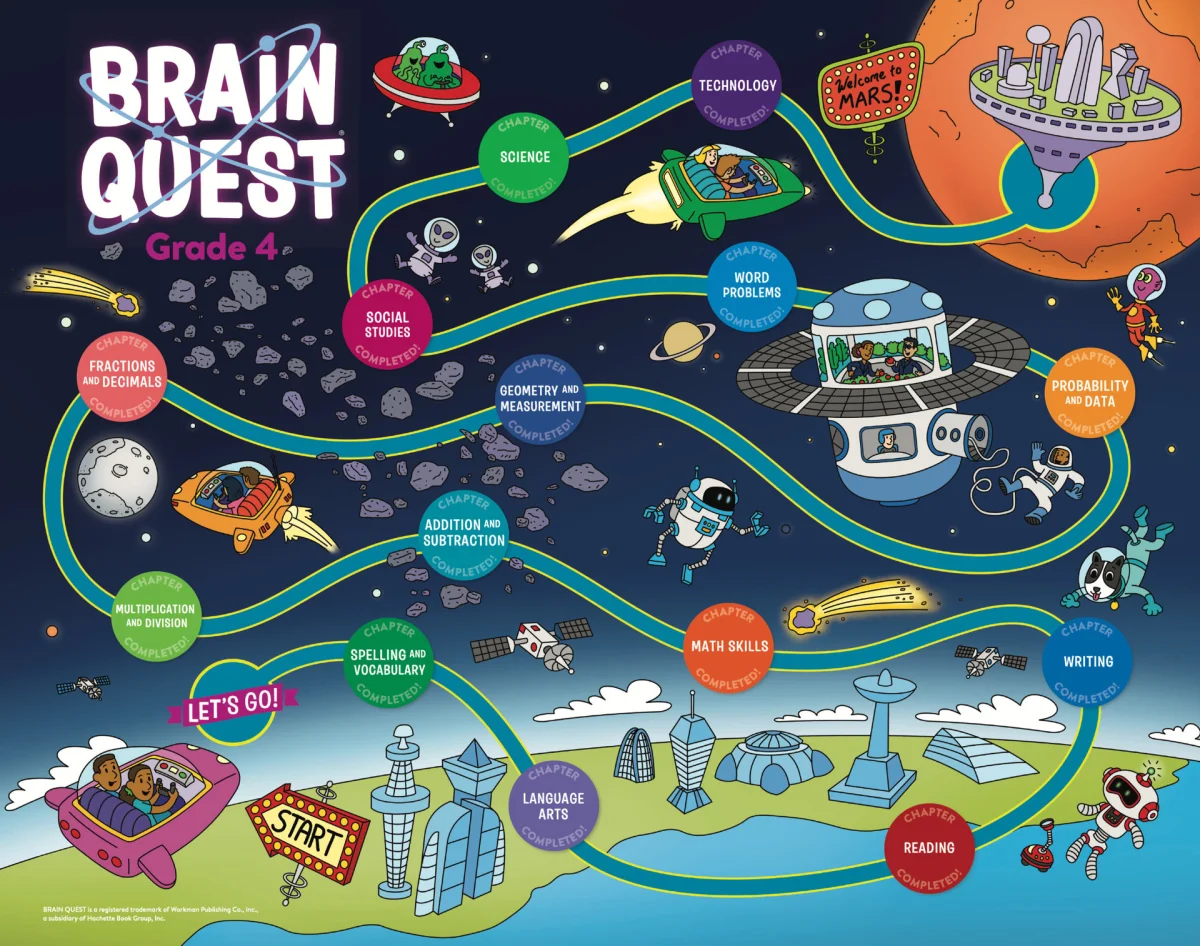
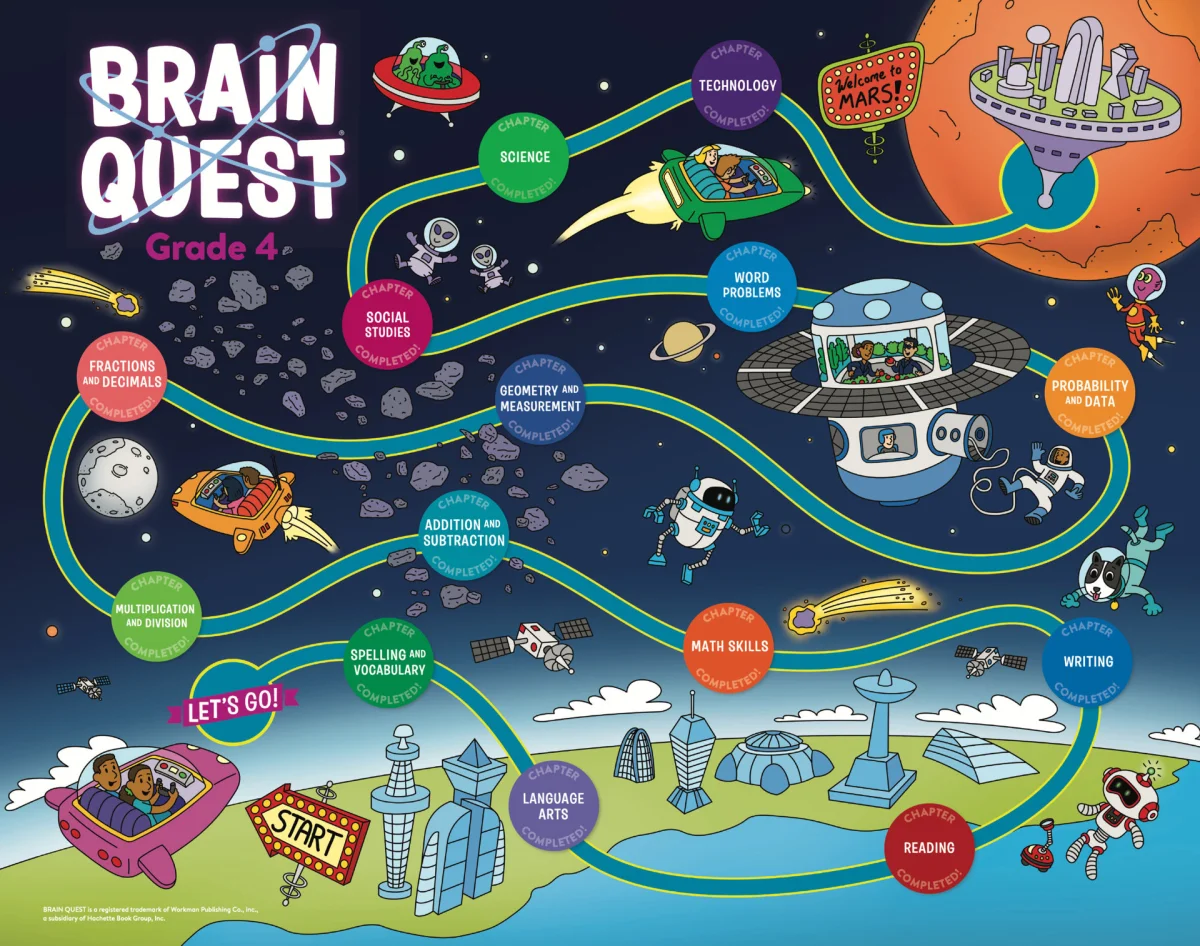
The project’s four fold-out posters offered a larger format for subjects that benefit from an expansive scene. The artwork shown here includes an outer-space poster, alongside workbook illustrations with more intimate settings. These different scales help the collection move between imaginative subjects and familiar moments without relying on a single visual setup.
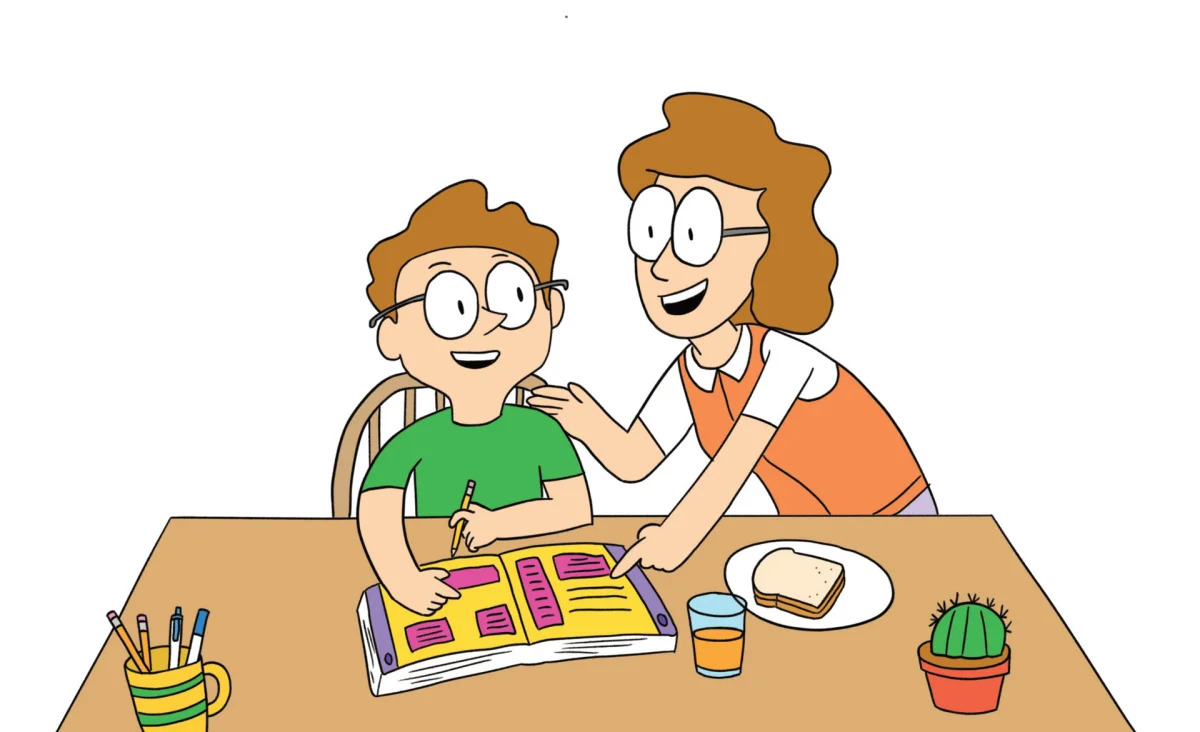
In the Grade 6 workbook scene, a mother helps her son. The interaction puts learning in a recognizable family setting, giving the page a human point of entry. It’s a different kind of illustration prompt from a faraway landmark or an unusual creature, and that contrast matters across a series aimed at several age groups. Familiar scenes can make the workbook feel connected to daily life; imaginative subjects can introduce surprise and visual variety.
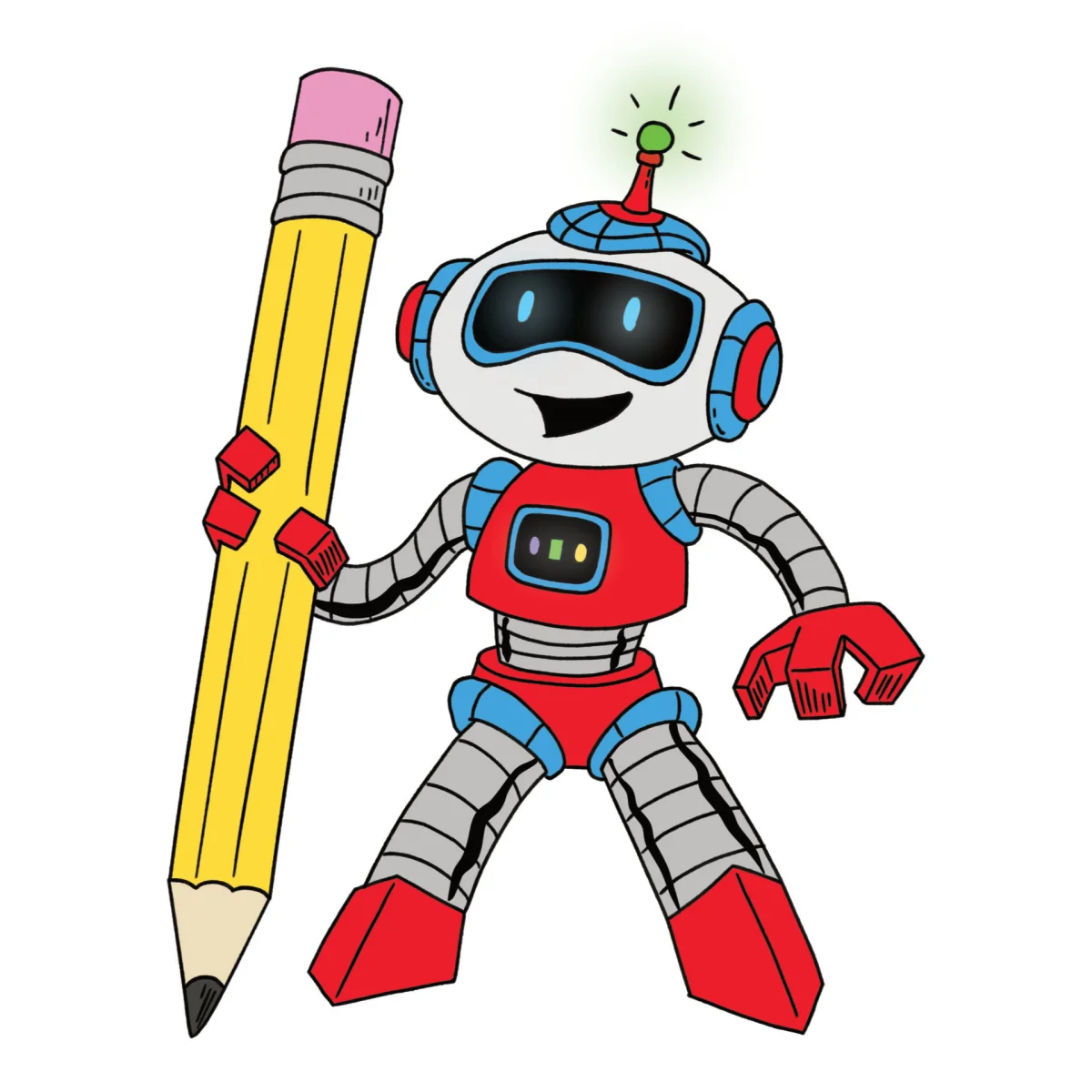
The Grade 4 robot illustration turns a pencil into an oversized prop and gives the object a playful helper. The caption identifies the robot as helpful, and the scale of the pencil makes the drawing’s premise immediately legible. This is a compact example of how a workbook image can add character around a familiar school tool without needing a detailed explanation.
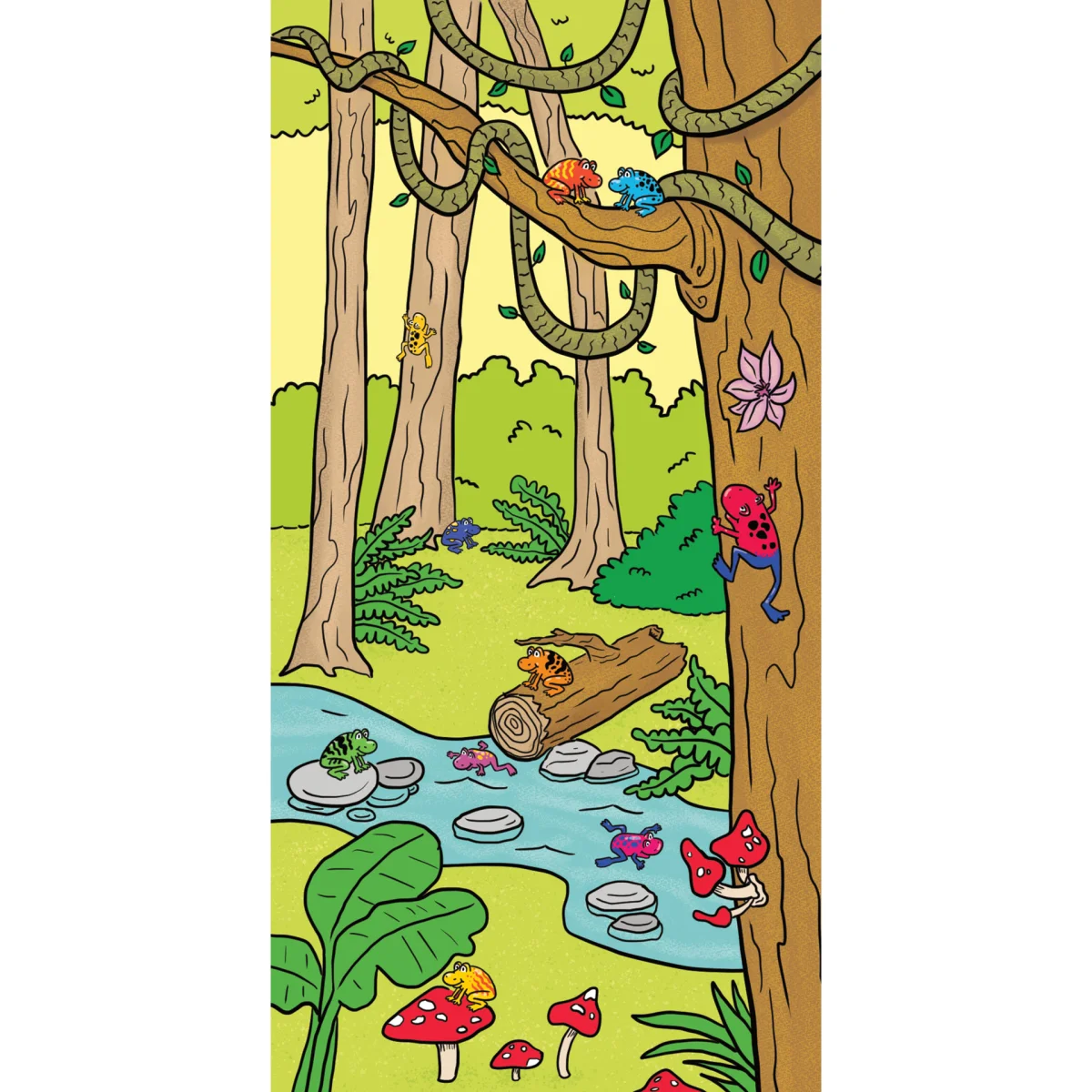
Colorful frogs in a rainforest bring the natural world into the series through a subject with strong visual variety. The caption supplies the setting and animals, while the image can make that subject memorable through its characters and color. DuBar says the assignment ranged from creatures to landmarks, so this piece sits within a broader mix of topics rather than defining the project’s entire visual approach.
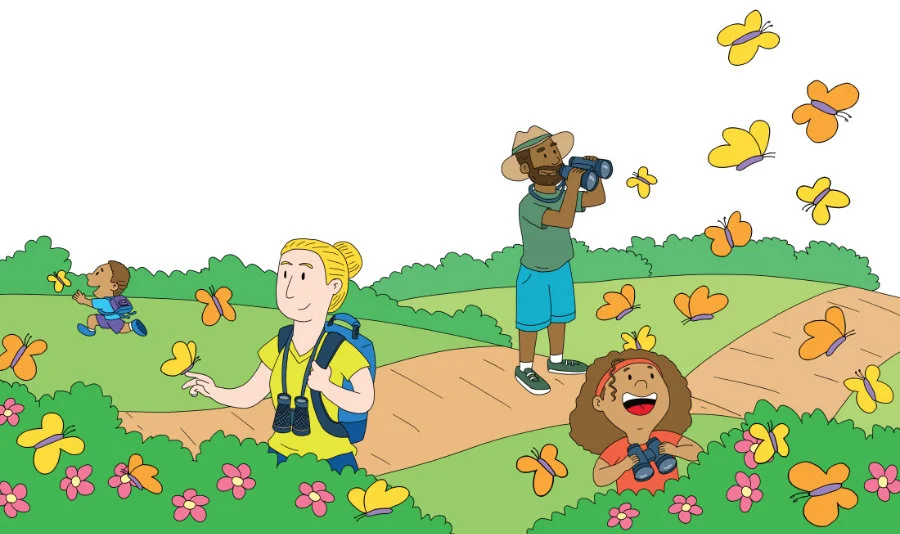
The butterfly scene returns to people and shared activity. Placed beside the rainforest frogs, it suggests two distinct ways to approach nature: focus on animals in their setting, or show people enjoying an encounter with them. That change in framing gives a collection more narrative options. It also lets the illustrations support different kinds of page content, though the source doesn’t specify how individual images were assigned to particular lessons.
A broad commission, with a personal payoff
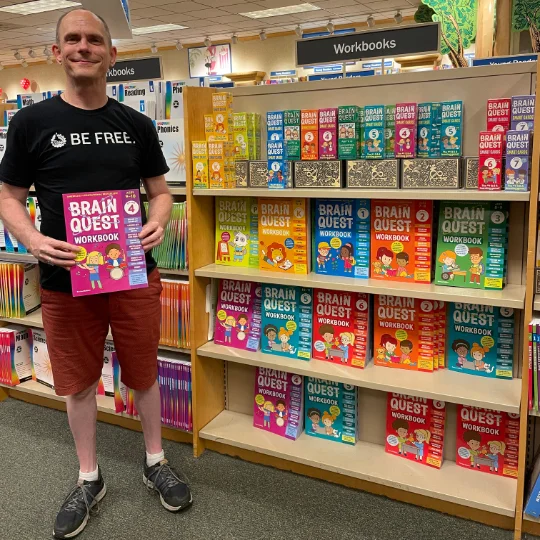
DuBar calls the assignment a dream project. He says its scale became real when he visited Barnes and Noble and saw a display of Brain Quest workbooks and deck cards featuring his artwork. His description centers on the experience of seeing many pieces together, after producing them across the series. The display made the project’s reach tangible to him: the images were no longer separate assignments, but a shelf of finished products.
He credits Dawn and Kevin from Fan Works Design, Art Director Erica Green, and the teams at Brain Quest and Workman Publishing for bringing him onto the project and making the collaboration enjoyable. The source identifies Green as art director on the workbook examples. That credit helps place the illustrations within a directed publishing project, while DuBar’s comments describe the variety and scale he handled.
DuBar graduated magna cum laude from VCU School of the Arts with a degree in Communication Arts. His work draws on lifelong interests that include old-style cartooning, surrealism and humor, as well as human rights and environmental issues. Those interests give useful context for an illustrator moving among playful characters, unusual subjects and grounded human scenes, without reducing the Brain Quest work to one style or theme.
The clearest takeaway for illustrators is the value of range within a consistent commission. A large educational series can ask one artist to change subject, scale and audience repeatedly, while making each image clear enough to work on its own. DuBar’s Brain Quest pieces move from family moments to animals, a helpful robot and outer space. See more of the project through his Brain Quest artwork, or browse his Directory of Illustration portfolio.
| Rev | Description | Date |
|---|---|---|
| A | Issued for reading | |
| B | Viewed 650 times | Current |


