Brian Stauffer’s 2024 Illustration Directory Cover Builds a Meeting of Ideas and Materials
- Project
- Graphic Design
- Drawn by
- Marika Lind
- Issued
- Sheet
- A-93
Brian Stauffer combines sketches, found textures and Photoshop for a cover designed to make a book’s physical presence part of the experience.

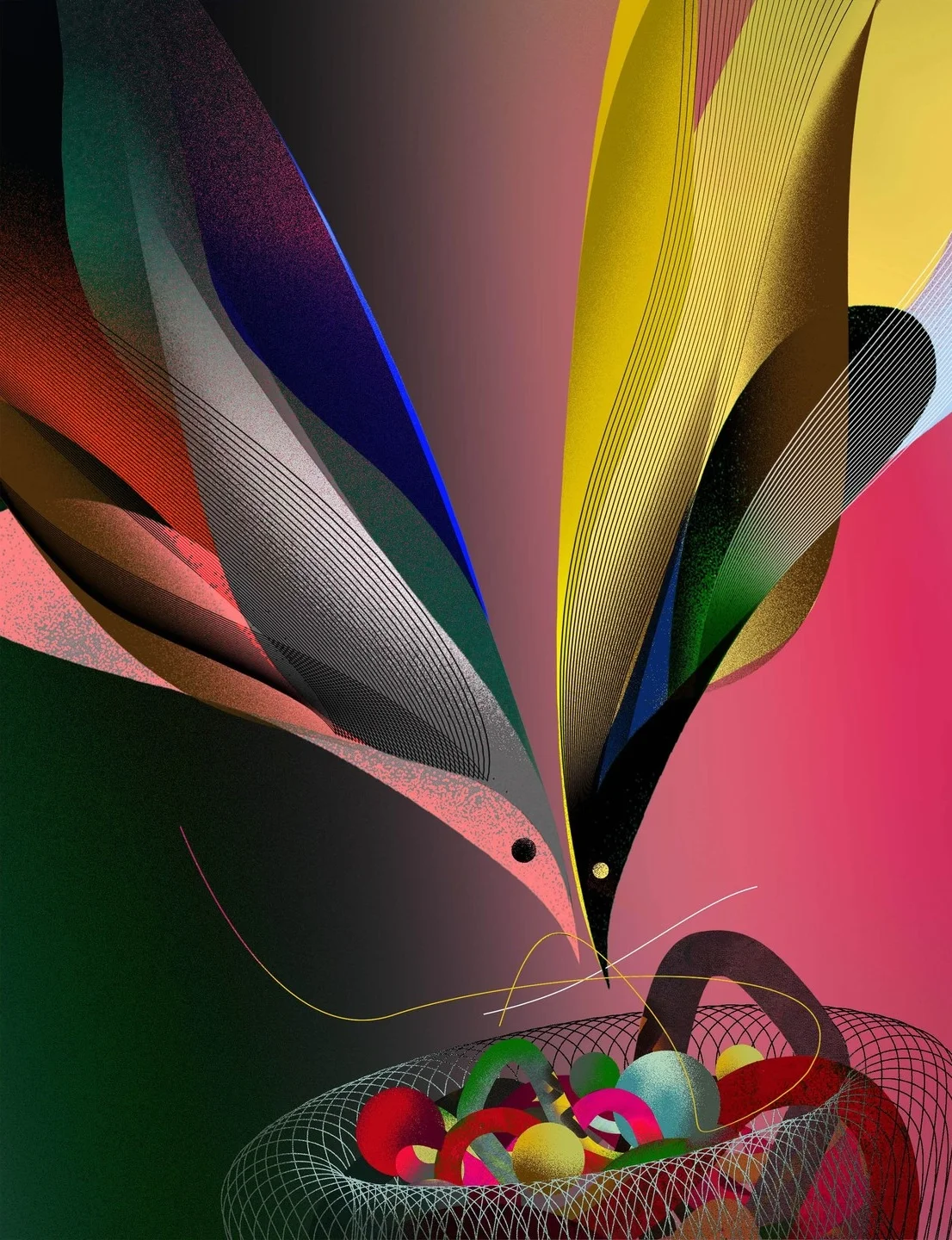
For Brian Stauffer, the cover of WORKBOOK’s Directory of Illustration 2024 needed to do more than carry an image. He wanted it to suggest creative forces working together, point toward the future through its content and color, and give viewers a sense of place. That brief suits an illustrator whose work starts with ideas and adapts its visual language to each one.
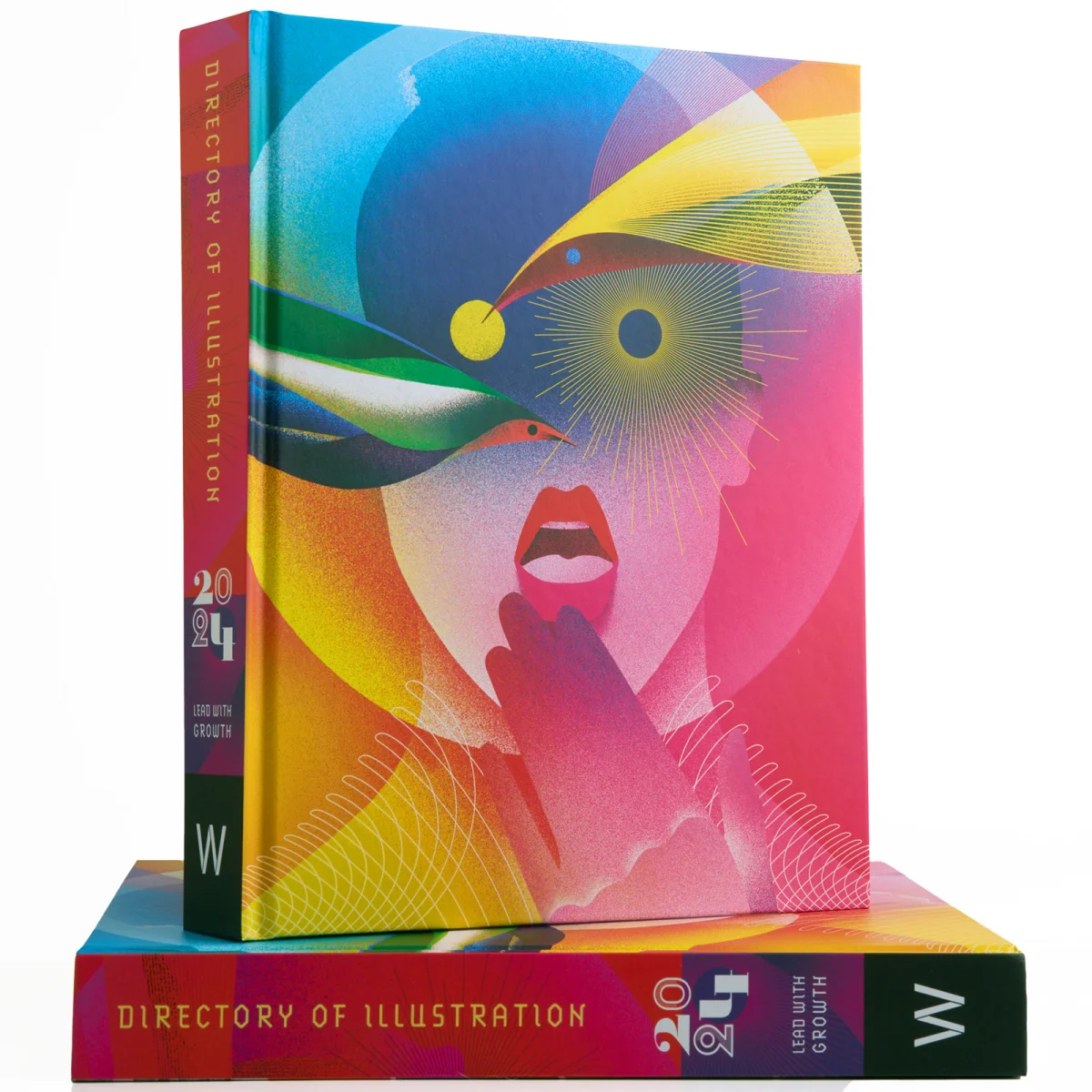
Stauffer says he hopes viewers will be drawn in by the book’s physical presence and feel excited to explore it. The 488-page sourcebook brings together illustrators, letterers, CG artists and animators. Its introductory pages, designed by Lisa Wiant, extend Stauffer’s original cover concept into the interior. Stauffer created the cover and end sheets; Wiant handled book design and art direction, with Tamra Dempsey as creative director.

An idea-led approach to illustration
Stauffer’s process begins with the subject, not a signature look. He says he searches for whichever visual approach will take an idea to its strongest form. His illustrations often use visual association to reveal a deeper aspect of a topic, asking viewers to make a connection with him through the image. The aim is for them to feel engaged and leave with a sharper understanding.
That approach grew out of an indirect route into illustration. Stauffer first studied music, but seeing his fellow students’ commitment made him realize his own interest lay elsewhere. He moved into graphic design, earning a BFA from the University of Arizona in 1989, and spent several years working in editorial design. Illustration’s conceptual process eventually offered a more direct path to the kind of graphic art he wanted to make.
His early interest in making things was hands-on. Raised in Prescott, Arizona, by parents who were part-time fine artists, he had art materials around him but was drawn to building contraptions and unusual objects from balsa wood, solder and modeling clay. Alexander Calder’s work changed his sense of what art could be. Stauffer still sees Calder as an influence, especially for his independent thinking, playfulness and refusal to be defined by the prevailing styles of his time.
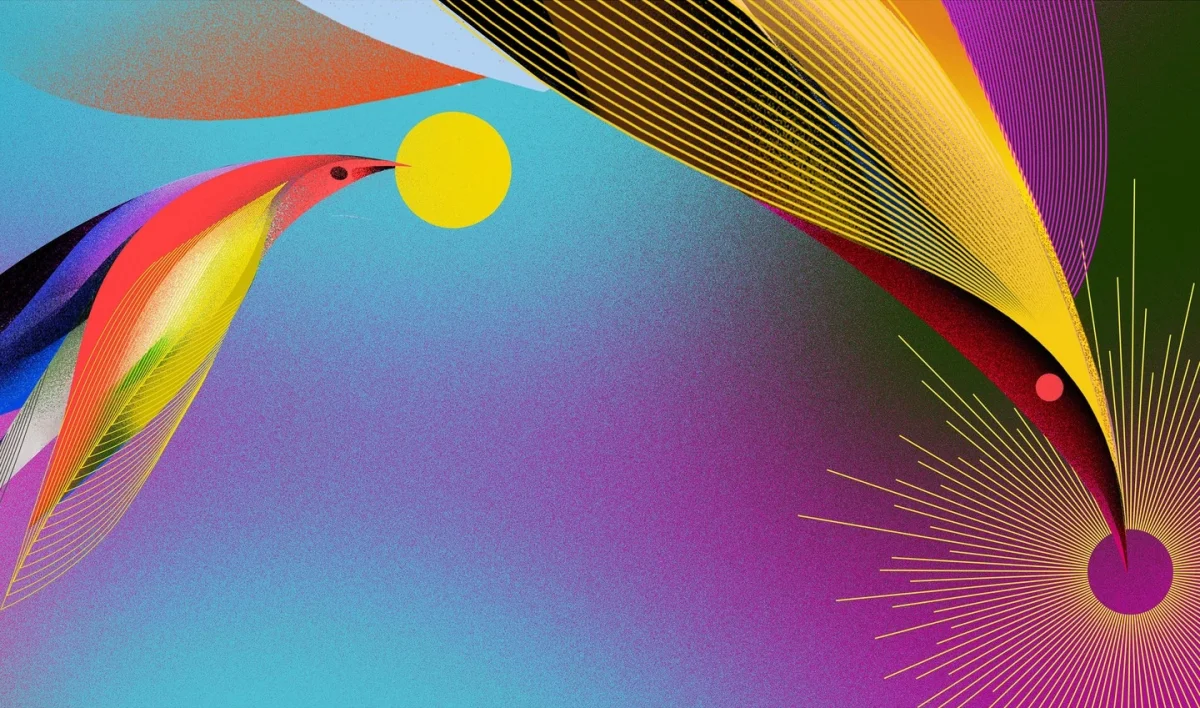
Stauffer is known for combining hand-drawn sketches, painted elements and scanned found objects. He does most of his digital work in Photoshop, but describes using the software bluntly: he brings his own found textures together with sketches rather than relying on elaborate digital effects. Print textures give the images a tactile dimension, while digital composition lets him arrange those pieces around the central idea.

A cover made to be encountered
For the 2024 book, Stauffer wanted the image to communicate collaboration: two forces combining to make something striking. He also looked for a sense of the future in both subject and color. Yet the detail he singles out as his favorite is the cover’s sense of place. That emphasis helps explain why the printed object mattered to him. He wanted the book itself to draw people in, not leave the cover as a flat image on a screen.
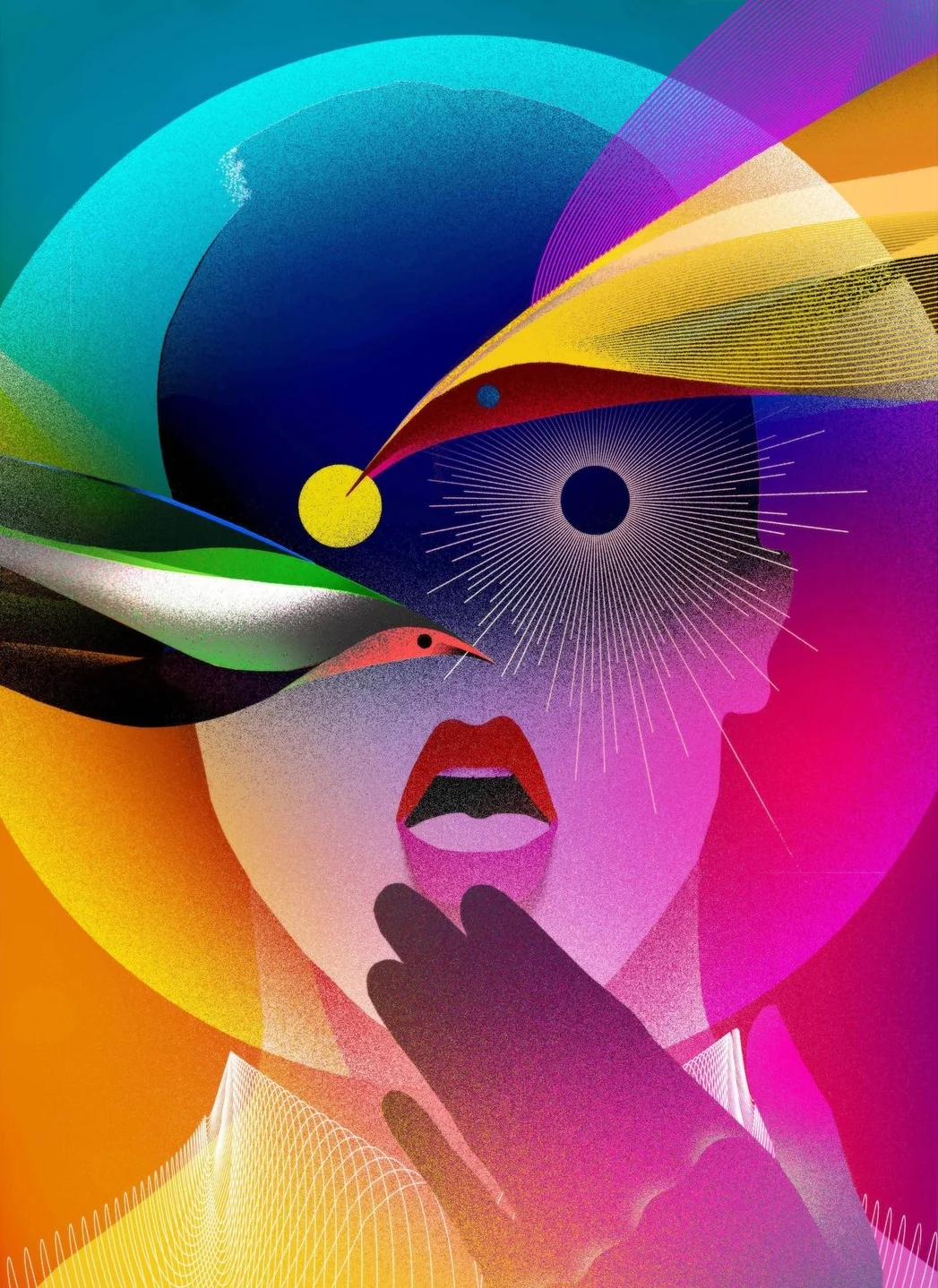


The audience added pressure. Stauffer knew the cover would be seen by people who understand illustration, and he didn’t want to deliver an image that felt routine. His answer was to treat the prominent placement as an invitation to push the concept, while keeping the image grounded in the work’s physical materials and its relationship to the book.
From print-first practice to faster assignments
Stauffer began working just before the first internet browser went live, and says he had his own website two years later. In the earlier print-centered model, illustrators reached out to people selectively instead of presenting their work to thousands online. He has since seen the volume of illustration grow and assignment schedules accelerate. The faster pace suits the way he thinks and works, he says.
His interests are also expanding into three-dimensional work. Although he has experimented with motion for years, he is now considering how some of his more recognizable images might translate into sculptural forms. It’s a shift that follows naturally from his interest in making images tangible: a concept developed through sketches and scanned textures may also have a life as an object in space.


Working through the difficult parts
Stauffer credits some of his career progress to taking on situations before he knew exactly how to solve them. He believes a person can learn to do what another person can do, and describes figuring out a route to a solution as a recurring part of his work. For emerging illustrators, his advice is to stop treating difficulty as evidence of a limitation. He argues that personal challenges can become part of what makes an artist’s work distinct, and encourages illustrators to hold themselves to their own standards rather than making every task faster or easier.
That advice matches the thinking behind his cover practice. The goal isn’t to force every project through a fixed style or process; it’s to identify what the idea needs, then build an image that gives viewers a way in. For a book aimed at people who work with images, Stauffer’s cover makes that exchange tangible: the artist offers a visual proposition, and the viewer completes the connection.
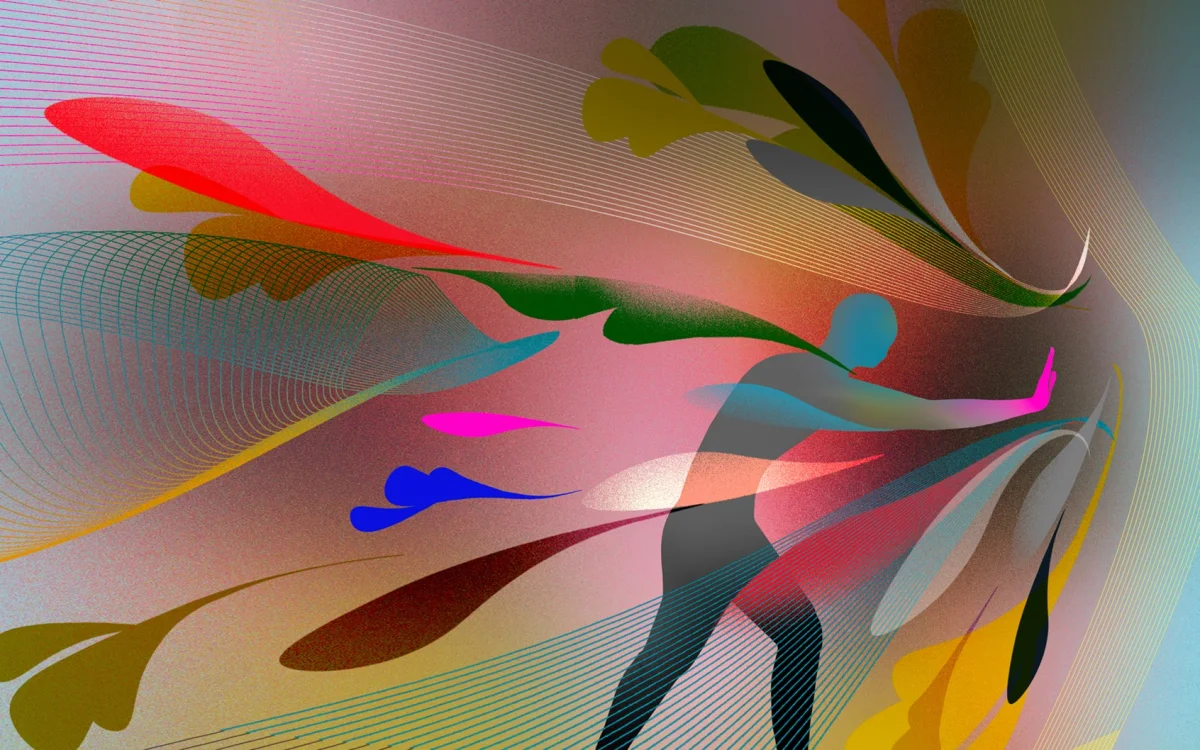
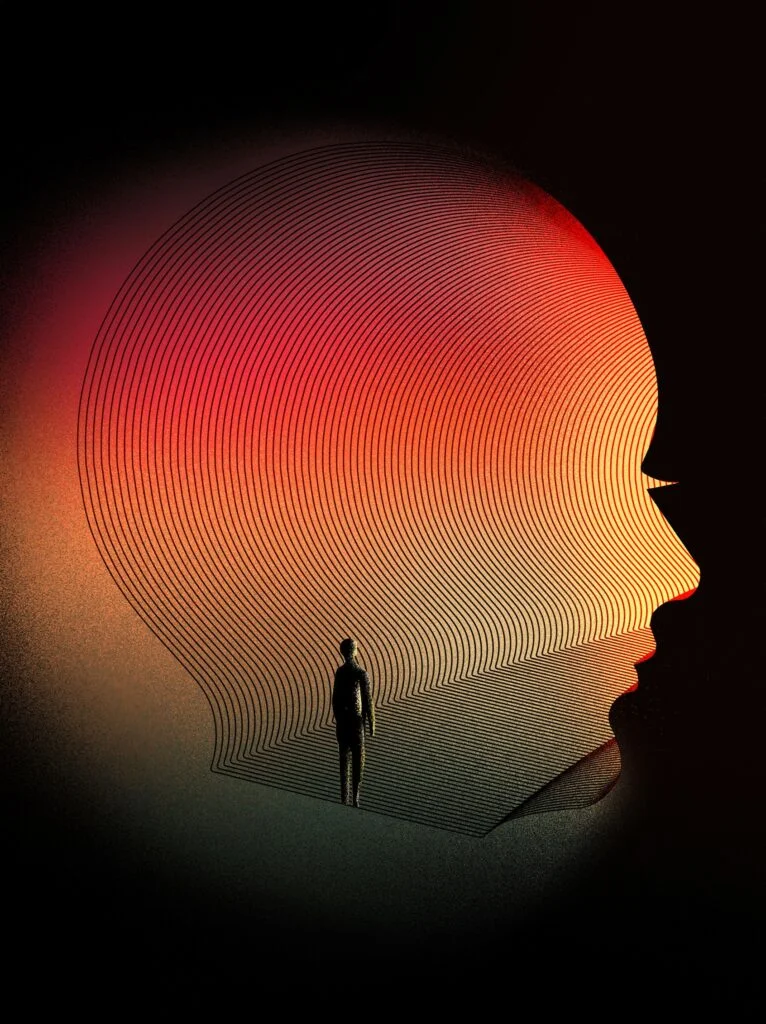
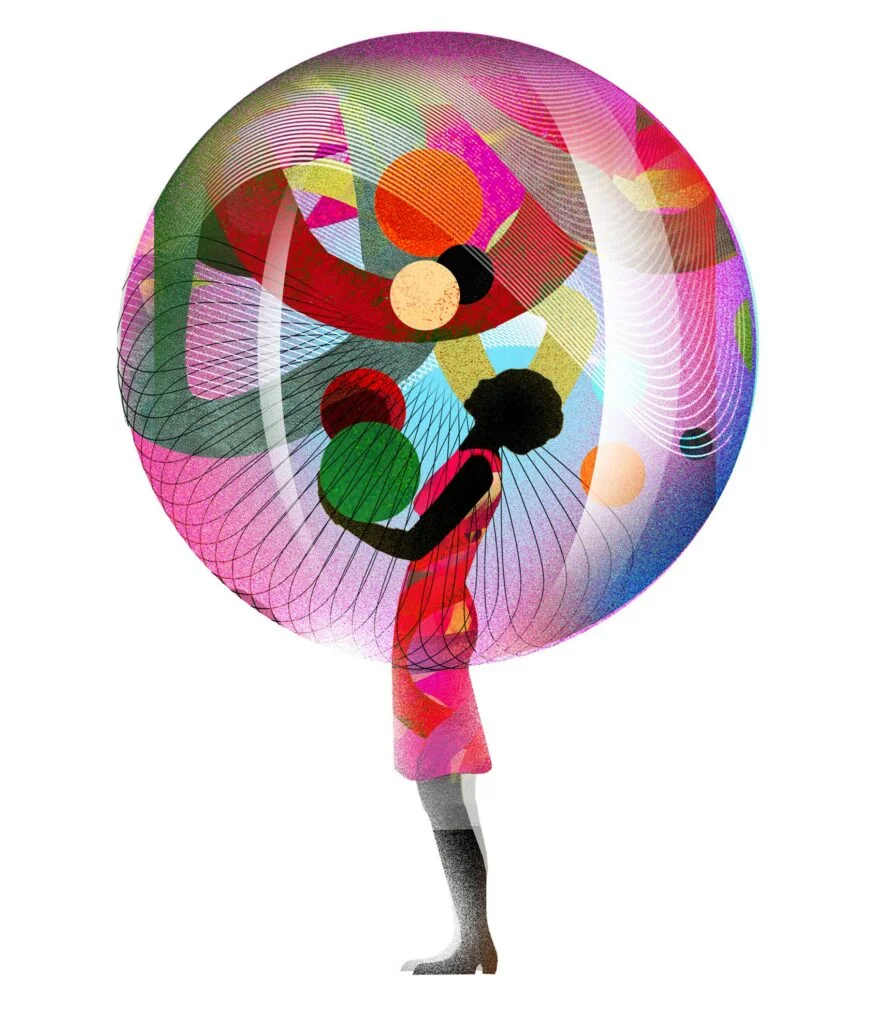
Stauffer’s Directory of Illustration portfolio and website show more of his work. His illustrations have appeared in The New York Times, TIME, The New Yorker, Rolling Stone, Esquire and GQ, among more than 300 publications worldwide. His work is held by collections including The Wolfsonian, the Museum of the Society of Illustrators in New York, the American Institute of Graphic Arts, the Newseum in Washington, D.C., and the Art Directors Club of New York.
| Rev | Description | Date |
|---|---|---|
| A | Issued for reading | |
| B | Viewed 696 times | Current |


