Pro.ZUI Scooter Concept Pairs a 75-Mile Range Claim With Everyday Utility
- Project
- UX & UI Design
- Drawn by
- TheFuture
- Issued
- Sheet
- A-9
Serbian industrial designer Ognjen Docic’s Pro.ZUI concept combines a claimed 75-mile range with a body panel imagined for carrying daily essentials.
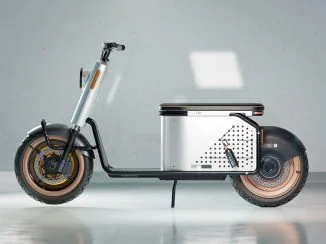
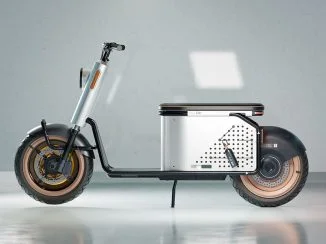
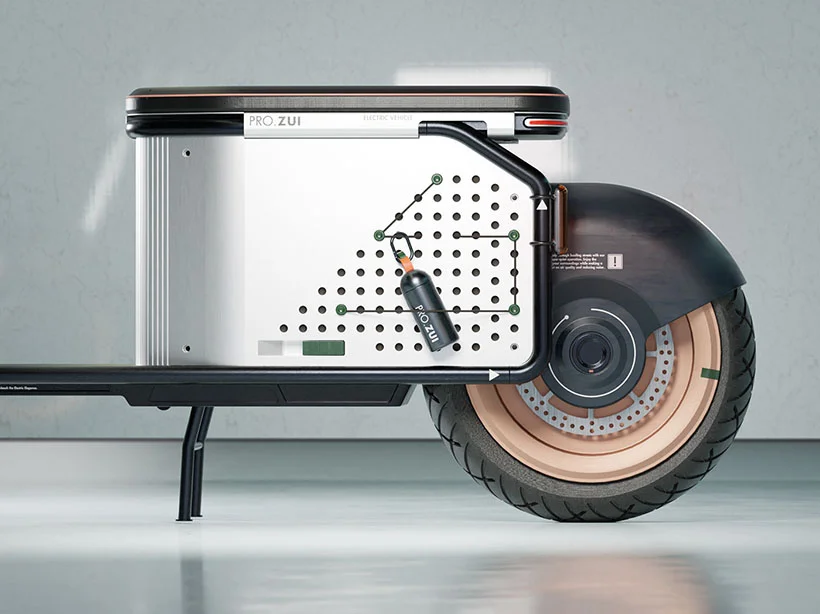
Pro.ZUI’s most useful design idea may be the least dramatic one: a panel beneath the seat imagined as a place to attach tools and other items for the day. That small detail shifts the concept beyond a sleek electric scooter form. It asks how a personal vehicle might support the tasks around a ride, as well as the trip itself.
Serbian industrial designer Ognjen Docic designed the Pro.ZUI e-Scooter as a personal vehicle intended to fit into everyday routines. The concept combines that practical aim with a stated range of up to 75 miles. The source describes the range as a promise enabled by battery technology; it gives no battery capacity, charging time, test conditions or production details, so the figure should be read as a concept specification rather than a verified result.
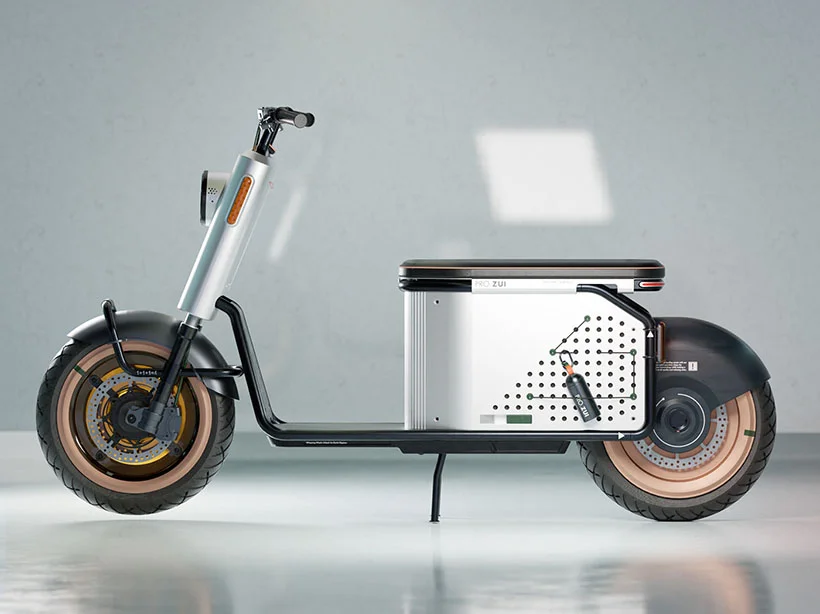
A vehicle with a place for the day’s gear
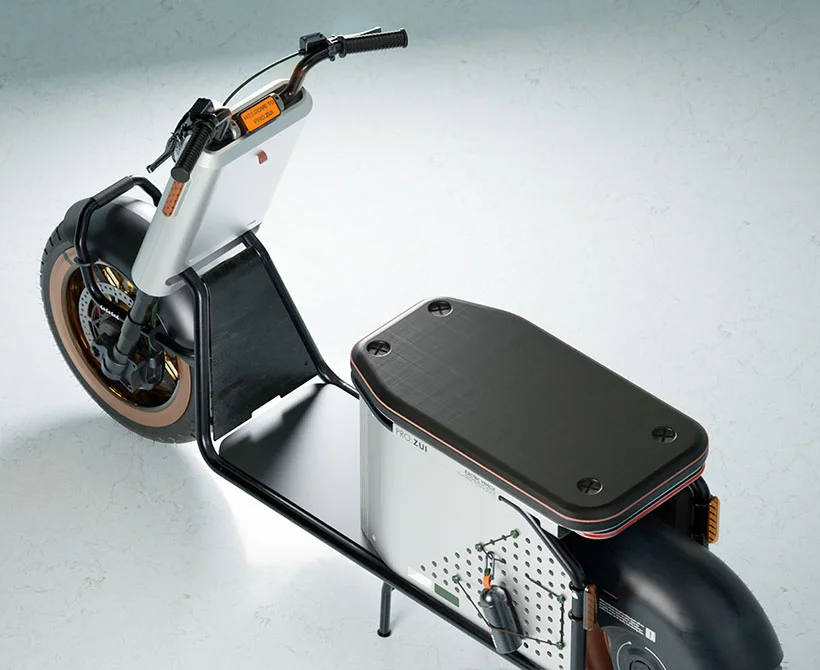
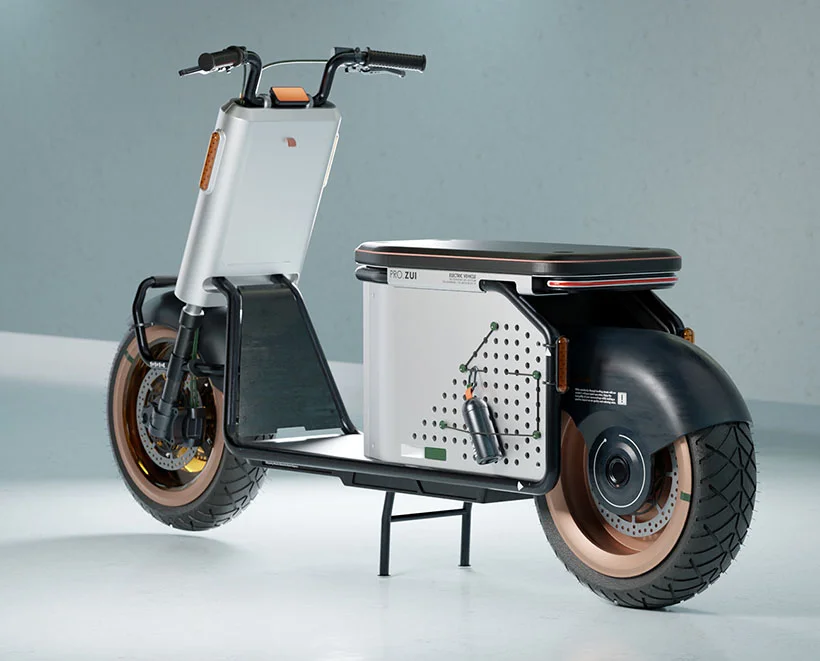
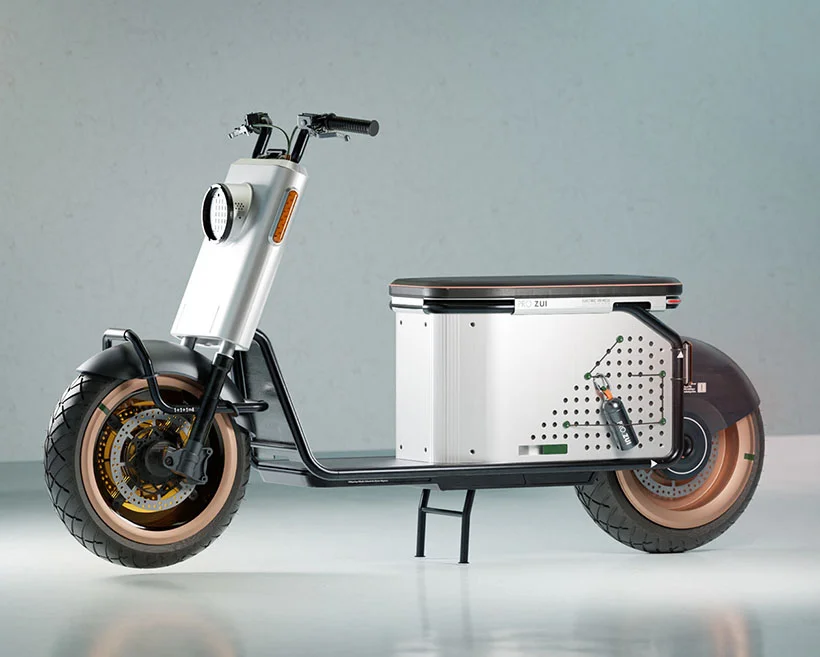
The under-seat body panel is described as working like a pin board, with items attached to it to complement the rider’s activity. That proposal gives the scooter a second function: its surfaces could help organize the transition between travel and whatever the rider is doing next. The source doesn’t specify attachments, dimensions, materials or load limits, leaving the exact system open.
That open question is also where the concept’s practical value lies. A useful accessory surface needs to make attachment simple while keeping objects secure during movement. It would also need to work across different kinds of daily carry, without making the scooter difficult to clean or the rider’s belongings awkward to reach. Those are design questions raised by the pin-board idea, not details the concept description answers.
For designers considering similar utility features, the sequence is worth borrowing: identify what people need to carry, decide where those objects can sit without interfering with movement, then make the attachment method legible. Pro.ZUI provides a location and a broad metaphor for the feature. Further development would need to show how the metaphor becomes a dependable interface between rider, object and vehicle.
Range as part of the design proposition
The stated range of up to 75 miles sets a long-distance ambition for a vehicle framed around city movement. The source connects that figure to battery technology and describes electric travel as a way to move without releasing harmful gases into the air. It does not name a battery type or explain how the range was calculated. For a design concept, the number communicates intended capability; for a rider evaluating a vehicle, conditions and testing would determine what that figure means in practice.
Range affects the whole experience, not just the battery. It shapes how often a rider might need to plan a charge, how confidently they can combine errands, and whether a scooter feels suited to a longer day away from home. The concept’s range claim therefore supports its everyday-use pitch: the vehicle is presented as a means of getting around with ease while reducing emissions during use.
Still, range alone can’t describe how well a vehicle fits a routine. Charging access, carrying needs and the ease of handling the scooter all influence whether the promise feels practical. Pro.ZUI’s description supplies one concrete range figure and one concrete storage idea, but leaves those surrounding details unspecified.
Form, function and what remains to be shown
The project is presented as a combination of sleek design and technology, with the exterior body doing some of the functional work. That pairing is a familiar challenge in product design: a vehicle can look streamlined in a rendering, while everyday usefulness depends on details such as where belongings go and how riders interact with the machine. Pro.ZUI’s panel gives the concept a point of view about those details, even though the source offers no construction or interaction specifications.
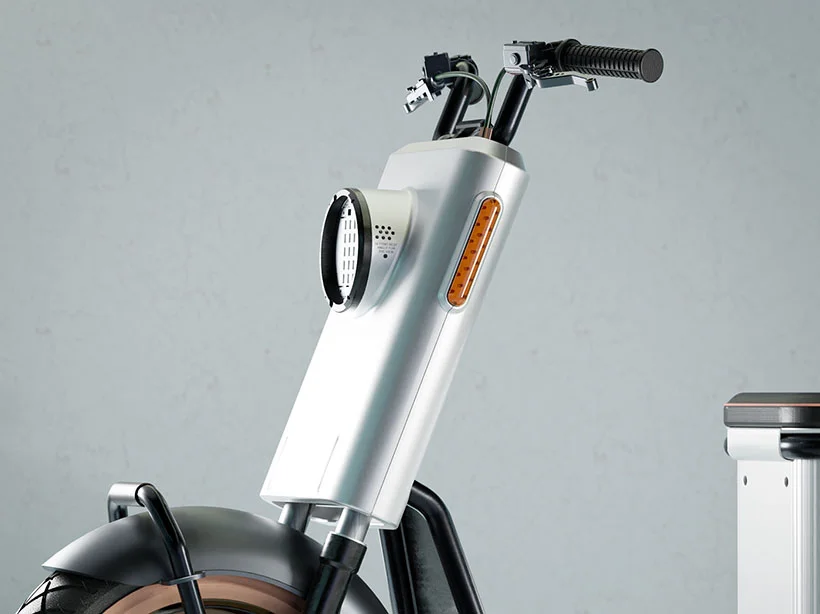
The images accompanying the project show the scooter concept from several views. They are credited in their alt text to Ognjen Docic, while the project description identifies him as its designer. No launch date, manufacturer, client, price or availability is provided, and the source doesn’t claim that the concept is a product ready for purchase.
That distinction matters when reading a speculative vehicle design. A concept can make a useful proposition visible before engineering, testing and production decisions are settled. Here, the proposition is that an electric scooter can pair an ambitious stated range with a place for the tools and objects that shape a rider’s day. The next design step would be making that carrying feature specific enough to judge: what attaches, how it stays in place, and how it works alongside the ride.
| Rev | Description | Date |
|---|---|---|
| A | Issued for reading | |
| B | Viewed 338 times | Current |


