LAVOIE Series 1 E-Scooter Pairs a Folding Frame with Car-Inspired Engineering
- Project
- UX & UI Design
- Drawn by
- TheFuture
- Issued
- Sheet
- A-10
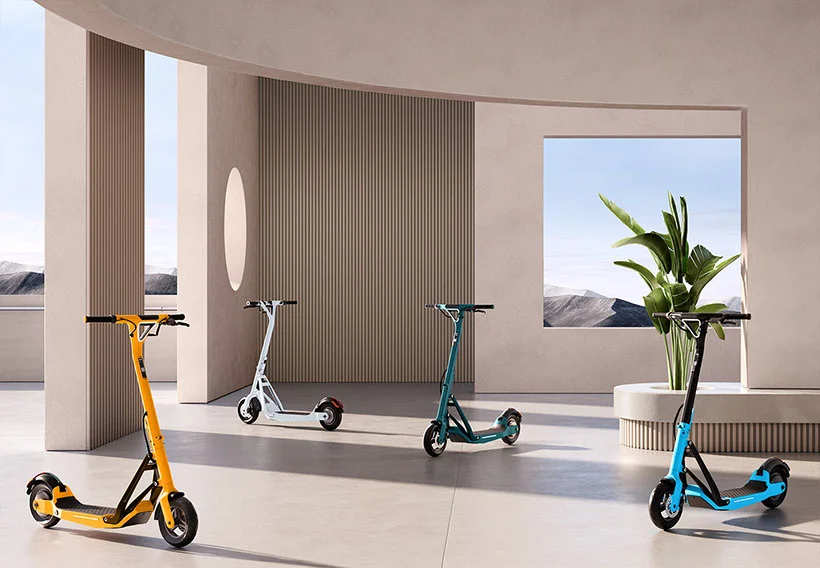
The 16.5 kg Series 1 combines a one-touch folding system, a 31-mile stated range and a companion app in a compact e-scooter.
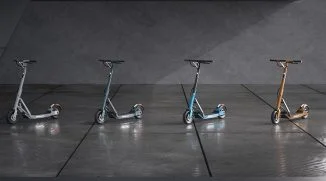
The LAVOIE Series 1 is designed around a practical tension: an e-scooter needs to feel substantial underfoot, yet fold down for storage and carrying. Its answer is a wide, long deck for riding and a patented one-touch Flowfold system for changing the scooter’s shape. At 16.5 kg, it brings automotive-grade magnesium construction and McLaren Applied technology into a product intended for everyday mobility.
A fold that shapes the whole product
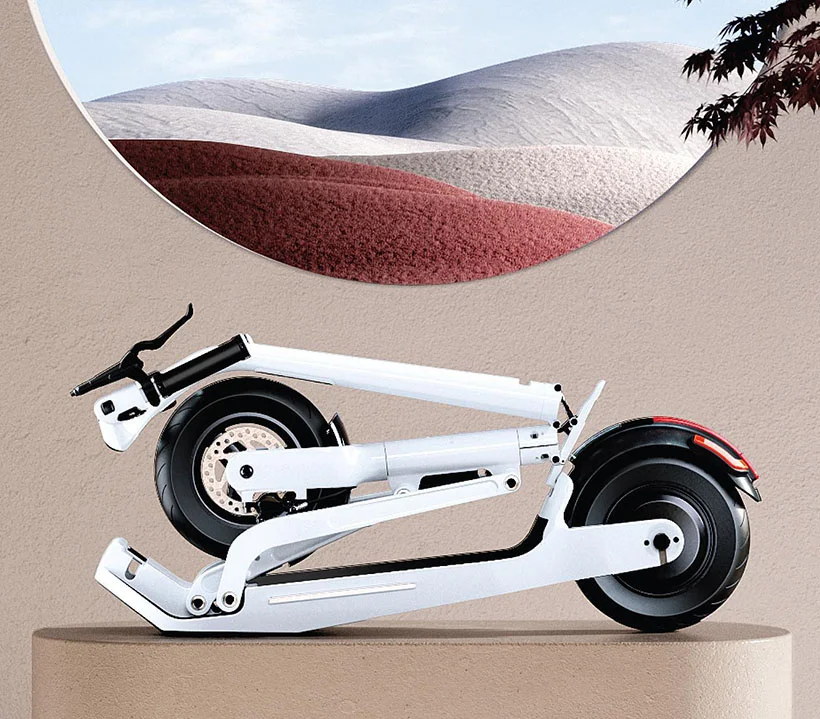
Folding is central to the Series 1’s design, rather than an afterthought. The Flowfold mechanism is described as allowing the scooter to collapse in one click, while automotive-style latches hold it securely in its riding position. The handlebars fold too, helping the vehicle become more compact for storage.
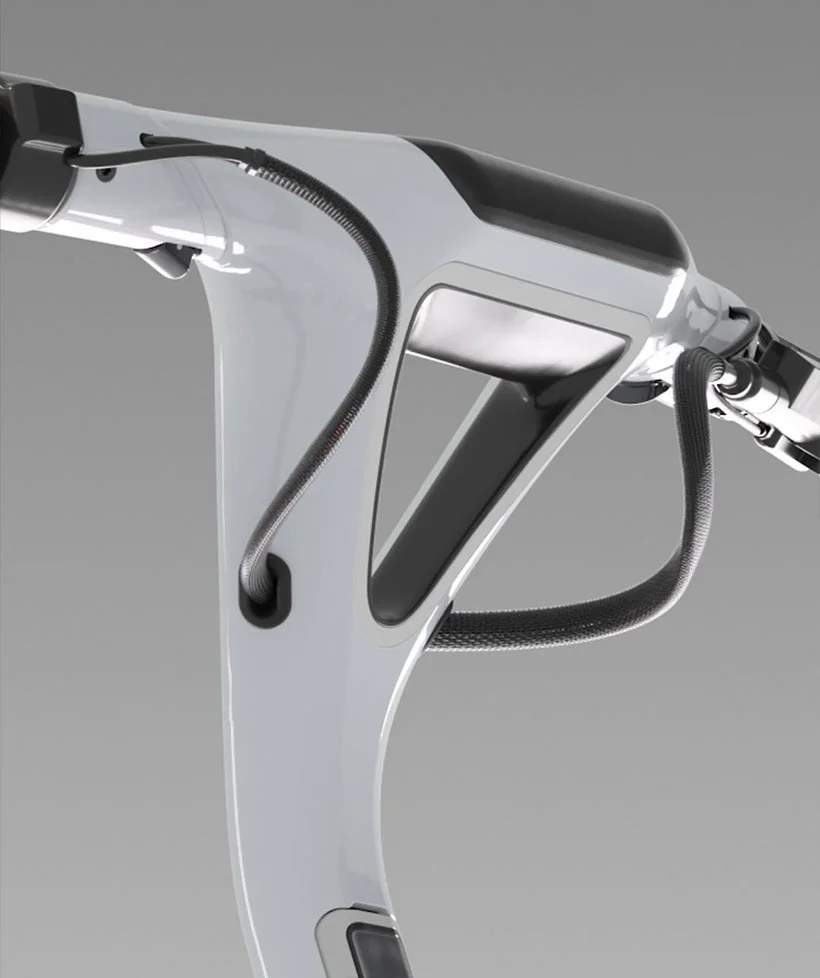
That mechanism has consequences for the overall form. A scooter that needs to fold quickly must make its joints and locking points part of the object’s visible structure. Here, the sturdy latch is presented as a functional counterpart to the streamlined silhouette: one element communicates stability when riding, while the folding action addresses what happens when the journey ends. The source does not describe the mechanism’s internal construction, so its engineering details remain unspecified.
The stated weight, 16.5 kg, gives a concrete sense of the portability trade-off. That figure may help prospective riders compare the Series 1 with other scooters, but weight alone doesn’t establish how easy it is to lift. The compact folded shape, handlebar arrangement and the distance it needs to be carried all affect that experience. The design makes the fold a clear part of the pitch; the available information doesn’t provide folded dimensions.

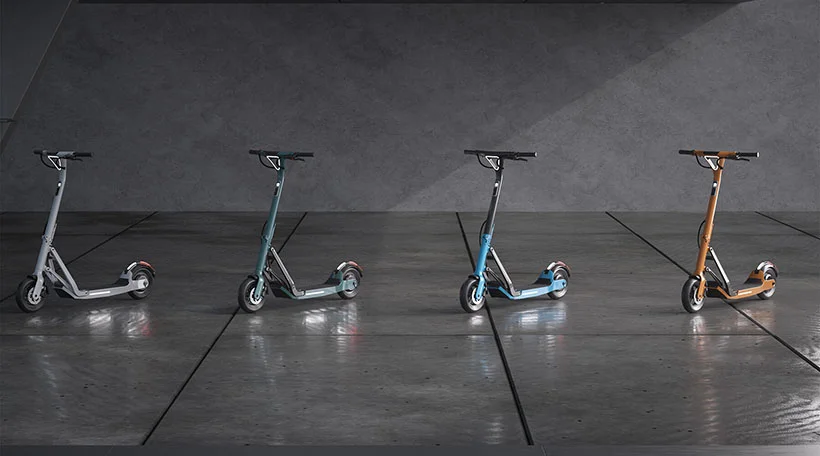
Room to ride, with lighting built into the deck
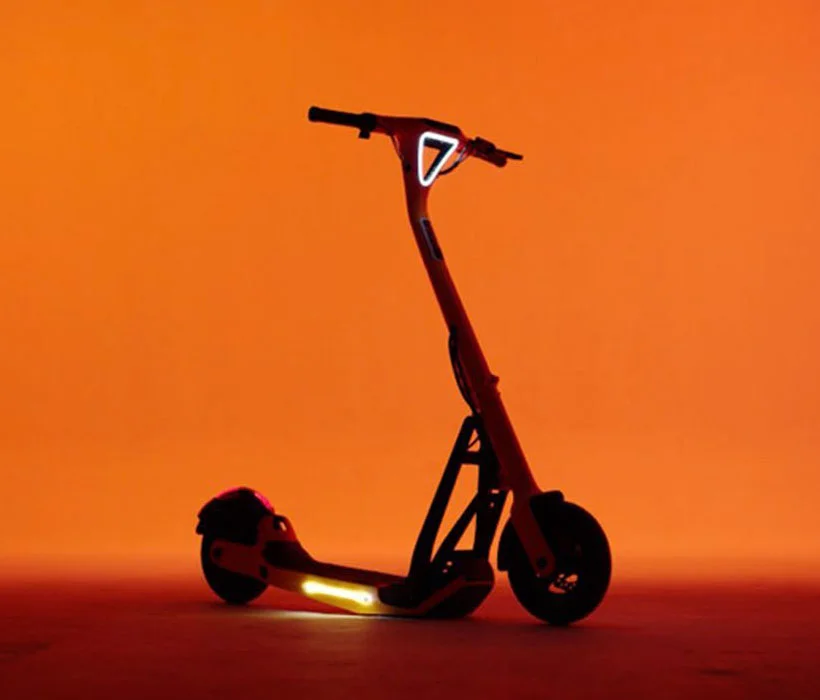
Unfolded, the Series 1 has a long, wide deck, which the source associates with a more comfortable ride. That proportion matters because the deck is the rider’s primary contact point: its length and width can give the feet more room to settle into a stance. The article doesn’t provide deck measurements or describe riding tests, so the comfort claim can’t be assessed in more detail from the available specifications.
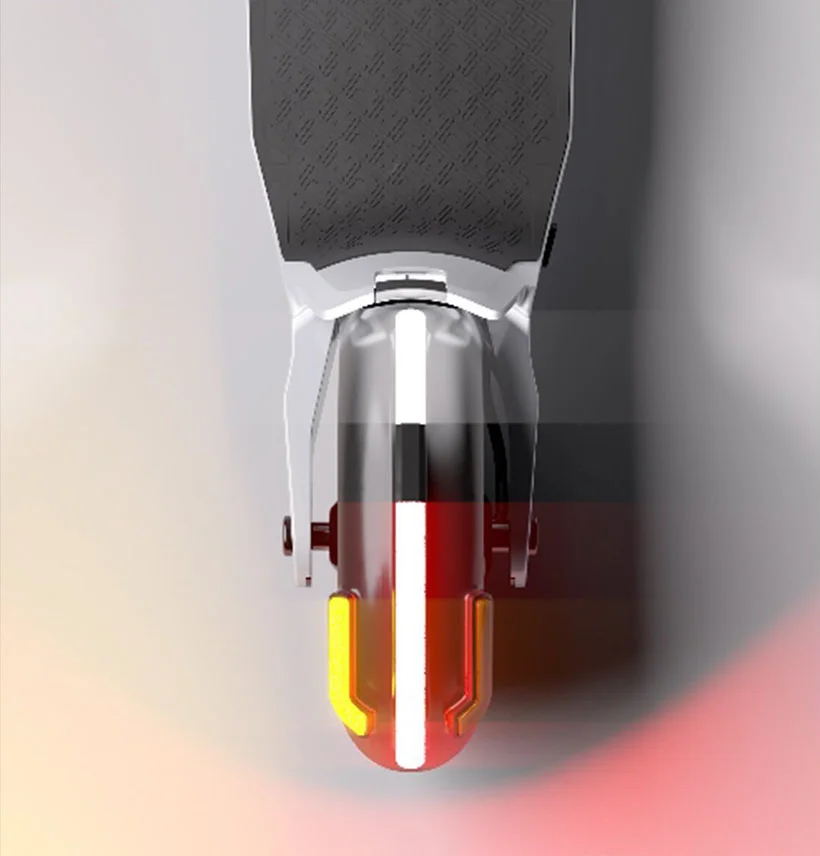
The lighting layout places front lights on the deck and uses rear lights described as bright enough to illuminate the rider. This makes visibility part of the scooter’s form rather than a separate accessory in the description. The front lights are intended to support road visibility, while the rear lighting helps make the rider visible from behind. No brightness figures, lighting modes or control details are supplied, leaving those practical characteristics open.
For designers, the placement is a useful reminder that visibility features affect both the product’s appearance and how it reads in use. Deck-mounted lights sit close to the road and connect visually to the scooter’s base; rear lights frame the rider from behind. Their success depends on where the light falls and how it performs in real conditions, details that would need hands-on evaluation beyond the description here.
Range, charging and the companion app
LAVOIE states that the battery provides up to 31 miles of range between charges and takes two hours to fully recharge through a three-pin plug. Those numbers sketch the intended ownership rhythm: the scooter is presented as capable of covering a substantial distance on a charge, with a defined charging time. Actual range can vary with use, but the source gives no test conditions or further battery specifications.
The companion app adds a digital layer to the physical product. Its listed functions include navigation, customization, detailed ride statistics and remote locating. Together, these features make the app a place to orient a trip, adjust the experience and check information about the scooter. The description does not specify which settings can be customized, how the navigation works or how remote locating is enabled.
That distinction matters in product design: naming a set of app features tells readers what the software is meant to cover, but the quality of the experience depends on the interaction details. For navigation, useful questions include how directions are presented while riding and whether the interface can be checked at a glance. For ride statistics, the labels and hierarchy determine whether the data is easy to understand. The source gives no screen examples, so those interface decisions can’t be evaluated here.
Automotive-grade cues in a personal vehicle
The Series 1’s positioning connects its magnesium construction, sturdy latches and McLaren Applied technology with the kind of engineering associated with cars and motorcycles. That framing suggests a product built to feel engineered as a complete vehicle, with folding hardware, lighting, battery and software considered together. It doesn’t specify which components or systems use McLaren Applied technology, so the attribution should be read at the level the source provides.
The design story is therefore less about a single headline feature than about how several systems meet. The folding mechanism addresses storage, the deck defines the riding platform, lighting supports visibility, and the app extends the experience beyond the scooter itself. For anyone assessing the Series 1, the most useful next step is to compare its stated range, charge time and weight with the demands of a real route, then inspect the folded form and app details firsthand. Those checks turn the product’s engineering claims into a clearer picture of how it may fit into daily use.
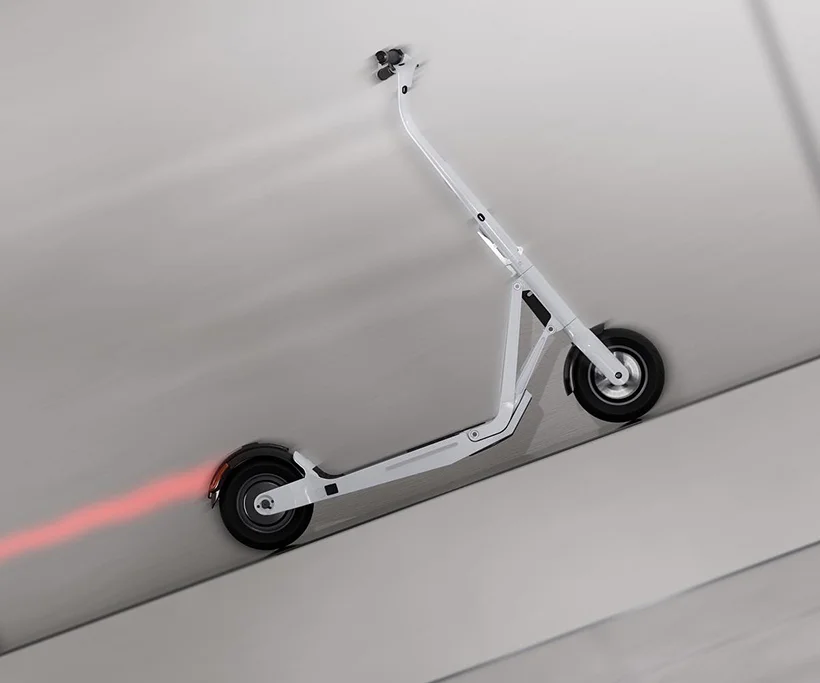
Learn more from LAVOIE.
The original post appeared on Tuvie Design.
| Rev | Description | Date |
|---|---|---|
| A | Issued for reading | |
| B | Viewed 755 times | Current |


