Alison Berkey Turns Portraits Into a Mamdani Print Skirt and Oversized Paintings
- Project
- Graphic Design
- Drawn by
- Steven Heller
- Issued
- Sheet
- A-64
After years away from art, Alison Berkey is building a practice across illustration, sculpture and painting, with portraits that move from the iPad to fabric and large-scale work.
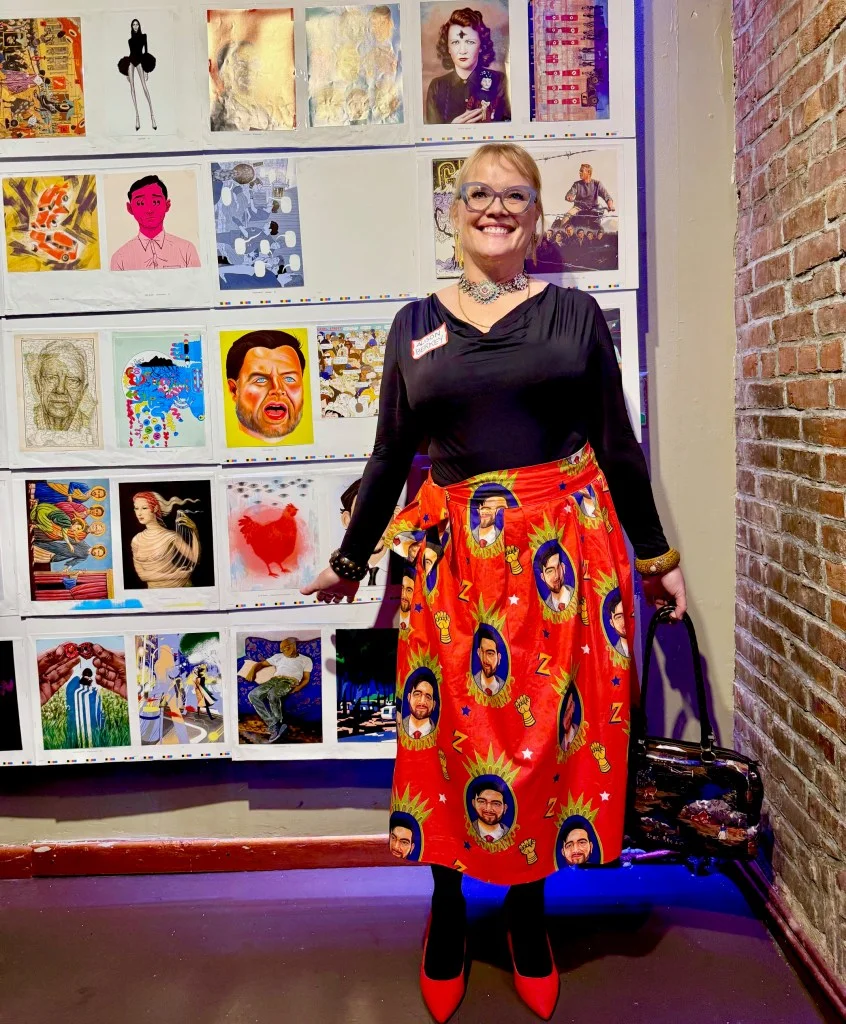
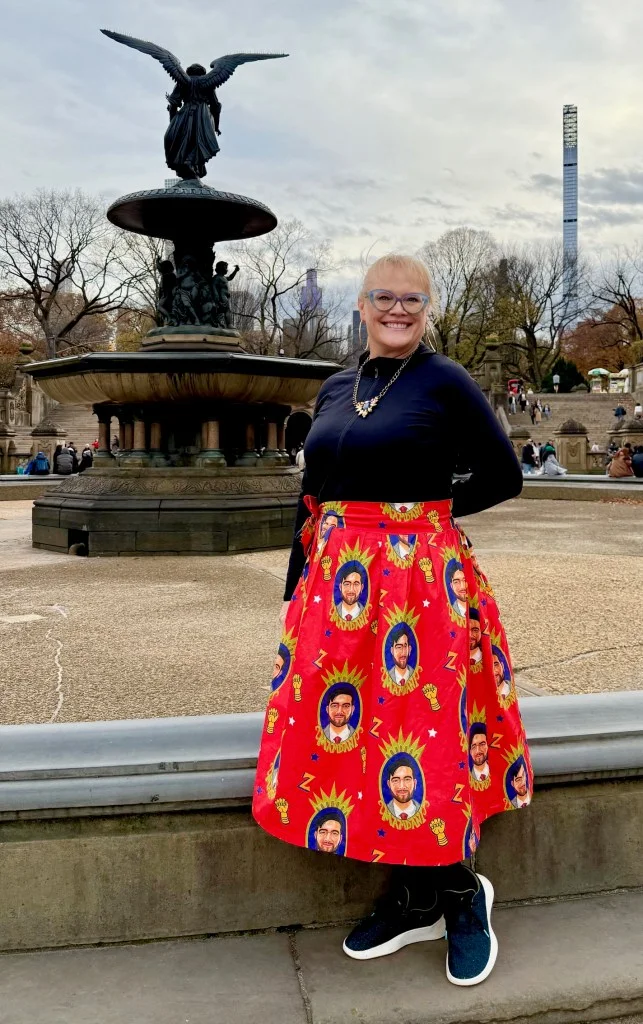
Alison Berkey’s portrait of Zohran Mamdani became a wearable print: she adapted her drawing into a red, white and blue fabric pattern, then sewed it into a skirt. The piece brought together several strands of her practice—portraiture, an interest in textile design and a return to making art after years focused on family. It also offered a vivid introduction to an illustrator whose work has begun to attract attention: two portraits were selected for this year’s American Illustration annual, and Berkey traveled to New York for the AI-AP annual party.
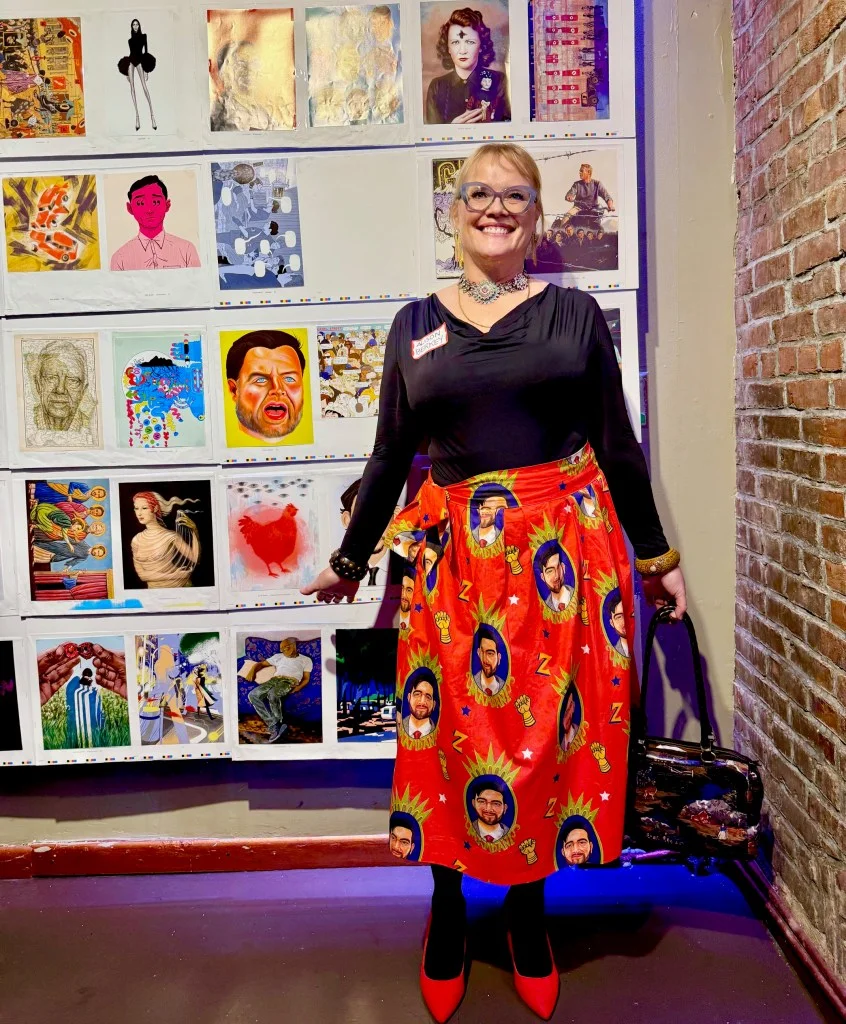
Berkey met PRINT’s Daily Heller while showing her work around the event. Her portraits have a lively, carnivalesque quality, but the skirt made her approach tangible in a different way. Rather than simply reproducing an image on clothing, she treated the portrait as part of a pattern, drawing on visual references she had carried with her for years.
A practice shaped by travel and observation
Berkey’s early life involved frequent moves. Her father, an upper atmospheric physicist, took the family between Alaska, Norway, Canada and, eventually, Utah. She earned a BFA from Utah State University, then moved to Taipei to teach English. A vacation in India turned into an eight-year stay. There, she observed local life, married her husband in a traditional Hindu ceremony and took occasional acting roles in Kollywood, the Tamil film industry. She later moved to the Pacific Northwest to raise a family.
India changed how Berkey understood her own ambitions. She arrived at a time when mobile phones and the internet were spreading, while the events of September 11, 2001, reshaped the wider context. In the stone-carving village where she lived, the sound of chisels was constant, and sculpture followed traditions that had lasted for generations. Against that history, she felt that pursuing an individual artistic voice could seem self-important beside the demands of daily survival.
That pause became part of the work’s foundation. Berkey says the sights, colours, smells and sounds of India returned to her later as memories she could draw from. Her account suggests that observation itself was a form of preparation: she needed time to absorb a place before those experiences could become material for her own art.
Portraits as a way into difficult conversations
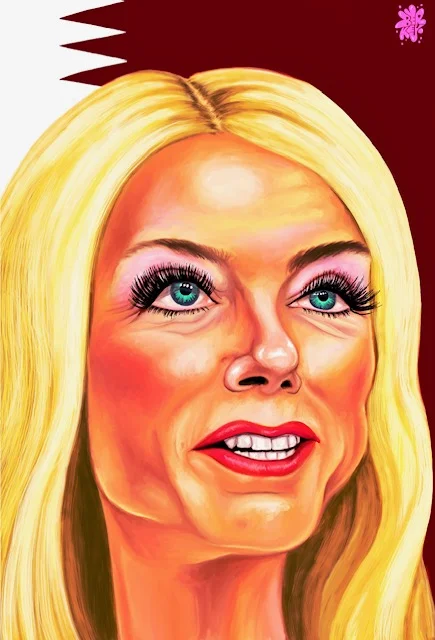
Berkey describes her move into illustration as an expression of activism. As a mother in a mixed-culture family, she wanted to use her voice with purpose. Drawing portraits gave her a way to direct attention toward people and ideas, then invite viewers to talk. Her stated aim is to encourage understanding and, through it, the possibility of healing divisions.
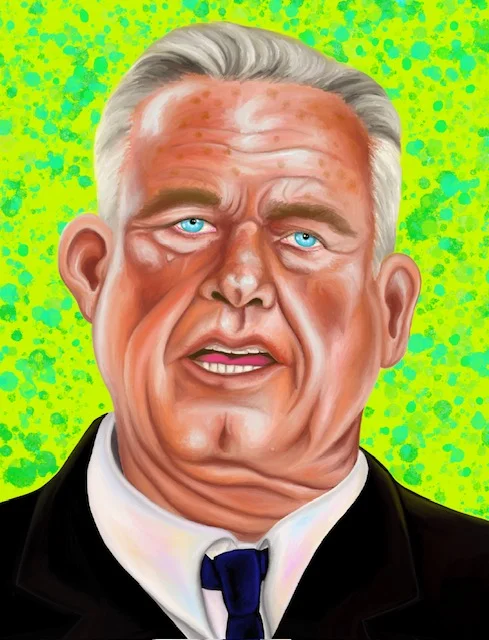
Her first sustained series focused on an especially provocative public figure. Berkey drew him in elaborate outfits that borrowed from authoritarian uniforms and historical dress, layering each image with contemporary symbols and language. On a whim, she submitted the series to the 3×3 International Illustration show and received a couple of merit awards. She later joined the 3×3 Collective and continued developing her illustration work through portraits prompted by current events.
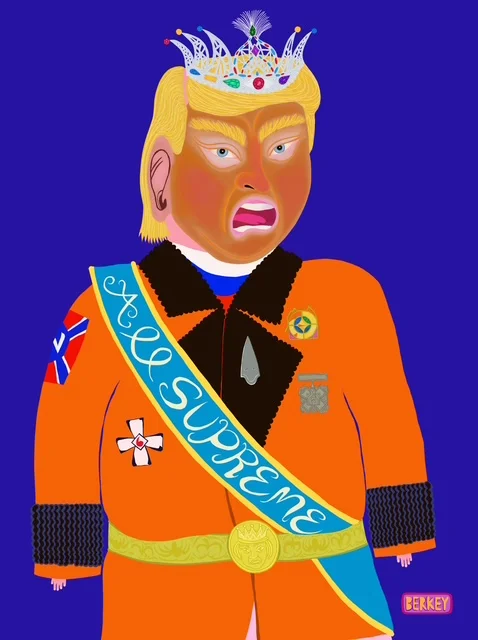
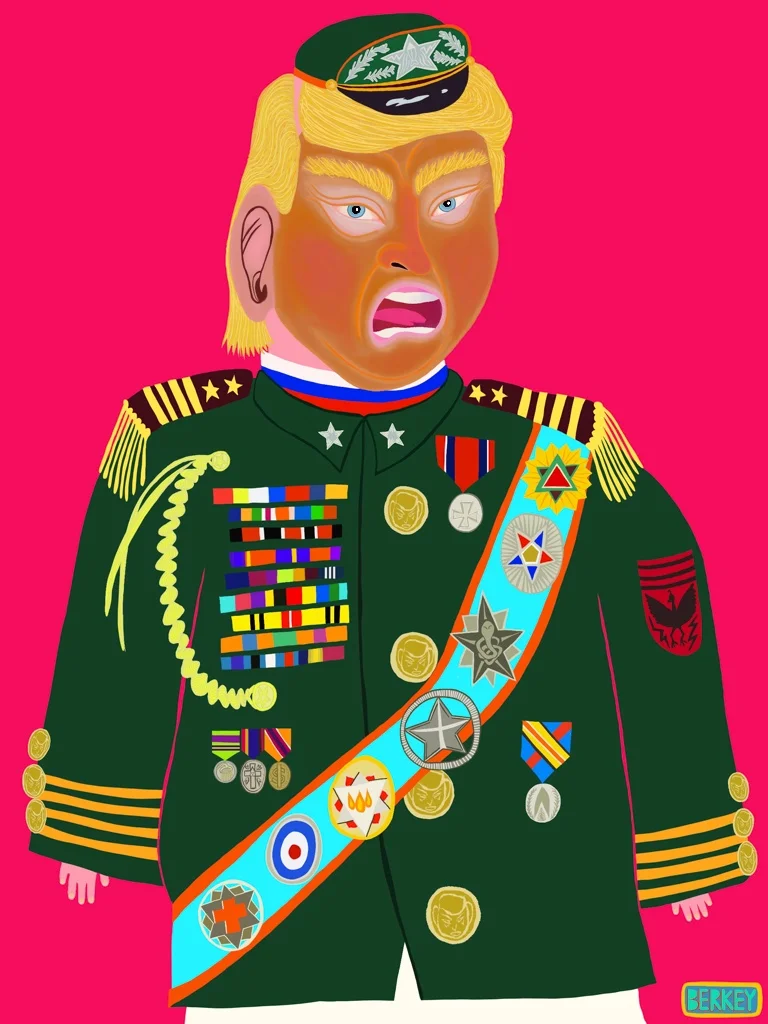
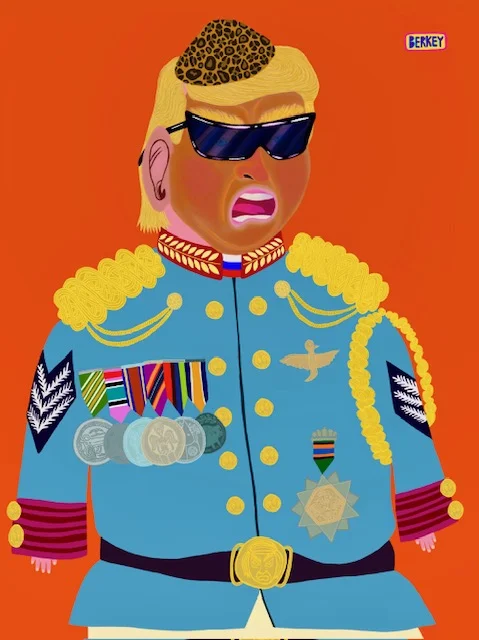
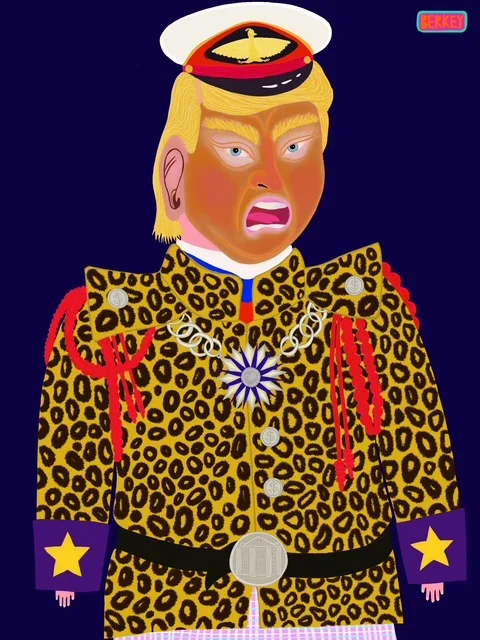
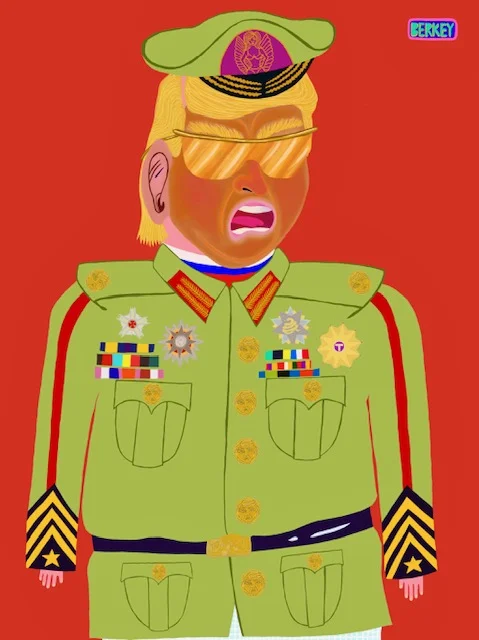
Over time, her focus shifted from the most obnoxious personalities toward people she finds compelling or wants viewers to understand more fully. Research is central to the approach. Berkey looks for an element of a subject’s history that might add context to the face she is drawing. In one portrait, she placed Tucker Carlson against a wallpaper of sliced lemons. She had read that his mother was an artist who made a series of coffee tables featuring sliced lemons; Berkey used that detail to raise questions about how family relationships might shape a person.
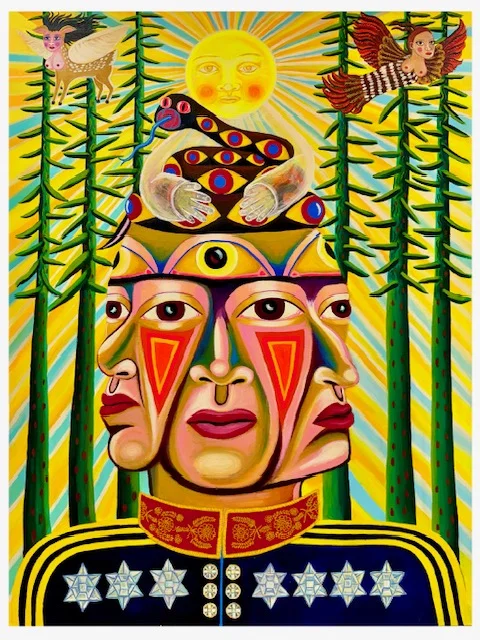
Scale changes the experience of these portraits. Berkey has displayed them in groups, arranged like a family portrait wall, so viewers encounter several large faces together. She watches people move from looking to quietly voicing their frustrations. For her, making art that invites that response is essential at a time when people are unsure how freely they can speak.
From sculpture to fabric and paint
Berkey once thought of herself primarily as a sculptor. She made painted papier-mâché reliefs, combining painting with raised surfaces, and did not imagine herself working on flat canvases. Her first flat canvas came only two years ago. Drawing on an iPad helped bridge illustration and painting, though she still sees a distance between those modes and hopes to bring them closer.
She now works across sculpture, digital illustration and acrylic painting, each with its own demands. Sculpture remains a liberating process for her because it offers many possibilities without a fixed set of rules. Painting, meanwhile, has been growing in scale. Berkey recently began working on drop cloth, a surface she sees as opening up new options for expansive images and possible installation work.
The Mamdani skirt grew from the same habit of carrying visual references between forms. Berkey started with a portrait she had drawn and manipulated it into a repeatable fabric pattern. She has long been drawn to West African wax cloth, also known as Ankara fabric. With the Mamdani family’s roots in Africa, she felt that reference could enter the design subtly.
Red was her starting colour, though she connected it to a familiar red hat and wanted to reclaim its presence in the piece. She added a raised fist as a symbol of hope and collective courage, then kept the palette close to red, white and blue to express an inclusive American identity. Berkey sewed the skirt herself and wore it to the AI-AP party. She says the response was enthusiastic, just as she had hoped.
Berkey also points to Salaam Bombay as a lifelong favourite film that shaped her. A connection she only recently discovered made that influence feel newly resonant. It’s another example of how experiences can surface in unexpected ways across an artist’s work.
Painting at a larger scale
Her current focus is oversized painting on drop cloth. Berkey builds up acrylic in layers, aiming for the rich texture the paint can create on the material. She wants to keep making larger works and hopes eventually to construct a walk-in installation where visitors can encounter the paintings at close range.
One planned piece is called Ugly on the Inside. Berkey imagines it as a possible response to current affairs, though she is still working toward the form she has in mind. The direction connects with an earlier impulse: at university, she made large cardboard signs depicting world leaders. After years working across other materials, she finds herself returning to that scale and subject matter with a broader set of tools.
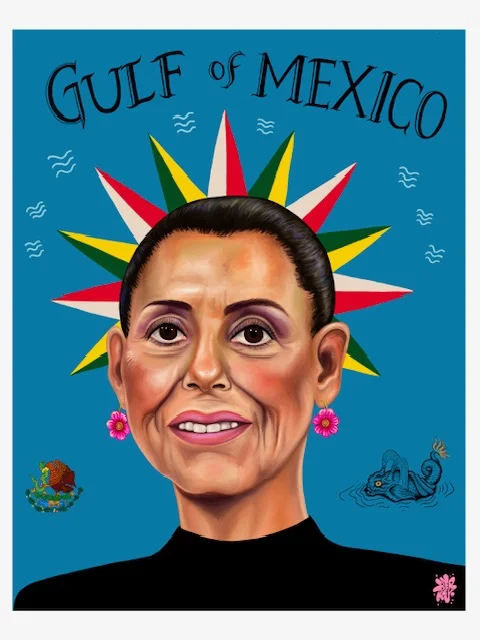
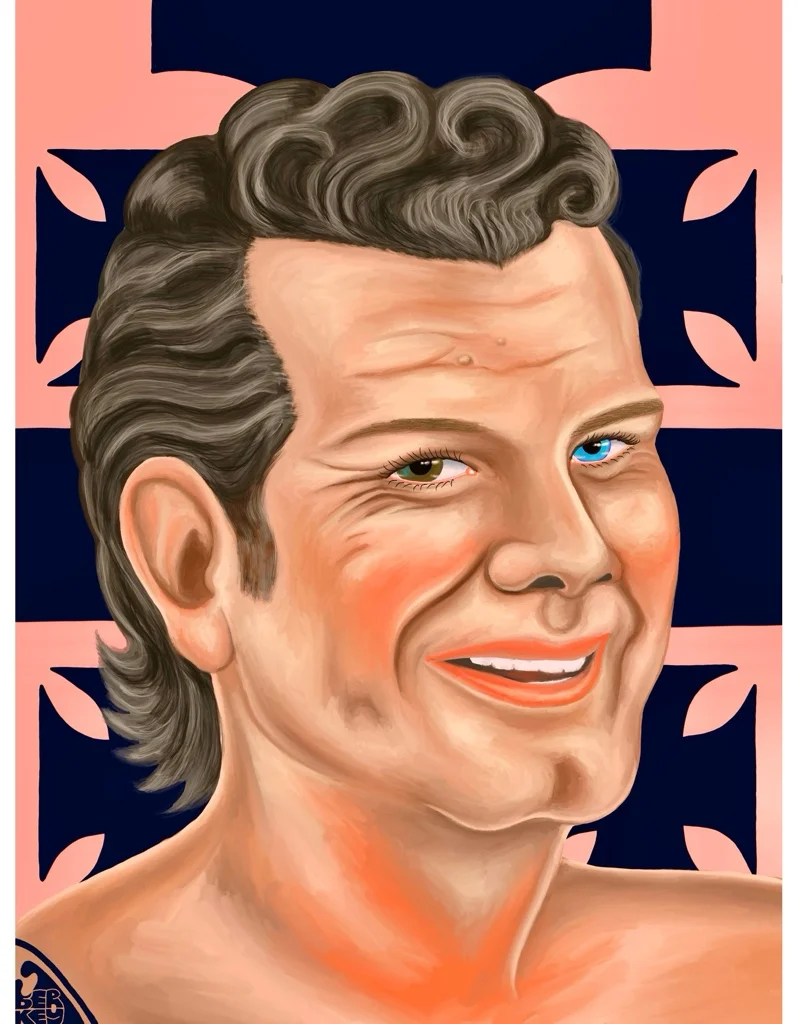
Berkey’s work is moving between image, object and space. The iPad drawing can become a painting; a portrait can become a fabric repeat; a large canvas may become an environment. The practical thread is her willingness to let one medium lead into another. Her next challenge is to bring those strands together in a form that gives viewers room to look closely, make connections and respond.
The post The Daily Heller: Mamdani Skirt Drawing Draws Attention appeared first on PRINT Magazine.
| Rev | Description | Date |
|---|---|---|
| A | Issued for reading | |
| B | Viewed 472 times | Current |


