Thomas Nast’s Santa Claus and the Images That Shaped Christmas
- Project
- Graphic Design
- Drawn by
- Steven Heller
- Issued
- Sheet
- A-61
From Nast’s 1862 drawings to Coca-Cola’s annual Santa, illustrators built a familiar Christmas figure from European stories and commercial art.
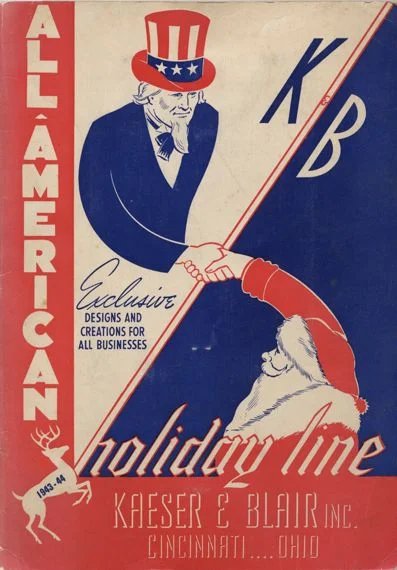
Santa Claus became one of Christmas’s most recognizable images through a series of illustrations that gave him a face, a home and a growing cast of companions. Thomas Nast’s drawings for Harper’s Weekly helped set that visual story in motion in 1862. Later artists, including Norman Rockwell and Haddon Sundblom, carried it further, turning a figure rooted in European traditions into a familiar presence in American commercial art.
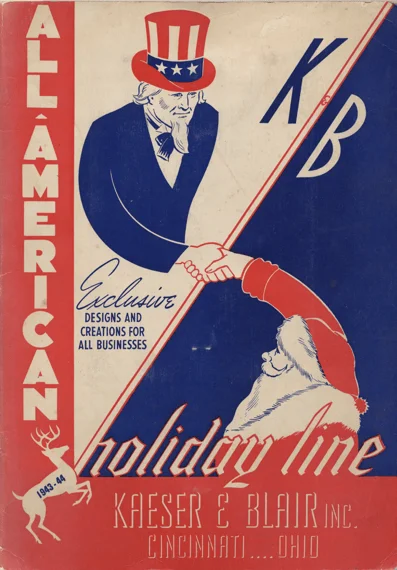
Nast was born in Bavaria and brought memories of Saint Nicholas into his work. The fourth-century bishop was associated with generosity and gift-giving, and was often pictured with a tall miter, a flowing robe and a long white beard. European Saint Nicholas Day, observed on Dec. 6, was already a gift-giving occasion. Nast’s version carried that association into a new setting: a Christmas figure who rewarded well-behaved children with toys.
The timing gave the image an added purpose. Nast drew Santa during a difficult period for American families, hoping his work would lift the spirits of soldiers and their loved ones. His illustration combined a recognizable folk figure with an immediate emotional appeal. The result wasn’t simply a portrait of a kindly visitor; it suggested continuity, family and generosity at a moment when those ideas mattered.
Building Santa’s visual world
Nast expanded the character beyond his appearance. German folk traditions supplied elves, who became Santa’s helpers, while his drawings gave the figure work to do and a place to do it. In “Santa Claus and His Works,” published in 1866, Santa appears as a prolific toymaker. Nast’s 1869 collection of drawings, accompanied by a poem from George P. Webster, located his workshop at the North Pole. These details made the character feel like the center of an entire imaginative system.
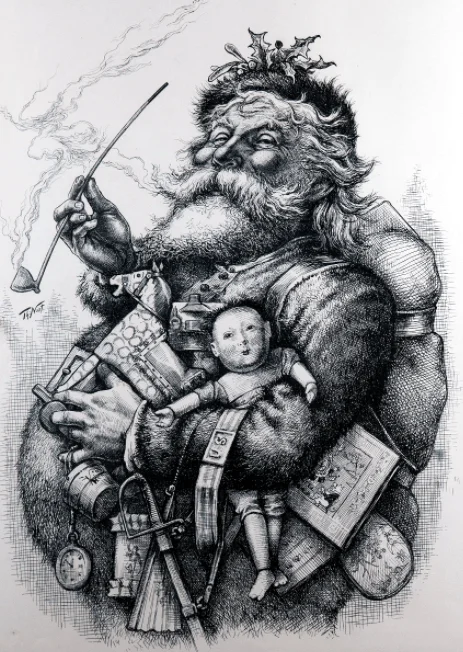
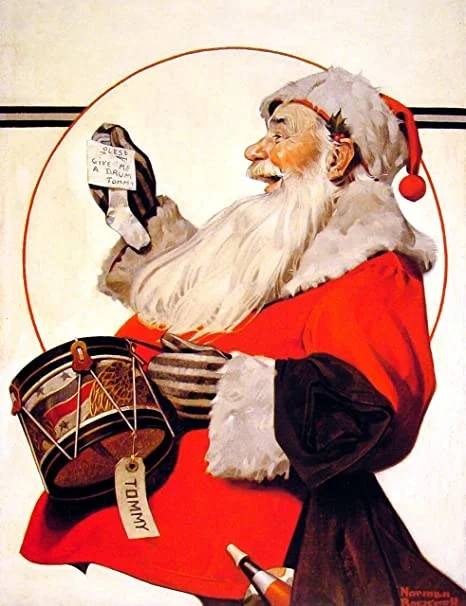
That system kept changing as artists drew on it. Nast’s 1881 “Merry Old Santa Claus” presented a jovial, portly figure, a look that helped shape later depictions. Norman Rockwell’s 1920 Santa cover for The Saturday Evening Post extended the familiar image into magazine illustration. Each version made Santa legible at a glance while giving the artist room to adjust his expression, pose and personality.
The visual shift from folk character to widely repeated commercial image reached another stage in 1931. Haddon Sundblom painted Santa for Coca-Cola advertising, depicting him as a rosy-cheeked, rounded figure. Sundblom used himself as a model and produced a new scene each year for 33 seasons. Repetition mattered: annual appearances let audiences meet the same recognizable character in fresh settings. Coca-Cola’s advertisements placed Santa among other seasonal imagery, including snowmen and reindeer, and helped make Sundblom’s interpretation especially familiar.
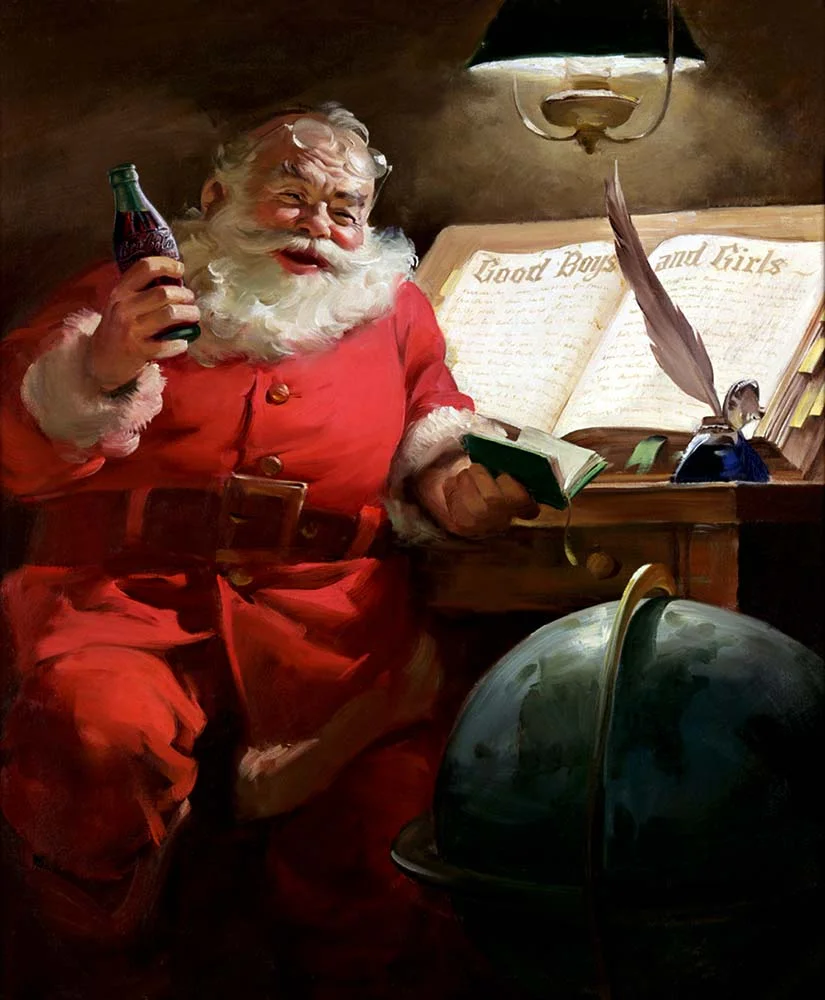
For designers, the sequence offers a useful example of how a character accumulates meaning over time. Nast established a look and a narrative; later illustrators reinforced those cues through their own pictures. Sundblom’s yearly work shows how repetition can strengthen recognition while variation keeps a recurring image active. The figure’s familiarity came from many depictions, not one isolated drawing.
Christmas imagery beyond Santa
Santa’s popularity sits within a broader history of Christmas images and customs. The Roman Church set Dec. 25 as the date for celebrating Christmas in the fourth century, incorporating seasonal feasting and gift-giving associated with the Roman Saturnalia. Evergreen decorations also had older ritual connections. The source of a custom didn’t always determine how later generations would understand it: by the 16th century, Germans were decorating Christmas trees, creating fresh demand for ornaments and symbolic trinkets.
Christmas observances developed unevenly. English Puritans, influenced by John Calvin, rejected overt celebration of the holiday, limiting the production of festive images for a time. Later changes in custom helped bring seasonal decoration into wider use. Prince Albert’s support for Christmas tree decoration helped popularize the practice across the British Empire.
Literature added memorable details to the visual vocabulary. On Christmas Eve in 1822, New York poet Clement Clarke Moore read his children a poem called “An Account of a Visit From St. Nicholas,” now better known as “‘Twas the Night Before Christmas.” The poem named the reindeer, described their flight and staged Santa’s entrance through a chimney. Moore’s visitor was small, with a miniature sleigh and a little old driver—a playful scale that helps explain the narrow passageways Santa could manage.
Charles Dickens’s 1843 A Christmas Carol, illustrated by John Leech, added another memorable seasonal figure: the abundant, generous Spirit of Christmas Present. Around the same time, Sir Henry Cole created a Christmas card combining holiday imagery with a personal greeting. The card helped establish a format in which illustration could carry both seasonal symbolism and an individual message.
Seen together, these examples show Christmas imagery being made through illustration, writing, publishing and commerce. Santa’s enduring design rests on a few strong visual cues, but his story grew through details that artists and writers added across generations. Nast gave the character an influential form; the images that followed kept adapting it for new audiences and settings.
The post The Daily Heller: ’Twas the Icon of Christmas appeared first on PRINT Magazine.
| Rev | Description | Date |
|---|---|---|
| A | Issued for reading | |
| B | Viewed 508 times | Current |