Steve Heller’s Archive Recalls the Creative Freedom of Newspaper Illustration
- Project
- Graphic Design
- Drawn by
- Steven Heller
- Issued
- Sheet
- A-59
A rediscovered set of slides connects Steve Heller’s editorial archive to illustrators’ freedom to make striking covers for The New York Times Book Review.
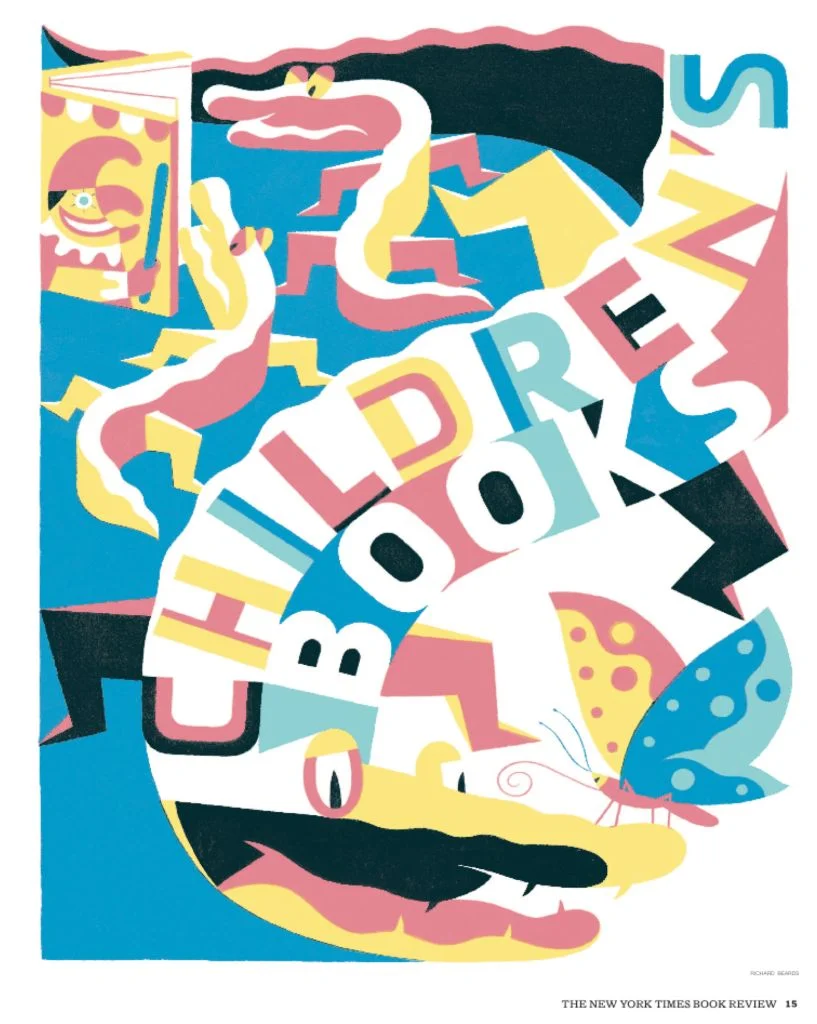
A set of old slides can do more than bring back a series of images. For former The New York Times Book Review art director Steve Heller, rediscovering slides of illustrated covers reopened a larger question: what happens to creative work when the records that preserve it are scattered, misplaced or thrown away?
Heller’s recollection starts with a familiar designer’s habit: saving the evidence. Boxes of work from his late teens onward accumulated in attics, closets and cabinets, filed away without a reliable catalogue. When he assembled his 2020 memoir, Growing Up Underground, material he had kept for decades helped him reconstruct the past. He had, he writes, collected personal ephemera as if it could justify his existence. With time, though, the distinction between collecting and simply accumulating became harder to ignore.
When saved work becomes an archive
The difference matters to working designers. A collection has some structure and purpose; an unindexed pile can hold equally valuable material but make it difficult to find, understand or pass on. That gap becomes especially visible when a project resurfaces in someone else’s hands. Illustrator Mirko Ilic recently posted a grid of New York Times Book Review covers made during Heller’s tenure as art director. Heller realized he didn’t have a copy of the grid or the issues it showed.
His research has since found a more organized home. With help from Beth Kleber, director of the SVA Milton Glaser Study Center and Archive, many feet of his material are now accessible for research. The collection includes common and rare items, though access still takes patience. For designers, the point isn’t that every sketch or printed piece needs institutional treatment. It’s that finding, identifying and describing material can turn private storage into a record other people can use.
Heller’s own move to a smaller apartment exposed the cost of poor organization. Among the belongings he discarded was a cache of Book Reviews gathered during the roughly 30 years he held the art director role. The loss was substantial: issues that represented a lifetime of work had gone out with the household clear-out. A collection can be carefully kept for years and still disappear when its owner has to make quick decisions about space.
Editorial illustration with room to roam
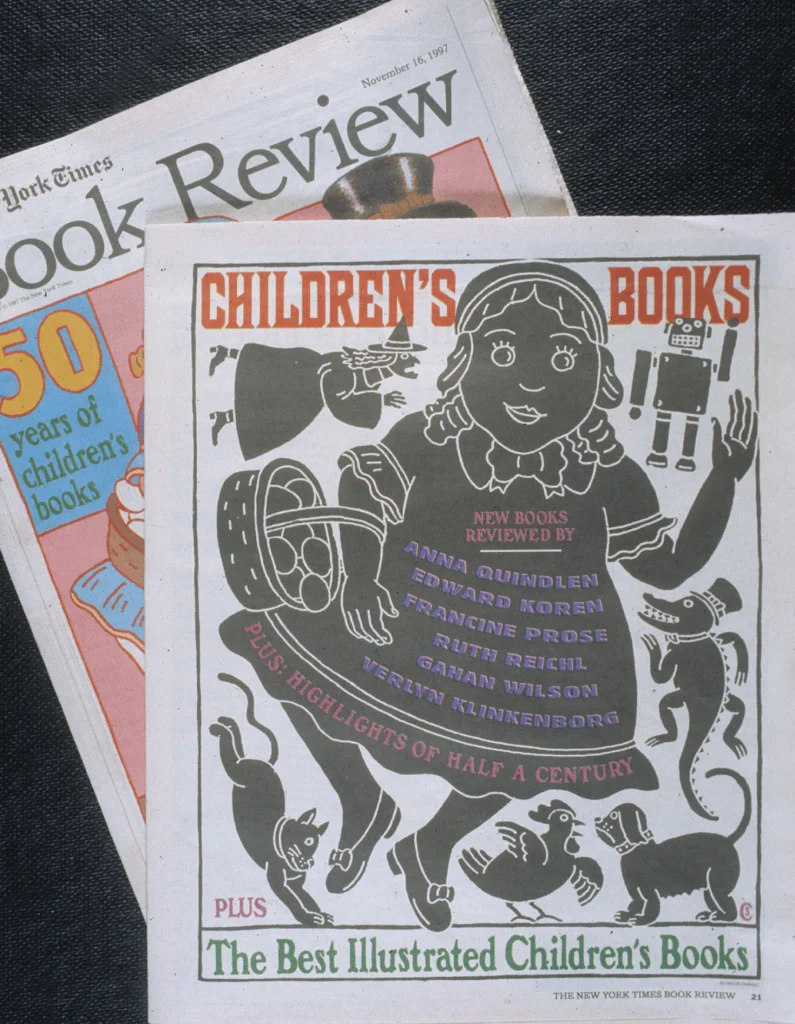
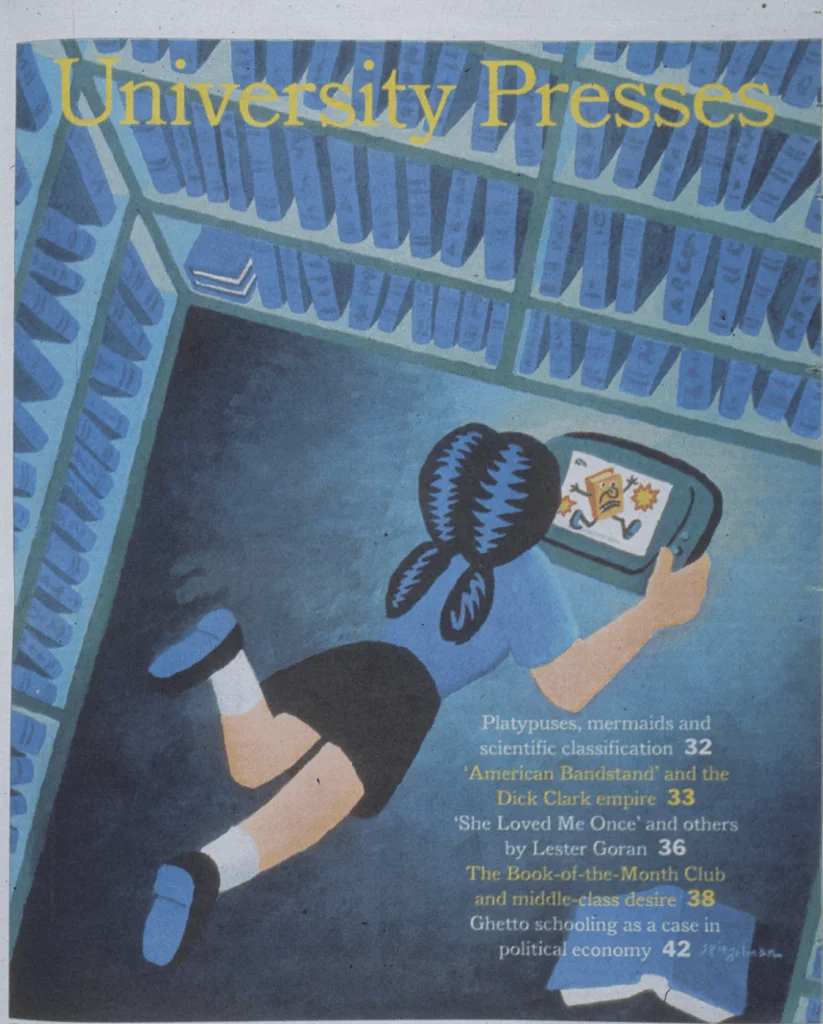
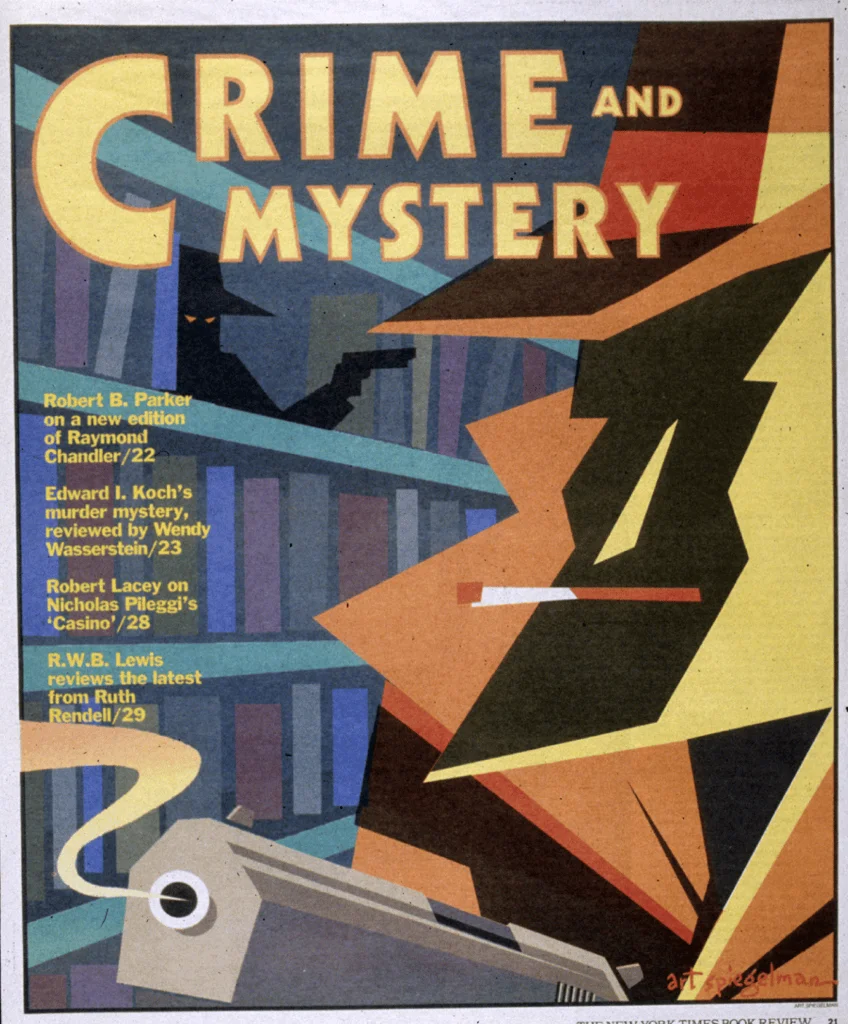
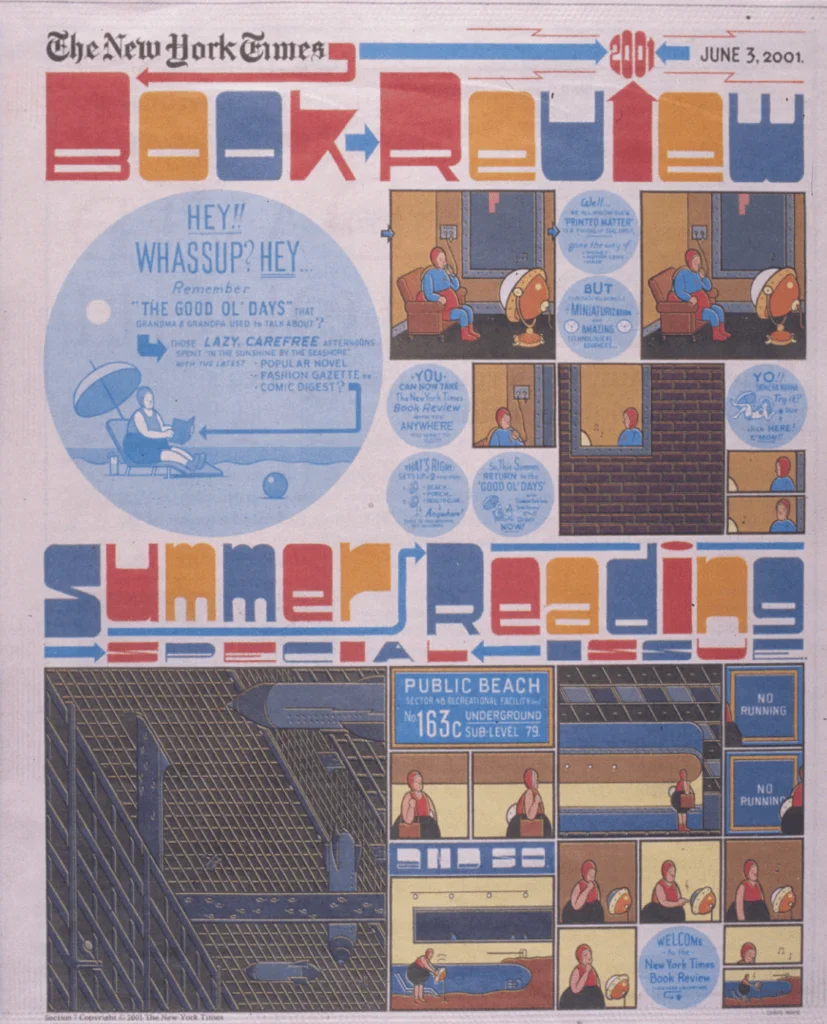
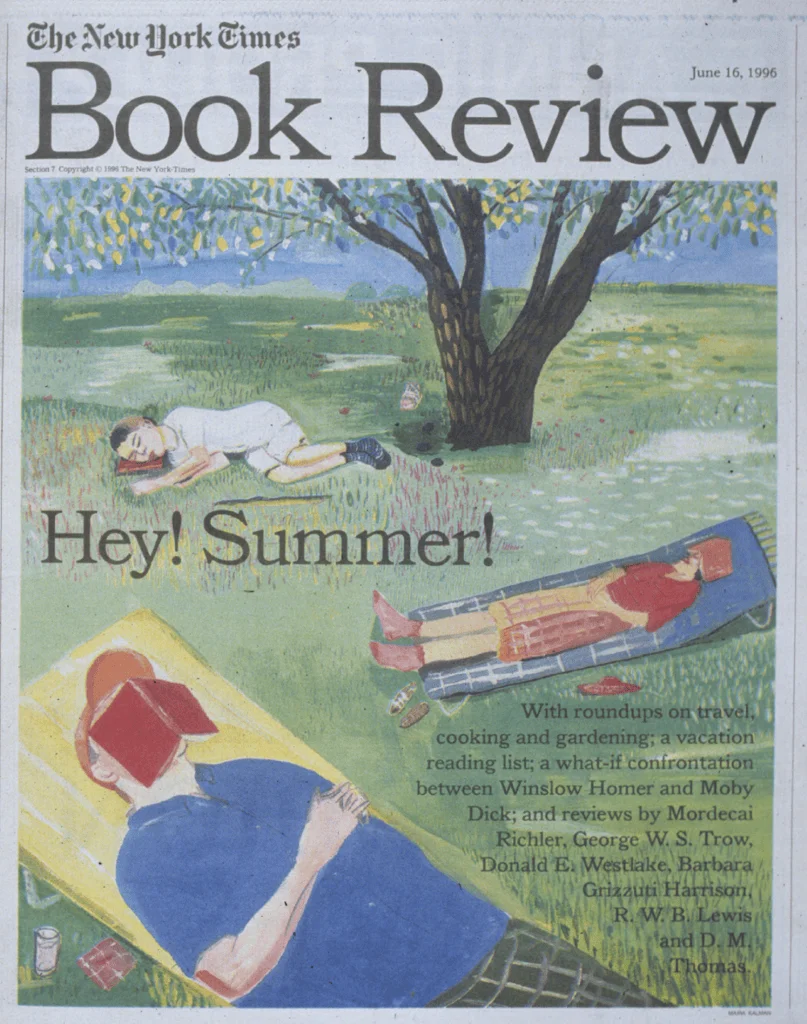
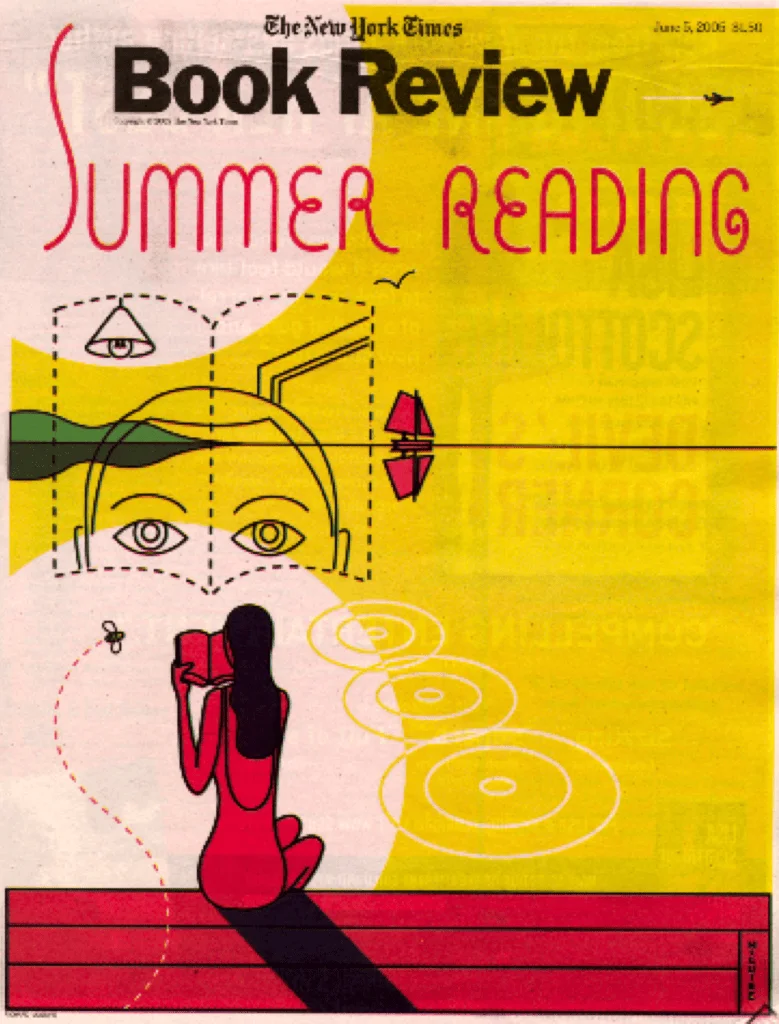
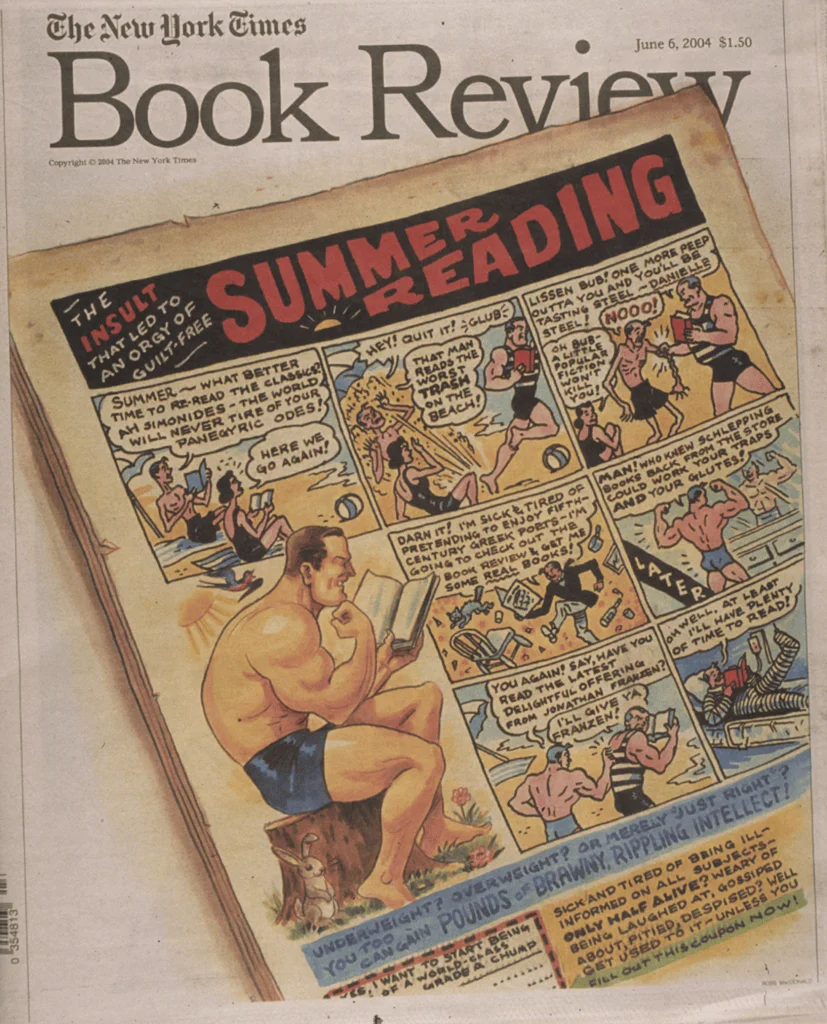
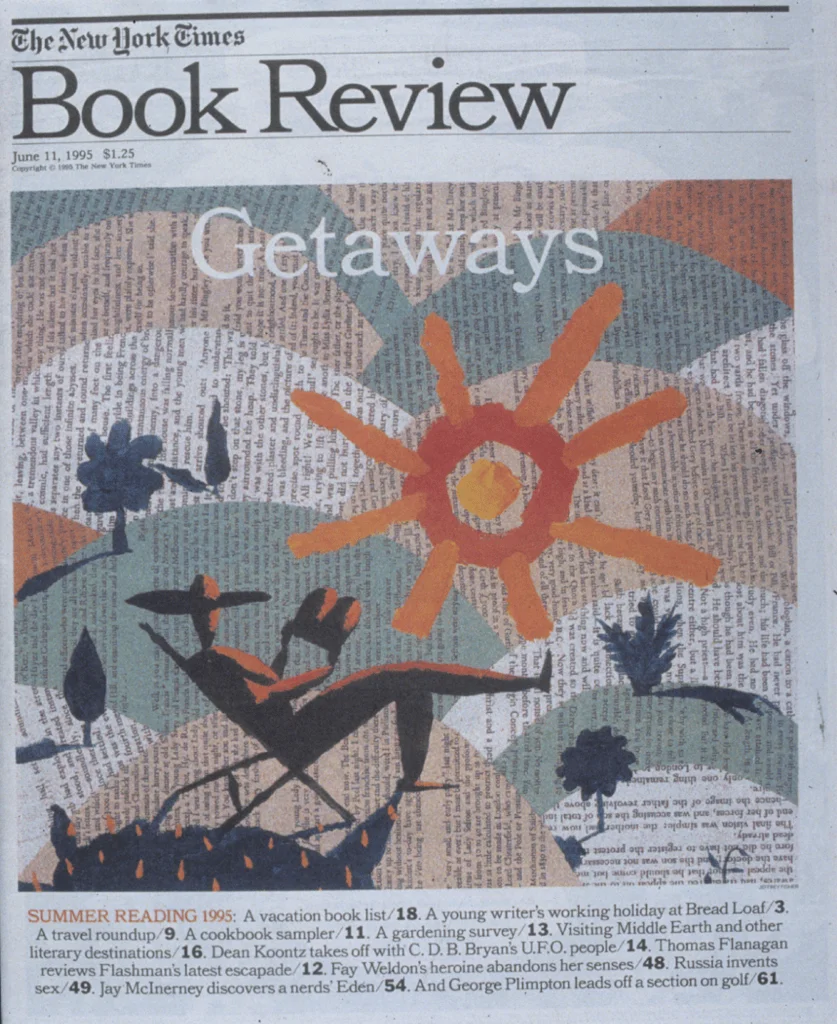
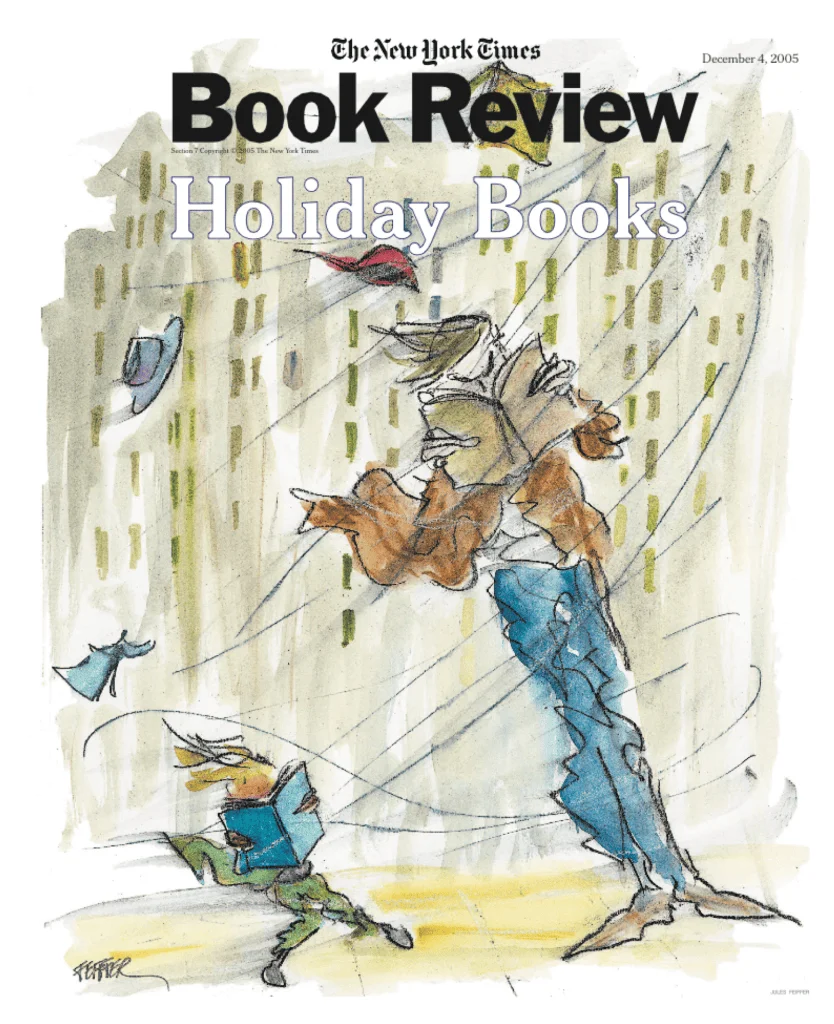
Some slides survived. Heller found them among the remnants of what he calls his hoard, and they may help if he makes a second memoir focused on his love of illustration. The images document special-section covers that he remembers as personal favourites. His brief to the illustrators was open: they could do what they wanted, provided the result was striking.
That kind of instruction gives an illustrator a wide field to work in while keeping one clear editorial test in view. The art director defines the desired effect, then lets the maker decide how to reach it. In practice, such freedom can produce varied interpretations within a shared context: the cover has to catch attention and serve its section, but its visual language need not be dictated in advance. Heller’s account doesn’t identify the specific prompts or describe each image’s palette, composition or technique, so the surviving captions are an important part of what the archive can tell us.
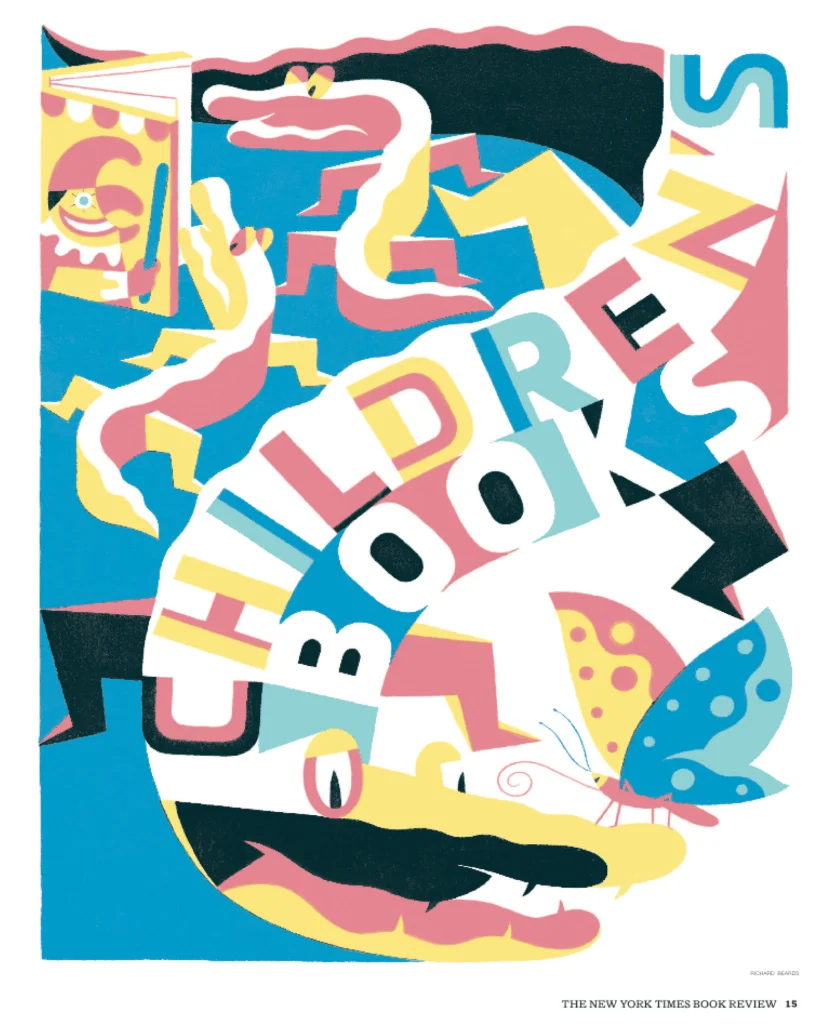
The group of credited artists spans distinct practices and generations. The covers shown here are attributed to Richard Beards, Steven Savage, Seymour Chwast, Steven Guarnaccia, Peter Sis, Art Spiegelman, Chris Ware, Robert Grossman, Maira Kalman, Richard McGuire, Ross Macdonald, Jeffery Fisher, Roger Law of Spitting Image, Jules Feiffer and Ed Fella. Two entries credit Spiegelman, giving the set a glimpse of the range of contributors without turning it into a complete account of the publication’s illustration history.
What the slides preserve
Each caption identifies an artist, but the images also point to a working relationship: an editorial commission, a defined publishing context and room for individual decisions. That record can be useful to designers studying how art direction sets limits without prescribing every move. It can also prompt practical questions: who made the image, what section did it serve, and what did the brief leave open? Without notes, dates or copies of the original issues, some answers may remain out of reach.
Heller’s story makes preservation feel less like a tidy ending than a continuing design task. Keep material, but give it enough context to remain findable: names, dates, publication details and a description of what the item is. The slides have returned a group of illustrated covers to view, while the missing issues mark what didn’t survive. For anyone managing a creative archive, that combination is a useful reminder to catalogue the work while its story is still close at hand.






| Rev | Description | Date |
|---|---|---|
| A | Issued for reading | |
| B | Viewed 619 times | Current |