Arts and Crafts Book Covers: The Cloth-Bound Designs That Came Before Jackets
- Project
- Graphic Design
- Drawn by
- Steven Heller
- Issued
- Sheet
- A-54
Malcolm Haslam’s book revisits decorated cloth covers from the Arts and Crafts movement, with designs credited to six artists between 1895 and 1908.
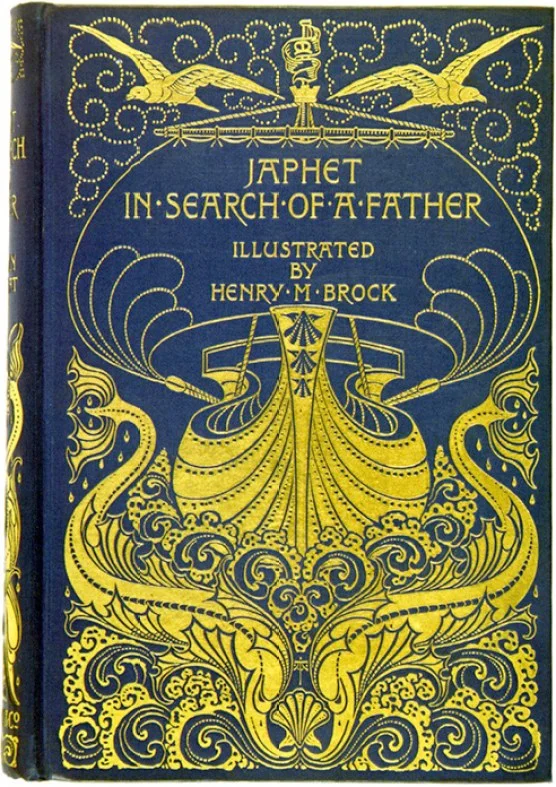
Before a separate jacket became a book’s main designed surface, its cloth cover had to carry the visual identity of the volume on its own. Malcolm Haslam’s Arts and Crafts Book Covers, published by Richard Denis in London, brings that practice back into view through decorated covers associated with the late-19th-century Arts and Crafts movement.
The distinction matters to anyone thinking about book design as more than a front-cover image. A cloth-over-boards binding makes the cover part of the object itself: its design is applied to the bound volume, rather than supplied as a removable outer layer. That changes the designer’s task. The visual treatment has to belong to a book that will be handled, shelved and seen as a physical object, while also giving the volume a recognizable face.
A designed surface in its own right
Today, a reader may first encounter a book as a small image on a screen. A jacket, when there is one, often serves as the most visible piece of its design. The earlier cloth cover occupied that role more directly. Its decoration wasn’t a preliminary layer waiting to be covered; it was the book’s public surface.
Haslam’s subject is the “stamped” cover design associated with the Arts and Crafts movement. The source places decorated covers from around 1860 within that history. The word “stamped” points to a design applied to the binding, a process that connects the graphic treatment to the material construction of the book. Here, image and typography weren’t only composed for a flat page or a printed jacket. They were made to sit on cloth-covered boards.
That object-based approach offers a useful prompt for contemporary designers. A cover can be considered through its material, structure and use, as well as through its image. Even when a project now appears chiefly on a screen, asking how its visual identity works across formats can clarify what the design needs to communicate and which details carry that meaning.
Six designs, six credits
The images accompanying the book’s discussion span works credited to six designers. A.A. Turbayne’s example is dated 1895, as is Fred Mason’s. Gleeson White’s is dated 1897. Selwyn Image and Laurence Housman are each credited with a design from 1899, while Paul Woodroffe’s example dates to 1908. Together, these captions trace the material across more than a decade.
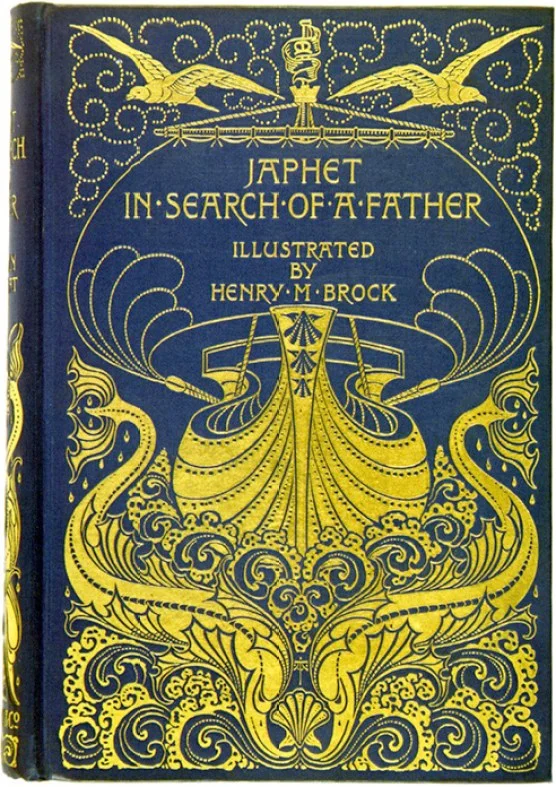
Designed by A.A. Turbayne, 1895

Designed by Fred Mason, 1895
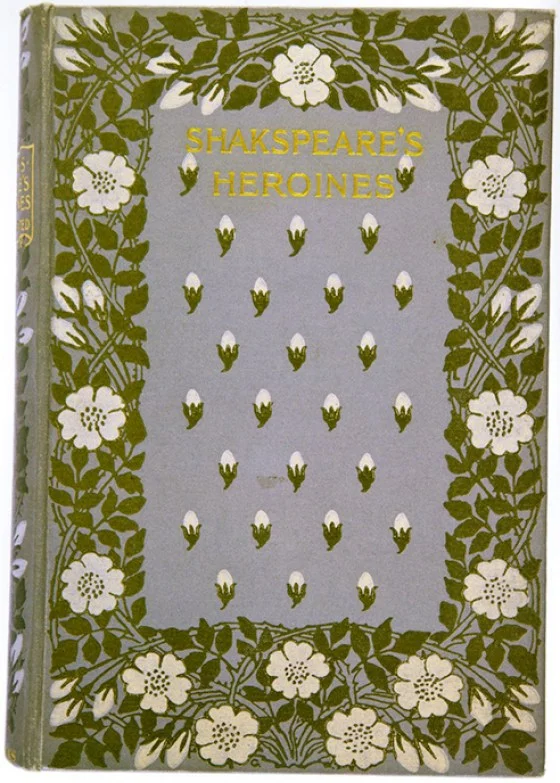
Designed by Gleeson White, 1897
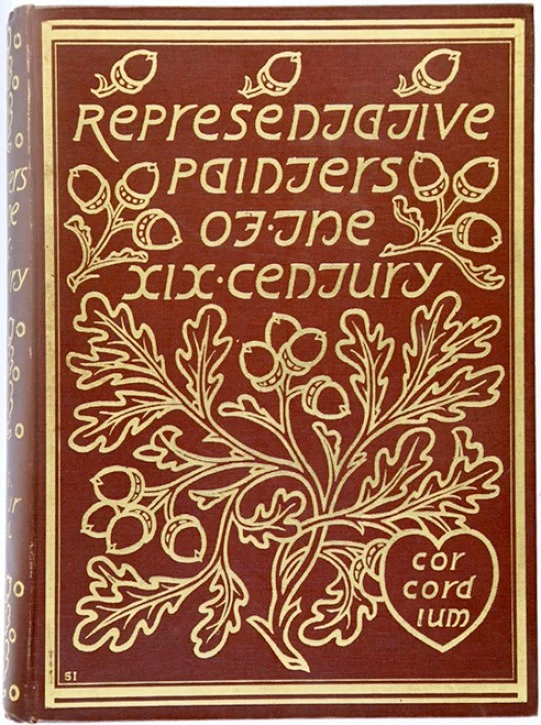
Designed by Selwyn Image, 1899
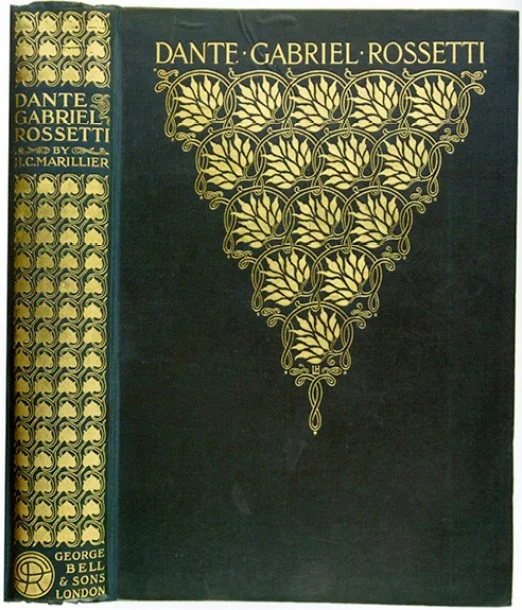
Designed by Laurence Housman, 1899
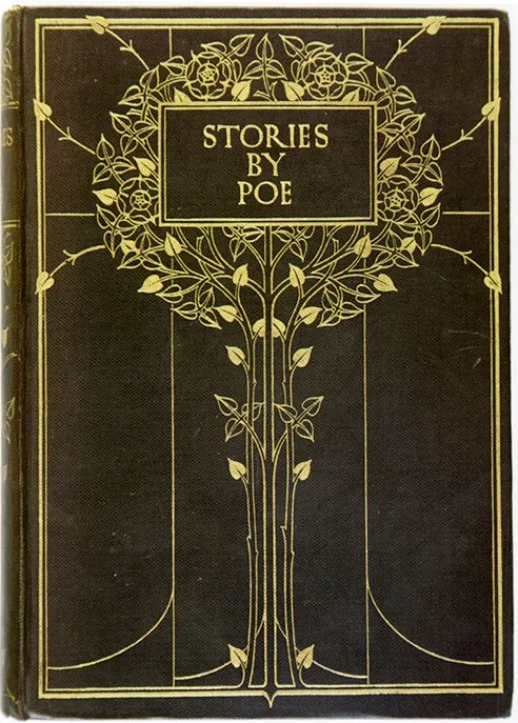
Designed by Paul Woodroffe, 1908
The captions give designers and dates, but the value of seeing the covers together is broader than a list of names. A sequence like this lets readers consider how a shared interest in decorated bindings could support distinct individual work. It also invites close looking: where the decoration sits, how the surface is organized, and how the design relates to the book’s shape. Those are practical questions for any designer studying work made within a common visual culture.
What the book preserves
Haslam is described as a leading scholar of the period. His account covers the movement, its designers and their interest in decorated covers, and the source characterizes the book as an especially inclusive treatment of the subject. The photographs are central to that case. They let readers examine examples of the covers alongside the historical account, instead of treating the binding as a detail that can be separated from the design.
That documentation also gives the book a place in the history of graphic design. Printed books change as reading habits and formats change, but older examples can still make the designer’s choices legible. Here, the material record is the starting point for thinking about how a cover can identify a book, reward attention and express a period’s design interests through a crafted surface.
Paper and print may take different roles as more reading happens on pads and pods, but the source expects paper to remain in use for some time. The decorated cloth binding may be a less familiar format now; that makes a book documenting its examples more useful as a visual reference. For designers working with covers, packaging or identity, Haslam’s collection offers a reminder to consider the whole object and the surface a reader actually encounters.
The post The Daily Heller: What the Best-Dressed Books Wore Before Jackets appeared first on PRINT Magazine.
| Rev | Description | Date |
|---|---|---|
| A | Issued for reading | |
| B | Viewed 711 times | Current |


