The Story of Ferdinand at 90: Robert Lawson’s Linework and a Bull Who Would Rather Sit
- Project
- Graphic Design
- Drawn by
- Steven Heller
- Issued
- Sheet
- A-48
A museum exhibition revisits Munro Leaf and Robert Lawson’s picture book, where quiet humor, precise ink drawings and a flower-sniffing bull endure.
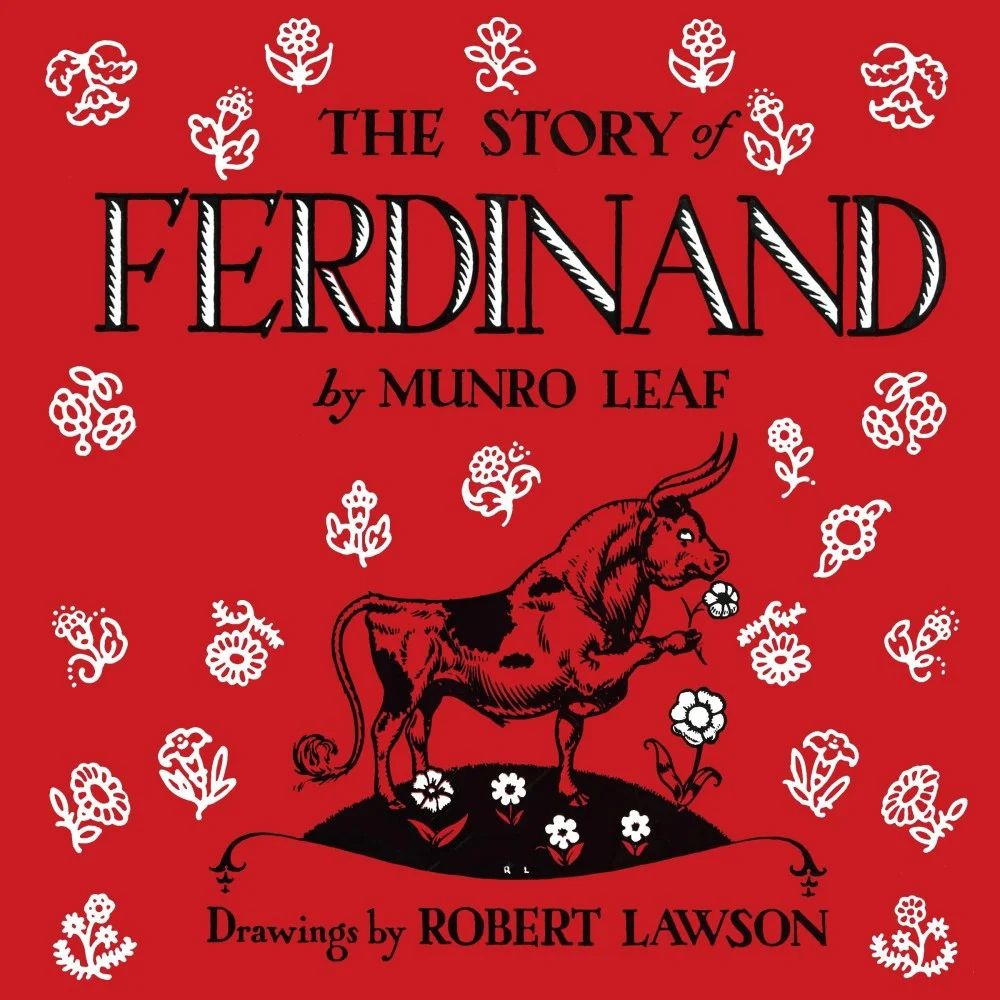
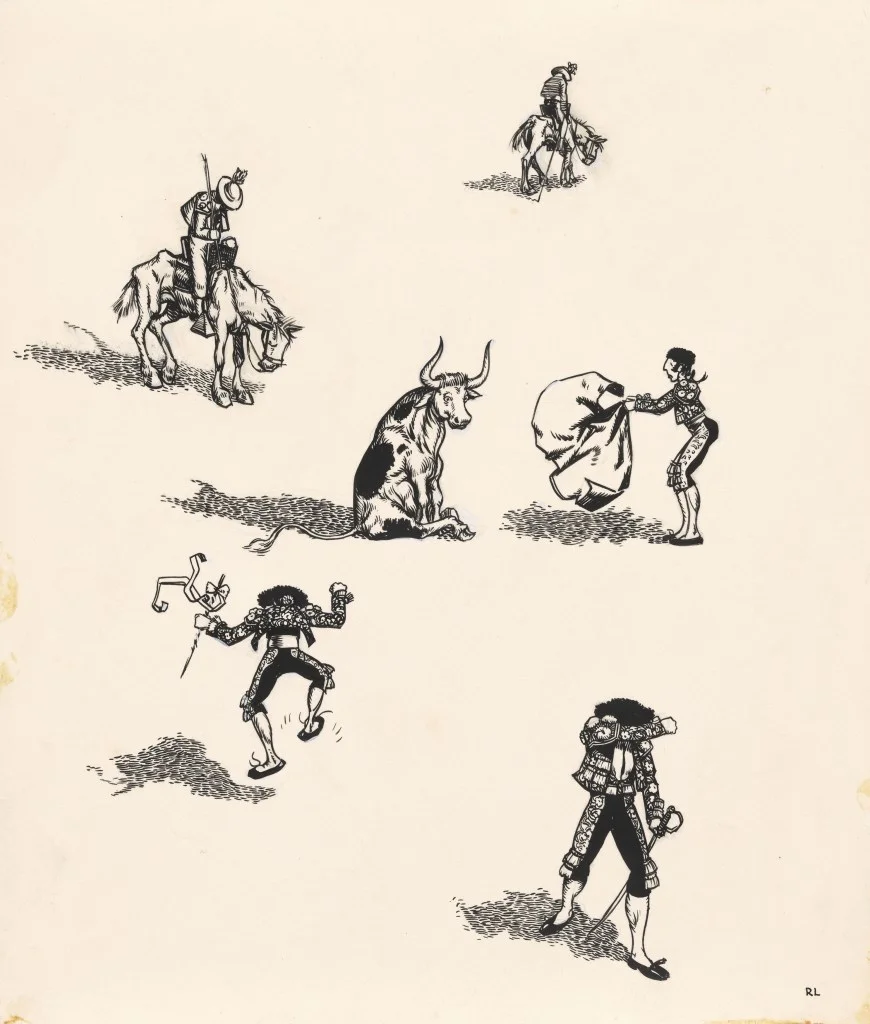
What gives The Story of Ferdinand its staying power is the fit between Munro Leaf’s dry, gentle story and Robert Lawson’s sharply observed drawings. The bull at its center would rather smell flowers than charge, and the book gives that preference room to be funny, peculiar and quietly memorable. As the 1936 picture book turns 90, an exhibition at The Eric Carle Museum of Picture Book Art revisits how text and image made Ferdinand an enduring character.
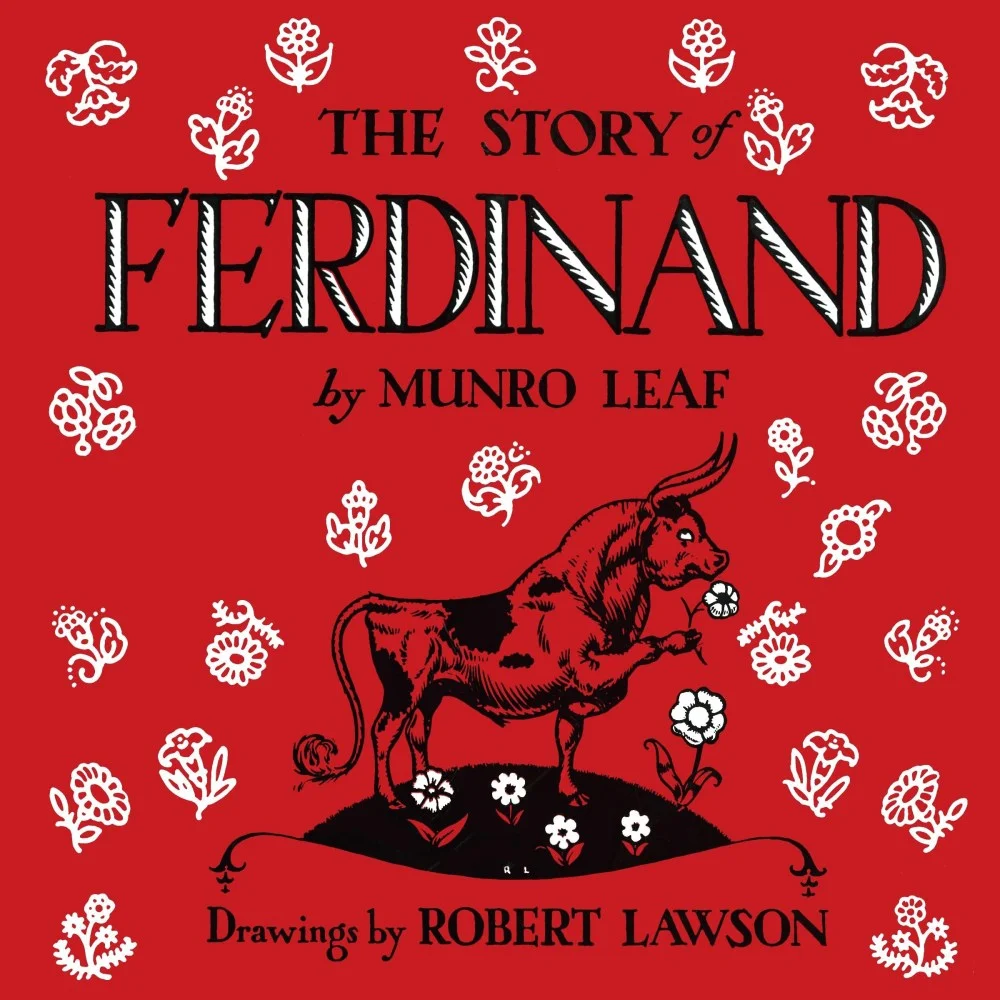
Jane Bayard Curley, the exhibition’s curator, remembers loving the book as a child for its humor and graphics, rather than for a lesson she was expected to take from it. That distinction matters. Ferdinand’s preference for stillness has often invited big interpretations, but the book’s first pleasures are more immediate: an unusual bull, a joke that unfolds across the page, and drawings that reward a second look.
A short story with a long afterlife
Leaf, who wrote more than 40 children’s books, reportedly finished Ferdinand in about 40 minutes. His wife had told him to stop hanging around while she ironed, and he sat down to write. Curley says he had two simple aims: to cheer up his friend Lawson, who was in a difficult stretch at work, and to make children laugh at the idea of a bull who would rather sniff flowers.
The book appeared in September 1936 and, Curley says, has remained in print ever since. Its reception quickly exceeded the scale of that quick beginning. By 1938 it was outselling Gone With the Wind. At the same time, events in Spain and Europe shaped the way some adults read the story. Ferdinand attracted conflicting labels and was banned in Spain and Nazi Germany. Leaf, Curley says, was baffled by those readings and maintained that his purpose was fun and laughter.
That history forms part of the book’s public life, but it doesn’t account for its appeal on its own. Curley points to admirers including the Roosevelts, Gandhi and Thomas Mann. In 1968, Linda Johnson Robb brought copies to Anwar Sadat and Menachem Begin while accompanying her father to peace talks in the Middle East. The story has traveled through changing contexts without losing its small, comic premise: a bull can be content with flowers.
Lawson’s visual jokes reward attention
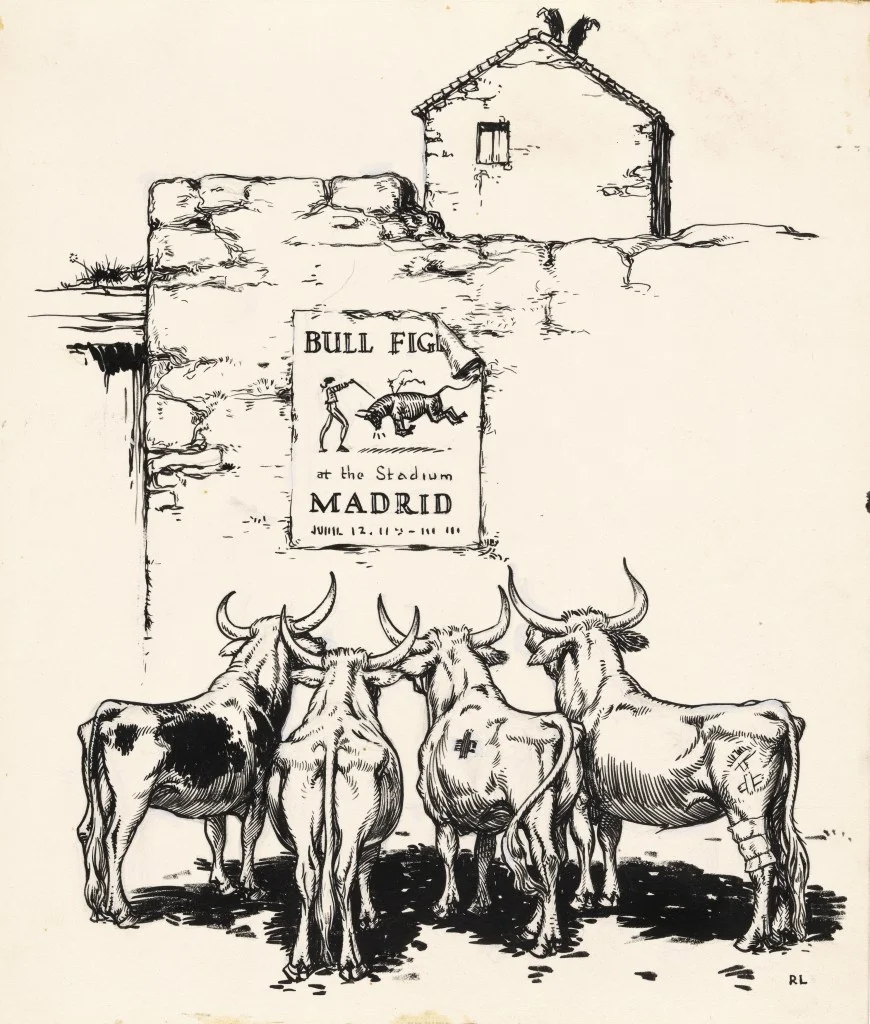
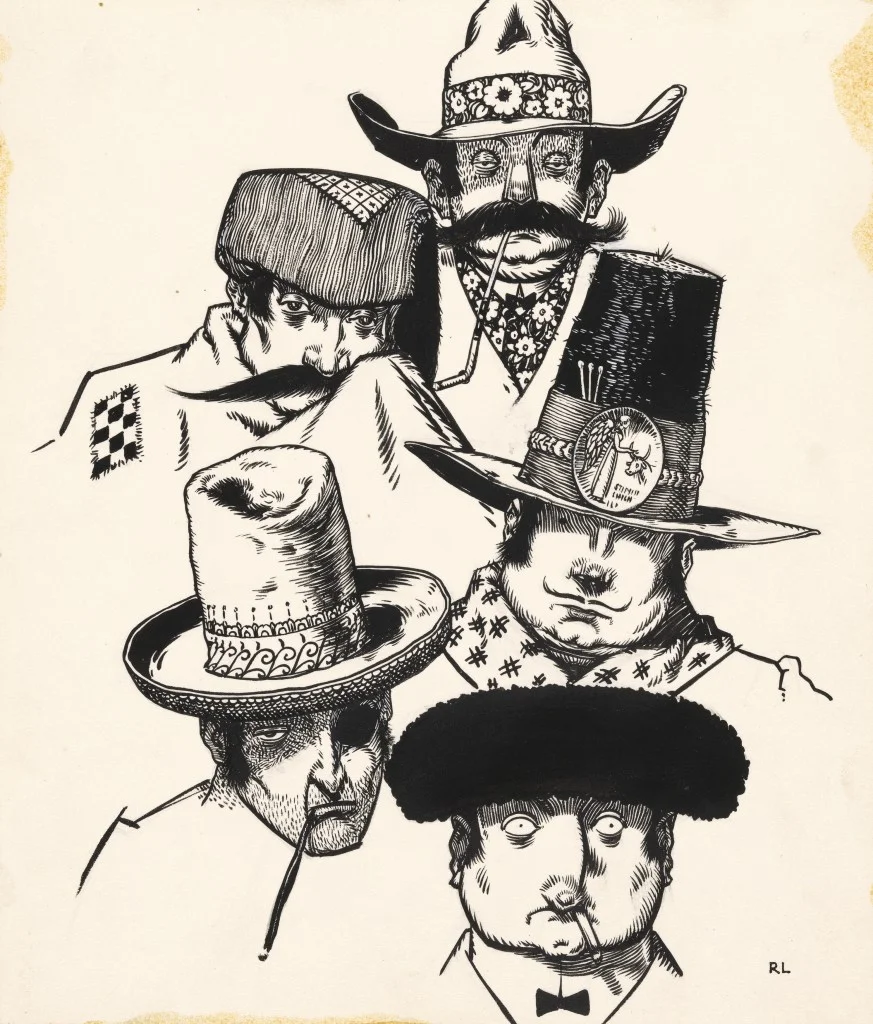
Lawson makes that premise vivid through controlled pen, brush and black ink. Before drawing the book, he spent three months at the New York Public Library studying magazines for pictures of Spanish life and scenery. His models included British illustrators Arthur Rackham and Edmund Dulac, known for fairy tales and fantasy. Leaf challenged his friend to draw something beyond fairies and elves—perhaps a bull—and Lawson met the task on his own terms.
The result isn’t simply descriptive. Lawson’s line gives the animals character, while small details turn the page into a place for visual discovery. Curley singles out the cork tree as her favorite joke. Corks, of course, don’t grow in bunches like grapes; Lawson’s drawing makes the mistaken image part of the fun. Once readers catch the gag, they’re primed to look for more.
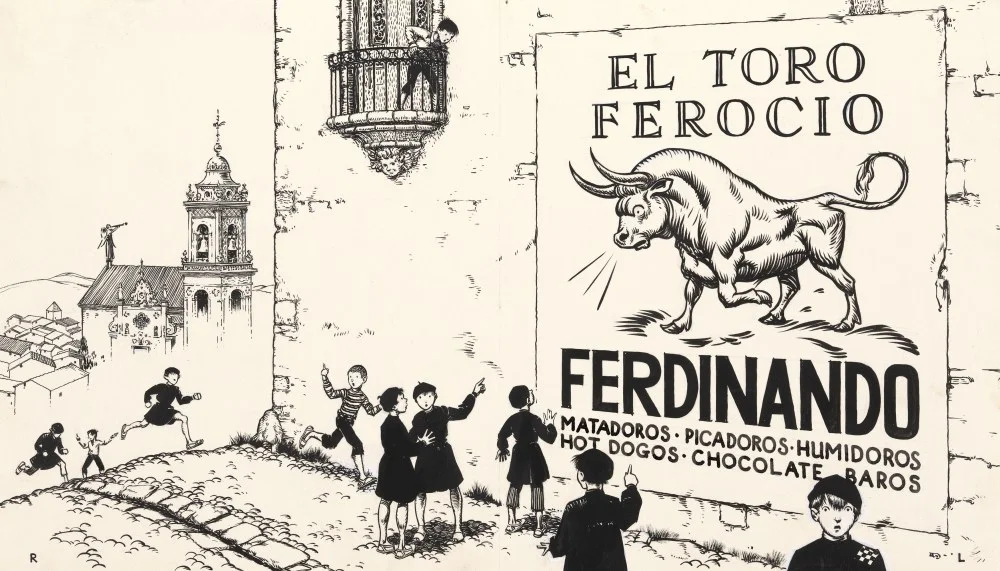
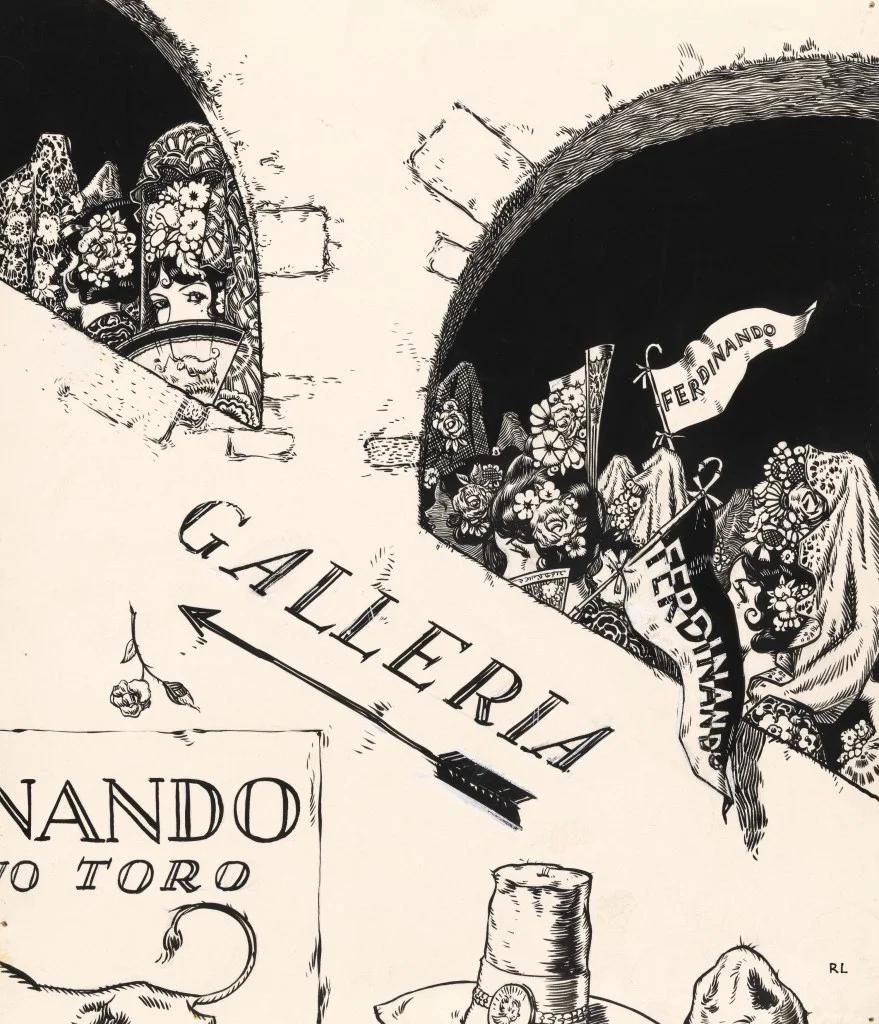
The jokes begin before the story proper. Lawson’s endpapers advertise “El Toro Ferocio Ferdinando” alongside deliberately mangled Spanish phrases for hot dogs and chocolate bars. Neither Leaf nor Lawson spoke Spanish or had visited Spain, Curley notes. The humor comes from the artists’ playful invention, not a claim to documentary accuracy. At the other end of the book, a bedraggled flower delivers one last visual punchline.
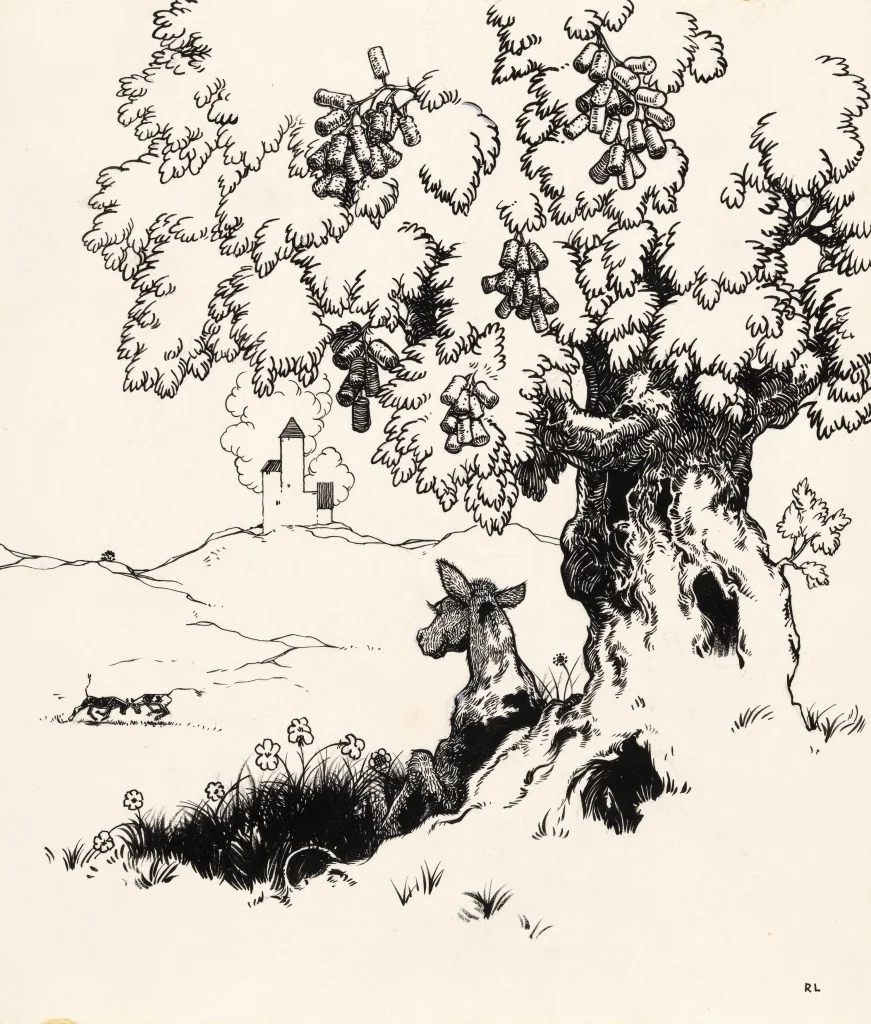
For the exhibition, Curley asked the museum’s curator, Isabel Ruiz, to hang bunches of corks on a small apple tree in the museum garden. It gives visitors a chance to sit beneath a version of Ferdinand’s favorite tree. The gesture carries the book’s humor into the exhibition space while keeping its pace: look closely, get the joke, then sit for a while.
From picture book to popular character
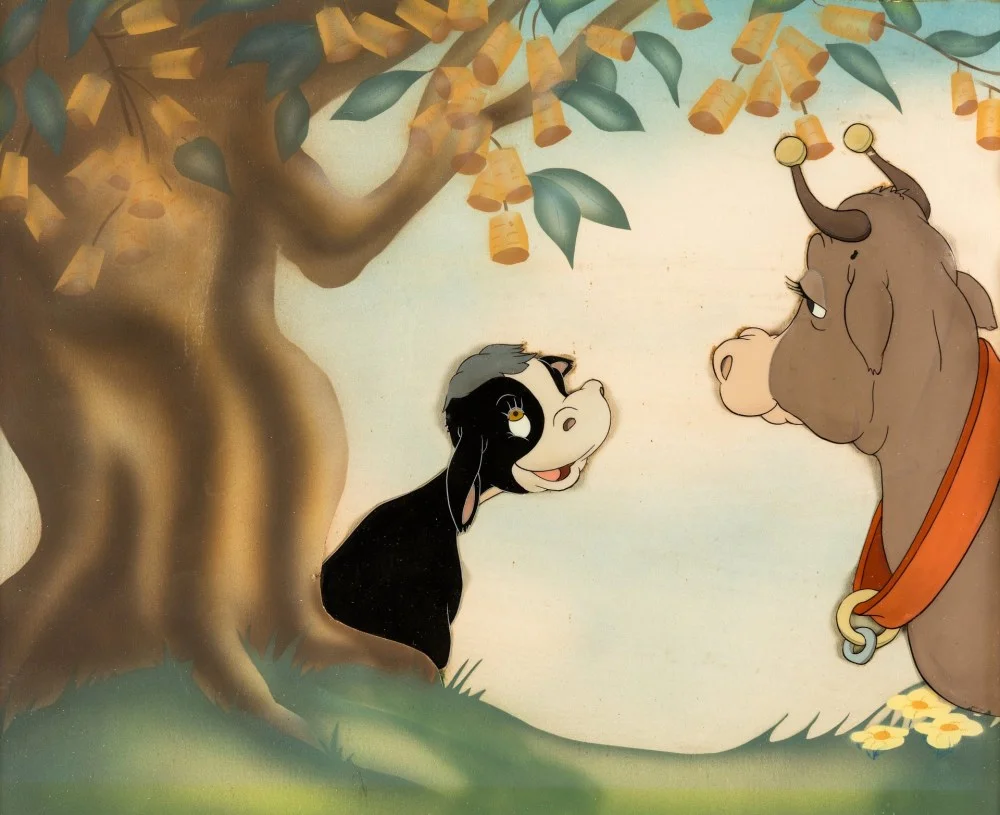
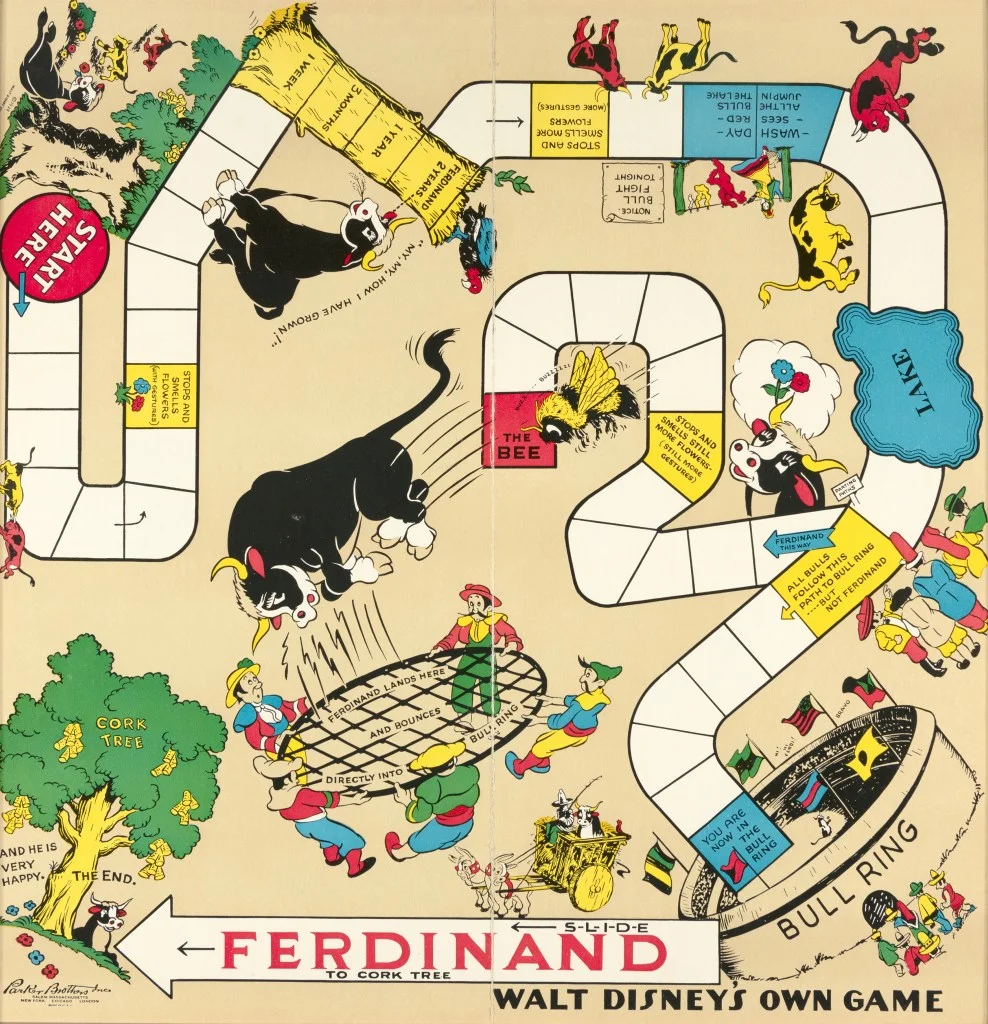
Disney expanded Ferdinand’s reach. The 1938 film adaptation brought the character into color and, in Curley’s view, a wider public imagination. Its Academy Award and broad merchandise presence helped make Ferdinand a familiar figure of American childhood. The exhibition includes two animation cels and examples of the objects that followed: a song, a 38-foot Macy’s Thanksgiving Day Parade balloon, toys, games, jewelry and even Ferdinand soap.

Curley likes the Disney film, while recognizing that it carries the character into a different register. The original book’s spare humor and Lawson’s monochrome drawing leave space for readers to notice gestures and visual details. The film and the merchandise made Ferdinand more widely recognizable; they also gave the character an afterlife beyond the page. Eight decades later, a feature-length film starring John Cena showed that the bull could still draw a screen audience.
The exhibition places these versions alongside the original art, inviting visitors to see how one character moves between formats. A book, an animation cel, a parade balloon and a board game each ask for a different kind of attention. Lawson’s illustrations remain the source of the character’s first visual identity, while the later adaptations show how far that identity could travel.
A quiet ending that still feels open
Curley calls The Story of Ferdinand one of the few picture books she considers perfect, because the writing and illustration work together so completely. Their collaboration turns an unconventional hero into an easy presence to remember. Ferdinand’s quietness isn’t explained away; it gives the story its shape and lets the humor land without a heavy hand.
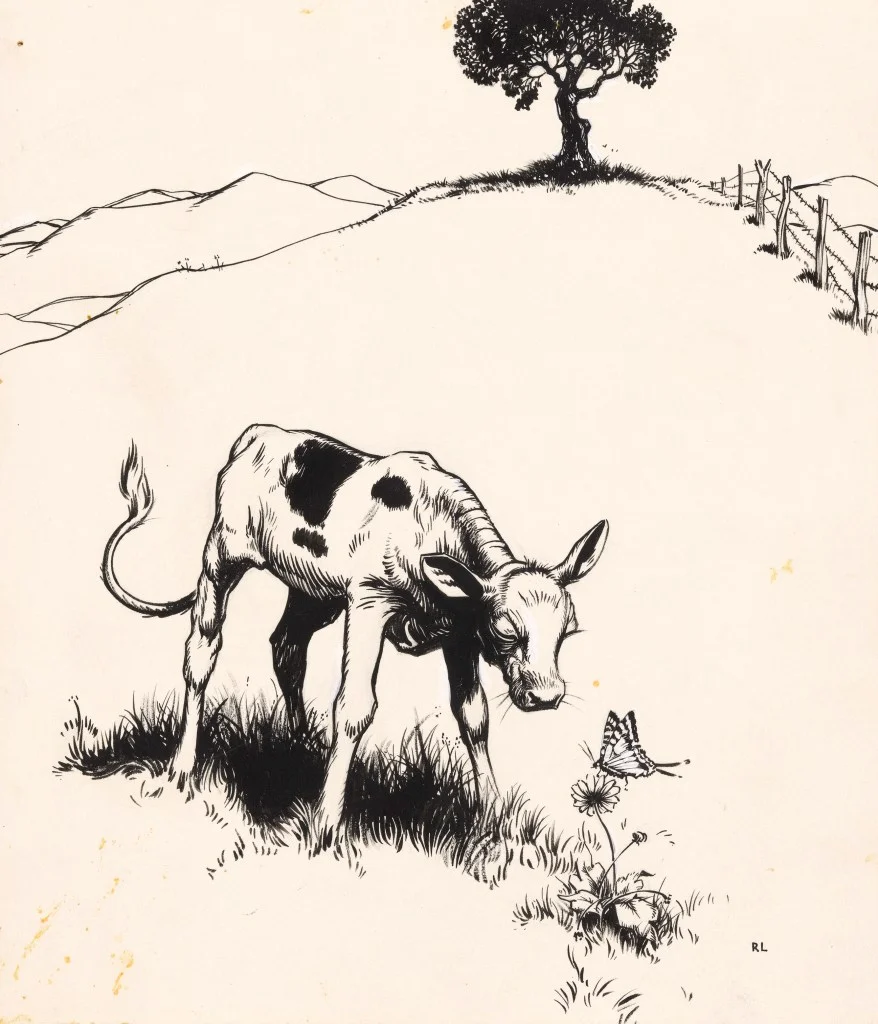
At 90, the book’s clearest invitation is also its most practical: let a page hold a pause. Readers don’t need to settle on a single interpretation before enjoying the drawings or the joke. Ferdinand’s private patch of shade can mean whatever a reader needs it to mean—and Lawson’s corks are still there to make them look twice.
The post The Daily Heller: Bully for Ferdinand at 90 appeared first on PRINT Magazine.
| Rev | Description | Date |
|---|---|---|
| A | Issued for reading | |
| B | Viewed 606 times | Current |