Ivan Ehlers Builds Editorial Cartoons from Research, Pencil Sketches and Digital Drawing
- Project
- Graphic Design
- Drawn by
- Charlotte Beach
- Issued
- Sheet
- A-47
Cartoonist Ivan Ehlers discusses his route from construction work to illustration, his research and drawing process, and the purpose of editorial cartoons.
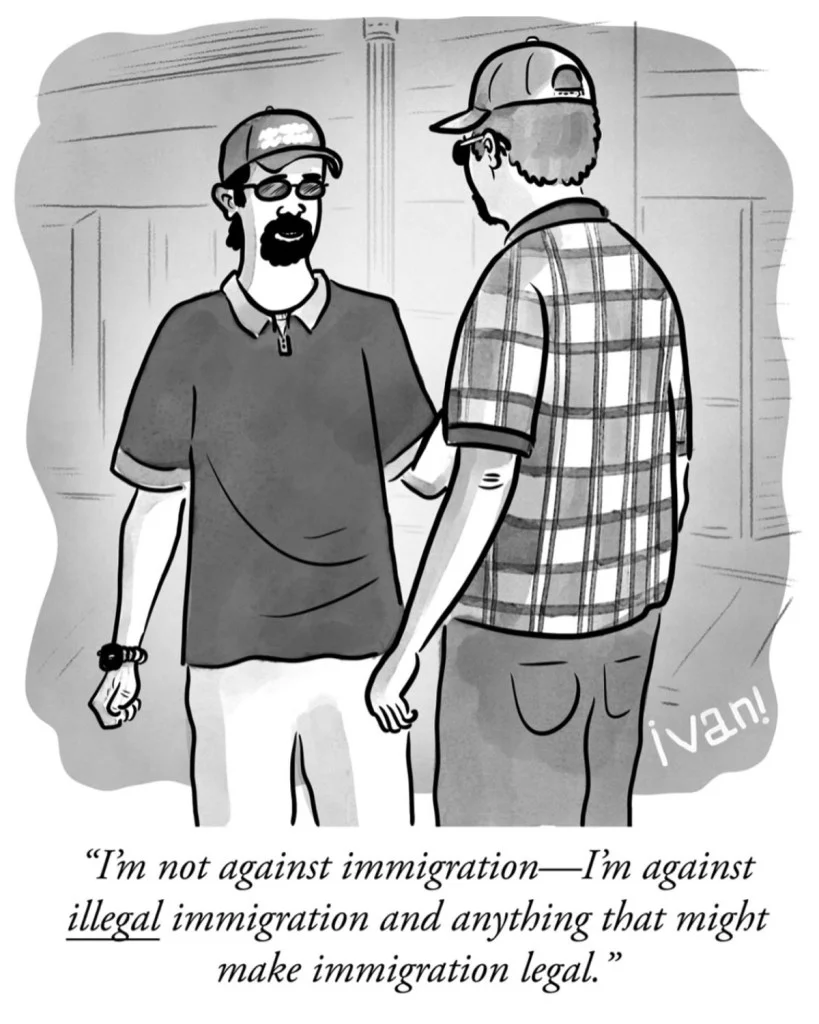
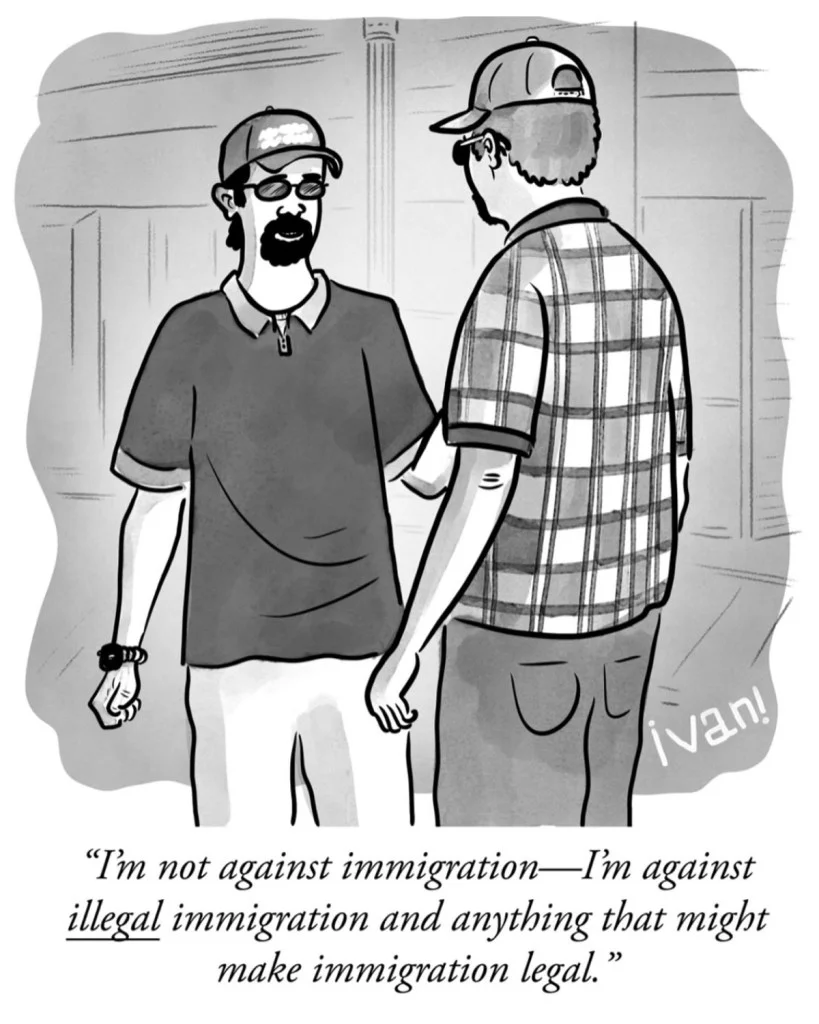
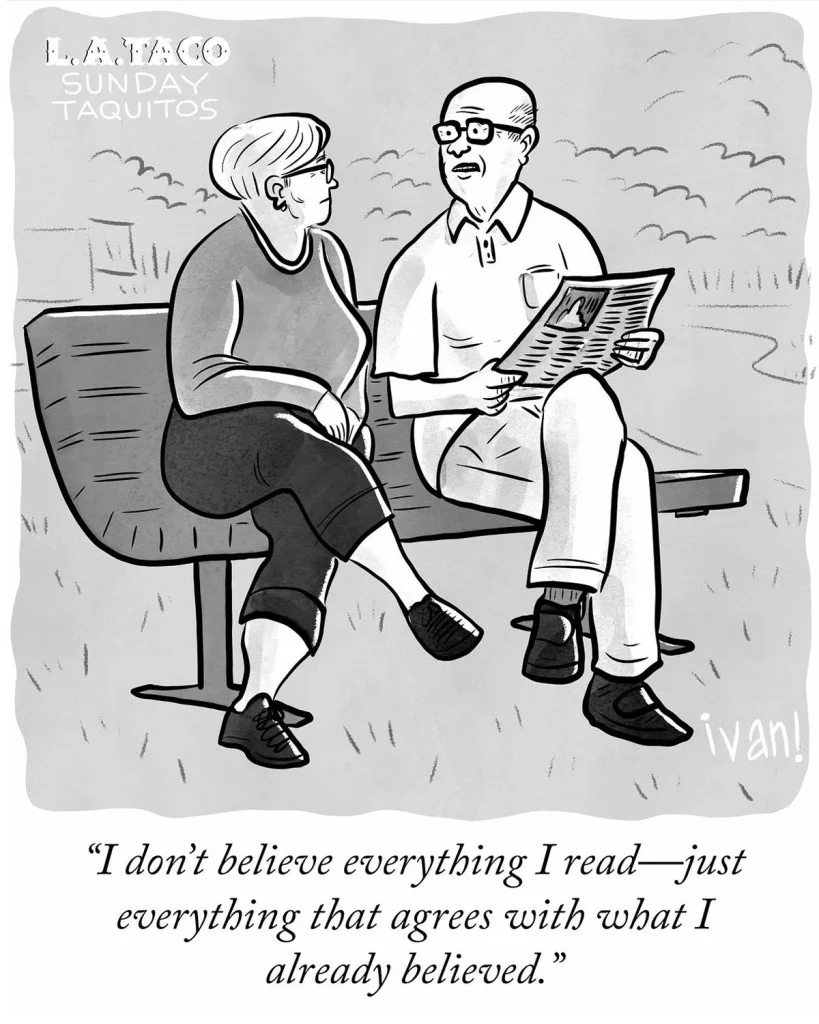
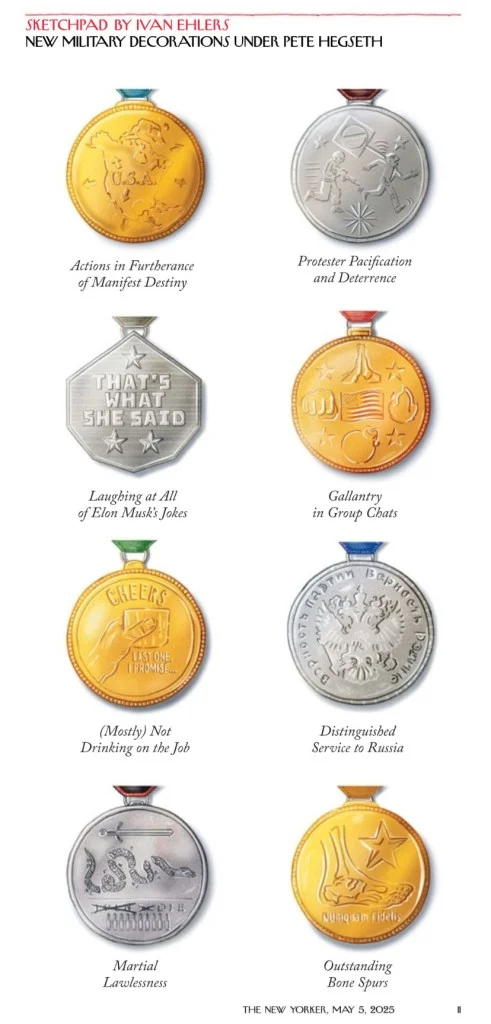
Ivan Ehlers builds editorial cartoons around a clear idea: make complicated, urgent subjects understandable at a glance. His process runs from keeping a list of observations to checking facts, roughing out a composition in pencil and finishing the drawing digitally. The freelance cartoonist and writer was named a finalist for the 2026 Pulitzer Prize in Illustrated Reporting and Commentary, with work appearing in The New Yorker, MAD Magazine, The Los Angeles Times, The Boston Globe and LA Taco.
Ehlers describes his work as a record of the past, a response to the present and a warning about what may come. That aim gives his cartoons a practical design challenge: compress a subject into a readable visual idea without losing sight of the people and facts involved. His Ecuadorian-American background informs his perspective, while his working method depends on observation, research and repeated drawing.
A self-taught route into cartooning
Ehlers didn’t attend art school, and his feelings about that choice remain mixed. Learning independently, he says, sometimes lets him solve visual problems in less predictable ways. But he also sees what formal training could have offered: an early start, experienced teachers and guidance on both creative practice and the business of art. When a drawing reaches a dead end, he can’t help wondering whether a classroom might have given him another way through.

His first steps came while he was working in construction. He drew comics and cartoons in his spare time, with little expectation that they would find an audience. His girlfriend, Ariel, encouraged him to send a group of drawings to MAD Magazine. An editor bought one cartoon. That sale began a gradual shift: it took years of steady illustration work before Ehlers could leave construction and work as a full-time artist.
The start was not a carefully mapped career plan. It was a submission prompted by someone close to him, followed by a first commission that turned a private habit into paid work. For illustrators trying to enter editorial markets, the story also shows how a single published drawing can open a door while a sustainable career still takes time to build.
From observation to a finished idea
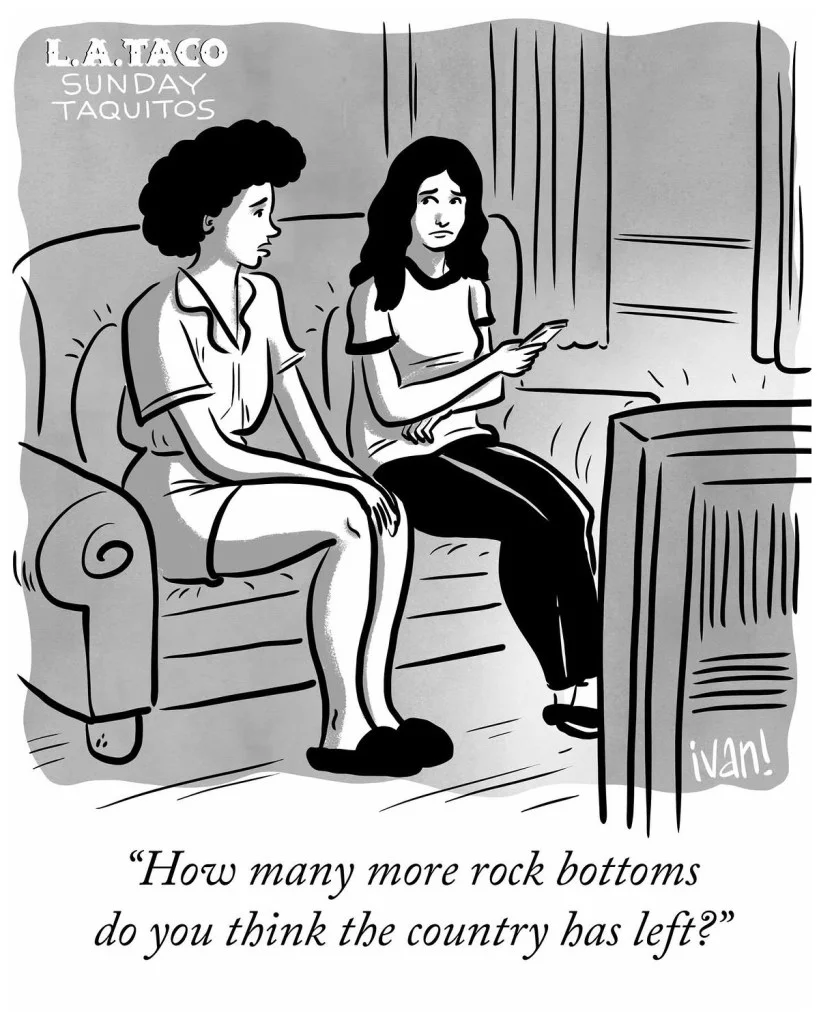
For gag cartoons, Ehlers keeps a running list of funny things he notices during the week. His batches for The New Yorker are due on Tuesday mornings, so he reviews the list and develops the ideas that can become drawings. He writes the caption first, then works out the visual that best serves it. If a joke feels especially strong, he checks whether someone else has already made it.
He uses a similar routine for editorial cartoons, with research added before drawing. When a piece involves real people, public decisions or facts that can be checked, he wants to understand the subject before he sends the work out. The sequence matters: the written premise sets the cartoon’s direction, while research helps keep its visual shorthand anchored in what actually happened.
Most of the time, Ehlers develops ideas on spec, without a commission. He estimates that assignments or requests for work on a particular subject account for only about five percent of the time. The rest begins with his own proposals and the hope that an editor will want to publish them.
That approach means producing drawings that may never appear. Editorial work has a short shelf life: once attention shifts, a timely idea can be difficult to place. Ehlers says that much of his stronger work has eventually found a home, but the process involves accepting that some finished ideas will miss their moment.
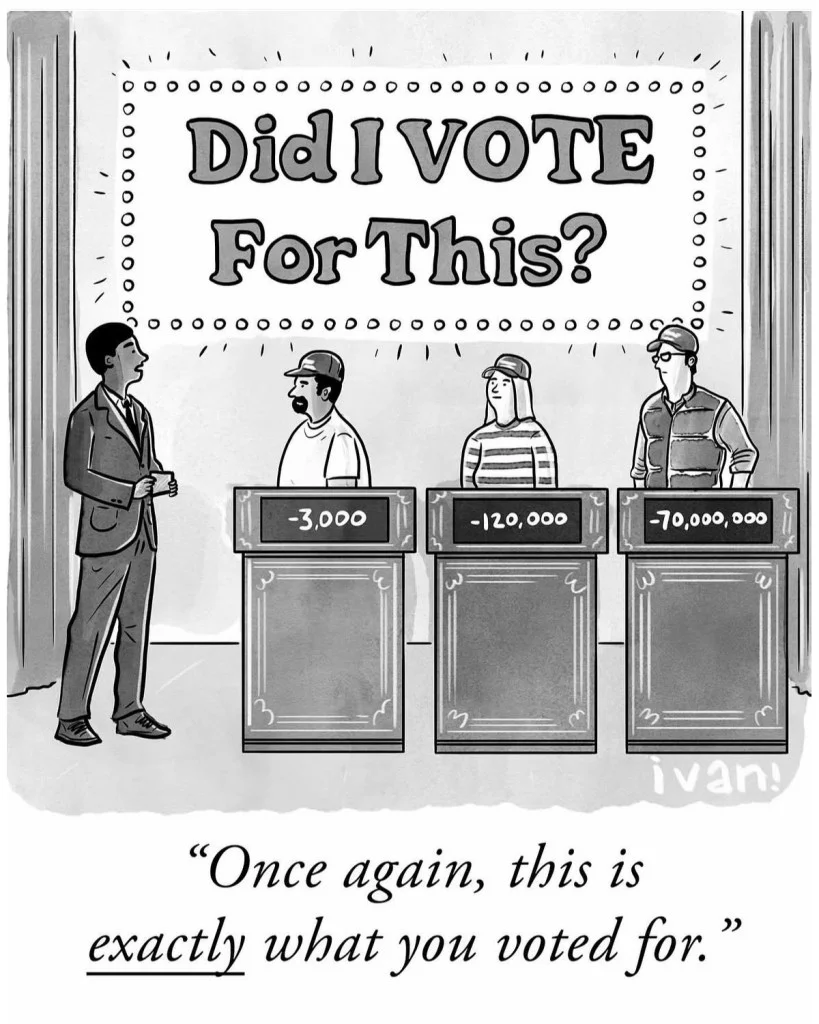
Pencil, reference and Photoshop
Ehlers starts on paper with Blackwing pencils. He uses early sketches to establish the drawing’s overall dynamics, hierarchy and visual flow, then keeps refining until the finished image is clear in his mind. Those decisions give the idea its structure before he moves to the computer.
Next, he brings the sketches and a large amount of reference into Photoshop, where he draws a digital version with a Wacom tablet. If a publication buys the work and time allows, he makes another version in pen and ink. That final step leaves him with an original artwork he can sell or give as a personal gift.
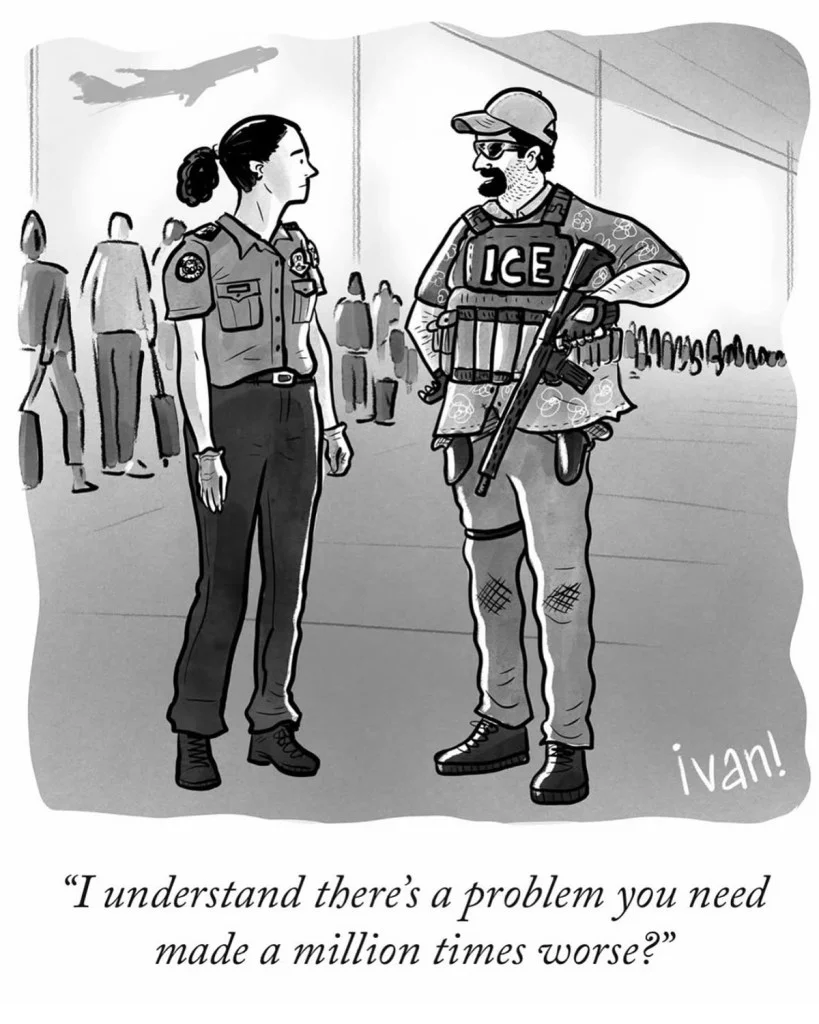
Drawing what’s difficult to ignore
Political subjects were present from Ehlers’ first submission to MAD Magazine, though most of that batch consisted of song parodies. One or two cartoons dealt with current affairs, and one of those was the drawing the editor bought. Ehlers says he doesn’t enjoy focusing on subjects such as authoritarianism, climate and immigration, but he can’t ignore what distresses him. A cartoonist friend, Paul Noth, calls himself a “reluctant political cartoonist”; Ehlers says the description fits him, too.
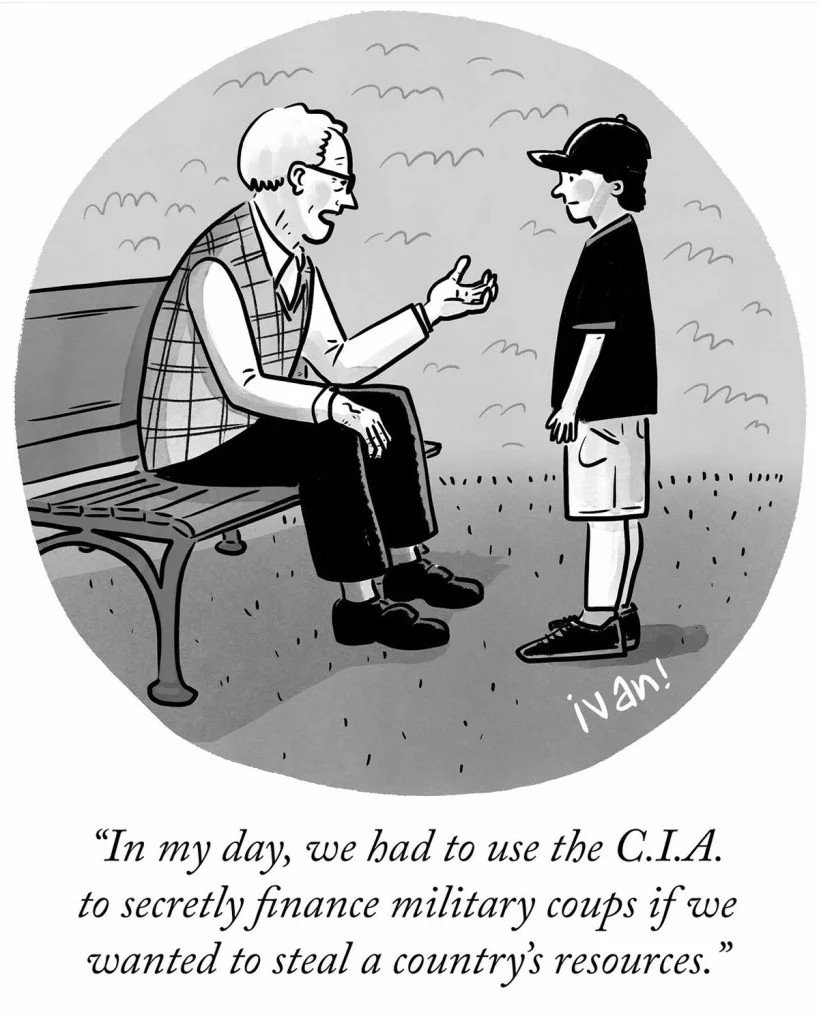
For Ehlers, cartoons can bring difficult subjects to people in a direct, legible form. He has heard from people who are afraid to speak publicly against those in power. His response is to make work that names hypocrisy and wrongdoing and shows readers that silence isn’t their only option. He sees editorial cartoons as a means of defending liberty, supporting people who are mistreated and serving the public good.
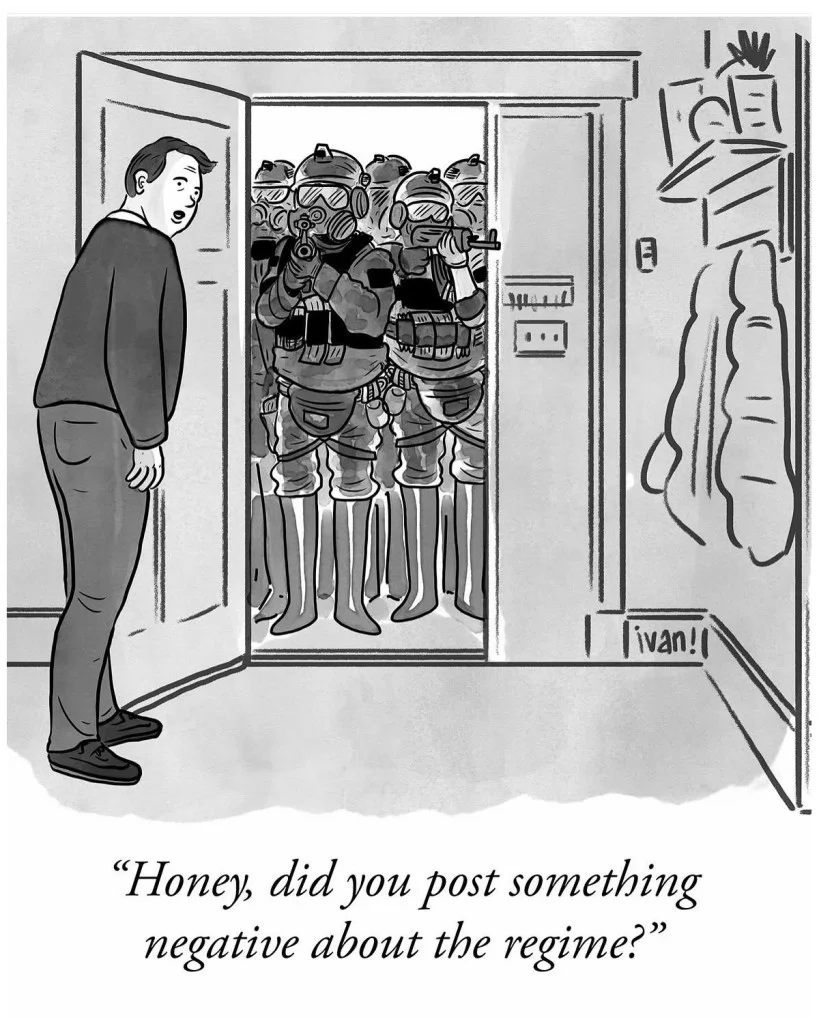
The Herb Block Foundation describes editorial cartoons as an essential tool for preserving Americans’ rights to expression. Ehlers’ own formulation is more personal: his work recalls what came before, comments on the current moment and offers a warning about what might follow. That sense of continuity helps explain why a cartoon can do more than capture a headline; it can connect an immediate event to a longer pattern.

Recognition and the work ahead
Ehlers described his Pulitzer finalist recognition as astounding. He compared his own efforts to a drop in an ocean made more polluted and warmer, and said he was grateful that the Pulitzer Prize Board had acknowledged that work. The honor doesn’t change the modest scale of a single cartoon. It does recognize the care behind making each one: find the idea, confirm the details and give it a form people can understand.
| Rev | Description | Date |
|---|---|---|
| A | Issued for reading | |
| B | Viewed 790 times | Current |


