Otto Soglow’s *Liberated Latin* Turns Wordplay Into Cartoons
- Project
- Graphic Design
- Drawn by
- Steven Heller
- Issued
- Sheet
- A-45
A look back at Otto Soglow’s 1952 *Liberated Latin*, where visual jokes make fractured Latin part of a midcentury humor-book tradition.
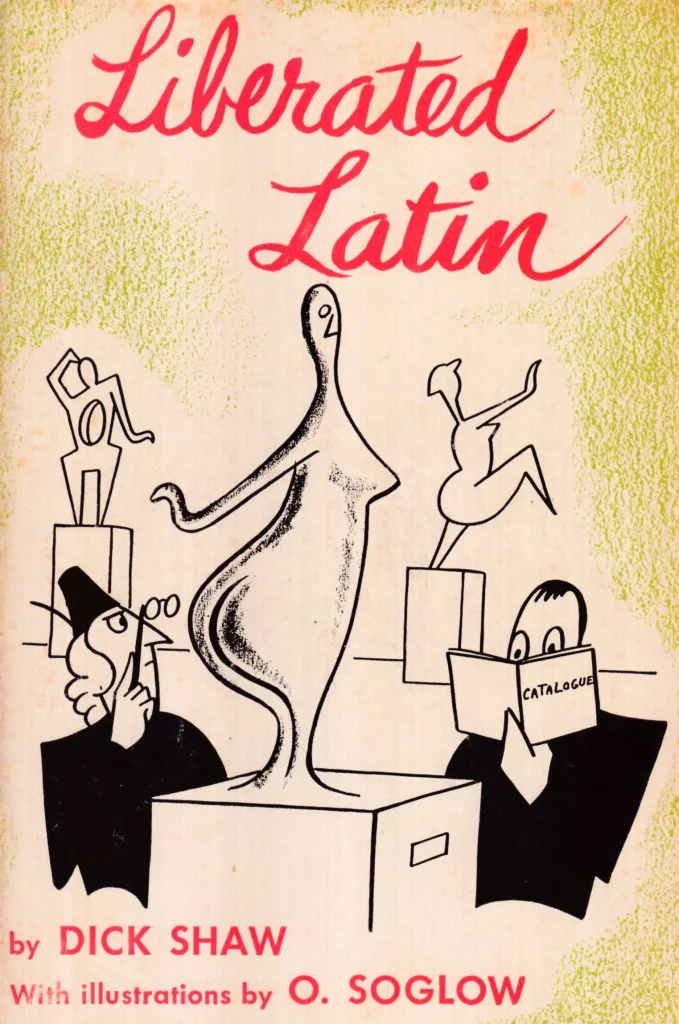
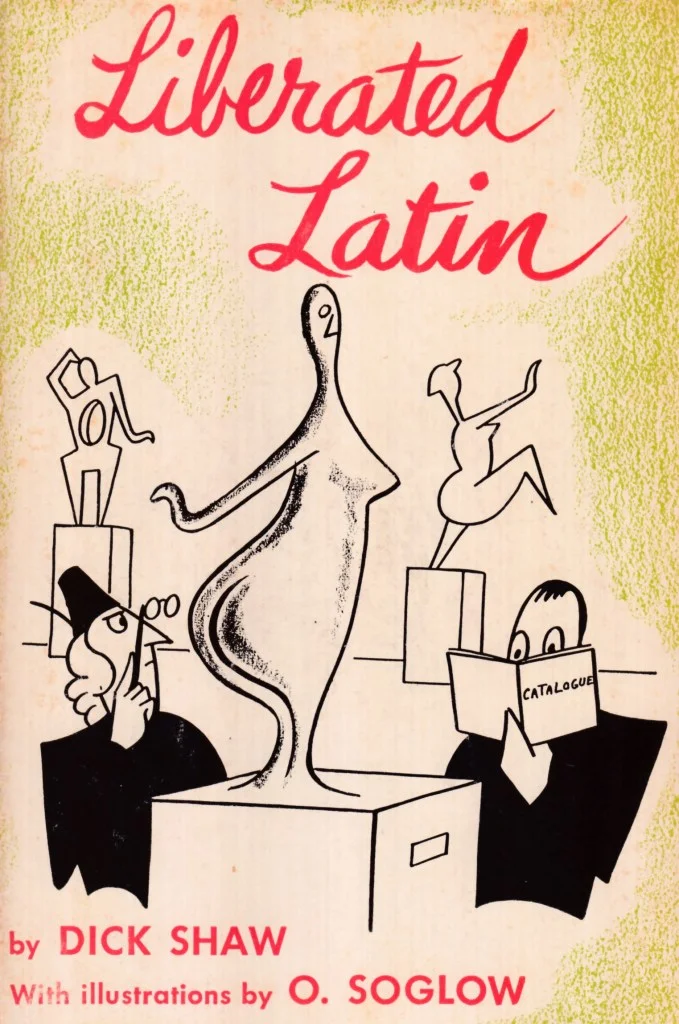
Otto Soglow’s cartoons give a visual punchline to the awkward pleasure of getting a language almost right. In Liberated Latin, published in 1952, fractured phrases become prompts for comic interpretation. The jokes may be painful, as the book’s owner admits, but Soglow’s drawings offer another way to enjoy them: by seeing how a phrase can be turned into a small scene.
The book belongs to a familiar midcentury humor-book tradition. In early and late 1950s middlebrow America, comic takes on French and Italian sat alongside other light reading in family bookshelves. Liberated Latin applies that playful approach to a language often described as dead or dying, even though Latin remains woven through English words, expressions and sayings.
For the writer recalling the book, Latin is also a missed educational chance. High school passed without an introductory course, leaving only a rudimentary grasp of French, Romanian, Spanish and Italian. At the time, learning Yiddish already felt like enough linguistic work. Pig Latin, picked up with an accent, became the comic substitute; Soglow’s book offered a secondhand route into language play.
A cartoonist’s reading of a phrase
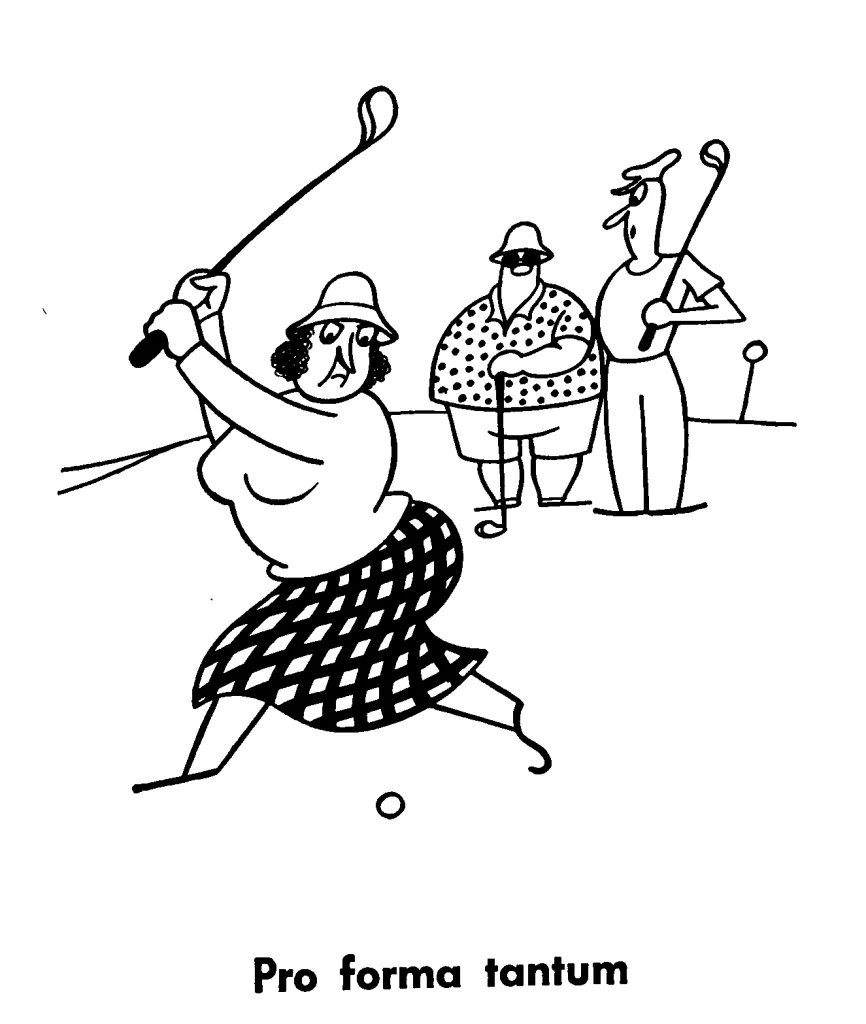
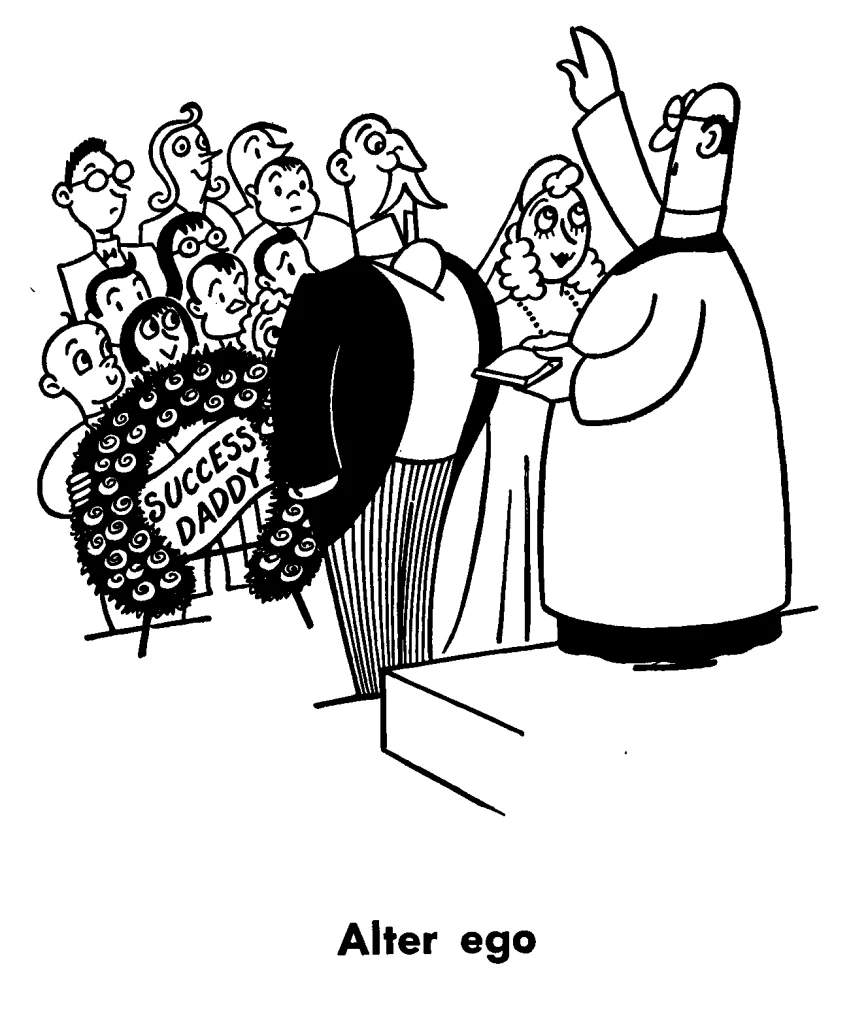
Soglow, who lived from 1900 to 1975, was the creator of the minimalist comic “The Little King.” He was also one of the era’s popular humorists, known for wit that could turn bawdy. His role in Liberated Latin is more than decorative: the drawings are the visual half of the joke, translating verbal nonsense into images that can be read at a glance.
That pairing gives the book its particular appeal. A pun starts with a phrase that sounds as though it might belong to Latin, then leans on the gap between its apparent meaning and its comic interpretation. The illustration makes that gap visible. The reader can meet the joke through the words, the picture, or the moment when the two click together.
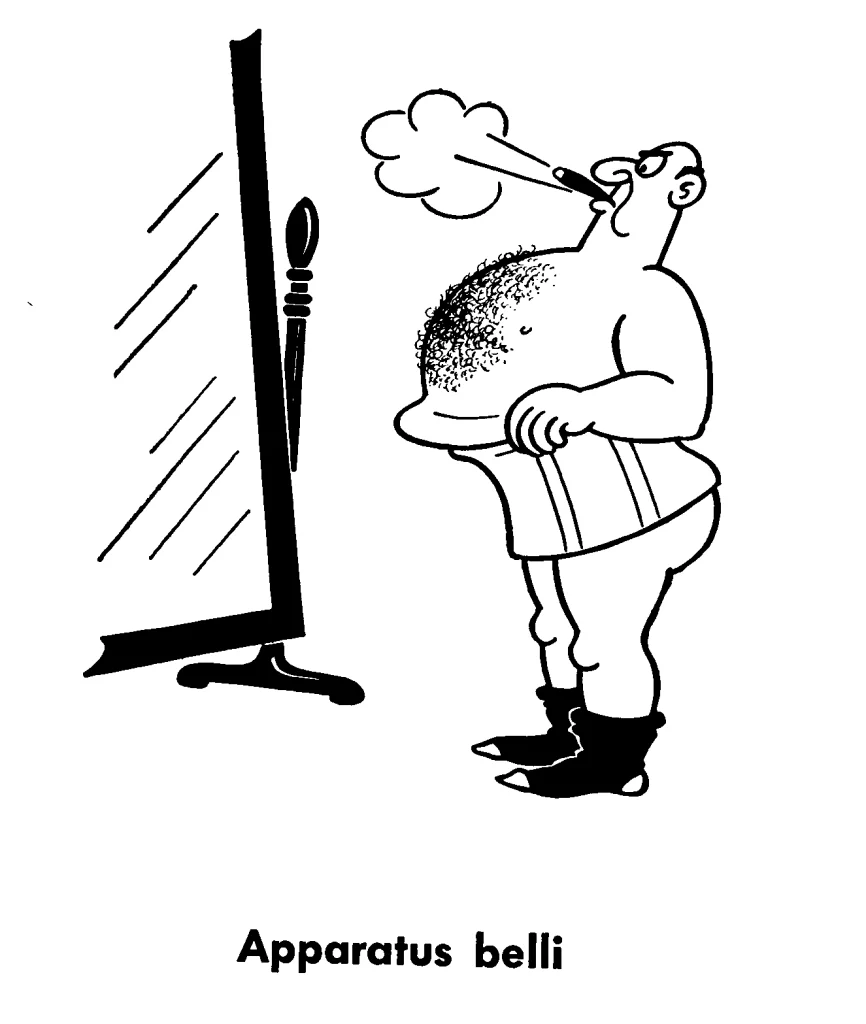
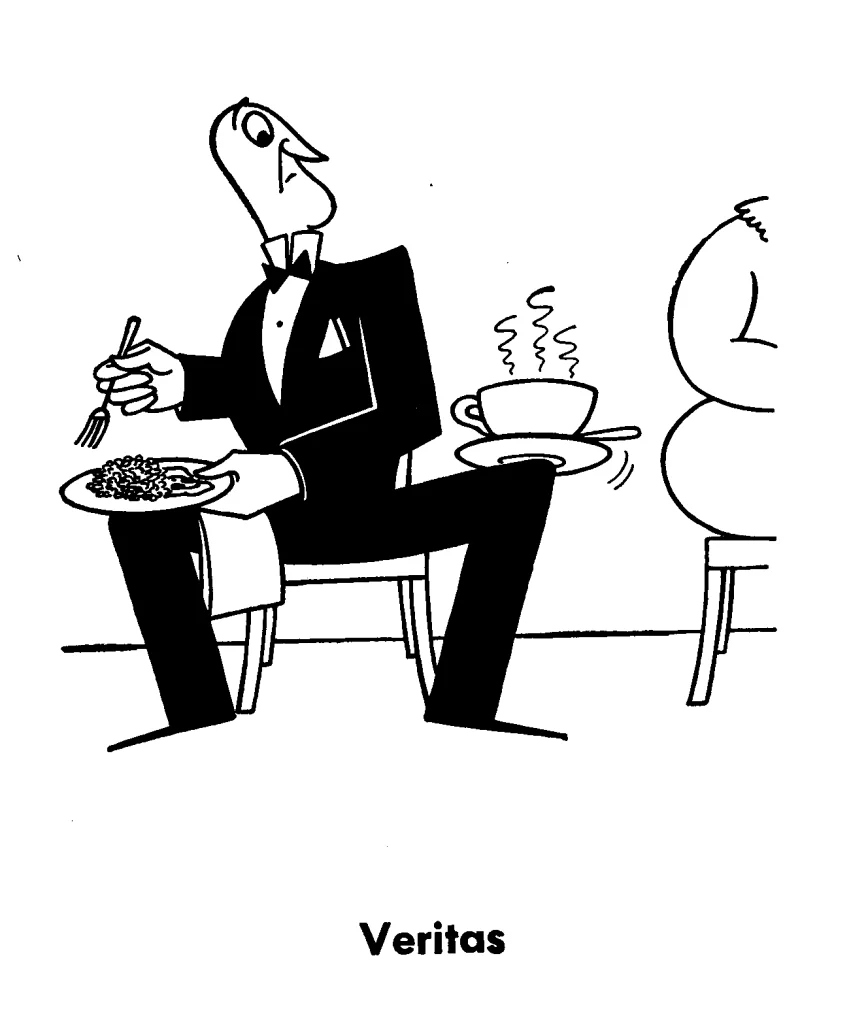
The surviving examples include captions such as “Instrument of war,” “Truth,” “For form only” and “Another self.” Each offers a compact verbal cue rather than a lengthy explanation. The images invite the reader to work out how Soglow has interpreted the phrase, while the captions keep the joke anchored to its language. The book’s actual translations appear at the back, giving readers a way to check the wordplay after taking in the cartoon.
Why the wordplay still works
The book’s jokes depend on a simple creative mechanism: take a language with cultural weight, loosen its rules for comic effect, and let an image supply a second interpretation. Latin’s associations with formal phrases and maxims make it especially suited to this kind of treatment. A mock translation can sound grand before the cartoon brings it down to earth.
For designers and illustrators, that structure is a useful reminder of how image and text can share a joke without doing identical work. A caption can establish the premise; an illustration can redirect it. When both parts leave room for the reader to make the connection, the result feels participatory, even if the pun itself is deliberately groan-worthy. The translation in the back adds a final layer, letting the reader compare the joke’s invented reading with the phrase’s intended one.
There is a small note of affection in the rediscovery, too. The writer found an old copy over the weekend and was reminded of the humor books on their parents’ shelves. Even the word “nostalgia” becomes part of the language game: its Greek roots are given as nóstos, meaning homecoming, and álgos, meaning pain. That blend of warmth and discomfort suits the book’s appeal. Some jokes land; others hurt in the way a pun is supposed to.
Liberated Latin doesn’t ask readers to master Latin before they can enjoy it. Its charm comes from Soglow’s ability to give a verbal stumble a visual form, then let the reader decide whether the result is clever or gloriously bad. For anyone building a comic around language, the book’s enduring lesson is practical: a picture can make even a strained phrase worth looking at twice.
The post The Daily Heller: Revivifying a Dead Language Through Cartoons appeared first on PRINT Magazine.
| Rev | Description | Date |
|---|---|---|
| A | Issued for reading | |
| B | Viewed 881 times | Current |


