Paolo Garretto’s Caricatures Turned Social Observation Into Art Deco Design
- Project
- Graphic Design
- Drawn by
- Steven Heller
- Issued
- Sheet
- A-44
A designer’s letters and magazine clippings trace Paolo Garretto’s decades of caricature, from public figures to industrial leaders.
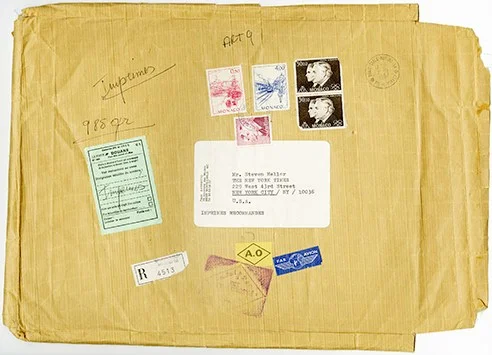
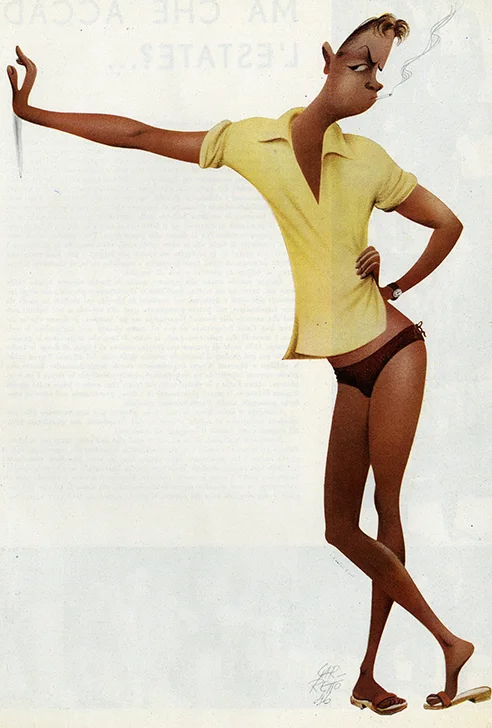
Paolo Garretto made a face do the work of a paragraph. The Italian caricaturist’s drawings took recognizable features and enlarged them into pointed visual commentary, with a light touch that could still make a subject’s vanity visible. A cache of clippings sent to a correspondent offers a view of how that approach ranged across public figures, business leaders and several decades of magazine work.
The material comes with a personal record. In the 1980s, a few years before Garretto died, the writer corresponded with him at least twice a month. Garretto lived in Monaco near the end of his life, and his letters recounted earlier years in Italy and New York. Alongside them came monthly envelopes containing assorted clippings from his studio. The images reproduced here are from one of those envelopes; the packages continued to arrive until his death.
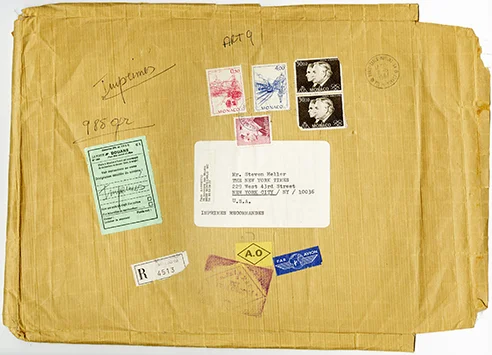
A career seen through its subjects
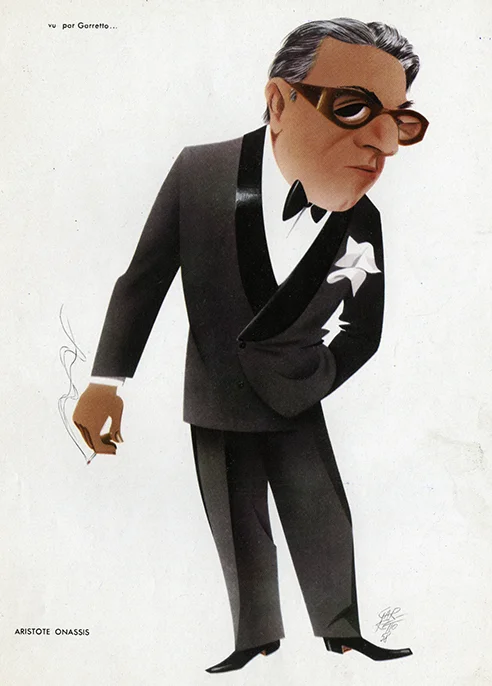
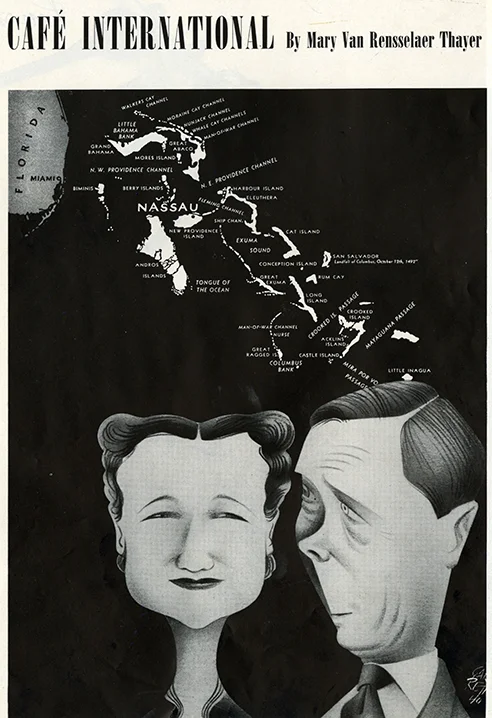
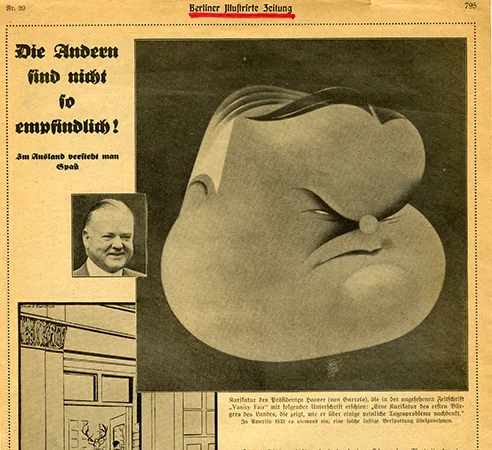
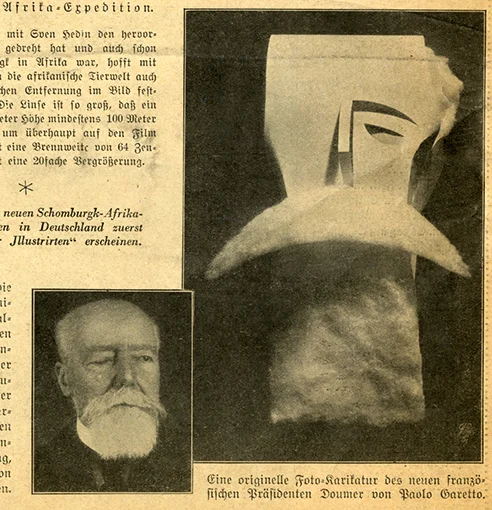
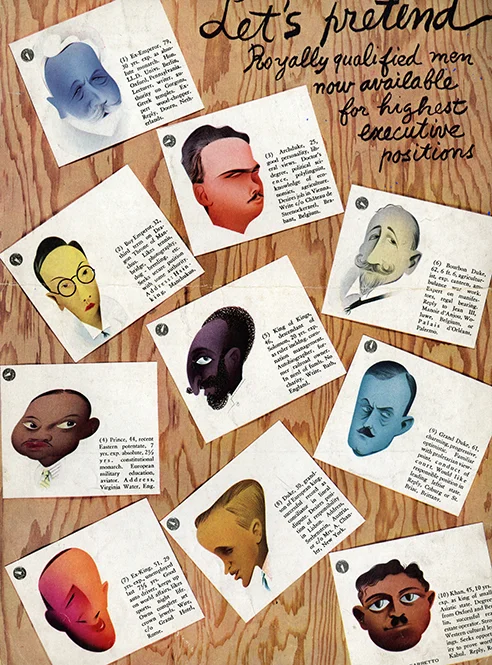
The clippings span 1940 to 1958. Their subjects include the Prince of Wales and Mrs. Simpson, and Onassis. They appeared in American titles including Town & Country and Vanity Fair, as well as Germany’s Berliner Illlustriete Zeitung and French magazines whose names were not recorded. That spread of publications places the work in a periodical culture where a single drawing had to register quickly, even when readers encountered it among unrelated stories and images.
Caricature depends on selection. The artist identifies a feature that can carry a likeness, then makes it prominent enough to become an idea. Garretto’s correspondent describes him looking for small facial quirks and enlarging them into the central point of a drawing. The method sits between recognition and interpretation: the viewer needs to know who is being depicted, but the distortion gives the portrait its argument. A face becomes a compact editorial device.
Satire with a measured edge
Garretto particularly enjoyed drawing wealthy and powerful people. The account describes his work as rarely vicious, but says his subjects could tell when he disliked them: a facial tic they might prefer to conceal could be amplified until it became impossible to miss. That balance matters to the effect. If the distortion goes too far, a portrait can lose its likeness; if it barely changes the face, the caricature has little bite. Garretto’s approach, as remembered here, made pointed observations while keeping the person recognizable.
Some of the clippings turn that attention toward American industrial leadership. The writer identifies drawings of chief executives in the steel and telecommunications industries. Their faces gave Garretto a way to address the people behind large organizations without needing a lengthy caption to explain the target. For designers, the useful lesson is in the economy of the device: one carefully chosen detail can carry both resemblance and judgment. The drawing’s shape and emphasis do part of the editorial work.
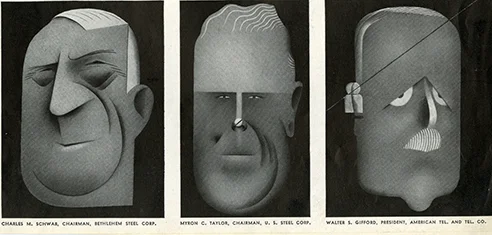
Illustration as visual shorthand
The source credits Garretto with helping define a style of Art Deco design, and places that broader reputation beside his caricature work. It also notes that he designed uniforms for Mussolini’s body guards. Those details suggest a career that crossed different kinds of visual assignment, from designing for institutions to drawing individuals for magazines. The surviving clippings offer a more immediate way to consider his craft: each image had to establish character through a limited set of choices.
A useful way to study the drawings is to look first for the feature that anchors the likeness, then notice how the artist changes its scale or prominence. Next, consider what the exaggeration says about the subject. Does it read as affectionate, neutral or cutting? Finally, look at how the image might work at magazine size: whether its main shape remains legible and whether a viewer can grasp the subject without needing to inspect every detail. These questions apply to editorial illustration now, even when the subject and medium have changed.
What the envelopes preserve
The envelopes matter as more than a collection of finished pictures. Garretto’s letters carried stories from different stages of his life; the clippings show how his work circulated across publications and countries. Together, they make a personal archive of an illustrator’s practice: not a complete catalogue, but a group of fragments selected and sent by the artist himself. Their uneven, accumulated quality also offers a reminder that design history often survives through the material people keep—an image clipped from a magazine, a note in the mail, a recurring exchange.
Seen together, the drawings show how a distinctive visual voice can travel between subjects and publications. Garretto’s recurring tool was distortion, but its purpose shifted with the person in front of him. The lasting takeaway for illustrators is practical: choose the detail that reveals character, make it carry the idea, and keep enough of the original likeness for the audience to recognize who the image is about.
The post The Daily Heller: Paolo Garretto Was My Pen Pal, Reprised appeared first on PRINT Magazine.
| Rev | Description | Date |
|---|---|---|
| A | Issued for reading | |
| B | Viewed 776 times | Current |


