Glossary of Undisciplined Design Makes Graphic Design’s Canon an Open Question
- Project
- Graphic Design
- Drawn by
- Dirk Petzold
- Issued
- Sheet
- A-31
Anja Kaiser and Rebecca Stephany’s 312-page handbook pairs varied voices with an alphabetical structure to challenge design’s inherited rules.
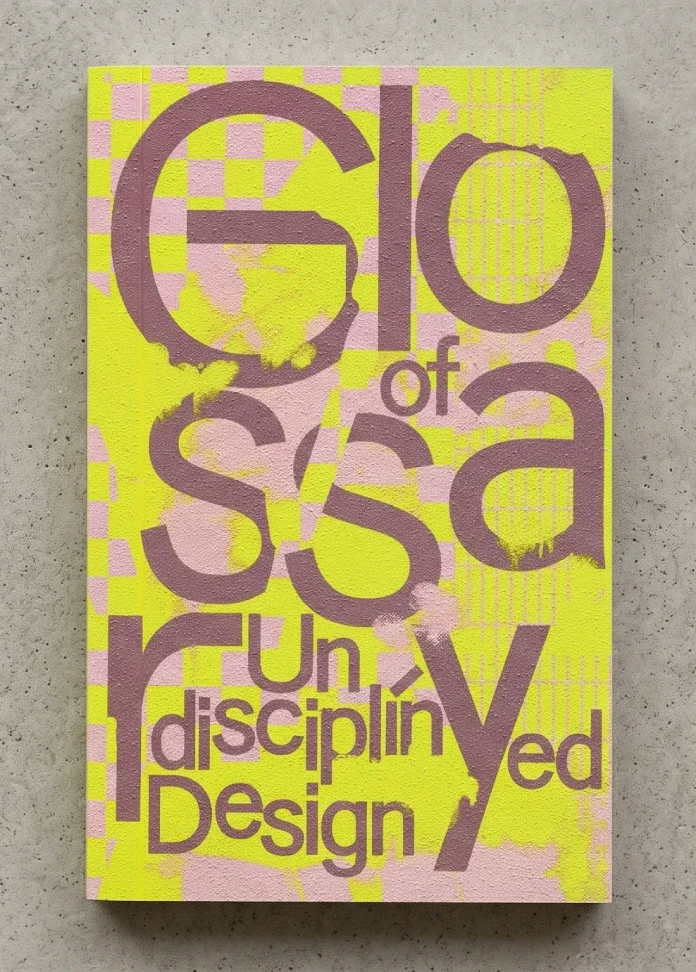
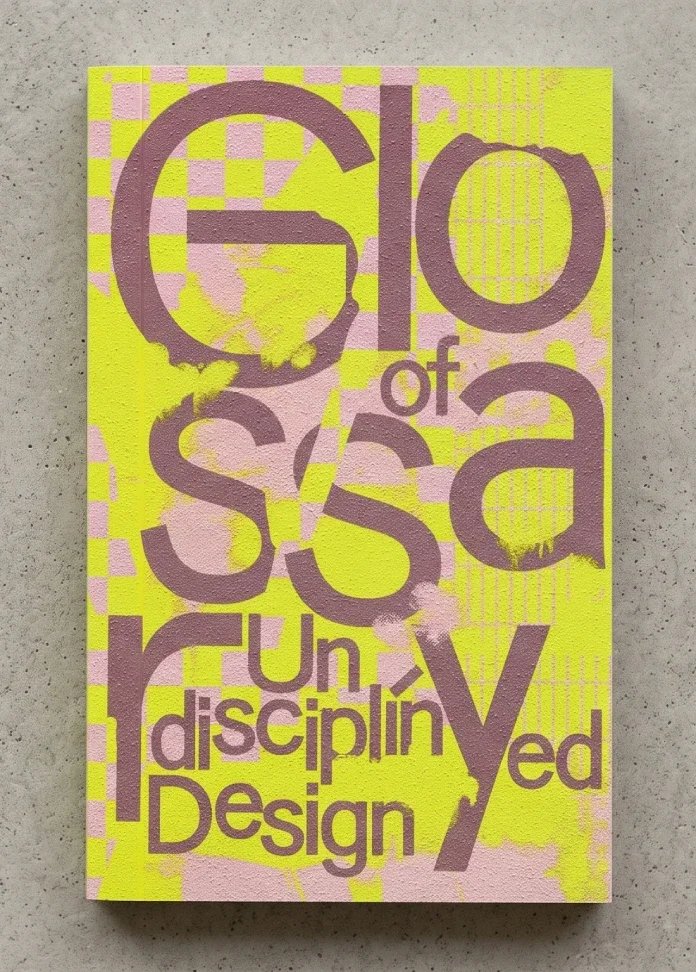
The Glossary of Undisciplined Design treats graphic design’s rules as material to question, not instructions to follow. Edited and designed by Anja Kaiser and Rebecca Stephany, this feminist handbook brings together around 55 contributions from 20 international designers, activists, educators and theorists. Its short, varied entries make room for disagreement—and invite readers to examine whose work a design history leaves out.
That invitation feels especially timely as image generators make familiar visual conventions easy to reproduce. First published in 2021, the book’s second edition carries a release date of May 6, 2025. Spector Books in Leipzig publishes it as a 312-page, thread-sewn paperback. The US list price is $30.
A handbook shaped by teaching
Kaiser and Stephany began with teaching formats and workshops, then developed the project through shared research. Kaiser works in feminist contexts and club culture, making space for resistance. Stephany’s practice draws on intersectional social critique, experimental research methods and a strong interest in imagery. Together, they frame undisciplinarity as a way to work in design while resisting dogmatic rules and a one-sided canon.
The book grew from that educational work. A three-day symposium at GfZK in Leipzig ran from February 20 to 23, 2020, with Clara Balaguer, Ece Canlı, Jungmyung Lee, Sara Kaaman and the collective Hackers & Designers among its participants. Students at the Karlsruhe University of Arts and Design also developed projects in a seminar. Their experiments included failing plant color prints and collective swirl baking. The first edition followed in 2021.
Those origins help explain the book’s form. It doesn’t set out a single account of design history. Instead, entries offer different ways to define and practice design, leaving disagreements visible. Sheila Levrant de Bretteville, Markus Dreßen, Vincent Schier and Franciska Zólyom add further perspectives. The result makes gaps in the familiar story part of the subject.
Alphabetical order, many kinds of entry
The contents move from A to Z, but the contributions don’t settle into one genre. Visual essays sit beside hands-on experiments; interviews, advertorials, poems, speculative writing and scholarly texts share the same framework. Headings such as “Dummy Woman,” “Monster’s Tools,” “Style Defense” and “Unstable Signs” read like compact challenges to established expectations.
Other entries turn uncertainty and imperfection into productive methods. “Collective Uncertainties” grew out of a symposium exchange titled “I don’t know. Me neither.” “Failing Queerly” and “Professional Amateur” give failure and amateur practice room as subjects. “Embracing Differences” names a value, while Hackers & Designers contribute “Do It Together” and “Weaving Out.”
The alphabet gives each contribution an equal starting point, but it also sets a limit: English determines the order. A translated edition would bring entries into new sequences and change the connections readers make. That possibility feels like an extension of the book’s central idea, since even its organizing rule can be examined.
The scale supports quick shifts between voices. Across 312 pages and around 55 contributions, the simple average is about 5.7 pages per contribution. Dividing those pages among 20 contributors gives an average of 15.6 pages per person. These figures don’t describe every entry or each contributor’s share, but they suggest why the reading experience stays unsettled. No single voice needs to carry the whole argument.
A pocket format with a real trade-off
The paperback measures 4.25 by 7 inches (11 by 17.5 centimeters) and weighs 9.6 ounces. Thread sewing lets the spine open wide, while black-and-white and color illustrations give the pages visual range. At this size, the book feels close to an artist’s zine: easy to handle and suited to browsing.
There’s a cost to that portability. A visual essay has only a narrow page to work with, and some spreads would benefit from more room. A larger format could let images and layouts breathe. Still, the compact scale reinforces the book’s use as a handbook that readers can dip into, carry between classes or keep close at a studio desk.
Reading against your own habits
The book works best as a toolkit rather than a linear course or a set of fixed instructions. One way to begin is to open it at the entry you disagree with most. That point of friction can reveal assumptions that a more comfortable choice might leave undisturbed.
A second exercise turns the book’s challenge toward a design library:
- Choose ten design books from a shelf.
- Write down every designer named in them.
- Mark names that appear in more than one book.
- Read ten entries in the Glossary of Undisciplined Design.
- Compare the two lists and note who is absent.
The missing names can show where a reader’s own design canon has its edges. Educators can adapt the exercise for a class: students in the Karlsruhe seminar worked with existing entries or wrote additional terms of their own.
Who will get the most from it?
Design educators, students and studio leads have clear ways to put the book to work: assign individual entries, use them as prompts for discussion, or build a workshop around writing new definitions. Readers looking for software instructions or a chronological survey of graphic design will need other resources. This book asks for active reading, and its fragments reward readers willing to make connections across forms.
The strongest design decision may be the glossary itself. Each entry has room to make a case, but none has to close the discussion. The alphabetical structure lends the collection a shared shape while its contributors keep that shape from settling into a single doctrine. For a class or studio, that’s a useful model: a document can define a working vocabulary and remain open to challenge.
Published by Spector Books in Leipzig, the English-language paperback has ISBN-13 978-3959054461 and ISBN-10 3959054467. The book is available through Amazon.
Find more work in WE AND THE COLOR’s Graphic Design and Books categories.
Subscribe to the newsletter for more design coverage.
This post first appeared on WE AND THE COLOR.
| Rev | Description | Date |
|---|---|---|
| A | Issued for reading | |
| B | Viewed 976 times | Current |


