Naomi Pollock’s Japanese Design Since 1945: A 448-Page Reference for $59.85
- Project
- Graphic Design
- Drawn by
- Dirk Petzold
- Issued
- Sheet
- A-27
Naomi Pollock’s illustrated sourcebook links Japanese designers, objects and essays from 1945 to 2020. Its weight and fixed-length profiles are trade-offs.
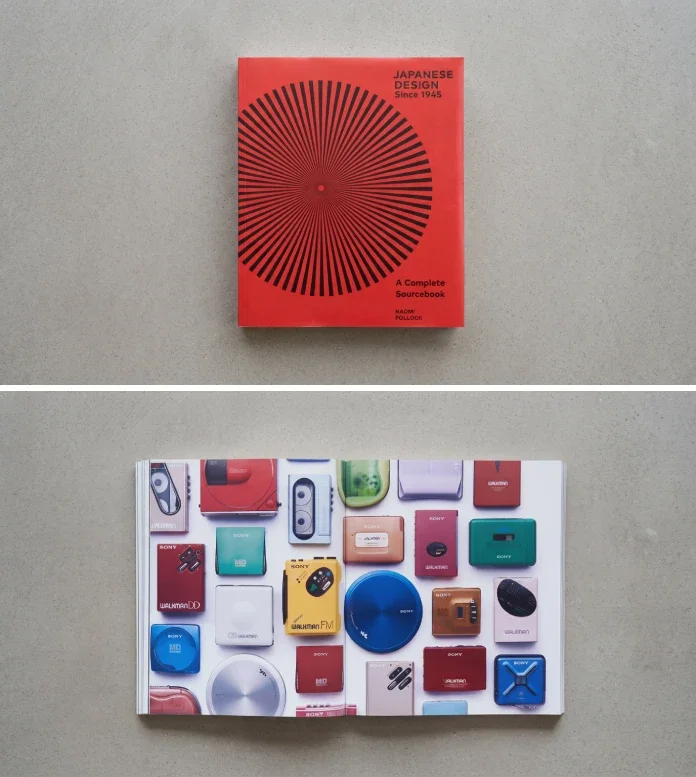
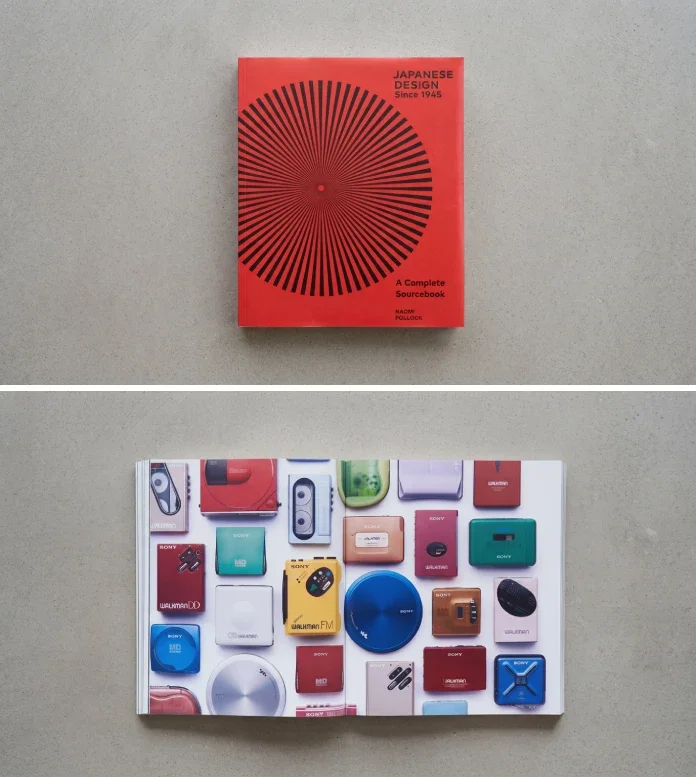
Naomi Pollock’s Japanese Design Since 1945: A Complete Sourcebook is built for looking things up, then looking again. Its 448 pages bring designers, individual objects and essays together across furniture, tableware, textiles, graphics, fashion and cars. More than 700 illustrations give the book a visual reach that’s hard to match in one volume. At the same time, its 5.4-pound hardcover is most at home on a desk.
The book was published by Abrams Books on November 3, 2020. The source lists a $59.85 price on Amazon.com, against an $85 list price, and describes that as roughly 30 percent off. Online prices can change; check the current listing before buying.
A reference organized around people and objects
Pollock’s book moves between designer profiles and close readings of products, with essays and an A–Z directory extending its usefulness as a reference. The contents begin with an introduction to the craft of Japanese design, then move through design figures and everyday objects before ending with the directory.
The first major section profiles thirteen designers and one brand, MUJI. Names include Issey Miyake, Naoto Fukasawa, Sori Yanagi and Tokujin Yoshioka. The profiles follow a regular eight-page rhythm: Fukasawa begins on page 24, while Yoshioka starts on page 112. That consistency makes the sequence easy to scan, though it leaves figures with long careers, such as Miyake and Shiro Kuramata, with limited space.
Short entries called “Everyday Icons” shift attention from careers to particular designs. The seating and tableware sections include six such objects, from the Butterfly Stool on page 142 to the HS Stackable Tumbler on page 210. This object-first approach is one of the book’s strongest choices. A biography can describe a designer’s changing interests; a close look at a stool asks what its shape, material and construction are doing.
The Butterfly Stool, designed by Sori Yanagi in 1954, is a compact example. Two bent plywood shells meet around a metal rod. There’s little ornament, so the paired curves carry the visual weight. Pollock’s structure encourages readers to move between that visible detail and the designer’s wider practice.
Essays add context to the visual record
Four essays widen the frame. Hitoshi Mori writes about design before 1945 on page 121. Pollock considers space and chair design on page 169; Makoto Shimazaki examines Scandinavian influence on page 217; and Shinji Hamada addresses car design on page 265.
The placement makes it possible to connect objects with broader themes. Pollock’s chair essay follows several seating entries: the Butterfly Stool appears on page 142, the Teiza Chair on page 155, and the WINK Chair on page 164. Reading those examples before the essay gives designers a useful sequence: compare individual decisions, then consider the ideas linking them.
The A–Z of designers at the back serves a different purpose. It offers a starting point when a name surfaces in a project, class or conversation. For research, that directory works well alongside the profiles; readers can use it to find people and then follow their objects through the book.
Reading craft in mass-produced objects
Pollock’s central argument is that industrial production can still carry “the pride and care of the handmade.” One way to test that idea is to look at how materials, details and evidence of human judgment survive the move to production. The Hand-Trace Index, a scoring method proposed in the source, makes those questions explicit. It’s an interpretive tool, not a rating supplied by Pollock.
Each object receives a score from 1 to 5 in three areas: Material Reverence asks whether the material receives careful treatment; Detail Persistence looks at whether radii, seams and joints remain considered; Maker Visibility asks how strongly an individual maker’s judgment can be sensed. The three scores are averaged.
| Object | Year | Material Reverence | Detail Persistence | Maker Visibility | Average |
|---|---|---|---|---|---|
| Butterfly Stool, Sori Yanagi | 1954 | 5 | 5 | 4 | 4.7 |
| Miss Blanche chair, Shiro Kuramata | 1988 | 5 | 5 | 5 | 5.0 |
| Sony Walkman TPS-L2 | 1979 | 4 | 4 | 2 | 3.3 |
| Sony Aibo ERS-110 | 1999 | 3 | 4 | 2 | 3.0 |
These scores are subjective, but the comparison raises a practical question for designers: can meticulous detail remain visible when a product is made at scale? In these examples, Detail Persistence stays high, while Maker Visibility falls for the Walkman and Aibo. The objects may preserve careful decisions without making the people behind them easy to see. That distinction gives Pollock’s argument a useful point of friction.
Scope, trade-offs and a nearby reference
The book’s breadth comes with physical and editorial limits. At 9.35 by 11.55 inches and 5.4 pounds, it’s a desk reference, not an easy book to carry on a commute. The eight-page profile template also gives landmark designers the same space as every other subject. And the timeline ends in 2020, so the book doesn’t cover objects from the 2020s.
A useful comparison is Japanese Design: A Survey Since 1950, the Philadelphia Museum of Art catalog by Hiesinger and Fischer, published in 1994. It presents 255 objects across 236 pages, with 316 illustrations: 246 in color and 70 in black and white. Pollock’s later book starts in 1945, runs to 448 pages and includes more than 700 illustrations. The earlier catalog offers a focused museum survey; Pollock’s offers a wider mix of profiles, icons, essays and biographies. Designers teaching or studying the subject could get different things from both.
Who will get the most from it
Product designers can use the object entries to study construction and form. Brand strategists and students can turn to the profiles and directory for names and dates. Readers looking for a continuous narrative history may find the fragmented structure less satisfying: the book is arranged for browsing, with essays and standalone entries rather than one sustained story.
At the listed $59.85 price, the 448-page volume works out to about 13 cents per page; at $85, it’s about 19 cents. Those figures describe the source’s listed prices, not a guarantee of what a buyer will pay. The value rests more on the range of material and the chance to compare objects than on the arithmetic. If Japanese design is part of your working practice, start with an object, follow its designer, and use the essays to connect the details.
The original post appeared at WE AND THE COLOR, which also features design and books coverage.
| Rev | Description | Date |
|---|---|---|
| A | Issued for reading | |
| B | Viewed 842 times | Current |


