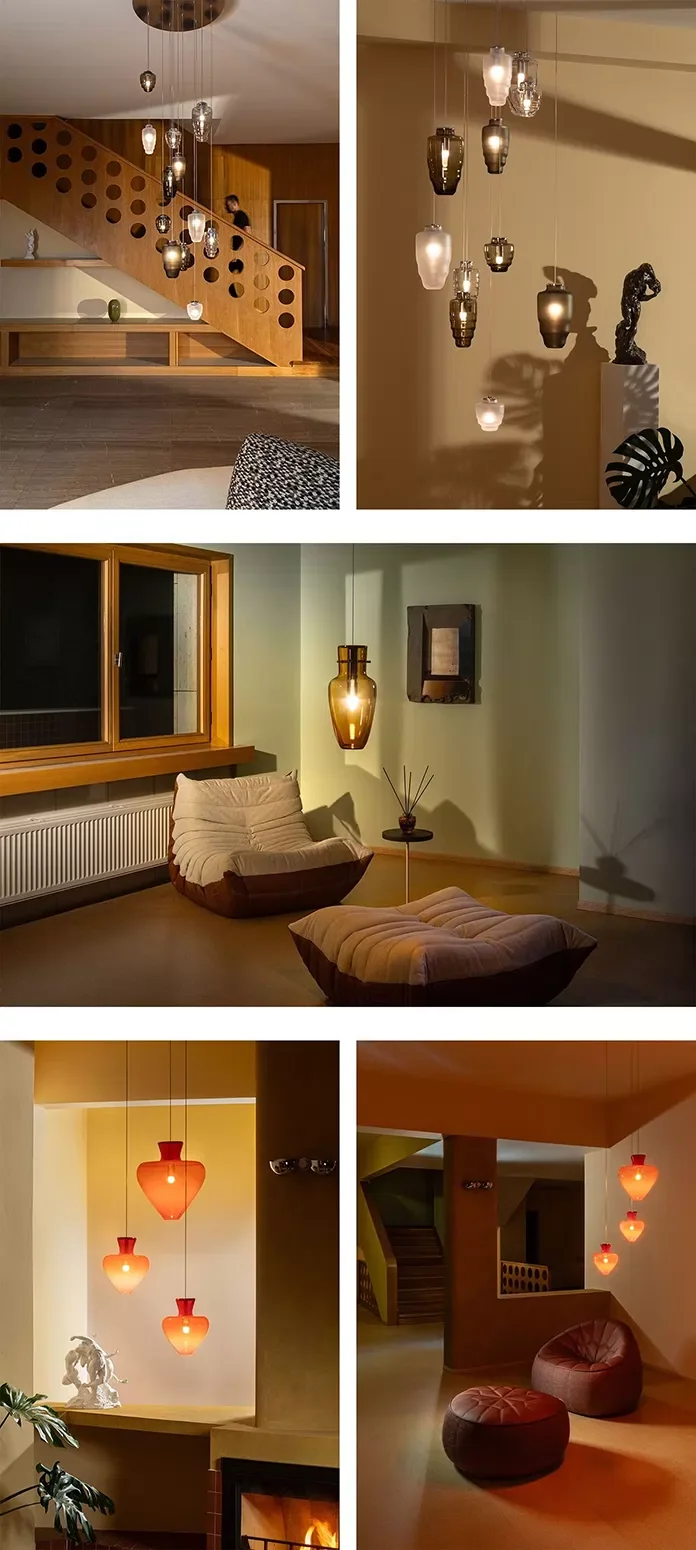
Contemporary Japanese Posters: What Giancarlo Calza’s 756-Poster Survey Offers Designers
- Project
- Graphic Design
- Drawn by
- Dirk Petzold
- Issued
- Sheet
- A-24
Giancarlo Calza’s Skira survey brings together 756 posters by 85 designers. Its breadth makes it a useful reference, though small reproductions limit close study.
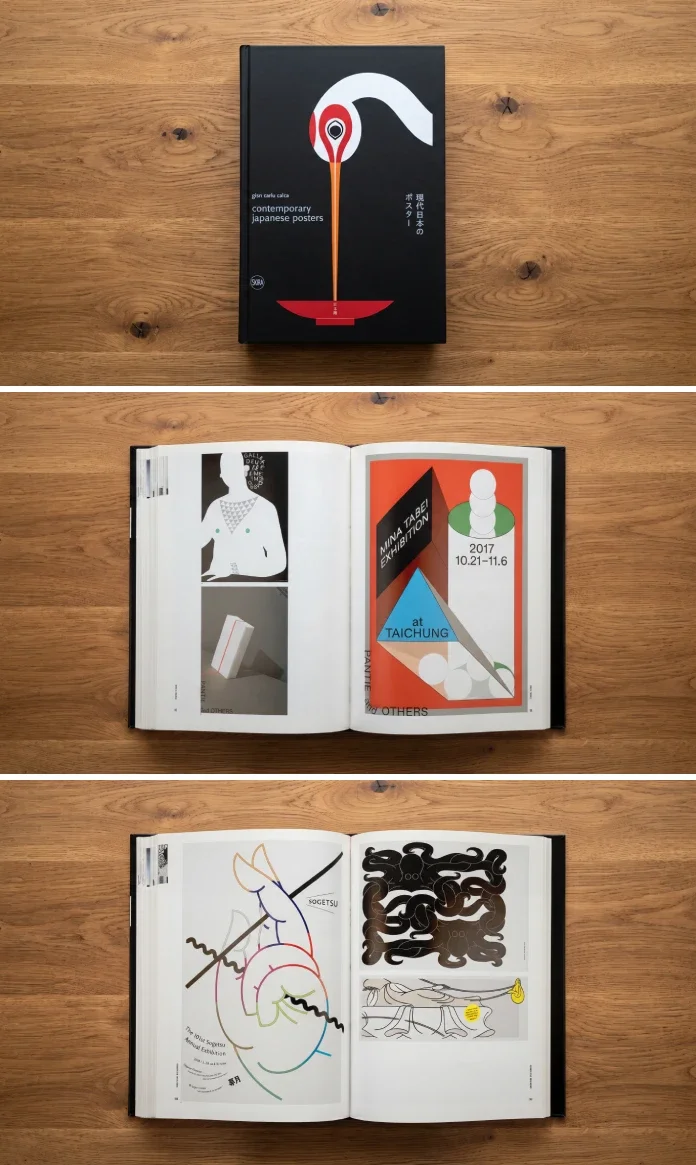
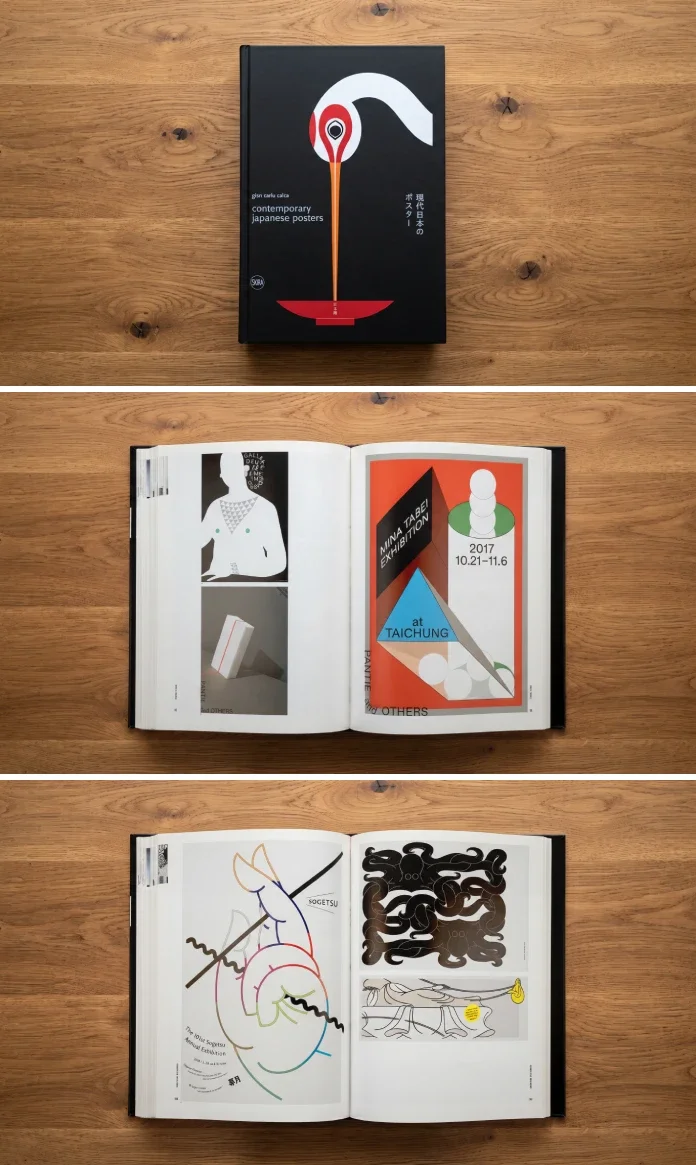
A poster survey earns its place on a designer’s shelf when it helps you see relationships across work, periods and people. Contemporary Japanese Posters, edited by Giancarlo Calza and published by Skira in November 2021, makes that case through sheer breadth: 756 posters by 85 designers across 519 pages. Its compact reproductions make it better for comparison and reference than for studying every detail at full scale.
That distinction matters. The book can help identify a designer or compare approaches to a layout, but it can’t reproduce the physical presence of a large poster. For working designers, its strongest use is as a curated visual index, with museum collections and other archives supplying dimensions and object records when closer inspection is needed.
The book is available on Amazon.
A broad survey, with a trade-off in scale
D.A.P. lists the book at $70. Dividing that price across 756 posters works out to about 9 cents per image; across 85 designers, it’s about 82 cents per designer. Those figures make the book’s range easy to grasp, but they don’t tell you how large each work appears on the page.
The publisher gives the trim size as 8.25 by 11.5 inches, or about 210 by 292 millimeters. That’s narrower than the 250-by-290-millimeter pages in Calza’s Ukiyo-e from Phaidon, which runs 512 pages and reproduces more than 600 works. By fitting 756 posters into a narrower page, Skira’s book puts coverage ahead of display size.
A simple measure makes the density clear: divide the number of posters by the page count. The result is about 1.46 posters per page. Calza’s Ukiyo-e comes in at at least 1.17 by the same rough calculation. This “Poster Density Index” is an editorial measure, not an industry standard; it describes the trade-off in plain terms. More images invite comparison, while fewer images at larger sizes give each composition more room.
For a sense of the scale involved, Japanese B1 posters measure 728 by 1,030 millimeters. The Museum für Gestaltung Zürich lists Ikko Tanaka’s 1991 Issey Miyake poster at 103 by 73 centimeters. If a poster that tall filled a 29.2-centimeter page, its reproduction would be about 3.5 times shorter than the original. The grid and colour relationships can still read, but fine type and paper texture won’t carry the same presence.
My preference would be to show fewer posters larger, though that would change the book’s central promise. Skira describes it as “the most complete volume on the subject in any language.” The high count supports that claim in terms of quantity; it doesn’t guarantee that each work receives space for close visual study.
Following postwar design through its posters
The survey traces Japanese graphic design from the mid-1950s through the first two decades of the new millennium. Publisher copy highlights four reference points: the 1964 Tokyo Olympics, the Osaka Expo, the Issey Miyake logo and the Pan-Pacific Design Congress poster. Yusaku Kamekura, who designed posters for the 1964 Games and the 1970 Expo, is among the featured designers. Ikko Tanaka, born in Nara in 1930 and deceased in 2002, is another central figure.
Calza brings a substantial background in Japanese art and design to the selection. He taught Asian art history at Ca’ Foscari University of Venice and directed the International Hokusai Research Centre in Milan. His books include Ukiyo-e and Japan Style for Phaidon, as well as the 1997 monograph Tanaka Ikko. That experience informs the book’s account of how postwar designers carried traditional themes and colours into modern graphic work.
The publisher’s description also presents a range of generations: recognized masters alongside newer names, with coverage extending into the 2000s. For readers already familiar with Kamekura and Tanaka, the less familiar designers are likely to be the most useful discovery. A survey’s value depends partly on whether its selection helps you expand the set of references you already know.
Why Tanaka’s work travels beyond the page
Tanaka’s career shows why poster design can reward study long after its original use. After graduating from the Kyoto City School of Fine Arts at 19, he moved to Tokyo in 1957 and joined the advertising agency Light Publicity. He founded Tanaka Design Studio in 1963. His work included Noh publicity, where he shifted from handwritten slips to bold posters intended to meet a broader public.
His visual language also moved into fashion. Issey Miyake launched a first Tanaka collection in January 2016 and a second in October that year. The later collection placed Tanaka’s Face design on wedge heels and clutch bags. The Museum für Gestaltung Zürich holds his Issey Miyake posters from 1989 to 1994, photographed by Irving Penn.
That range gives designers a useful reason to look beyond the immediate format of a poster. Strong graphic decisions can persist as a visual identity across contexts and decades. The book lets readers compare a body of work in one place; object records can then help connect those reproductions to their original dimensions and production details.
A practical way to read the survey
With hundreds of images in a single volume, a little structure can make the book more useful than a quick page-through. Try four passes:
- Start with the reference points. Find the four works named by the publisher and note who receives credit for each. For the Issey Miyake logo, the People’s Graphic Design Archive credits Shin Matsunaga for the 1989 logo and lists Ikko Tanaka under clients. Compare those credits with the book’s treatment.
- Look for unfamiliar names. Choose five designers you don’t recognize and read their entries first. Then return to the posters and see whether you can identify any of their visual habits without checking the captions.
- Check reproduction size. Choose one work and find its dimensions in a museum collection. If it’s large, mark out its dimensions on paper and view that outline from across a room. This gives you a better sense of what a reduced reproduction can preserve—and what it can’t.
- Read Calza’s text after looking. Form your own impression from the images before turning to the commentary. The text can then add context or challenge what you noticed.
Use the book alongside online collections
Museum and design archives provide details that a printed survey can’t fit beside every image. The Museum für Gestaltung Zürich lists poster dimensions and donor information; its record for Tanaka’s 1991 Issey Miyake poster identifies the process as offset and gives the size as 103 by 73 centimeters. The People’s Graphic Design Archive adds credits and production techniques for selected work.
Those records are particularly useful when reproduction size affects your reading of the design. Calza’s selection and sequence offer a different kind of value: an editor has gathered 756 posters into one comparison set. I’d use the book to browse and make connections, then turn to collections for object-specific facts.
Who will get the most from it?
Designers working on posters and identity systems can use the volume as a quick visual reference. It also gives instructors a wide selection of names and work to build into a design history course. Readers looking for an in-depth account of one designer will get more from a focused monograph, such as Calza’s Tanaka Ikko.
At 4.94 pounds, according to Amazon, this hardcover is more comfortable on a desk than in a relaxed one-handed read. Retail listings also vary: release dates range from November 4, 2021, to February 14, 2022, and page counts run from 500 to 520. Some listings give the title as Contemporary Japanese Graphic Designers. The ISBN-13, 978-8857245782, is the most consistent way to identify the book. D.A.P. lists it at $70; European listings cited in the source range from 69 to 74 euros.
If future poster surveys want to distinguish print from online collections, scale is a strong place to start. Digital archives can make large collections searchable, while a physical book can put selected images into a considered sequence. A follow-up covering the 2020s would be most useful if it gave fewer works more room. In this volume, Kamekura and Tanaka’s bold compositions remain legible at reduced size; posters built around fine typography ask more of the reproduction.
Book details
| Attribute | Detail |
|---|---|
| Title | Contemporary Japanese Posters |
| Editor | Giancarlo Calza; some publisher copy spells the name “Gian Carlo Calza” |
| Publisher | Skira |
| Release | November 2021; retailer dates vary |
| Format | English-language hardcover |
| Contents | 756 posters by 85 designers |
| Pages | 519 in the Amazon listing; other listings show 500 or 520 |
| Trim size | 8.25 × 11.5 inches, according to the publisher |
| Weight | 4.94 pounds, according to Amazon |
| ISBN-13 | 978-8857245782 |
| U.S. list price | $70 through D.A.P. |
| Poster Density Index | About 1.46 posters per page, calculated from the stated count and page total |
| Best suited to | Reference, name checks and visual comparison |
| Main limitation | Reproduction size |
The book is available on Amazon.
Frequently asked questions
Who edited the book?
Giancarlo Calza edited the book and wrote its text. Skira published it. Some listings spell his first name as two words.
How many posters and designers are included?
The book contains 756 posters by 85 graphic designers, according to the publisher.
How large is the book, and how much does it cost?
The publisher lists an 8.25-by-11.5-inch trim size. Amazon lists 519 pages and a weight of 4.94 pounds, while other sellers give page counts of 500 or 520. D.A.P. lists the U.S. price at $70.
Which works does the publisher highlight?
The publisher names the 1964 Tokyo Olympics, the Osaka Expo, the Issey Miyake logo and the Pan-Pacific Design Congress poster as reference points. Kamekura, who designed for the Games and the 1970 Expo, is included.
How can I check a poster’s original size?
Look for its record in a museum collection. The Museum für Gestaltung Zürich provides dimensions for works in its collection, including Tanaka’s 1991 Issey Miyake poster.
What does the Poster Density Index measure?
It’s a review-specific calculation: the number of posters divided by the book’s page count. For this volume, the result is about 1.46 posters per page.
Is it comfortable to read on a couch?
Amazon lists the book at 4.94 pounds, or about 2.24 kilograms. Its size and weight make a desk a practical place to compare the images.
Explore WE AND THE COLOR’s Books category for more.
The Contemporary Japanese Posters Book by Giancarlo Calza Reveals the Art of Japan’s Visual Culture appeared on WE AND THE COLOR.
| Rev | Description | Date |
|---|---|---|
| A | Issued for reading | |
| B | Viewed 414 times | Current |