Inploration Connects Space Art to a Closer Reading of Earth
- Project
- UX & UI Design
- Drawn by
- Kate Mothes
- Issued
- Sheet
- A-198
Lawrence Azerrad and Richelle Ellis bring nearly 100 contributors together to show how looking to space can sharpen our sense of place on Earth.
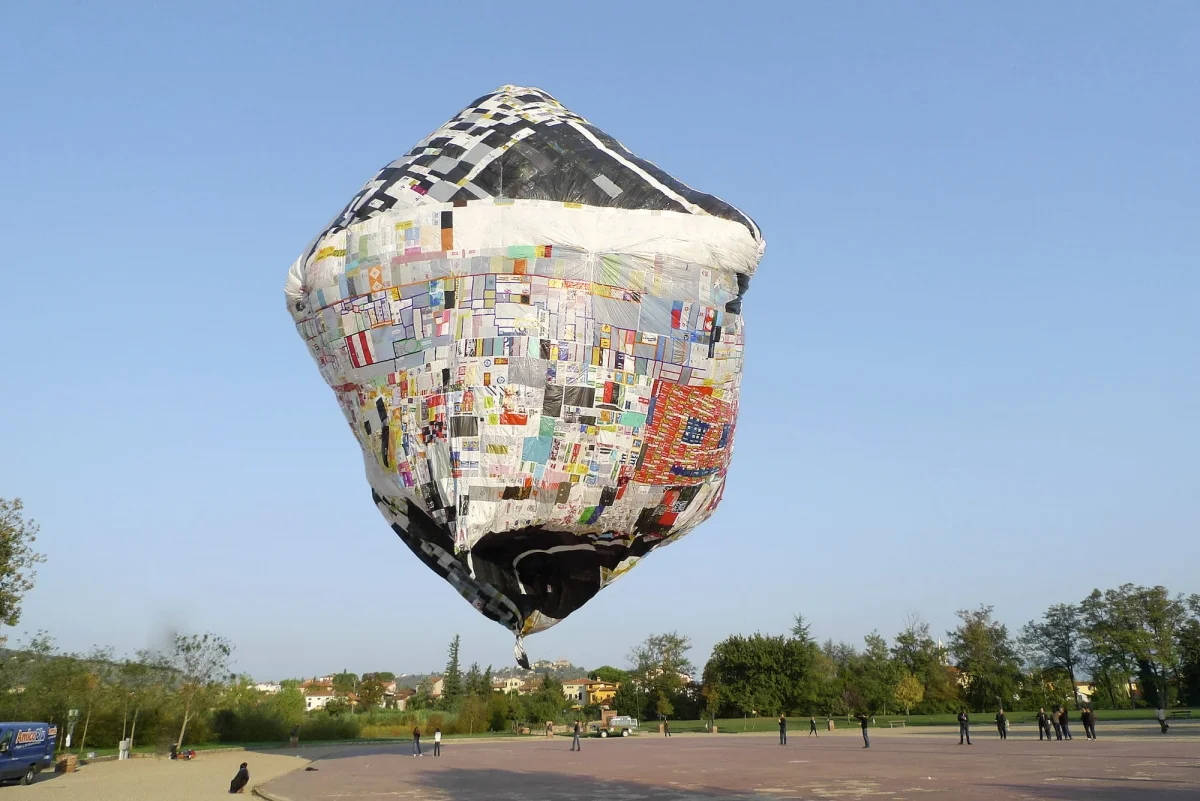
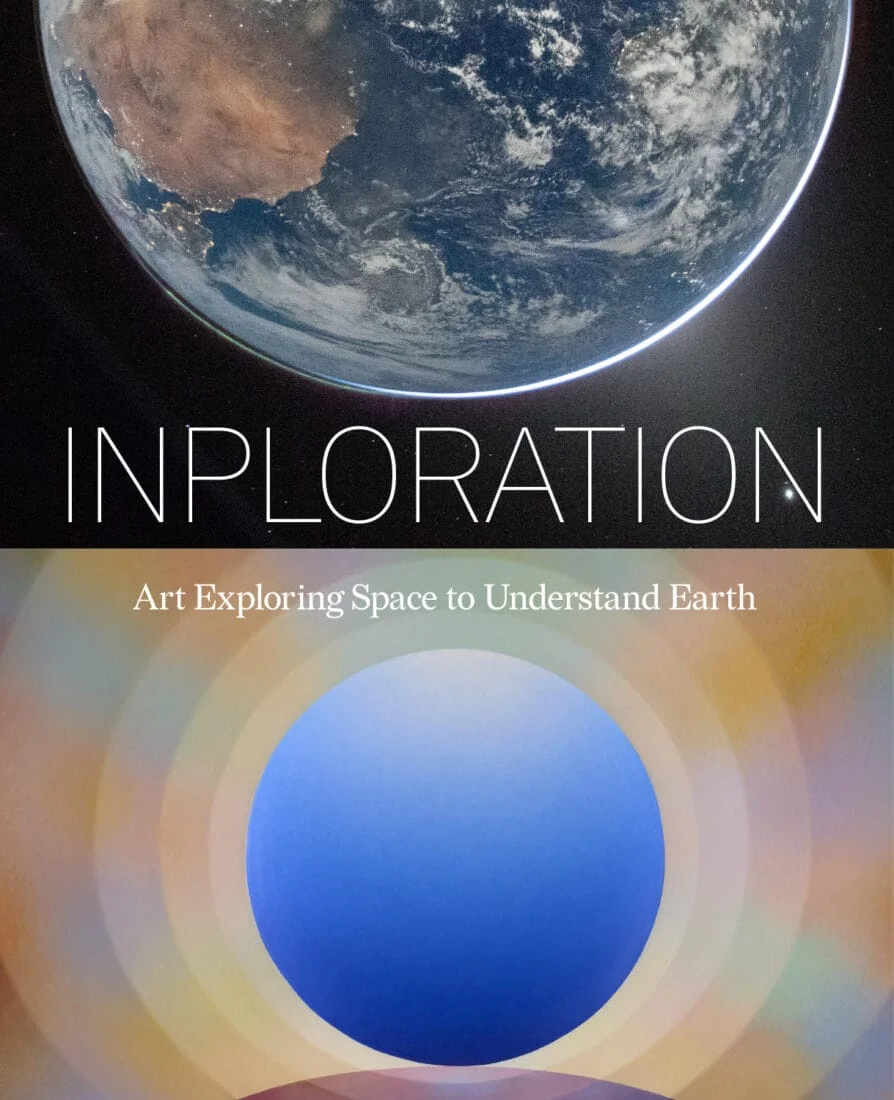
Inploration: Art Exploring Space to Understand Earth uses the vastness of space to bring attention back to the planet beneath our feet. The forthcoming book, edited by creative director and curator Lawrence Azerrad and artist Richelle Ellis, gathers work and thinking from nearly 100 artists, scientists, astronauts, futurists, and others. Its central idea is that curiosity about the cosmos can change how we see, value, and care for Earth.
Ellis and Azerrad’s project takes its name from a term Ellis says they coined as a counterpart to exploration. Exploration looks outward for discovery; “inploration,” in her description, turns inward. The scale of the universe becomes a way to reconsider human experience and our relationship with the planet. That shift gives the book room to connect artistic practice with scientific inquiry without asking either to stand in for the other.
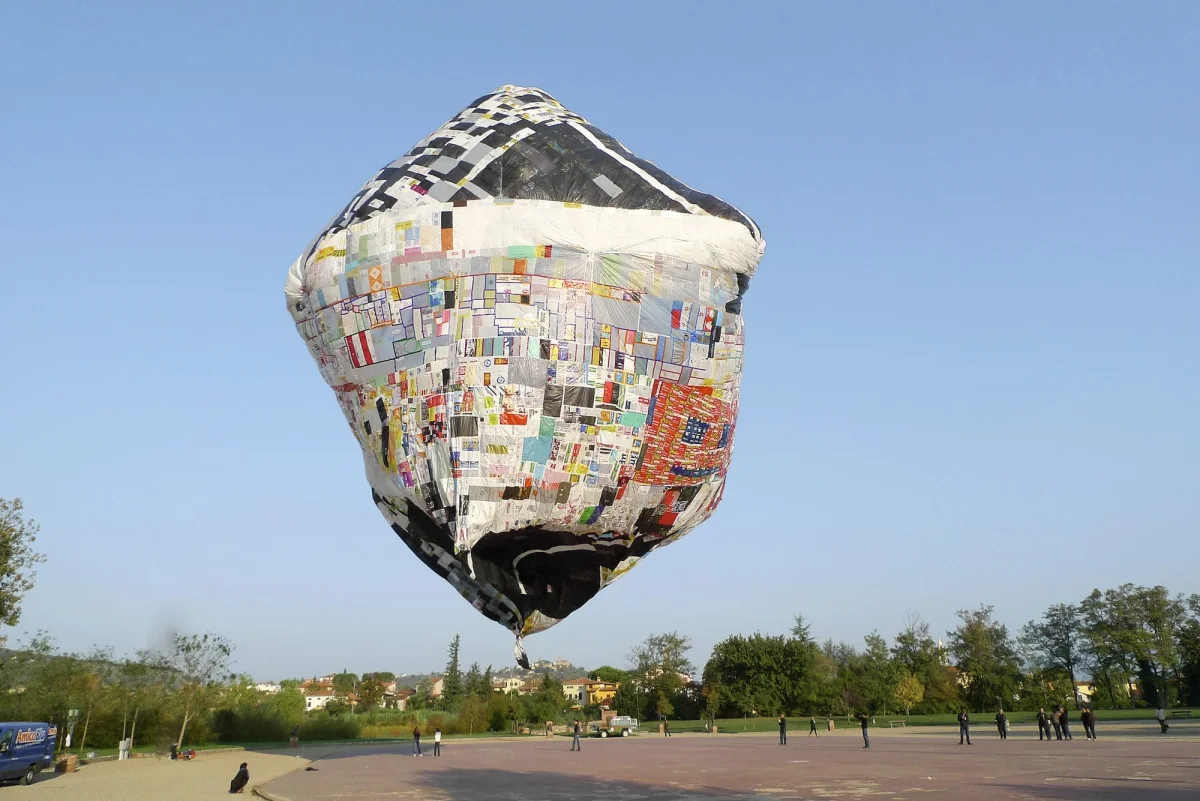
Wonder as a way of seeing
The book’s premise echoes a question raised by environmentalist and writer Barry Lopez in his essay “The Passing Wisdom of Birds”: what gets lost when accounts of nature leave out the senses and the experience of being in it? Lopez argues that scientific methods can overlook perception, and points to quantum physics as a field that makes room for uncertainty while still studying complex events. The reference helps frame Inploration’s interest in wonder as a way to keep observation open, rather than as an alternative to analysis.
That balance matters to the project. A view of Earth from beyond it can make familiar boundaries feel less fixed, while art can bring that change of scale into personal and cultural experience. The contributors approach the subject through different media and questions, so the book reads as a collection of perspectives rather than a single argument about space. Its editors connect those perspectives to the choices people make about their shared home.
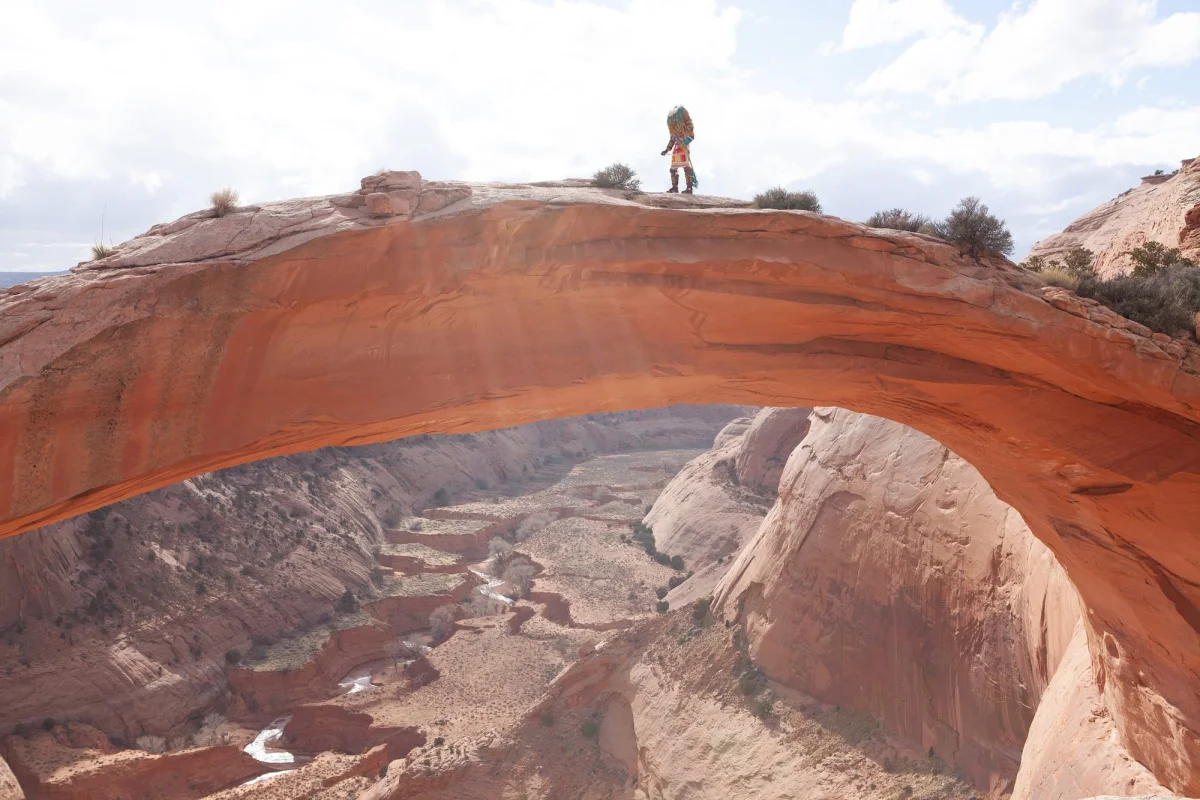
Ellis has spent the past decade investigating what she calls “the intersection of art and aerospace.” She also founded Supercollider and co-founded the Inploration platform with Azerrad. Their work brings together disciplines that often use different languages: an artwork might make an idea tangible through material and scale, while a scientific account describes what can be observed or measured. The book places those approaches in conversation.
From a burning ladder to a desert aperture
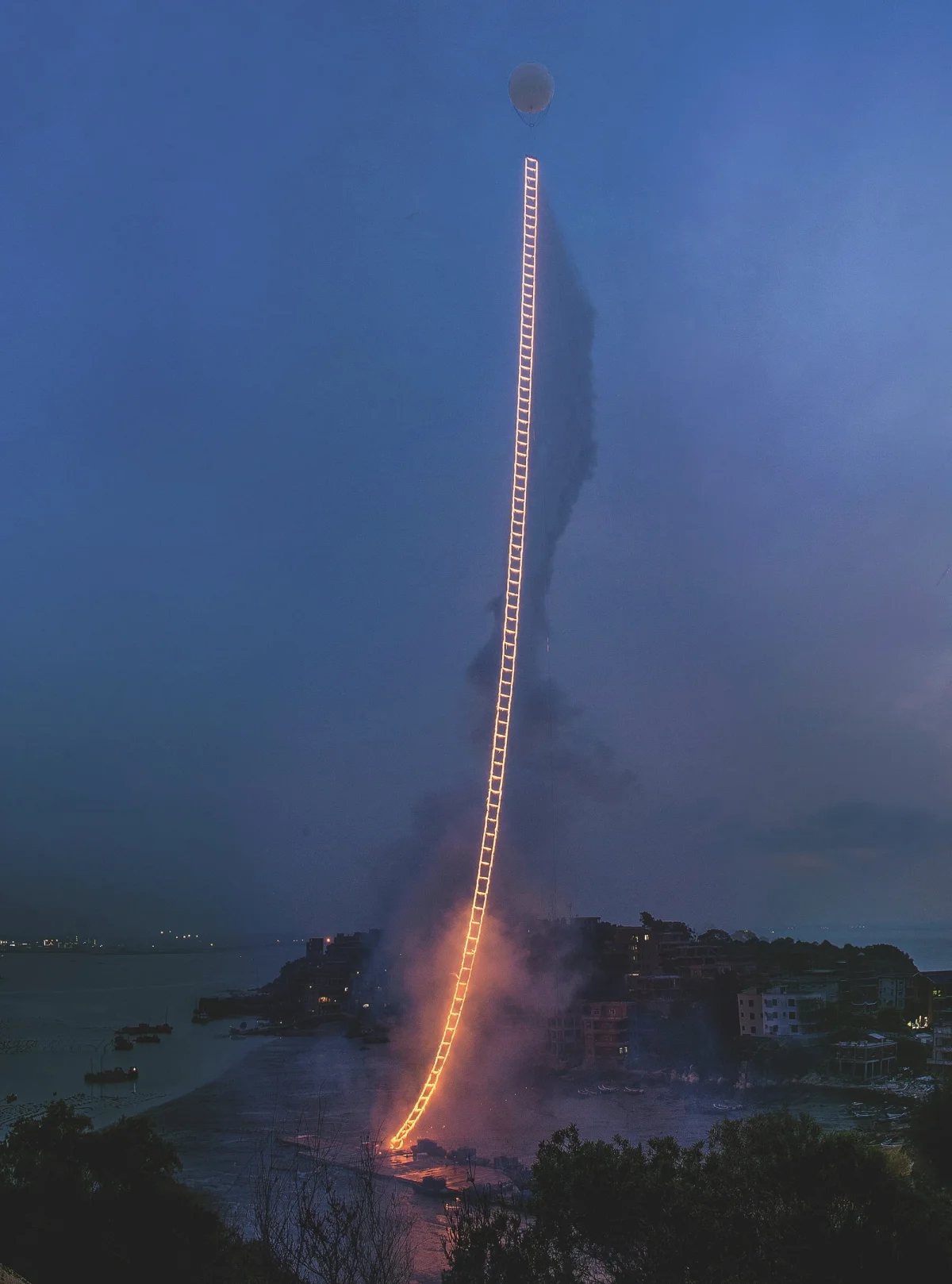
The projects range from large-scale interventions to works that ask viewers to reconsider what counts as a habitable or knowable place. Cai Guo-Qiang’s “Sky Ladder” (2015) was made from gunpowder, fuse, and a helium balloon. It stretched 500 meters by 5.5 meters and burned for 100 seconds at dawn at Huiyu Island Harbour in Quanzhou, Fujian. Its vertical form turns an earthly material and a fleeting event toward the sky, making the atmosphere itself part of the work.
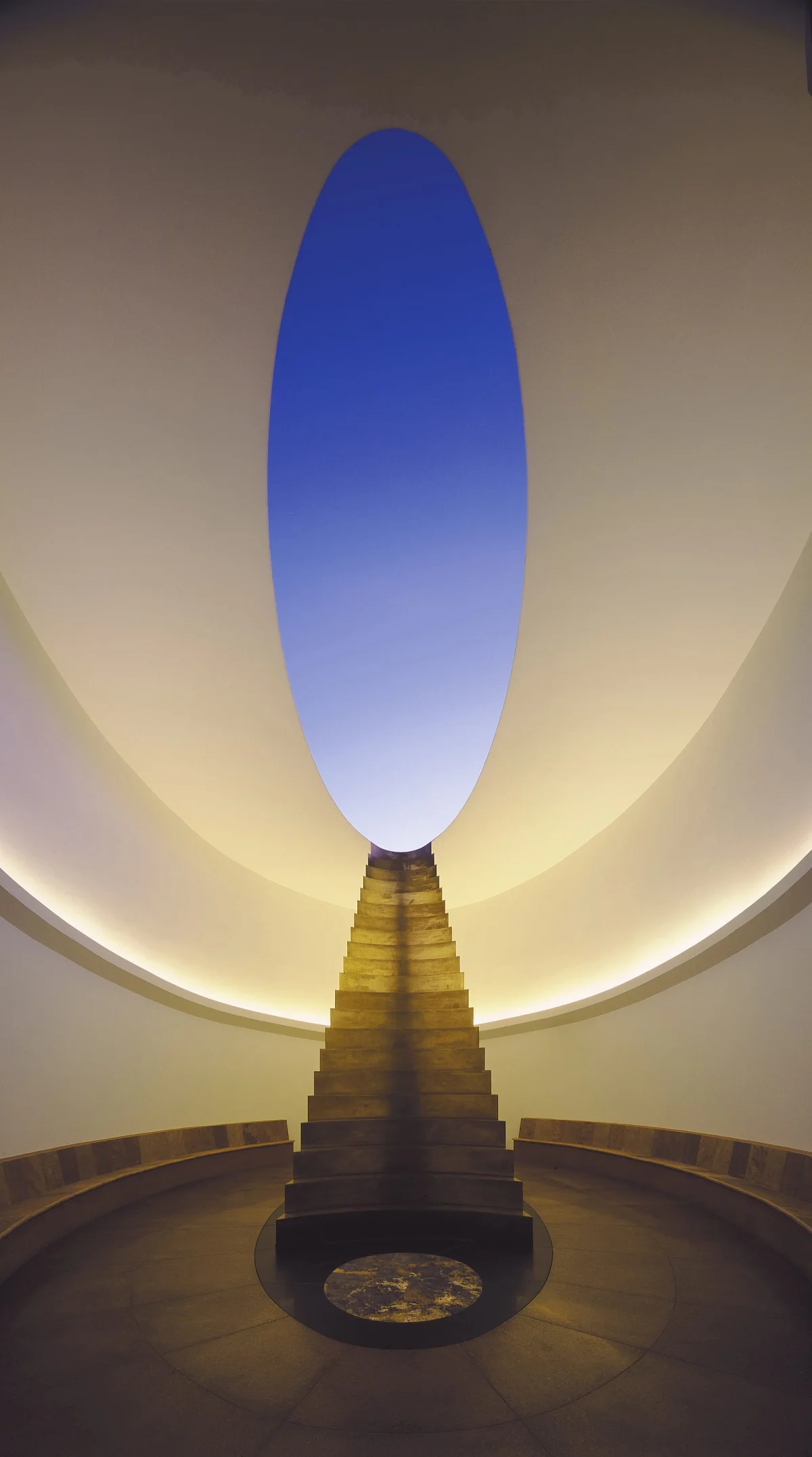
James Turrell’s “Roden Crater” (2015) works through a different kind of encounter. The earthwork’s interior frames the sky through an aperture, with a stairwell leading visitors down into the structure. Rather than depict the cosmos, the architecture sets up a direct view of it. The opening, the descent, and the changing sky shape how a visitor experiences light and space.
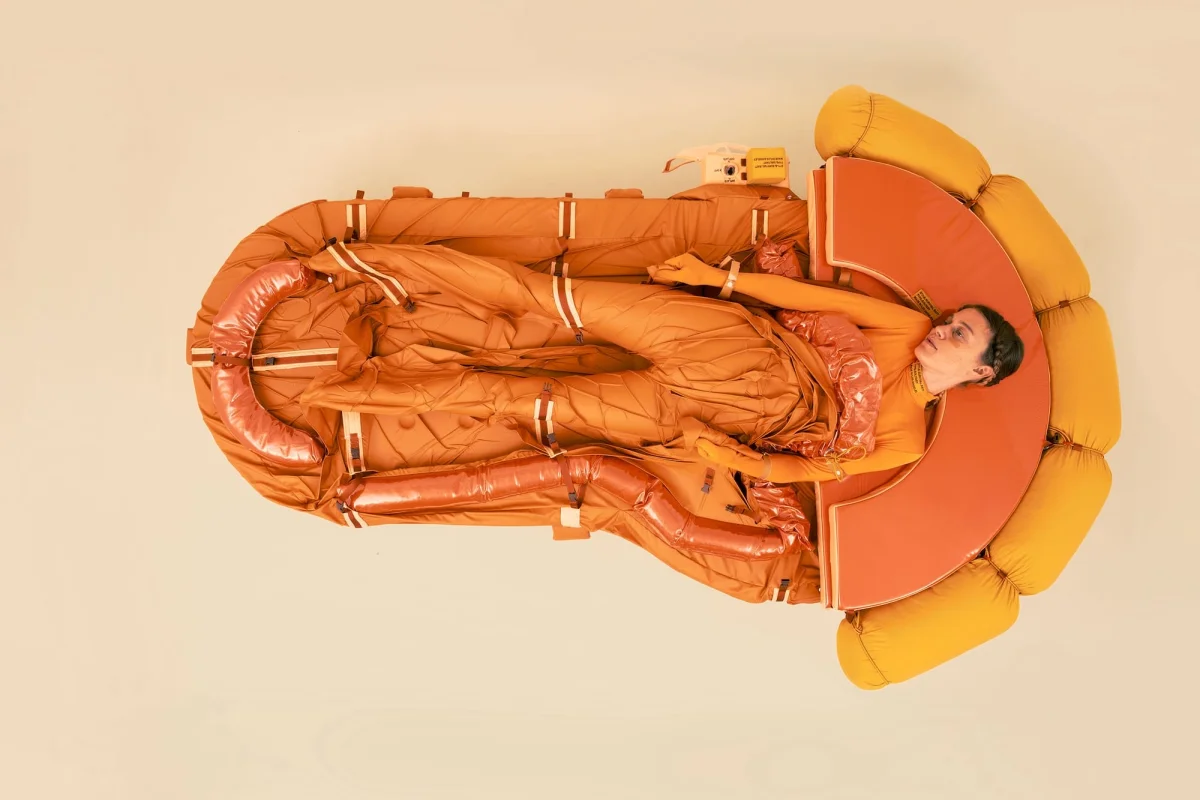
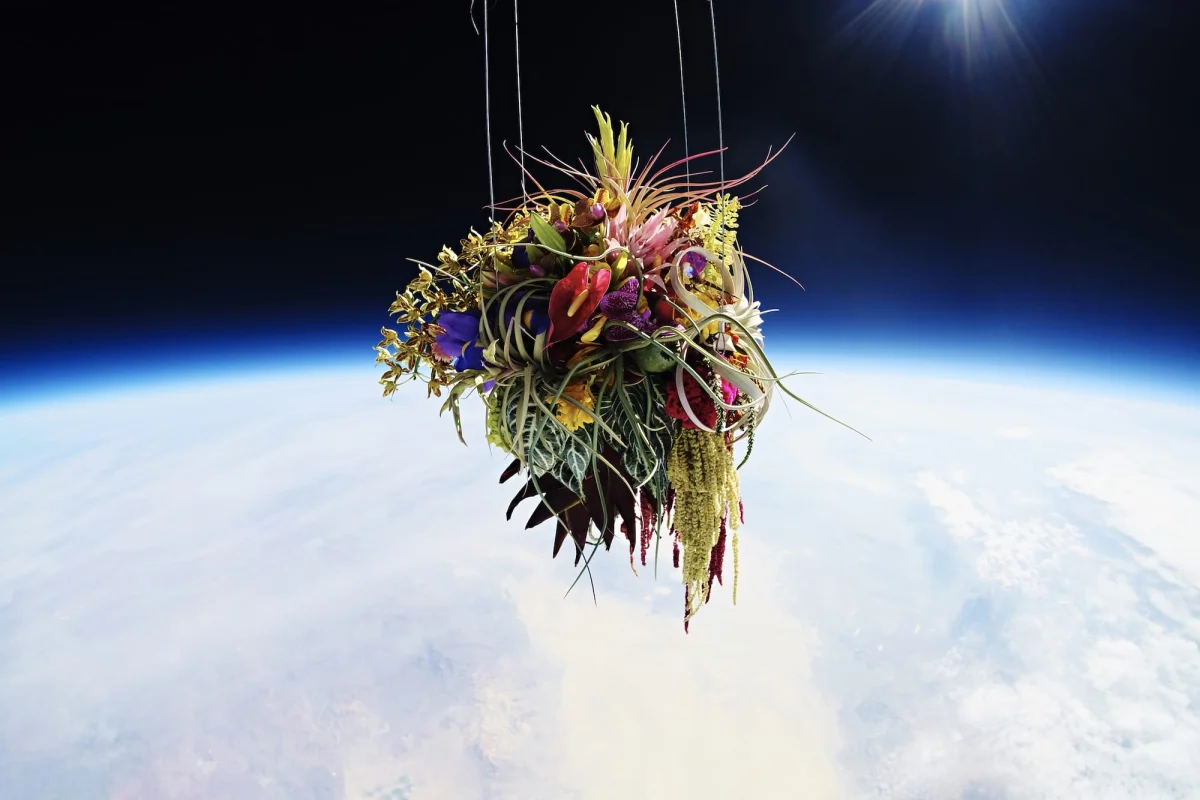
Other works make the body’s vulnerability or the persistence of life part of the conversation. Lucy McRae’s “Solitary Survival Raft” (2020) presents a compact orange vessel designed for one person. Azuma Makoto’s “In Bloom #1: EXOBIOTANICA I-BOTANICAL SPACE FLIGHT” (2014), photographed in Nevada’s Black Rock Desert, places flowers against the suggestion of Earth seen from space. Each image offers a different point of entry into questions of survival, distance, and what humans carry with them.
Many scales, one shared planet
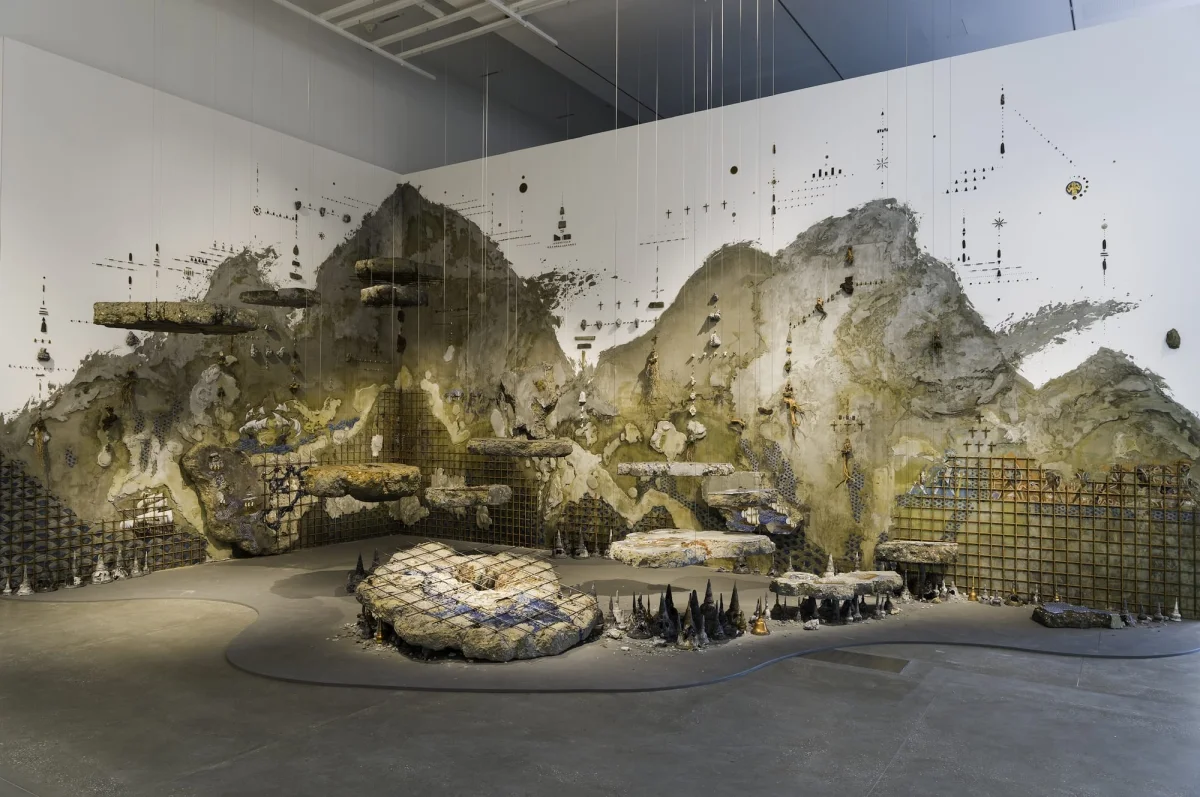
The selection also includes Cannupa Hanska Luger, Tavares Strachan, Wangechi Mutu, and Pannaphan Yodmanee. Yodmanee’s “In the aftermath” (2017–18) combines found objects, artist-made icons, plaster, resin, concrete, steel, and pigment in a variable-size installation. Lita Albuquerque’s “Stellar Axis: Antarctica” (2006) sets small dark spheres against the bright expanse of the southern continent. These works bring cultural memory, constructed environments, and remote terrain into a book concerned with how people place themselves within larger systems.
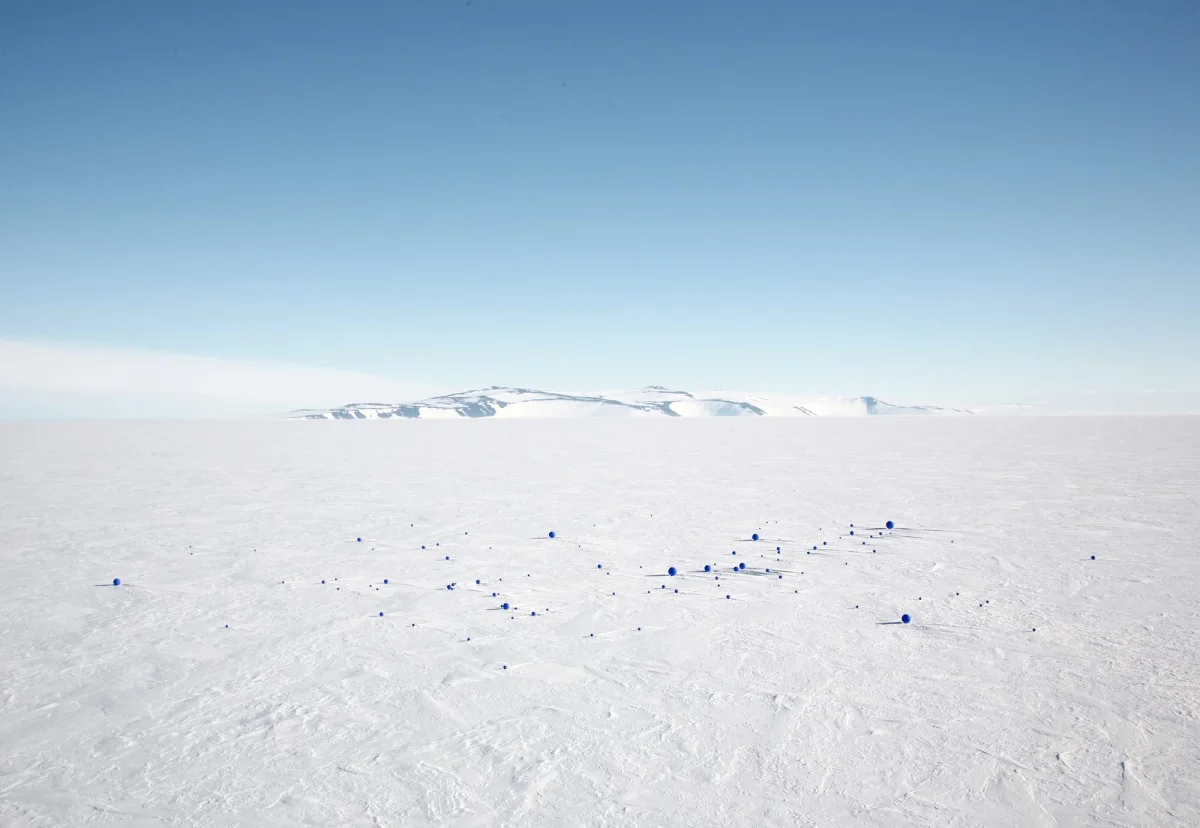
Azerrad and Ellis describe the book as a shift in perspective as much as a gathering of works. They argue that imagination and curiosity have helped people understand and navigate the world, and that wonder can be necessary when facing the opportunities and challenges of a connected culture. The collection makes that case through specific artistic encounters: a brief flare of fire, an aperture open to the sky, flowers poised against Earth, and objects arranged in a changed terrain.
Inploration: Art Exploring Space to Understand Earth is forthcoming from Delmonico Books and is scheduled for release at the end of October. Copies can be pre-ordered through Bookshop.
| Rev | Description | Date |
|---|---|---|
| A | Issued for reading | |
| B | Viewed 872 times | Current |


