Phaidon’s Fungi: The World of Mushrooms Brings More Than 200 Images Together
- Project
- UX & UI Design
- Drawn by
- Grace Ebert
- Issued
- Sheet
- A-197
Phaidon’s October 15 book gathers more than 200 images spanning centuries, from Hilma af Klint’s drawings to interactive mushroom sculptures.
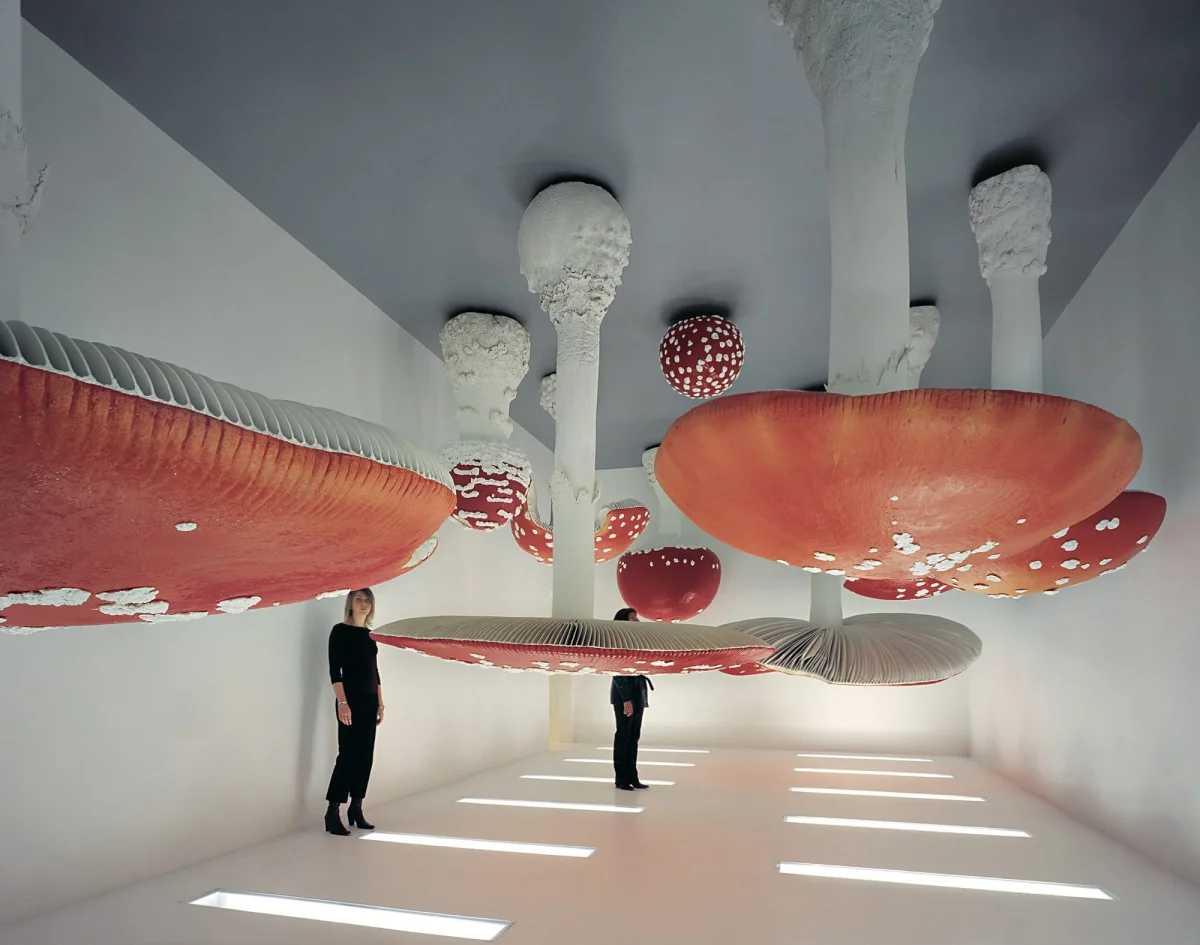
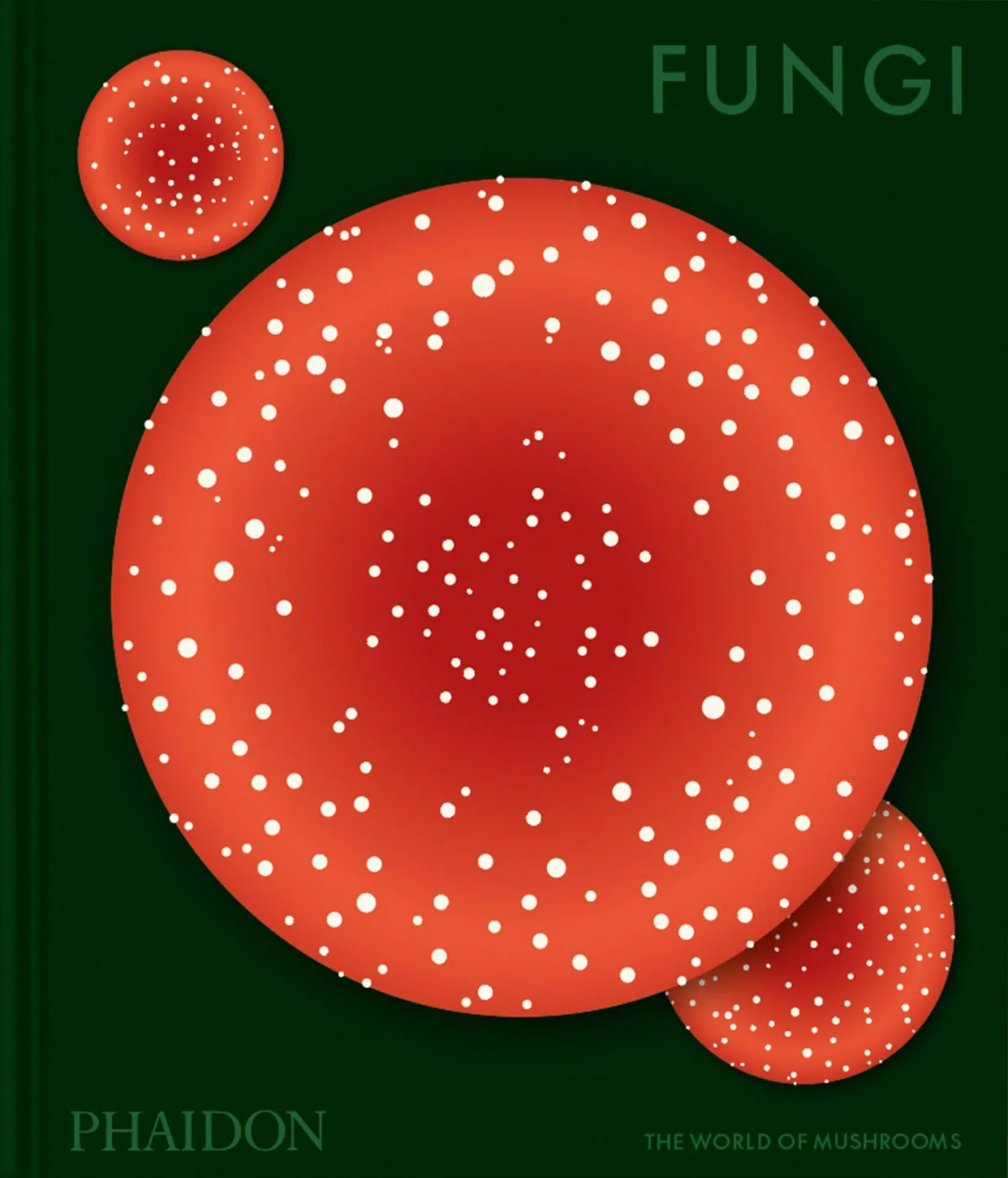
Fungi sit at the meeting point of natural history, visual culture and material experimentation. Phaidon’s Fungi: The World of Mushrooms makes that range its subject, bringing together more than 200 photographs, artworks, historical objects and other images across a book of more than 200 pages. Set for release on October 15, the volume moves from ancient objects to contemporary work, offering designers and image makers a broad collection of ways that mushrooms have been observed, represented and reimagined.
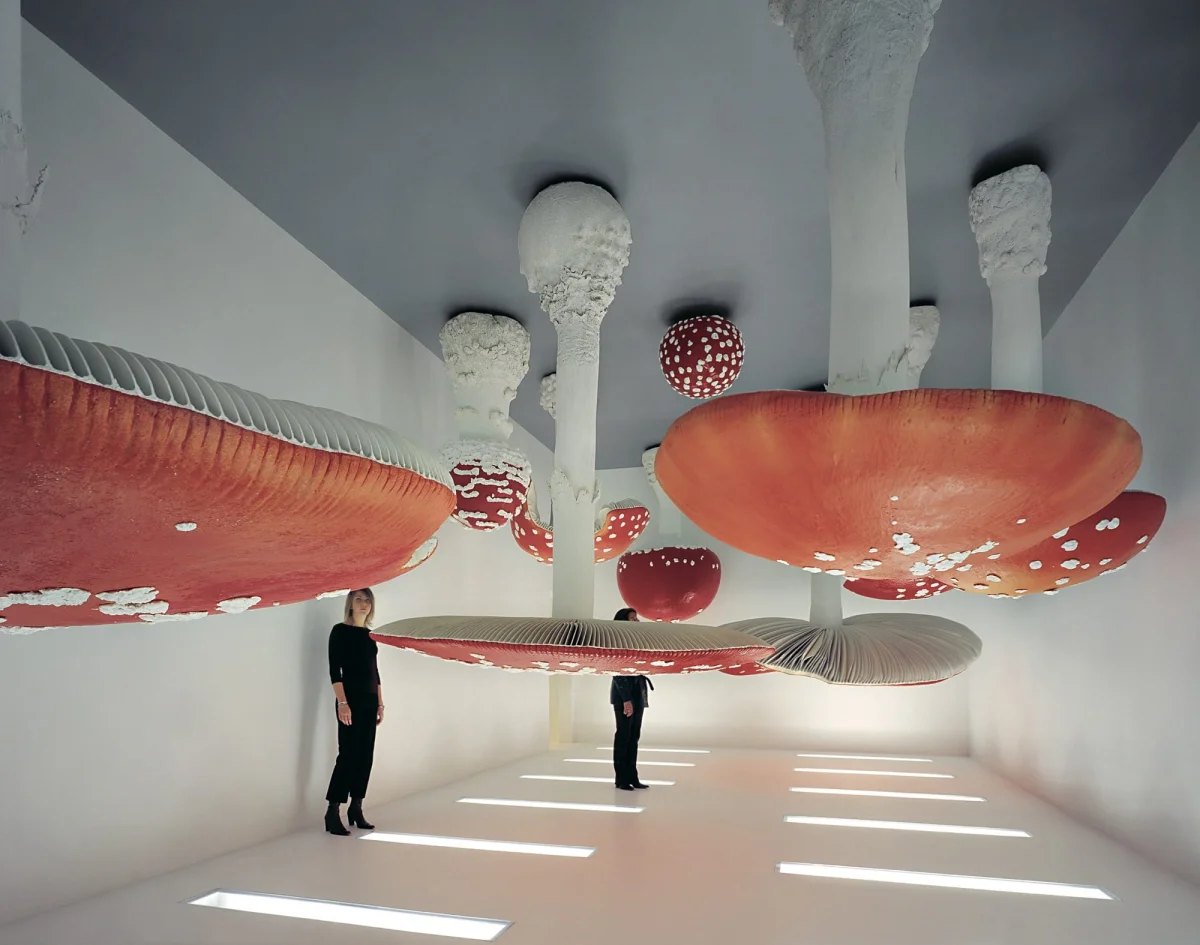
The book follows Phaidon’s earlier surveys of butterflies, birds, oceans and trees. Fungi give the series a subject with particular visual elasticity: the forms can be studied as biological specimens, rendered as delicate illustrations, or translated into sculpture, costume and installation. That variety lets the collection connect close observation with imaginative interpretation.
From field observation to constructed worlds
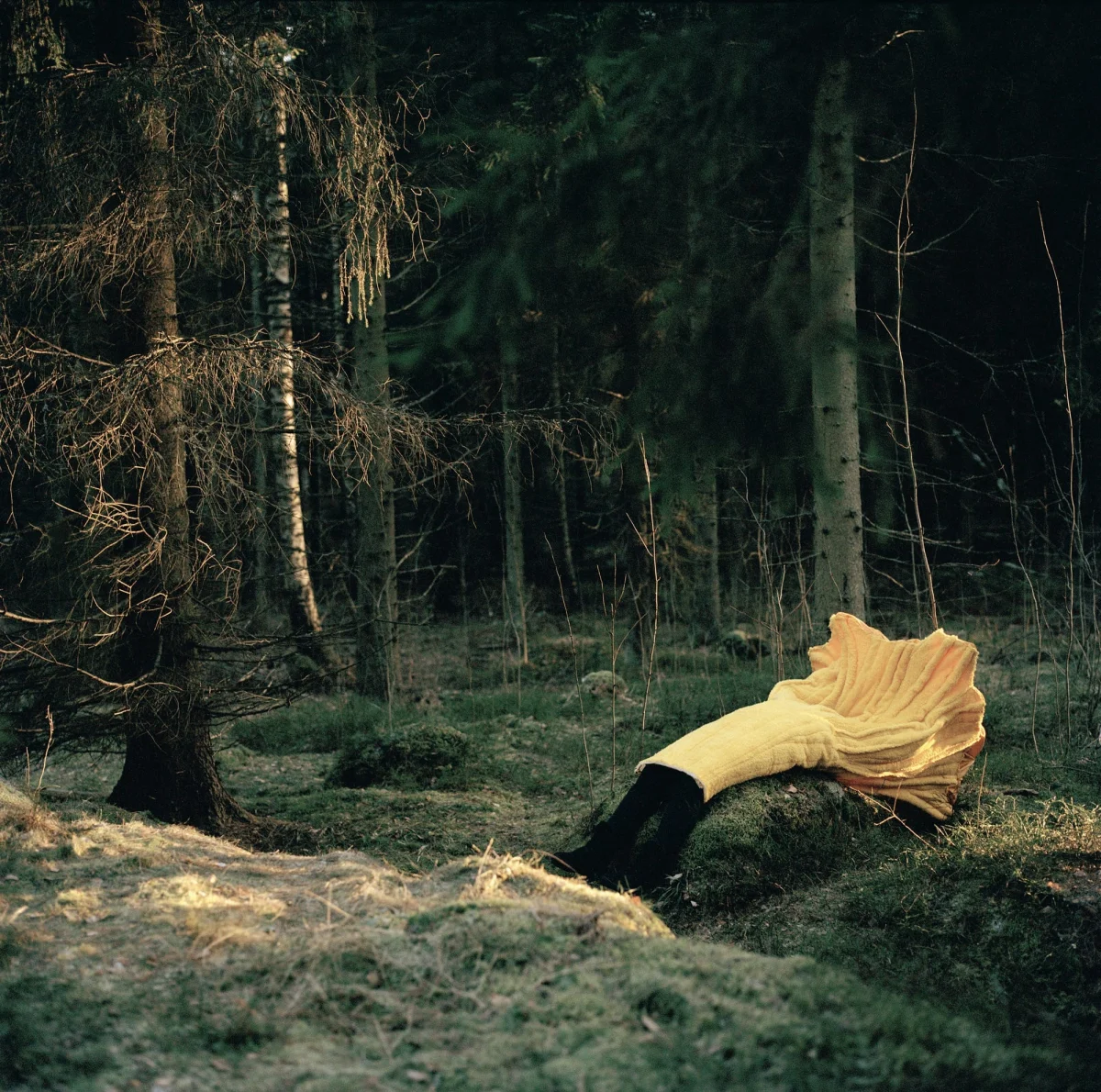
Among the contemporary works are photographs by Riitta Ikonen and Anni Koponen, whose “Chanterelle” places a yellow mushroom costume within a forest setting. The image brings the subject into the landscape through a wearable form, making the mushroom both a visual reference and part of a staged encounter with its surroundings. Its caption dates the work to 2009 and gives its dimensions as 29½ by 29½ inches.
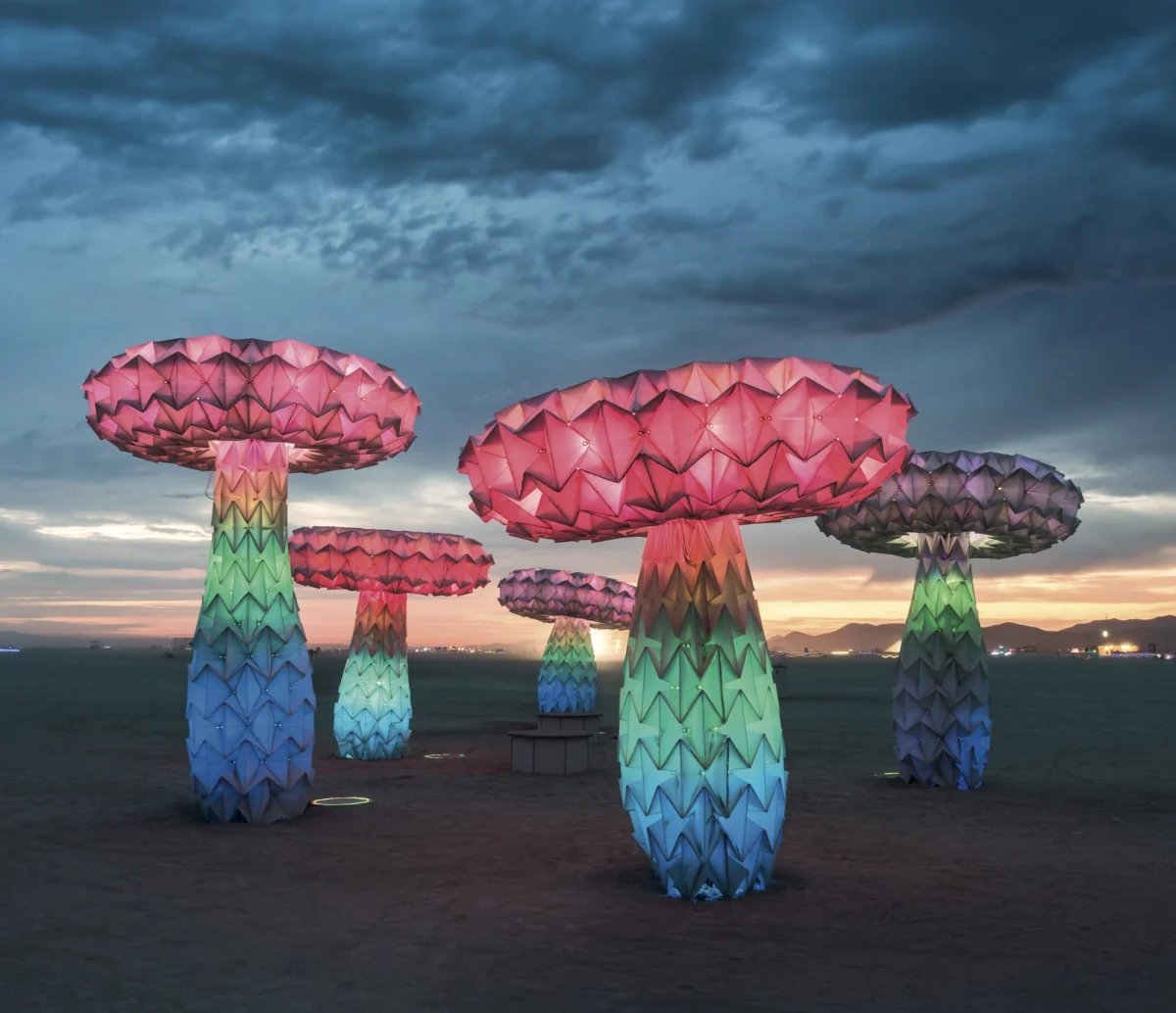
FoldHaus Collective takes a more architectural approach with “Shrumen Lumen” (2016), an installation of illuminated mushroom forms. Aluminum, steel, polypropylene and interactive electronics make up the work, whose components range from 11 to 17 feet high and 9 to 12 feet across. At dusk, the glowing structures turn a familiar natural shape into an environment-scale experience. The materials and interactive elements also shift the viewer’s role: the work is encountered as an installation rather than simply looked at as an image.
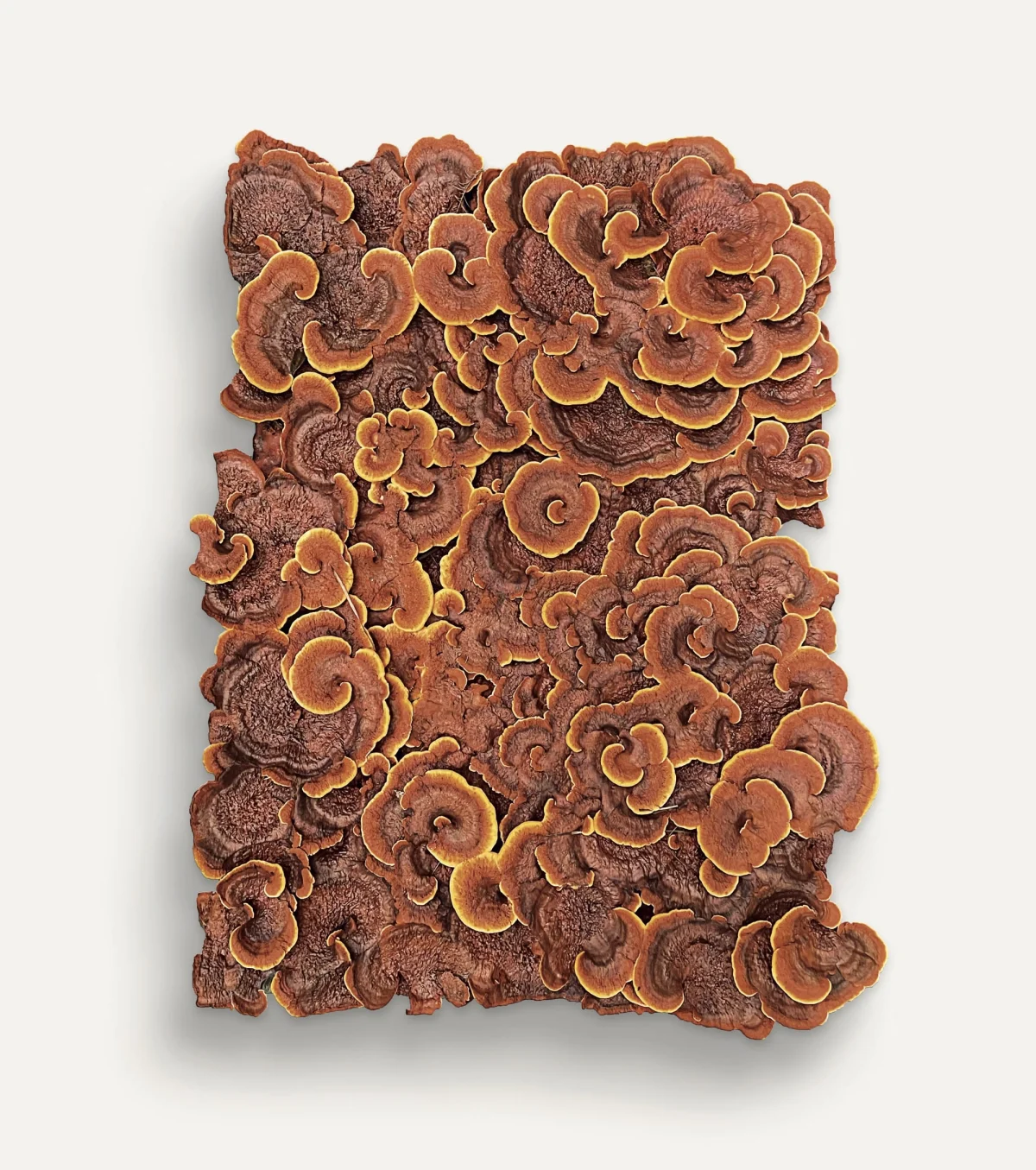
Chris Ritson’s “Mushroom Picture” (2022) brings actual fungal growth into the work’s making. Made from live fungus and sawdust, the 20-by-14-inch piece records a process in which the material itself contributes to the image. That approach sits in useful contrast with a photograph or drawing: the subject is not only depicted but also involved in producing the object.
Historical forms and careful illustration
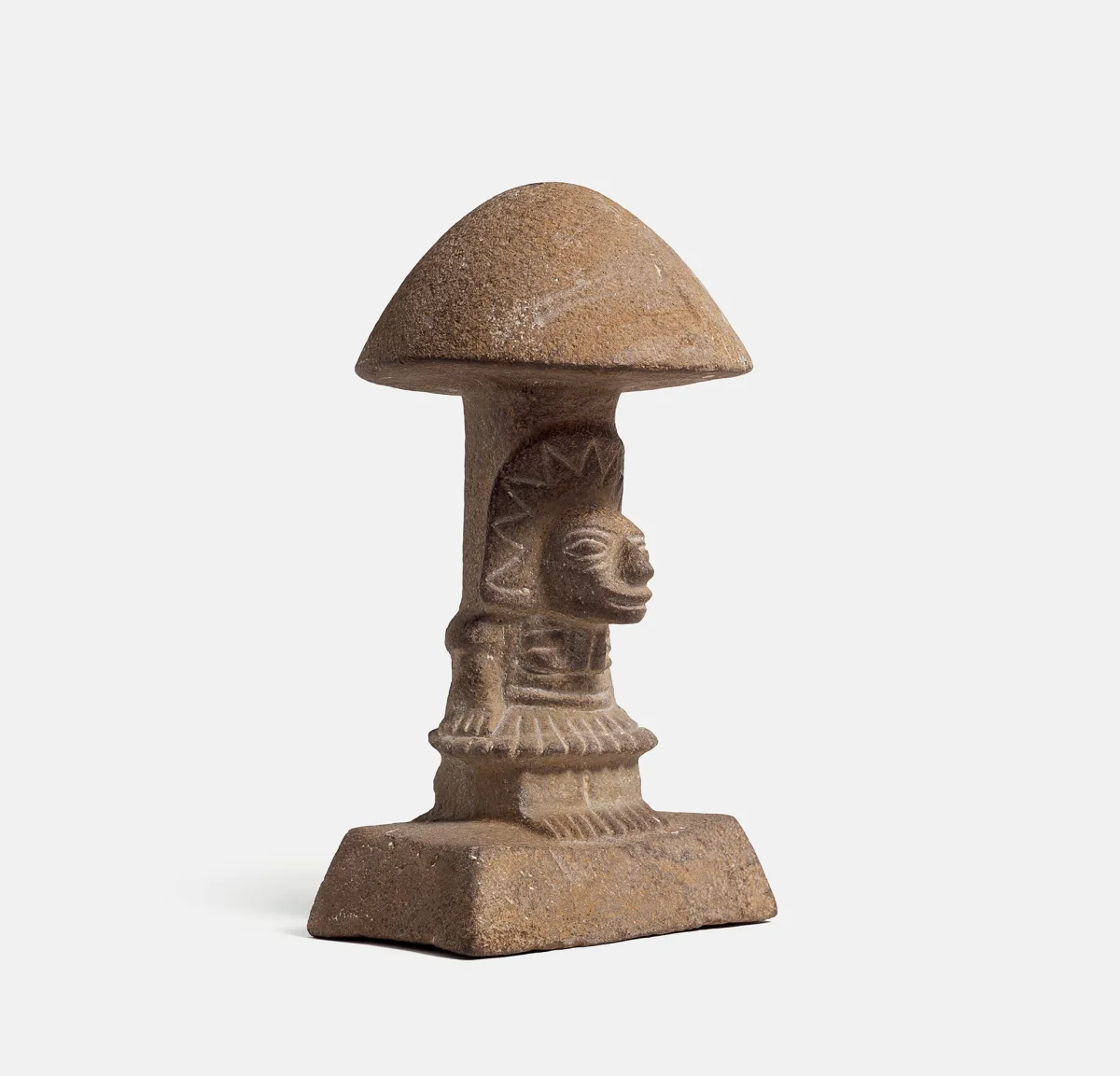
The collection reaches back to a carved mushroom stone dated to 400–250 BCE. The stone object, photographed with the courtesy of Museum Rietberg Zürich, shows a mythic figure emerging from a mushroom. At 13⅛ by 7½ by 6¾ inches, it offers a compact historical example of fungi taking on symbolic form. Placed alongside contemporary work, the object widens the book’s frame beyond mushrooms as specimens or motifs, showing how they have also appeared in cultural imagery over time.
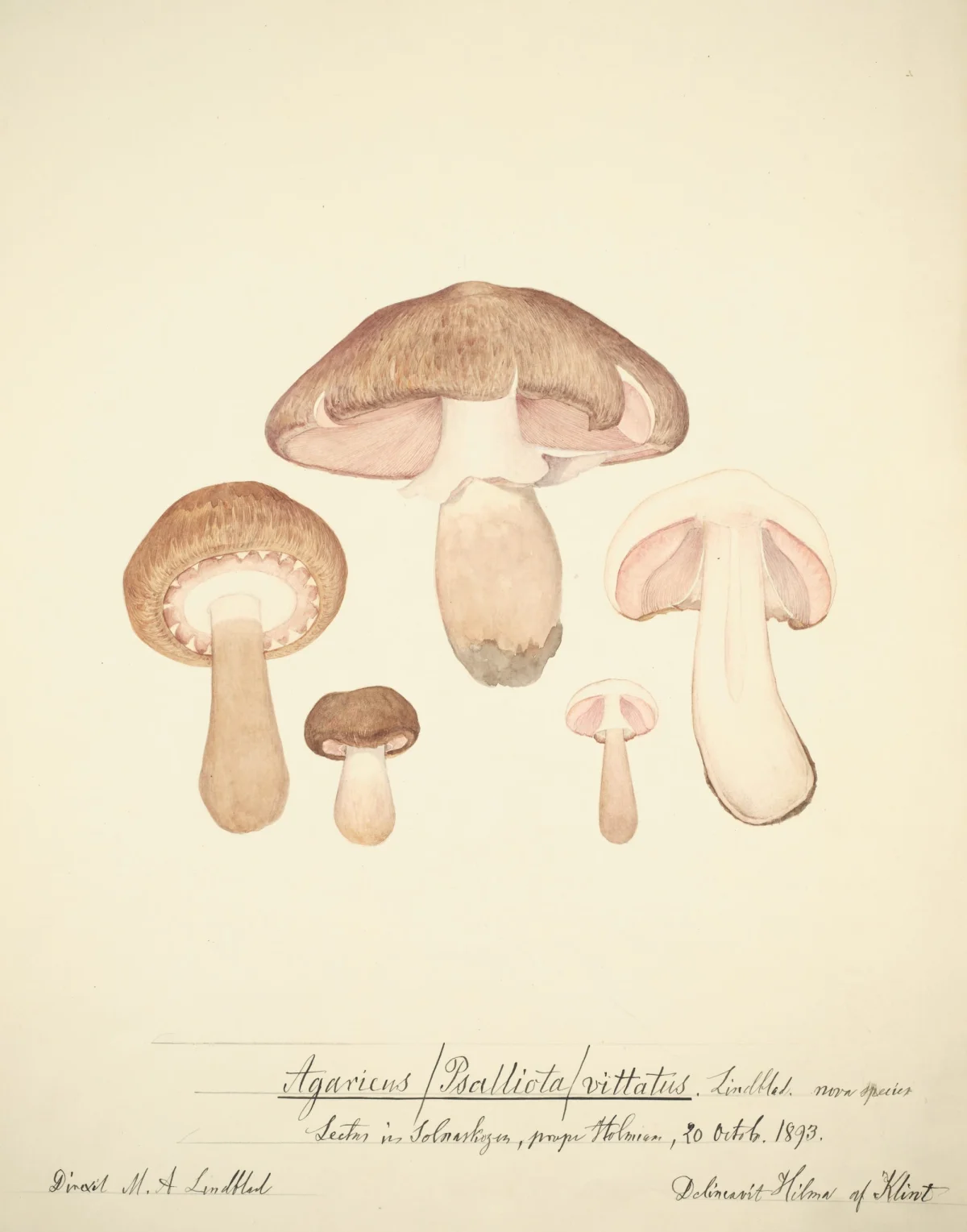
Hilma af Klint’s “probably Agaricus bisporus (cultivated mushroom)” dates to 1893. The watercolor, gouache, pencil and ink drawing on paper measures 16⅜ by 12 inches. Its title signals some uncertainty in identifying the subject, while its range of media points to the close attention involved in botanical illustration. For readers who work with images, that precision offers a different kind of reference from the staged costume or luminous installation: here, the mushroom is studied through line, pigment and form.
Together, these works suggest why fungi can support such varied visual approaches. A single subject can prompt documentary looking, speculative staging, object making and immersive display. The book’s chronology and range of media make those approaches available for comparison, while the captions preserve practical details such as dates, materials, dimensions and image credits.
A visual reference across centuries
Fungi: The World of Mushrooms is scheduled for release on October 15, and copies can be reserved through the Colossal Shop. With more than 200 pages and imagery spanning several millennia, the volume appears suited to browsing as much as sequential reading. Its clearest value for creative teams may be the opportunity to see how different makers turn the same broad subject into distinct visual languages: measured illustration, found material, costume, sculpture and light.
Readers can find further information about supporting Colossal through its membership page.
| Rev | Description | Date |
|---|---|---|
| A | Issued for reading | |
| B | Viewed 959 times | Current |


