Colin King’s Interiors Find Depth in Movement, Memory and Everyday Imperfection
- Project
- UX & UI Design
- Drawn by
- Monika Mróz
- Issued
- Sheet
- A-191
The stylist draws on dance, book collecting and small domestic rituals to make rooms feel layered, personal and lived in.
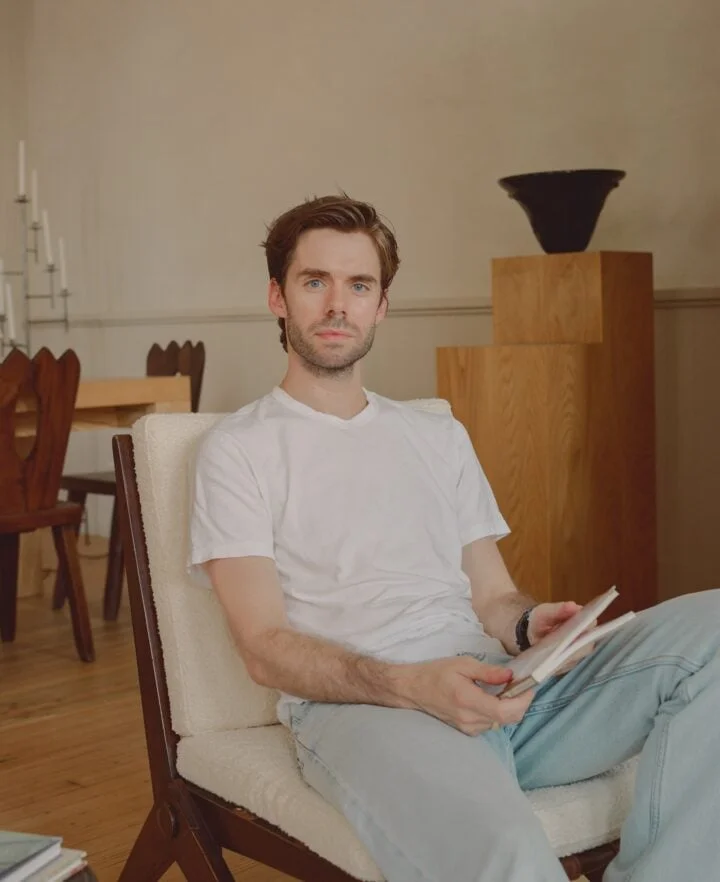
Colin King’s rooms are composed with a stylist’s eye and a dancer’s sense of space. Their quietness doesn’t come from stripping everything back: it comes from noticing how light falls, how an object sits beside another, and when a scene feels complete. King’s work gives imperfection room to breathe, making a carefully arranged interior feel as if life is still unfolding in it.
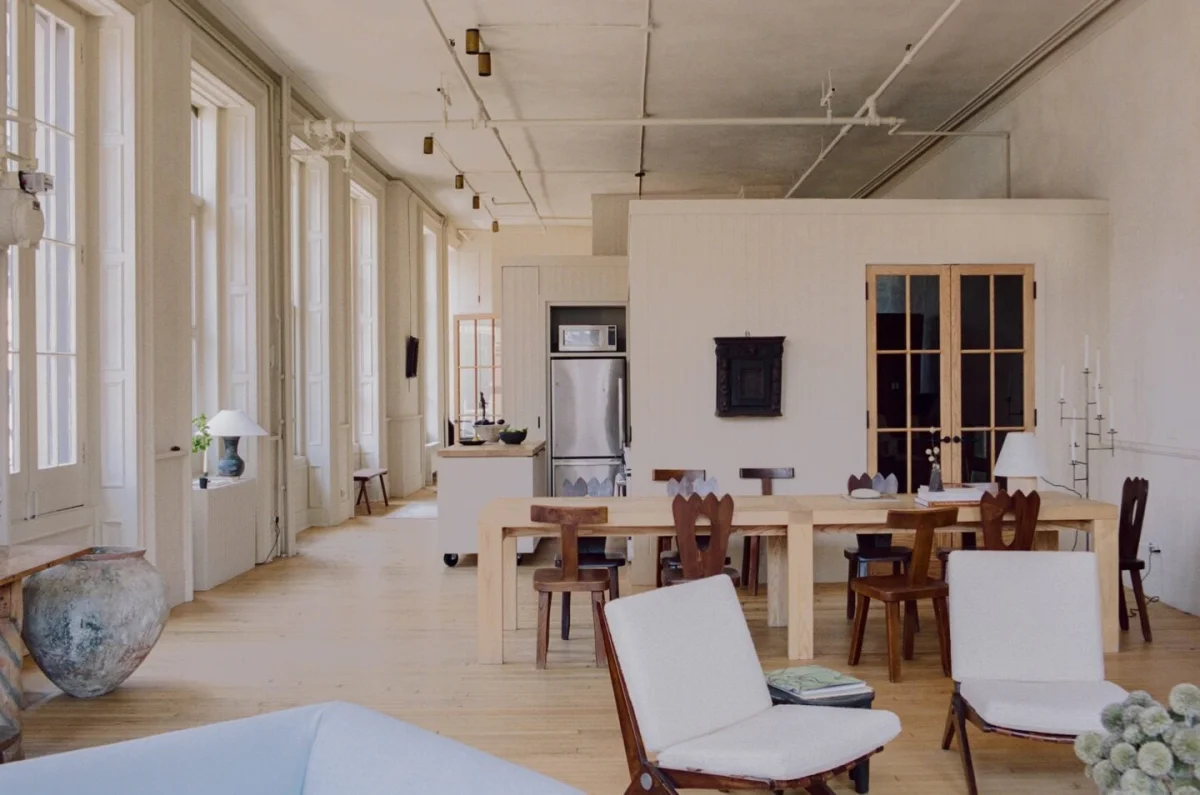
That approach has grown out of an unconventional career. King trained in dance, worked as a personal trainer and estate manager, and gradually found his way into interiors through styling, photography and editorial shoots. Today, his Tribeca loft is both a home and a working studio, a setting for client and collaborator meetings as well as a place where objects and arrangements continue to change.
Colin King spoke with Monika Mróz about the movement behind his visual language, the small choices that shaped his apartment, and how he finds an original point of view amid a constant flow of images. His answers offer a practical idea for designers: treat a room as something experienced over time, not a picture to perfect once and leave untouched.
Reading a room through movement
King still sees dance as a working discipline, not simply a former career. A dancer trains the body as an instrument, he explains, while accepting that its capabilities shift from day to day. The value lies in returning to practice: showing up at the ballet barre, building strength and refining the instrument even when the work feels different each time.
That experience also gave him a way to read space. Dance communicates without words, and styling, in King’s view, does something similar: it creates a visual language that viewers can interpret from their own perspective. Spatial awareness is part of that fluency. A dancer learns to feel how a body occupies a room; a stylist can carry that awareness into the placement of furniture and objects.
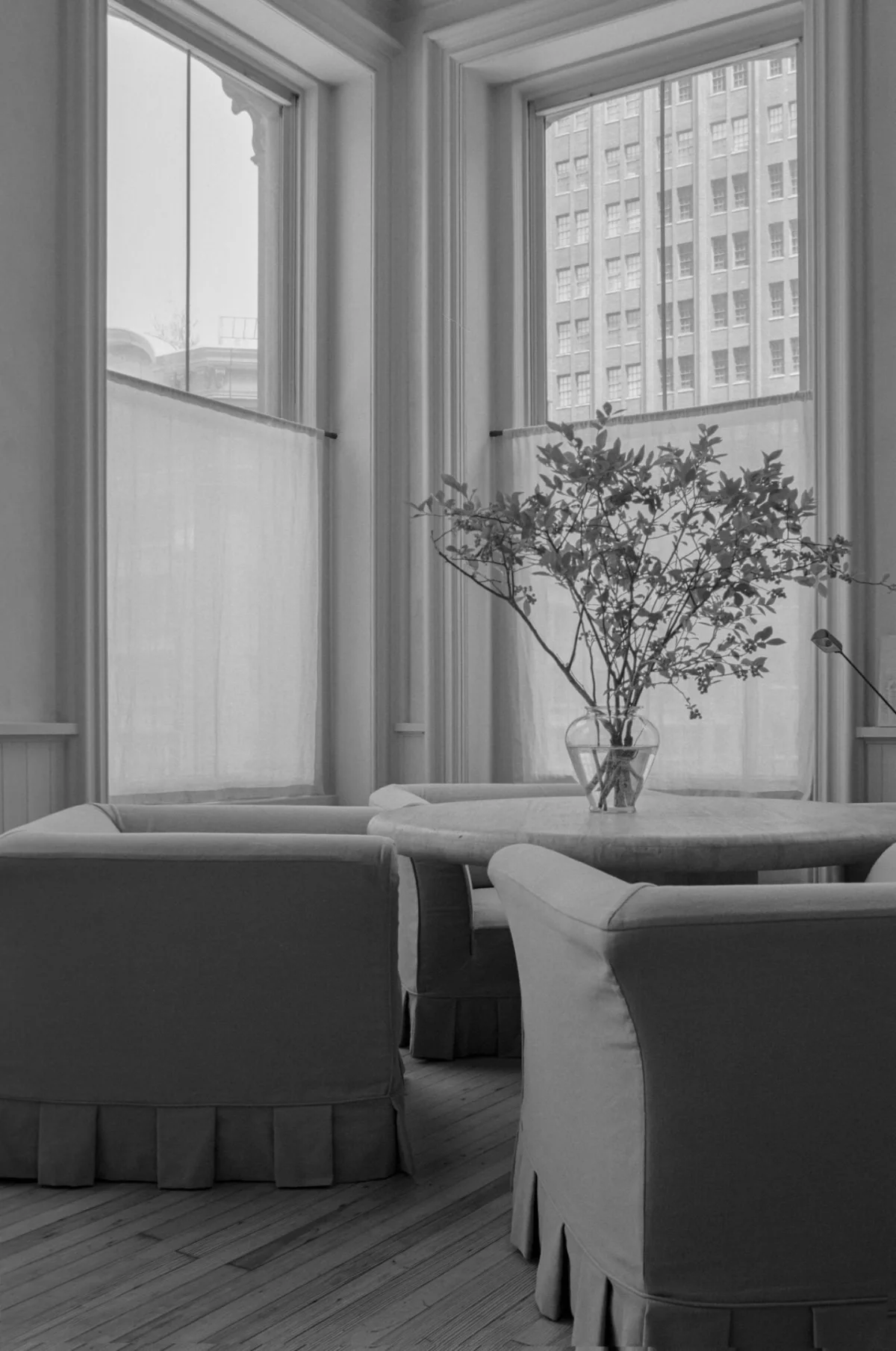
Lighting is one visible connection. King prefers side lighting in interiors, a choice informed by stage lighting used to keep movement from appearing flat. Light arriving from the side can reveal an object’s edges and surface, and bring dimension to the area around it. The result matters as much as the individual piece: the room reads through relationships between objects, shadows and open space.
That sensitivity to depth helps explain why his compositions feel composed without seeming rigid. The aim isn’t to make every item equally prominent. It’s to let forms hold their own, while light and placement guide the eye through the scene. For a stylist, that can mean recognizing that adjusting a lamp or turning a piece slightly may shift the whole arrangement.
A nonlinear route into interiors
King didn’t set out with a clear plan to become a stylist. After studying dance at a New York college, he took assorted jobs while auditioning, then moved to Los Angeles and danced for a time. He later became a personal trainer, a path familiar to many dancers who understand the body through daily practice.
Training clients brought him into homes he had previously encountered only in books and magazines. Seeing those spaces firsthand changed the way he thought about interiors. He went on to manage seven homes for one client, where his responsibilities included arranging flowers, styling rooms and recording what made each home distinct. He began photographing the spaces, building an archive through observation.
His next role was at a design firm, where he managed content and a small shop. He styled the shop, photographed it and handled its social media. In 2015, as Instagram was gaining traction, photography became a channel for his creative work. After returning to New York, he was increasingly described as a stylist, though at first he didn’t know what the job involved.
A photographer friend invited him to style a shoot, and the work developed from there. Architectural Digest found his name, leading to editorial assignments about once or twice a month. King continued to supplement his income with personal training and learned design while working as a junior designer for Tom Delavan. An agent followed, and the freelance work gathered momentum. The route wasn’t a tidy sequence of career steps; it grew from opportunities that connected his eye for space with a growing ability to make and photograph scenes.
That history matters to the way King describes his practice. Photography, arranging and managing homes weren’t separate experiences that he had to discard as his role changed. Each gave him a different kind of familiarity with how interiors are used and seen. He knows the difference between being inside a room and constructing the frame through which someone else will encounter it.
A loft shaped by small decisions
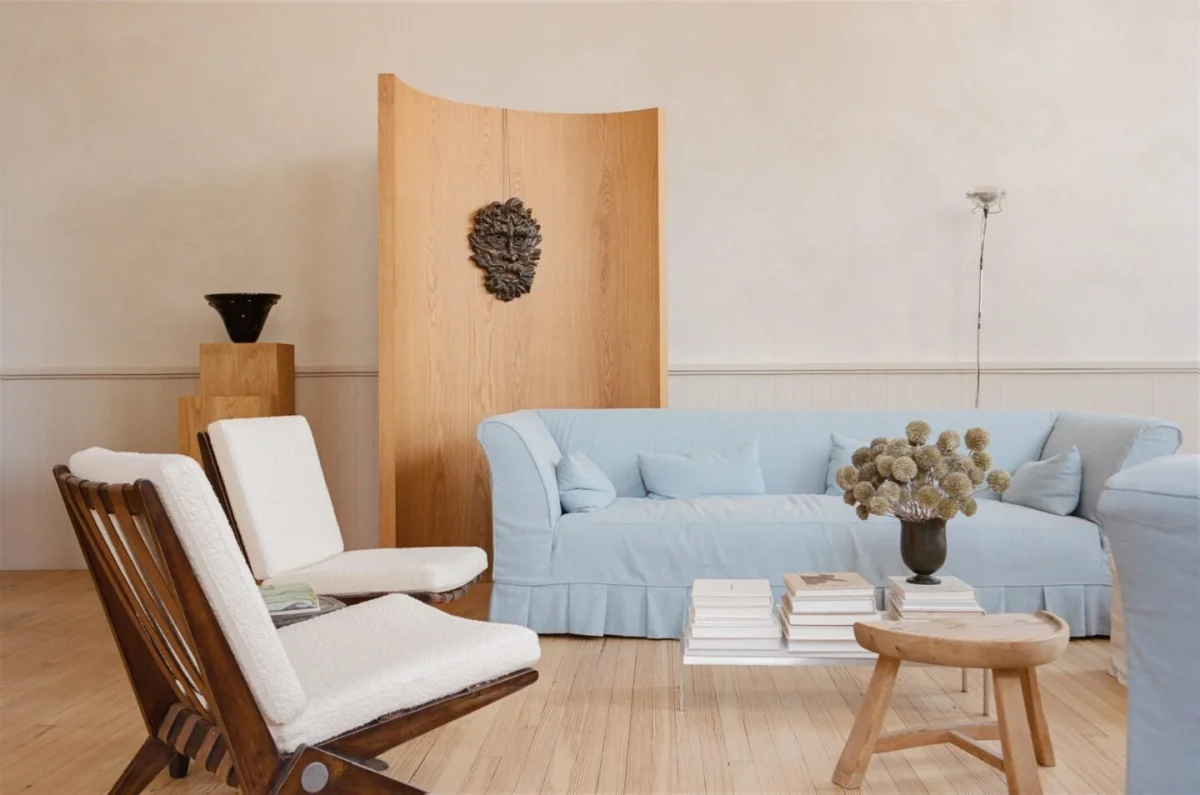
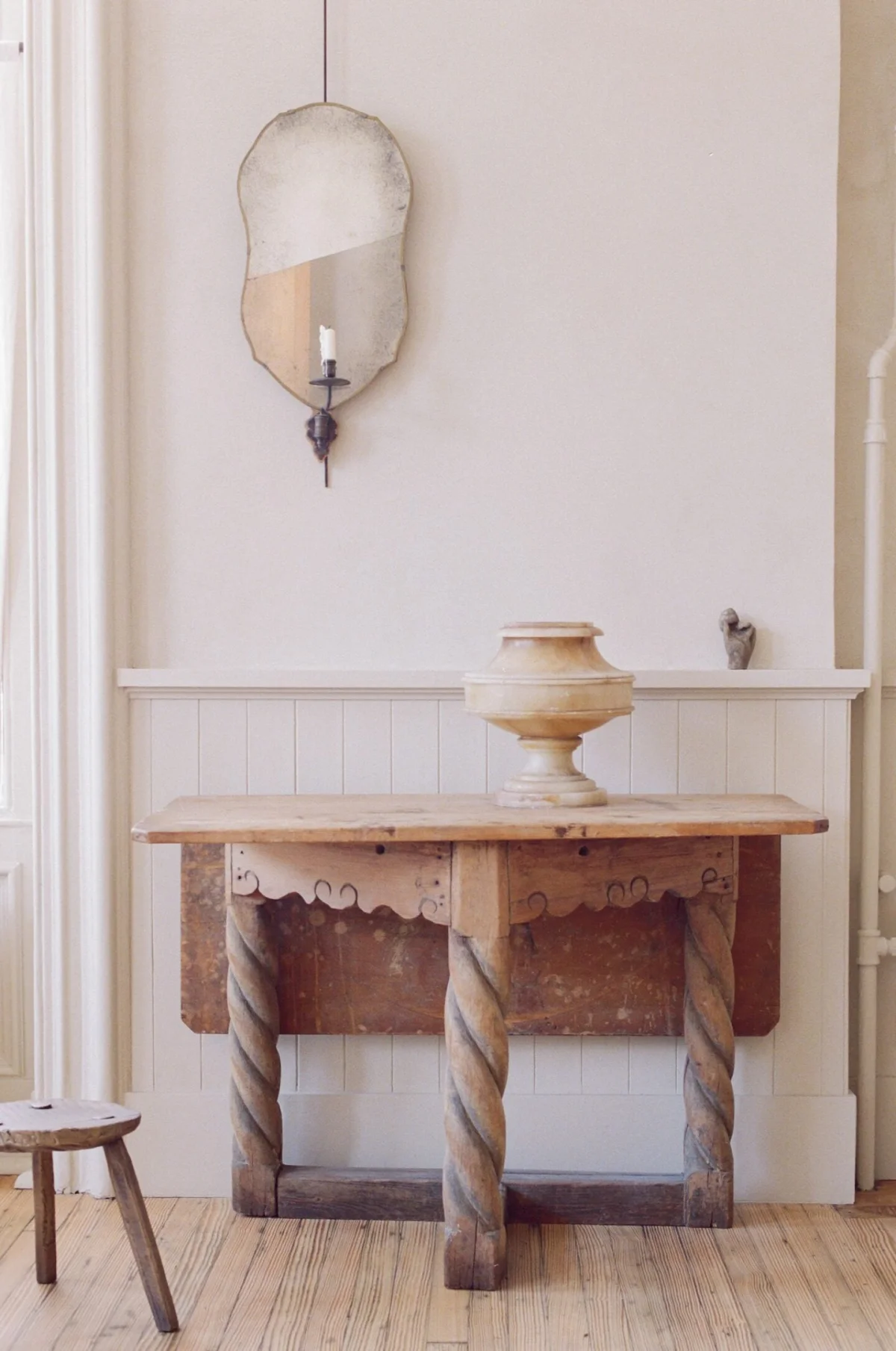
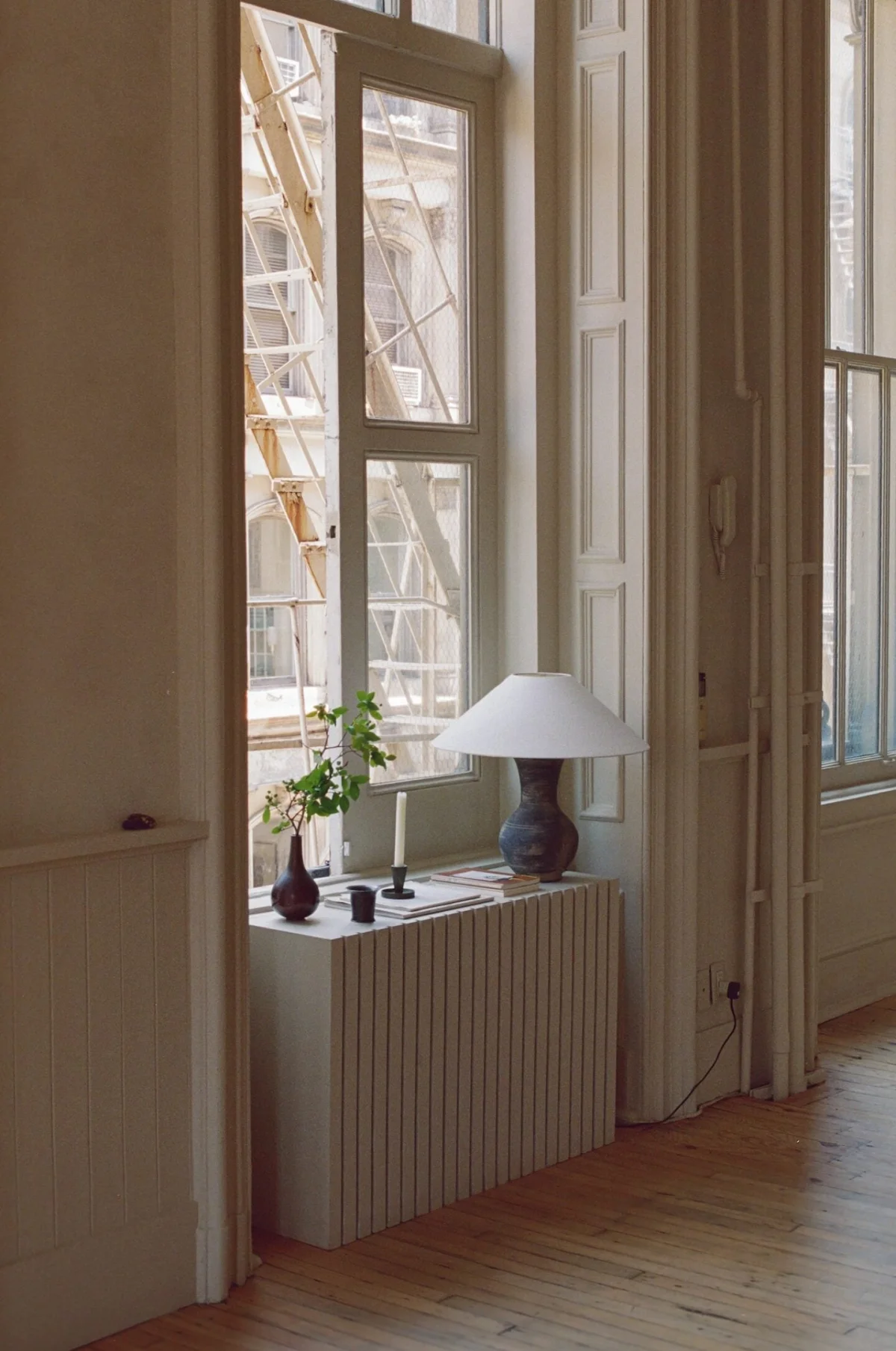
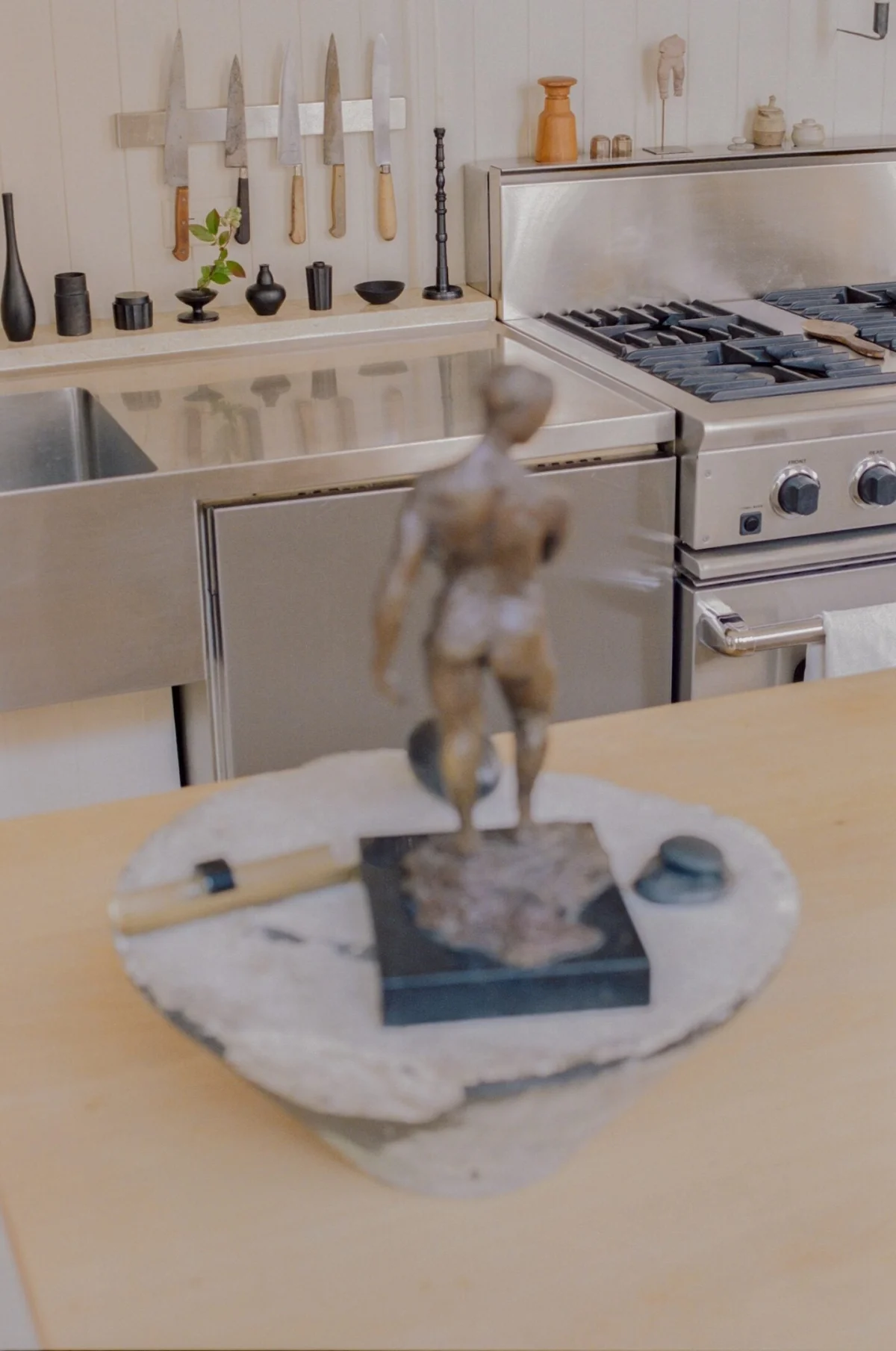
King’s Tribeca apartment wasn’t transformed through a major rebuild. The changes were mostly cosmetic: he restored the pine floors, replaced hardware and doors, and changed the lighting fixtures. He began with the parts that would establish a durable framework, trusting that the rest of the room could develop around them.
Choosing a wall color took particular care. King worked with Kamp Studios on a custom shade suited to an apartment surrounded by red brick buildings. Nearby brick could push a neutral toward red or yellow, while a conventional beige wasn’t the effect he wanted. He looked for warmth that would work with the floors without making the space feel beige. It’s a small example of how context shapes a palette: the right color has to respond to the materials and light around it.
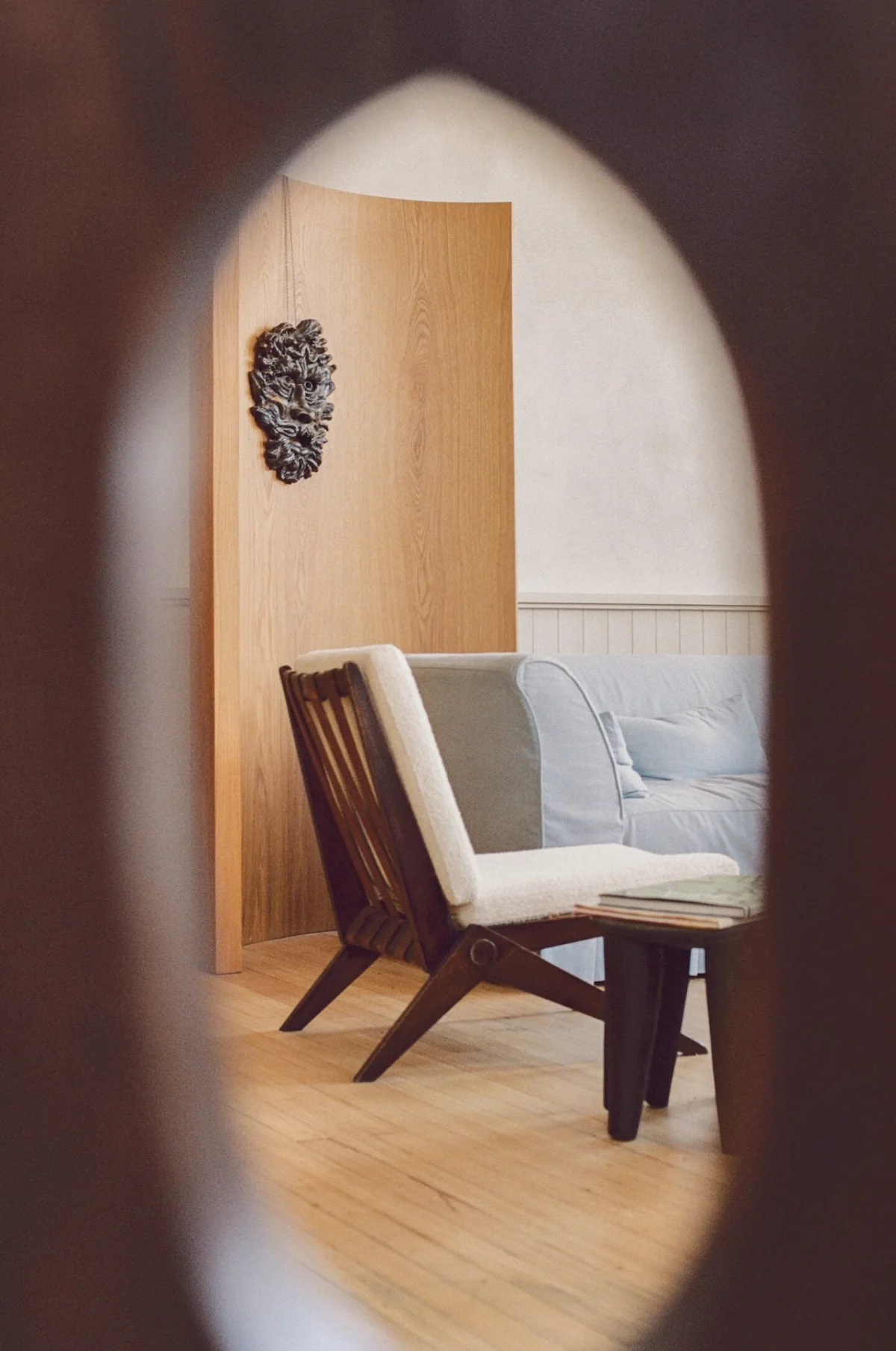
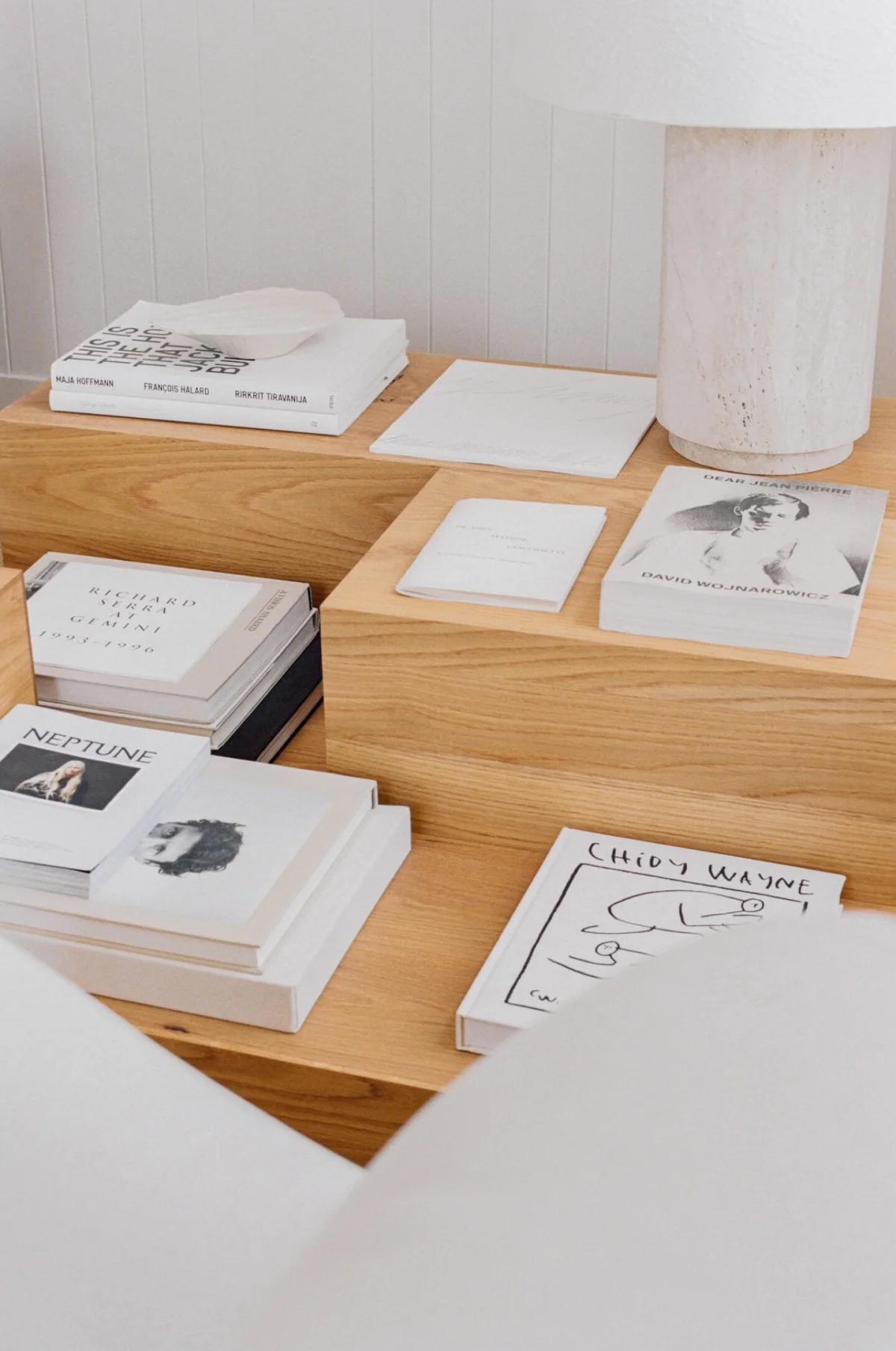
The apartment’s arrangement is less fixed. King sees his space as a reflection of how he feels and what stage of life he’s in, so he makes small adjustments frequently. Large changes come with a practical complication: New York apartment elevators can be tight. The blue sofas he designed with Future Perfect had to be cut in half to get them inside, a logistical reminder that a furniture choice has to work with the building as well as the room.
Instead, he experiments with layout. On some Saturdays, music goes on and pieces move. He keeps furniture-moving pads under his belongings so he can rearrange them himself. A lamp might shift rooms; a side table can become a coffee table, or a stool a bench. The table he was sitting at during the interview had once been a coffee table, its unattached legs set aside while the top rested on a plinth for a couple of weeks.
Those improvised trials are a useful counterpoint to the idea that a finished room requires a single correct arrangement. Moving one object can make familiar surroundings read differently. Repurposing a piece may reveal a proportion or relationship that wasn’t apparent when it stayed in its usual role. King’s method is simple: make the change, live with what it does, and let the room offer a new view.
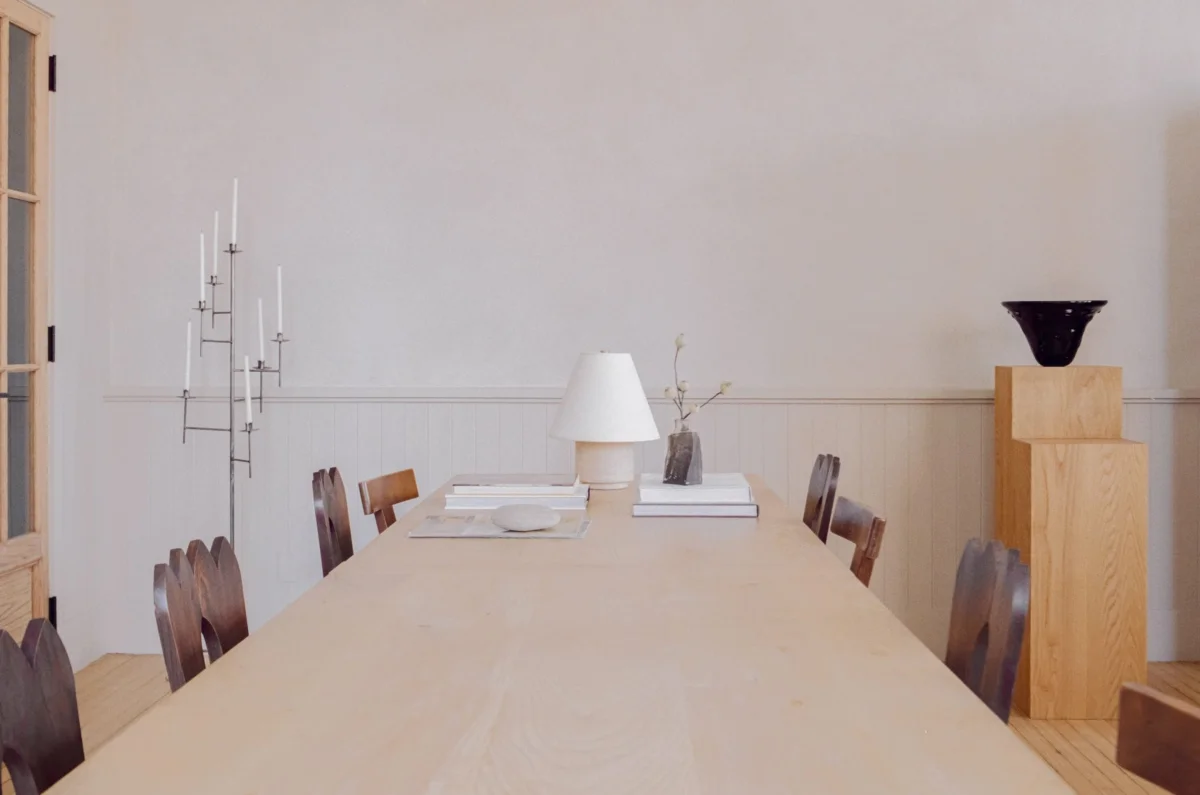
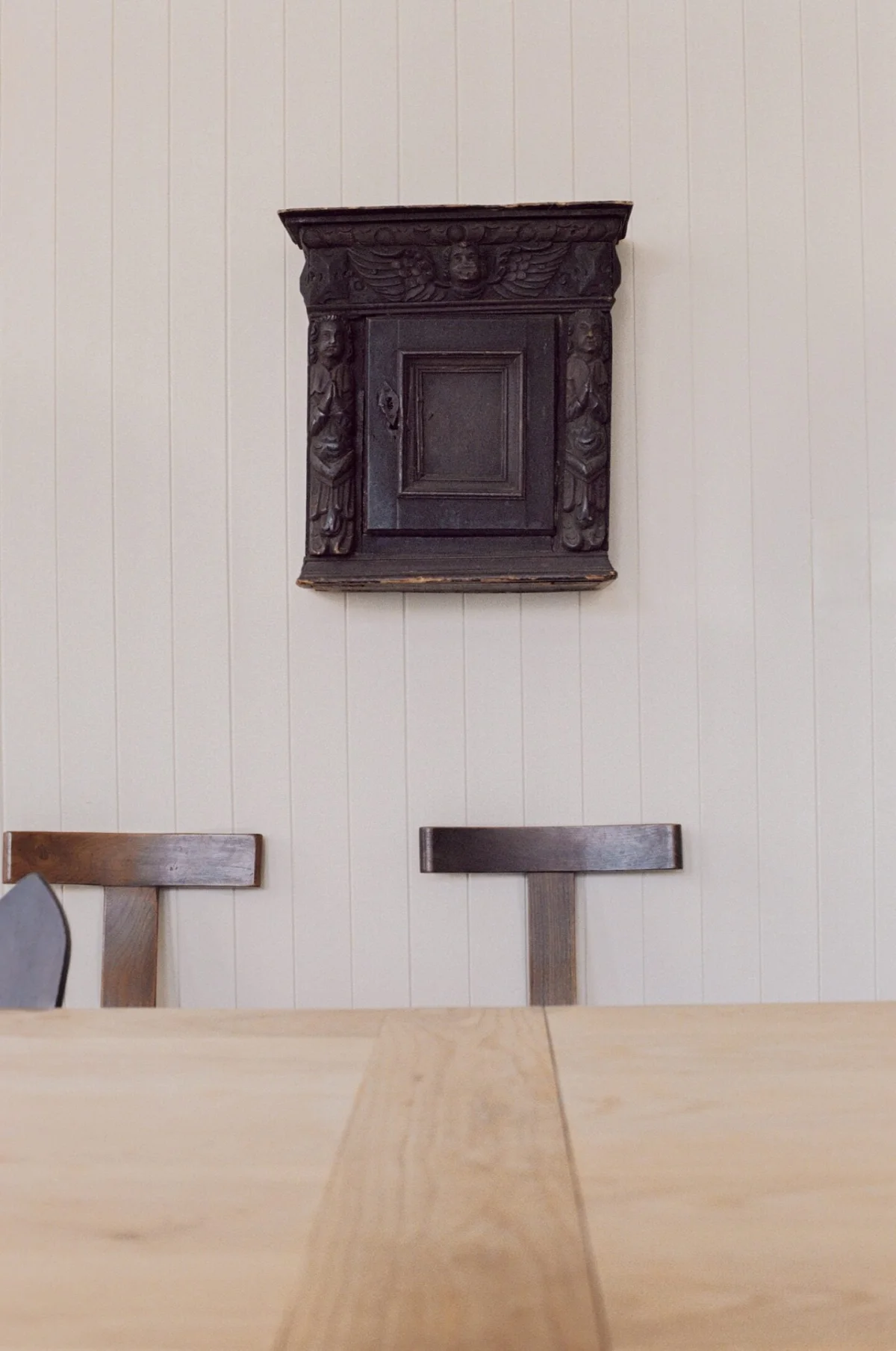
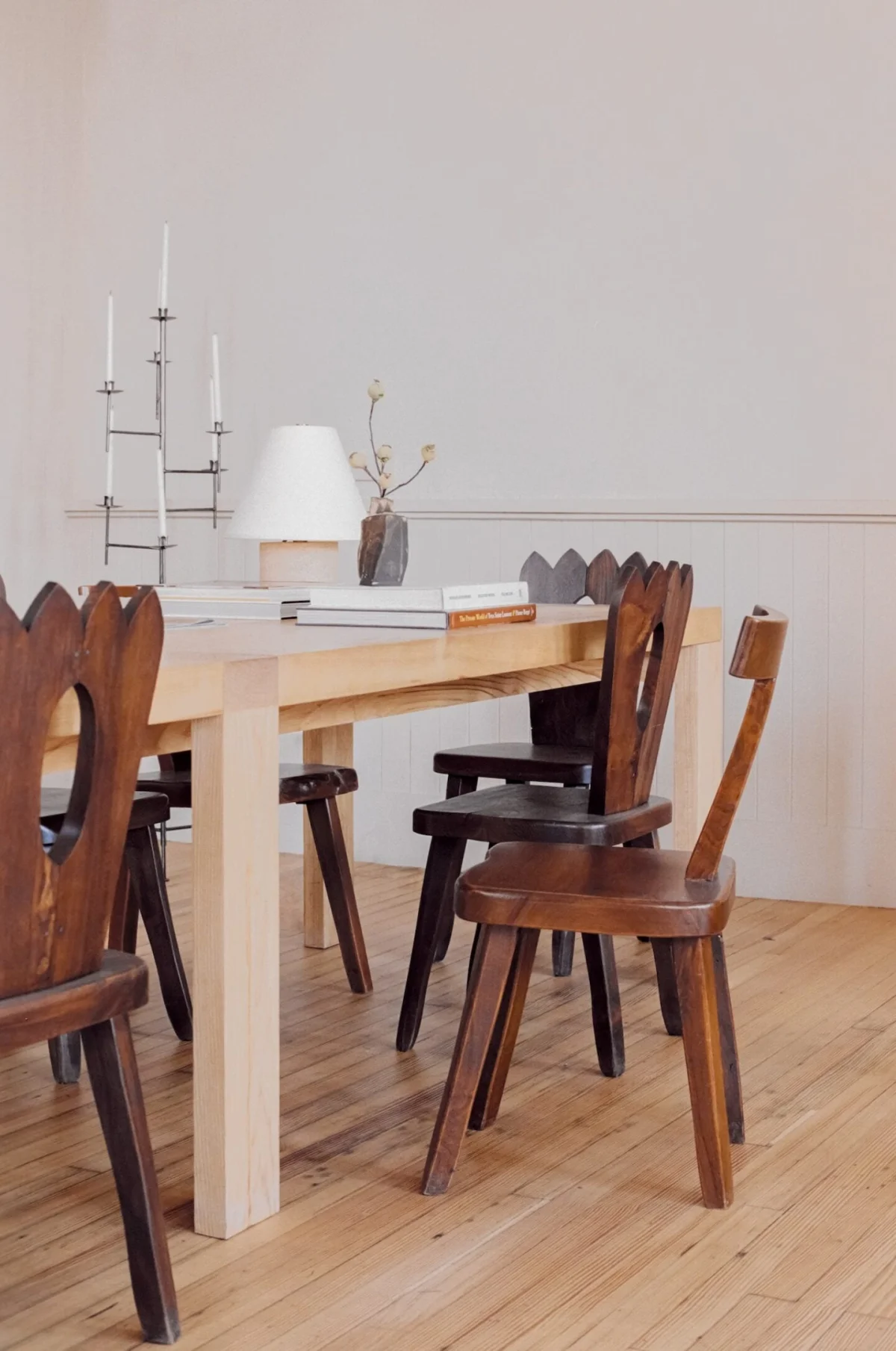
King wants his arrangements to feel human: lived in, with enough room for real life to show.
Objects carry stories, not just style
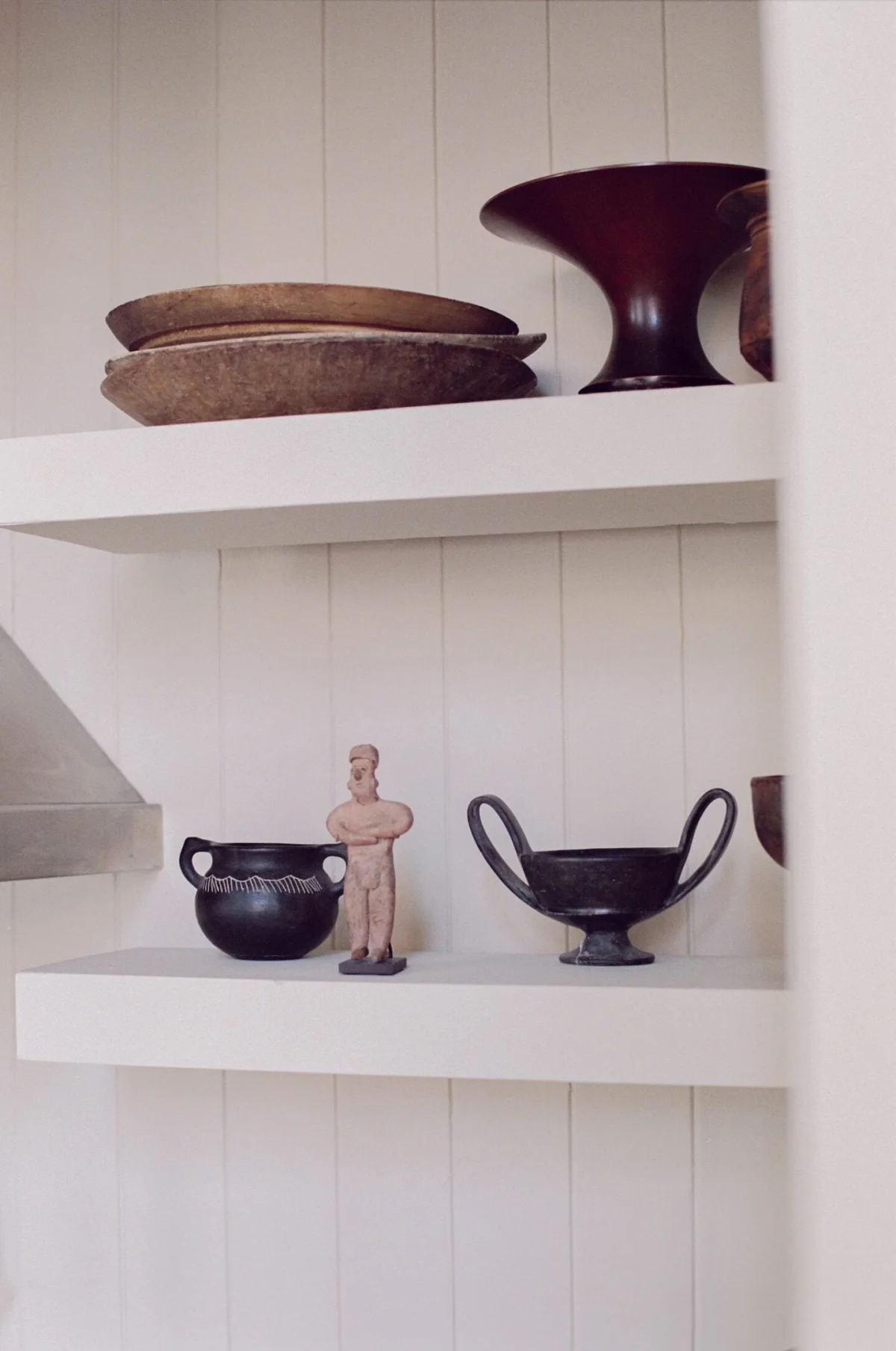
Not everything that matters in King’s home is visible. Handwritten notes from people close to him are kept in known places around the apartment. As a stylist, he’s comfortable letting objects go if he can keep the memory or image of them. What holds on to his attention are pieces with a personal history: things given by friends and family, or finds attached to a specific encounter.
Among them is a small brass egg from a friend whose child King is godfather to. The piece is engraved with the child’s name and birth date. A friend named Adrian gave him a bowl he found at a flea market in Japan. A quilt made by King’s mother stays in the apartment even though it doesn’t fit his visual style and isn’t on display. Knowing where it is brings him comfort.
That distinction between display and meaning runs through his ideas about home. Styling for a photograph can create a concentrated moment, but a private interior has to work for the people who live there. A camera only records what falls within the frame; daily life fills the rest. King’s own loft also functions as a studio and hosts visitors, so he sometimes imagines how he would arrange it if it were only a place to relax. He might want a comfortable bed where he could watch television.
For him, a home should offer respite and support its occupants’ habits. The pressure to make it a perfect portrait of the self can turn decorating into a source of stress, especially when cost or rental constraints limit the available choices. His advice is to start with small things that bring pleasure and tell a story. A home can take time to gather, and it can change as the people in it change.
Finding inspiration in the everyday
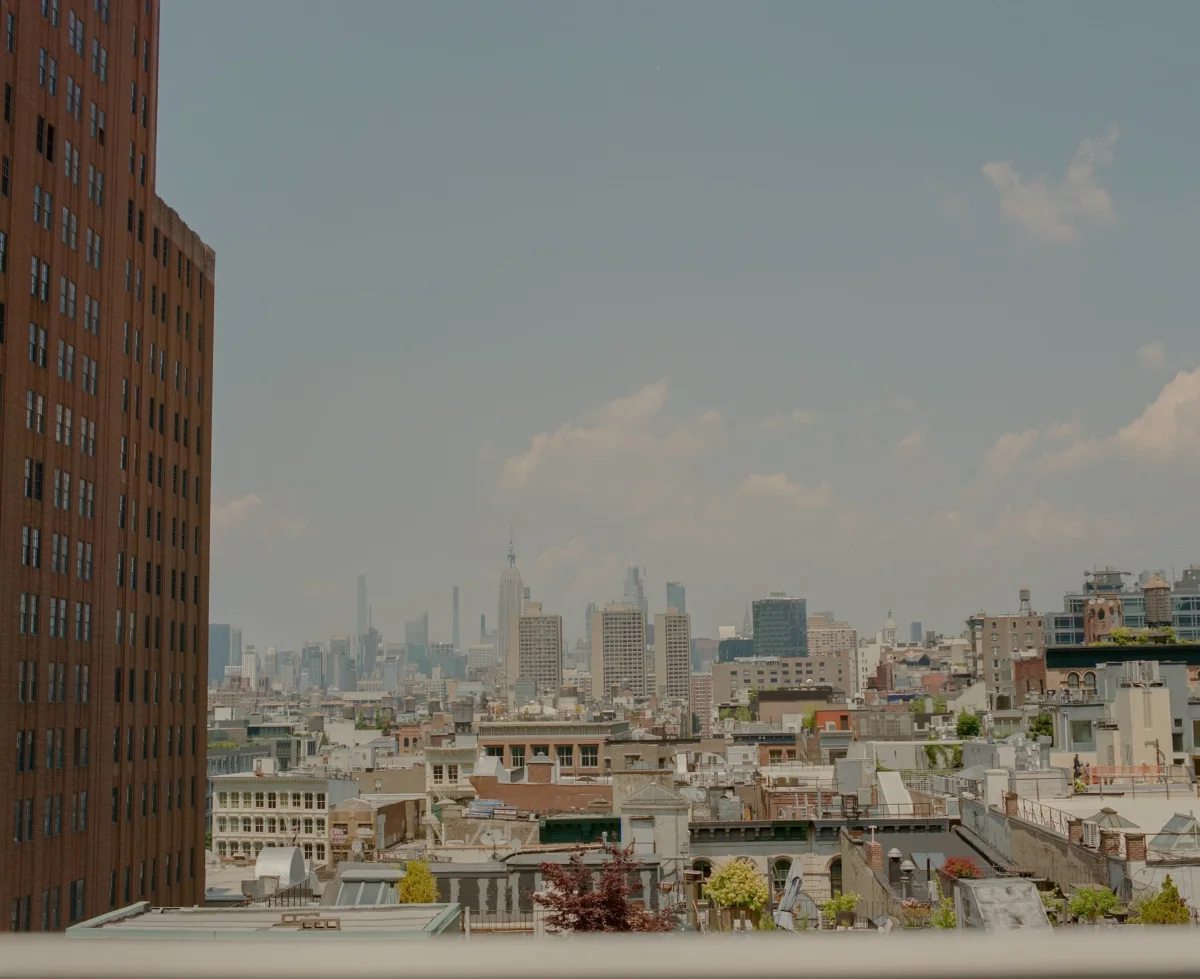
New York helps keep King’s attention outward. He loves the city and sees it as home, valuing the immediate access to culture, fashion and architecture. He grew up on an isolated farm in Ohio; the density of the city, with its eight million people, brings contact with others into daily life. He describes a shared determination among people trying to make their way there, a quiet sense of connection that keeps him engaged.
His interest in ordinary gestures began as he was learning to style. He was drawn to images that didn’t look overworked, and didn’t want excessive arrangement to erase a photograph’s natural feeling. Knowing when to stop is part of the craft. Rather than building every scene around an obvious focal point, he looks for small traces of use: a museum cloakroom, a table after people have left it, a curtain disturbed by someone passing through.
Those details suggest that a room has a life beyond the moment it’s photographed. The challenge is to make an arrangement feel specific without making it appear staged into submission. King wants viewers to sense human presence in the scene, even if no one appears in the image. For designers, that calls for a different kind of editing: instead of correcting every irregularity, decide which ones make the space feel more true.

Building a visual archive without copying it
King often begins a project with a mental image bank. A color combination spotted on the street might connect with a picture in a book, setting off a chain of associations. He collects books and returns to them when a new idea needs shape. The starting point can be a palette, a remembered image or the mood of a composition; each project brings its own set of connections.
Three books offer a glimpse of what draws his attention. One is a small sketchbook by Jack Ceglic, whom King describes as a quiet partner behind Dean & DeLuca, the New York grocery store associated with the 1970s. Ceglic treated food as art, and King remembers meeting him and posing for one of his drawings. The sketches remain a source of fascination.
Another is The Private World of Yves Saint Laurent & Pierre Bergé. King had recently returned to Tangier and stayed at Villa Mabrouka, their former home. He is interested in the way the pair lived, including their interiors, art collection and attention to craft. Their travels became part of the character of their spaces, offering an example of how collected influences can combine into a personal setting.
The third is a photo album by John Pawson, made up of simple images accompanied by brief notes about why he took them. A cluster of leaves in a corner or a shadow on a building can be enough. King values the unpretentiousness of the pictures and the chance to see what another creator notices.
For him, using references doesn’t mean reproducing their arrangements. An image of a chair beside a lamp may prompt him to remember a feeling or a certain visual balance, then translate that impression into a different composition. The work is in carrying the mood across without repeating the source. With so much material available online, that distinction can protect a project from becoming an echo of whatever is currently circulating.
Trusting instinct and making the next thing
King says that early in his styling career, he didn’t think much about burnout. Now he sees the value of keeping the work fresh and resisting the pull of trends. His answer is to trust his own visual instincts and the ability to make connections. When outside images become overwhelming, he becomes more selective about what he shares and returns to what feels authentic.
That inward focus isn’t a rejection of looking. King’s practice depends on observing, collecting and remembering. It’s a way to process those references through his own perspective rather than treating them as instructions. His read is that no two people see the world in quite the same way; an original composition begins when a designer trusts that difference enough to act on it.
For emerging stylists, his advice is to start making work before waiting for a commission or someone else’s discovery. He recalls creating small vignettes, visiting a flower market and trimming a branch. The actions were modest, but they gave him a way to practice and show how he saw things. Sharing those compositions online helped make his point of view visible. Looking forward to posting a piece can also help a maker judge whether the work feels resolved and worth showing.
King is still thinking through what he wants next. One exercise is to picture an ideal day and work backward from it: perhaps that points toward creative direction for a brand, or a stronger focus on his own work. The tension between artistic freedom and earning a living remains part of being both an artist and a business owner.
A project he can imagine clearly is a shop or gallery where people could encounter objects he has collected or made in person. He has already curated shows, including one at Jack Lenor Larsen’s house in the Hamptons for Object & Thing. Watching visitors move through a space he had assembled felt exposing as well as rewarding. Much of his work reaches people through photographs, so an encounter with the objects and rooms themselves would offer another kind of connection.
That possibility fits the logic of King’s practice. A room can be edited for a photograph, but its full meaning emerges through use, movement and the stories attached to what it holds. His work leaves space for those things to happen—and for the arrangement to keep changing.
Images © Monika Mroz for Ignant production. Words by Monika Mróz.
===END===| Rev | Description | Date |
|---|---|---|
| A | Issued for reading | |
| B | Viewed 895 times | Current |


