Forma Gallery and Ignant Set Collectible Design in a Berlin Church for “Silhouette”
- Project
- UX & UI Design
- Drawn by
- Anna Dorothea Ker
- Issued
- Sheet
- A-192
Vanessa Heepen and Clemens Poloczek pair photography and curation in “Silhouette,” the second Spatial Dialogue editorial from Forma Gallery and Ignant.
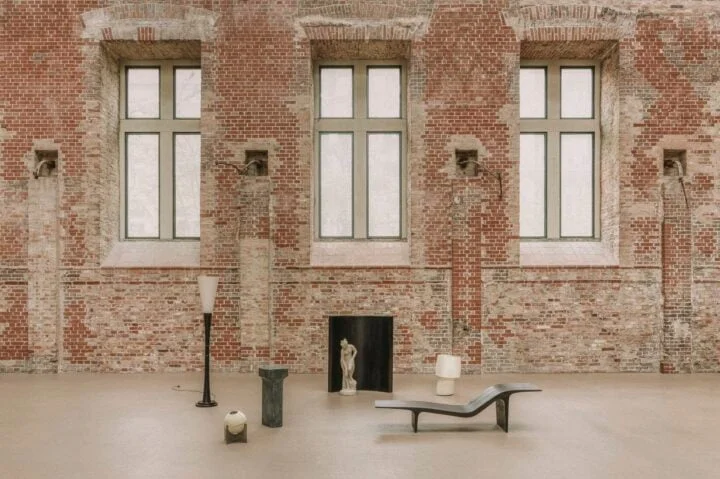
A church in Berlin gives “Silhouette” its scale and atmosphere, while a selection of collectible design supplies the close-up detail. The editorial brings the setting and the objects into a shared visual composition, using the room as more than a backdrop. That makes the project’s central design question spatial: how can a group of distinct works hold their character while also reading together in a charged interior?
“Silhouette” is the second editorial in Ignant’s Spatial Dialogue series. It was co-curated and produced with Forma Gallery, the Berlin gallery focused on collectible design. The collaboration brings together Vanessa Heepen, Forma Gallery’s founder and an interior designer, and Clemens Poloczek, Ignant’s founder and creative director. The source credits their complementary fields as photography and curation, respectively. The editorial is dated November 28, 2024, in Ignant’s article link.
A room that shapes the viewing
The setting is a Berlin church described in the source as once having been in ruins. Its architecture gives the presentation a strong existing frame: the objects appear within a place with its own history and spatial character, rather than in a neutral studio. The source calls the resulting scenography luminous, but doesn’t specify a lighting setup, colour palette, floor plan or particular architectural features. What can be read from the brief is the decision to let the setting take an active role in how collectible design is encountered.
That choice changes the viewer’s task. In a gallery with a plain background, an object can be isolated and judged primarily by its silhouette, material and finish. In a room with a pronounced architectural identity, the eye moves between the object and its surroundings. A piece’s scale becomes legible against the interior; its outline can stand apart from, or visually answer, the structure around it. This is a useful distinction for anyone planning an exhibition or editorial shoot: a location can add meaning, but it also competes for attention. The composition has to make both parts readable.
The title, “Silhouette,” points toward outline and shape as a way into the selection. That reading is an interpretation of the title, rather than a stated explanation from the designers. Still, it suggests a practical way to look at the images: notice where an object’s edge becomes clear, where it merges with the architecture, and how the camera’s position changes those relationships. The source gives no specific camera or lighting details, so those questions remain prompts for viewing rather than claims about the production process.
Photography meets curation
Heepen and Poloczek combine different forms of authorship. Curation determines which works appear together and the relationships a viewer can discover between them. Photography determines how those relationships are framed and shared beyond the physical location. The editorial’s value lies in bringing those decisions into conversation: the objects are selected as an ensemble, then presented through a photographic lens that turns the installation into an image based experience.
That pairing matters because a photograph of an installation is not the installation itself. The physical room offers movement, changing viewpoints and a sense of distance that a fixed image can only suggest. Photography, in turn, can draw attention to details or juxtapositions that may be harder to register while walking through a space. For a design team, the lesson is to plan both experiences together. Consider what a visitor might notice in person, then ask which moments will translate into a still frame and which will be lost when the room is compressed into a single view.
The source describes the selection as an ensemble of singular objects by emerging and established designers, alongside vintage pieces from across Europe. It doesn’t name the individual designers, identify the pieces or specify their materials. That mix nevertheless gives the project a broad curatorial span. New work and vintage objects can bring different visual languages into one room, with each piece contributing its own form and history. The challenge is to make the group feel deliberate without flattening the differences that make each object distinct.
What the project offers design teams
For curators and art directors, “Silhouette” offers a clear starting point: choose a setting whose qualities can support the work, then decide how those qualities will appear in the final images. A strong location doesn’t automatically make a strong composition. Teams still need to think about sightlines, visual density and the relationship between large architectural forms and smaller objects. They can test those decisions by reviewing the room from several positions, checking whether key pieces remain distinct against their surroundings and whether the framing gives the group a coherent rhythm.
For photographers, the project makes the relationship between curation and framing especially visible. The order and proximity of objects can create visual echoes, while a shift in viewpoint may turn a secondary detail into the image’s anchor. An editorial shoot can document the overall installation and also build a sequence of closer views, allowing readers to understand both the setting and the objects’ individual forms. The source doesn’t say how “Silhouette” was photographed, so this is a broader working method suggested by the format, not a description of the team’s specific workflow.
“Silhouette” extends Spatial Dialogue through a collaboration between a design gallery and a design publication, with the church setting connecting physical scenography to editorial presentation. Its most useful idea is that context can shape how collectible objects are read, while photography carries that encounter to an audience that may never visit the room. The project leaves the individual works unnamed in the available source, but its combination of place, curation and image making gives designers a concrete prompt: build the frame around the work, and give the work enough space to answer back.
The post Forma Gallery and Ignant Unveil Their Evolving Spatial Dialogue With A New Editorial appeared first on IGNANT.
| Rev | Description | Date |
|---|---|---|
| A | Issued for reading | |
| B | Viewed 355 times | Current |