George Nakashima Woodworkers: Mira Nakashima on Craft, Nature and a Family Legacy
- Project
- UX & UI Design
- Drawn by
- Monika Mróz
- Issued
- Sheet
- A-190
Mira Nakashima shares how the workshop grew from her father’s ideas, and how its buildings, furniture and daily work keep those principles alive.
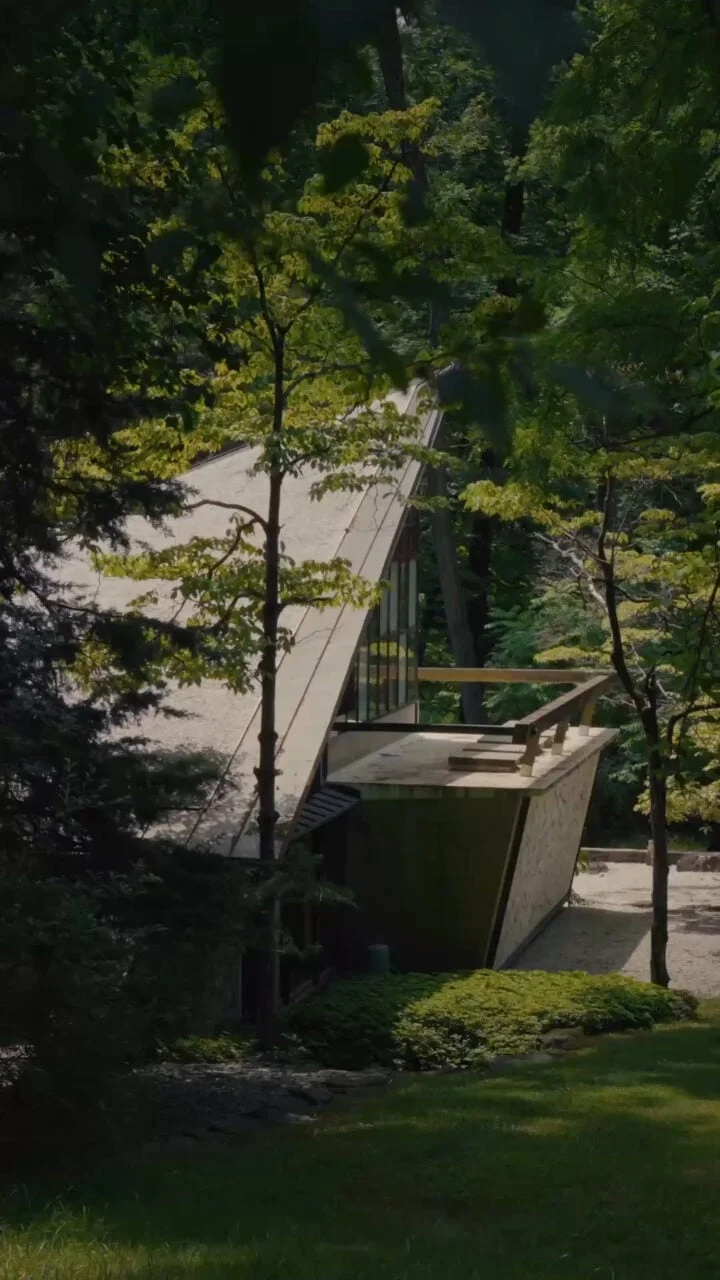
At George Nakashima Woodworkers, the landscape and the workshop belong to the same design. Buildings sit among trees on a south-facing slope, and handwork gives the place a quieter rhythm than its machinery might suggest. The property is a working studio, a family home and a record of how one furniture maker built a practice around the character of wood.
That practice began around 80 years ago, when George Nakashima set out to master woodworking and support his family. His daughter, Mira Nakashima, now leads the business. In a conversation at the family property, she described the experiences that shaped her father’s approach, the changes she made after his death in 1998, and the practical choices that allow his work to continue alongside her own.
The story is not simply one of preserving furniture designs. It is also about how knowledge passes from a designer to a workshop: by studying lumber, drawing for the people who will build a piece, and staying close enough to the process to revise a design as the wood reveals what it can become.
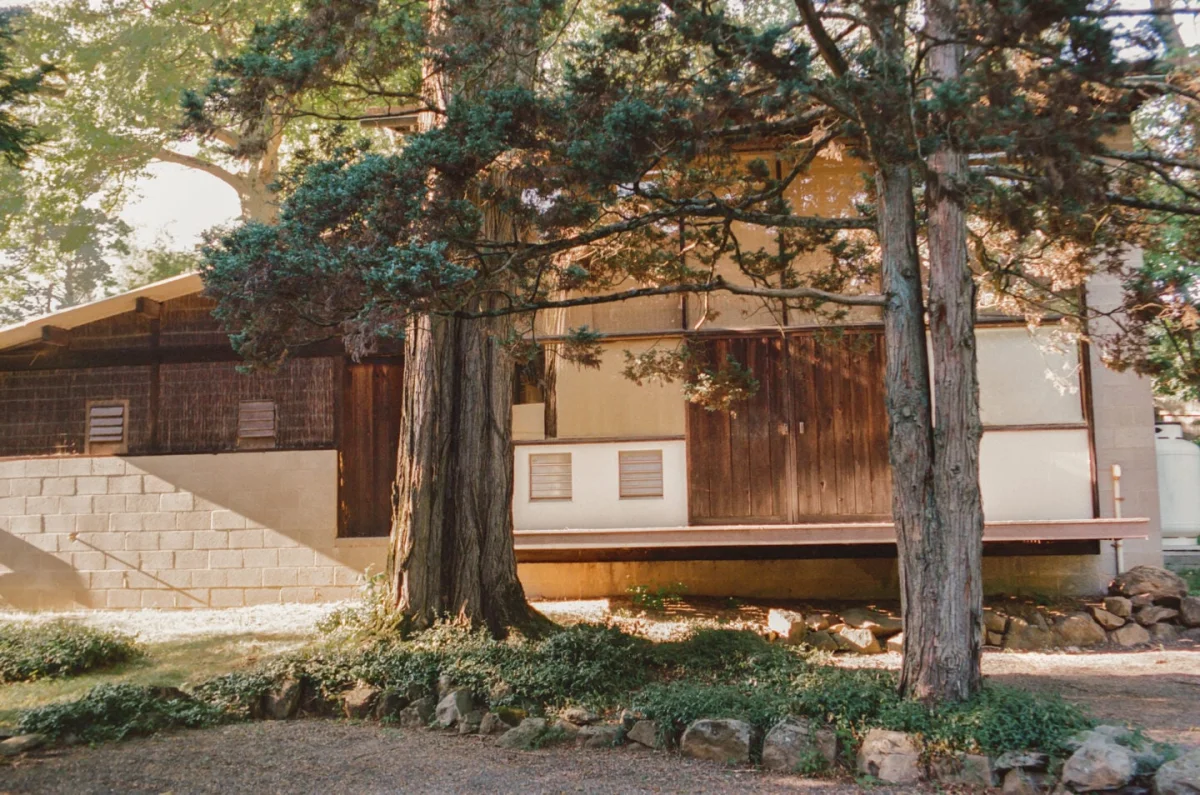
A workshop that began beside the family home
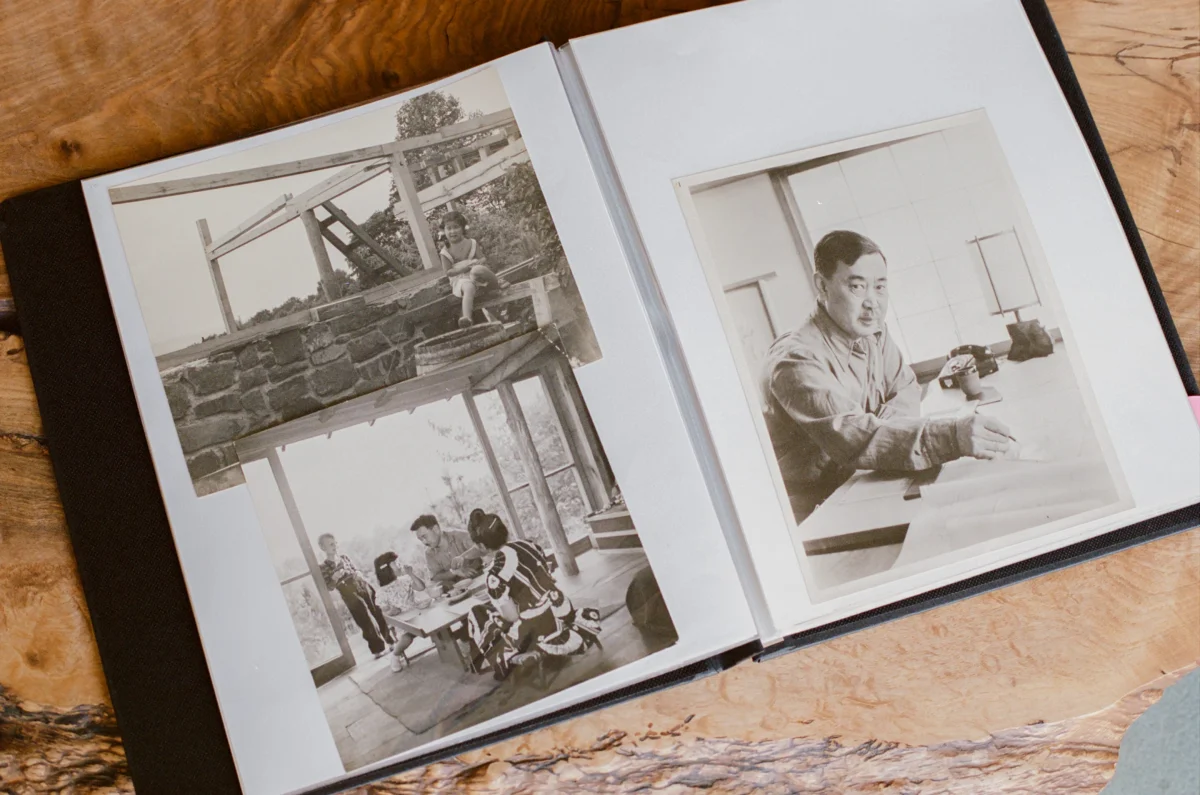
Mira remembers the property less as a planned institution than as the place where her family made a life. Born in Seattle, she was six weeks old when her family was sent to the Idaho desert during World War II. They were later sponsored by architects Noémi and Antonin Raymond, whose farm lay below the property. The family lived there until 1945, while George worked from a garage.
When Mira was about five or six, her father found the land where the workshop stands today. He could not afford to buy it outright, so he paid through labor. The family initially lived in a tent near the lumber sheds. Poison ivy covered the ground; George carried his children across it to spare them the rash. He built a shop first, then gradually constructed the family’s first house.
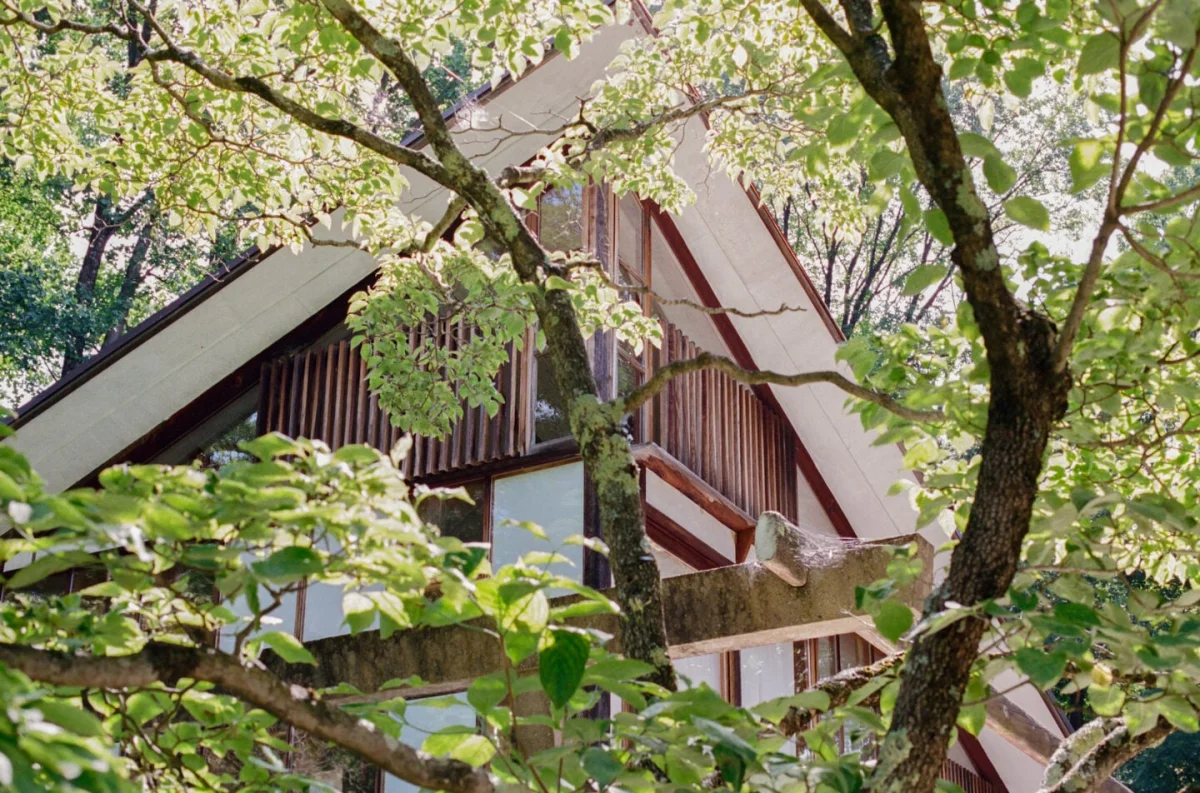
For Mira, the early shop was also a place to play. She was an only child for 13 years and had no television or neighborhood playmates. The two men working in her father’s shop became part of her world. She made things from scraps of wood and sawdust, and gathered berries outdoors. The setting was more rural then, with fewer workers, no large machinery and little traffic on the nearby road.
Creativity was present, but her parents did not formally steer her toward it. They supported her drawing and painting while she also studied French, mathematics and music. One of the workshop employees and his wife introduced her to folk dancing and the recorder, and she remembers singing rounds during the drive home. A close family friend, Aunt Milly, arranged lessons in swimming, diving, horseback riding and tennis, and took Mira to a music camp in Vermont.
At college, Mira thought she might study languages; she had taken French, Italian, Russian and some Greek. Her father directed her toward architecture. She followed that path at Radcliffe College, where her architectural sciences studies leaned toward history and design rather than furniture construction. At the time, she was enjoying her studies and was not planning a career in the family business.
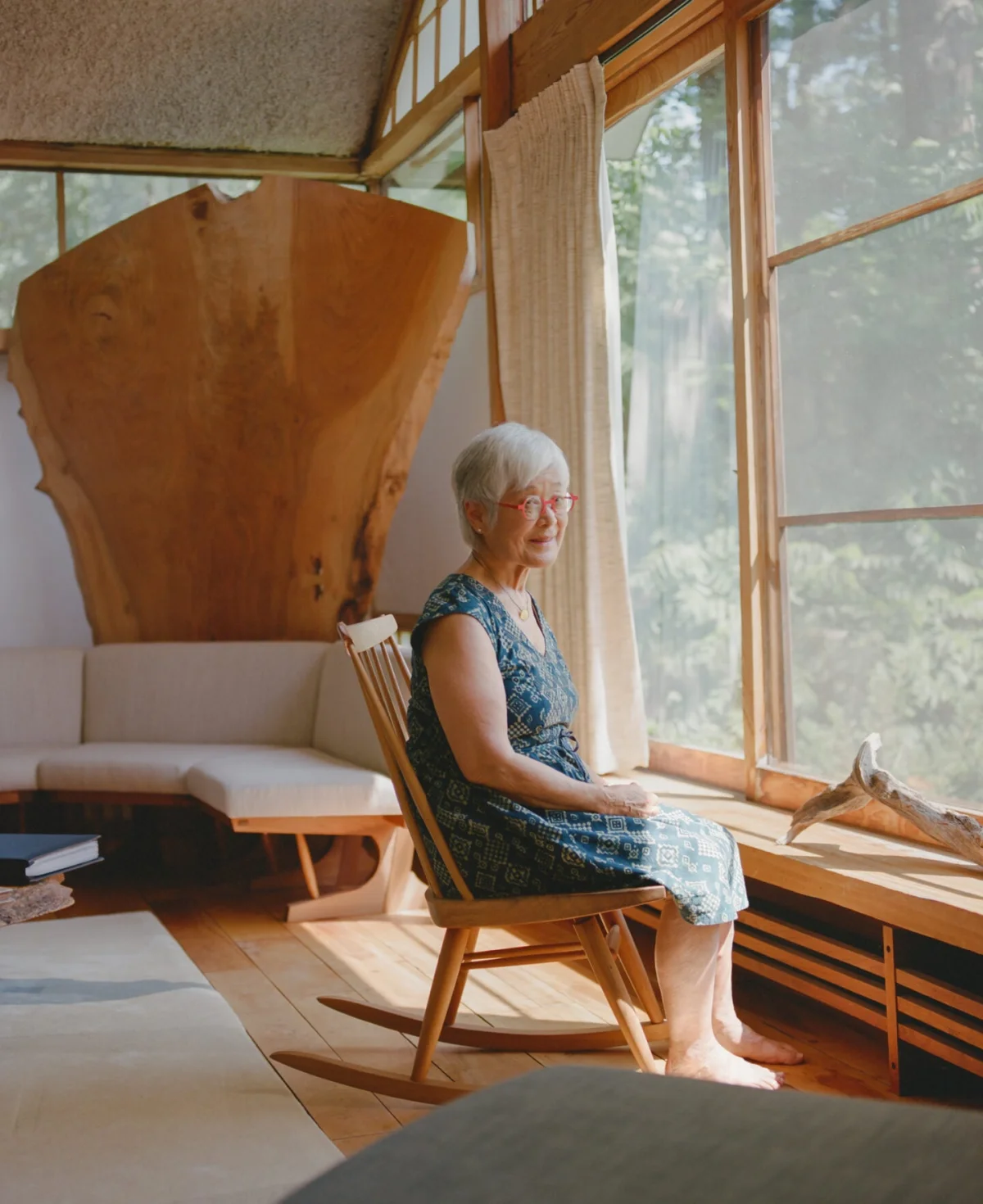
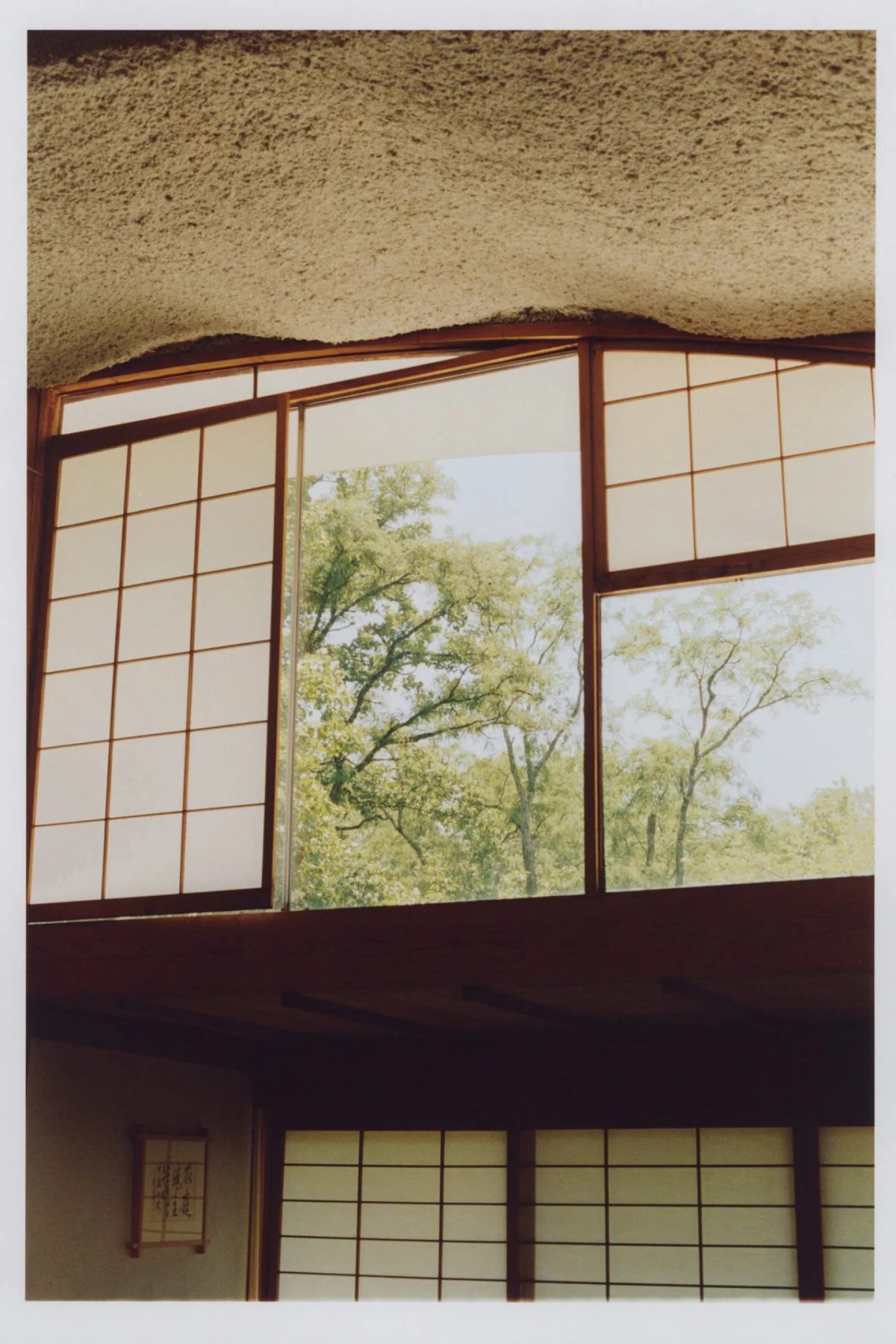
Learning architecture in Japan, then returning to Pennsylvania
A trip changed Mira’s sense of the work her father did. In 1963, she and Aunt Milly joined a Zen Buddhist tour of Japan led by Alan Watts. The trip introduced her to Japanese culture, history and traditional architecture. Afterwards, Mira stayed in Tokyo with her mother’s older sister to study Japanese.
Her father’s friends Junzo Yoshimura and John Minami helped her enter Waseda University’s architecture program. She arrived with less drafting experience than her classmates, who were already drawing with pencil and pen, while her own background was mostly freehand work. Learning technical drawing while studying Japanese made the program demanding. In 1964, George visited on his way to teach in India and took Mira with him for part of the journey. She later returned to Japan to finish her studies.
Mira had married a classmate and was living in Tokyo when she became pregnant with her first child. Her parents invited her back to the United States so they could meet the baby. She returned shortly before her daughter Maria’s birth in 1966. In 1969 or 1970, the company asked her to begin working part-time.
Her first tasks were office work: typing orders and answering the phone. She wondered how that related to her architectural education, but the office work eventually opened the way to the shop. She most enjoyed making things in three dimensions, watching wood change through shaping and finishing. Applying oil to a piece made the transformation especially clear: a raw board became an object with a new surface and presence.
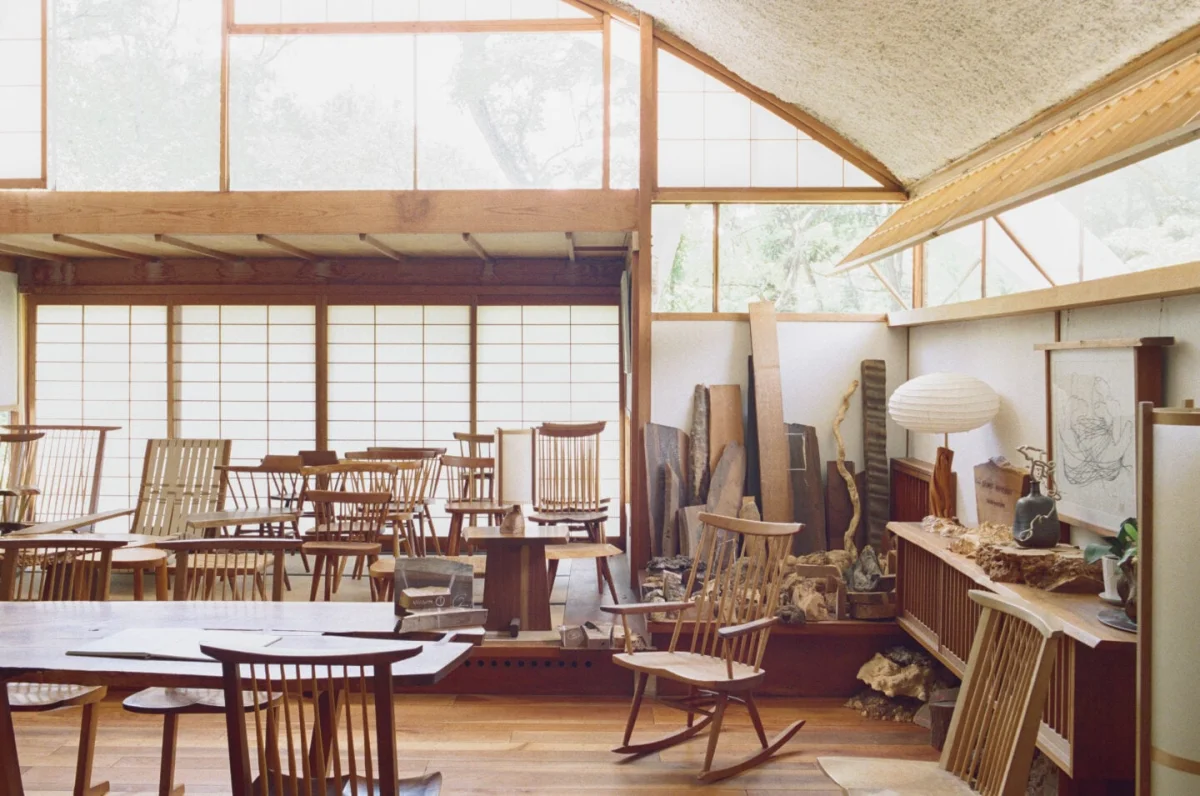
George’s design drawings were spare. Mira recalls small sheets covered in loose, freehand sketches with few dimensions. The shop workers knew how to interpret them because George was present each day, ready to give direction. If he had not arrived, they might wait rather than proceed without him.
Mira proposed adding detail so the team could work with more independence. She began drawing at a larger scale and including more precise dimensions. This adjustment made the instructions clearer and helped the making process run more smoothly. It also shows how a drawing can do more than record a designer’s idea: its level of detail shapes how decisions move between the design office and the bench.
Taking on the work, and making room for a new voice
When George died in 1998, he left no succession plan. The workshop had three and a half years of orders waiting, but some clients canceled because they believed a piece would lose value without his signature. Others asked for a 50 percent price reduction. Mira and several long-time employees worked to reproduce his designs as faithfully as they could.
Her preparation came from time spent beside her father. She had gone with him to the sawmill, watched him assess logs and learned how he decided what thickness to mill and what a piece of wood might become. She had also made drawings under his guidance. Those experiences gave her confidence in the craft itself, but she found that she had less experience with marketing and with explaining the value of work made under her direction.
A client, Mrs. Krosnick, helped prompt a change by asking for new designs rather than another version of George’s work. Art dealer Robert Aibel also urged Mira to establish herself as a designer. Some people saw her pieces as reproductions, he explained, and did not think they warranted the same price. Mira could point to the labor involved, but Aibel’s advice was to make her authorship visible. He offered to show her designs in his gallery, and she accepted.
Recognition came gradually. Publicity helped, and clients began to understand that the workshop could continue making George’s work while also developing new pieces. For Mira, that distinction became central to the business: continuity did not have to mean freezing the practice at the moment of her father’s death. The workshop could preserve his designs and methods while acknowledging her own ideas.
One lesson from George’s practice was to understand the material before deciding what it should become. He studied each log and allowed its qualities to shape the finished work. Mira remembers that he treated lumber not as neutral stock to be forced into a preset form, but as something with its own character. The shop’s connection to the sawmill and lumber sheds gave him a chance to keep that judgment close to production.
The same principle influenced the way Mira draws. More precise plans helped workers act independently, but they did not replace the need to see and handle the work as it developed. A design on paper is a starting point; a board on the bench can alter proportions or suggest a different solution. Keeping the designer close to the material made those adjustments possible.
Handwork, patience and a tree’s natural form
George’s book The Soul of a Tree, published in 1981, brings together personal history and workshop knowledge. Mira says the first part recounts his experiences, while the latter half turns toward practical woodworking, including joinery and methods he learned in Japan. An editor at Kodansha encouraged him to include more technical detail. That combination helps explain the book’s continued appeal to makers: it connects an outlook on materials to ways of working with them.
Writing did not come easily to George. Mira recalls her mother helping him with the opening chapter and reminding him to build sentences with a subject, a verb and an object. The finished book gives readers both his account of the life behind the furniture and guidance that can be applied at the bench.
The family’s home and work life were closely linked. The shop stood next to the house, and Mira spent much of her childhood there. In summer, her mother made pitchers of Kool-Aid and brought them out to the workers. The memory is modest, but it reflects the informal ties that formed around the daily work. The property was not set up as a detached studio with a separate social world; people lived, worked and gathered in close proximity.
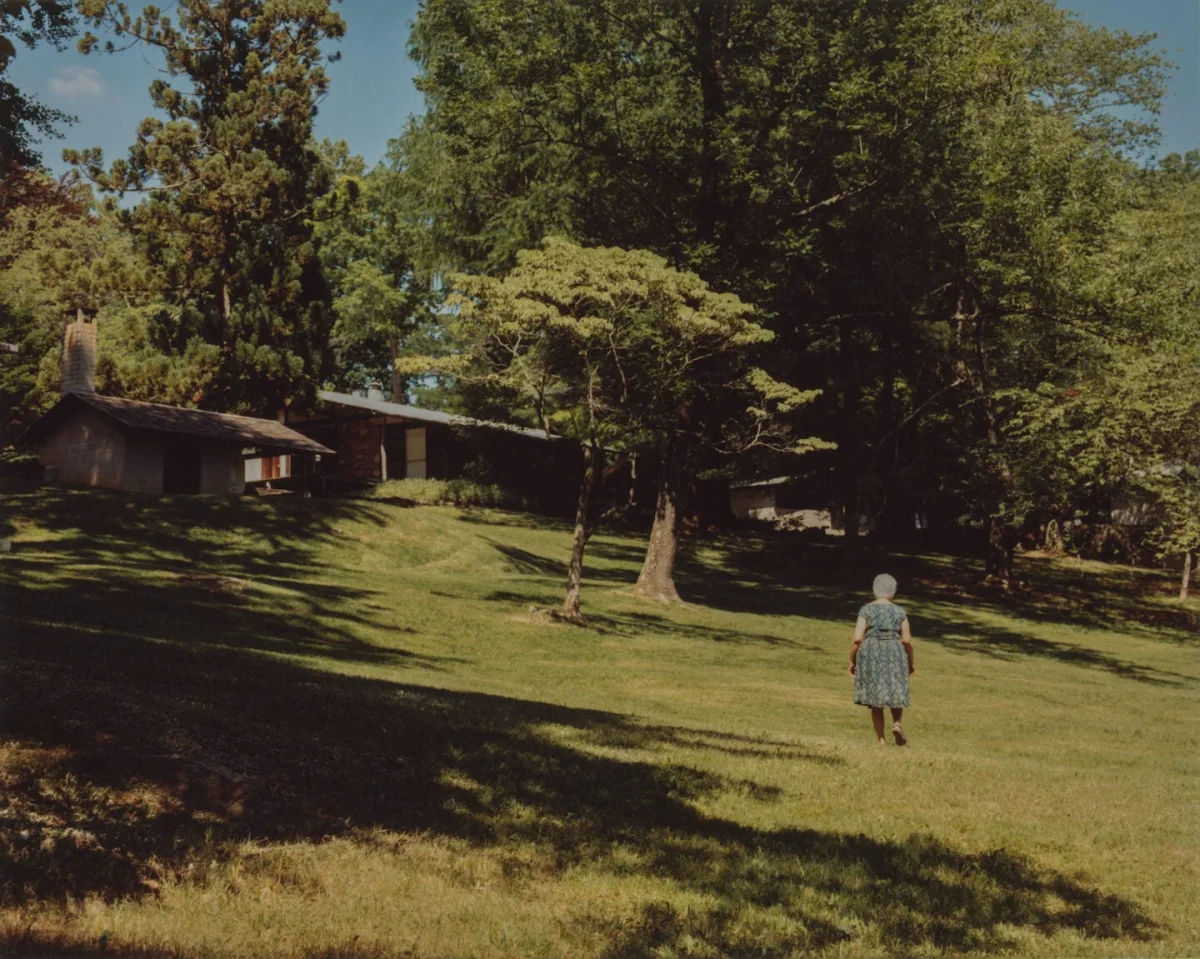
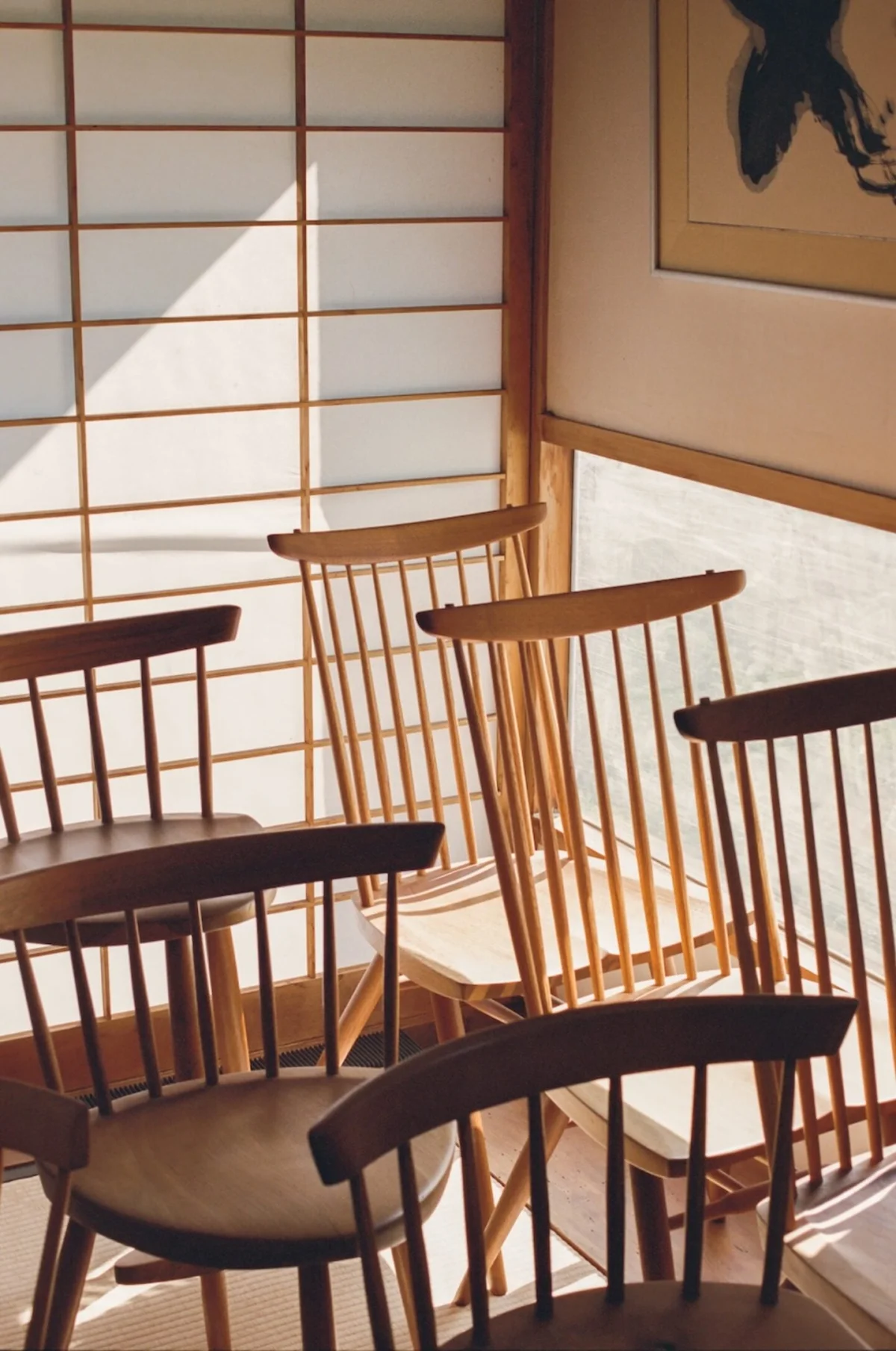
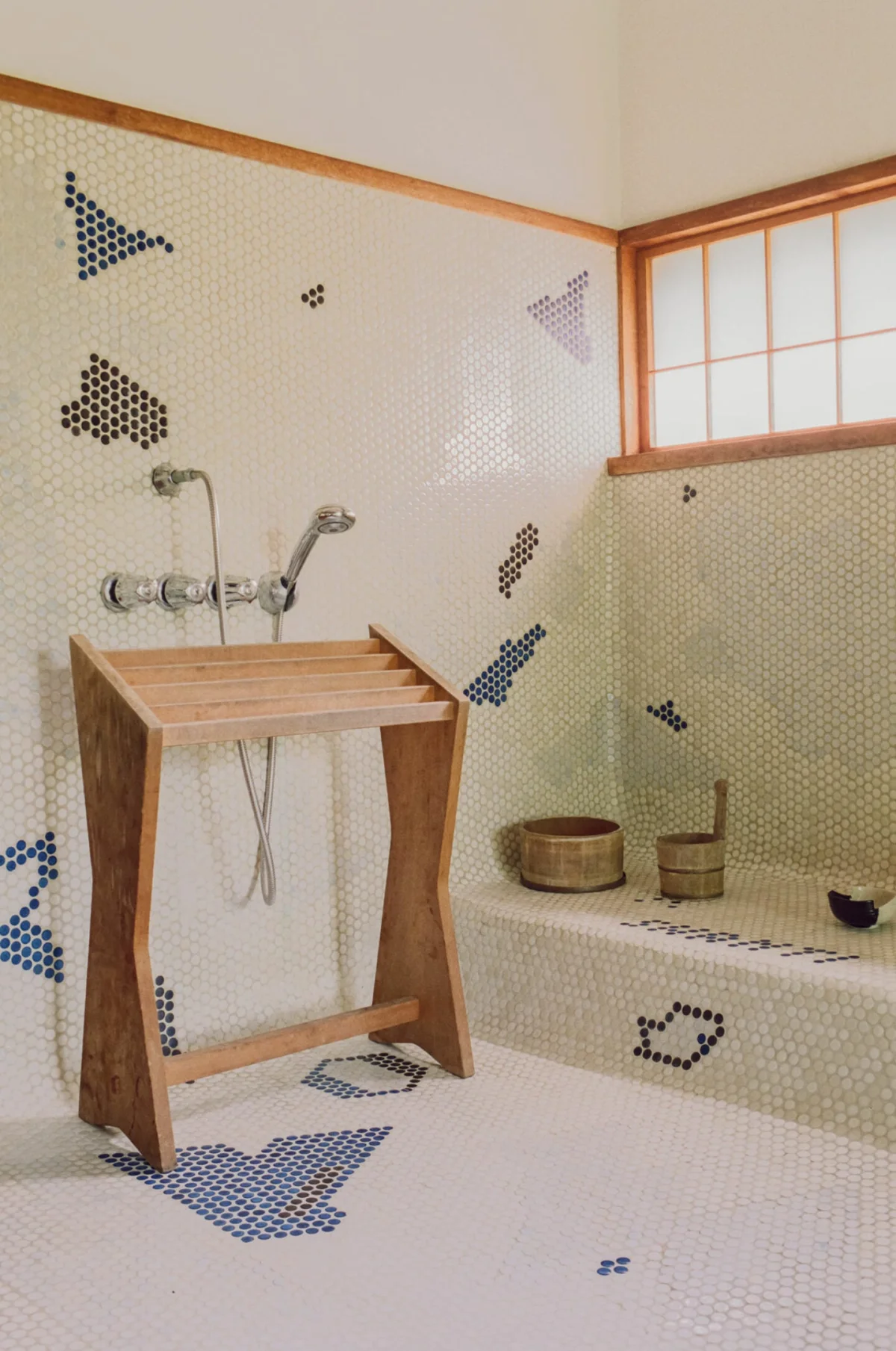
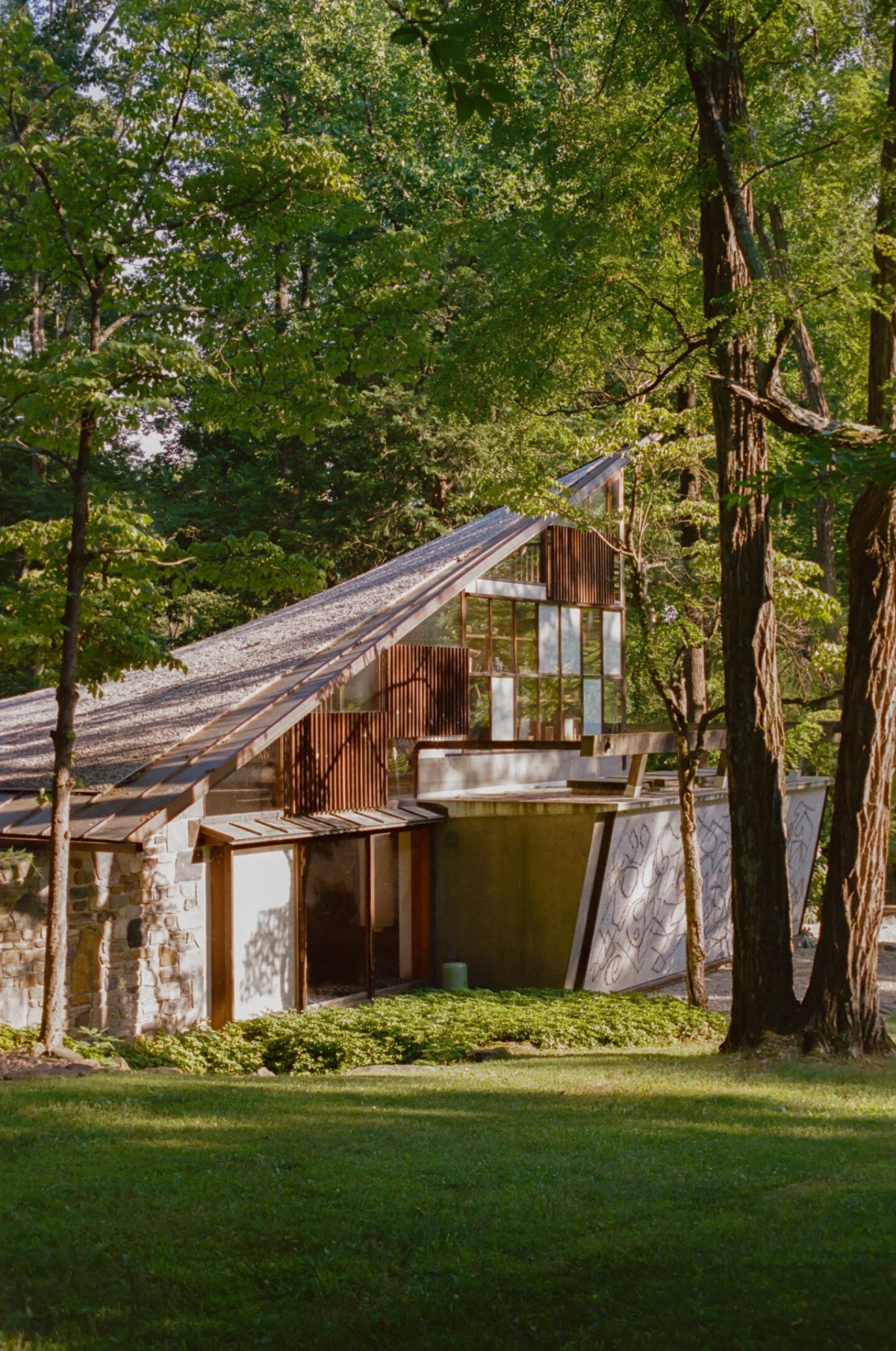
Mira connects the property’s calm to both its setting and its buildings. George chose a south-facing slope that had once been farmland, attracted by its outlook and quiet. He designed structures that sit within the landscape and make the outdoors part of the interior experience, drawing on ideas he encountered in Japanese architecture. The workshop does contain loud machines, but much of the work is done by hand and calls for concentration. The combination of a settled site and focused labor gives the place its particular pace.
George’s interest in architecture and woodworking developed together. While working in the office of architect Antonin Raymond in Tokyo, he learned from his friend Junzo Yoshimura about traditional Japanese buildings and their relationship to the land around them. Mira says that experience influenced his view of architecture as something that could incorporate its setting instead of closing it out.
A church George worked on in Karuizawa used wood from local trees and stone from the ground. Its construction relied on master carpenters whose knowledge had passed between generations. For him, the project connected material choice, craft skill and place. In Japan, he was also struck by carpenters who could spend years selecting suitable timber, and by the practice of planting trees for the rebuilding of Ise Shrine every 20 years.
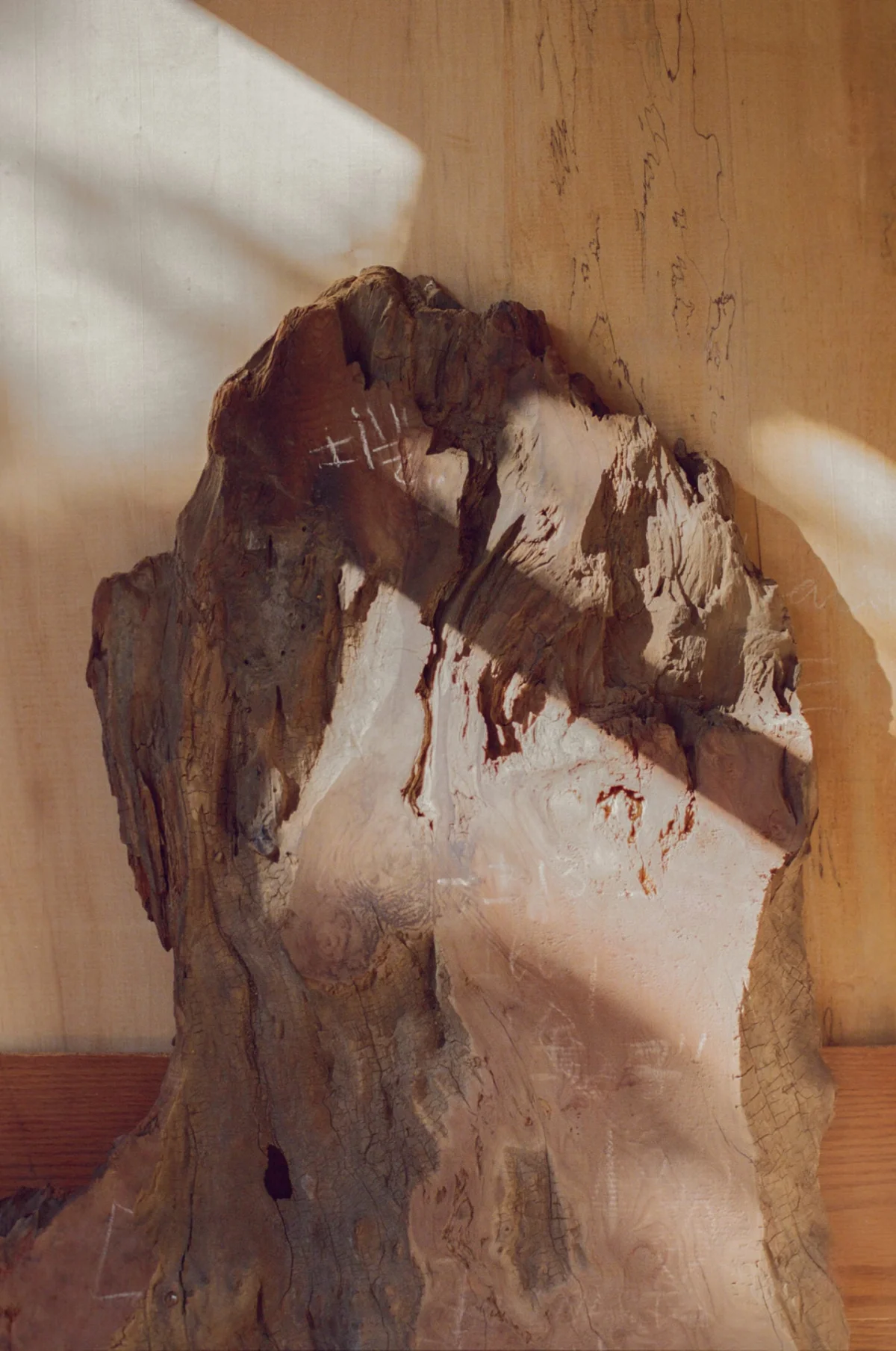
His respect for trees had roots in his own childhood, too. He spent time hiking and camping as a Boy Scout in the Pacific Northwest, and studied forestry for two years before moving to architecture. Mira describes his later furniture work as a way to give trees a second life. The goal was to let a piece of wood retain evidence of its origin, including the edges and contours that more processed furniture might erase.
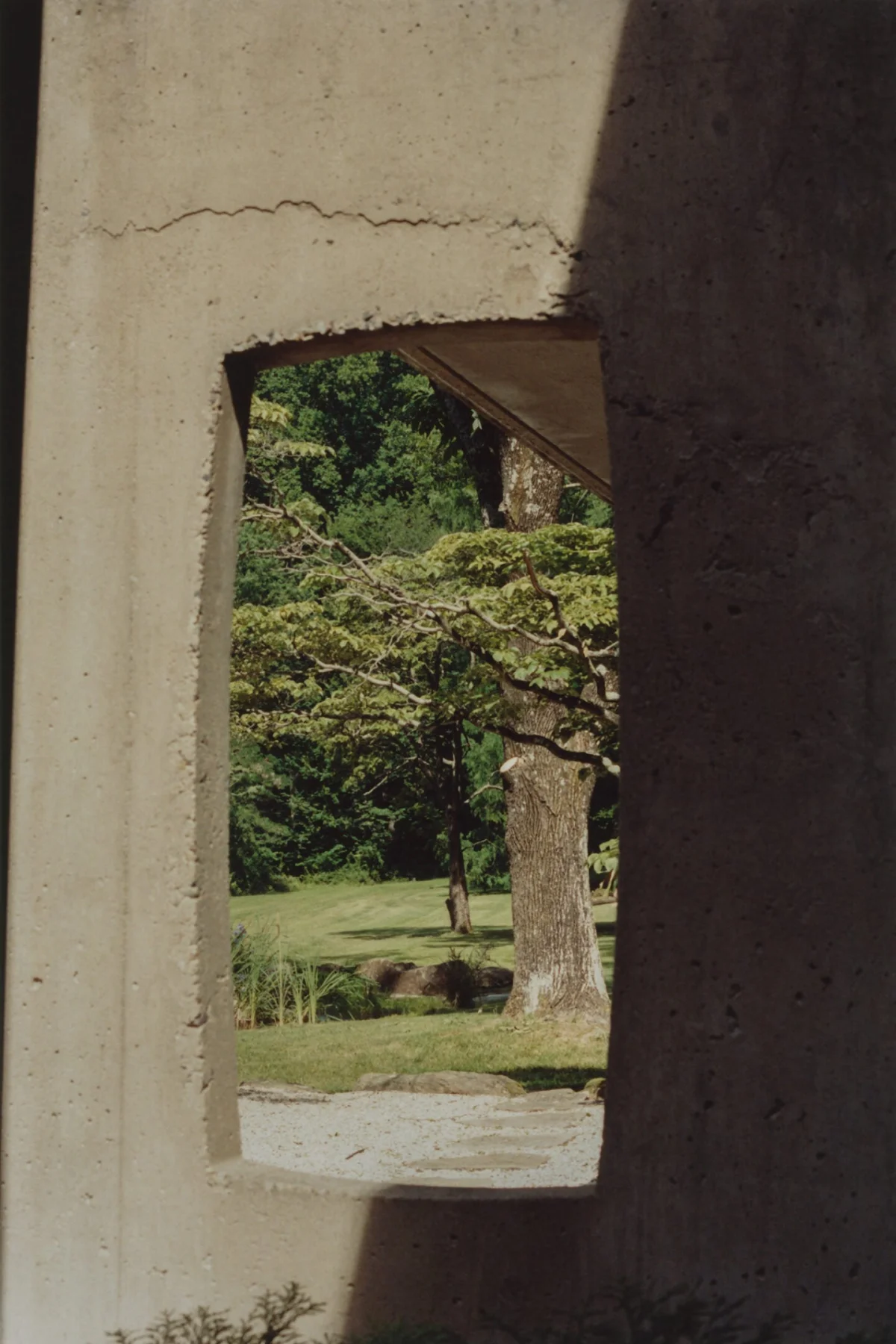
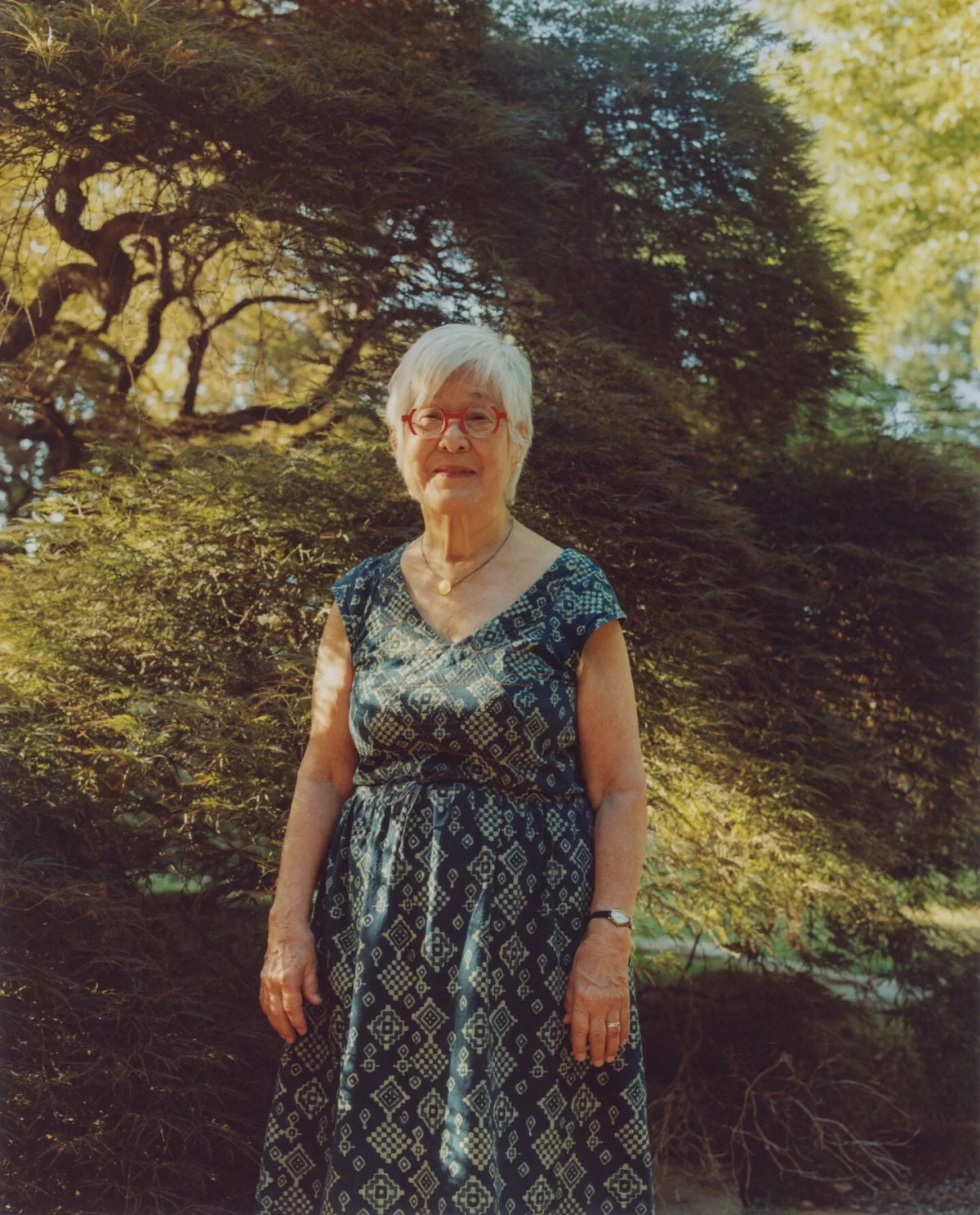
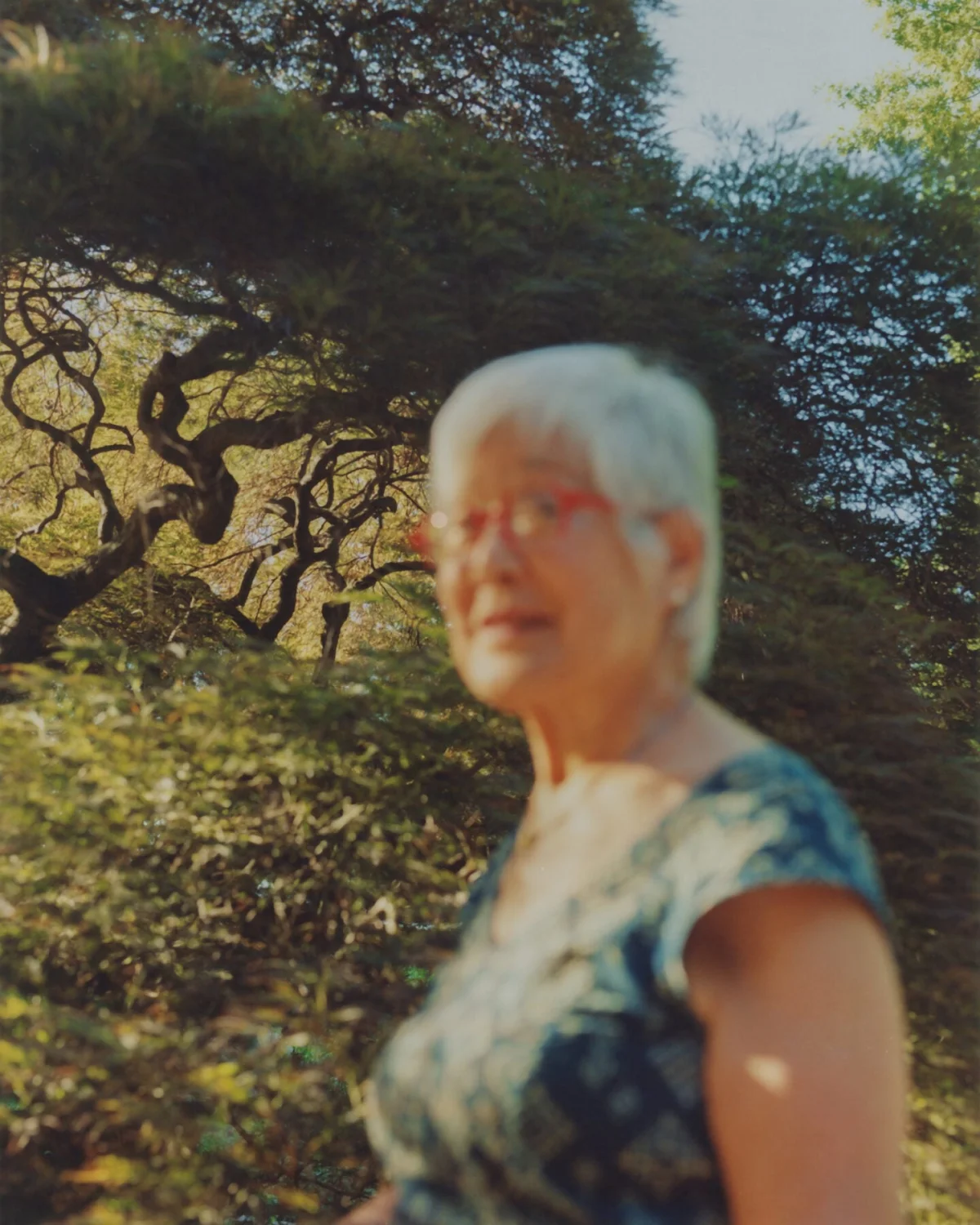
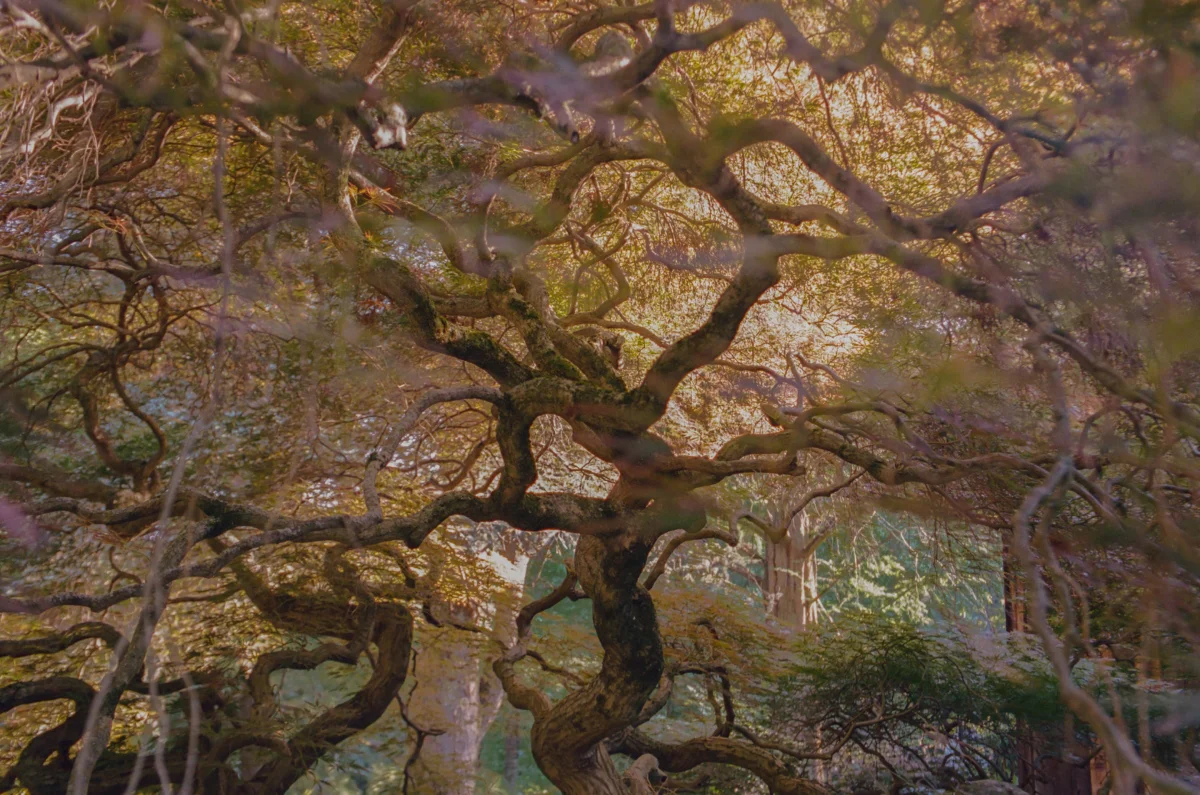
Mira sees that relationship in the trees around the property. In old photographs, the young trees leave a clear view toward the mountains. Now, their growth blocks that view. Her favorite is a Weeping Thread-leaf Japanese maple planted by her grandfather, who lived in Portland, Oregon, and helped establish the Japanese garden there. Its slender leaves and curved form make it a striking presence on the grounds.
In autumn, the maple turns bright orange for only a few days before its leaves curl, brown and fall. Mira connects that brief display to an appreciation of impermanence: beauty asks for attention because it does not stay. The tree gives visitors a living version of the material philosophy practiced in the shop. Its shape and seasonal changes are not defects to correct; they are part of what makes it worth noticing.
Furniture as useful art, and a place for conversation
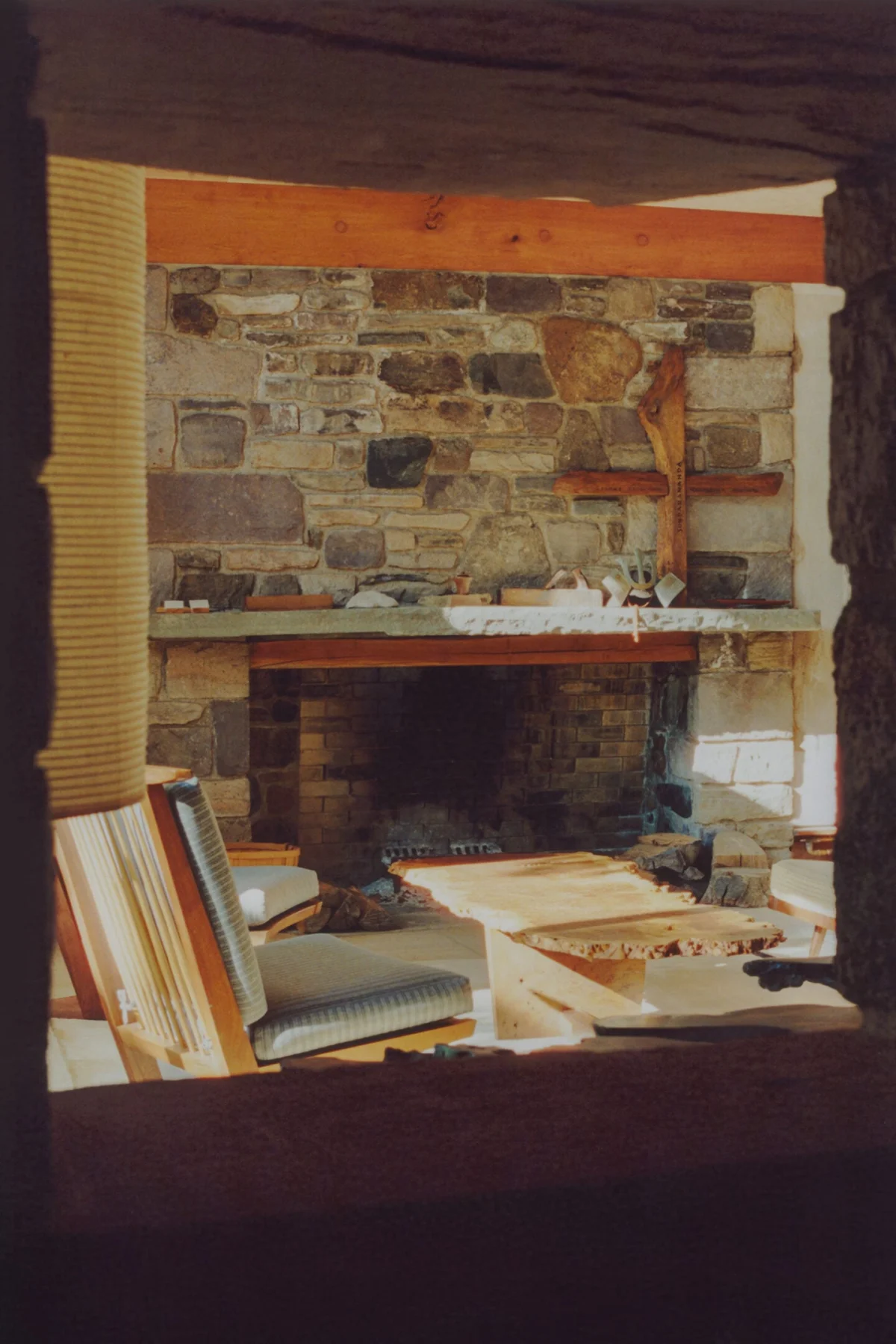
A round table in the former living space holds a different kind of record. Mira remembers it as the center of family meals, often attended by friends who were also clients. Her mother cooked in the old house and brought dishes over. Many visitors were doctors who had furnished their offices with Nakashima pieces, and relationships with clients often continued beyond the sale. The table gathered those overlapping circles of work and family.
It was also a prototype for the peace altars George made after a logger offered him a large tree. He wanted to use the timber for a meaningful project, creating an altar for each continent. The altars were larger than the family table, but shared a similar shape. George saw a round table as a form that could bring people into one conversation, where a rectangular arrangement might divide them into smaller groups.
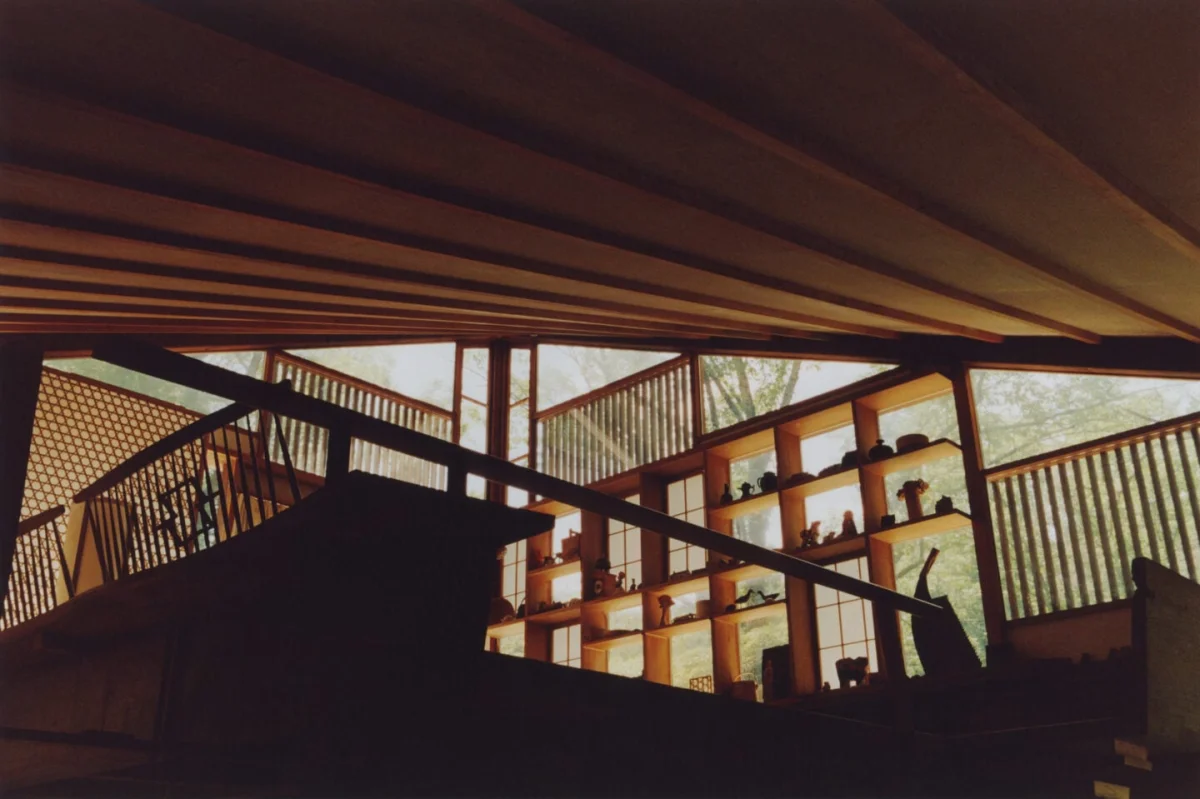
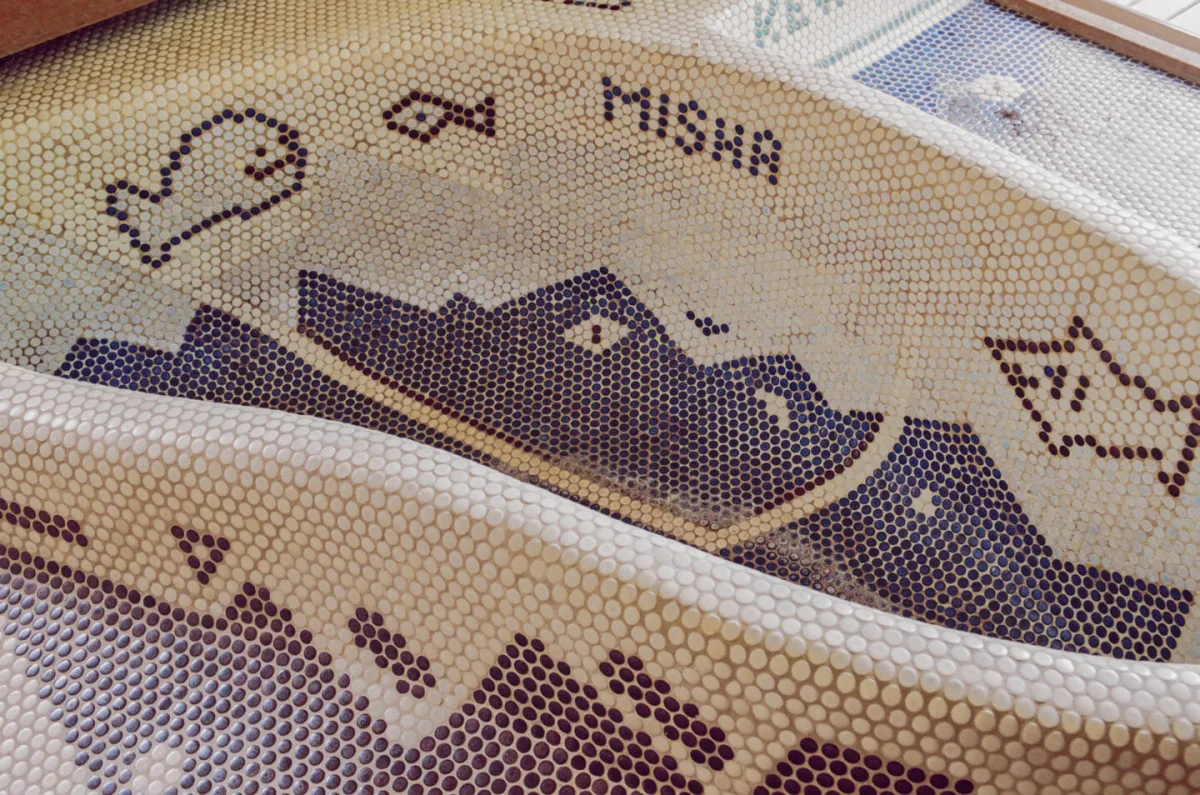
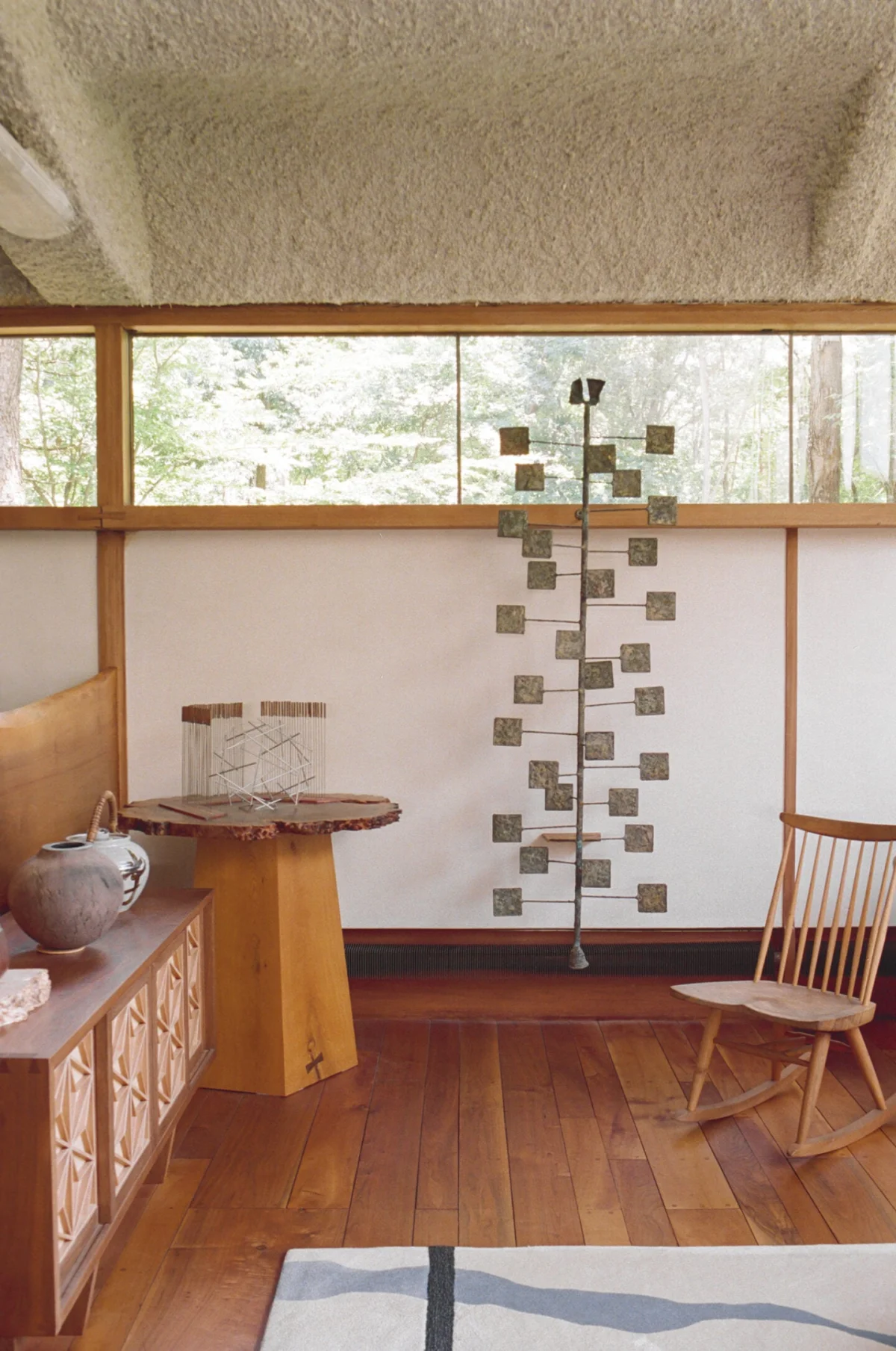
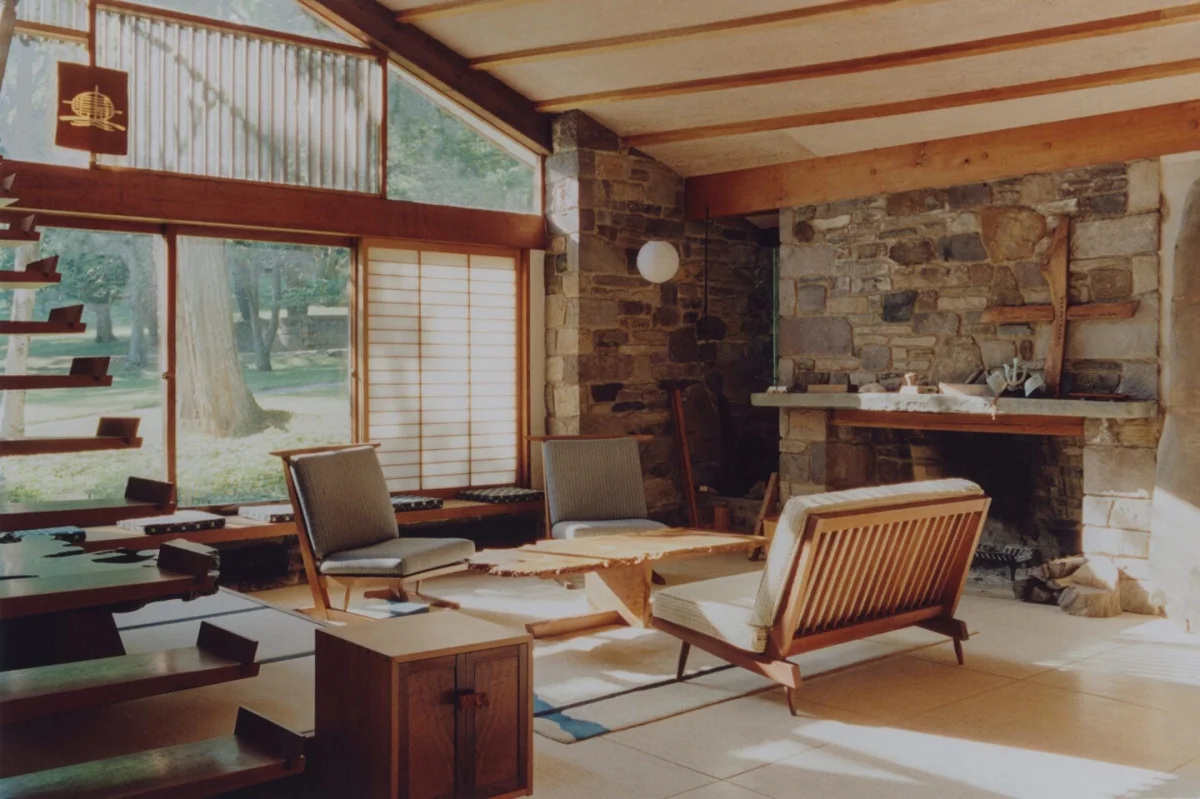
The round form carries the idea of gathering into the furniture itself. Its meaning comes from use as much as appearance: it supports shared meals and discussion, while its shape gives everyone a place around the same center. That balance between practical function and artistic intent was important to George. Mira says he and sculptor Harry Bertoia, a close friend from the early Knoll years, discussed what art was for and how it should enter everyday life. They worked in different materials, but both believed furniture had to be useful as well as expressive.
George’s move into furniture followed disappointment with some modern building practices. He had studied and worked in architecture in Japan and India, but was troubled by what he saw on returning to the United States. Mira recalls his reaction to a Frank Lloyd Wright building under construction, where he thought the work relied on rough assembly hidden behind an attractive finish. Furniture offered him more direct control over the process, from material to completed object.
His experience in Japan had taught him to value precise joinery, including joints that did not depend on nails or metal straps. In India, he supervised construction of a reinforced concrete building and set strict tolerances, even designing the formwork himself. During the family’s time in the Idaho desert, he also worked with a Japanese carpenter, using available materials such as old crates, leftover construction lumber and local bitterbrush. These experiences shaped a practice based on close attention, resourcefulness and the ability to adapt.
George’s work developed partly in response to mass production, which was expanding in the 1940s. He worried that losing hand skills and connection to natural materials would diminish something human. But he did not reject production in every form. He designed a furniture line for Knoll Studios in the 1940s and made many prototypes in his workshop, while retaining the right to make the pieces by hand there.
In the 1960s, he designed a second line for Widdicomb-Mueller, using techniques that included veneer bending. He ended the relationship when the company altered his designs without telling him. The disagreement reflected his preference for control from the tree onward, through milling and into the shop. That involvement let him adjust the work as it took shape. A piece could look different on the bench than it had on the drawing board.
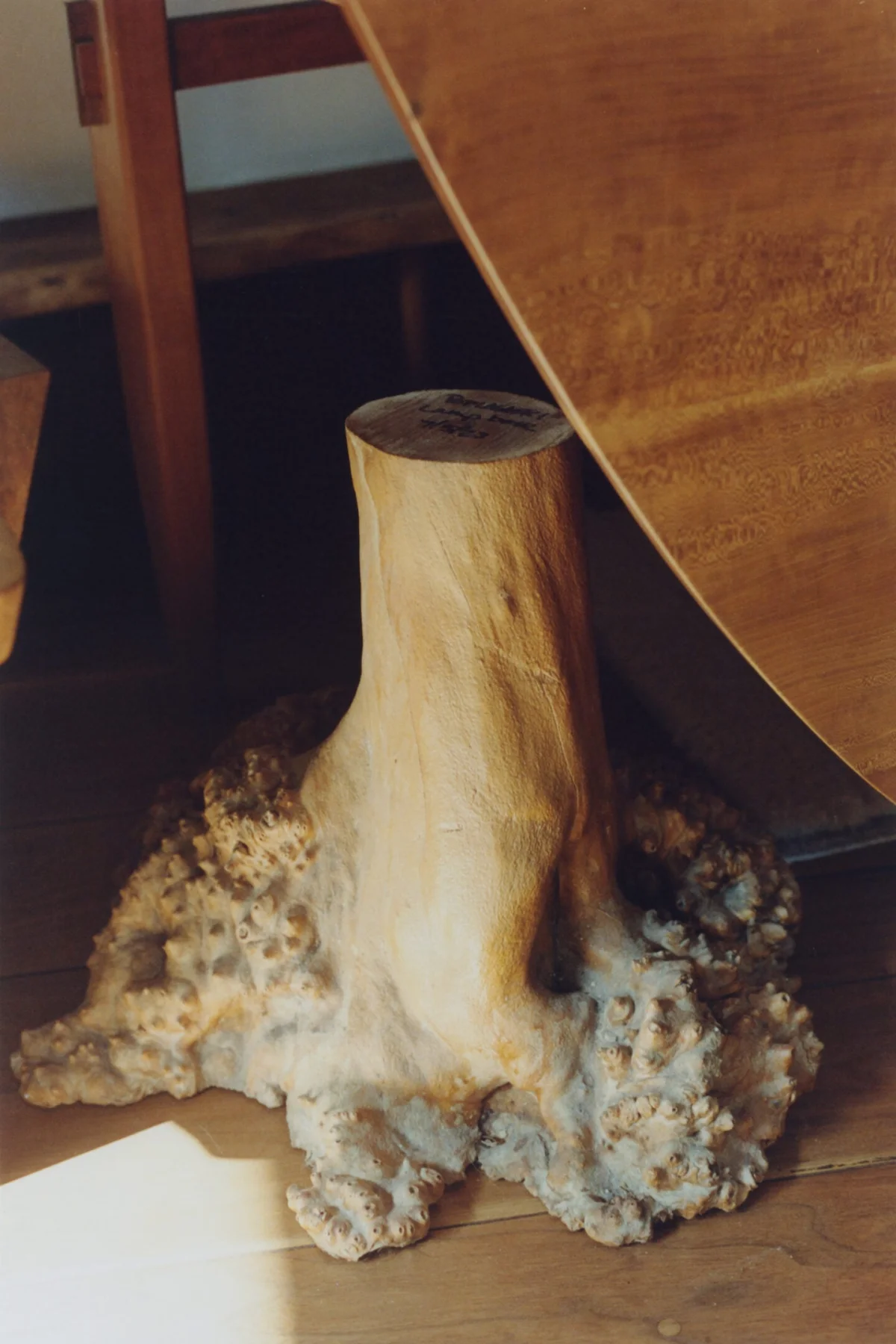
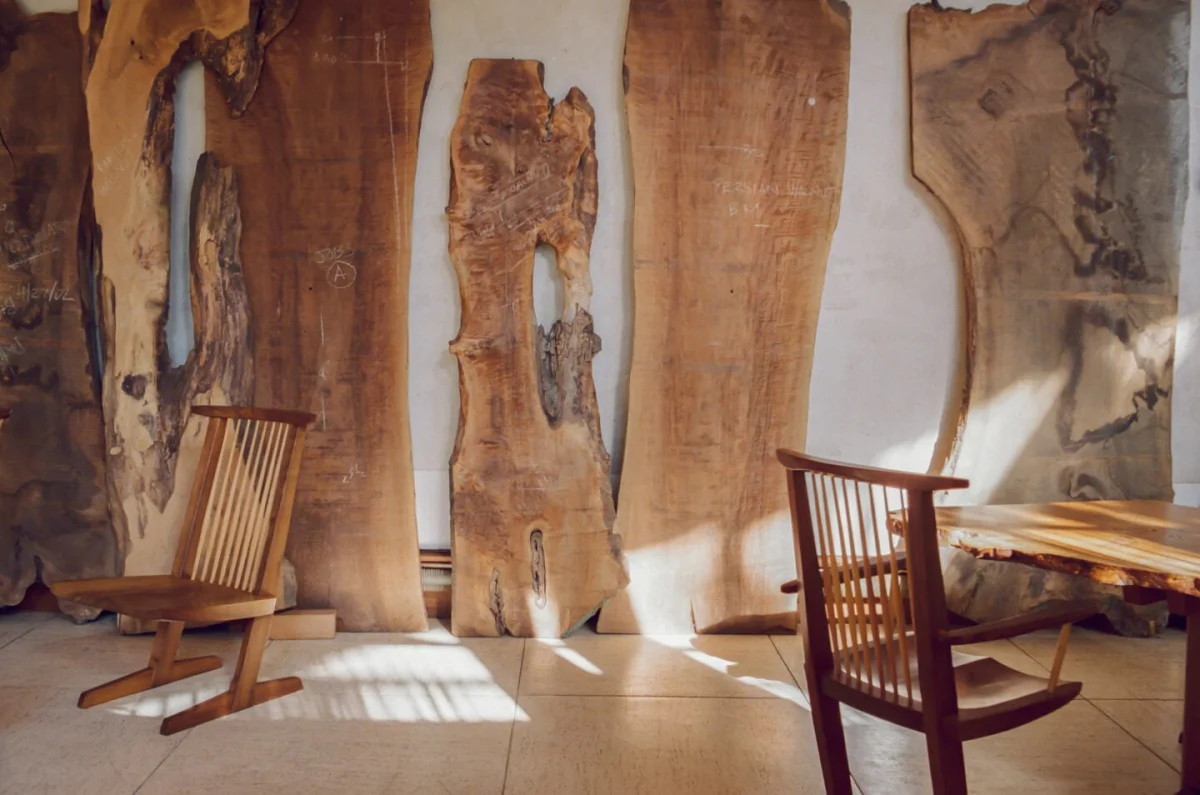
His respect for natural form also set him apart. Mira says he saw wood as more than a substance to be shaped; he believed the tree’s presence remained in the boards made from it. Rejected lumber, which he used when better timber was beyond his means in the 1940s, offered forms others might discard. By working with the natural contours, he gave “free form” a distinct place in furniture design.
That approach sits alongside a discipline of keeping the maker’s ego in check. George’s time at an ashram influenced his effort to put the work ahead of personal expression, a principle that sometimes caused tension in a culture that prizes individual authorship. For Mira, the shop’s standards come from holding both ideas together: the designer needs judgment and skill, but the material and the work should guide the result.
George’s design circle included Bertoia and Isamu Noguchi. He and Noguchi knew each other through the group of designers associated with Knoll in the 1940s, but worked separately and did not collaborate. After both had died, a Japanese cultural organization in Washington, D.C., arranged an exhibition pairing Noguchi’s Akari lamps with George’s furniture. Mira felt their work made a natural pairing. She also hoped to work with ceramic artist Toshiko Takaezu, who attended the exhibition, though they never made a project together.
Keeping the work in view
Photographer Ezra Stoller documented the buildings George designed in a complete photographic essay. His work gives the architecture its own visual record, separate from the many books that have focused on the furniture. Mira has been in touch with Jules Spector at Phaidon about a possible book devoted to her father’s architecture. She sees a close relationship between his buildings and furniture: both use similar joints and methods, informed by the same Japanese craft traditions.
Asked how she would describe her father, Mira recalled a builder, Robert Lovett, saying simply that George was “different.” His perspective had been shaped by Japanese design, by his experience of space and form, and by a willingness to work with materials other people might reject. The furniture’s irregular edges make that difference visible. Each piece keeps something of the tree’s contour, so the object retains a connection to its source.
That connection remains central to the workshop’s future. Mira says the business may become a nonprofit, combining the furniture-making operation with the Peace Foundation, which preserves her father’s legacy. Income from making furniture could then help care for the buildings, furniture and archives. The structure is still a possibility, and the family is considering how it might affect the workshop’s atmosphere and its emphasis on craftsmanship.
The challenge is to make preservation an active practice. George’s legacy lives in objects and records, but also in the way the shop studies lumber, works through drawings and allows a material to affect the design. Mira’s experience shows that continuing a family workshop means deciding what to keep and what to develop. The most useful measure may be whether the next piece still carries that attention: to the tree, the hands shaping it and the people who will gather around it.
Images © Monika Mroz for Ignant production | video © Portblue
About George Nakashima Woodworkers | Nakashima Woodworkers. Images by Monika Mroz; words by Monika Mróz.
===| Rev | Description | Date |
|---|---|---|
| A | Issued for reading | |
| B | Viewed 961 times | Current |


