Yellow Nose Studio’s INDERGARTEN Turns Play into Furniture and Objects
- Project
- Graphic Design
- Drawn by
- Anna Dorothea Ker
- Issued
- Sheet
- A-187
Hsin-Ying Ho and Kai-Ming Tung build INDERGARTEN through stacking, subtraction and shared experiments, extending the collection at Tokyo’s LICHT Gallery in 2025.
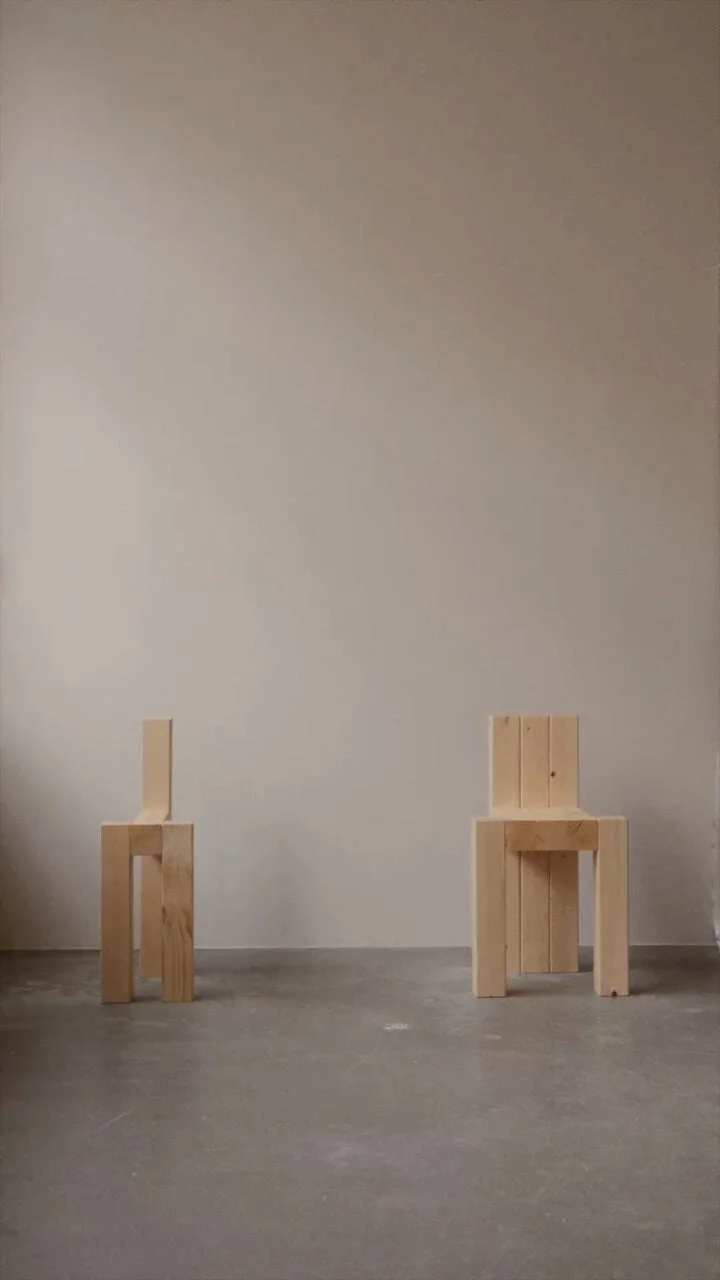
For Berlin-based Yellow Nose Studio, a chair can begin with a stack of leftover wood—and become a way to ask what a chair is for. Founders Hsin-Ying Ho and Kai-Ming Tung have shaped INDERGARTEN around that open question, using play as a working method for furniture, ceramics and objects.
The name drops the K from “kindergarten,” making a small typographic shift that points toward a larger idea: learning by handling things, testing forms and starting again. The studio’s approach recalls Friedrich Froebel’s early model of kindergarten, where play and experimentation were central to childhood learning. For Ho and Tung, that spirit has grown into a way of making that stays receptive to chance.
Learning to look again
The project’s roots are personal. At home, Ho and Tung watched their daughter, Muyi, discover the world through unselfconscious curiosity. Following how she handles objects and notices details changed the designers’ own perspective. Instead of starting with a fixed solution, they began paying closer attention to what everyday life might suggest.
That shift has become a practical prompt for new work. A starting point might be a feeling, a story, a trip, an exhibition or an object the pair encounters. Lately, Muyi’s changing interests have offered a close-up view of how familiar things can be used differently, and how colour reads through a child’s eyes. The designers let those observations unsettle assumptions about an object’s purpose before settling on a form.
From offcuts to a shared collection
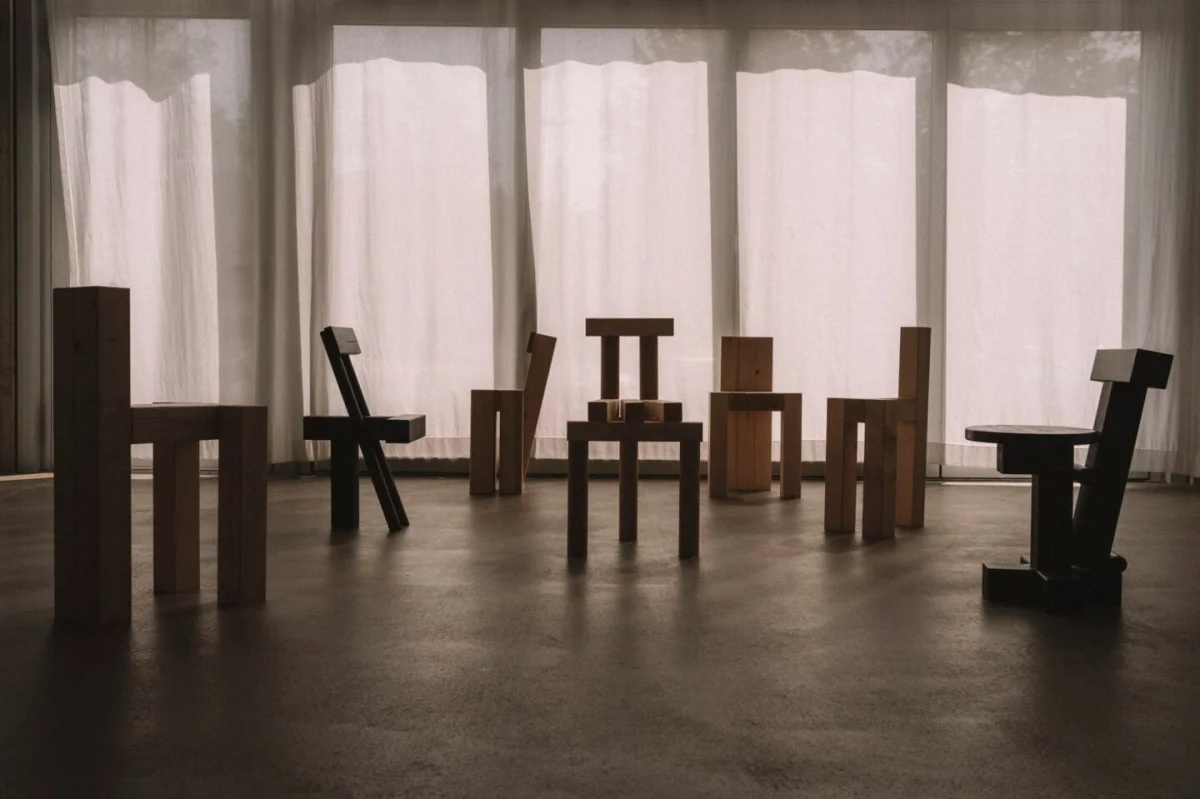
The first INDERGARTEN collection was presented in 2023 at two venues: a solo show at Pon Ding in Zhongshan, Taipei, and a smaller presentation at Mini Pon Ding, inside Pharos Coffee in Tokyo’s Jimbocho district. Ten variations on three basic shapes—the circle, square and rectangle—formed a group of seating pieces and vases that moved between furniture, craft, art and architecture.
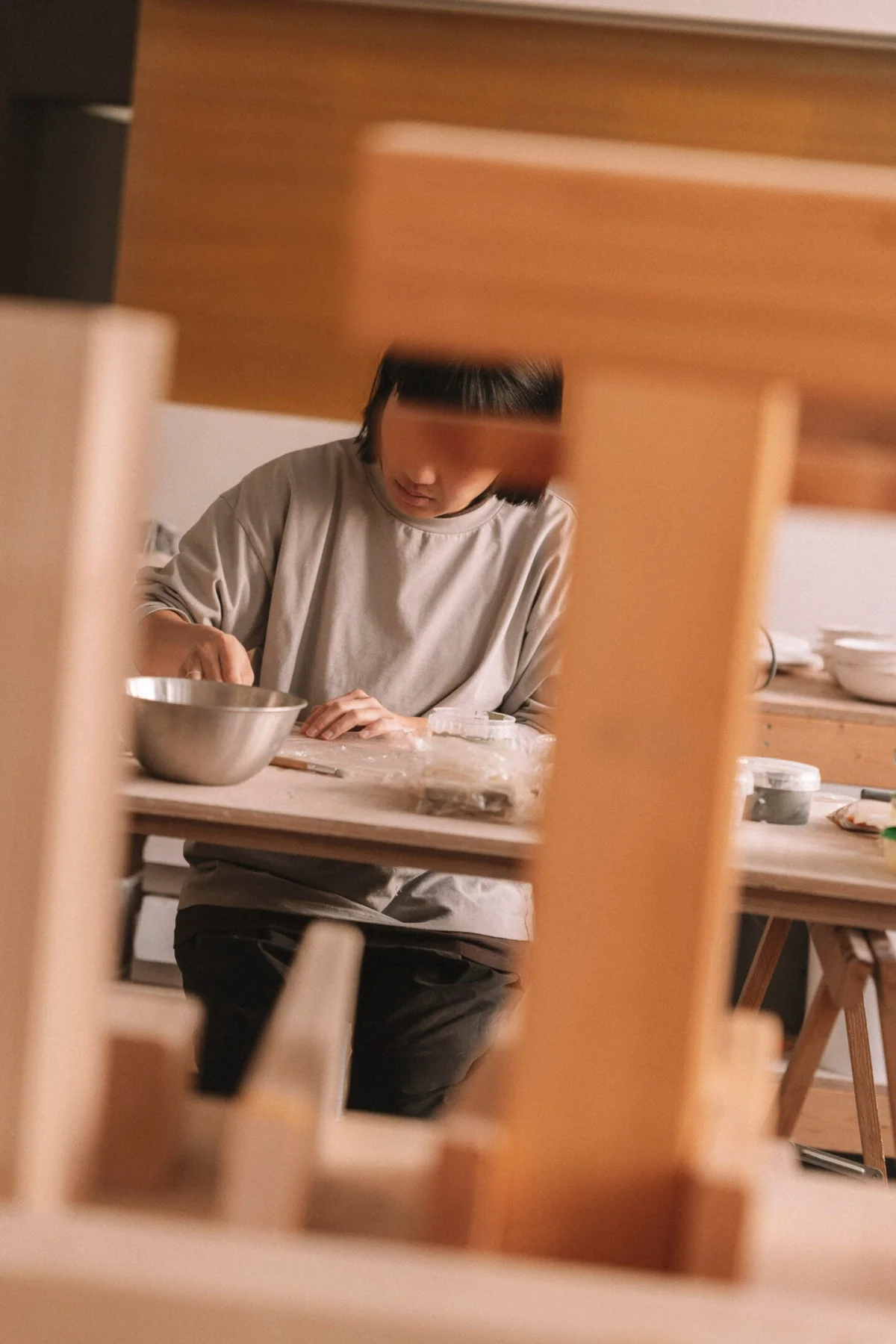
A slim monograph followed, published with Meter Books, with photography by Daniel Farò and graphic design by Hello Me Studio. It brought the studio’s working method into focus: wood and ceramic meet through experiments in form, with function and visual character developed together. The pair is also known for ceramic tableware, but INDERGARTEN makes the broader practice visible.
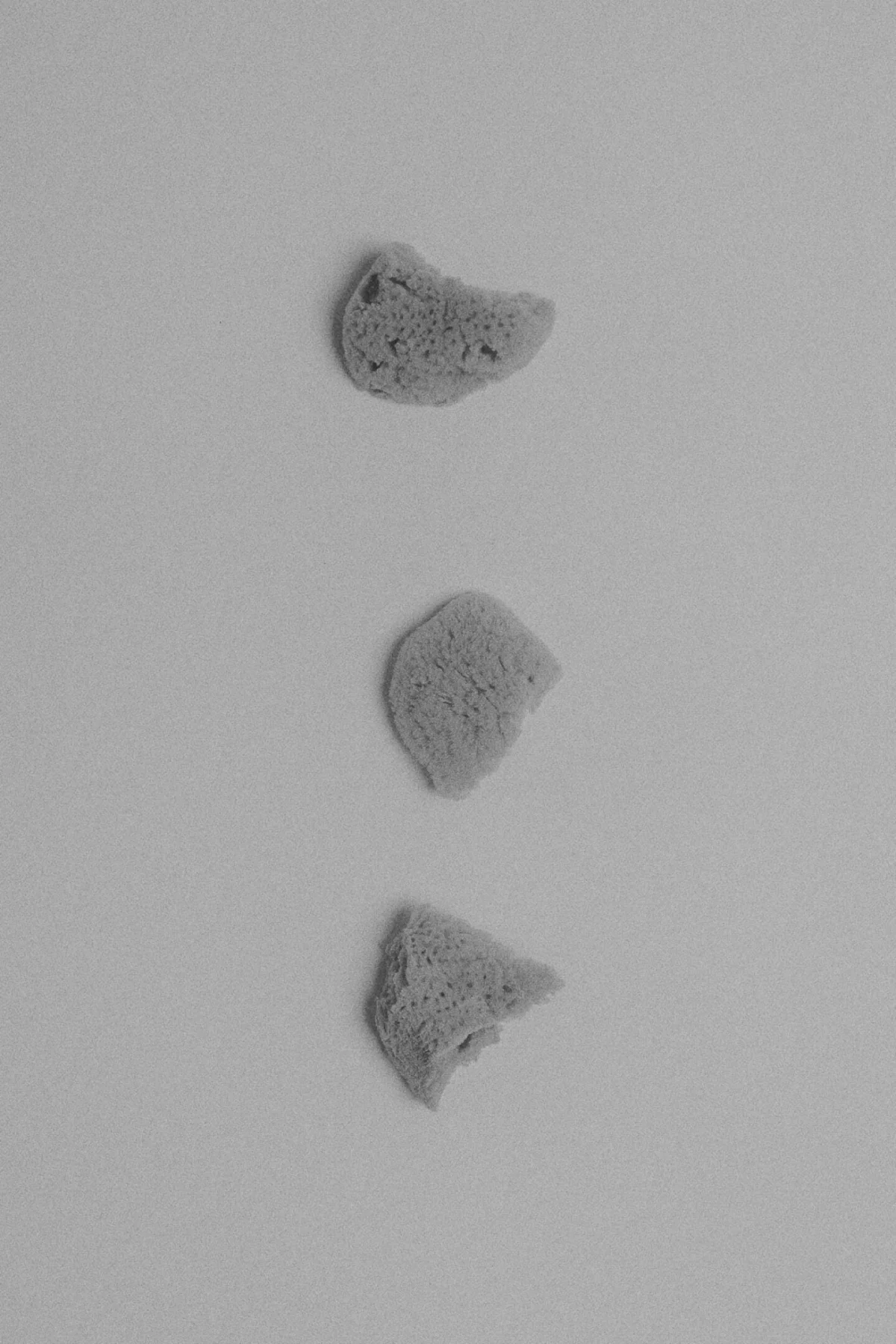
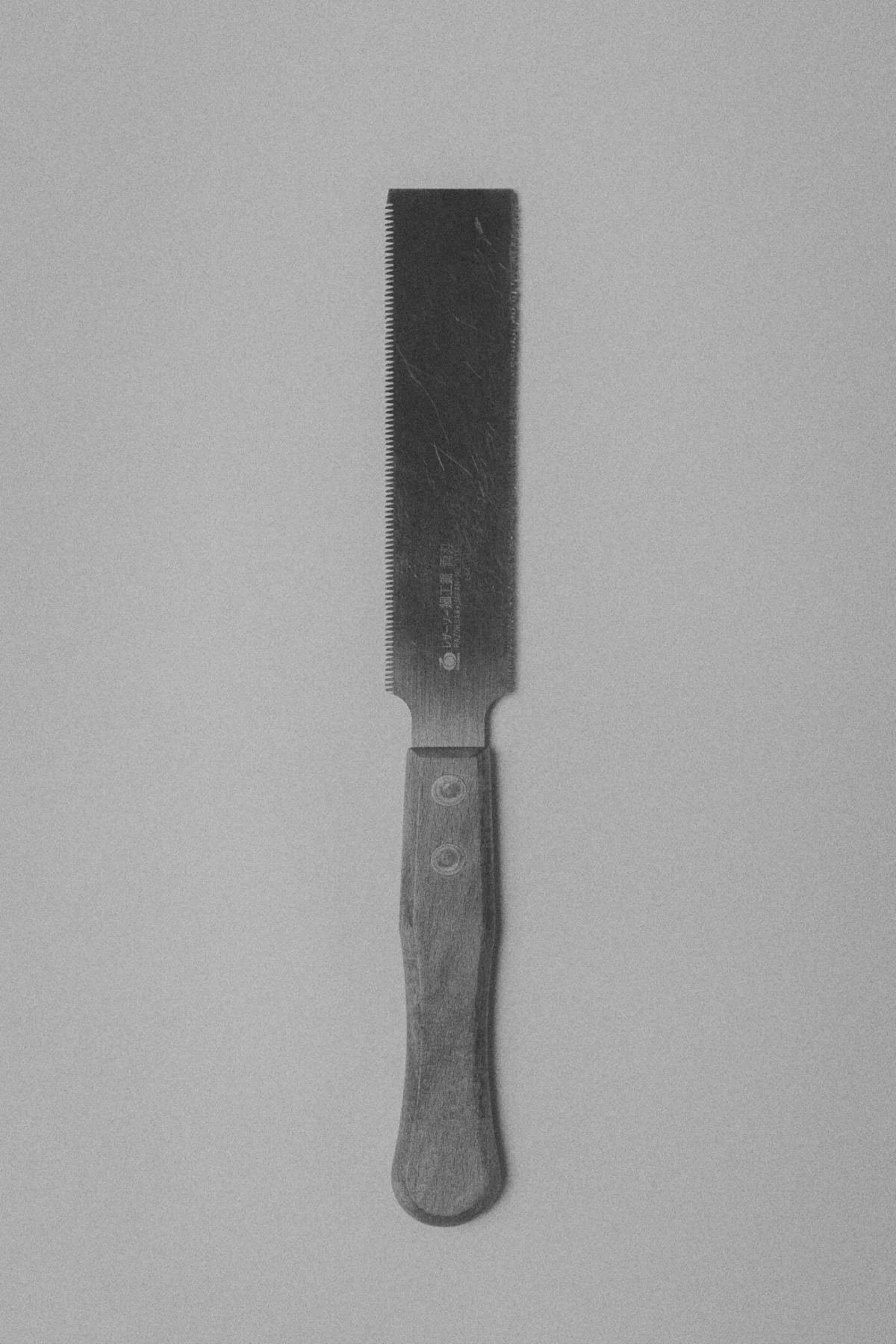
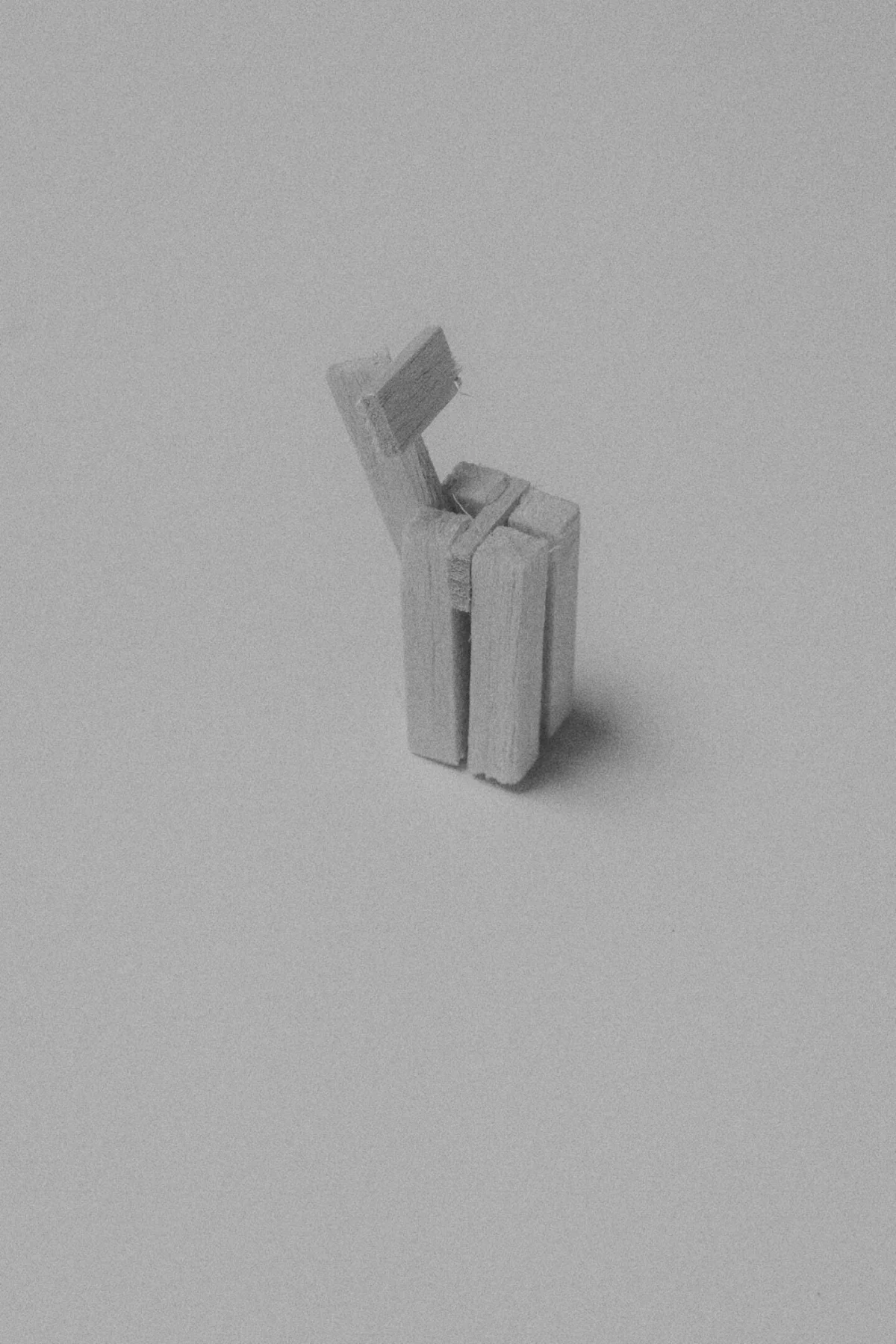
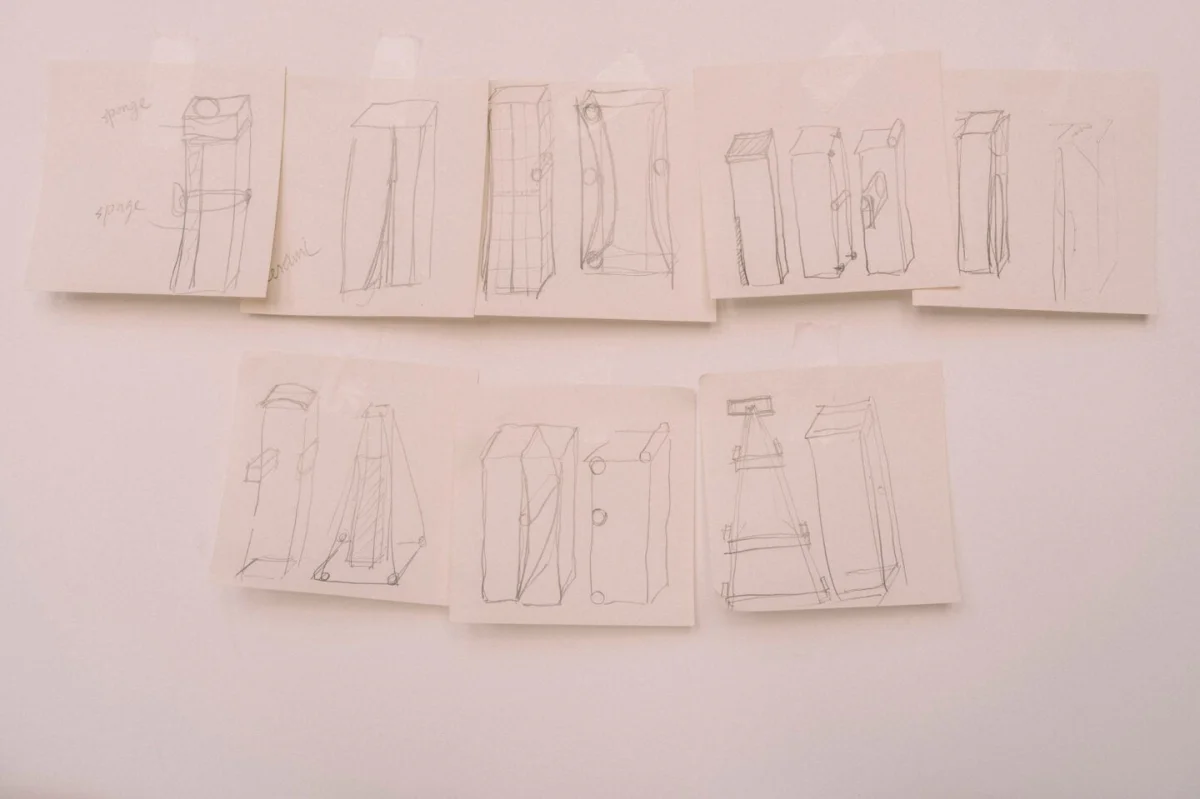
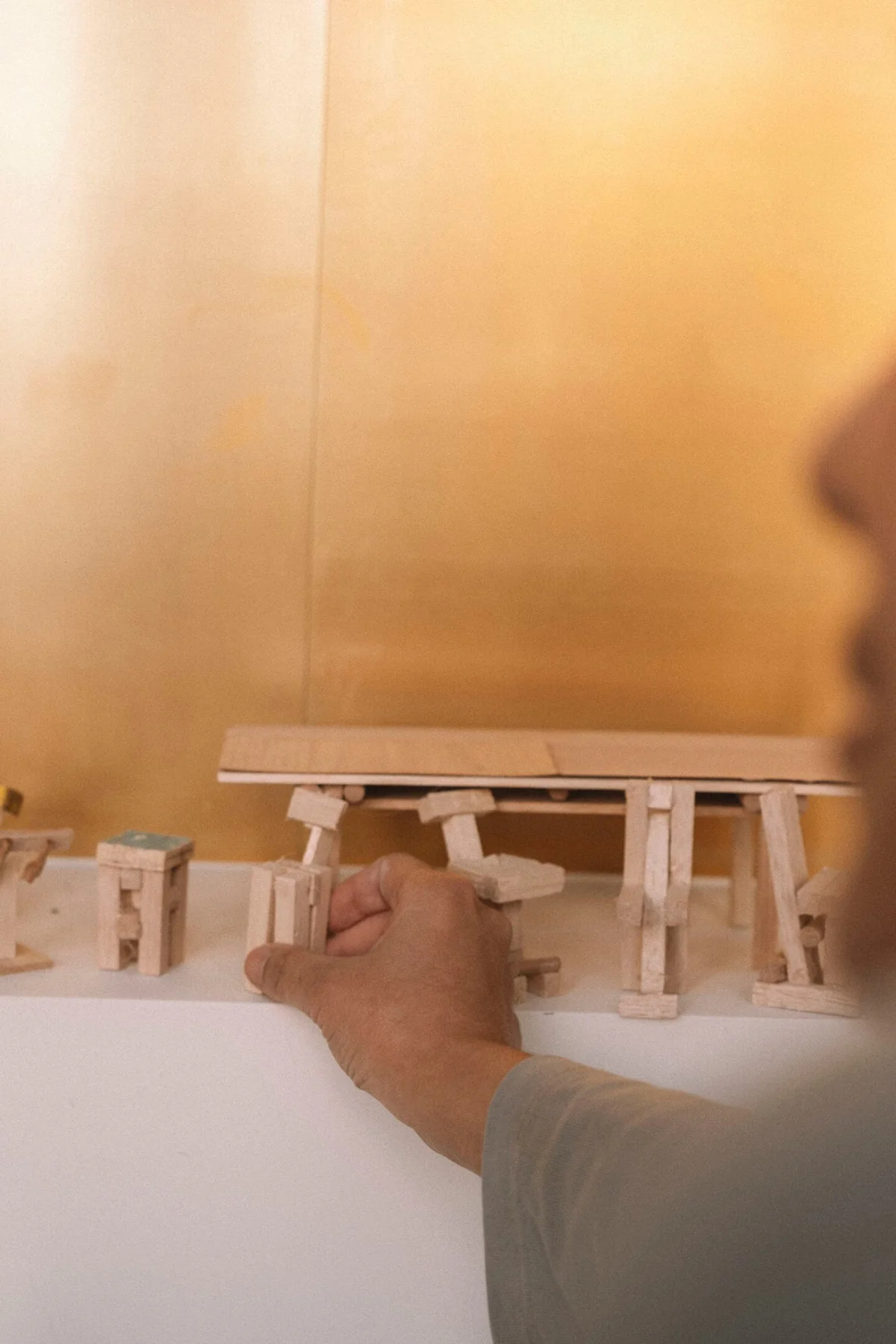
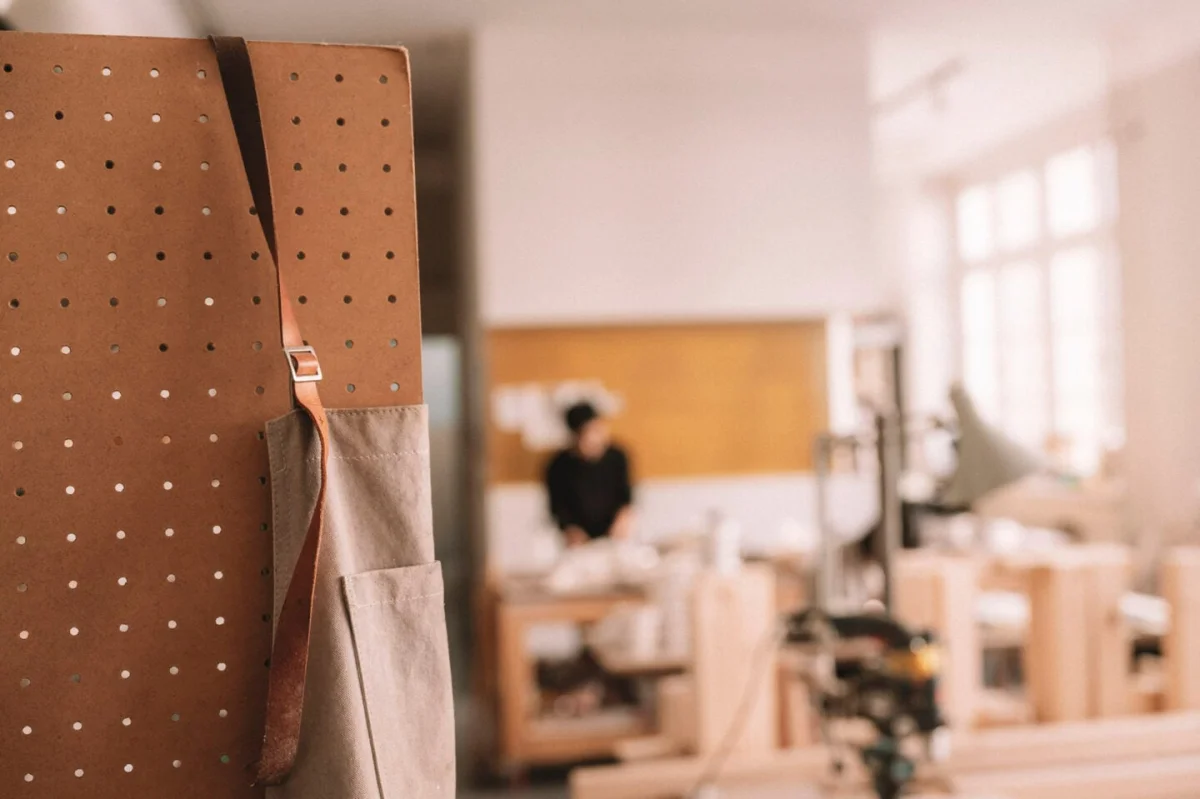
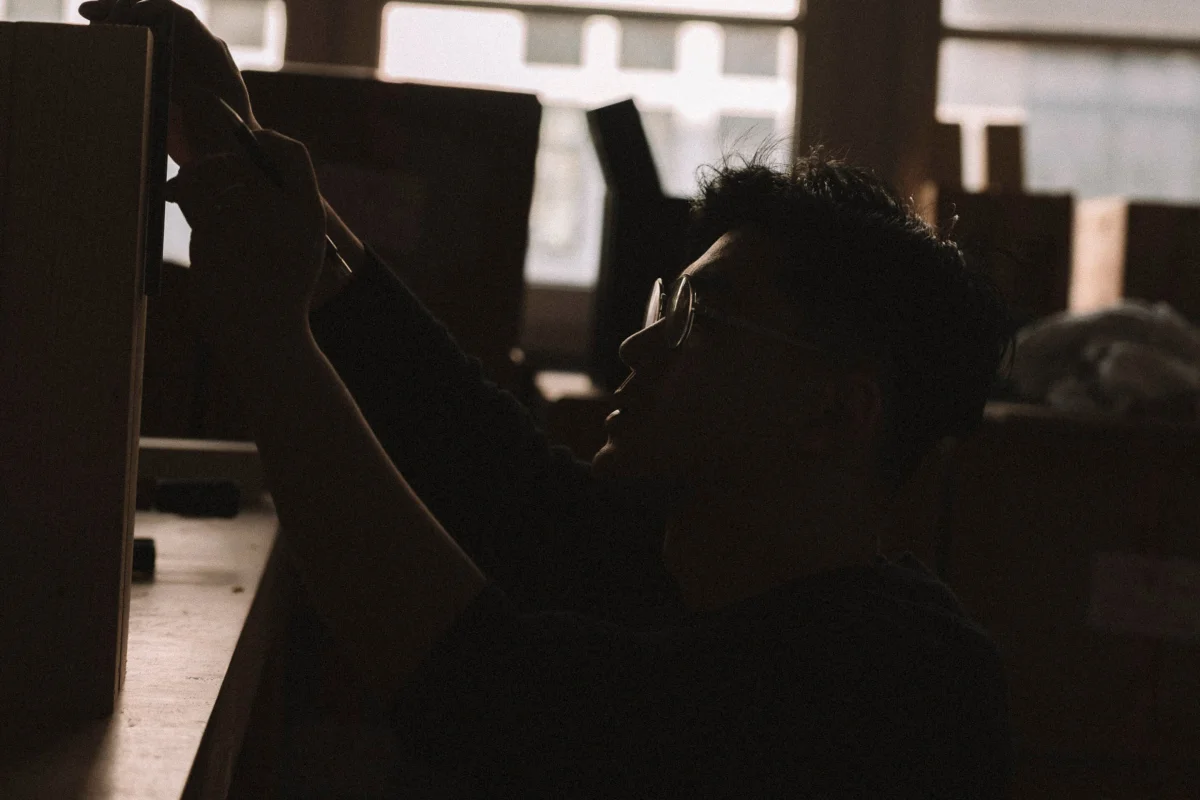
In their Berlin studio, Ho and Tung play with wood offcuts as if they were building blocks. They stack, remove and rebuild them in a daily morning ritual that can last up to two hours. Early attempts to make every piece symmetrical and rational gave way to a looser process. An unstable stack or a piece that falls can reveal a form that feels more compelling than the planned one.
That willingness to respond to accidents isn’t a shortcut around design decisions; it’s where the decisions begin. Ho describes the process as following a feeling, while Tung emphasizes the freedom of rearranging the scraps. The pair think like sculptors, adding and taking away as they work. When a project needs a specific use, they bring that requirement in as the form develops. Function and form still have equal weight.
Counting, stacking and simplifying
In 2025, the studio extended the collection with A Second Field at LICHT Gallery in Tokyo. The invitation came after LICHT founder and director Mitsuo Suma saw Yellow Nose Studio’s work at Mini Pon Ding and later contacted the pair. Ho says Suma gave them room to make what they wanted, without restrictions.
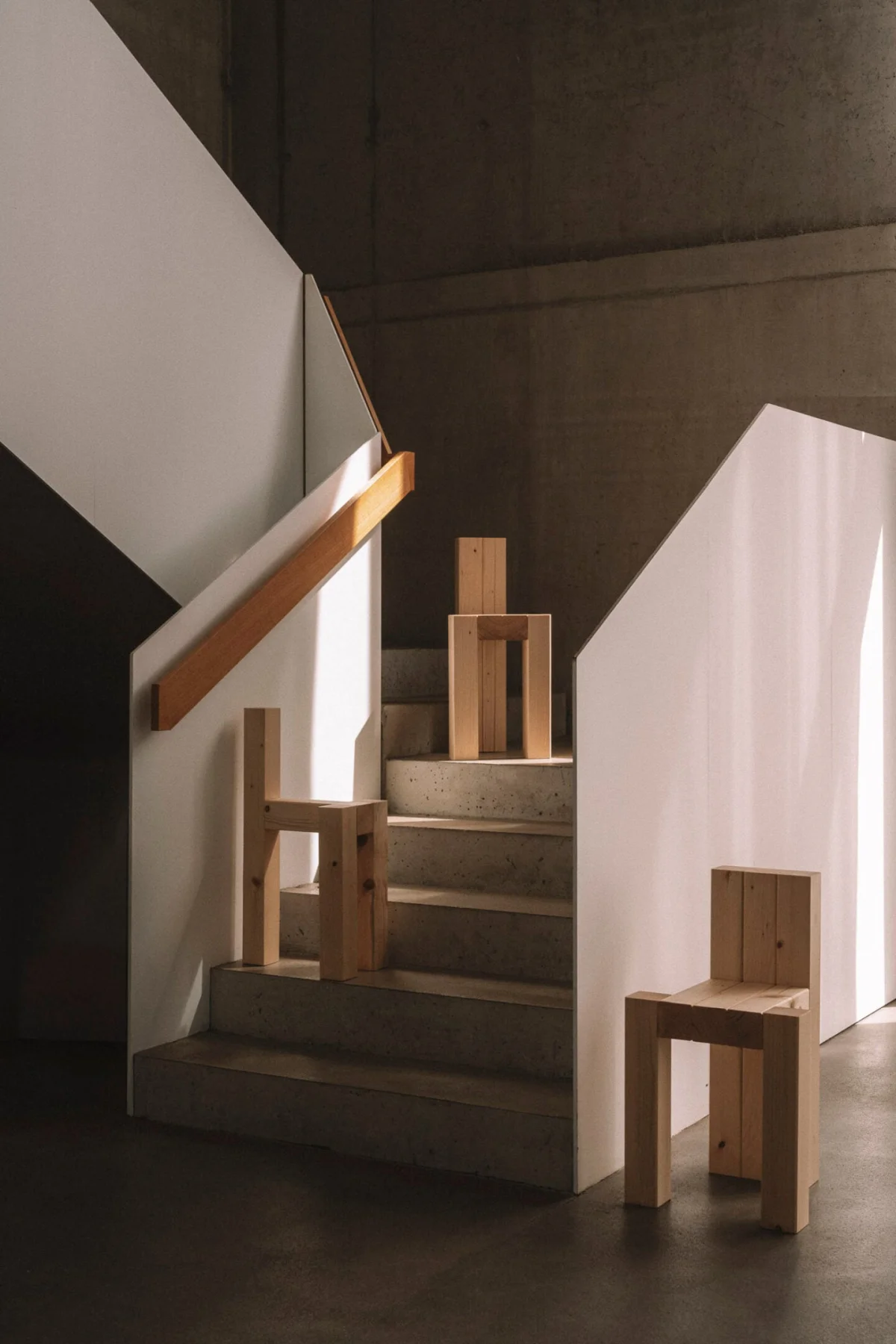
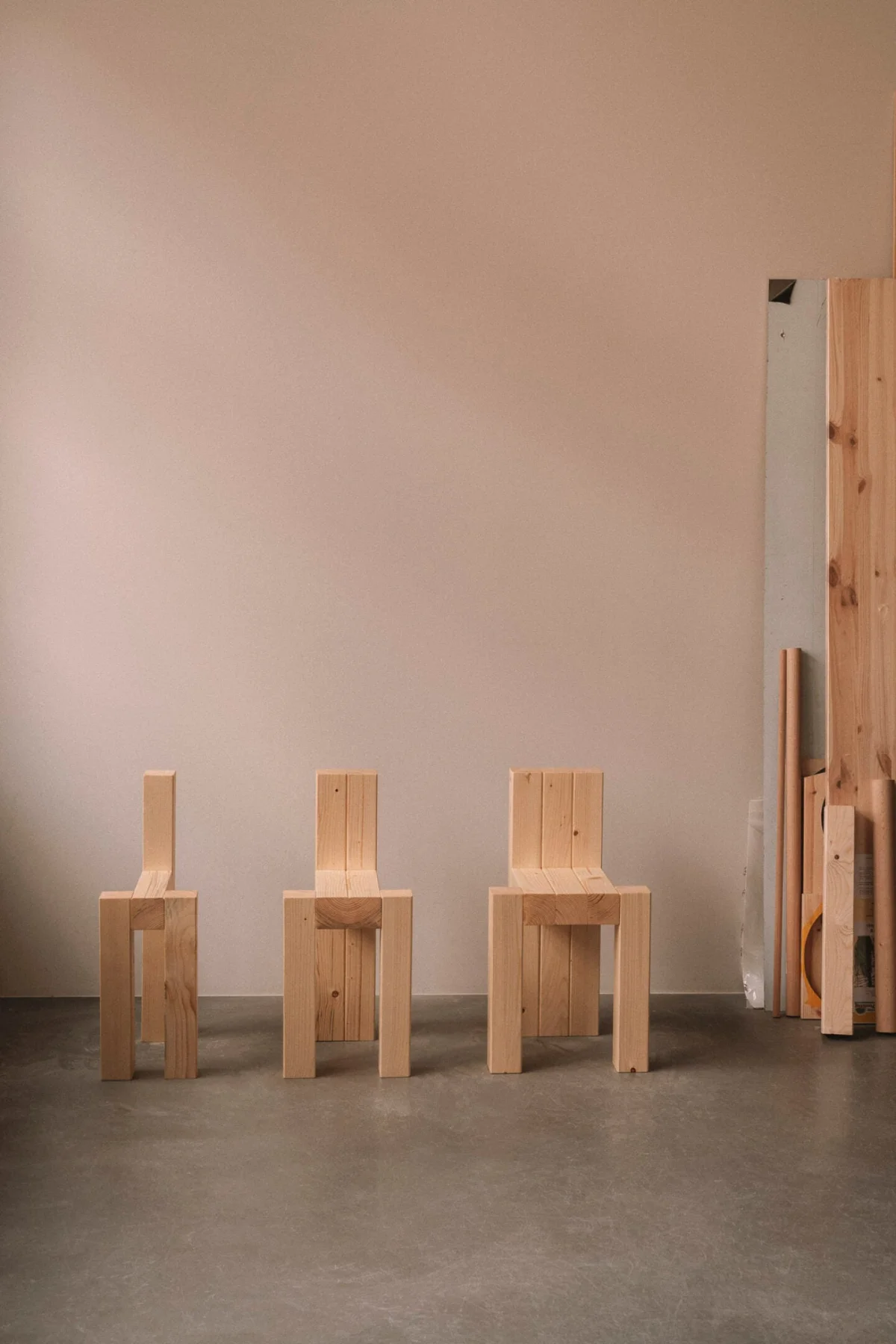
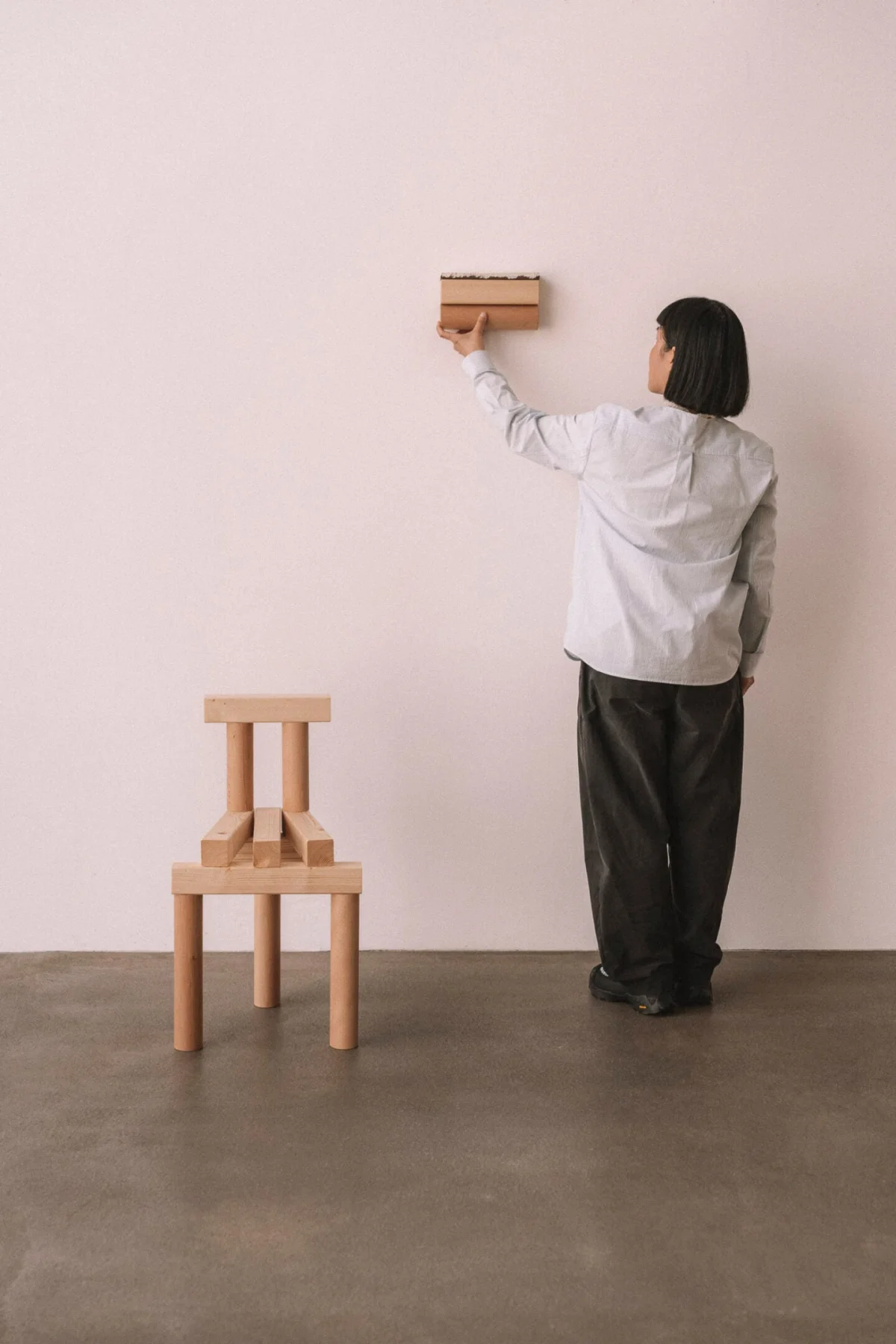
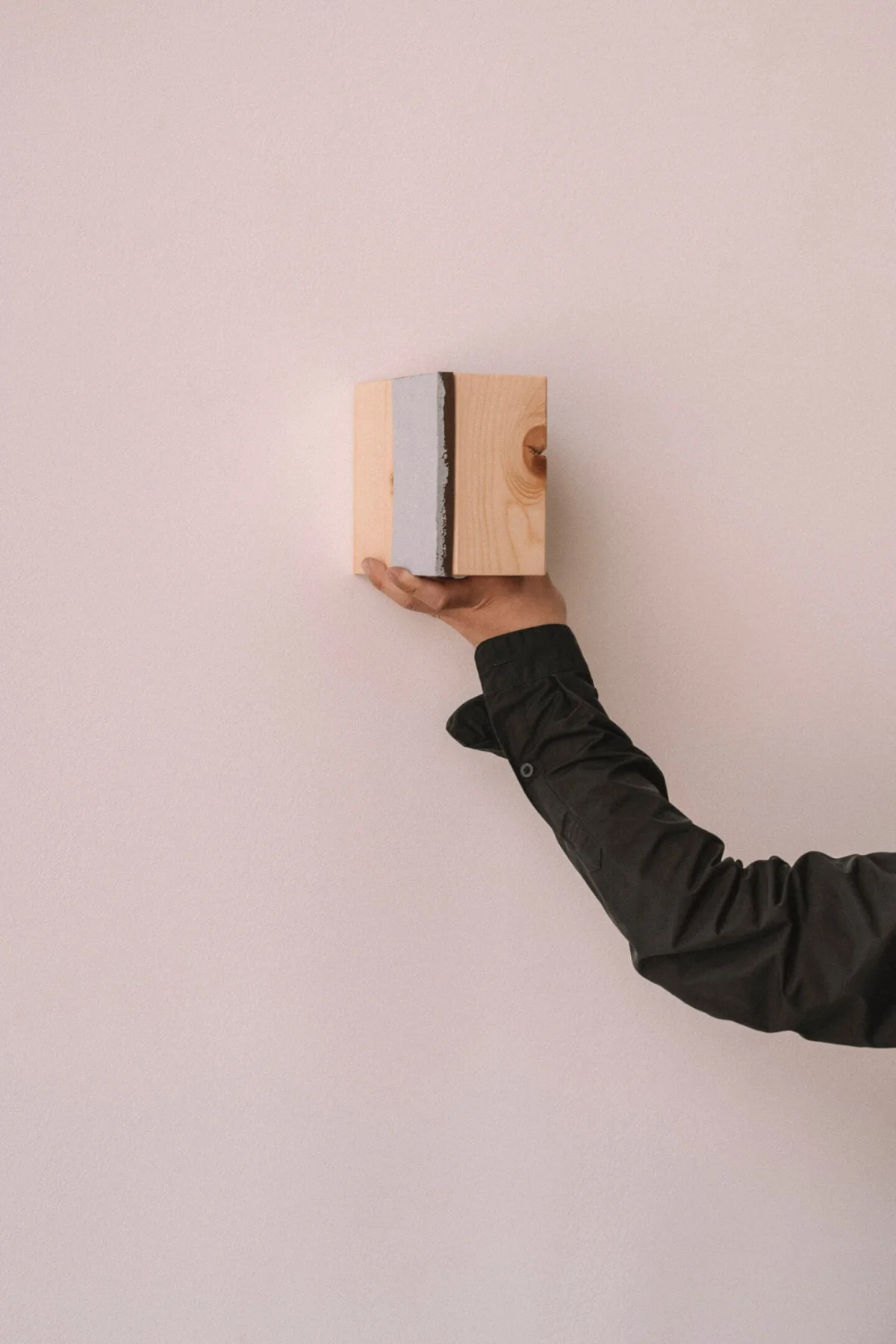
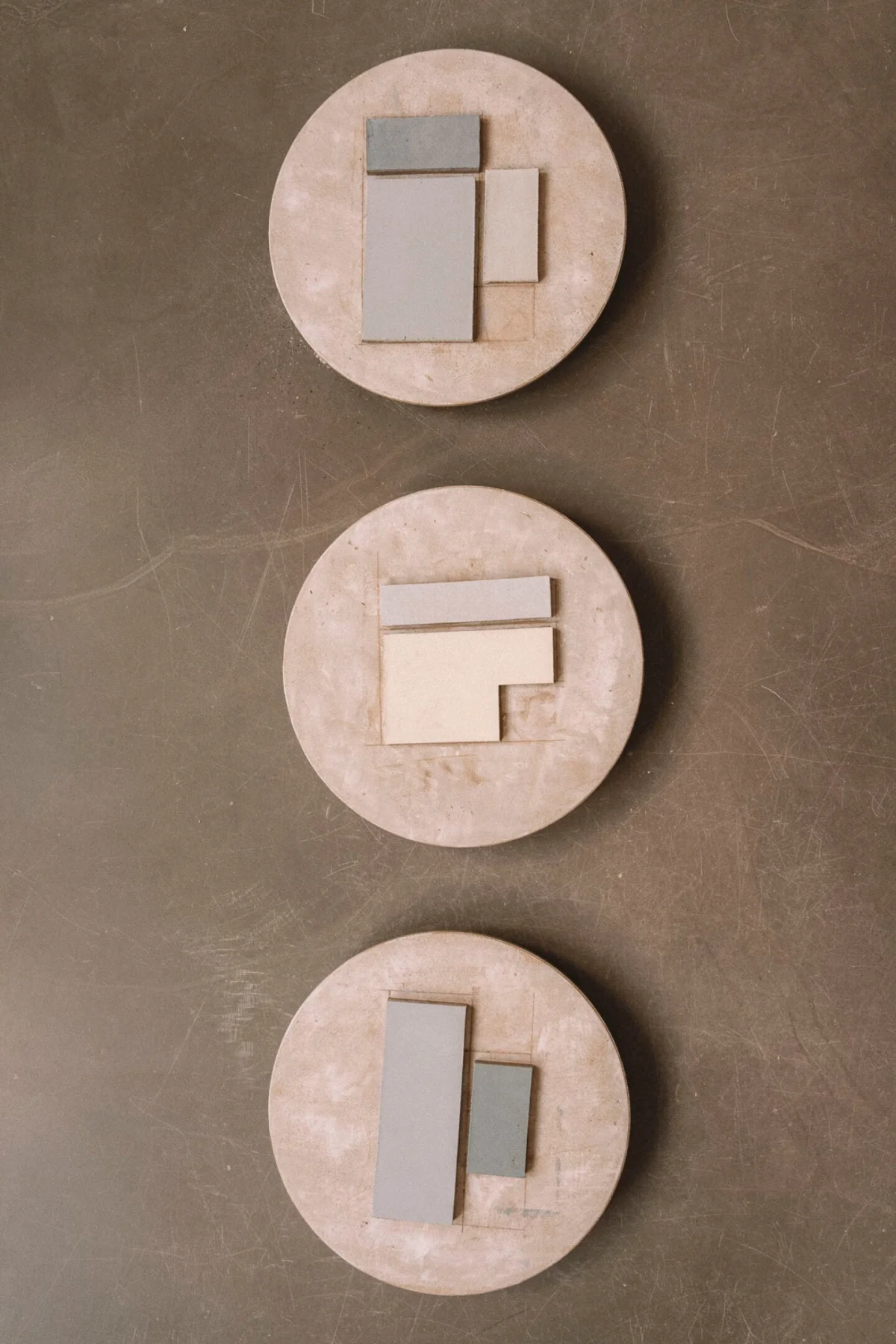
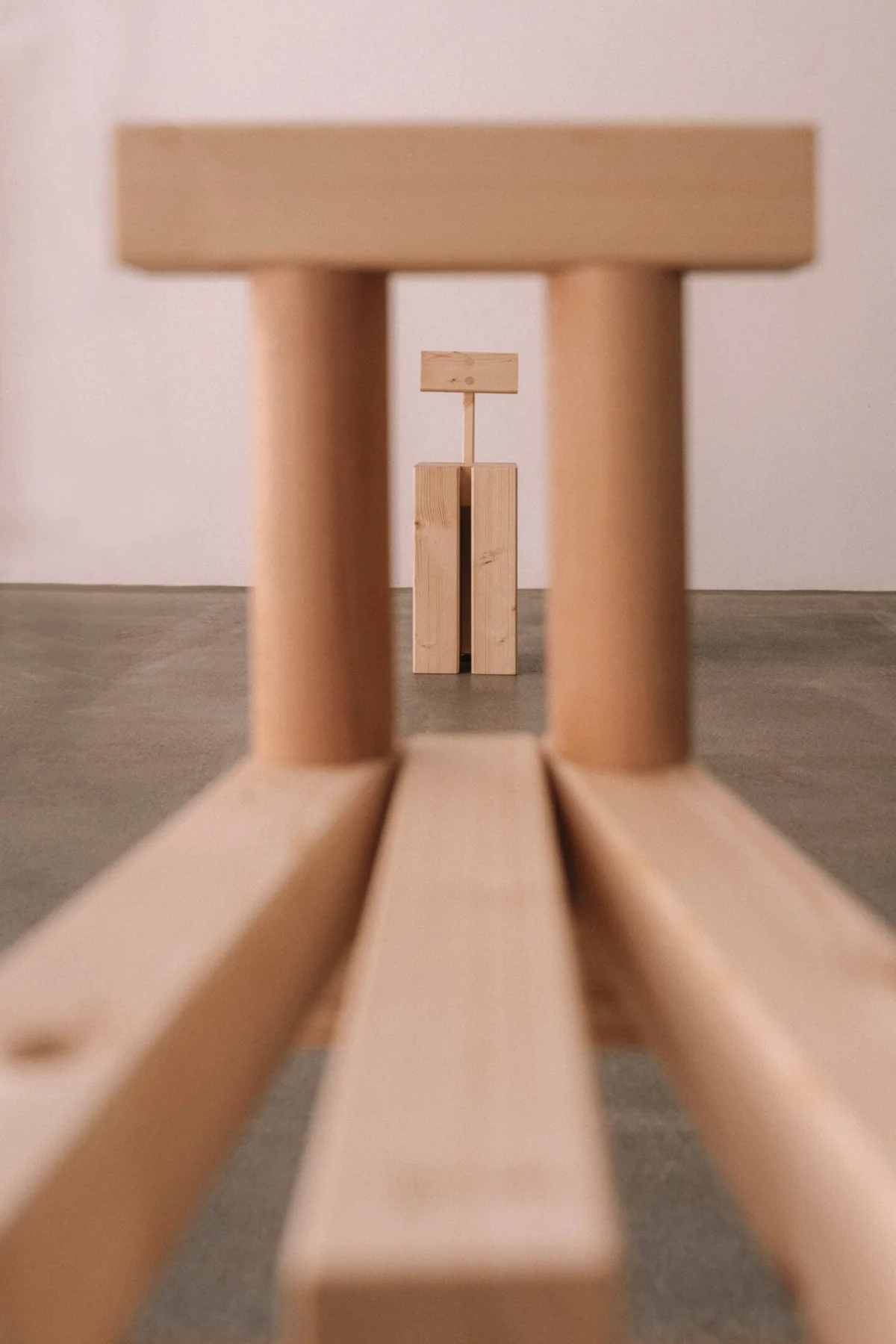
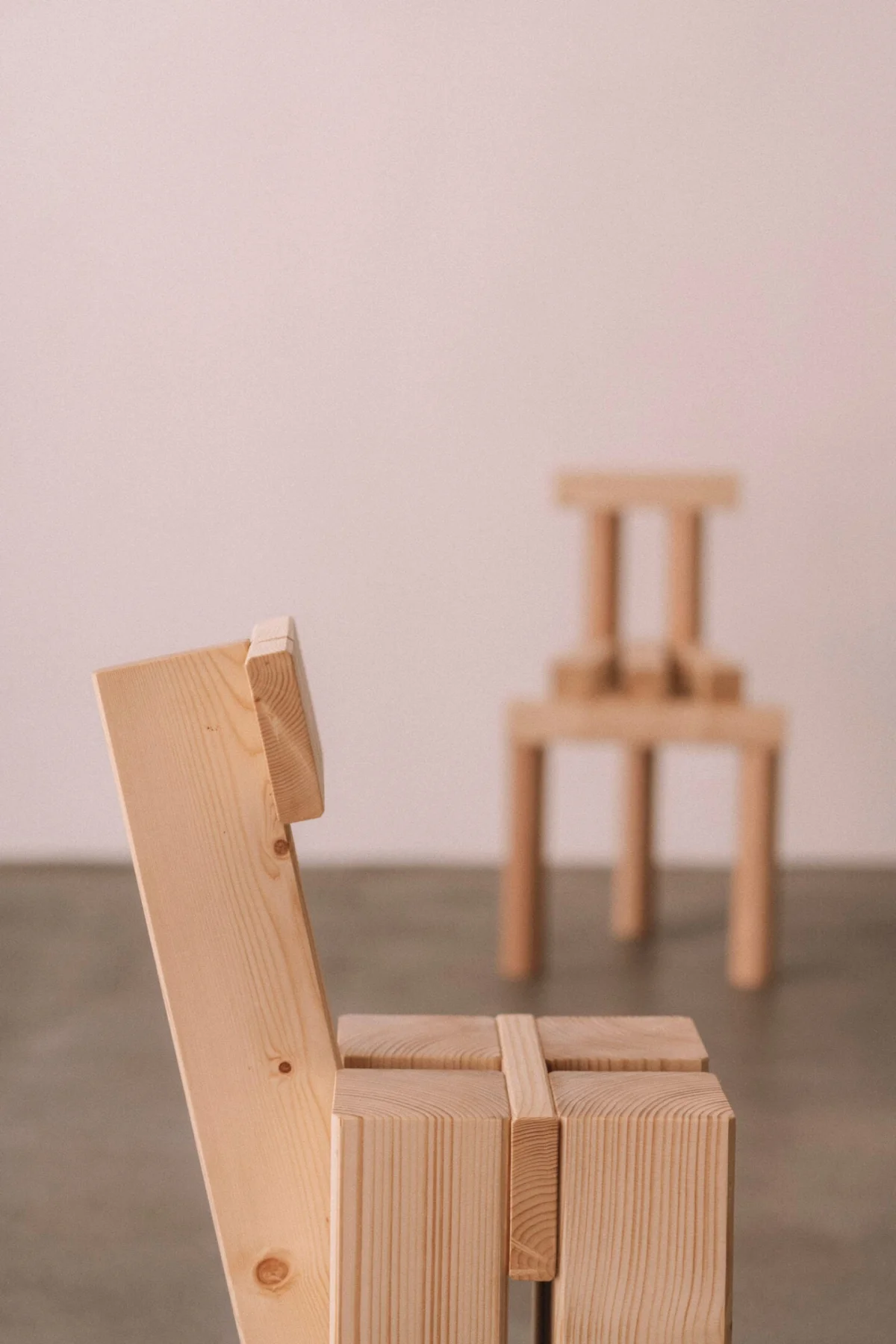
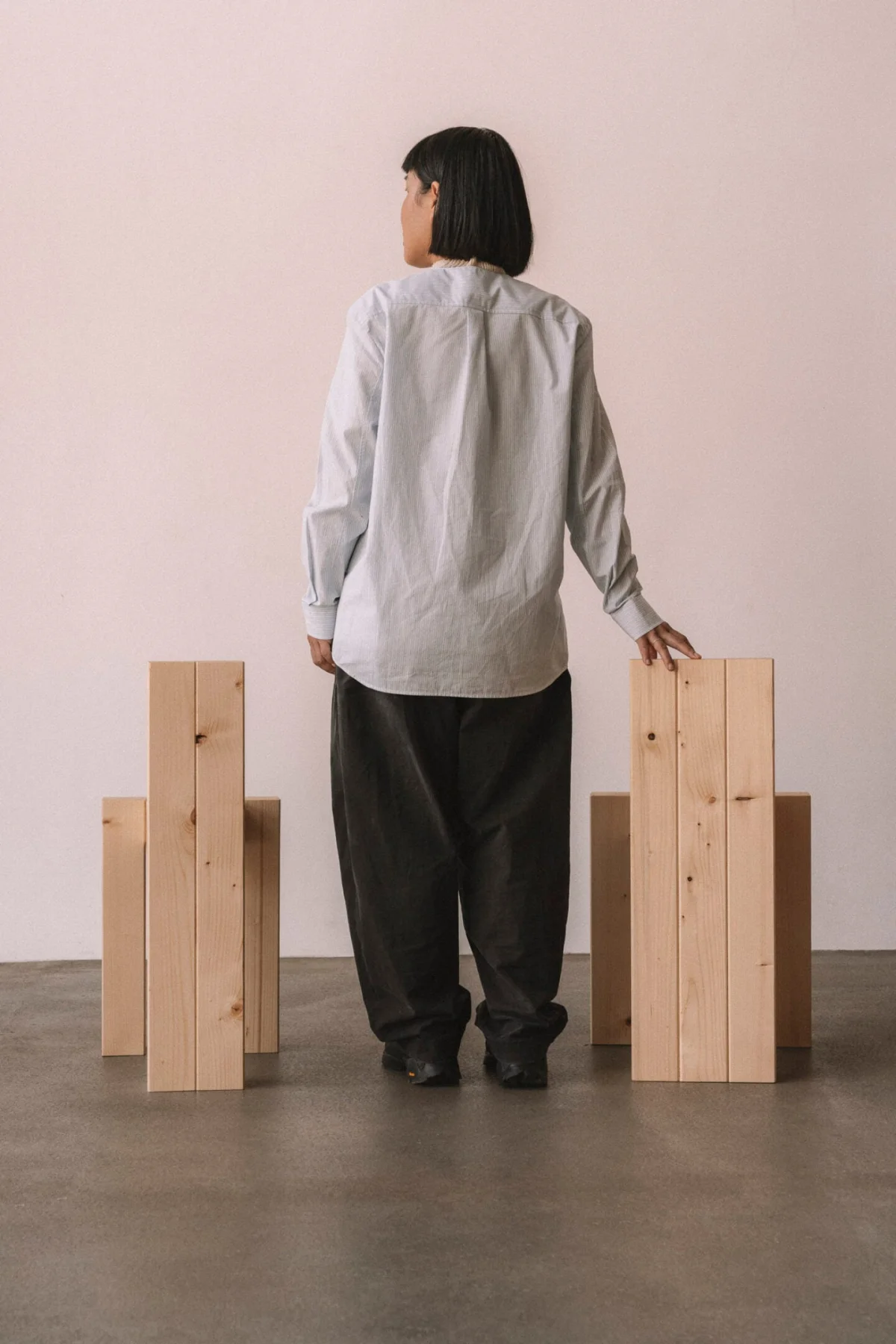
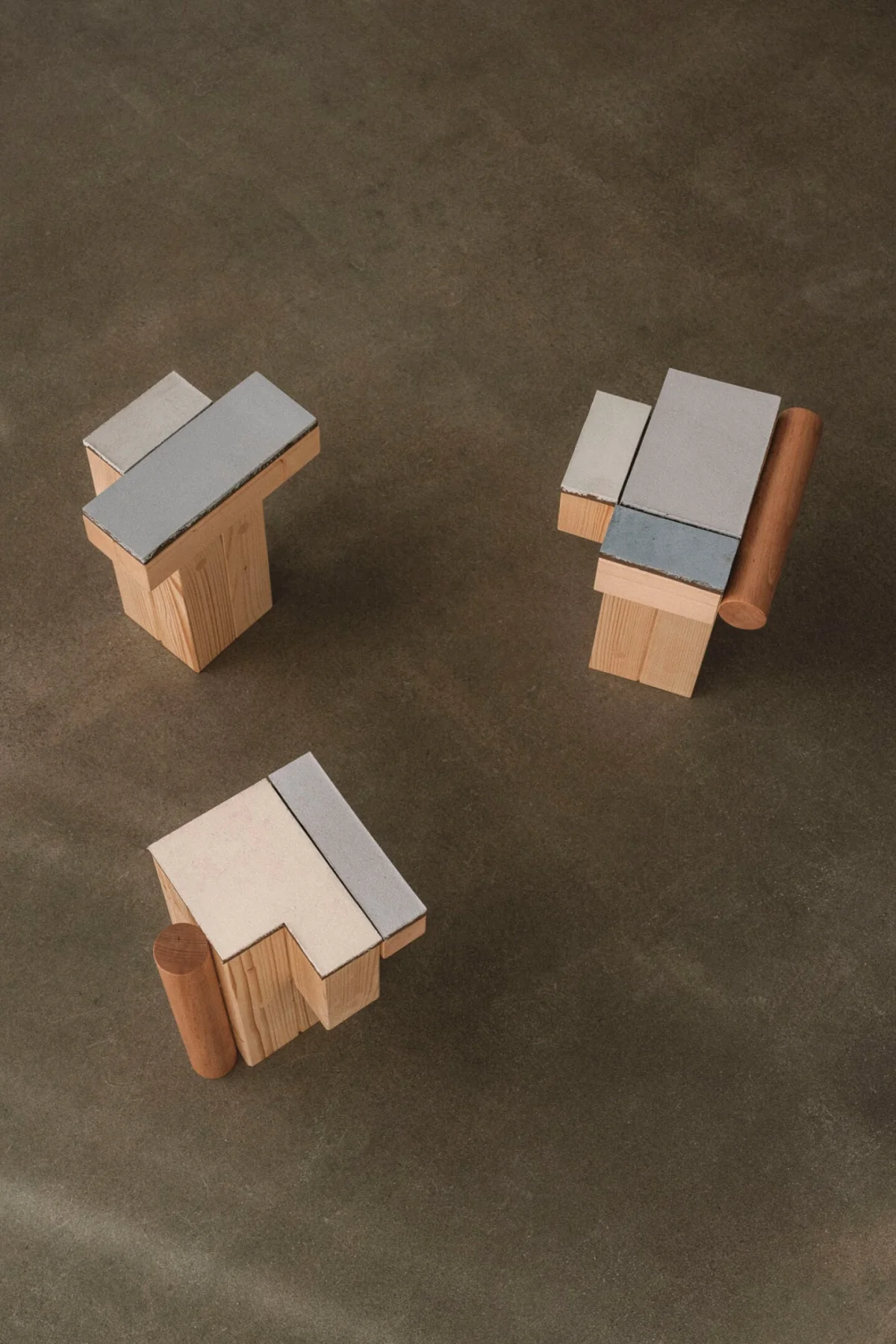
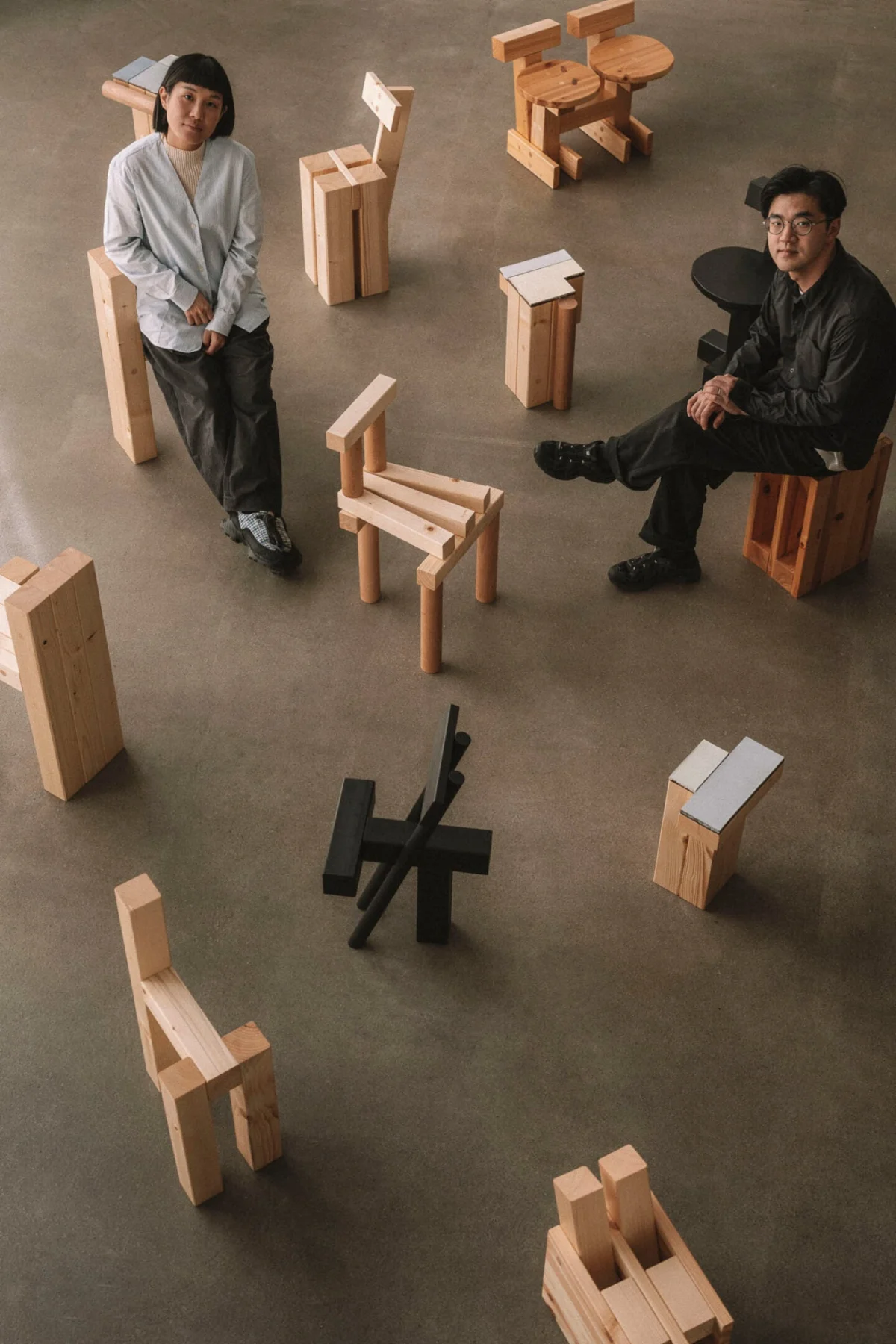
The new work returned to stacking and arranging, but arrived at simpler forms. The 1,2,3 Chairs grew from Muyi beginning to count: each uses stacked solid spruce, and its name carries that starting point into the finished object. The wider material palette included spruce, cedar and beech. Ceramic components were fitted to the wood’s dimensions in combinations Ho compares to Tetris.
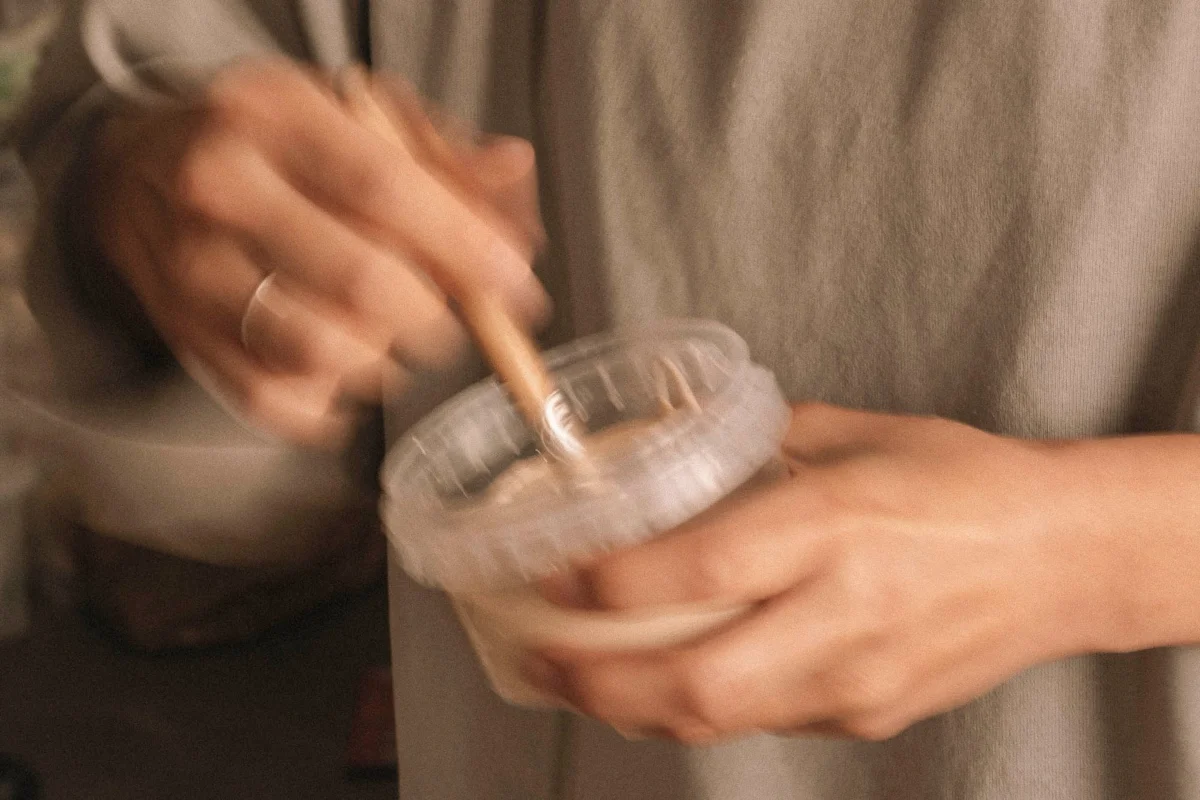
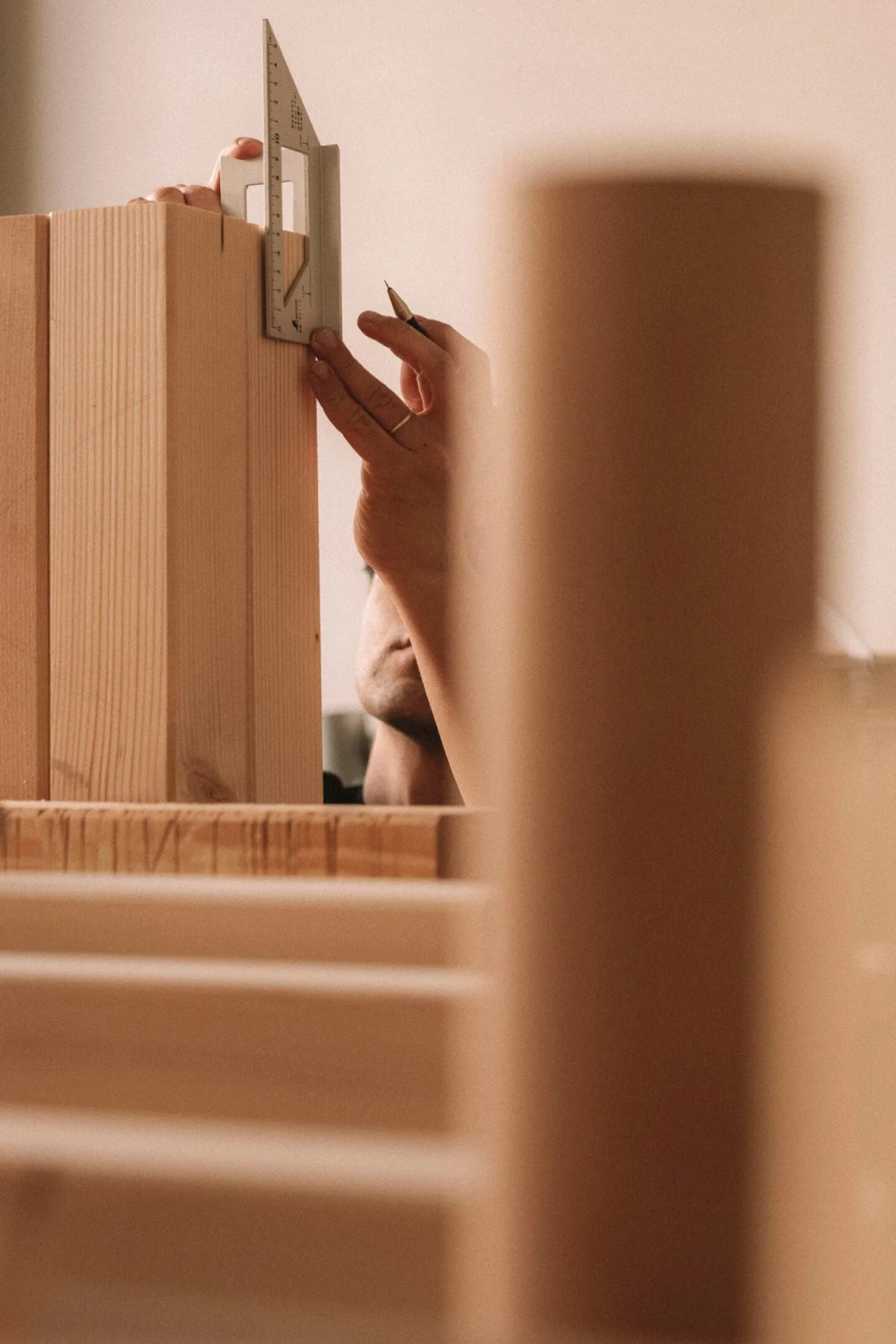
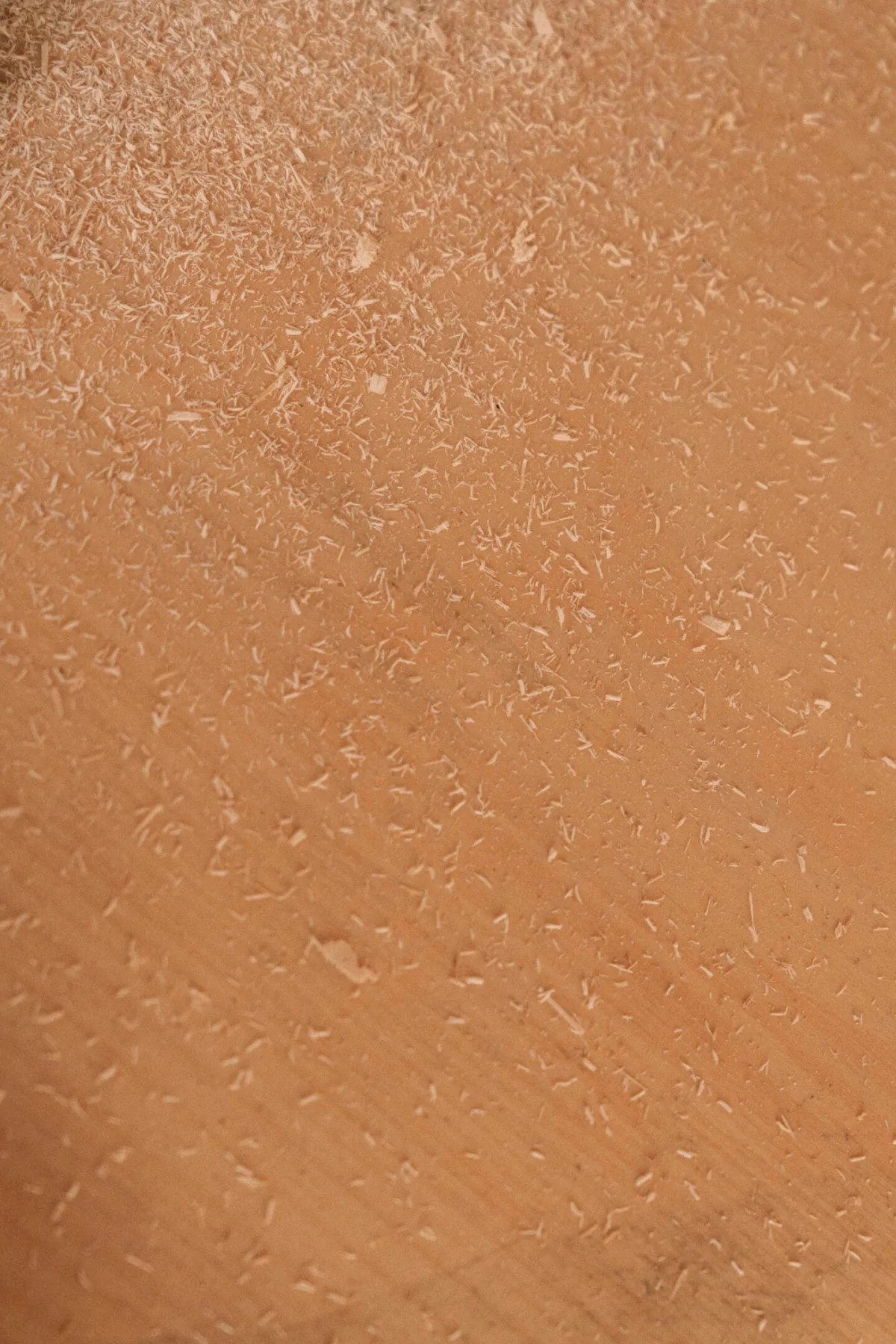
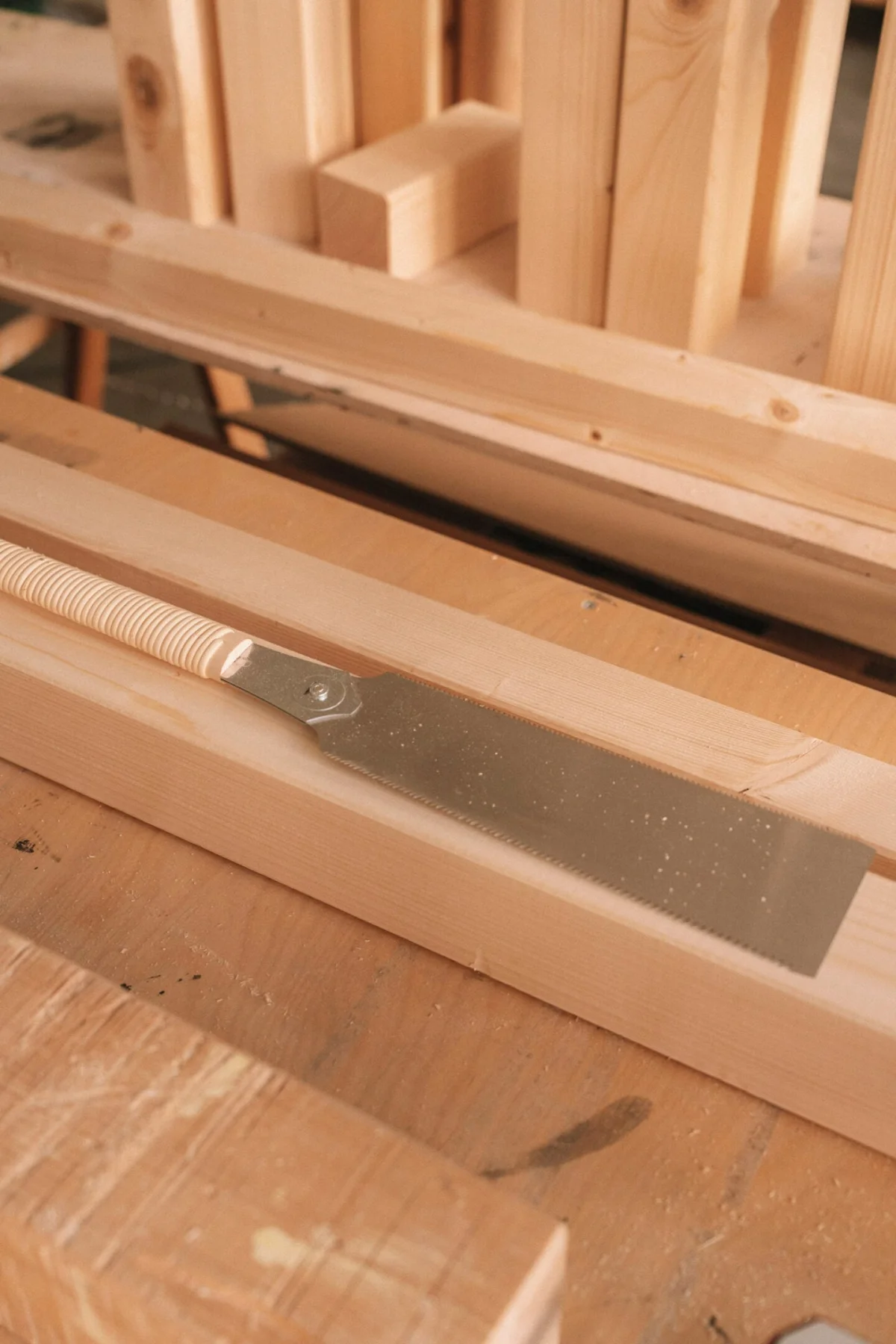
Colour came from looking closely at the sky over Berlin. Ho says the studio developed around 20 ceramic colours from those observations. The wood was bought in standard columns measuring 10 × 10 cm and 8 × 8 cm at German building supply stores, then left raw so the grain could remain visible.
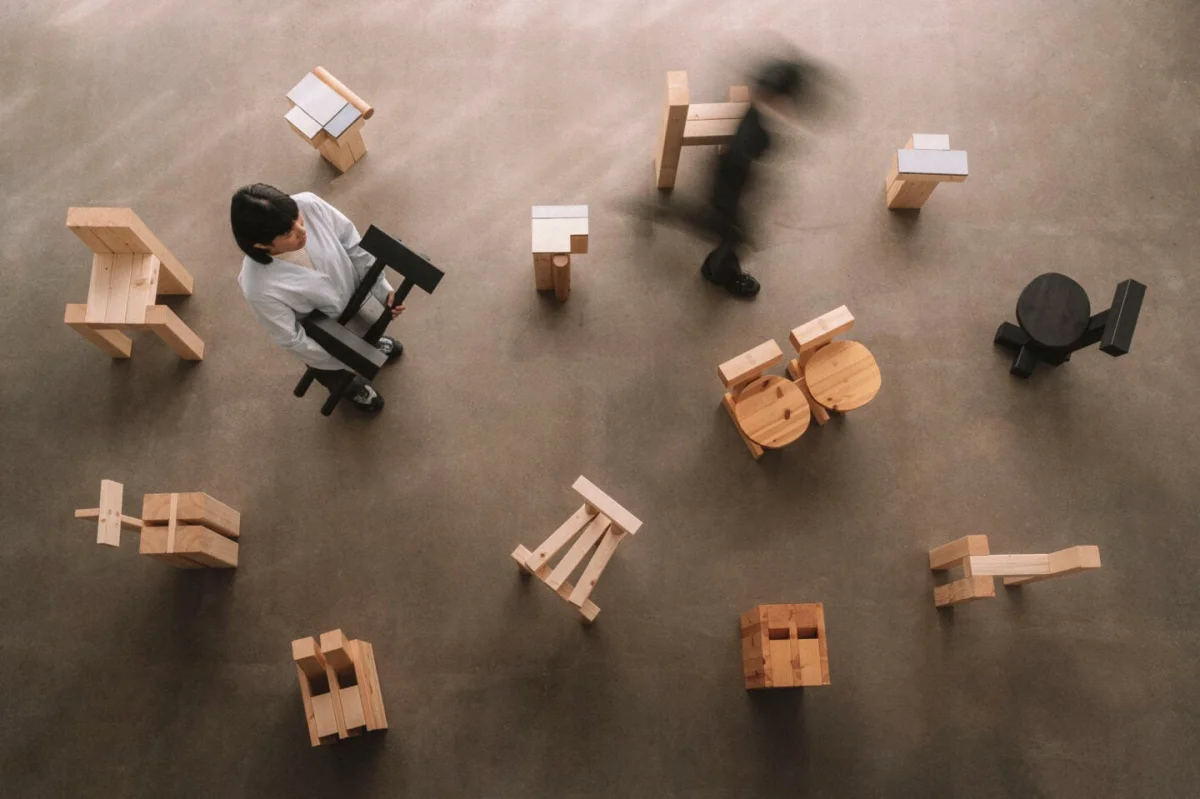
The LICHT presentation brought together 20 pieces: half earlier work, 40 percent new work and 10 percent made exclusively for the show. Adult-sized 1,2,3 Chairs sat alongside modular side tables and puzzle-like wall objects. Suma displayed them on plinths made from concrete, stone and carpet. That tactile mix softened the gallery setting and connected the presentation to the founders’ architectural backgrounds.
Objects that invite use
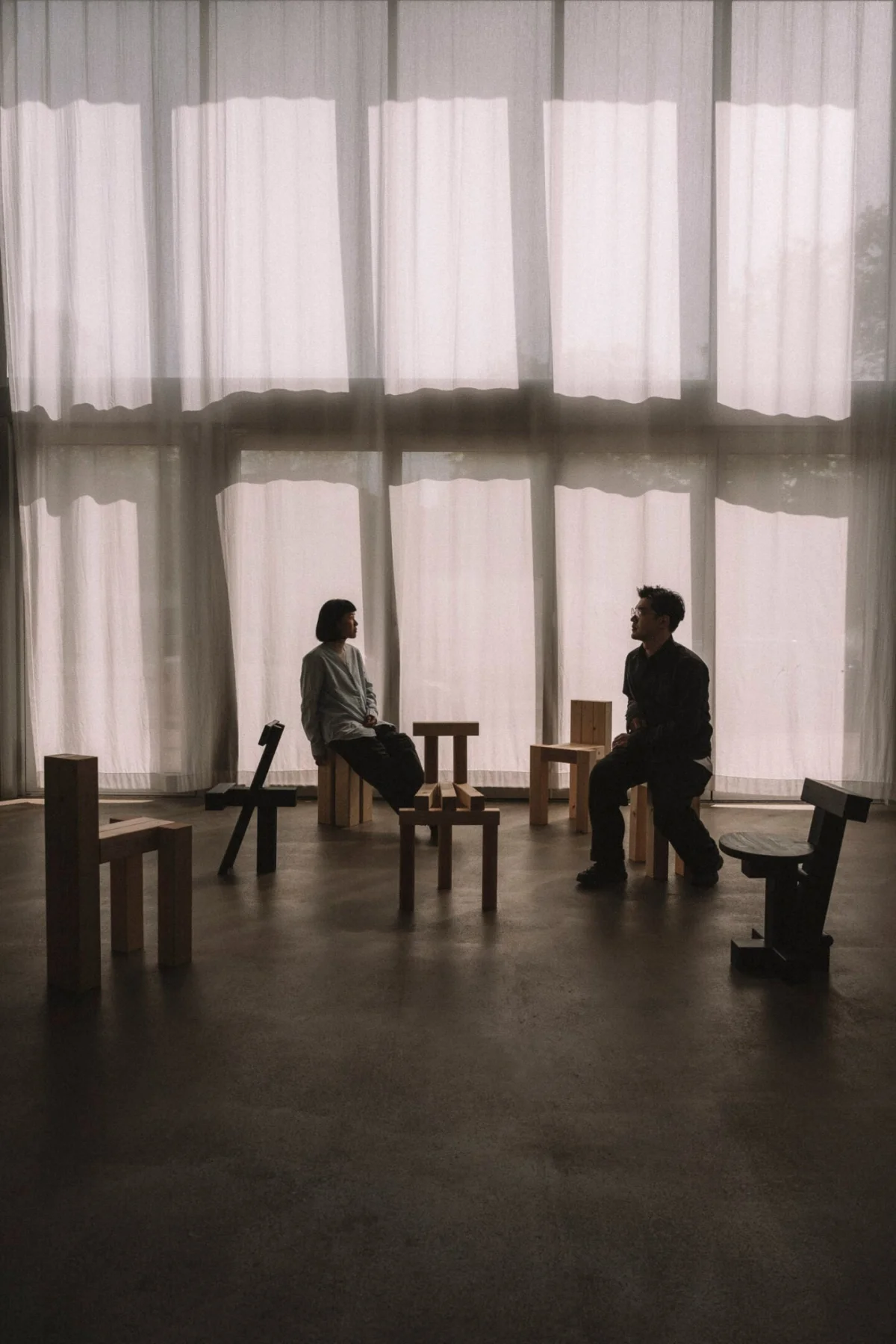
Visitors are encouraged to touch the work and sit on it. For the studio, physical interaction is part of the design: the chairs prompt people to test different ways of sitting and question what makes a chair recognizable. That invitation carries the collection’s logic from the studio floor into the gallery. Handling, arranging and trying things out are ways to understand the objects.
Ho and Tung also build each piece together. For the chair series, they each made ten works, then exchanged and took apart one another’s designs. They added elements until they reached a final set of ten, with both designers’ perspectives present in each piece. The method makes collaboration tangible, just as the collection makes play visible in its materials and forms.
INDERGARTEN leaves the studio with questions rather than a fixed answer: what counts as design, what does function ask of an object, and how else might someone sit? Ho and Tung plan to keep working through the same process and see where it leads. For designers, the useful lesson is in the routine: begin with what’s at hand, make room for uncertainty, and let use emerge alongside form.
Images © Clemens Poloczek | Text: Anna Dorothea Ker. Yellow Nose Studio: studio profile | website | Instagram.
| Rev | Description | Date |
|---|---|---|
| A | Issued for reading | |
| B | Viewed 473 times | Current |


