Marbledworks Turns Stone Offcuts into Modular Furniture and Sculptural Objects
- Project
- UX & UI Design
- Drawn by
- Anna Dorothea Ker
- Issued
- Sheet
- A-185
Founded by Maximilian Huber and Dominic Kim in 2022, Marbledworks pairs stone with metal and glass through local production and hands-on finishing.
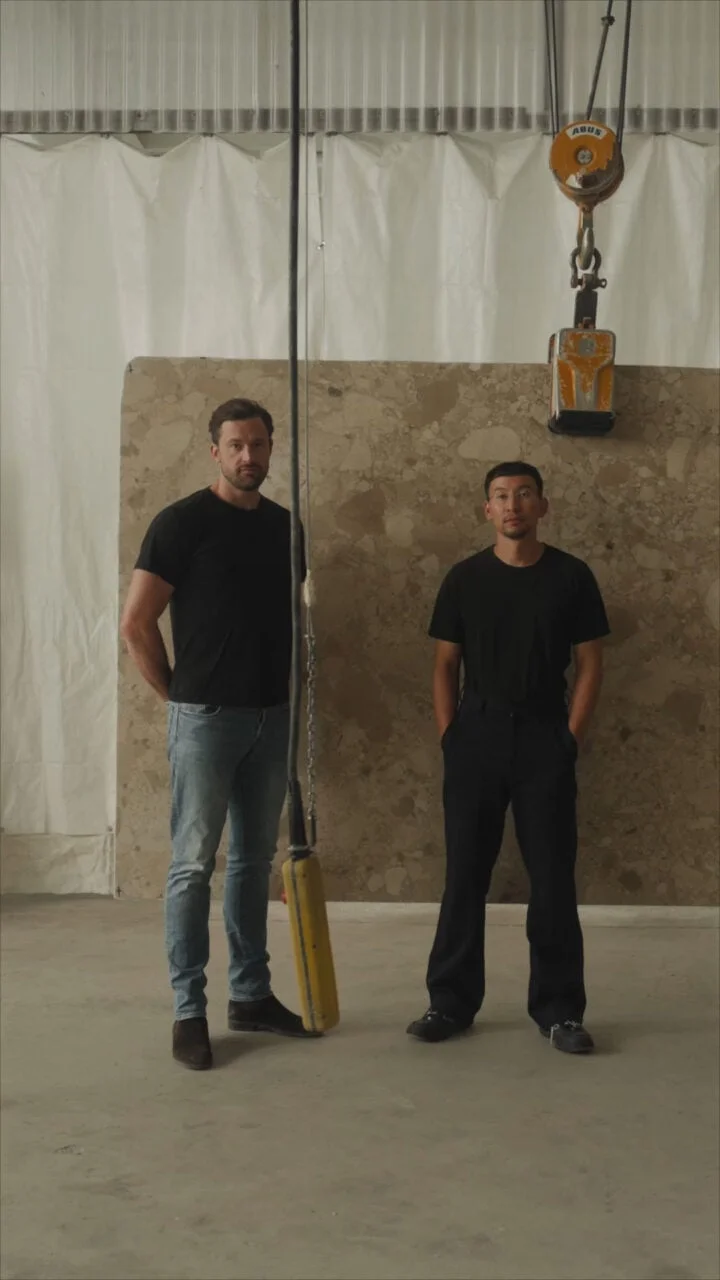
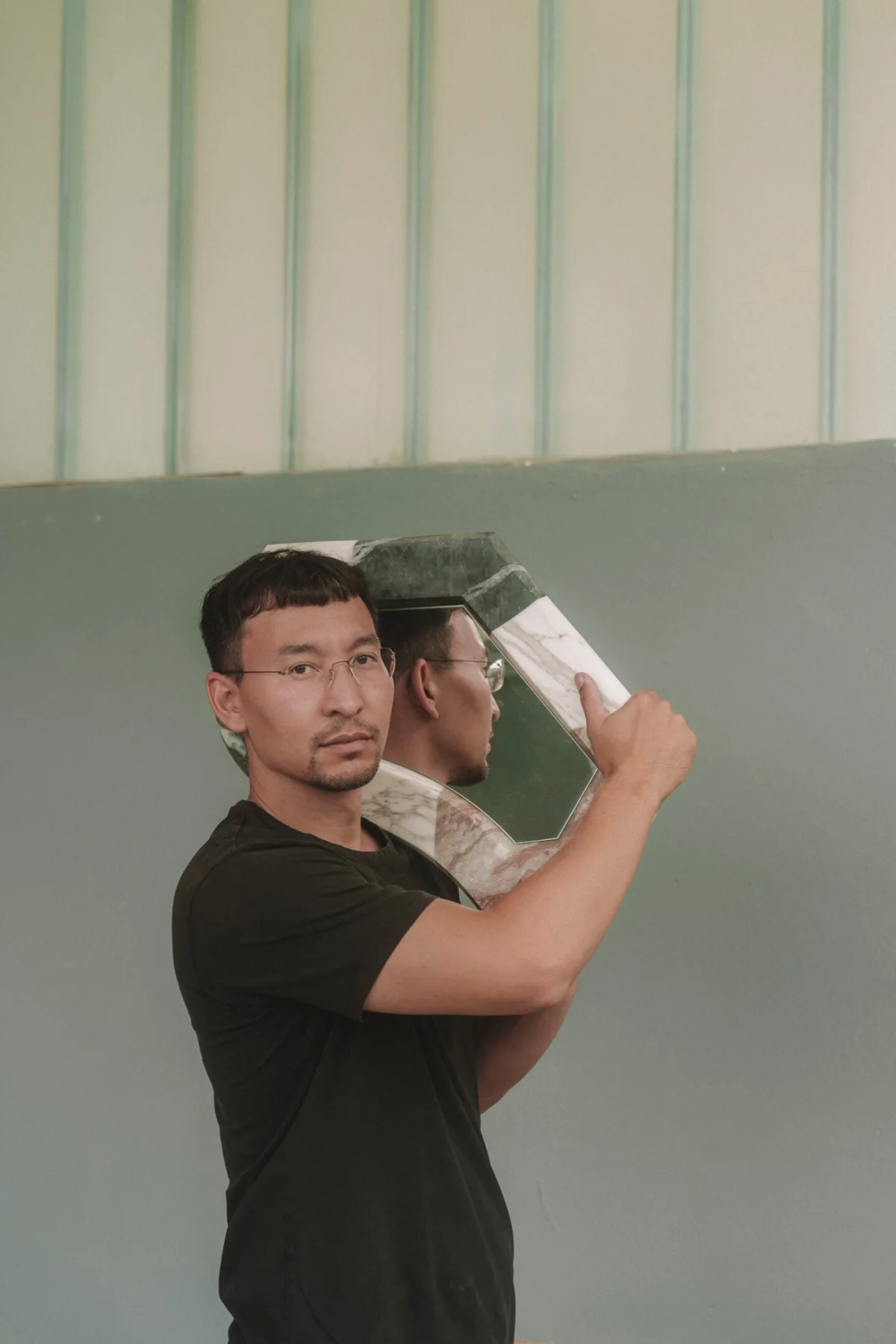
Marbledworks treats stone as a material with a past and a future: its veining records geological time, while its offcuts can become the starting point for new objects. Founded in 2022 by Maximilian Huber and Dominic Kim, the design studio and manufacturer connects sourcing, design and production from a base northeast of Munich. Furniture, vases and collaborations emerge from a process that keeps material, making and use in close conversation.
Huber brings a family background in stonework spanning four generations; Kim approaches projects through architecture and their relationship to space. Their partnership began with conversations about furniture and interiors. Huber recalls that Kim was working in architecture while he was in finance, and that contacts through friends and family kept bringing them together. When Kim shared ideas for objects and interiors, Huber’s knowledge of stone helped turn those exchanges into a shared practice. Within months, both had left their jobs to start the studio.
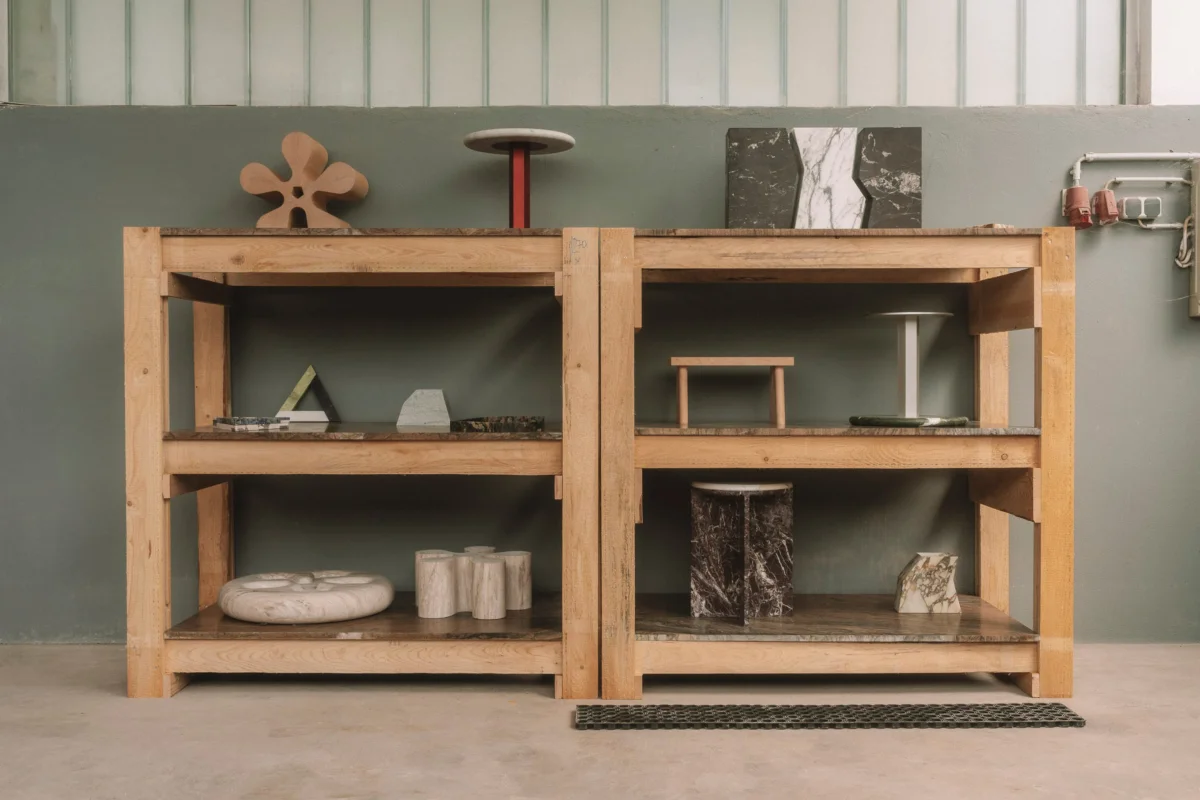
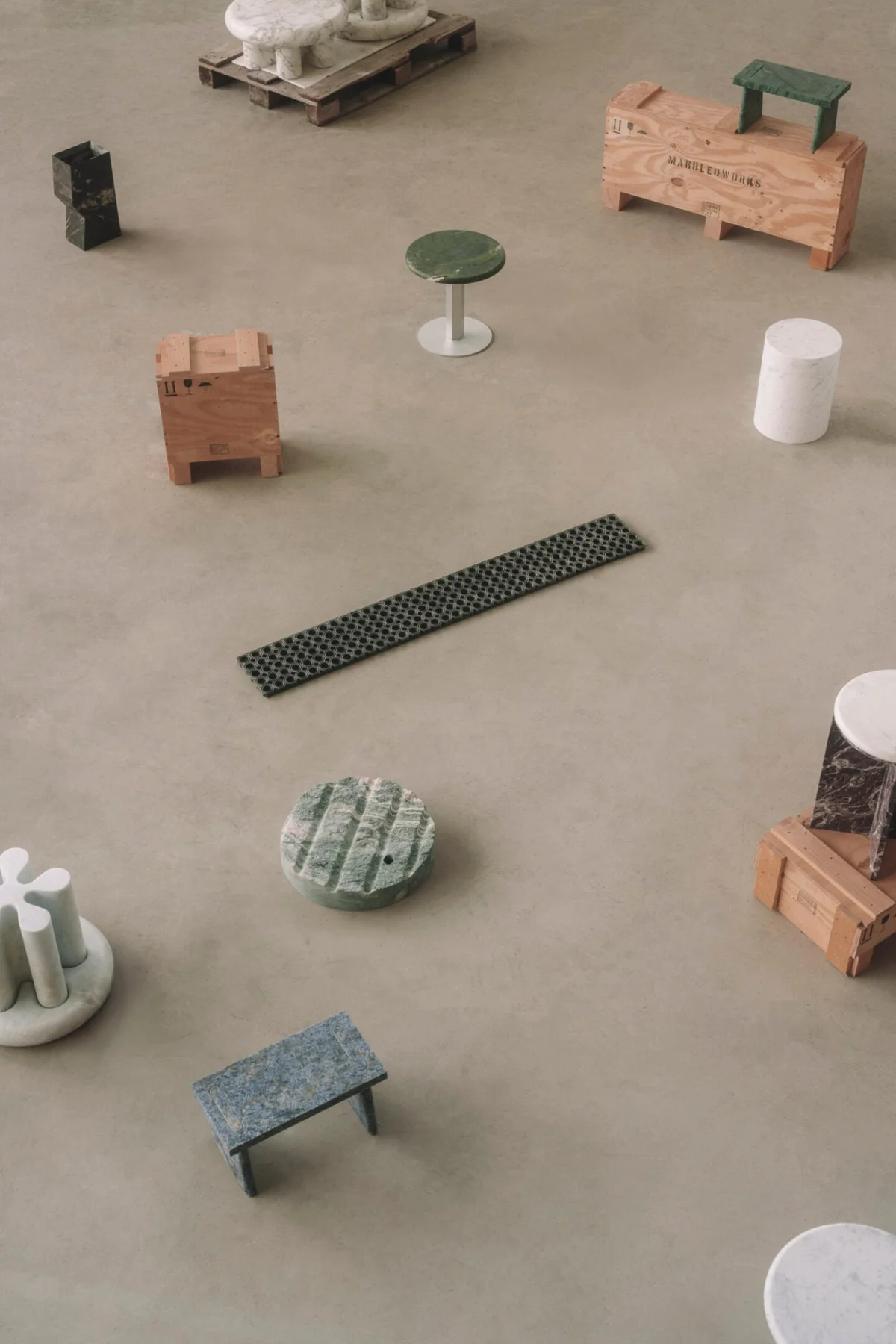
That mix of perspectives shapes the work. For Kim, an object’s role in a room matters as much as its construction: he considers how it relates to its surroundings. The name Marbledworks plays on both the patterns found in stone and the act of working material. That connection runs through the studio’s range, from the geometric structure of the Hex Table System to the rounded profile of the Jelly side table and the assembled fragments of its Triptychon vases.
Reading stone as a material in motion
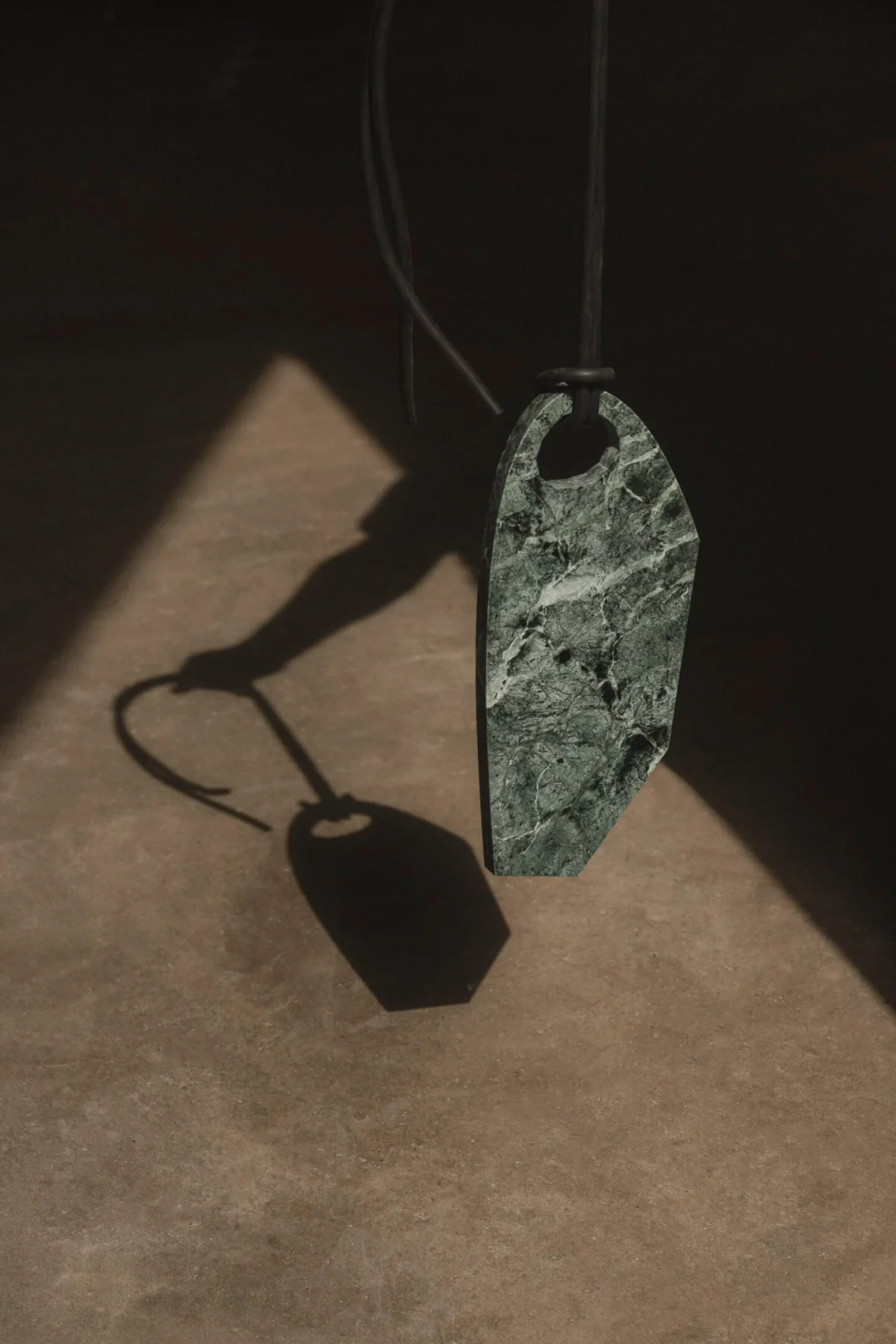
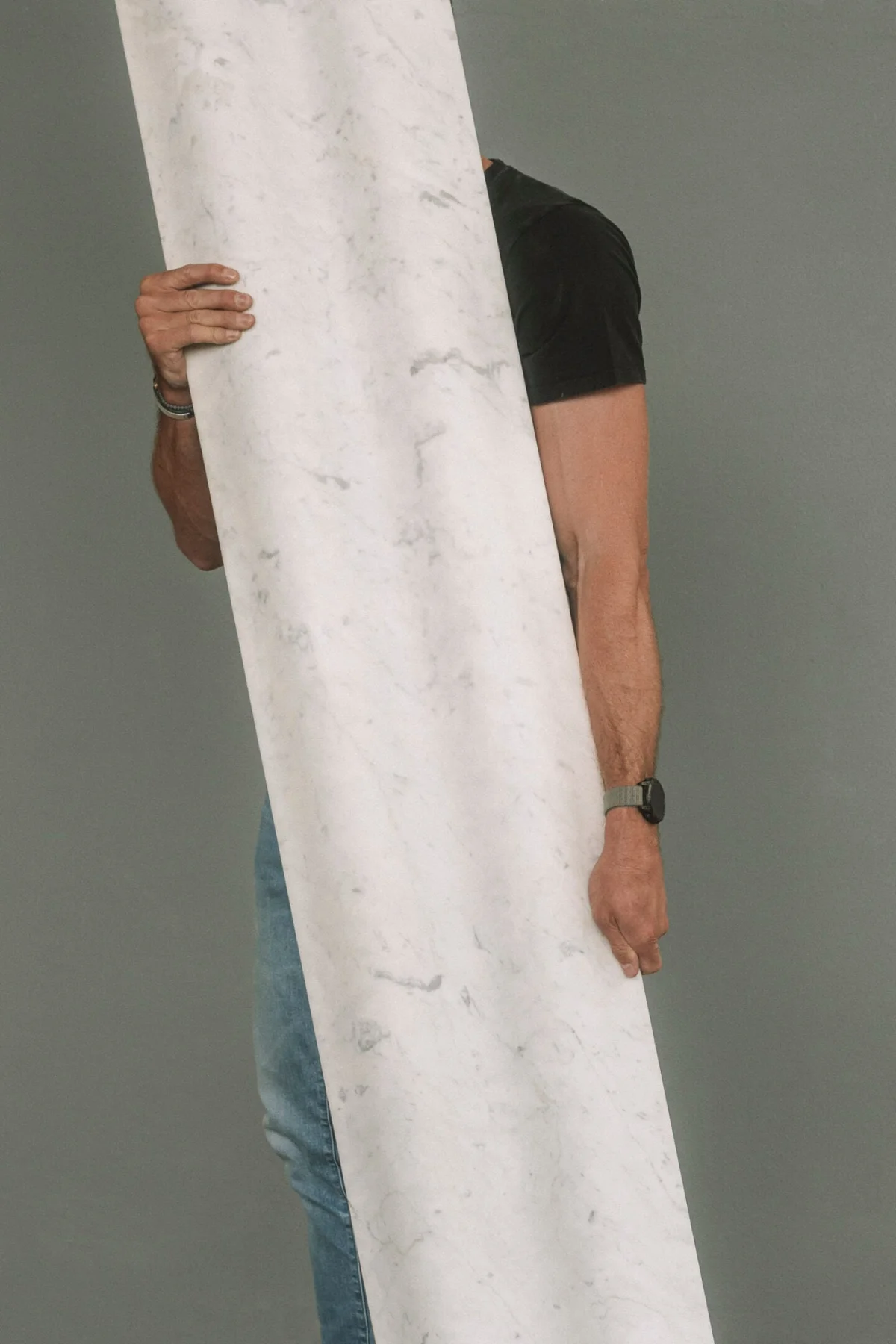
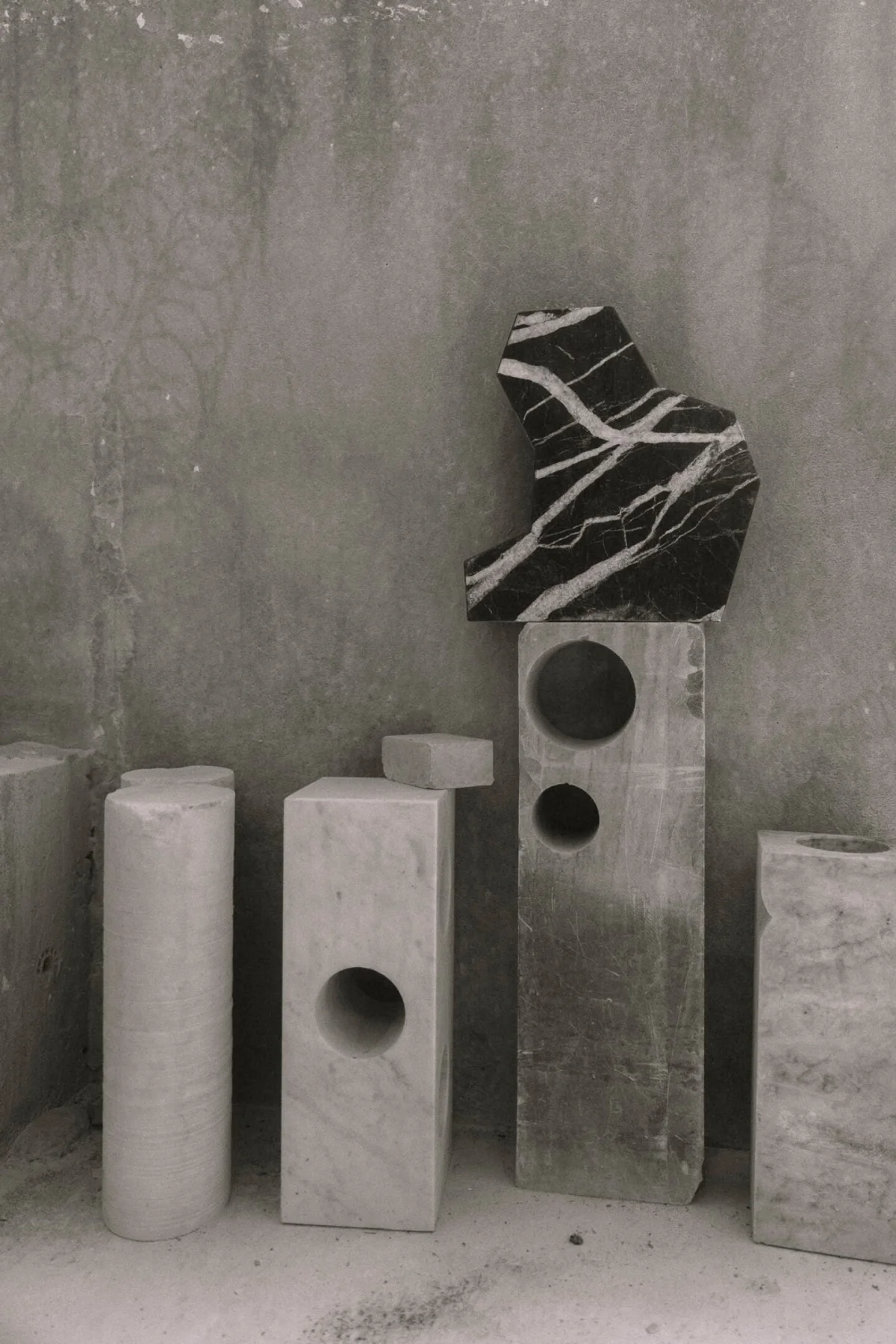
Stone was the natural first choice for the founders. Huber describes its colours, grains and imperfections as marks of a long history, with each block carrying its own character. The studio also had access to the cranes, machinery and workspace needed to lift and cut it. Stone was both an available resource and a material the founders already knew how to handle.
Research took Huber and Kim to quarries and factories in Italy, where they studied extraction and processing at scale. The visit changed how they thought about the by-products of production: a piece too small or irregular for one process might suit another. Instead of treating each block as a finished, fixed shape, they began to explore how it could be altered and combined. They also spent months speaking with glassblowers and metalworkers about ways to bring different materials together. That exchange remains part of the studio’s approach, with one material informing the use and treatment of another.
Designing beside the workshop
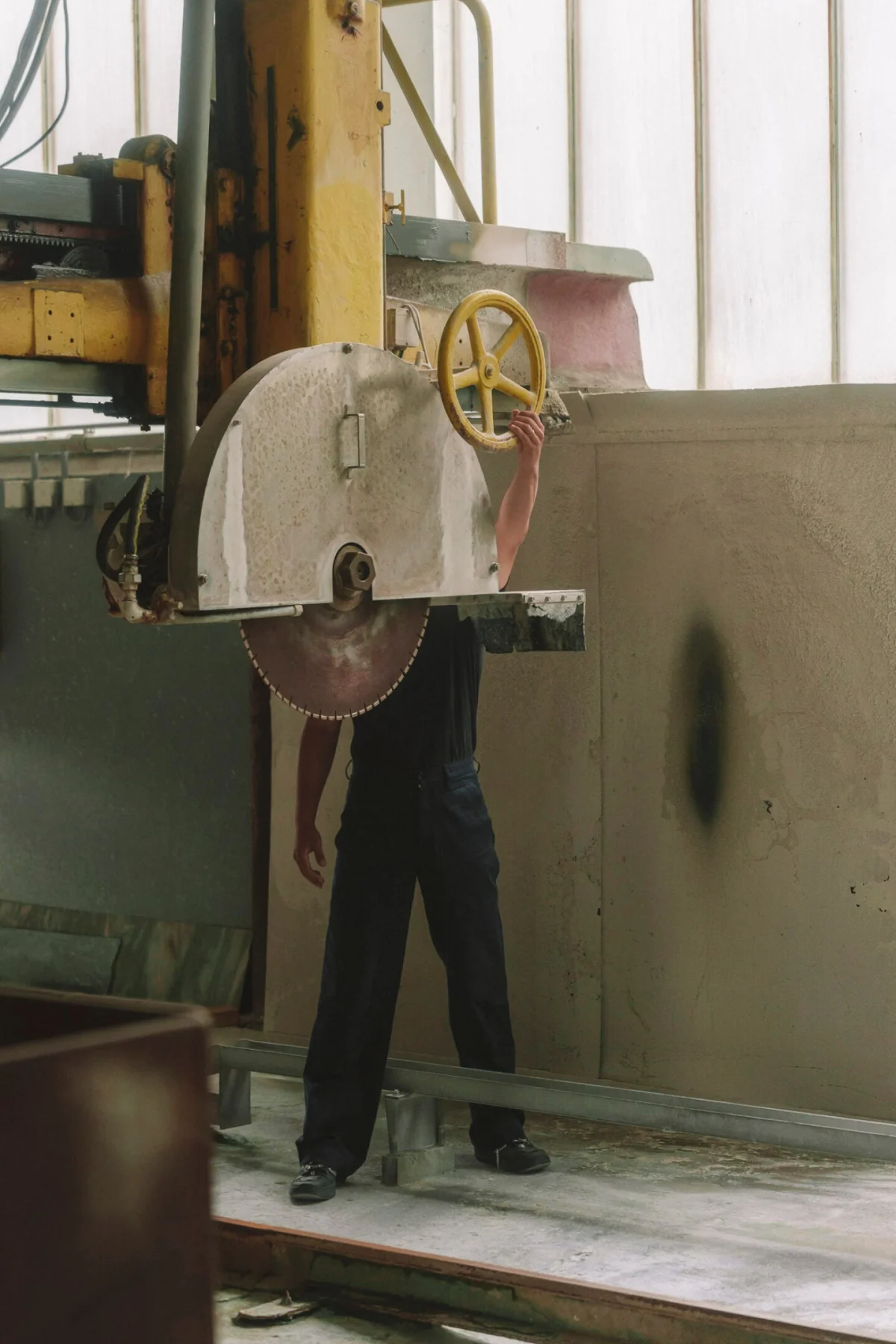
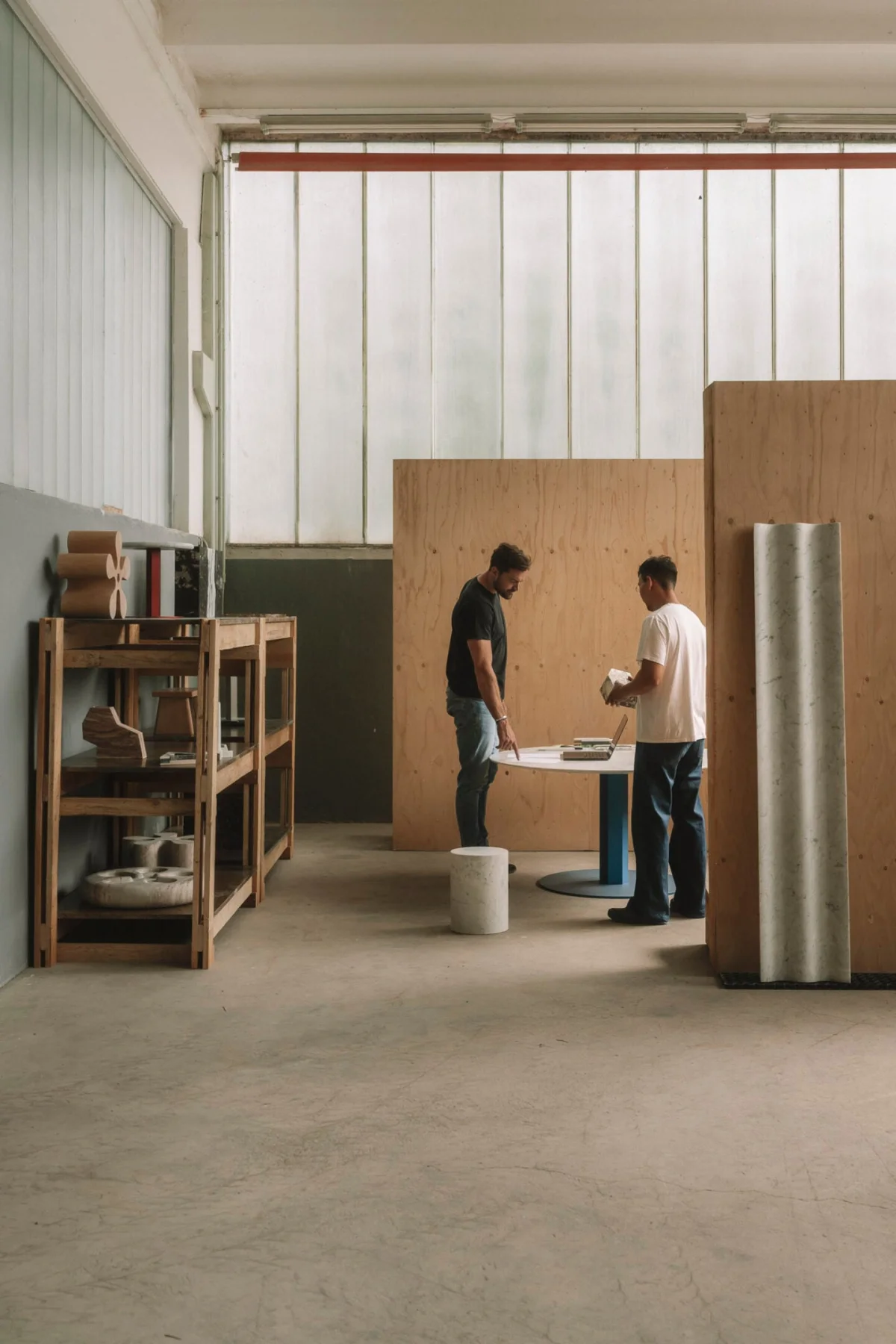
The studio and production hall share a building near Munich, with the office directly above the workshop. Kim describes a routine in which the team can walk downstairs to test an idea while machines are running. The proximity makes production part of the design process from an early stage, rather than a later handoff.
Every piece is made in Germany. The stone comes from Italy, Turkey or Brazil, while local carpenters work within a thirty-kilometre radius. The team combines machine precision with manual finishing, a method Kim calls “machine-assisted craftsmanship.” Machines help achieve accuracy; handwork gives each surface its final character. Edges, joins and finishes retain visible evidence of how an object was made, including in custom commissions.
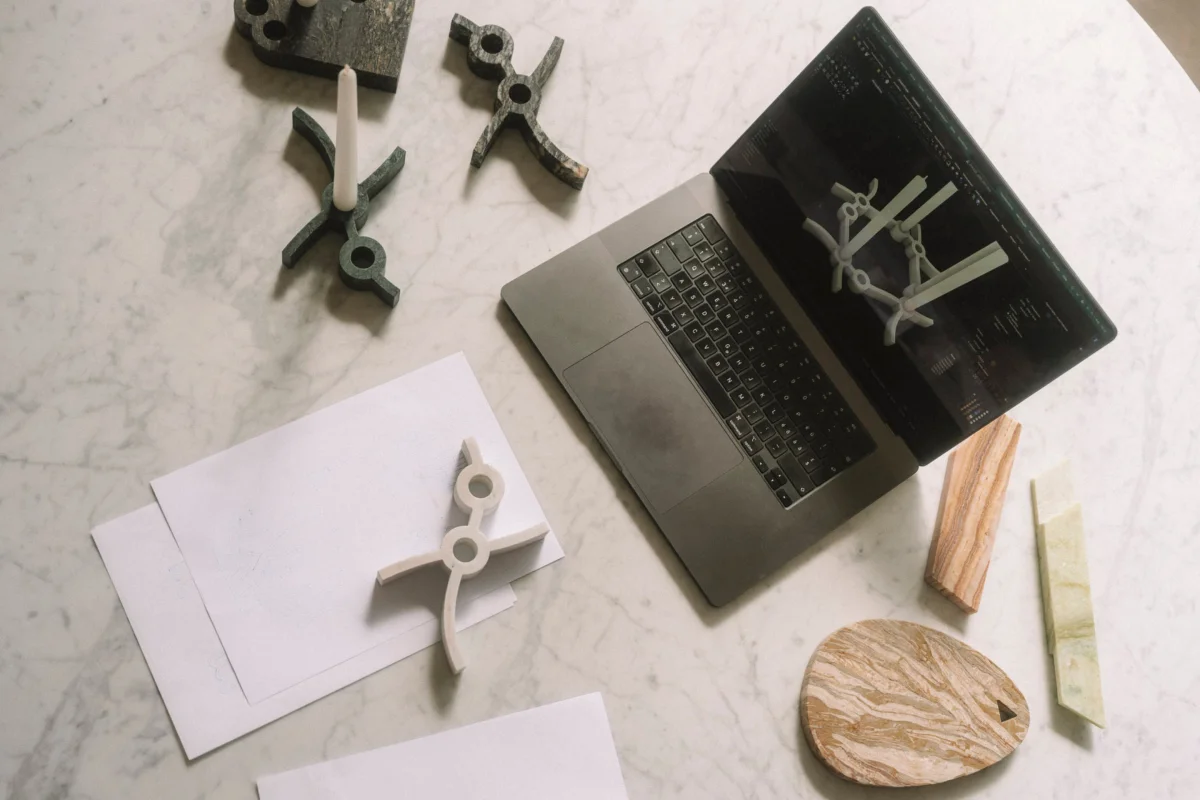
For a commission, the team first agrees on a brief, then sketches and visualizes possible directions. Material tests sit alongside 3D models so clients can consider texture as well as proportion. Feedback and revisions take production, shipping and reassembly into account. The aim is to resolve the practical demands without losing clarity in the design.
Modularity, touch and reuse
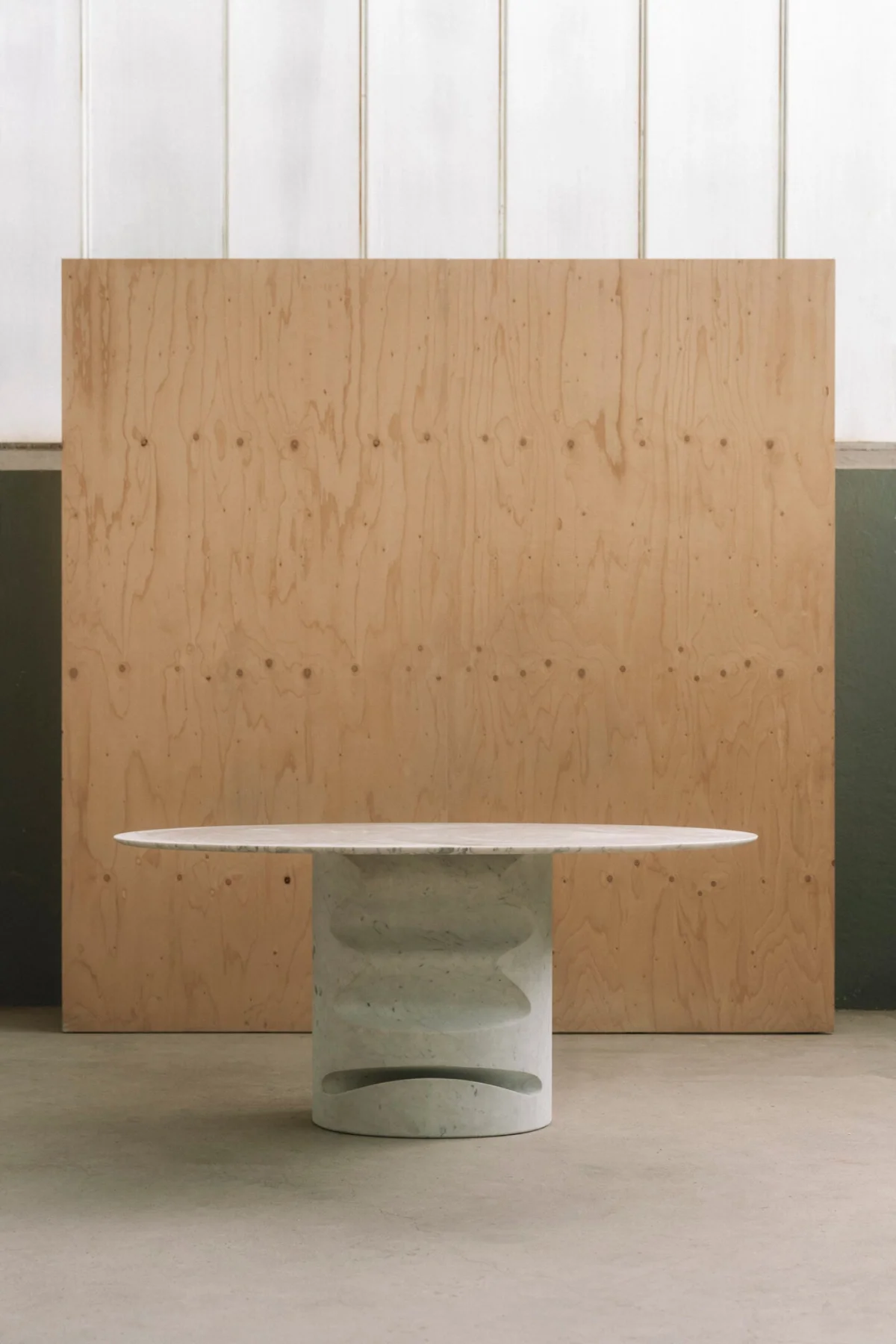
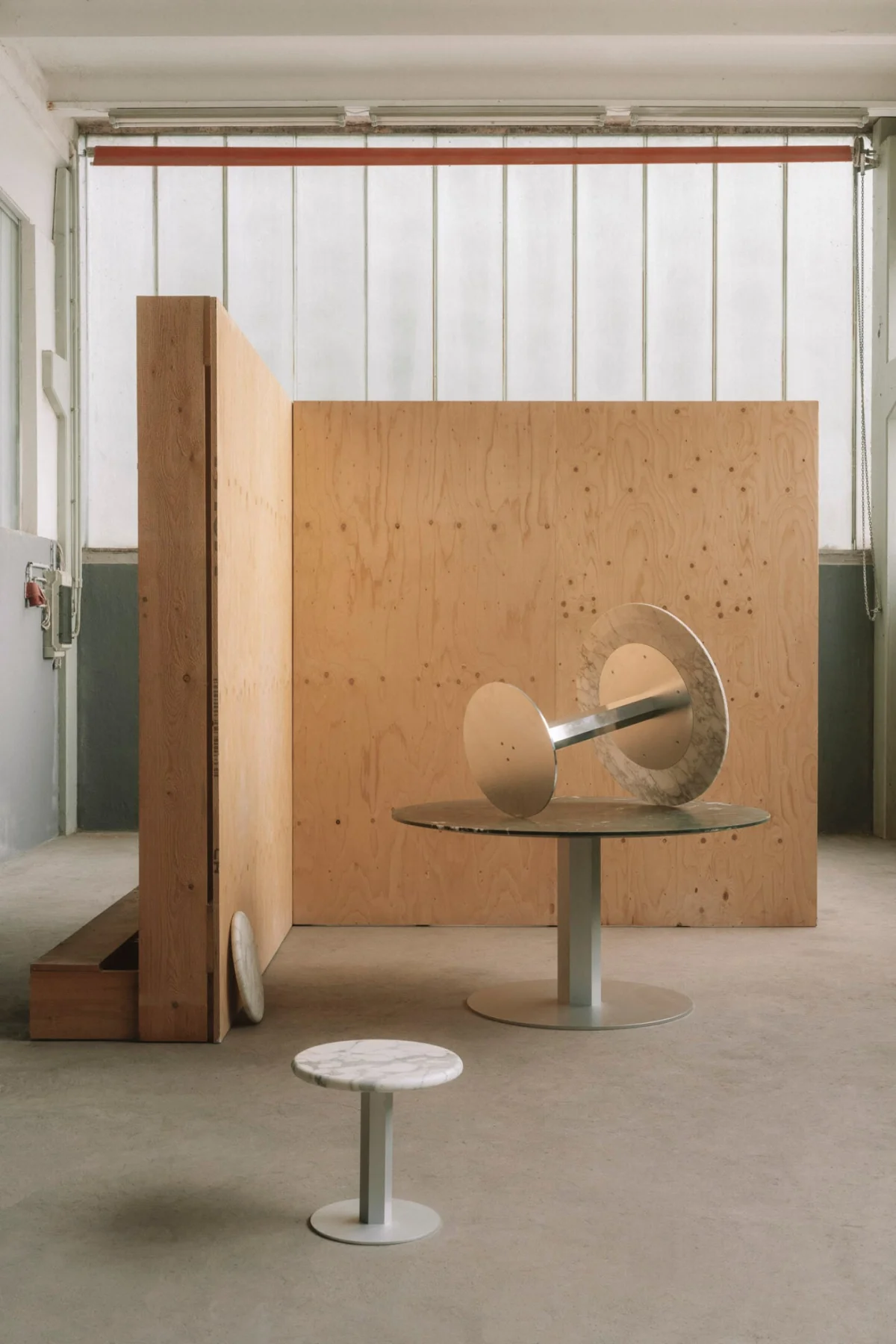
The Hex Table System explores familiar table forms through a contrast of materials. Hexagonal aluminium profiles support stone tops in varied colours and finishes. Huber says the design returns attention to details that can disappear in streamlined manufacturing, including joinery and the often-overlooked underside. Components are screwed together rather than glued, making them easier to assemble, take apart and replace. Industrially made structure meets the variation and weight of stone, while anodized colour adds a vivid counterpoint.
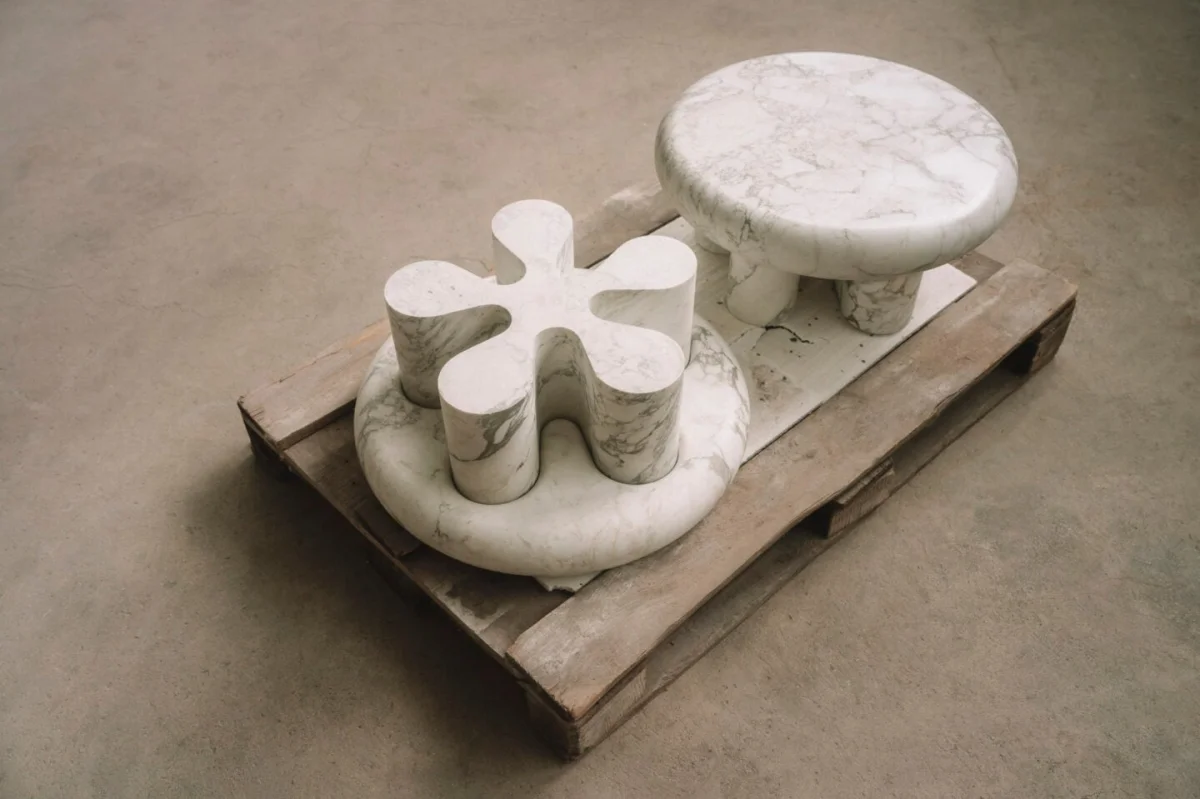
Jelly takes a different route. The side table’s rounded outline and grooves suggest forms shaped by water and erosion. Kim describes its inspiration as a jellyfish in motion, and its surface is designed to invite touch. Because each piece depends on the stone’s origin and veining, no two are identical.
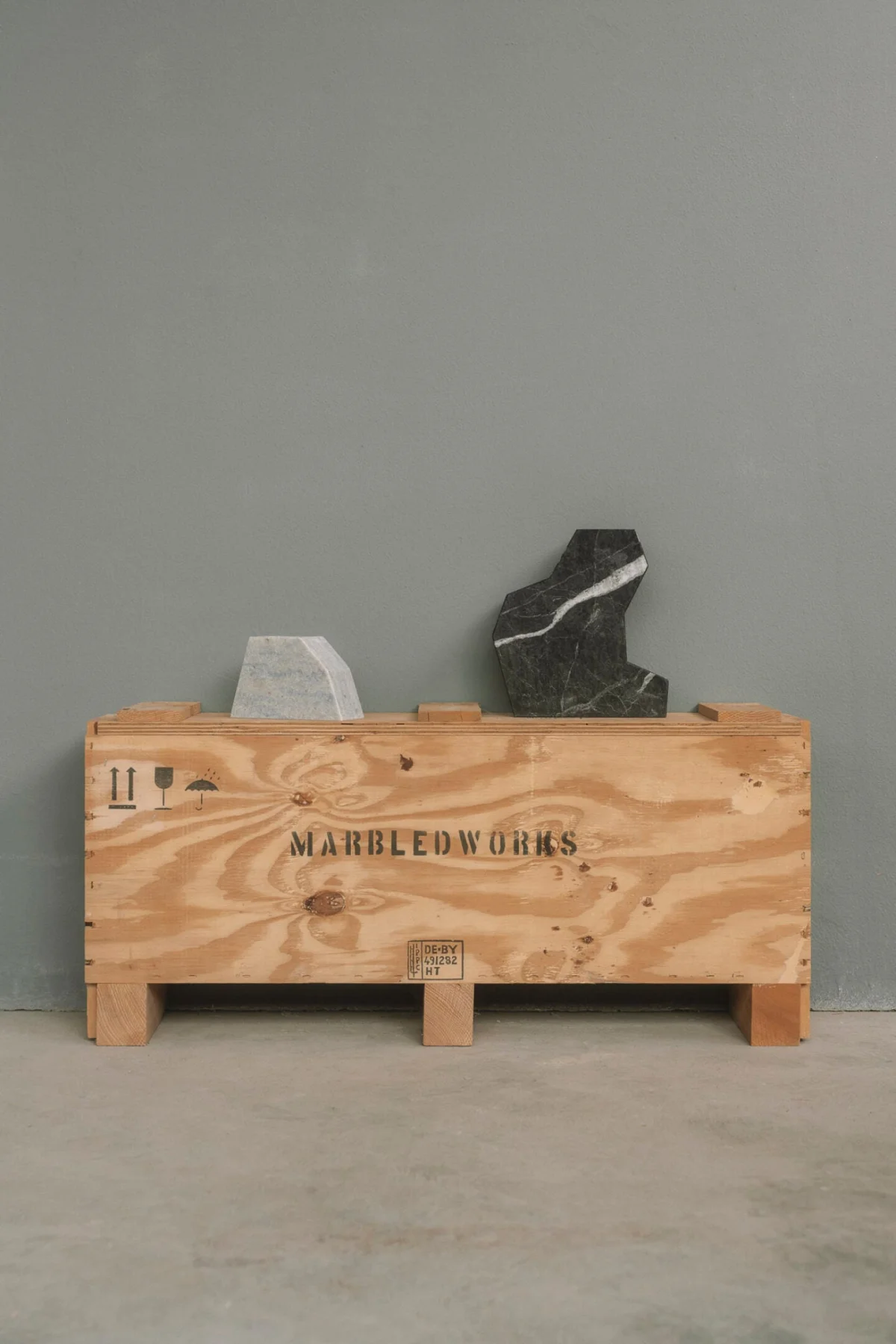
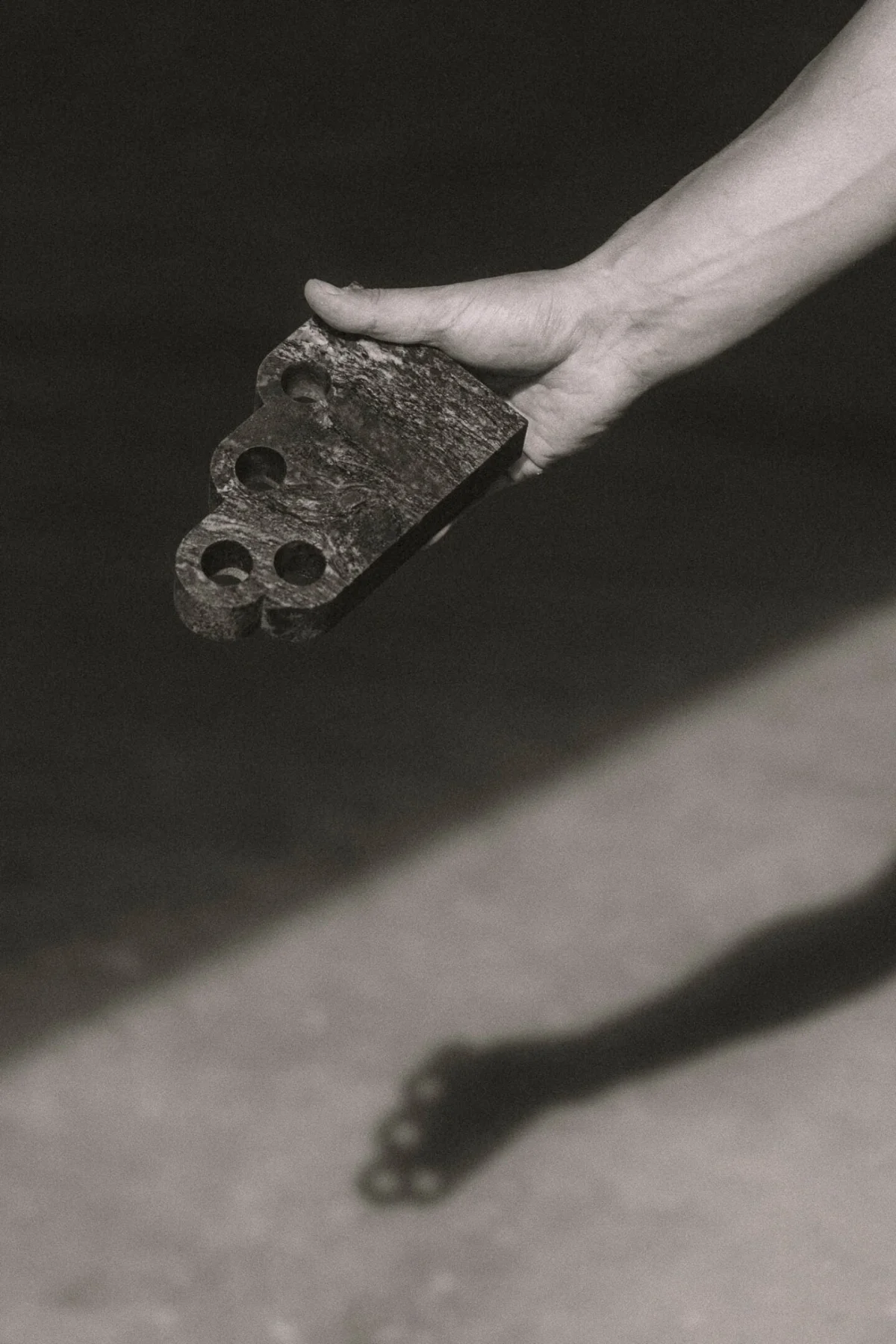
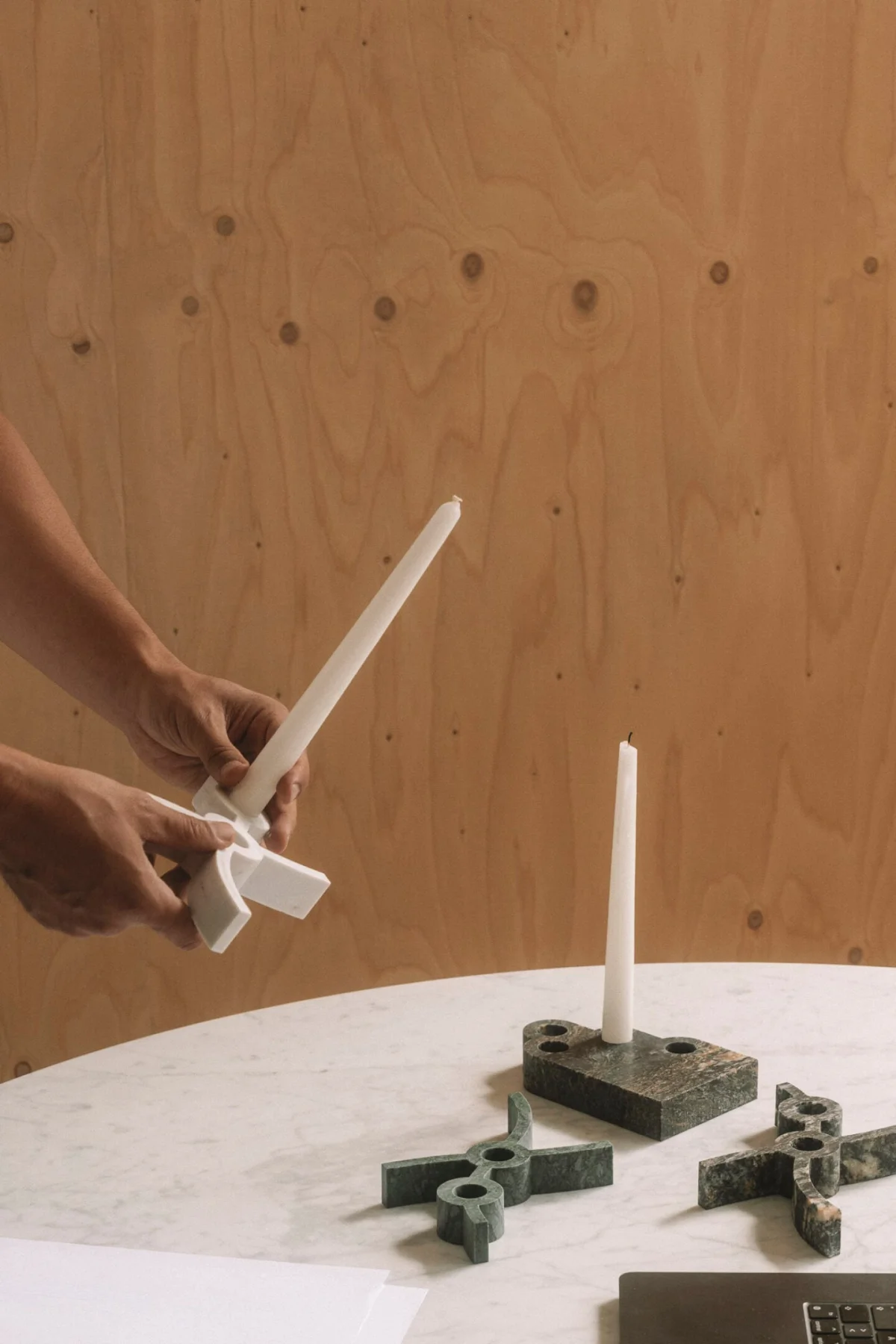
The Triptychon vases make use of fragments that are too irregular for larger projects. Huber compares their assembly to fitting together a puzzle: the pieces turn leftovers into a new composition. Reuse is part of the decision, but so is the chance to notice beauty in material that might otherwise be discarded.
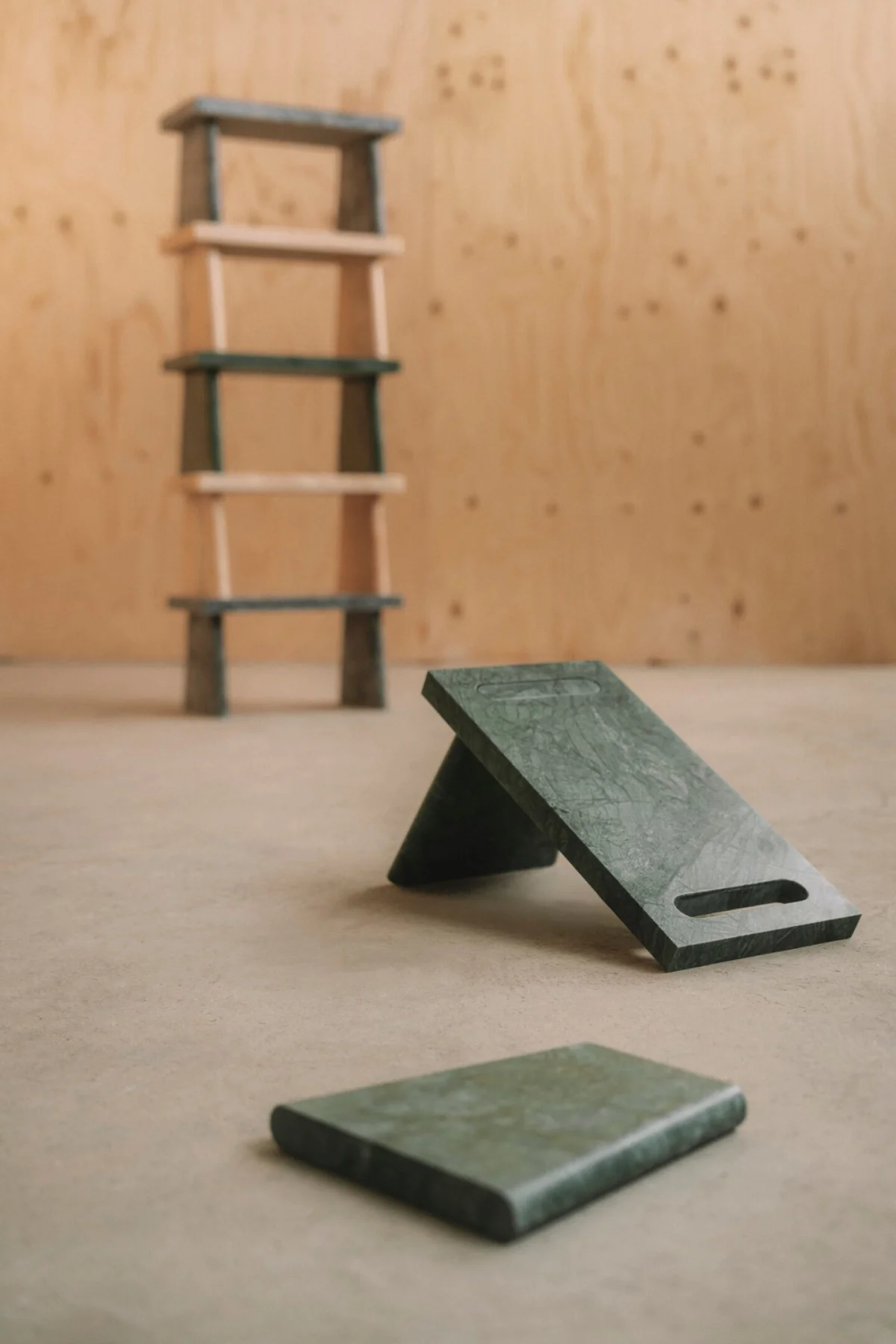
Alongside its own collections and custom work, Marbledworks collaborates with other designers. During Berlin Art Week 2025, it worked with Berlin-based architects Gonzalez Haase AAS on a project that brought architectural ideas into contact with stone and the studio’s production methods. Kim describes the exchange as a process of translating a clear concept through material and making.
Objects designed to move and endure
Local production and a slower pace also inform the studio’s view of value. Huber points out that low retail prices for stone objects can obscure the labour, skill and origin behind the material. Stone is finite and takes time to work; those facts shape the choices the studio makes, from sourcing through assembly.
Durability, in this view, includes the life an object has with its owner. Tables and other pieces should be capable of moving between homes, cities or countries, so the team considers how they can be disassembled and reassembled without losing their integrity. That practical question connects directly to the studio’s material ethic: a design should make good use of the stone it requires and remain useful over time. Marbledworks’ work suggests a clear lesson for material-led design: treat production leftovers as design inputs, and plan for an object’s next move from the beginning.
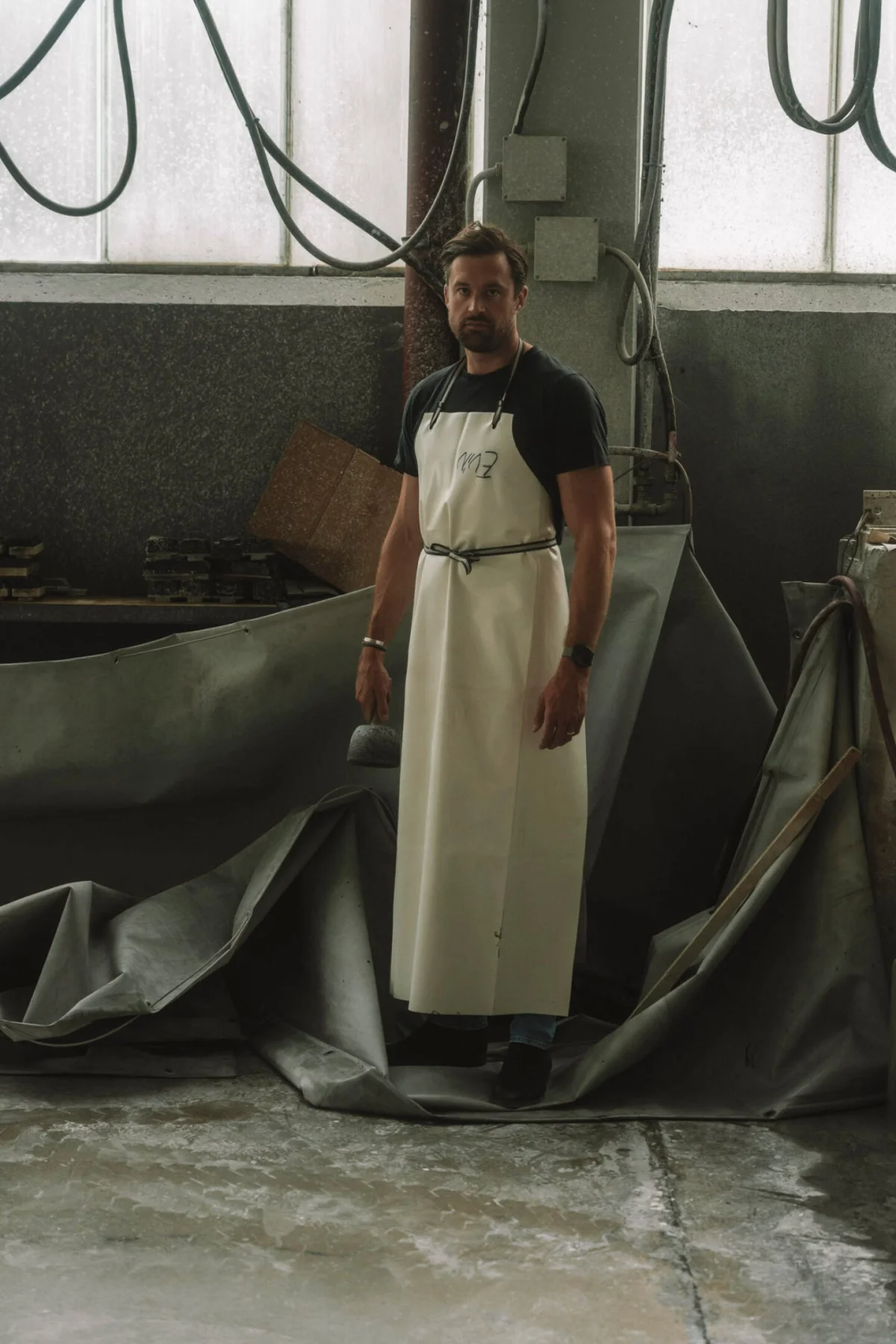
Images and video by Clemens Poloczek. Text by Anna Dorothea Ker.
| Rev | Description | Date |
|---|---|---|
| A | Issued for reading | |
| B | Viewed 795 times | Current |


