Sanghyeok Lee’s ARC Turns Negative Space into Furniture and Spatial Experience
- Project
- UX & UI Design
- Drawn by
- Rosie Flanagan
- Issued
- Sheet
- A-183
Sanghyeok Lee’s ARC collection uses oak, arches and carefully arranged gaps to connect furniture with the rooms and people around it.
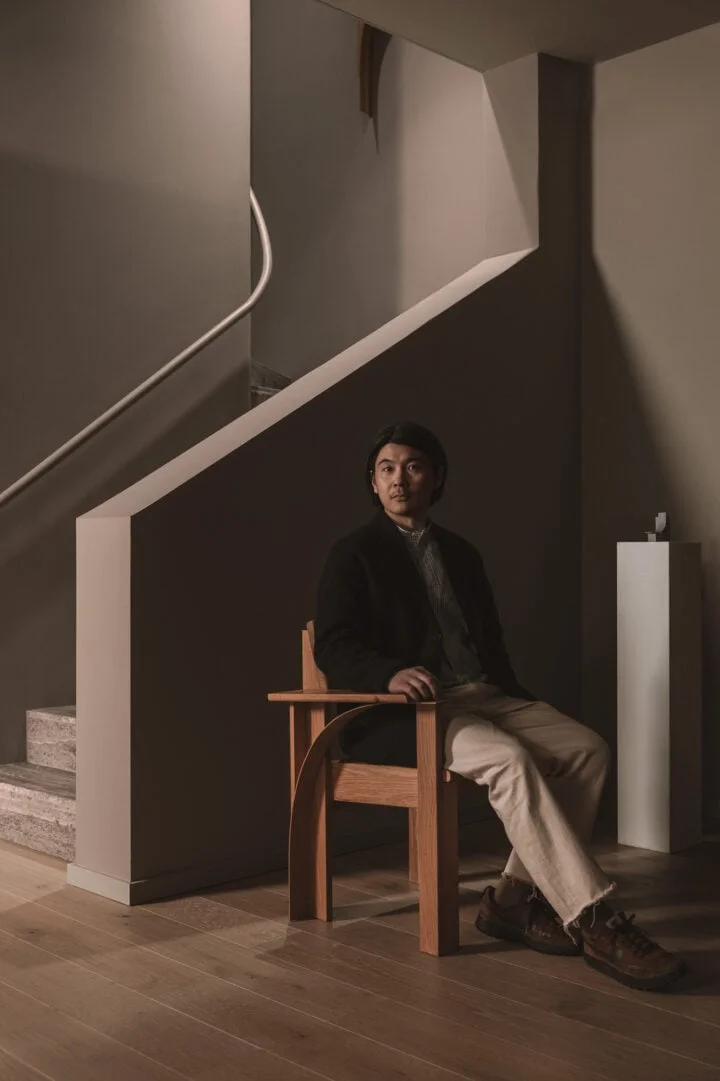
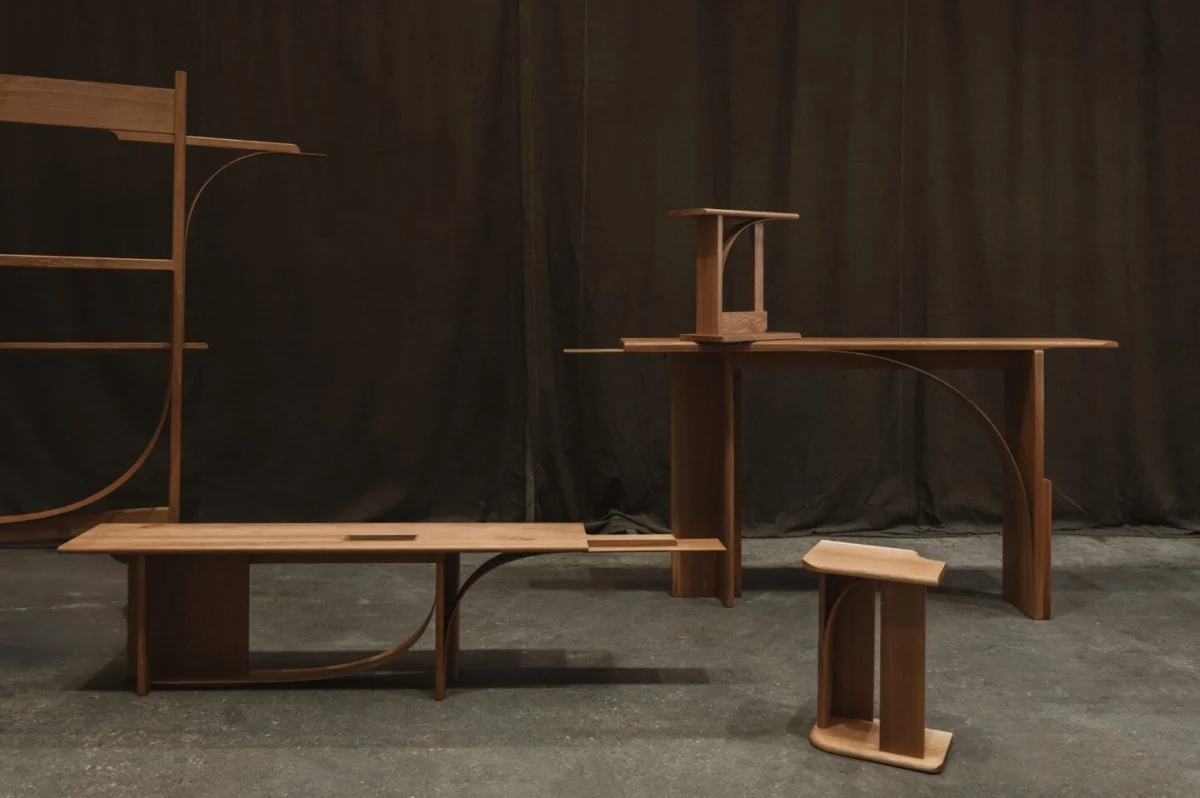
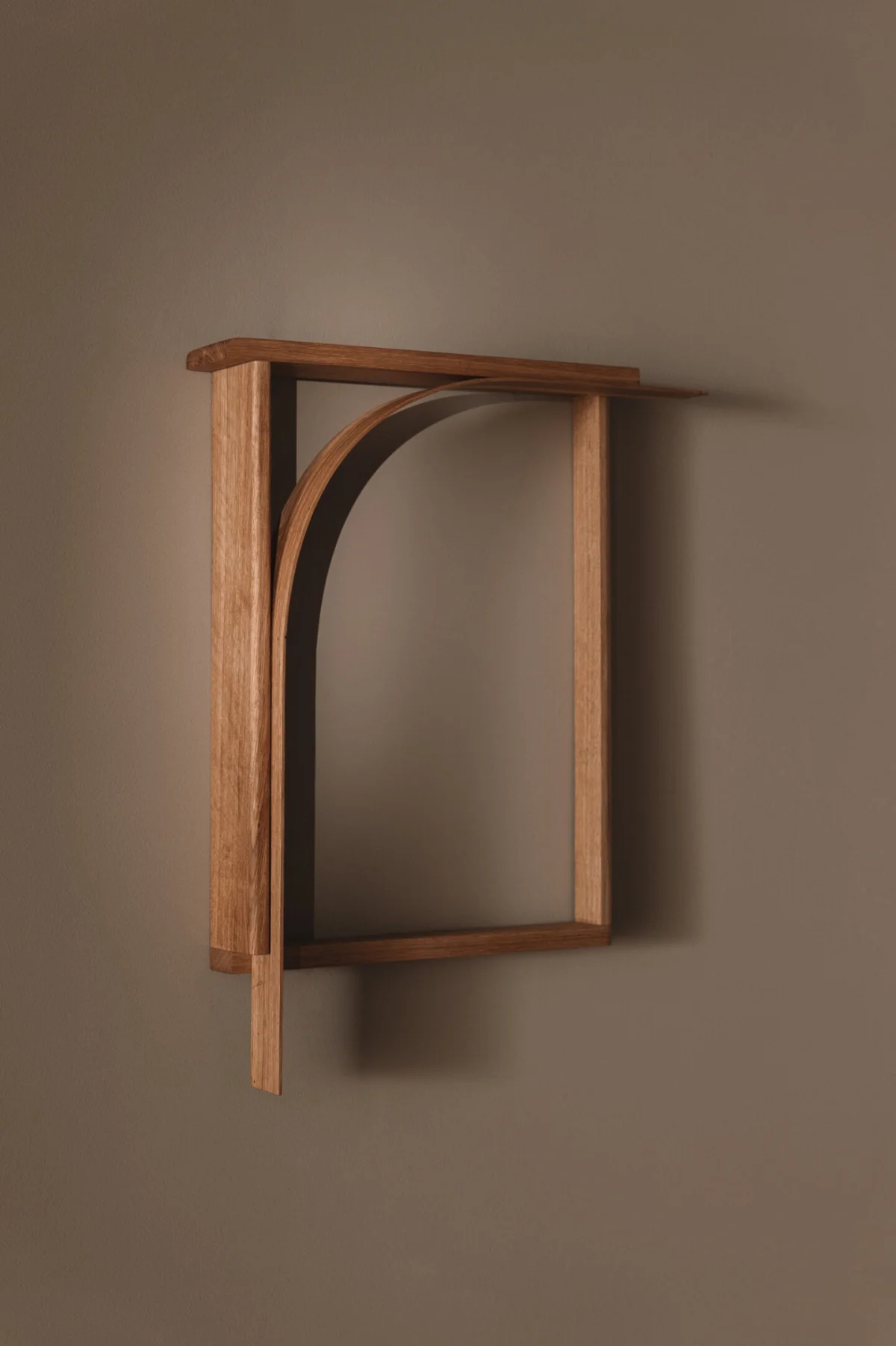
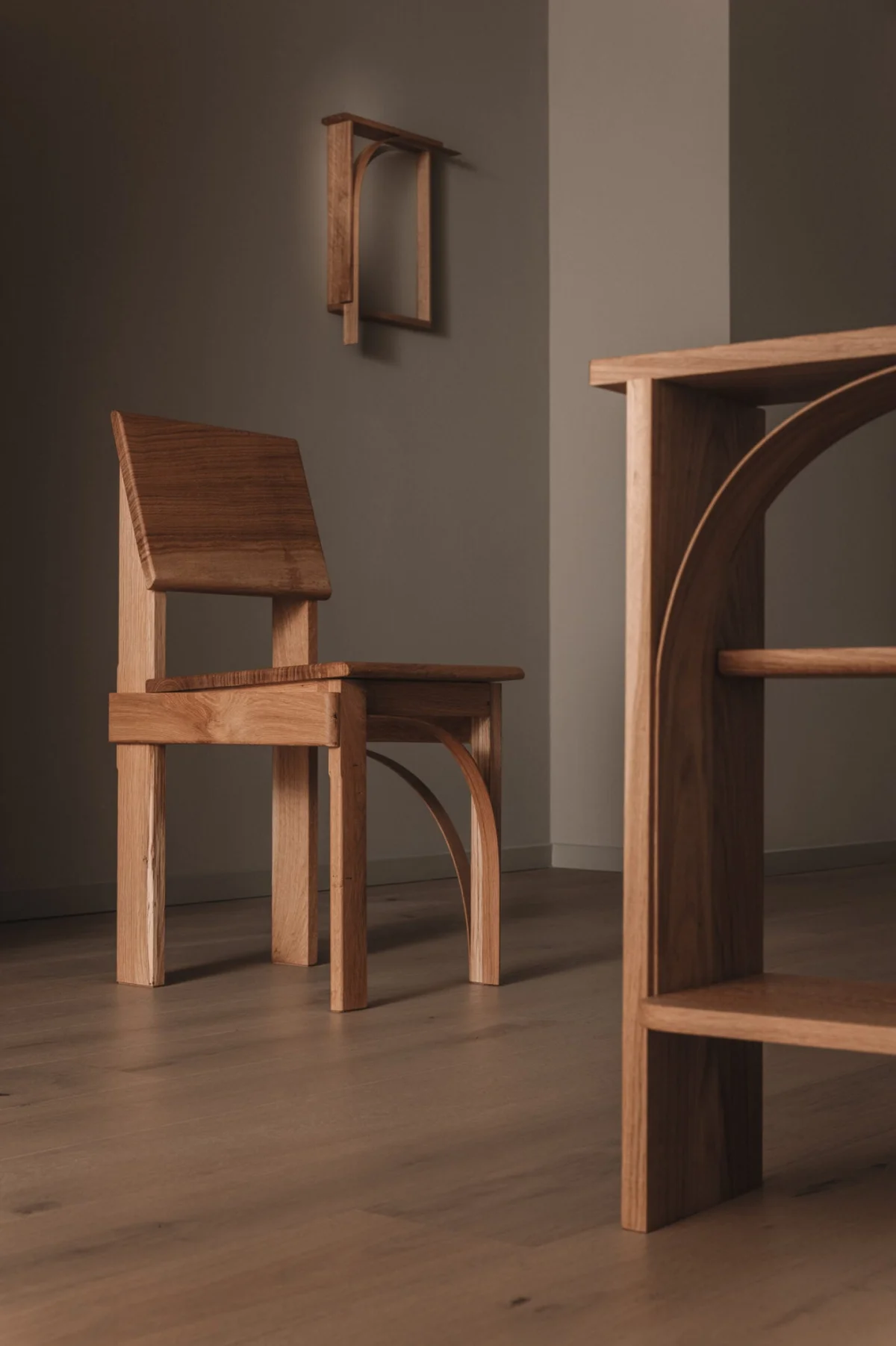
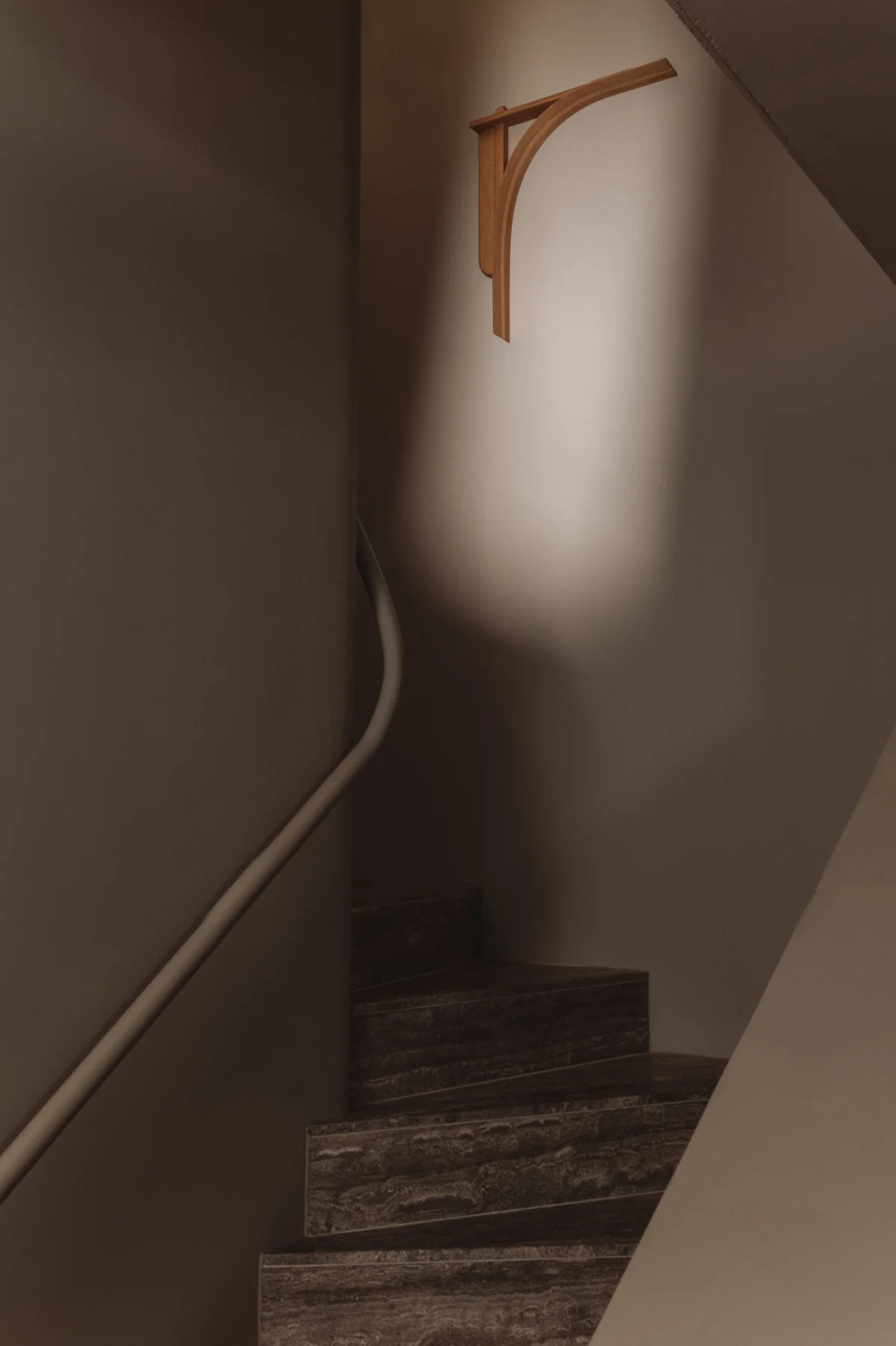
Sanghyeok Lee’s ARC collection treats the spaces between furniture as part of the design. Lamps, chairs, consoles and shelves form a route through a room, linking objects to walls, ceilings and the people moving among them. The series is on view at MAJ VAN DER LINDEN in Berlin, where its arrangement gives visitors a way to experience that idea in real space.
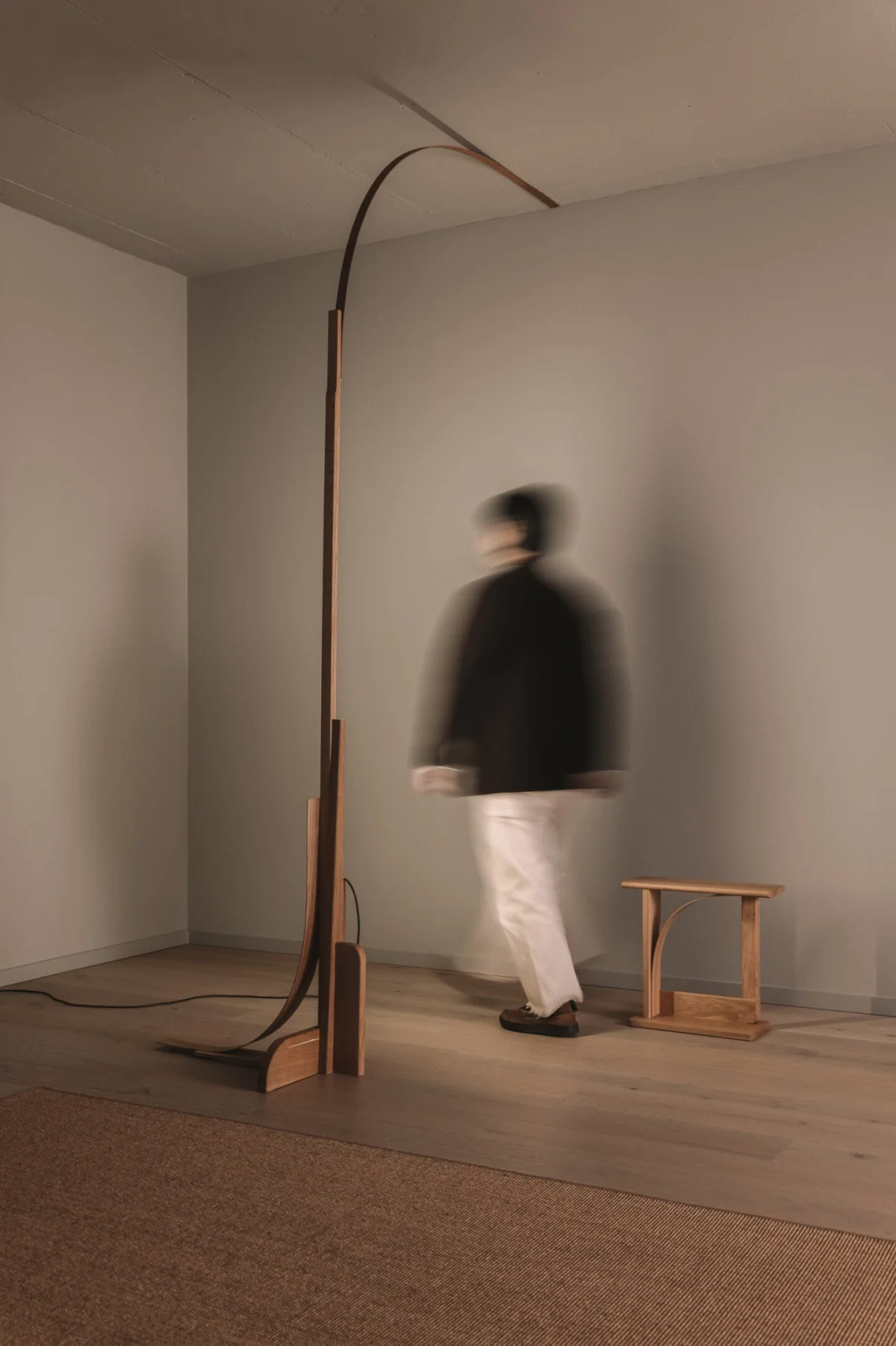
Lee describes his practice through a thought attributed to artist Ólafur Eliasson: “The gap between the two chairs is more interesting than the two chairs.” It’s a useful lens for ARC. The pieces have their own sculptural presence, but their placement also draws attention to the room around them. A curve can lead the eye from one object to another, while an open area invites visitors to imagine how they might occupy the space.
From objects to relationships
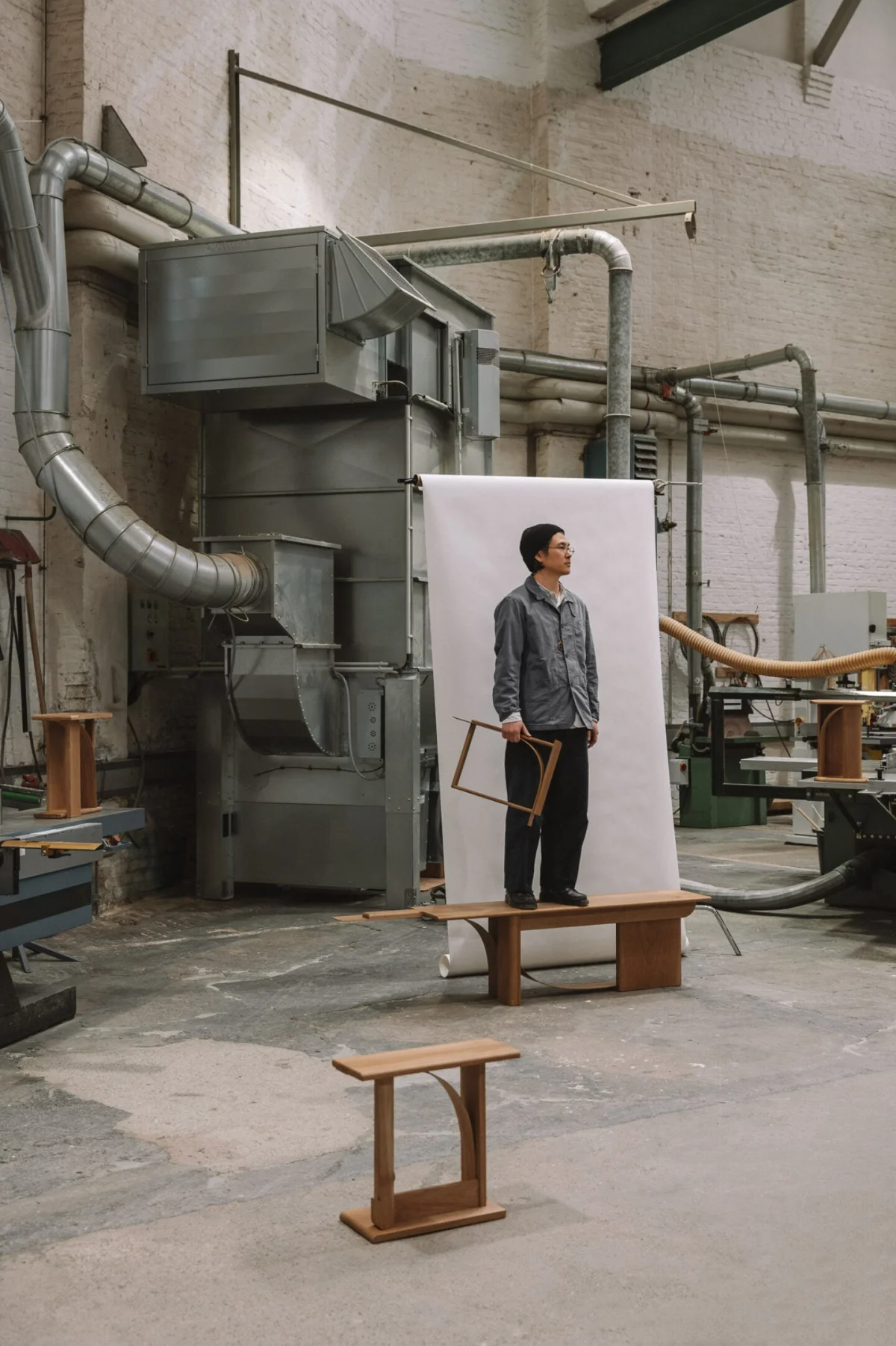
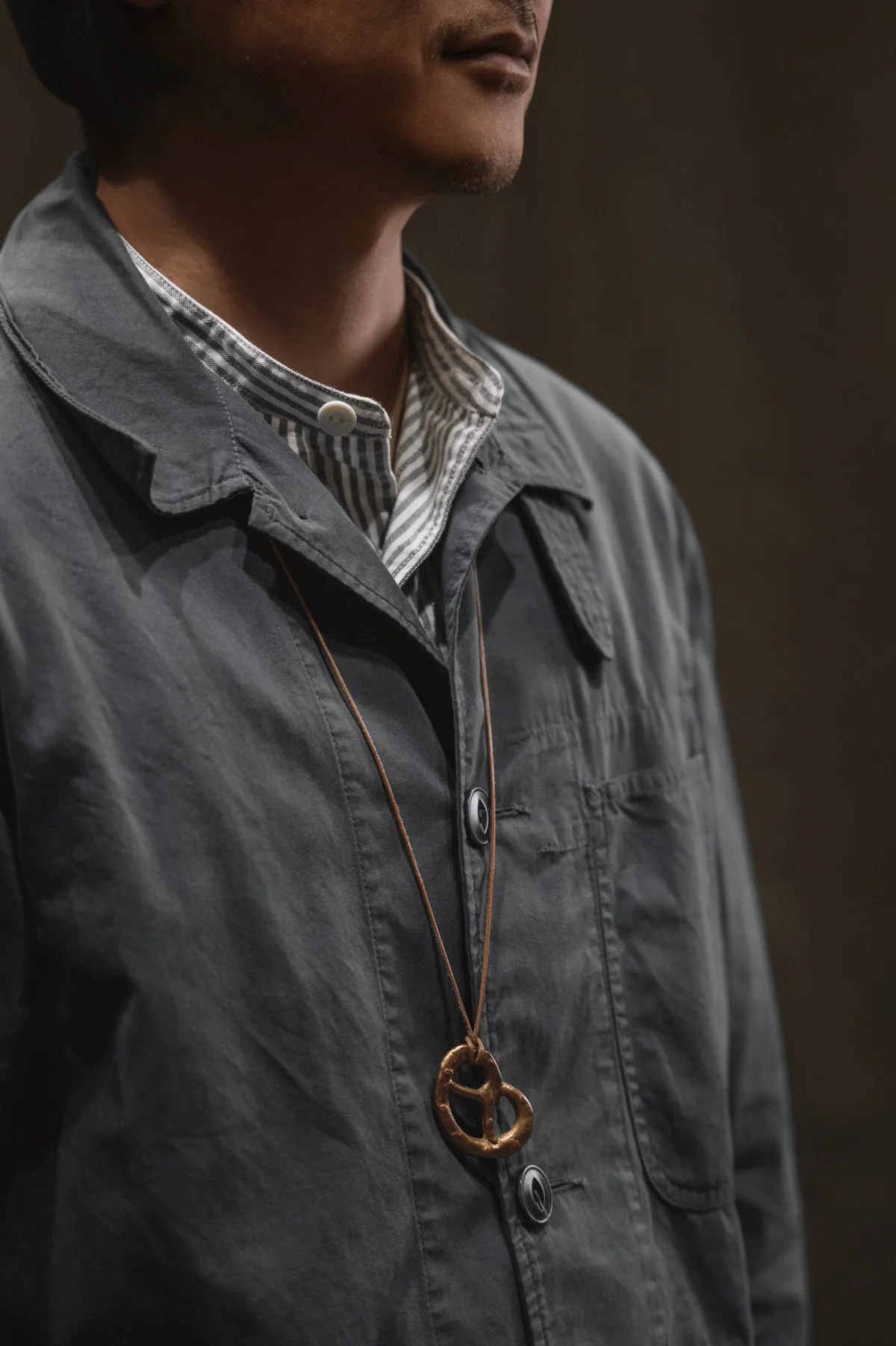
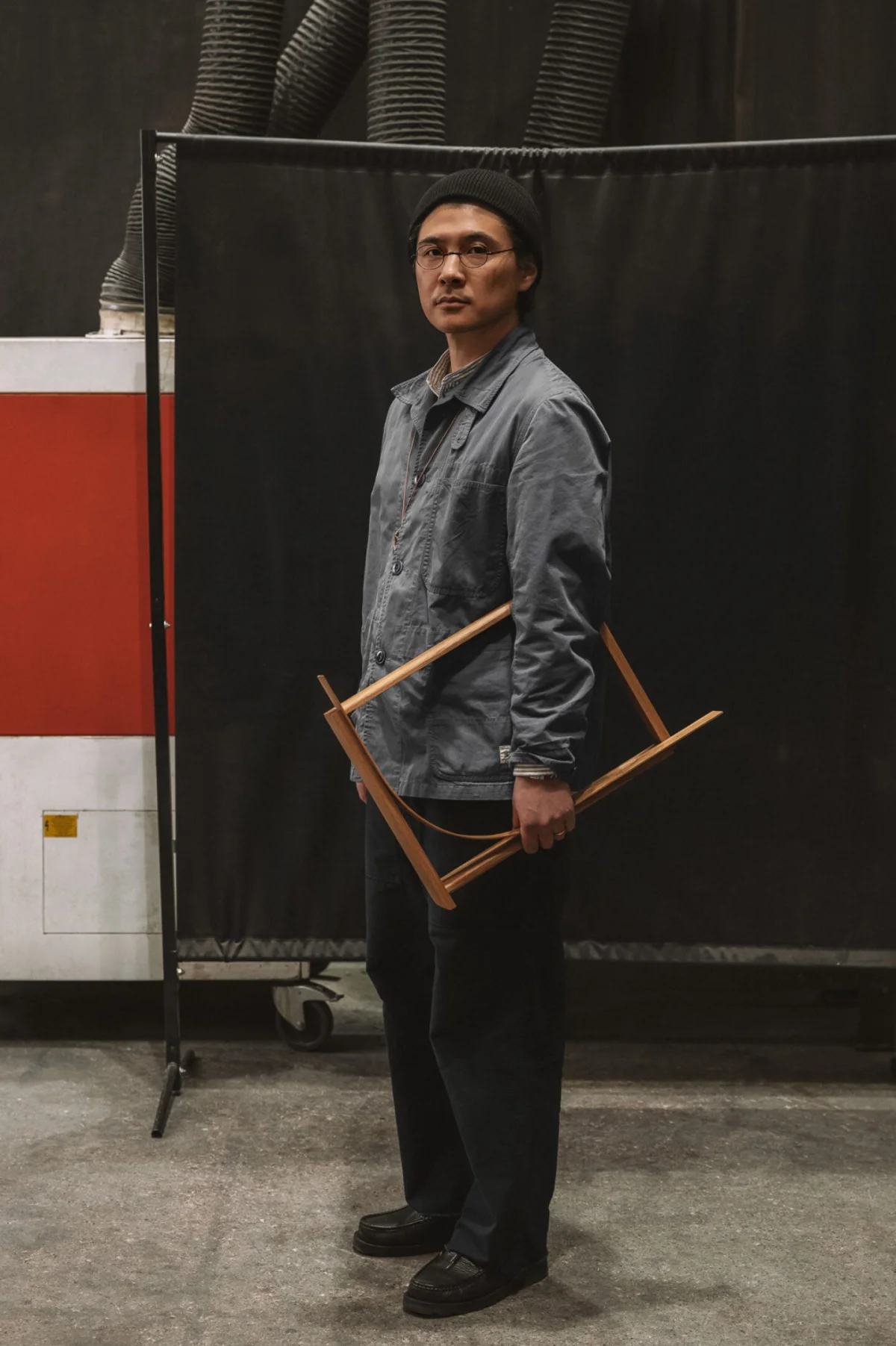
Lee was born in South Korea beside a strawberry field. He studied design in Seoul before moving to the Netherlands to attend Design Academy Eindhoven. The Dutch design scene of the early 2000s drew him with its combination of intellectual inquiry, material experimentation and play. At the academy, he developed an understanding of handling and materiality that he calls the foundation of his work.
After graduating, Lee moved to Berlin. The practical strain of settling in a new city—learning the language, finding housing and work, and arranging insurance and visas—informed Arbeitsloser (2012), a furniture series. Its wooden and brass forms rework the light, unstable appearance of scaffolding. The experience left a mark on how Lee translates lived conditions into objects.
His practice later widened from collectible design to sculpture and public art. In 2020, he began a master’s degree at Universität der Künste, during a period that changed how he thought about design. “I started to think not just about the object, but about the behaviour of the object and our behaviour around the object,” he says.
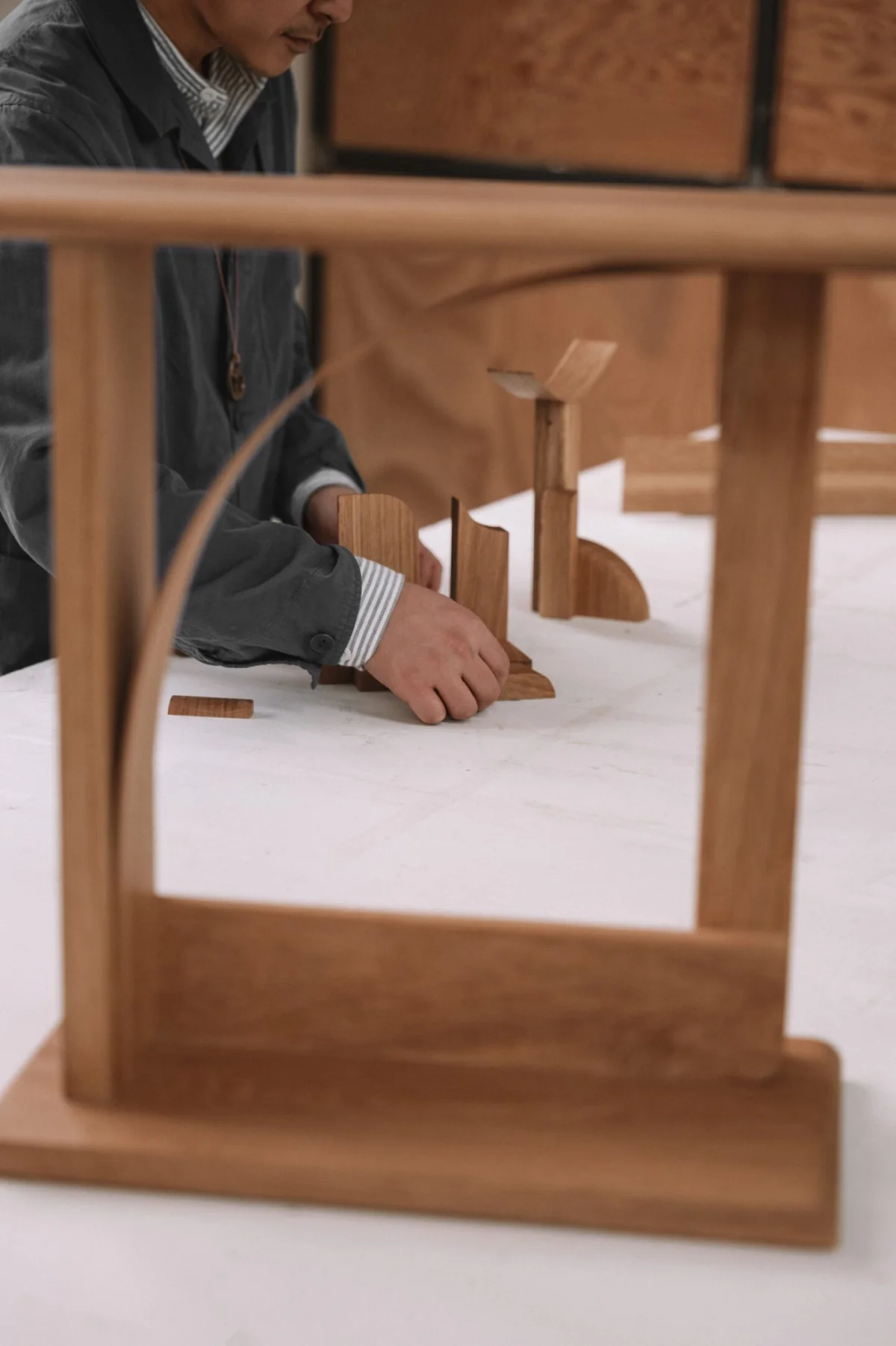
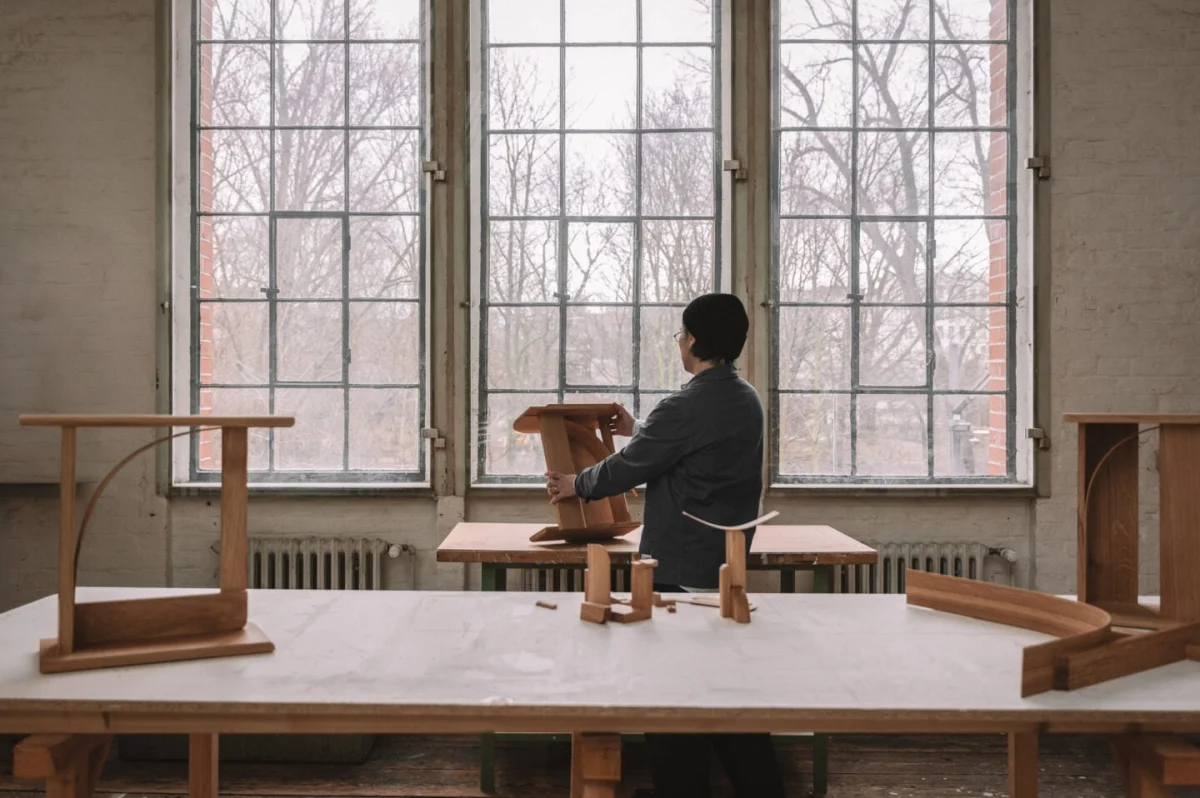
“I am interested in our movement in space and in relation to the things around us, be that walls or objects, pillars or rooms.”
That shift puts human movement at the center of Lee’s thinking. An object belongs to a wider system: the room that contains it, the route someone takes around it, and the other forms that frame the view. Lee also draws on yeo-baek, a concept in Korean art, design and architecture that treats empty space as an active part of a composition. The gap can hold meaning and invite reflection, just as a solid form can.
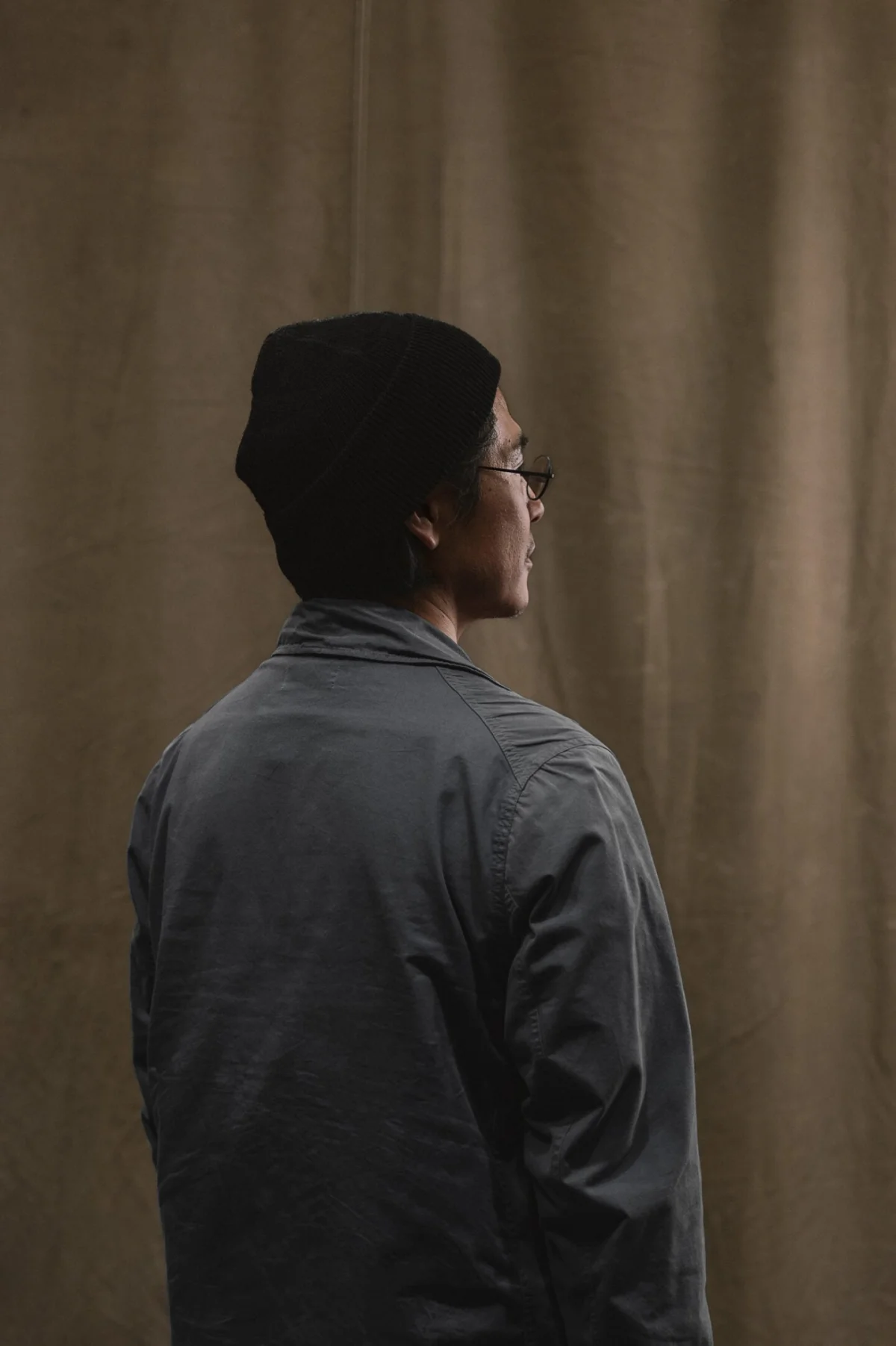
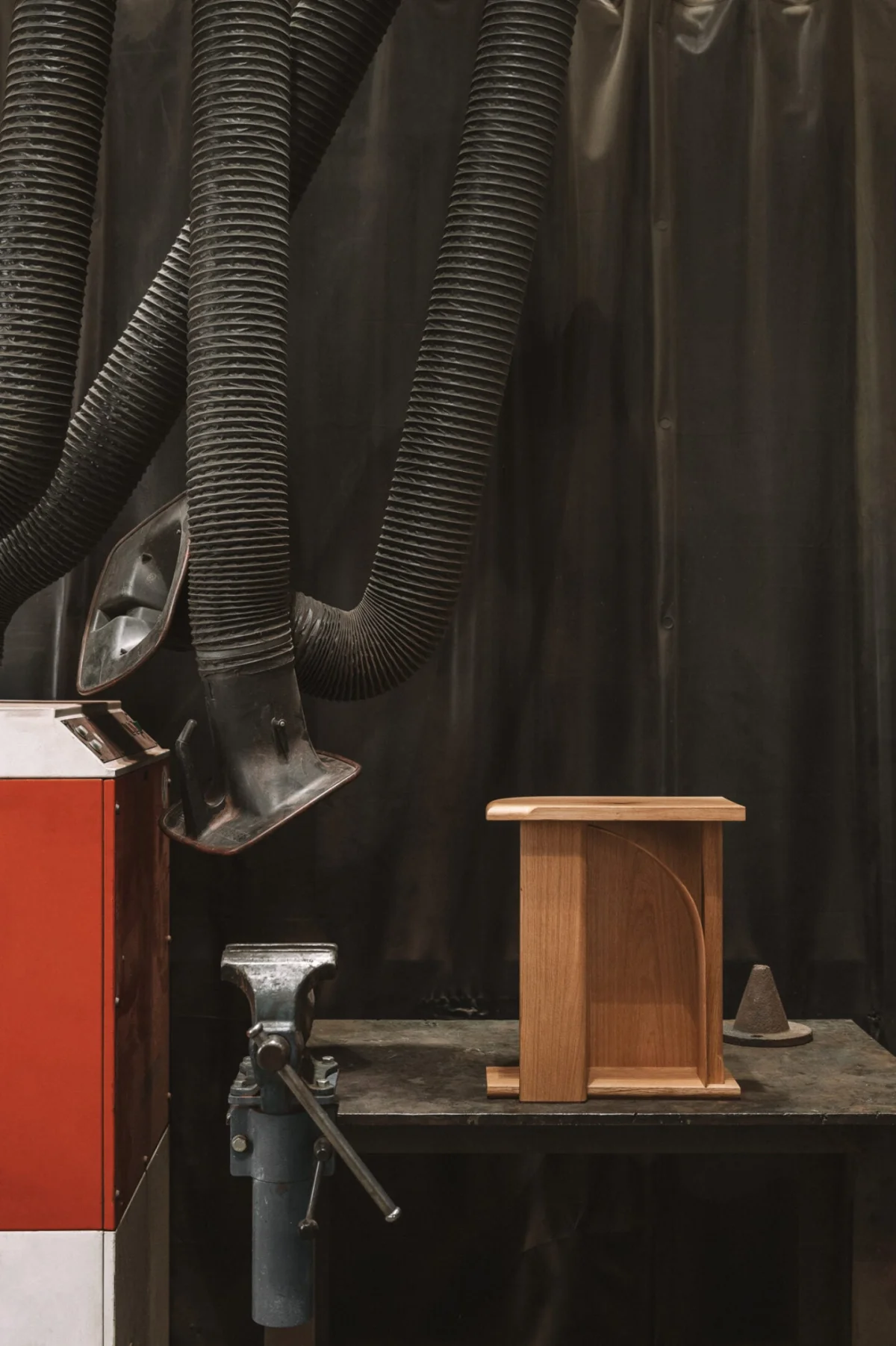
Building ARC through observation
Lee’s process starts by reading a space at two scales: its overall atmosphere and the details of its parts. He imagines connections between surfaces—a line from floor to wall, then from wall to ceiling—and considers how those invisible paths could suggest new forms or ways of using a room. The approach leaves room for what he calls “the absurd stories that might unfold” in a space.
For ARC, he drew on the inductive method associated with Enlightenment projects such as Denis Diderot and Jean le Rond d’Alembert’s Encyclopédie: gather observations, look for patterns, then build an understanding from them. Lee began by collecting images that caught his attention, including vaulted ceilings, a still of Austrian artist Valie Export bearing the words “Art can help to sharpen our perception,” and pale arcs of condensation against a blue sky. Over time, recurring ideas—layers, spatial connections and curves that seemed to lead somewhere—came into focus.
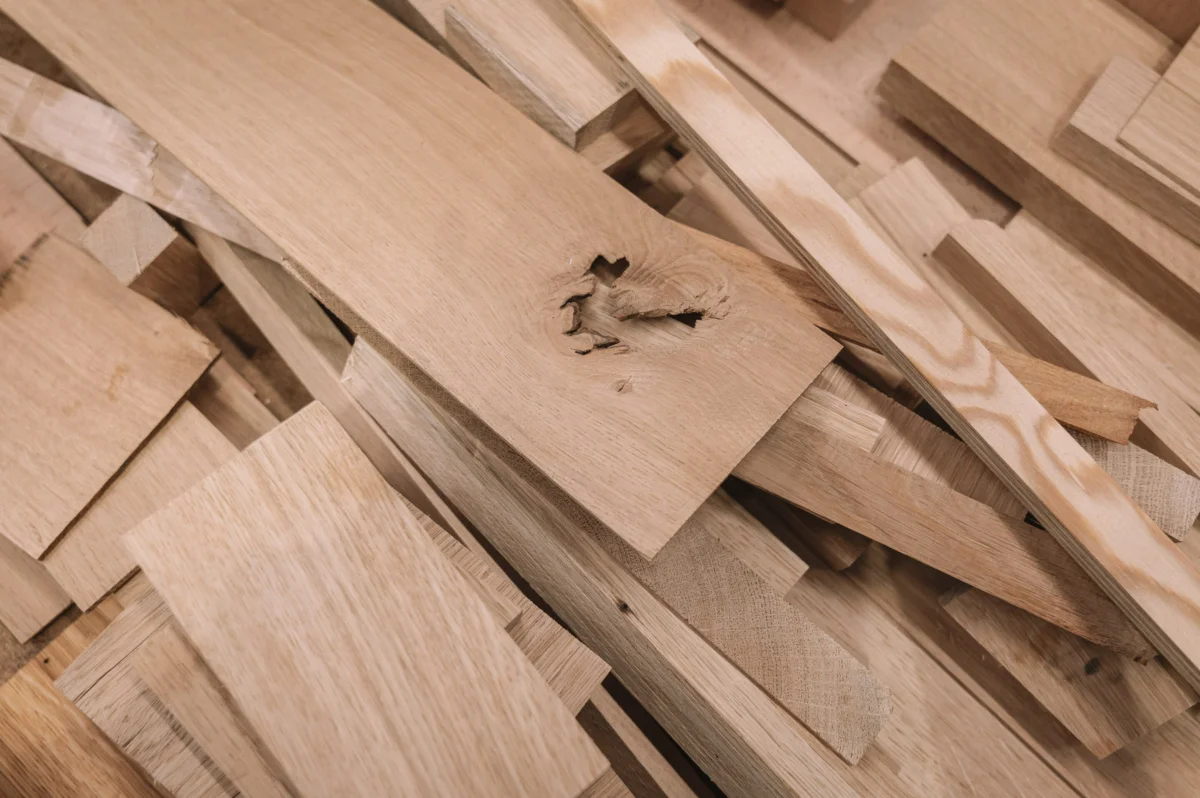
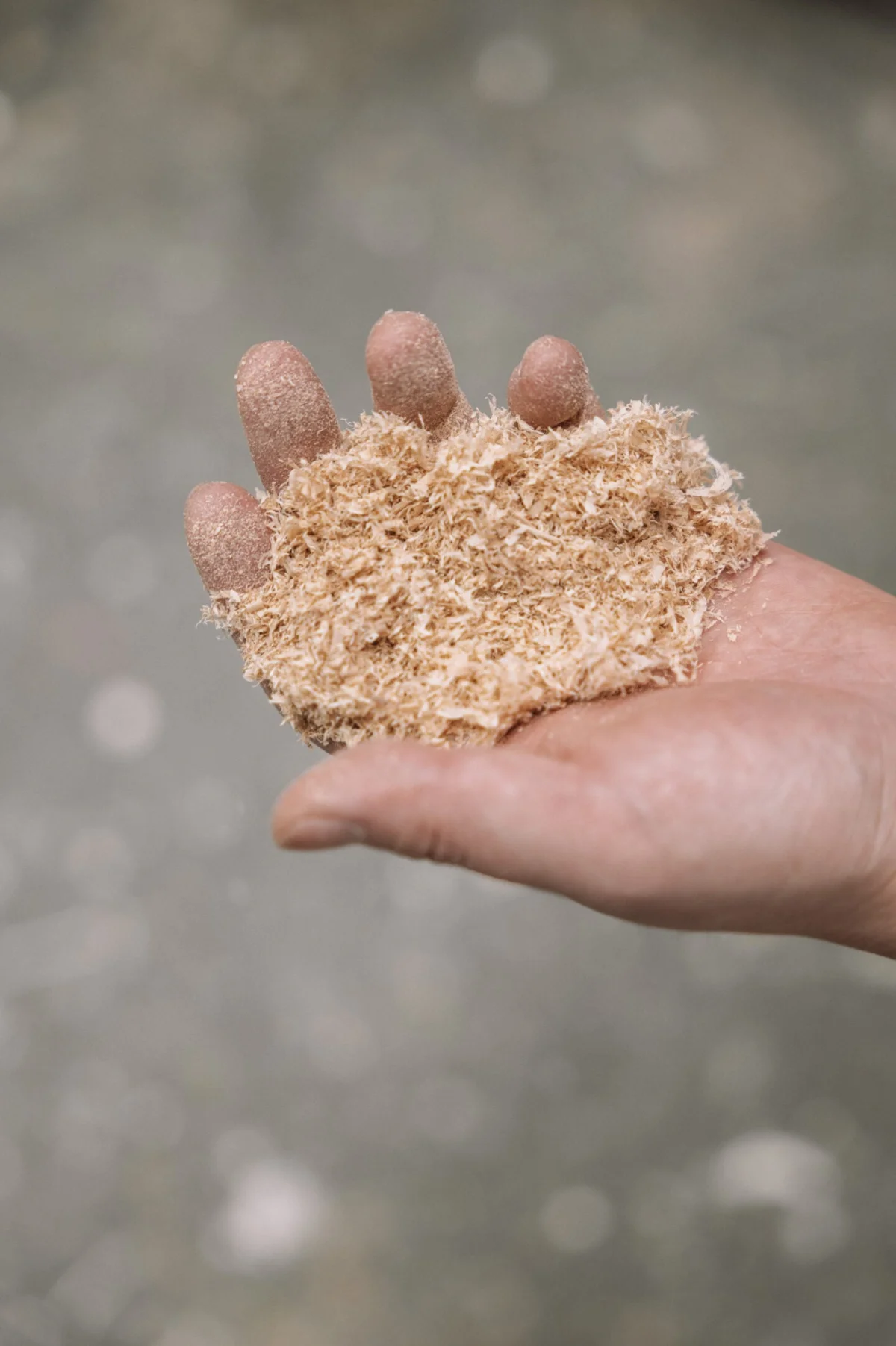
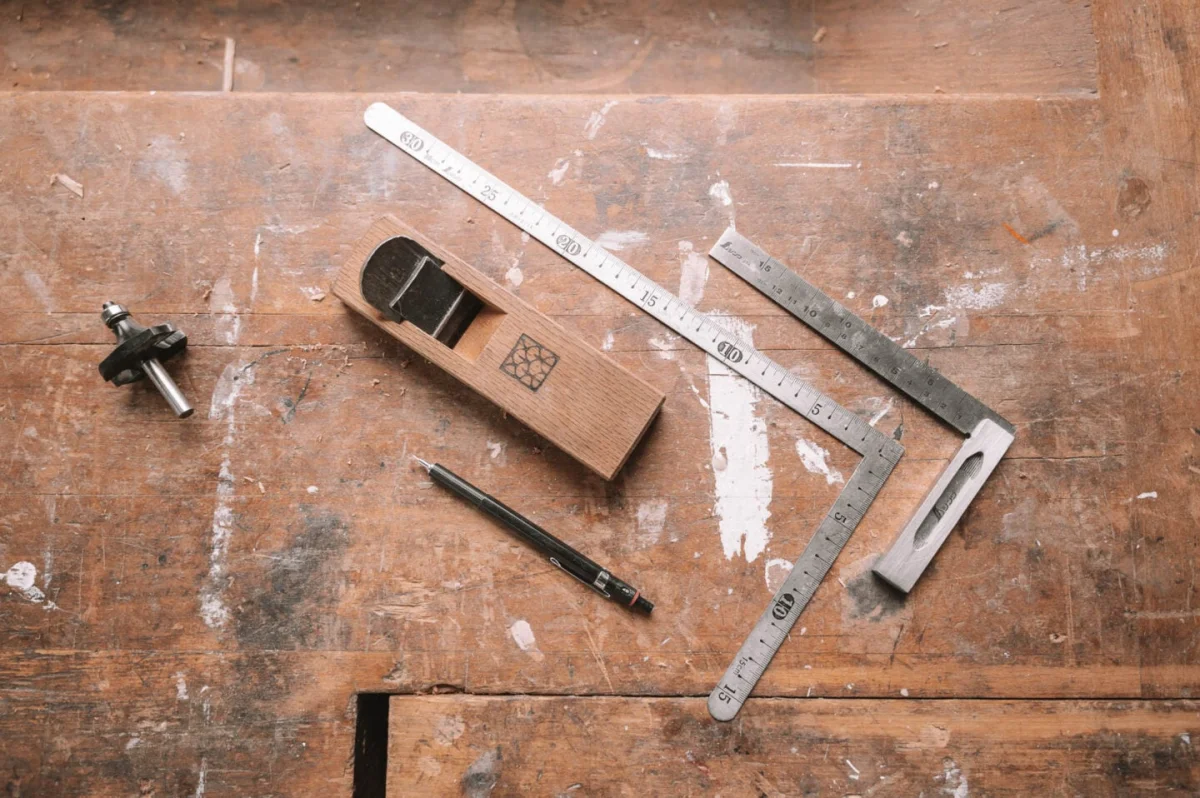
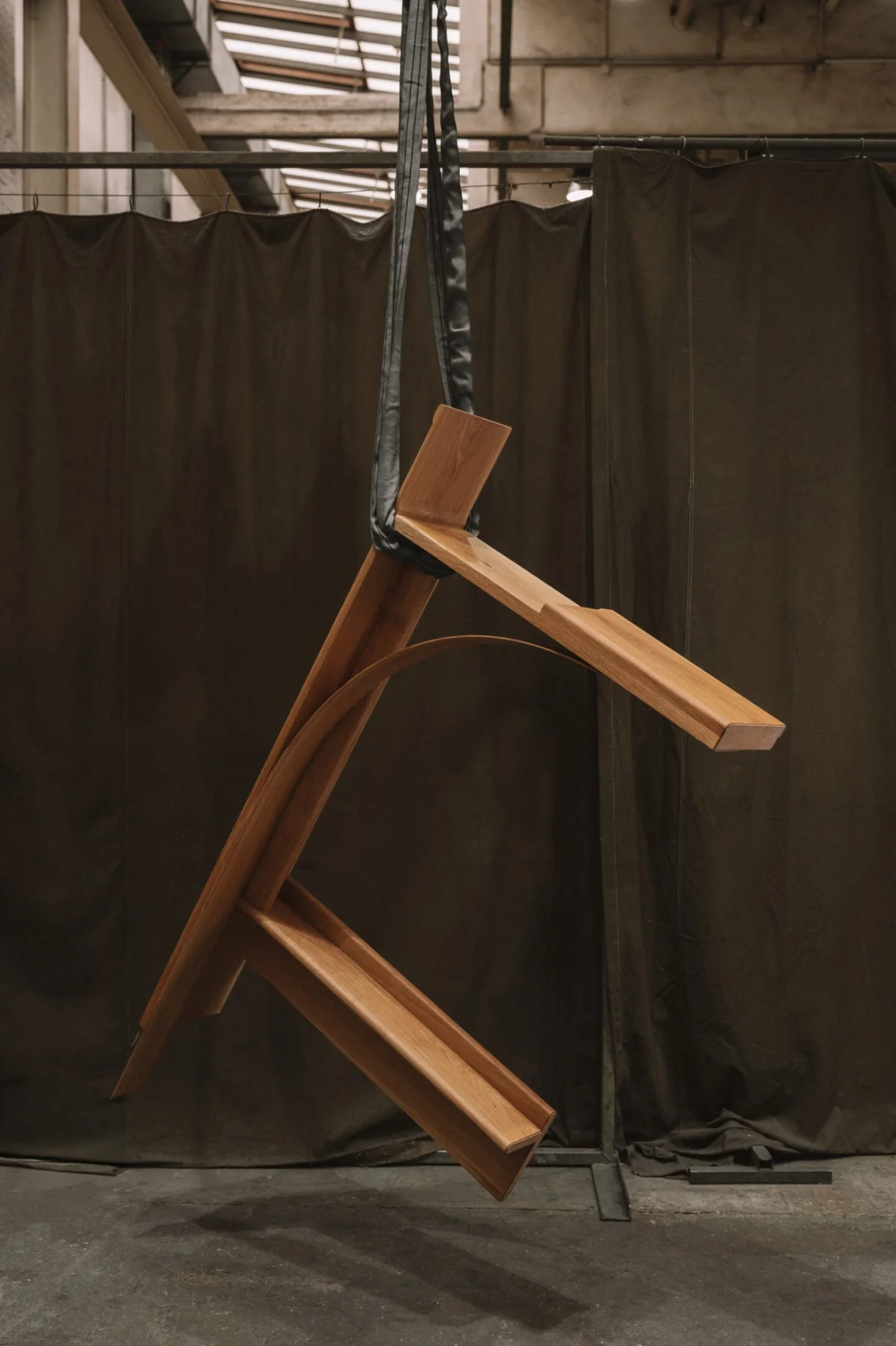
Materials shaped the next decisions. Friends who were leaving Berlin gave Lee some oak, and he chose to begin with the wood rather than a fixed plan. In traditional Korean thought, wood retains a life force after it has been cut. Lee approached it as an active part of the design process, allowing its character to influence what came next.
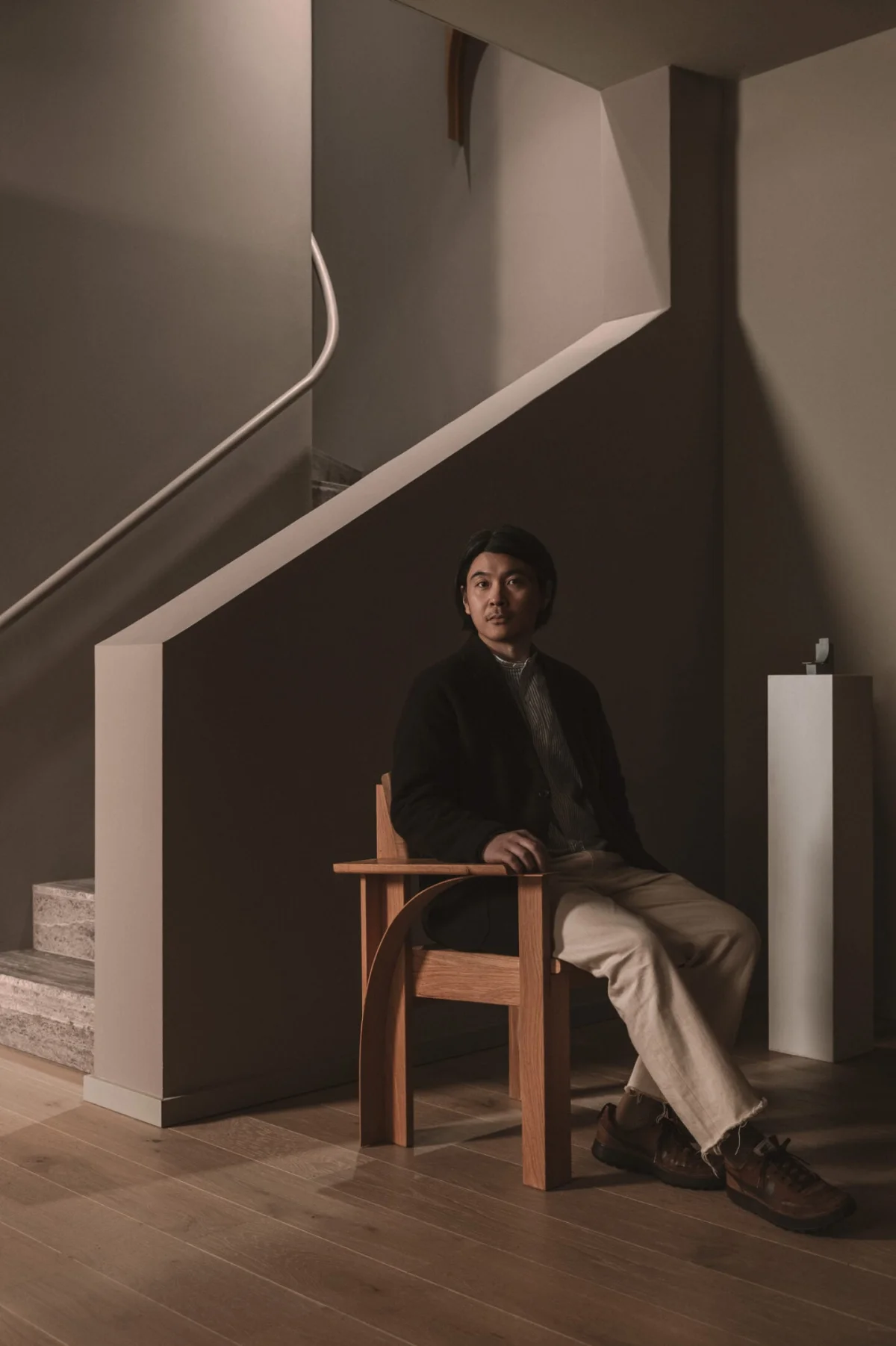
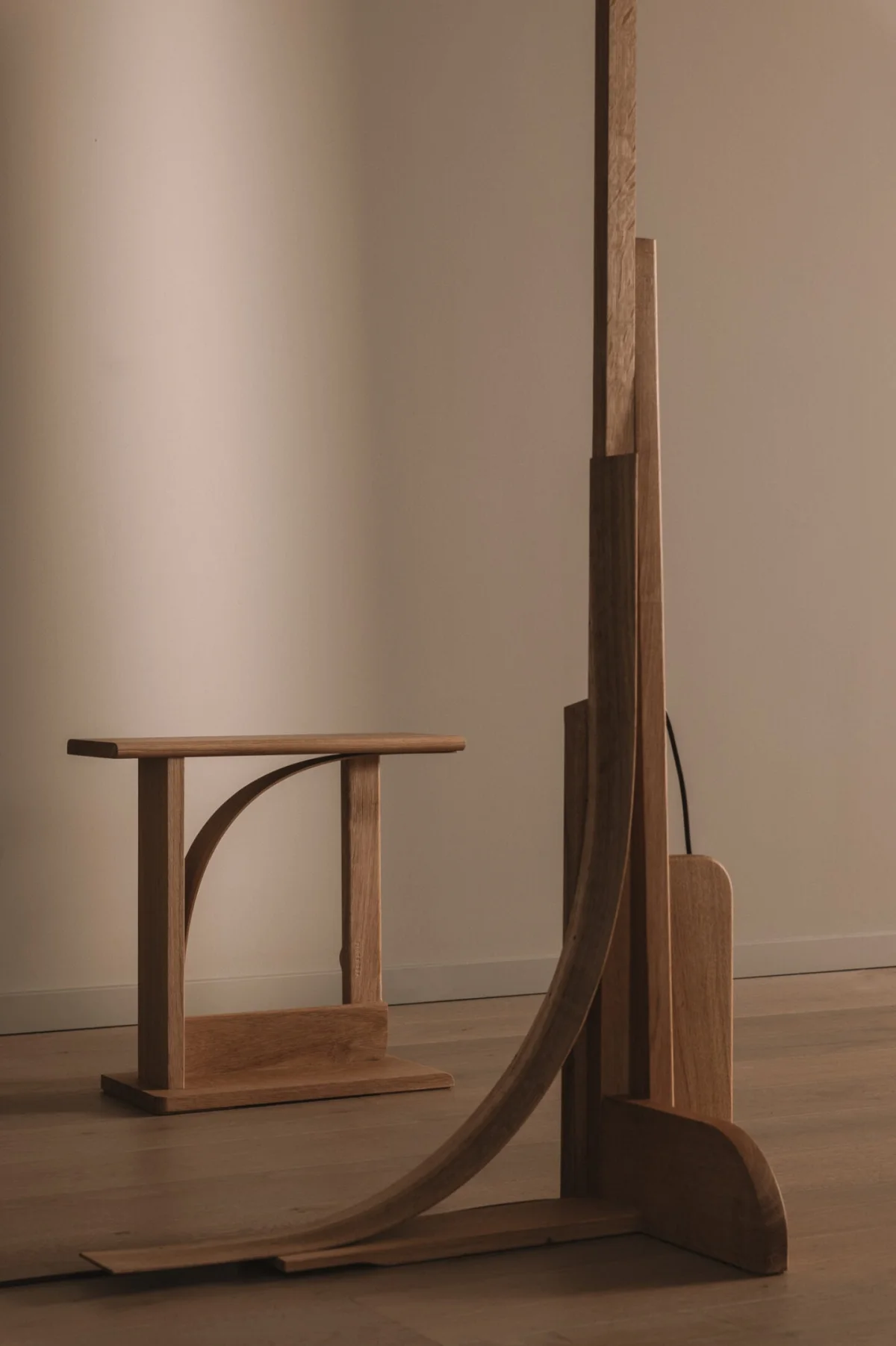
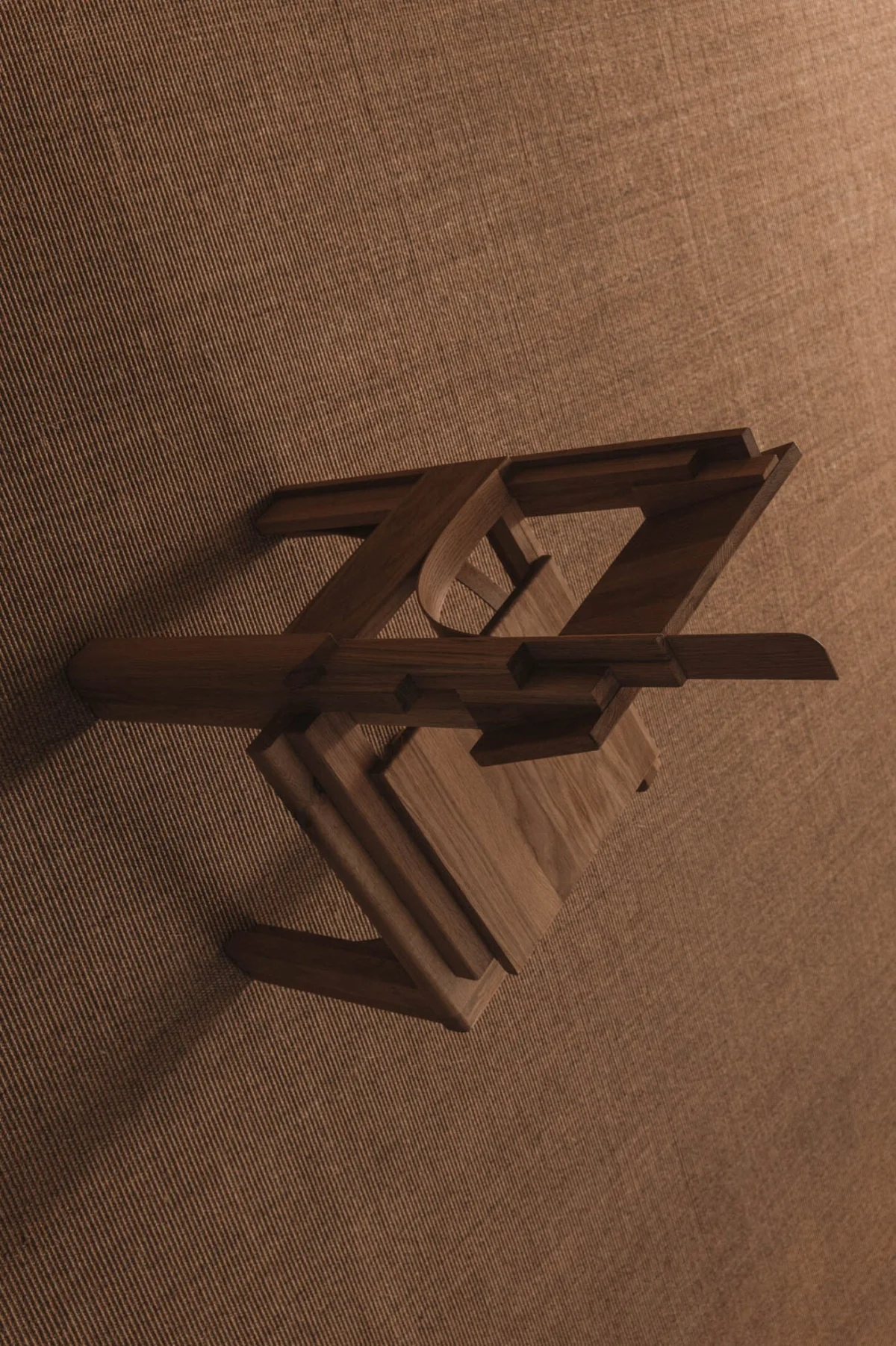
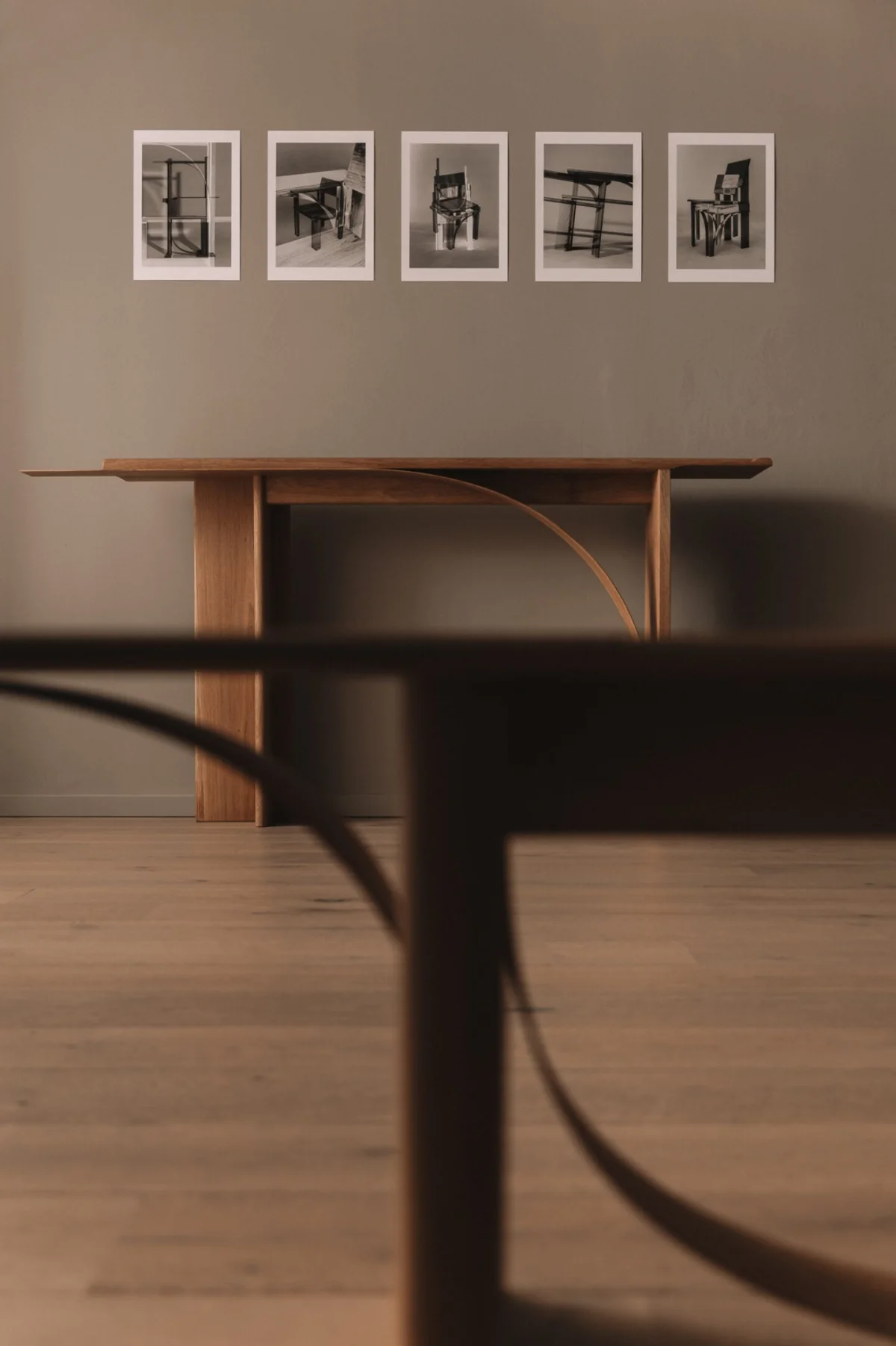
“I spent a lot of time placing different elements together, focusing on the details, looking at each object, and considering whether all the pieces were in the right place.”
Rather than follow a predetermined design, Lee developed the work through arrangement and adjustment. Each element was tested against the others, with attention to its position and to the larger composition. The result is a group of forms that feel both elegant and playful. Arches recur across the collection, carrying the eye through the pieces and into the surrounding space.
A room that completes the work
At MAJ VAN DER LINDEN, ARC is presented in a warm-toned room with a domestic scale, rather than against white walls and isolated pedestals. The pieces shape the room’s circulation, creating a circular flow through the exhibition. That setting makes Lee’s spatial ideas legible: the objects establish relationships, and visitors complete them by moving through the arrangement.
“Following the lines of ARC reveals hidden connections that invite personal interpretations of space,” Lee says. The collection’s most useful design lesson may lie in that invitation. Furniture can do more than occupy a room; through material, form and placement, it can change how the room is read. ARC was on view until March 27 at MAJ VAN DER LINDEN, Townhouse 068 im Stadtquartier AM TACHELES, Johannisstraße 14, 10117 Berlin.
Images © Clemens Poloczek | Text: Rosie Flanagan
| Rev | Description | Date |
|---|---|---|
| A | Issued for reading | |
| B | Viewed 932 times | Current |


