Further Ther’s Lisbon Home Studio Puts Stone, Craft and Daily Use on Display
- Project
- UX & UI Design
- Drawn by
- Rosie Flanagan
- Issued
- Sheet
- A-181
Tomás Fernandes and Natasza Grzeskiewicz built a Lisbon home, studio and showroom where Portuguese materials and lived-in objects shape the design experience.
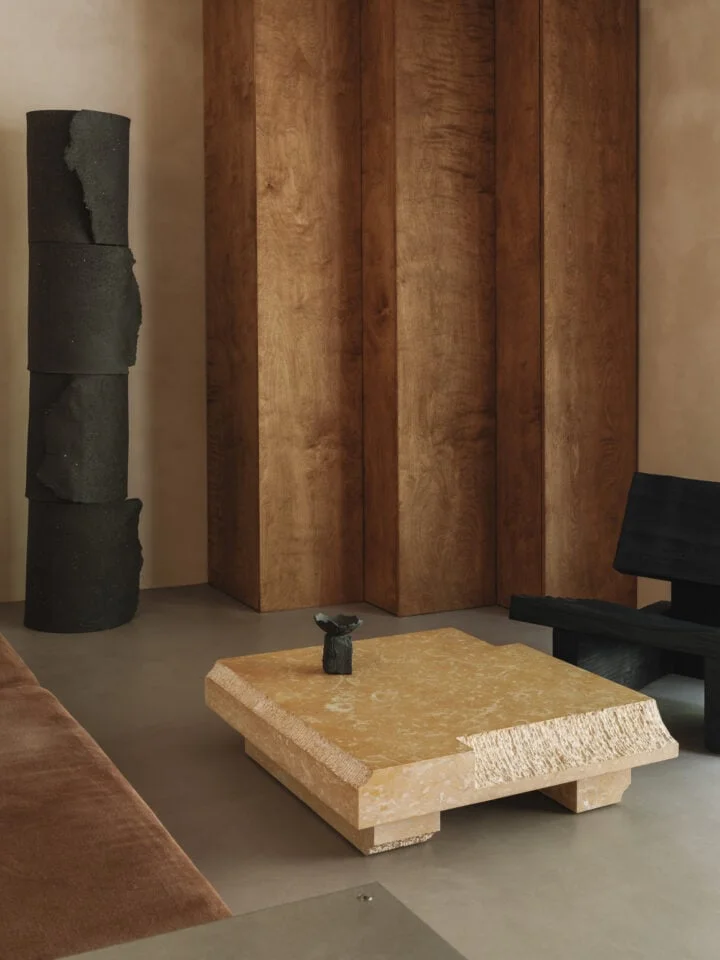
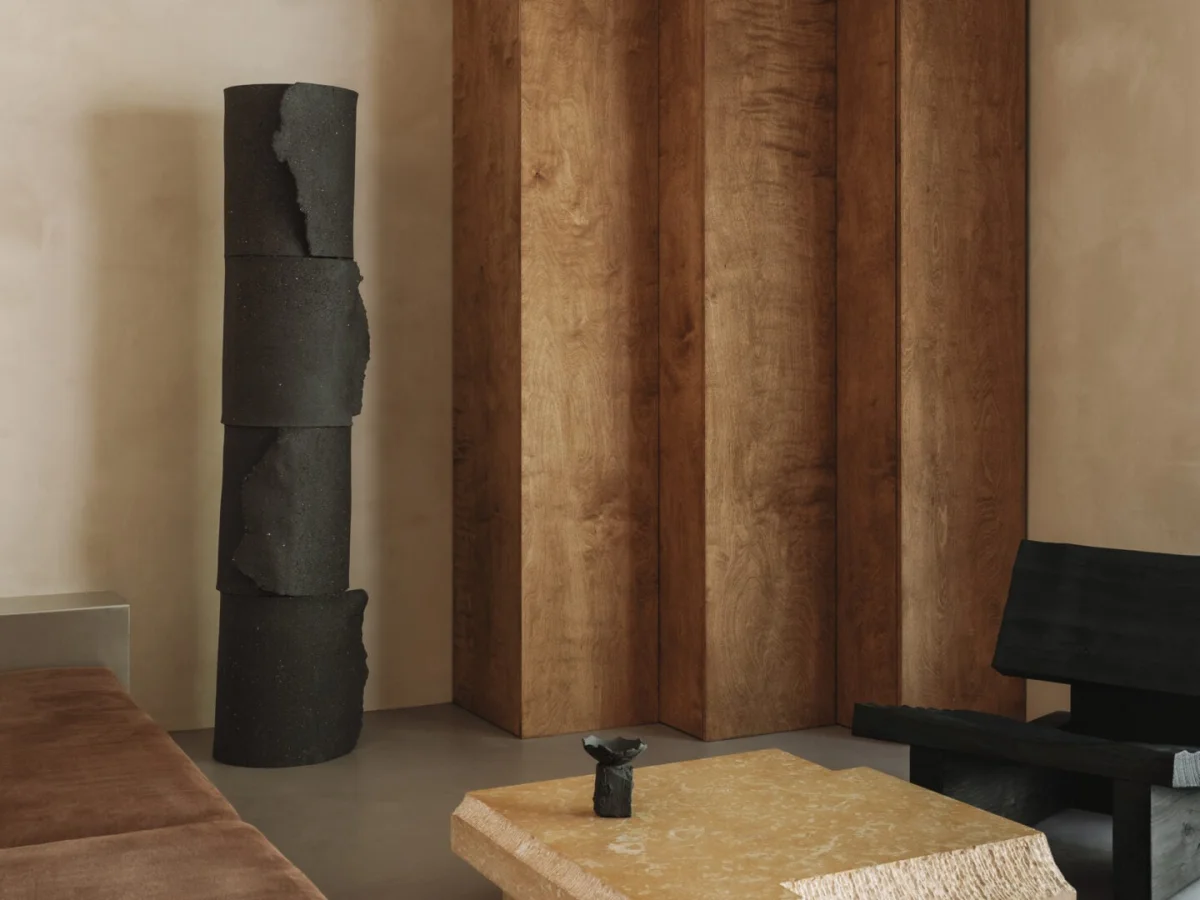
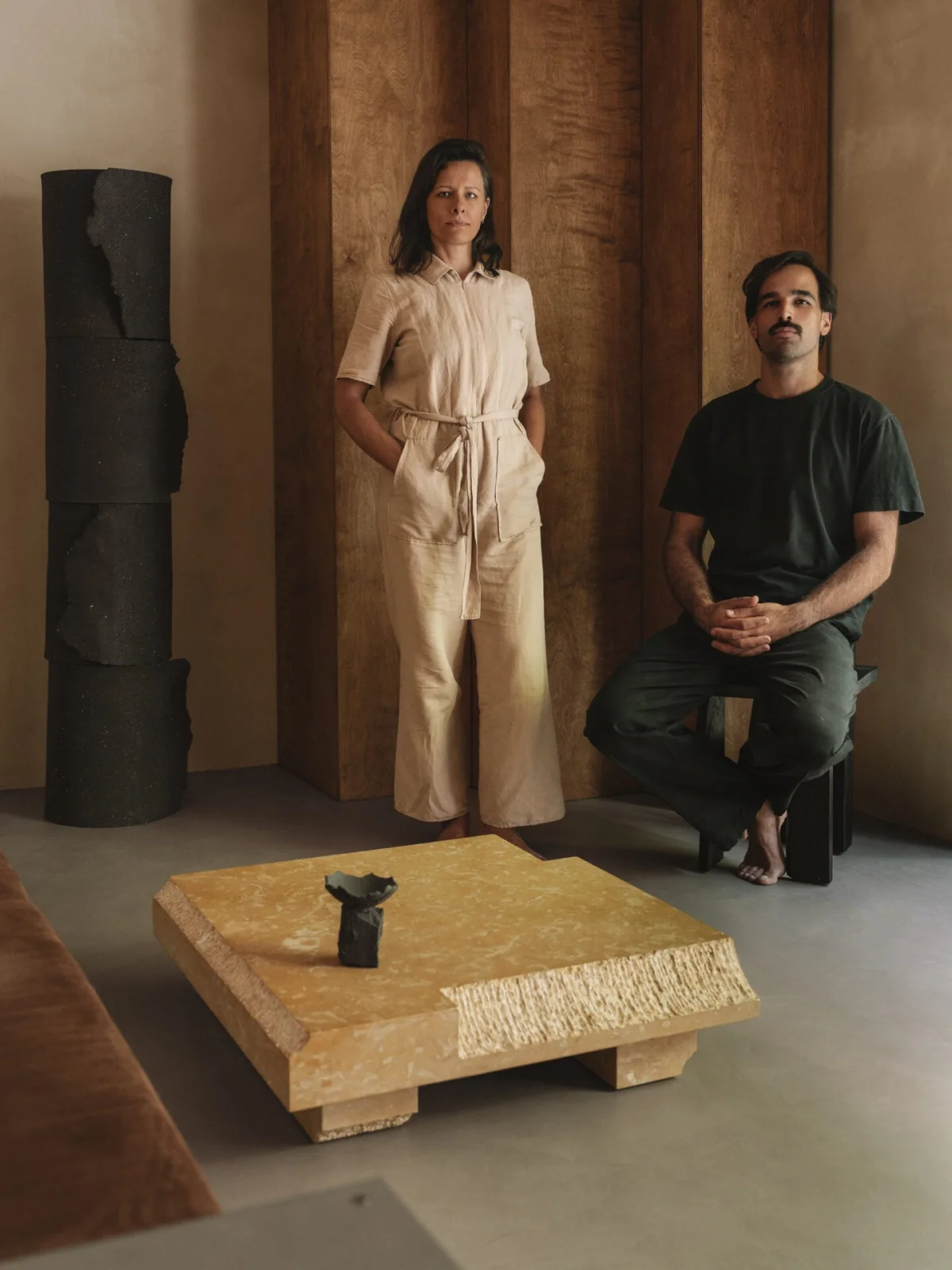
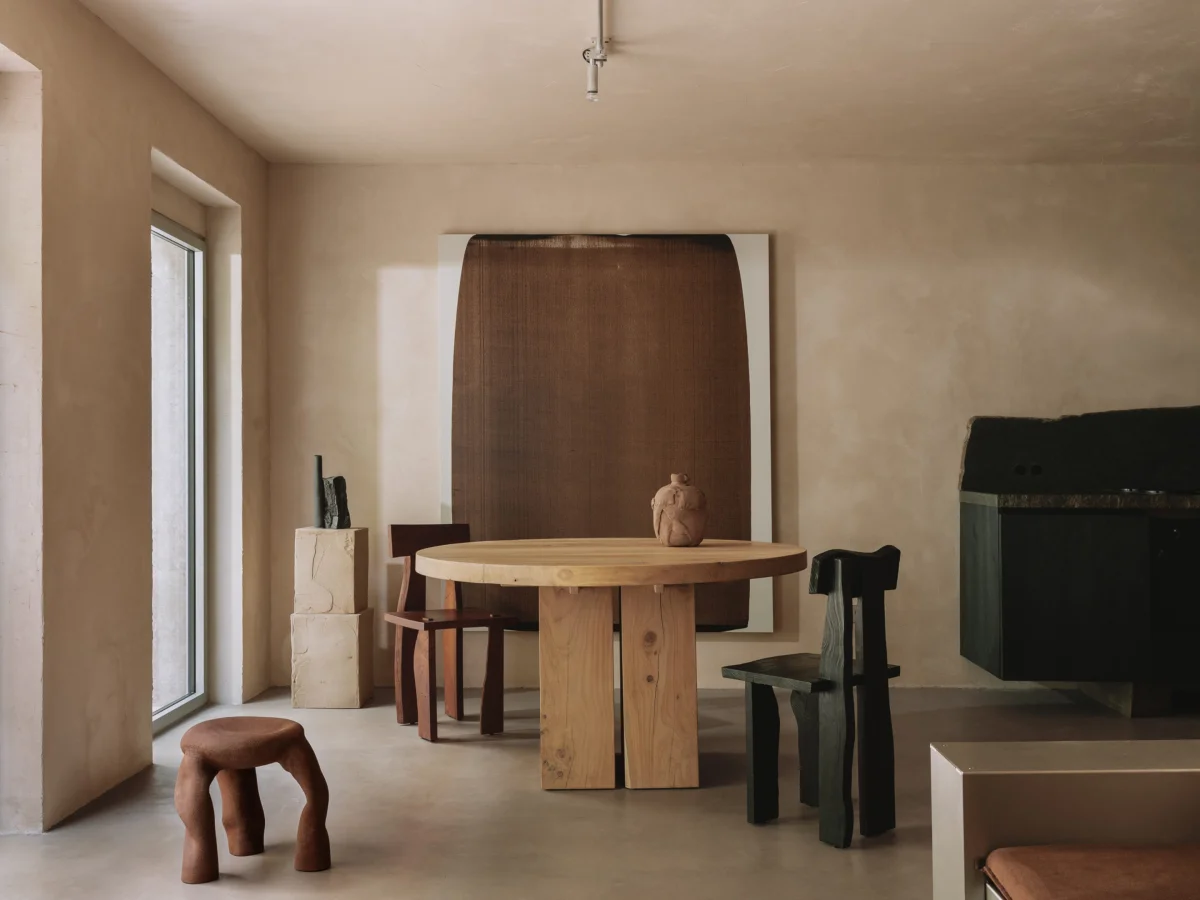
Further Ther’s showroom asks visitors to understand its objects by living with them for a moment. In Lisbon, designers Tomás Fernandes and Natasza Grzeskiewicz have made their home, studio and display space one continuous setting. A sofa is there to sit on; kitchen drawers invite a closer look; a ceramic cup might arrive with tea. The arrangement gives their work context, showing how sculptural forms meet the ordinary rhythms of a household.
The practice grew from a shared outlook and a route through several design cultures. Fernandes, from Portugal, trained in engineering; Grzeskiewicz, from Poland, studied fine arts. They met at Domaine de Boisbuchet, a cultural project in a château and surrounding woodland in southern France, where designers and architects have gathered for summer workshops since the 1990s. “When we met, we found we were in sync,” Fernandes recalls. Their different backgrounds, they found, could support a common aesthetic.
A practice shaped by place
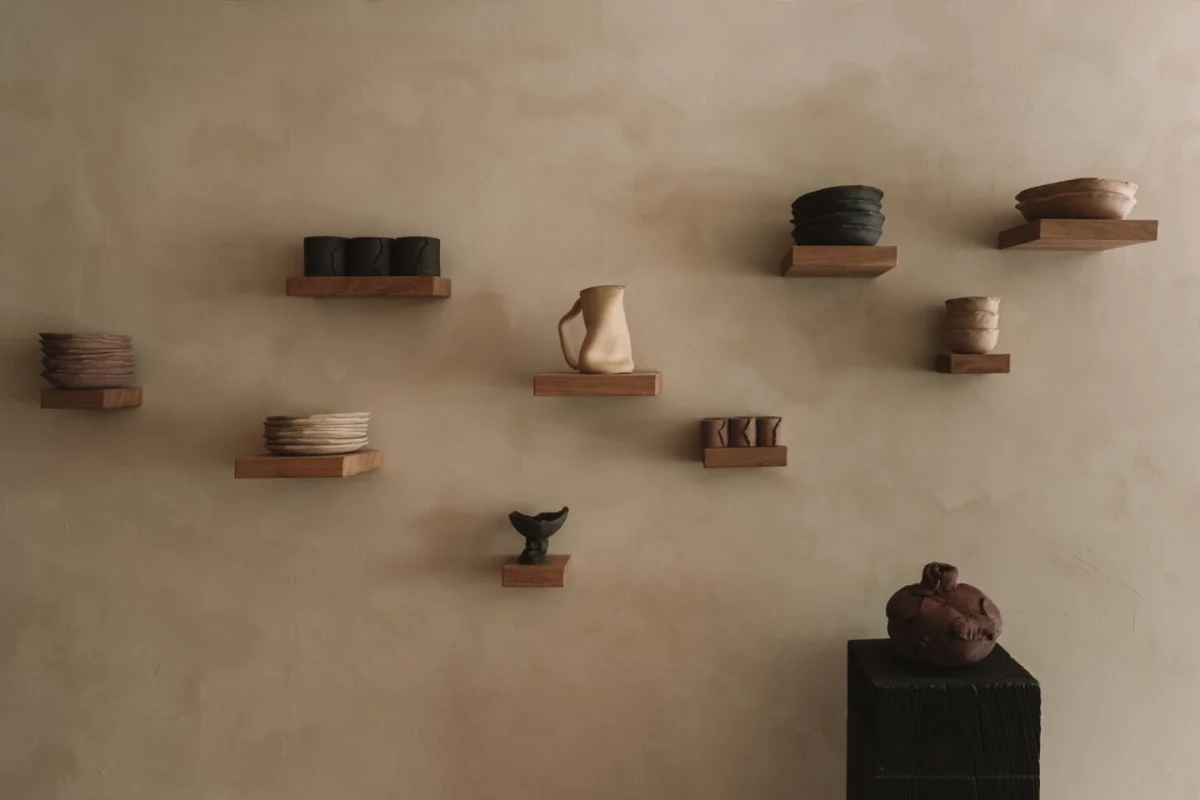
After France, the pair moved to Stavanger, Norway, drawn by Scandinavian design. They spent three years working in separate studios: Fernandes making furniture, Grzeskiewicz producing bespoke ceramics and tableware. A shared restaurant project brought their practices together and showed them they could start an atelier of their own.
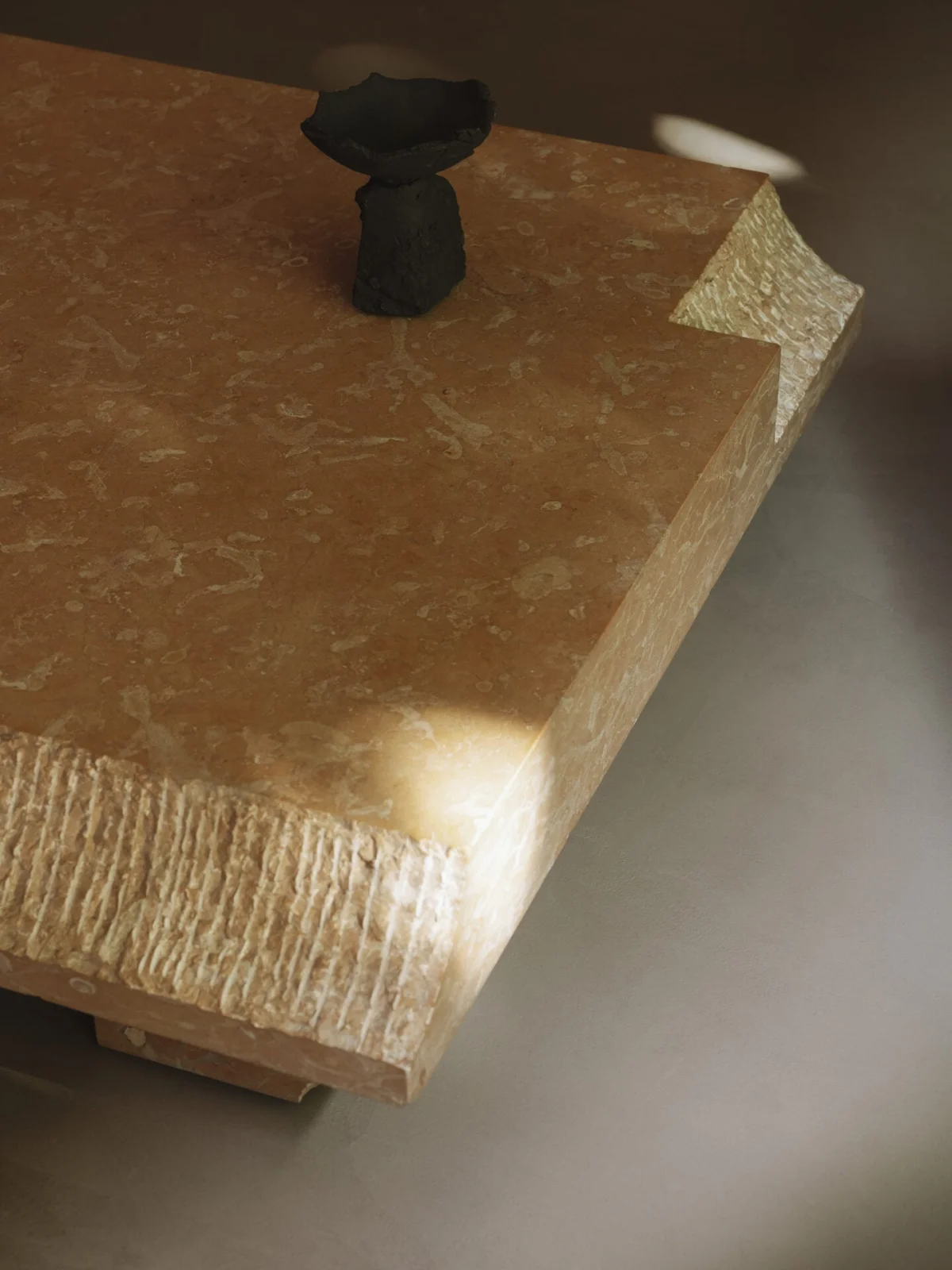
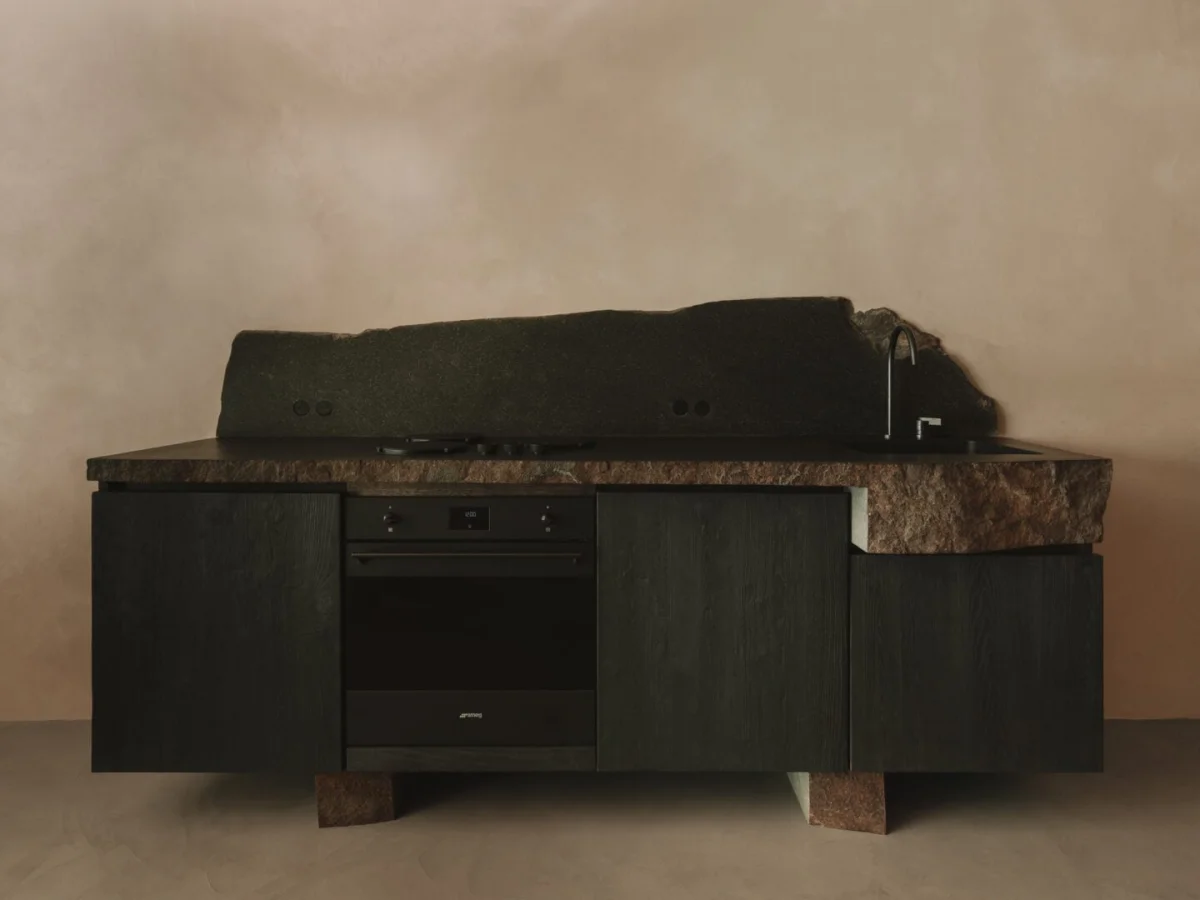
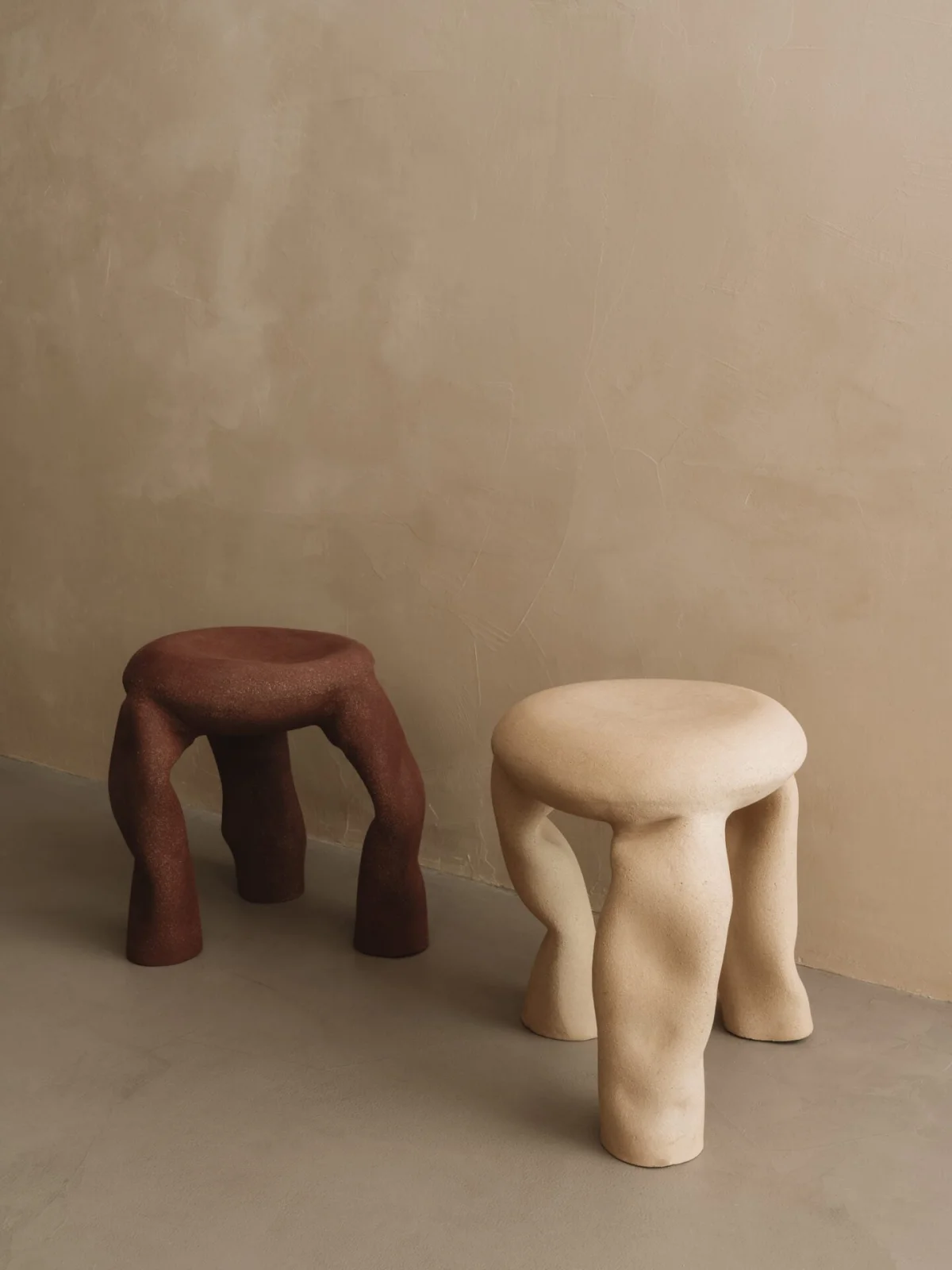
They eventually settled in Lisbon and founded Further Ther, a studio focused on collectible objects, furniture and interiors. Portugal offered practical conditions that suited their approach: small-scale production, bespoke manufacturing and close access to material suppliers. Grzeskiewicz says that local manufacturers make one-off commissions easier to pursue. Fernandes points to the range of stone available within 20 kilometres of Lisbon: three kinds of limestone, alongside granite and basalt.
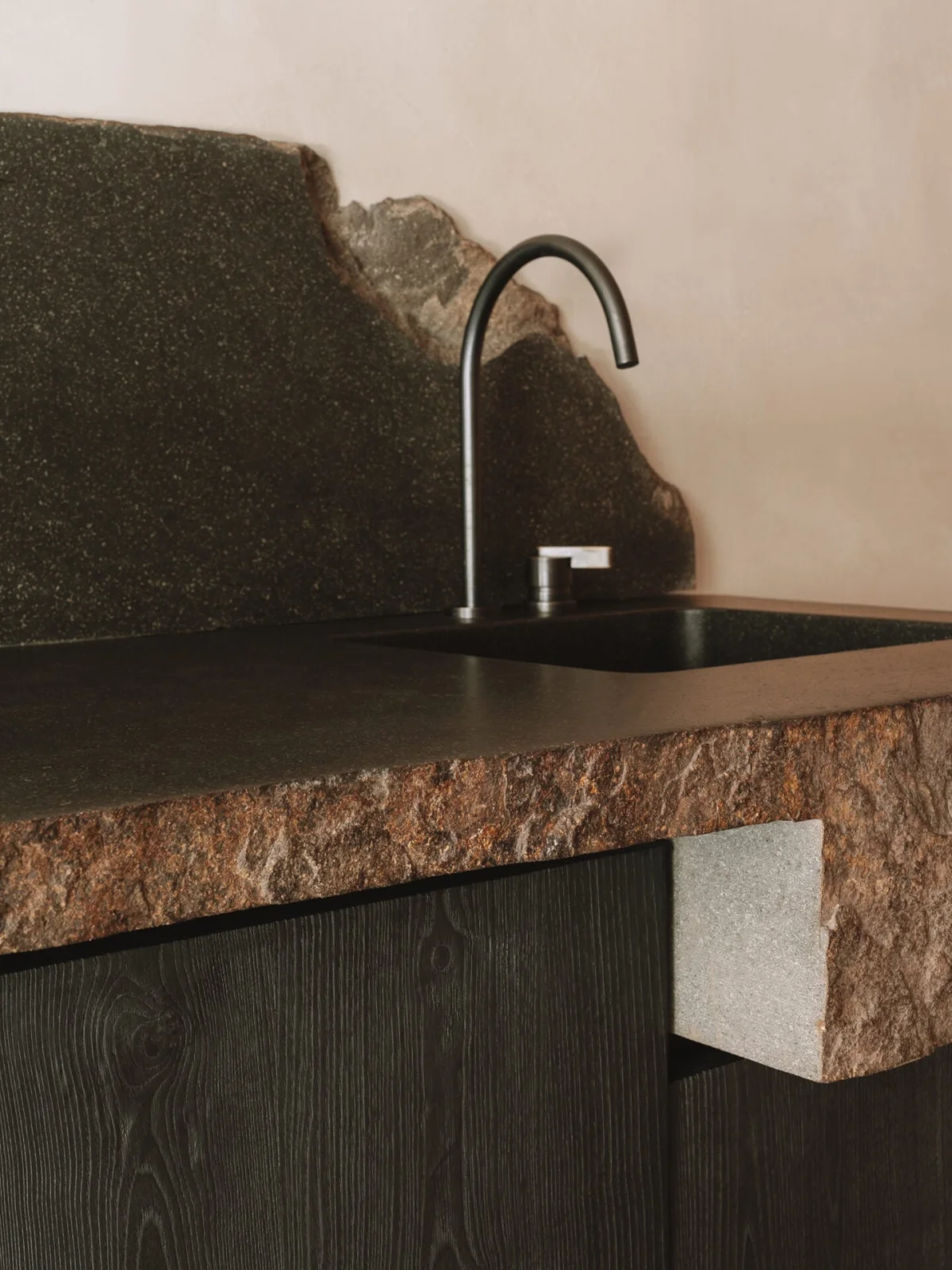
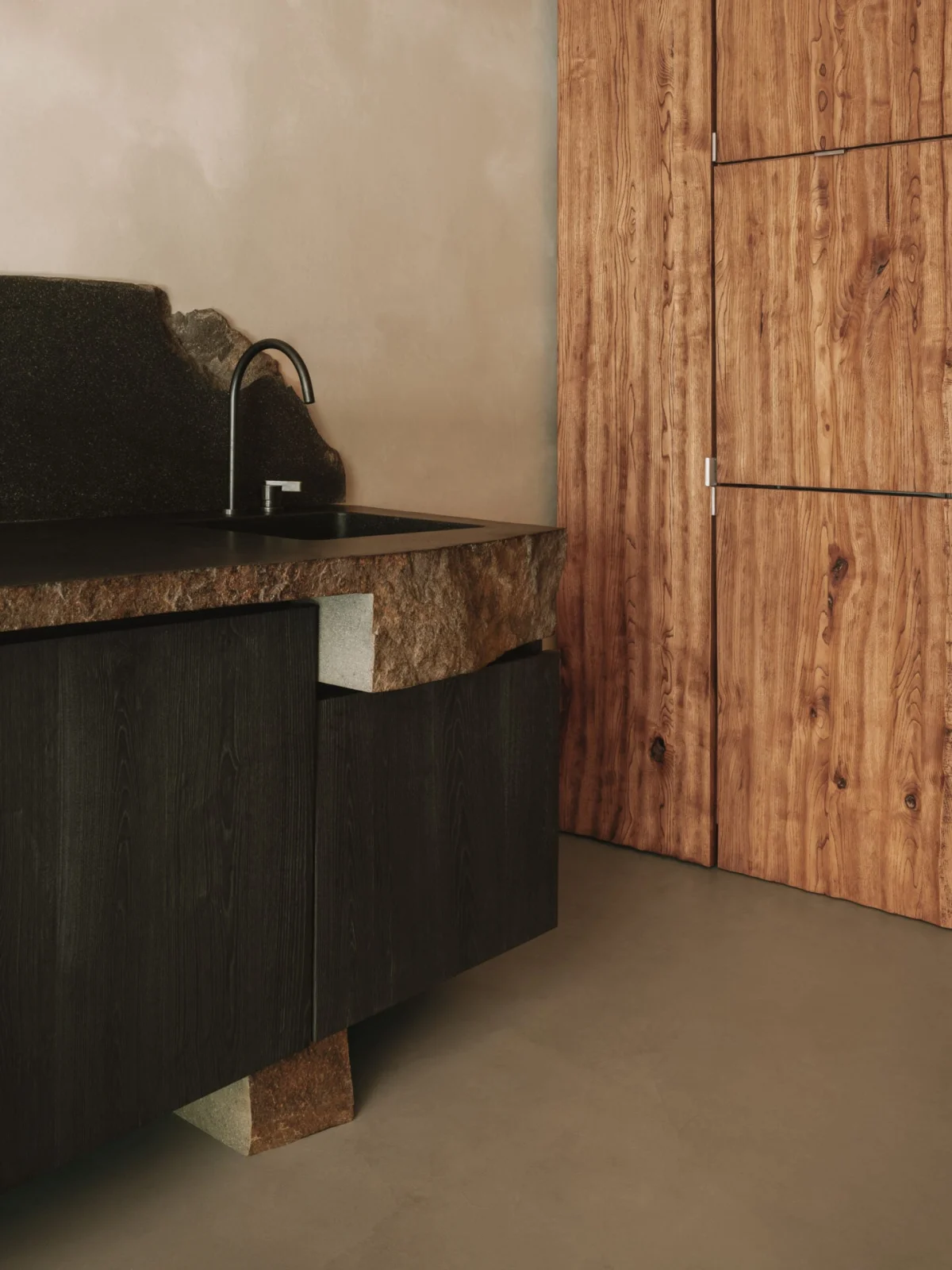
Stone became a natural part of the studio’s material vocabulary. “Stone has been used here for many many years, so we felt very drawn to work with it and its craftspeople,” Fernandes says. The material connects the objects to local making traditions, while its weight and texture give pieces a strong physical presence.
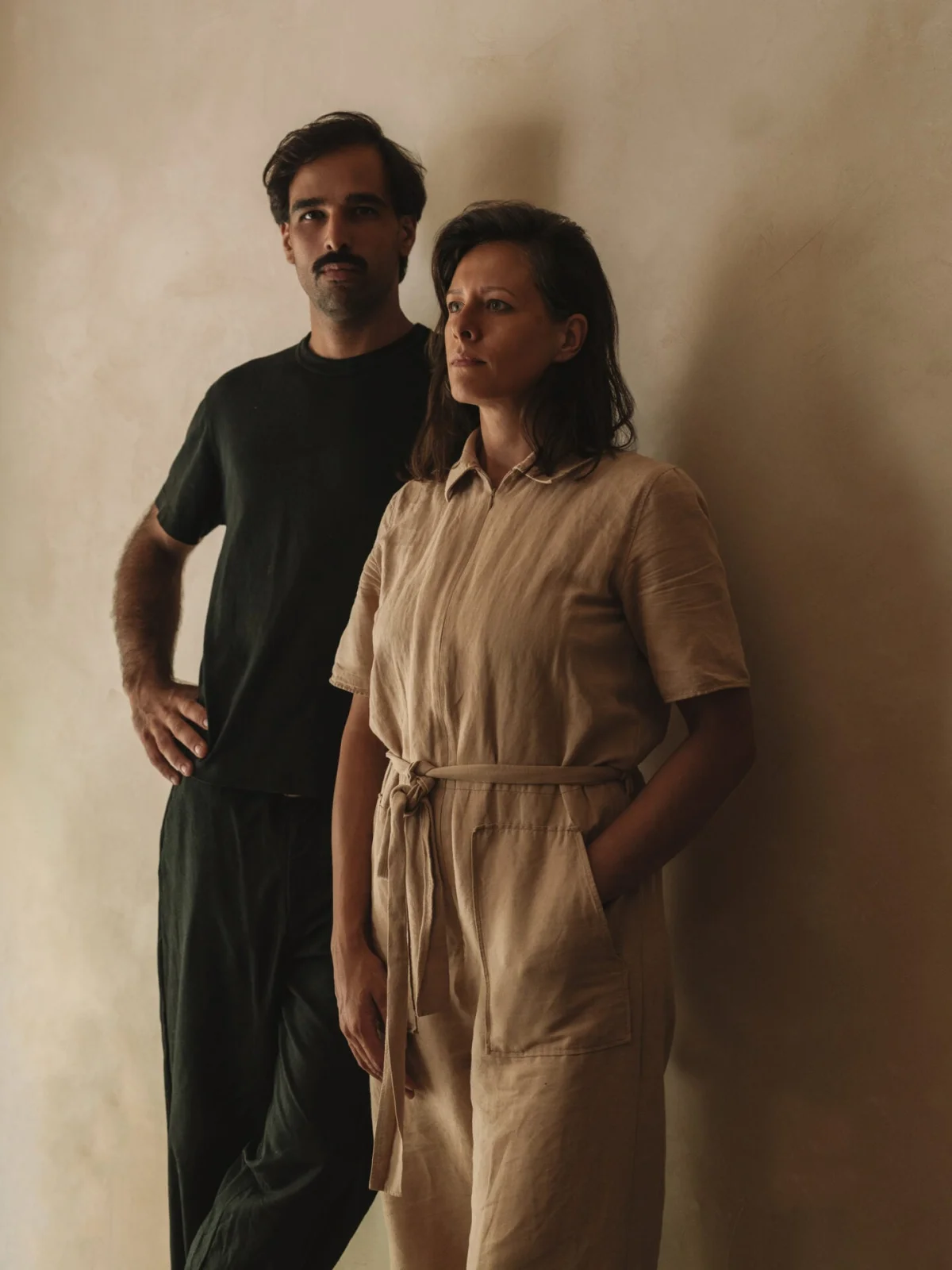
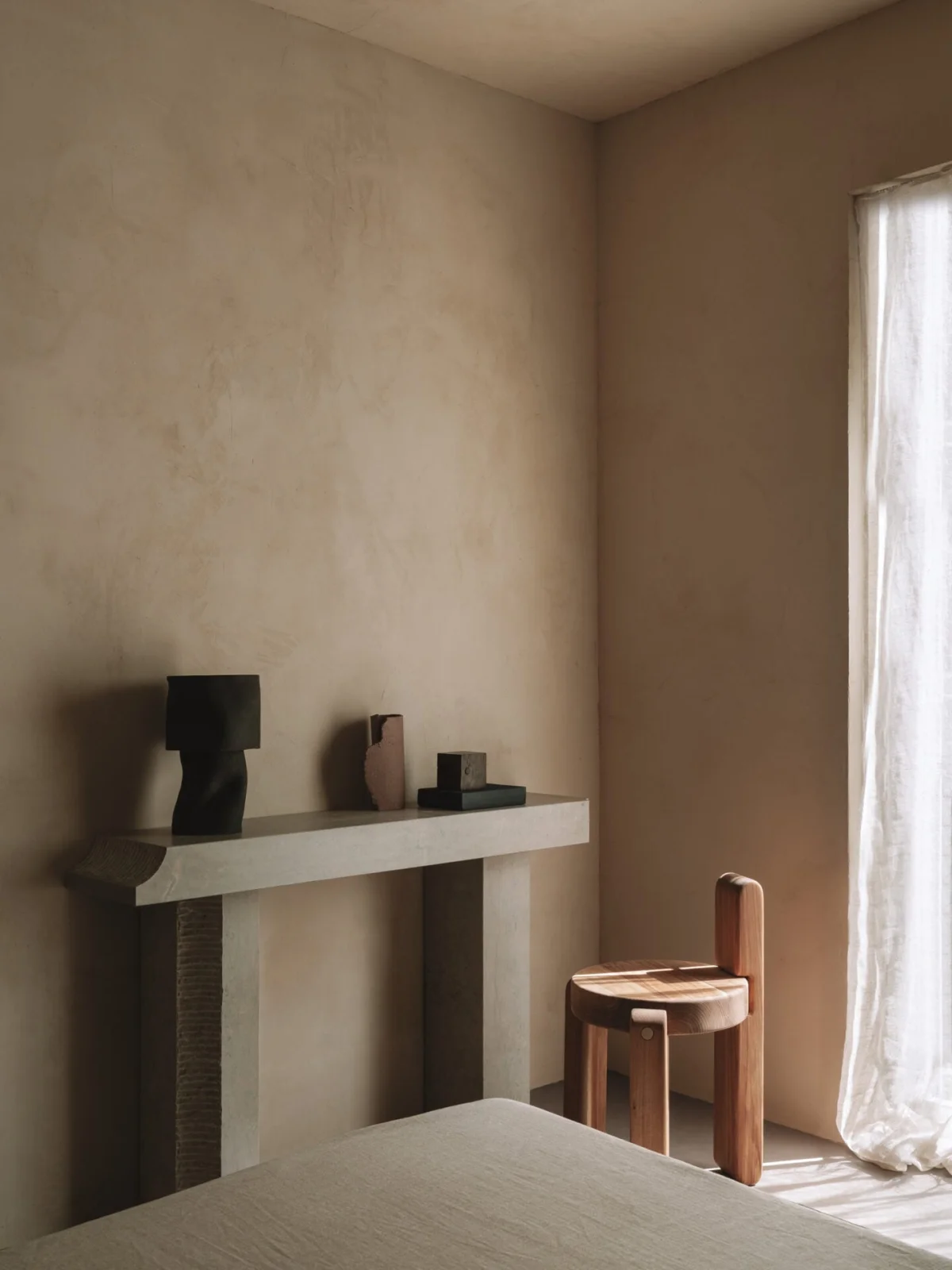
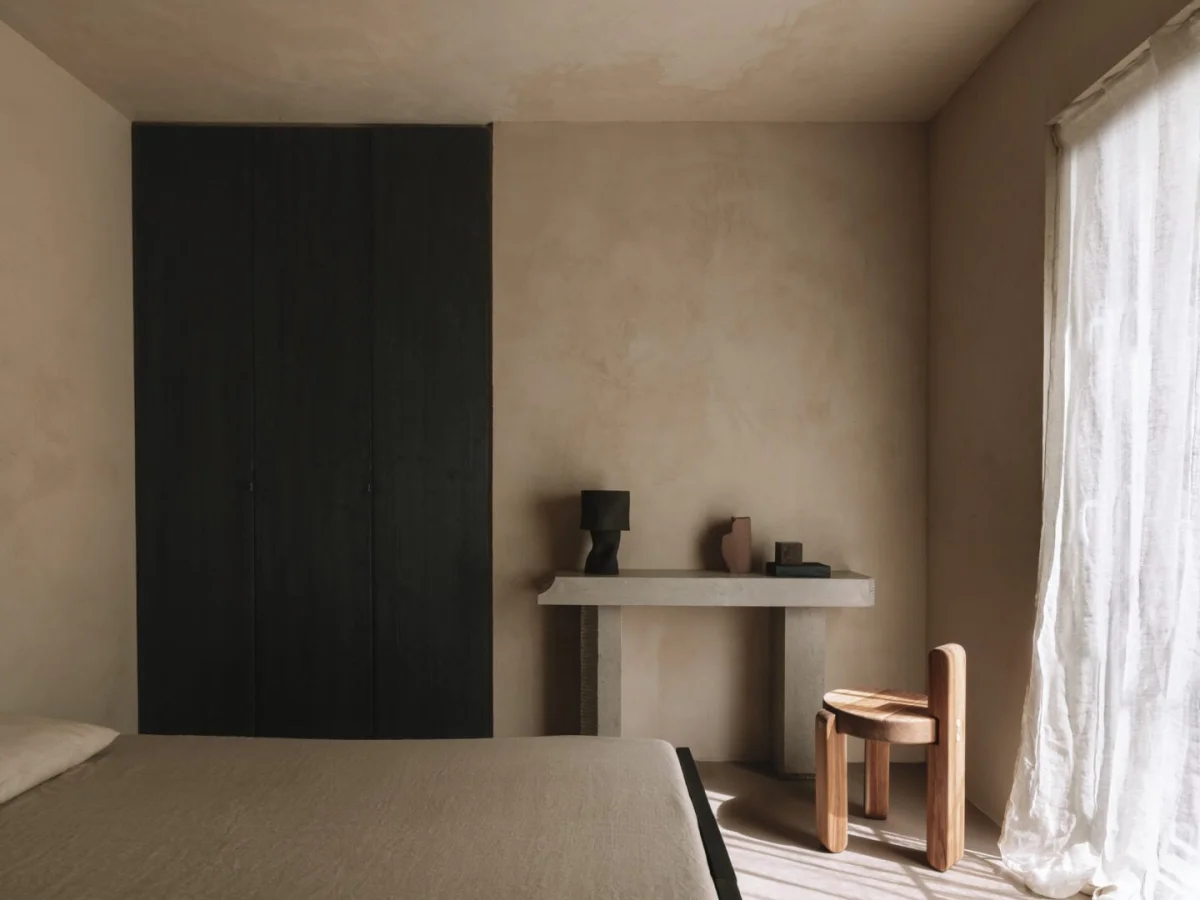
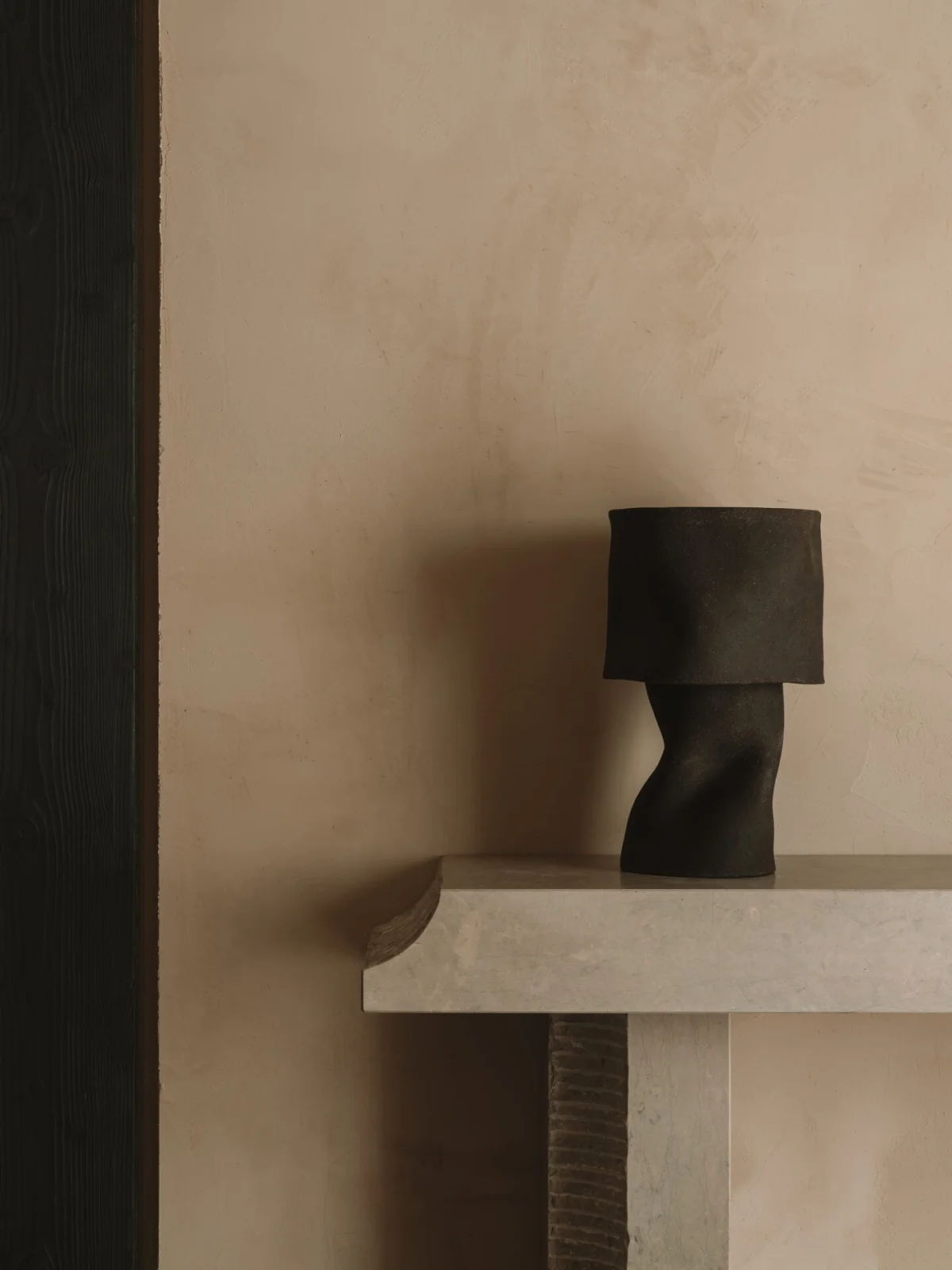
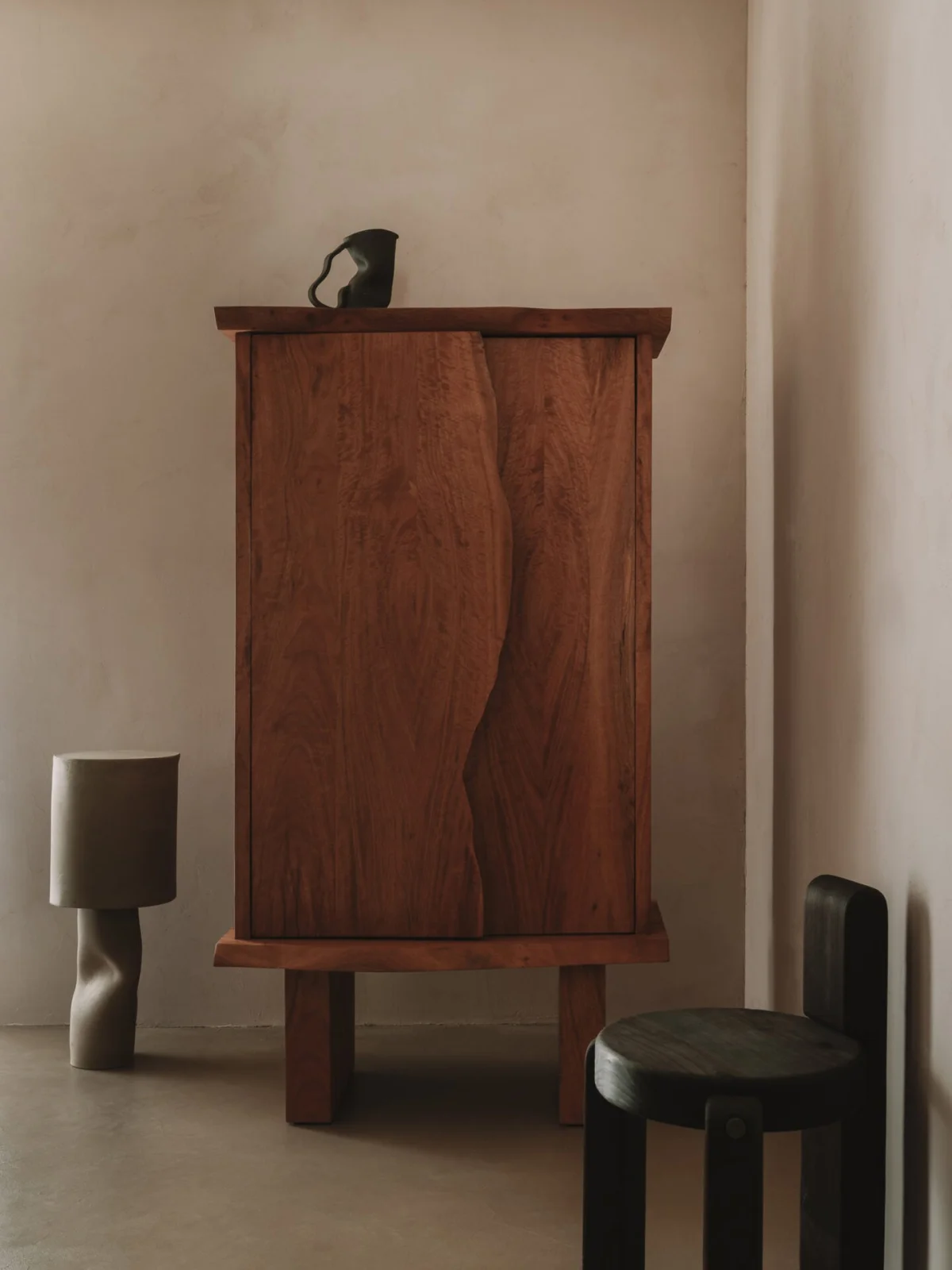
The designers describe their ties with Portuguese craftspeople and suppliers as a creative kinship. Their stone supplier, whom they call their “father of stone,” has taught them about the material, and the exchange goes both ways: the studio brings new ideas, then tests them with someone who knows the craft. Fernandes describes a small, personal network built on trust, where collaborators are available to talk through a project as it develops. That familiarity makes custom work possible and puts relationships at the centre of the production process.
A home that doubles as a showroom
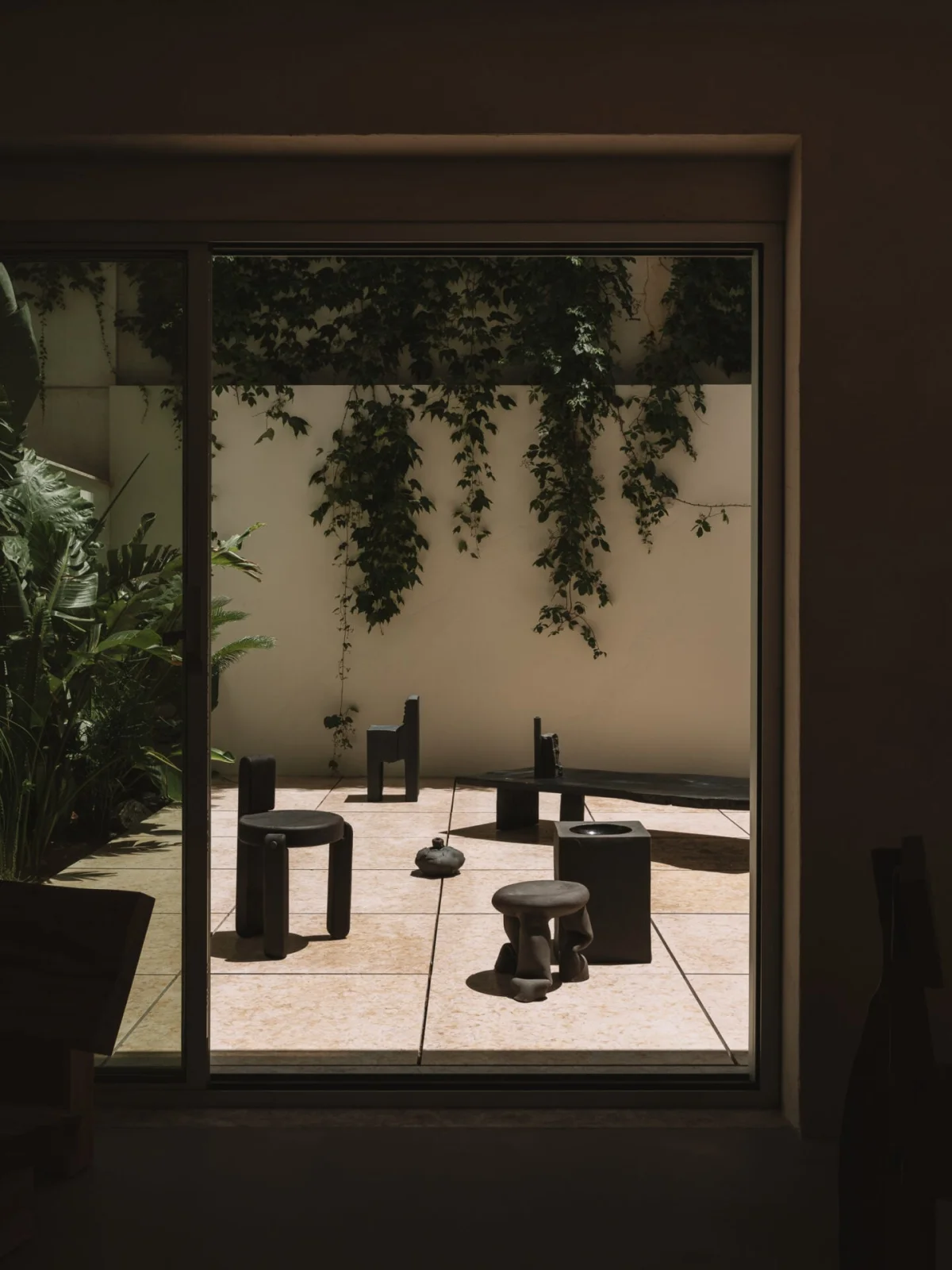
Completed in 2019, the Lisbon building became a hybrid home, studio and showroom after Fernandes and Grzeskiewicz spent five years living there and working out what the space needed. Its proportions are conventional, but the interior has been tailored to their family life and growing practice. The building runs between two contrasting edges: the busy Rua de São Bento to the west and a quiet courtyard to the east.
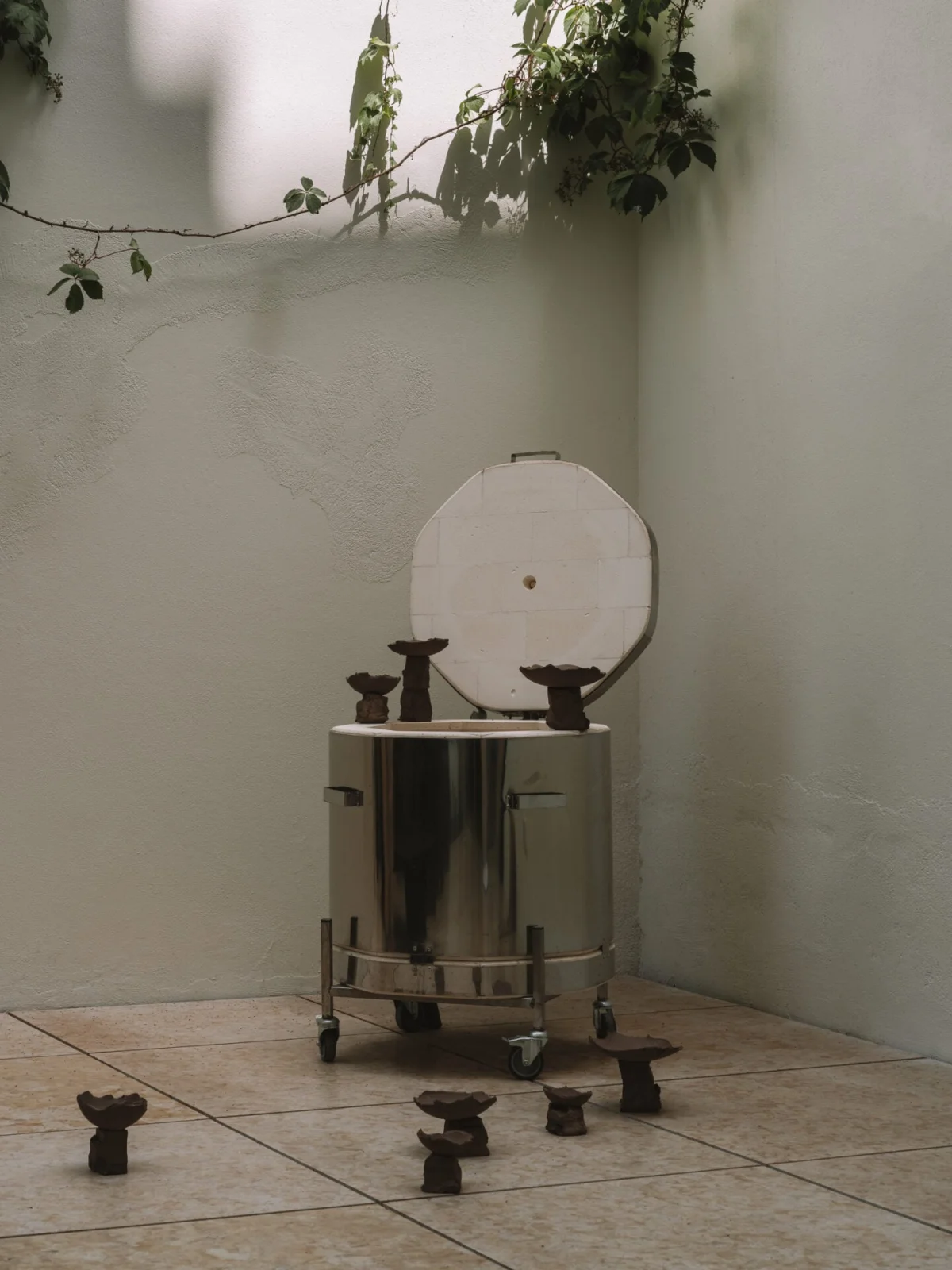
The ceramic studio sits on the first floor and opens directly onto the street. The family’s open-plan living and kitchen area occupies the level below. This layout lets visitors move through a working, lived-in environment instead of seeing objects arranged apart from their intended use. Grzeskiewicz says the aim is to show how the pieces might live with their owners. Materials, ceramic forms and textures can be encountered together, in the setting where the designers use them.
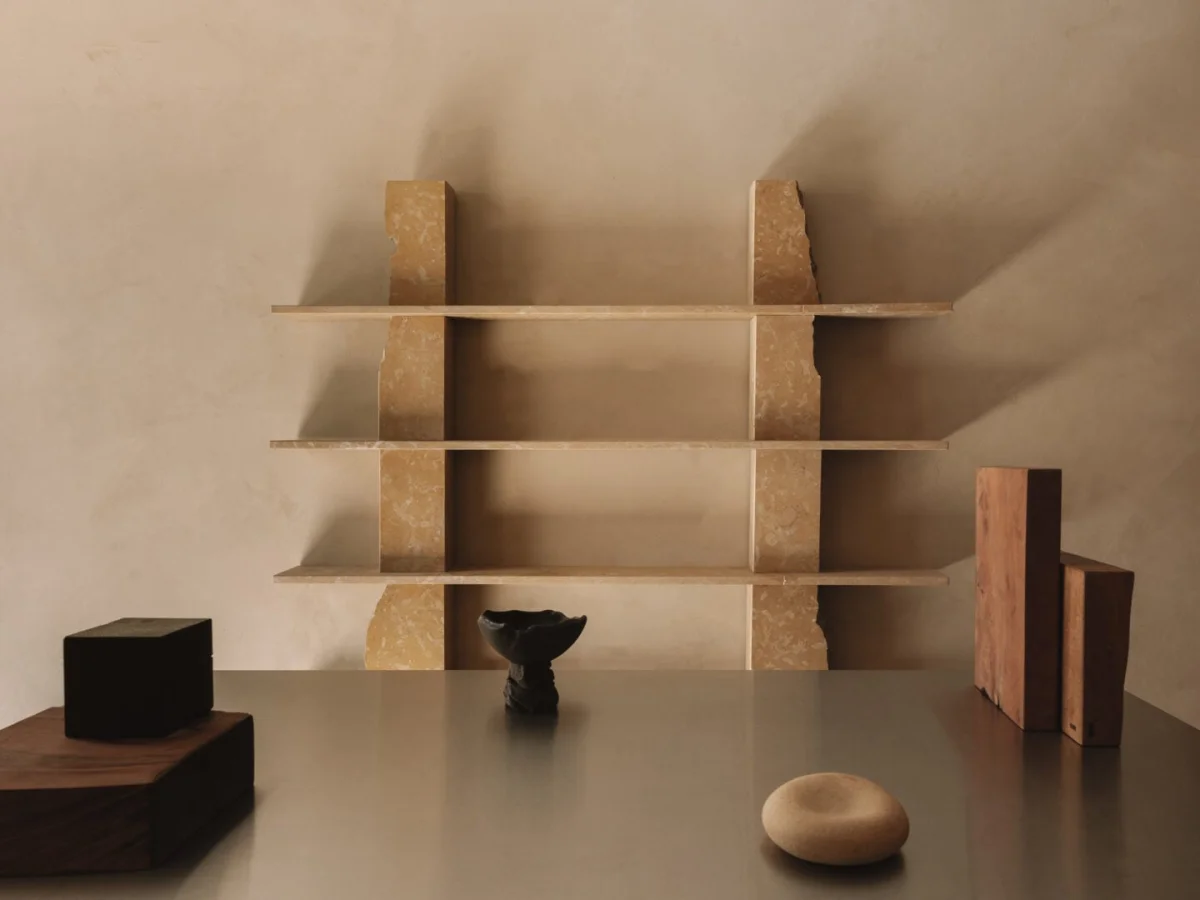
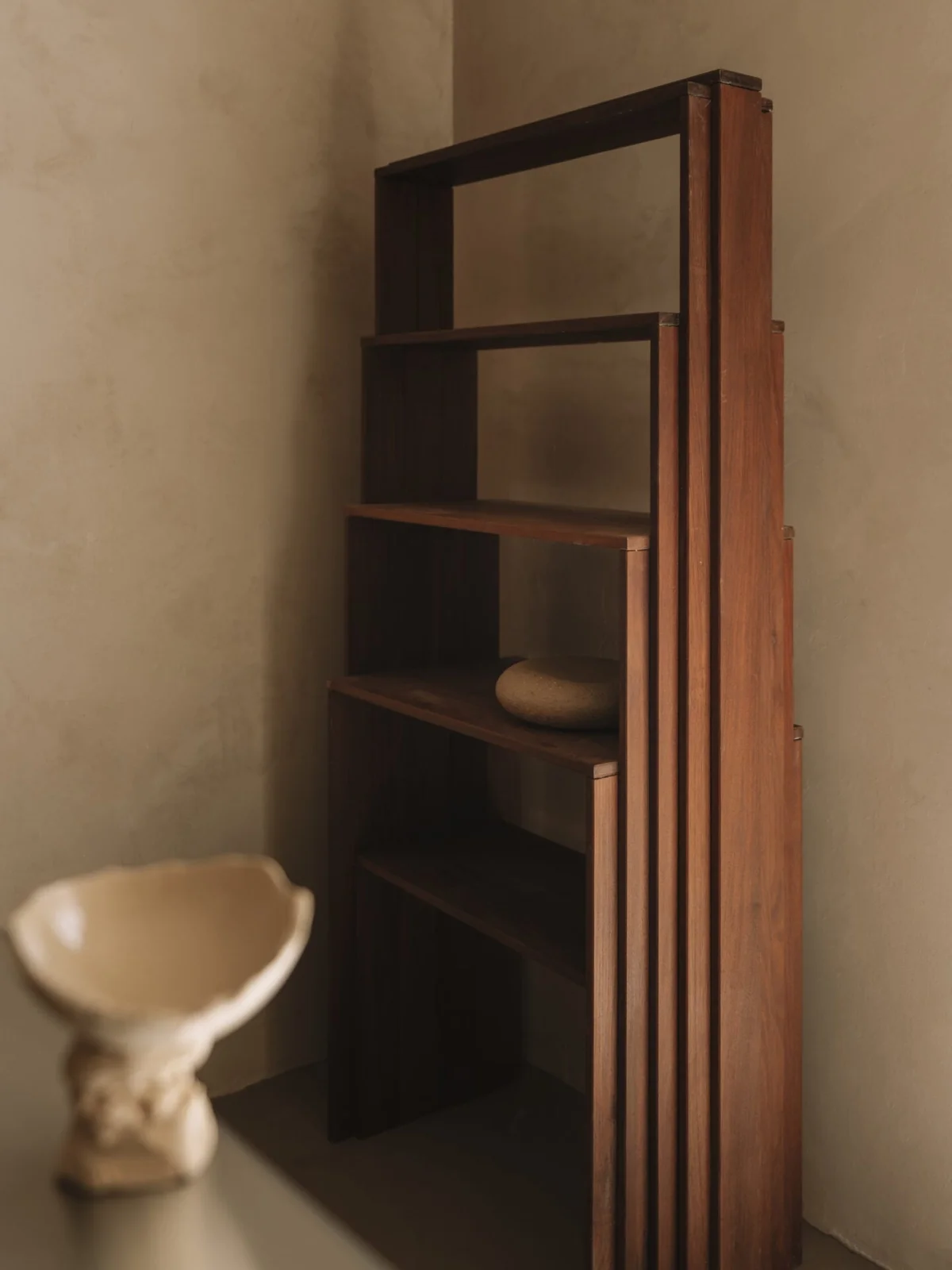
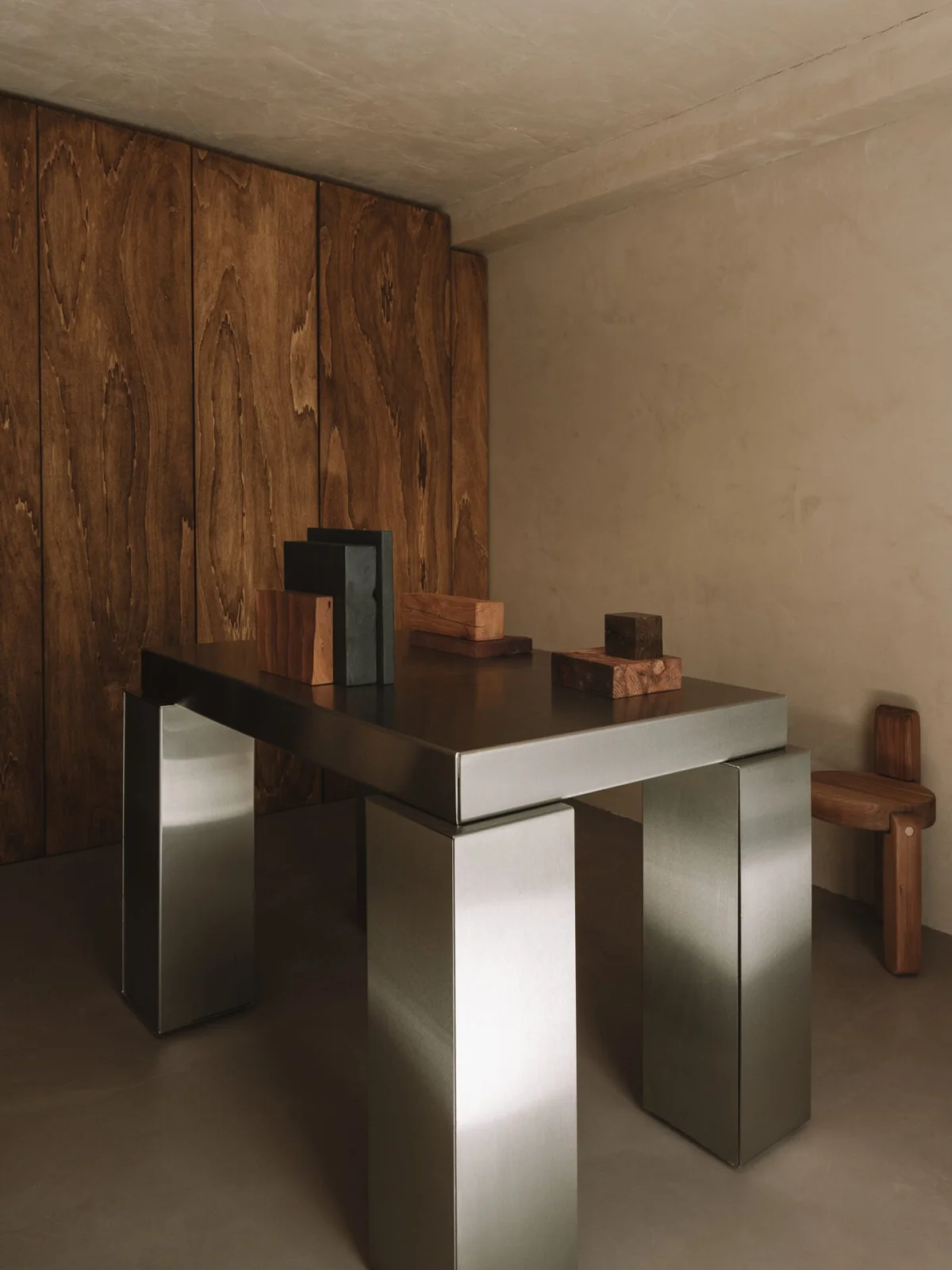
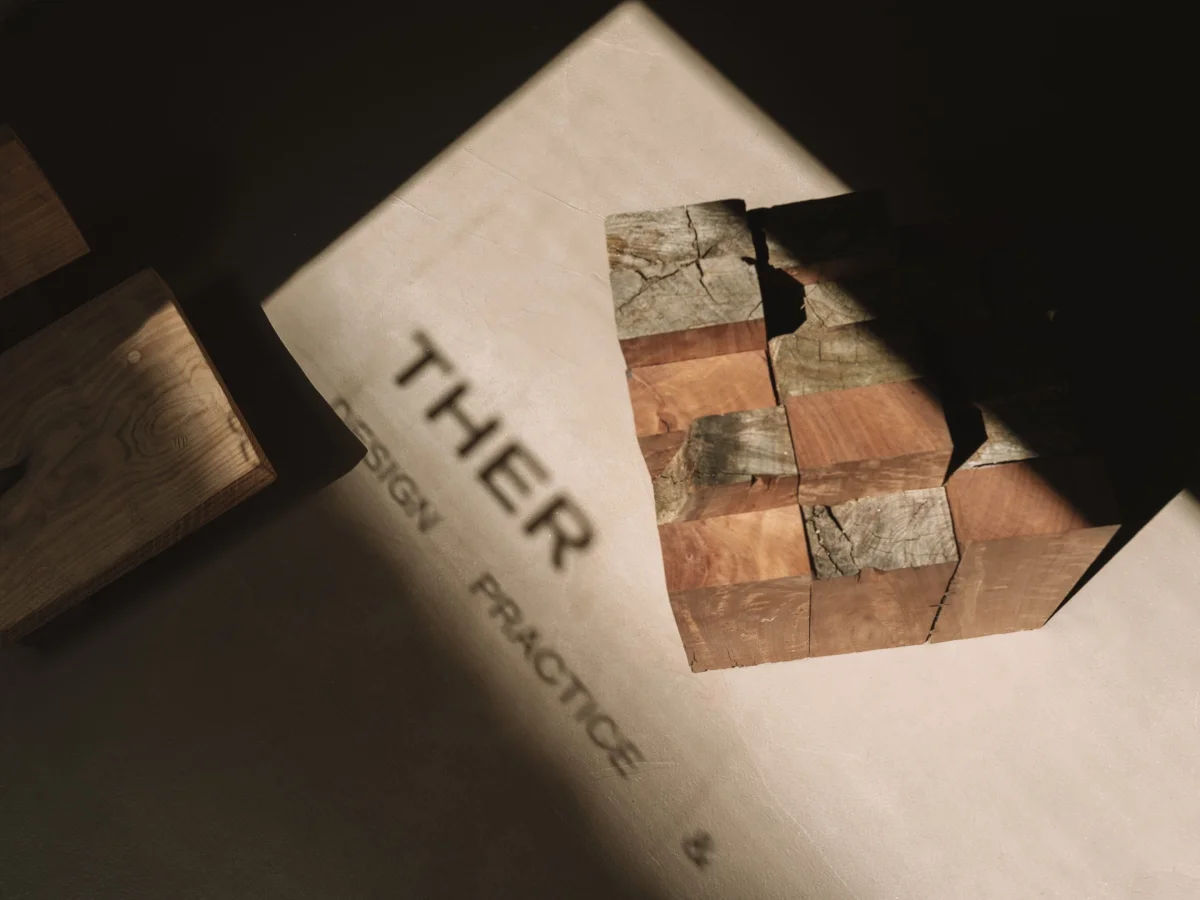
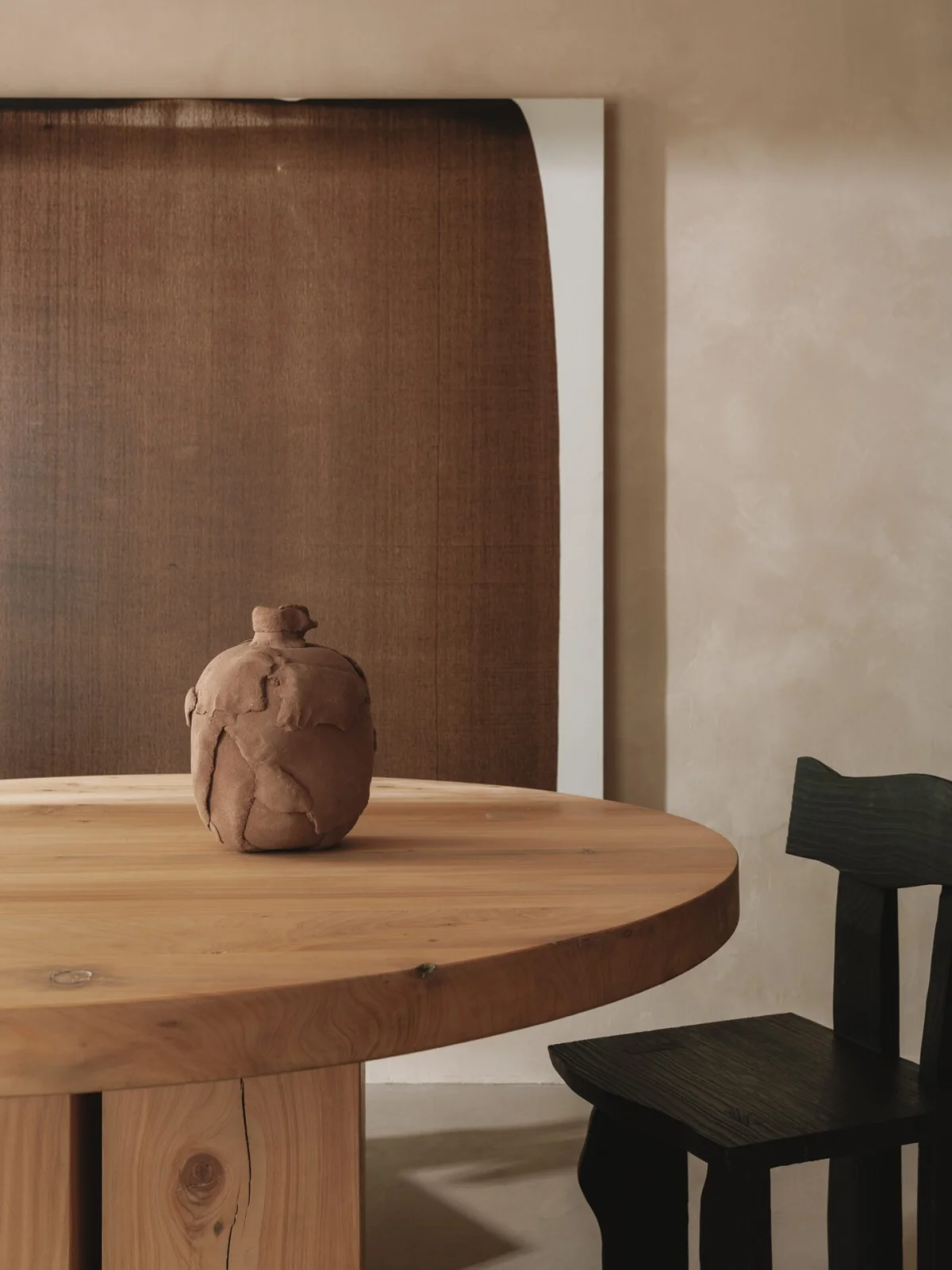
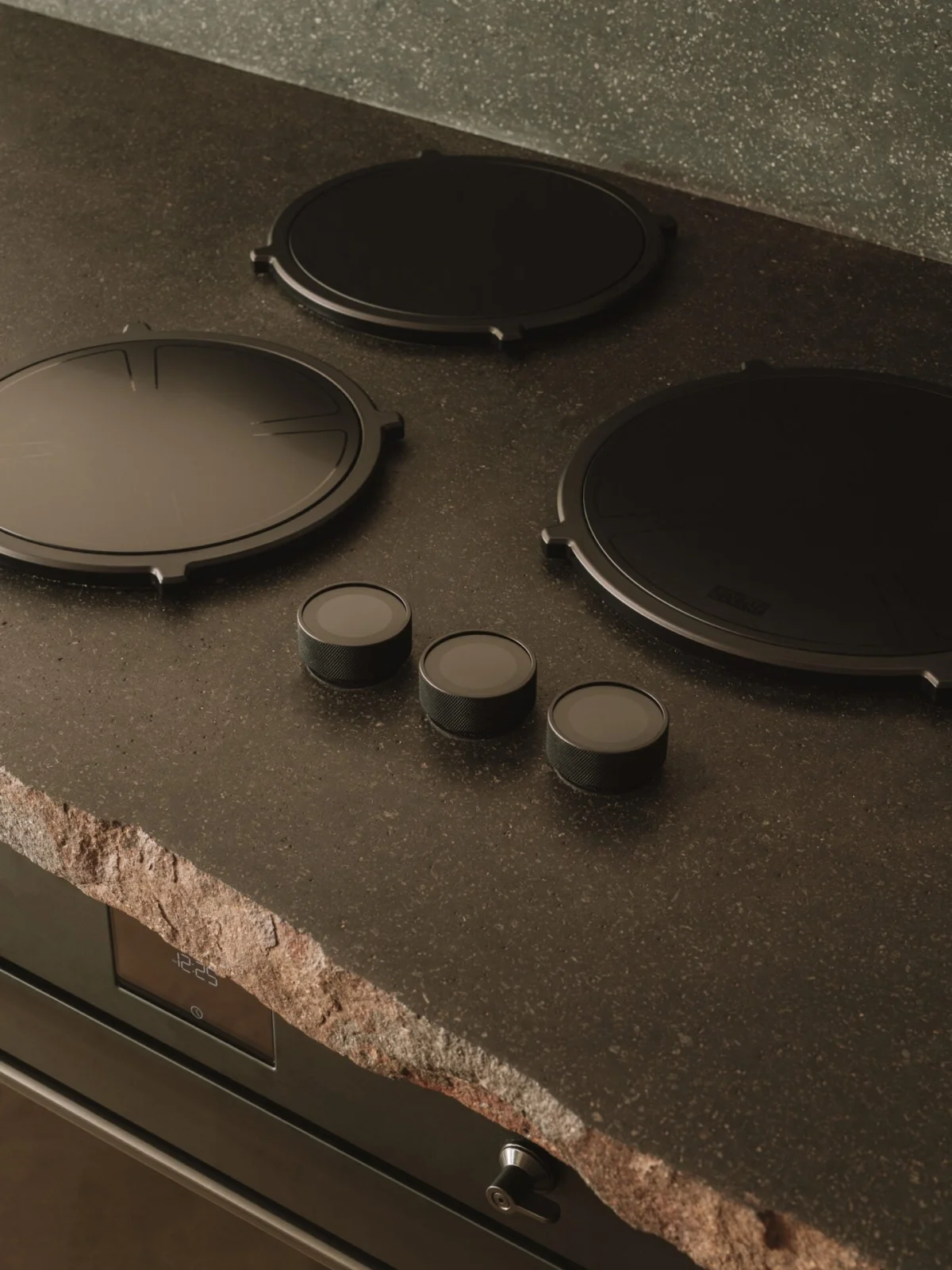
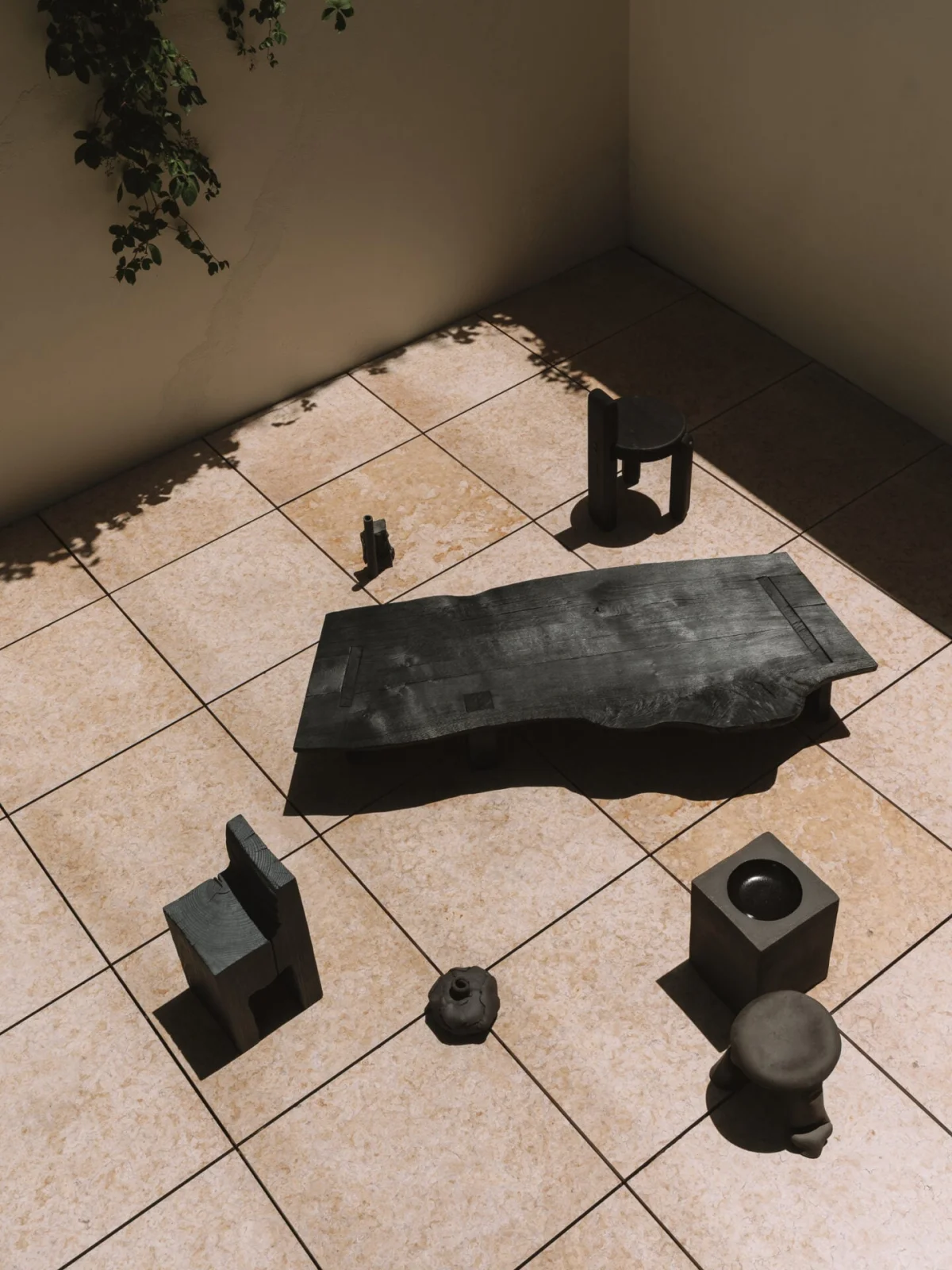
The works on view span ceramics, timber, stone and metal. The Bend Sofa pairs a sculptural stainless-steel frame with chocolate-coloured linen cushions. In the kitchen, a large basalt-stone unit makes the material’s mass hard to ignore, while the drawers keep it tied to daily use. A cup by Grzeskiewicz and an Askew Chair, made from timber darkened with the shou-sugi ban technique, bring the same attention to the dining area.
Objects that ask for attention
Further Ther’s pieces aren’t designed to disappear into their surroundings. Grzeskiewicz says their use calls for mindfulness, and Fernandes frames the work within a growing overlap between art and design. They value functional design, he says, but their own objects take a different role: they invite a deliberate encounter. Grzeskiewicz describes the studio’s philosophy as “we are what we explore,” pointing to the way interactions with objects can shape the people who use them.
That idea runs through the showroom as much as the furniture. Visitors can handle, sit with and look closely at the work, reading its material and form through use. For designers, the space offers a clear lesson in presentation: when the objects are meant to be part of life, showing them in a lived environment can communicate more than an isolated display.
Further Ther is the name of the designers’ studio and its Instagram account. Images are credited to Clemens Poloczek; the original feature was written by Rosie Flanagan.
| Rev | Description | Date |
|---|---|---|
| A | Issued for reading | |
| B | Viewed 537 times | Current |


