EzyDog Collar Concept Uses Sculpted Geometry and Cold Water Color Change
- Project
- UX & UI Design
- Drawn by
- TheFuture
- Issued
- Sheet
- A-165
Alberto Vasquez’s EzyDog concept pairs layered, BioThane-like material and shaped adjustment holes with a color shift triggered by cold water.
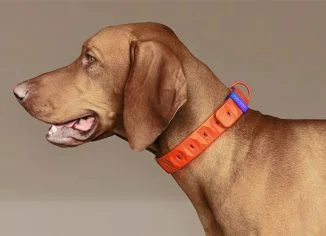
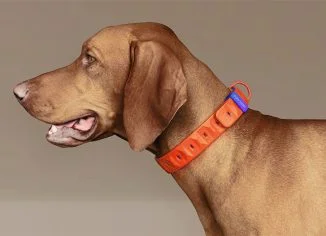
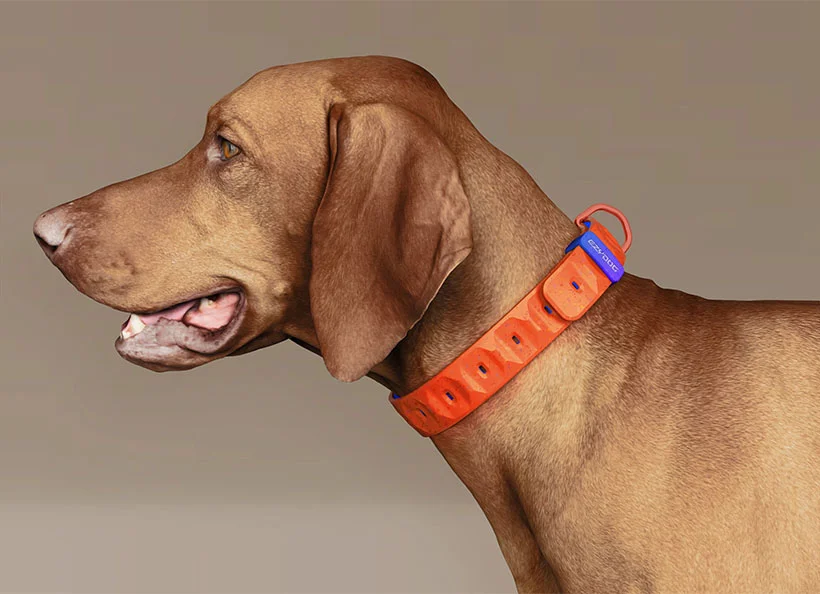
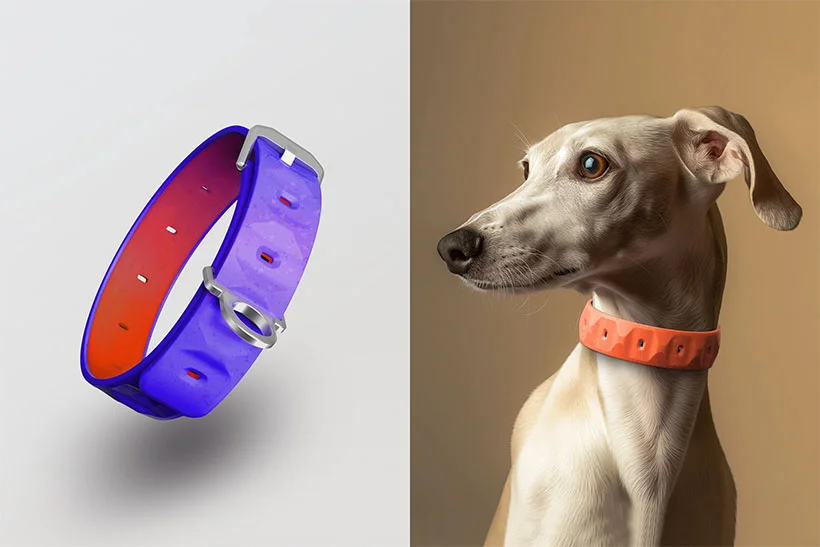
A collar can signal how a product is meant to be used before anyone fastens it. Alberto Vasquez’s experimental direction for EzyDog takes that opportunity seriously: its soft plastic material, repeated cutouts and purposeful contours suggest watersports equipment more than a familiar pet accessory. The design’s appeal lies in how those choices give a practical object a distinct identity while keeping movement and wear at the center.
Cutouts that shape the object
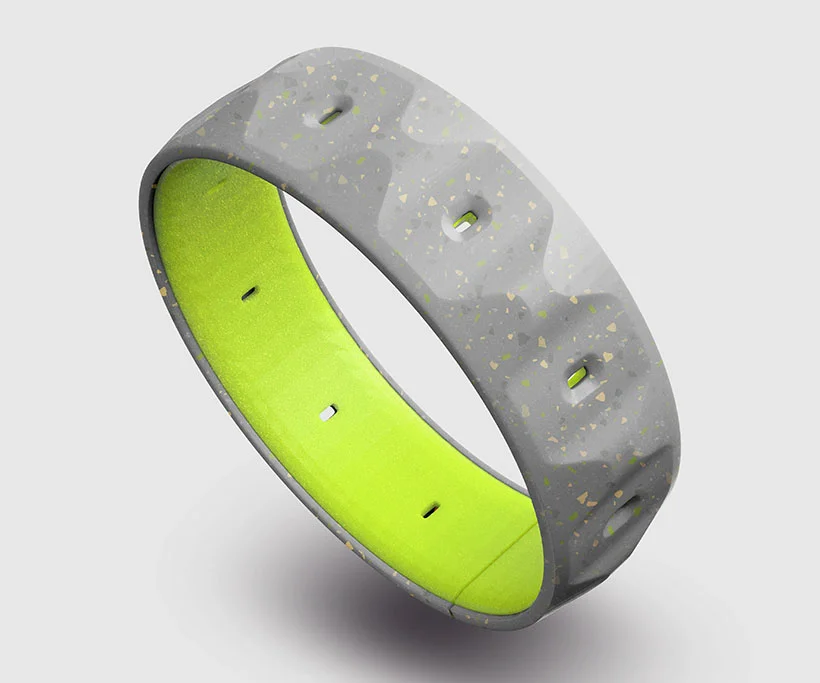
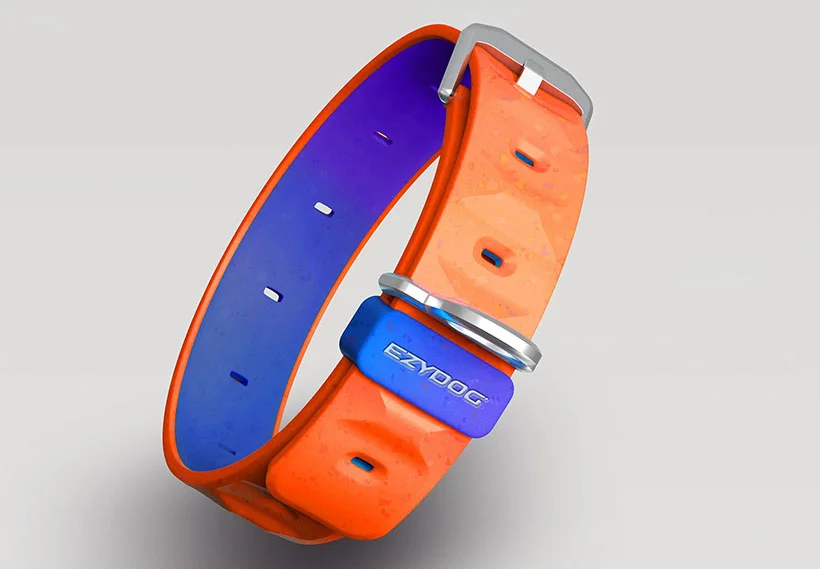
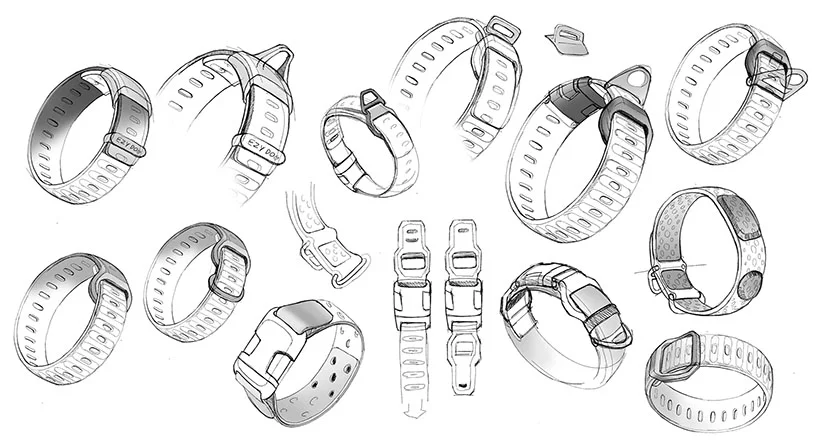
The material is described as similar to BioThane, but the concept moves beyond the plain strap form associated with that kind of material. Its surfaces appear layered and its geometry is more involved. Instead of treating adjustment holes as small, incidental openings, the design gives them a deliberate shape and repeats that shape along the collar. The pattern becomes part of the product’s visual character.
That decision does useful work at two scales. Up close, the cutouts give the strap a more considered surface, breaking up a continuous band without relying on added decoration. From farther away, their repetition creates a recognizable rhythm. The collar can read as designed through its structure, rather than through a logo or an ornamental attachment. The source doesn’t specify the cutout dimensions, adjustment range or manufacturing method, so those details remain open questions rather than established features.
For designers working with straps, bands and flexible materials, the concept offers a practical prompt: a functional opening can contribute to both use and appearance. Its shape, spacing and sequence affect how a product reads, as well as how its parts relate. Those choices still need to accommodate fit and wear, but they can be treated as part of the design language from the beginning.
Sport cues with a more refined form
Vasquez’s design balances a sport-tech impression with forms that have a slight jewellery-like quality. Cleaner lines and more intentional shapes temper the rugged associations of performance equipment. That tension helps the collar avoid looking either like generic utility gear or a decorative object detached from everyday use. It feels considered, but the source presents it as durable and practical, built for movement and wear.
That balance is a useful distinction for product teams. A reference to technical equipment doesn’t require every surface to look aggressive or heavily engineered. Here, the material and structured geometry carry the sporty character, while the cleaner lines soften it. The combination suggests how a product can draw from a specific activity without becoming a literal miniature of that activity’s equipment.
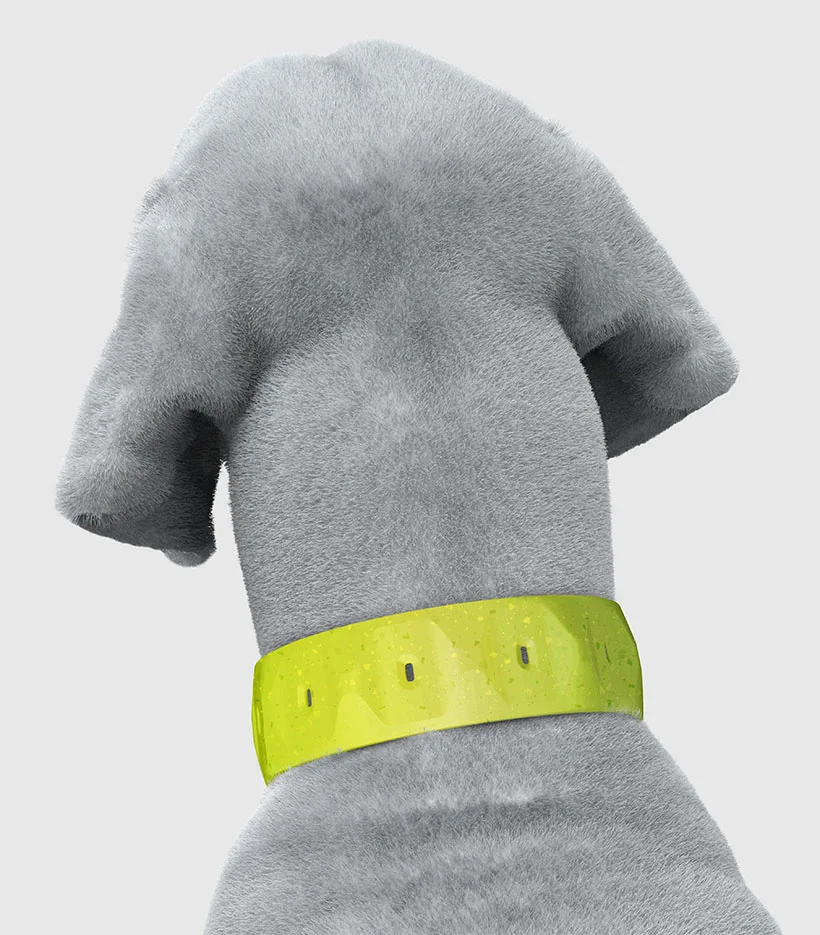
The concept is connected to EzyDog’s surfing roots through a color shift when the collar is exposed to cold water. The source describes the change as subtle. It gives the object a small moment of response in the setting associated with the brand: a dog enters the water, and the collar changes. The effect isn’t presented as necessary to the collar’s function; its role is to add a playful, context-sensitive detail.
A material detail with room to test
Color-responsive materials can make an everyday product feel more connected to its surroundings. Here, the cold water trigger gives the collar a simple interaction: exposure produces a visible change. The available description doesn’t name the material chemistry, explain how long the color shift lasts, or say how it performs across repeated use. Those would be important details to establish if the concept were developed for production, alongside questions of care, durability and visibility after the collar dries.
The same practical scrutiny applies to the shaped openings. A designer would need to see how their geometry performs under adjustment and wear, and whether the visual pattern works across different collar sizes. The source gives no test results or product specifications, so the concept is best understood through its stated design intent: durable soft plastic, a more sculpted strap, and a subtle water-triggered color change.
What makes the proposal compelling is the way those decisions support one another. The repeated openings make the material feel more designed; the clean contours keep its technical references from overwhelming the form; and the cold water response links the object to EzyDog’s surfing associations. For teams designing gear used outdoors, the takeaway is to let material behavior and functional geometry carry the identity. A small change in shape or response can make a familiar product feel specific to its users and setting.
Designed by Alberto Vasquez, this is presented as an experimental collar direction. Its strongest idea is not a single feature, but the close fit between form, material and use. The next step for any product development would be to test how those qualities hold up in daily wear, while preserving the quiet, tactile character that gives the concept its appeal.
The post EzyDog New Collar Concept Feels More Like Gear Than Pet Accessory appeared first on Tuvie Design.
| Rev | Description | Date |
|---|---|---|
| A | Issued for reading | |
| B | Viewed 598 times | Current |