Josh McKenna’s Pride Sticker Shows How Characterful Illustration Travels Across Formats
- Project
- Graphic Design
- Drawn by
- Andie O'Donnell
- Issued
- Sheet
- A-157
London illustrator Josh McKenna’s Vogue dancer moved from an app sticker to Pride walls and a planned four-metre parade float.
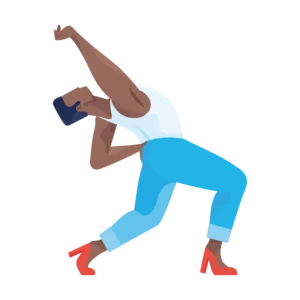
A compact illustration can take on a much larger life when its shape and character read instantly. For London-based illustrator Josh McKenna, a Vogue dancer created for Instagram Stories became a familiar app sticker, a mural motif and the centrepiece of a planned parade float. The character’s journey shows how a clear visual idea can adapt across screens and physical spaces while retaining its personality.
McKenna, represented by Debut Art, builds his imagery from rounded forms, expressive figures and a vivid, often limited palette. His clients have included Instagram, Google, Converse and the Wall Street Journal. His work spans editorial and advertising illustration, as well as emoji design for apps. He has also addressed transgender identity, same-sex marriage and gender fluidity through his illustrations.
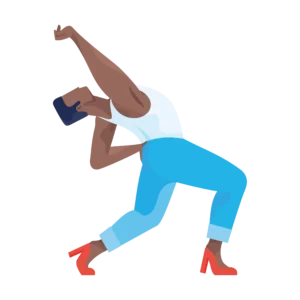
One dancer, several settings
In 2017, Google commissioned McKenna to make a sticker set for Pride Month in June. As summer approached, Instagram asked him to create a single Pride-themed sticker for Stories. McKenna explored several versions in his asymmetrical style before choosing the Vogue dancer. Its pose and silhouette gave the image a strong identity at the small scale of a phone screen.
The sticker’s use soon extended beyond the app. McKenna was invited to paint a mural at Facebook’s London headquarters and to design walls for London’s Pride Parade. The walls featured the dancer and invited people to pose for photographs and share them with the hashtag #kindcomments. The project linked a digital character to a public-facing experience: the illustration became both a visual backdrop and a prompt for participation. More about the project is available through It’s Nice That.
Instagram later made the sticker a permanent fixture in the app after its strong response. McKenna described watching it grow from an initial commission into a route to further creative work. He was also pleased to see celebrities, public figures and drag queens using the character. In his account, the sticker’s reach opened doors to projects with a wider scope than a single Stories graphic.

Building a visual language from people and place
McKenna draws on people he encounters in daily life, including individuals seen on the street and characters he has met. He also looks to the work of fellow artists for inspiration. For colour, he gravitates towards a small selection of strong hues, drawing references from vintage posters and packaging, as well as the sunny settings of Los Angeles and Miami.
That combination of observed character and deliberate colour economy helps explain why the Vogue dancer could move between formats. A memorable pose can carry the idea when the image is reduced to a sticker, while a bold figure can also hold attention at mural scale. The source doesn’t specify the materials or production process for the mural, so the useful point for designers is the consistency of the central character across those different contexts.
McKenna sees illustration as a way to represent a range of people and address issues faced by LGBTQ+ communities. He has encountered resistance from larger clients when proposing work about diversity, with some ideas judged too sexual. That tension, he said, makes it difficult to maintain his artistic integrity while meeting a client’s expectations. The challenge is a practical one for illustrators working with sensitive subjects: the intended meaning of an image can be narrowed by how a client interprets its content.
From app artwork to a four-metre float
At the time of the interview, McKenna was developing a project for Instagram/Facebook and Sydney’s Gay & Lesbian Mardi Gras, scheduled for March. The plan was to turn the Vogue sticker into a four-metre-high float for the main parade, with McKenna travelling to Sydney to take part in the float itself. The interview doesn’t give a year for that March event, so the timing is best understood as it was described then.
The project extends the same figure from an intimate screen interaction to a large, moving structure. For designers, that progression offers a concrete lesson in character design: build a silhouette and pose that remain recognisable as the context changes, then let each format shape how people encounter it. McKenna’s dancer began as a Pride sticker; its continued use and planned physical appearances show how one compact image can support a broader visual presence.
Explore more of McKenna’s work in his portfolio and on his website.



| Rev | Description | Date |
|---|---|---|
| A | Issued for reading | |
| B | Viewed 663 times | Current |