Laura Alvarez Turns Bronx Community Fridges into Welcoming Public Art
- Project
- Web Design
- Drawn by
- Marika Lind
- Issued
- Sheet
- A-116
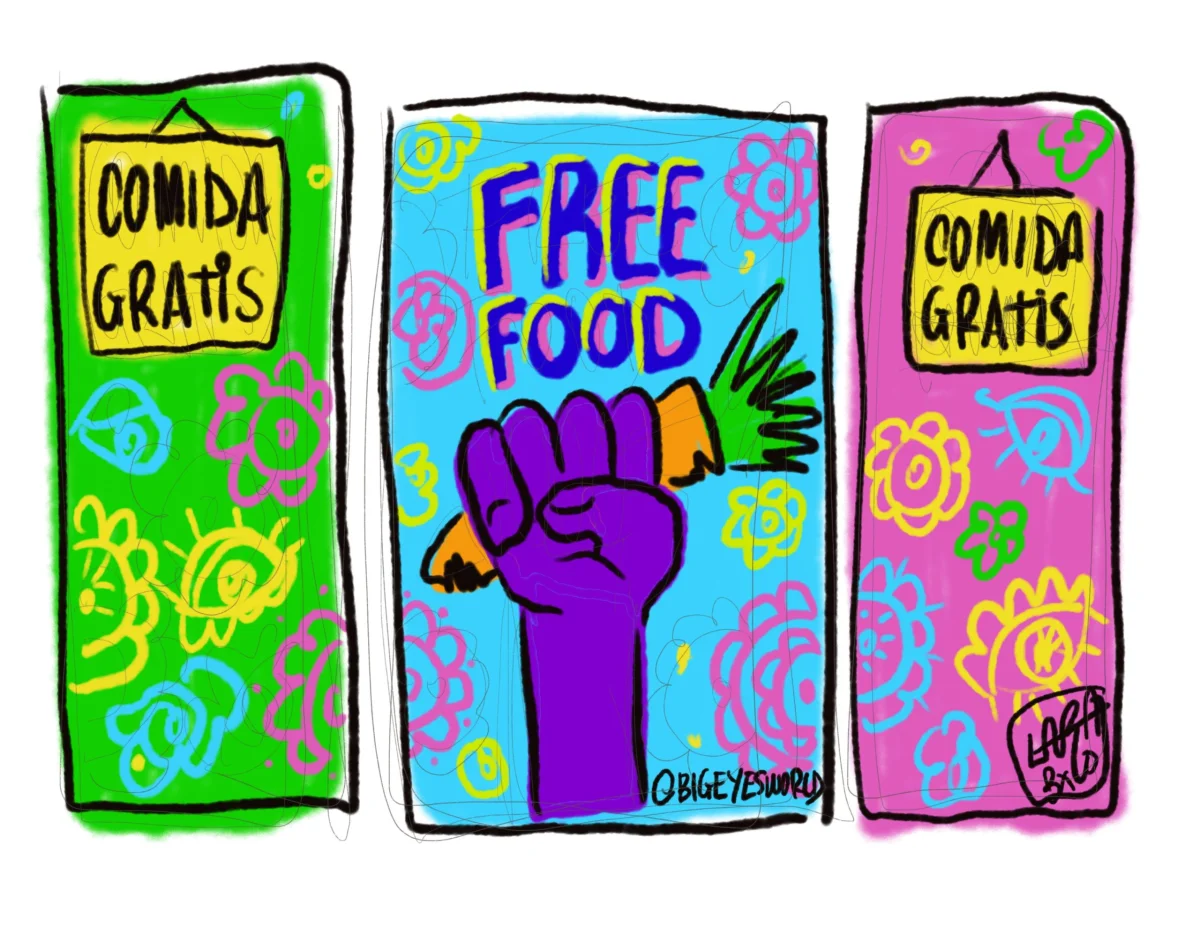
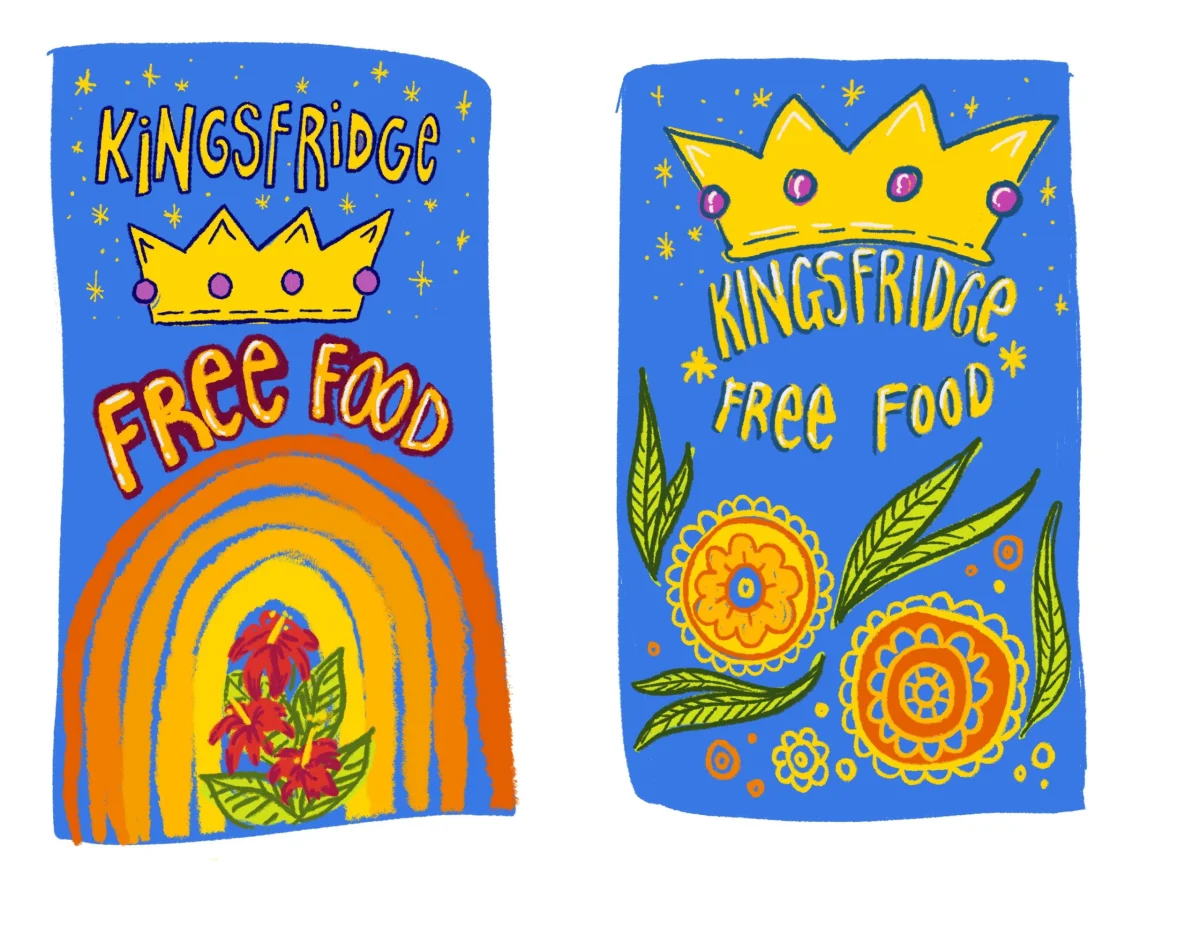
Laura Alvarez painted more than 12 Bronx community fridges, shaping each design with the volunteers who care for it.

Laura Alvarez’s painted community fridges do practical work before anyone opens the door: they help make free food visible and invite neighbors to contribute. In the Bronx, she created designs for more than 12 fridges, working with the volunteers who clean and fill them. The project shows how illustration in a shared space can support a service while reflecting the people who sustain it.
A design shaped by its stewards
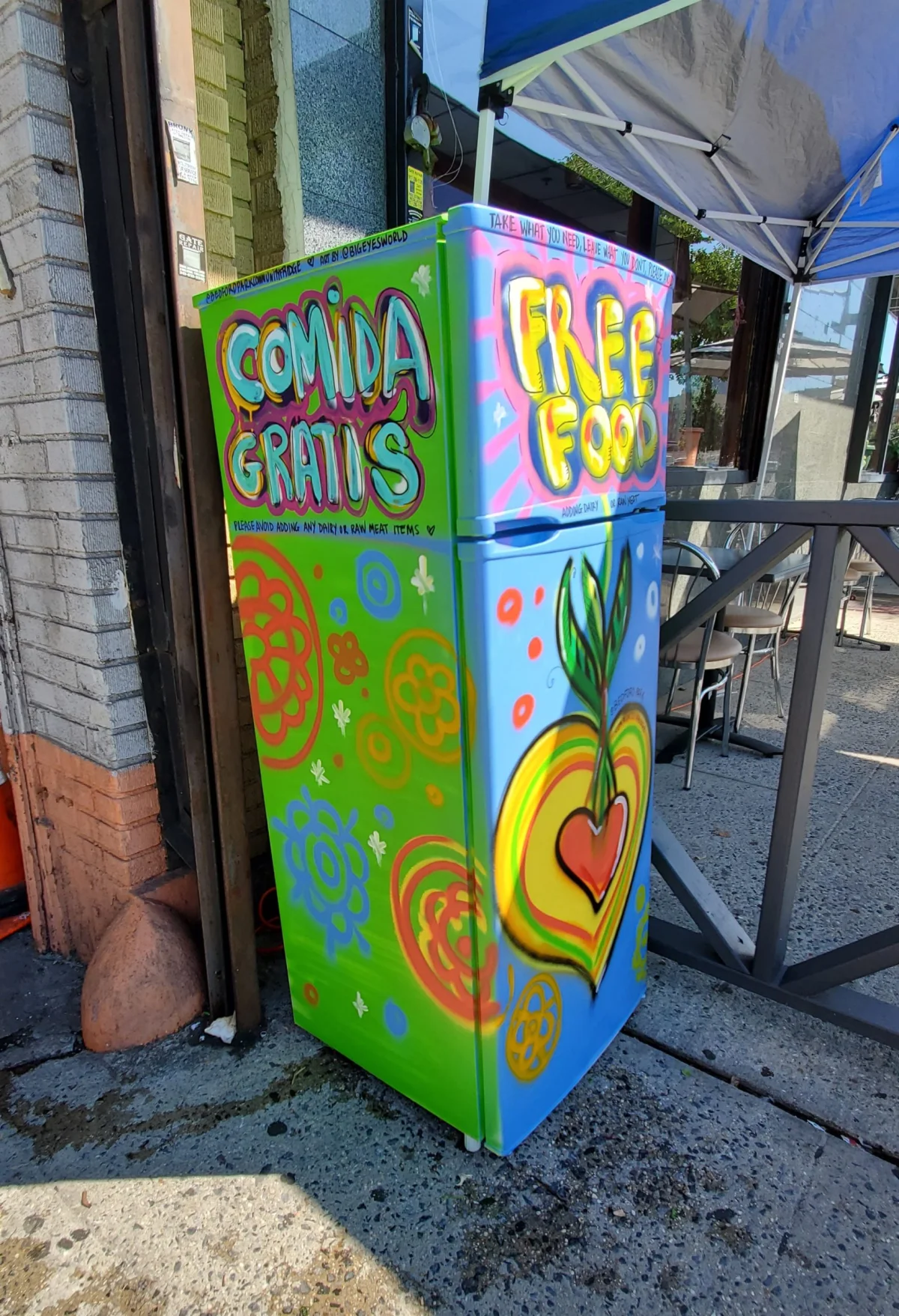
The work began in June 2020, when a volunteer coordinator from BxArts Factory asked Alvarez to help make a North Bronx community fridge more inviting. People weren’t realizing that the fridge held free food or that they could leave extra food for others. Alvarez offered to paint it, and that first fridge led to a series of projects.
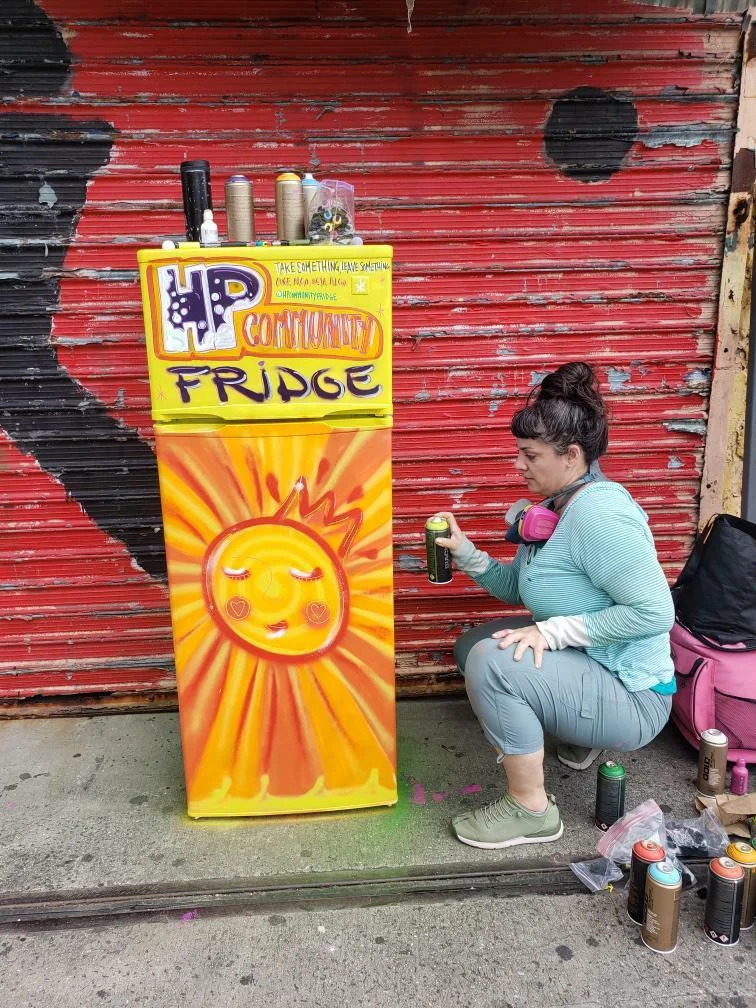
For each new fridge, she spoke with the volunteers who would look after it. They discussed why they were running the site, what the work involved and what name would suit that particular fridge. Alvarez then matched the name with an image. Her reasoning was clear: volunteers maintain the fridge day after day, so the design should reflect them.


Painting around a daily routine
The fridges are part of a neighborhood effort that grew in response to food insecurity during the pandemic. Neighbors and businesses bring surplus food before it spoils, and volunteers clean the fridges daily and keep them stocked. The setup also includes storage sheds that protect the appliances, plus shelves for cans and other dry goods. Alvarez painted those elements too, extending the visual treatment beyond the refrigerator itself.
That broader scope matters to the way the work reads. A painted fridge sits within a working system: food arrives, gets sorted and stored, and must remain accessible to the people who need it. The artwork gives the site a recognizable presence, while the name and image connect it to the volunteers responsible for its everyday care. Alvarez’s account doesn’t specify particular palettes, materials or lettering styles, but it makes the design process concrete: begin with the people and the purpose, then develop an image for that location.
Some fridges had to be painted again after they broke and were replaced. That repetition is part of the project’s real conditions. A mural or illustration in a shared setting has to meet the life of the object it decorates; when the object changes, the visual work may need to start again.
Art outside the studio
Alvarez was born in Valencia, Spain, and earned an MA in Fine Arts in Spain and England. In New York City, she balances a city job, her art practice and her commitment to the Bronx community. She has worked as a teaching artist with many organizations and city agencies, and describes the impact of those projects through the people she has reached.
Her practice takes artwork into streets, onto walls and across stairs in different countries and New York neighborhoods. That interest in how art meets people gives the fridge project a natural place in her broader work: the audience encounters the image as part of a daily errand or a neighborhood routine, rather than by entering a gallery.
Alvarez has received awards and grants that she has used to support arts work among Bronx youth and to make projects that open conversations about ecology, womanhood, racism, tradition, inequality and immigration. She has exhibited in Europe and New York, in group and solo shows, and often arranges free workshops alongside exhibitions. Her stated belief that “everyone is an artist” connects that teaching work with the collaborative approach she brought to the fridges.

What the project leaves behind
Across a year and a half, Alvarez painted fridges, replacement units, protective sheds and shelving. She says the experience changed how she thinks about food sharing: people bring food before it spoils instead of throwing it away. The artwork’s role is modest and specific—make a shared resource more inviting, and give each location an image connected to the people who keep it going.
For designers working in community settings, Alvarez’s process offers a useful starting point: talk with the people who will care for the work, understand how the place functions, and build the visual idea around that relationship. Explore Laura Alvarez’s portfolio and visit her website.
| Rev | Description | Date |
|---|---|---|
| A | Issued for reading | |
| B | Viewed 382 times | Current |