Matt Griffin Uses Orbital Simulations to Shape The Three-Body Problem Trilogy Box Set
- Project
- Graphic Design
- Drawn by
- Marika Lind
- Issued
- Sheet
- A-75
Matt Griffin’s Folio Society edition pairs atmospheric illustration with simulations of the chaotic motion at the trilogy’s heart.
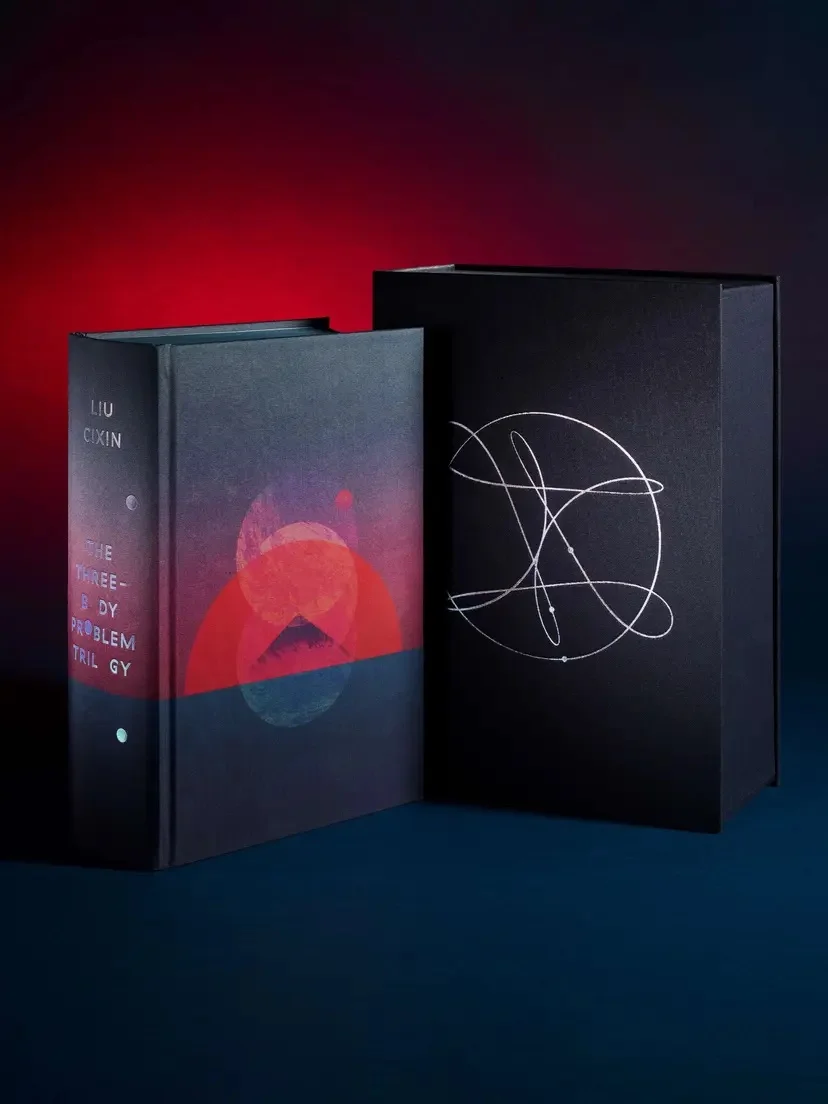
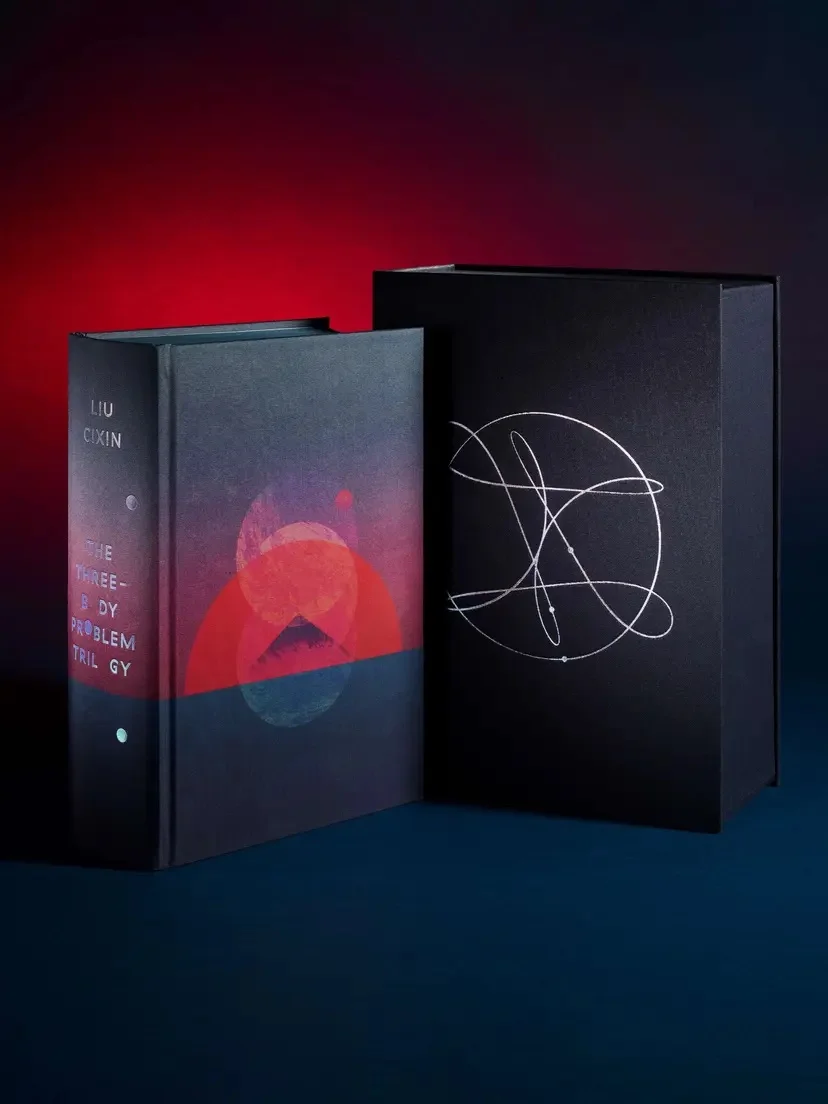
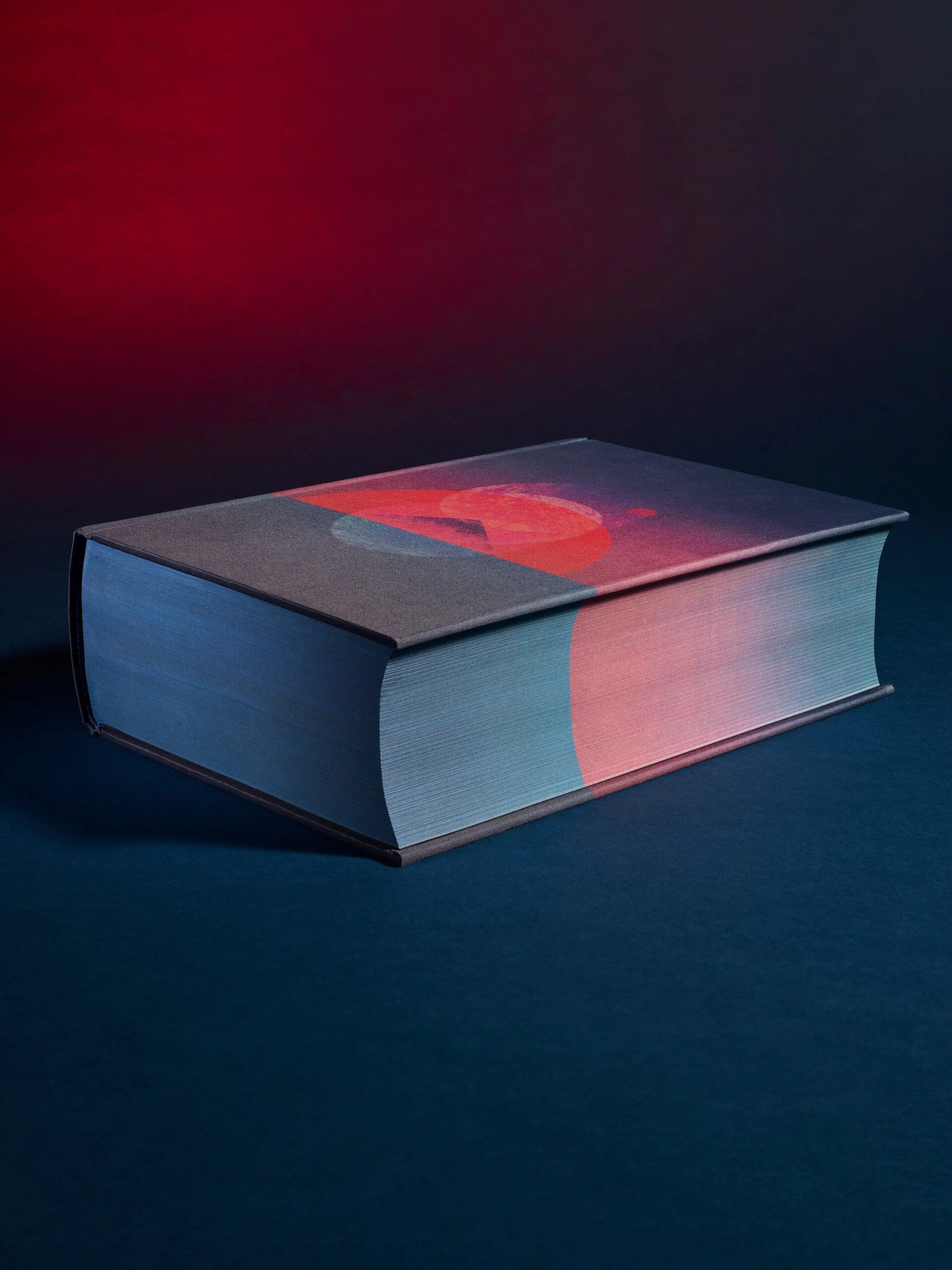
Matt Griffin’s artwork for The Folio Society’s deluxe edition of Liu Cixin’s The Three-Body Problem trilogy takes its visual cue from the story’s central scientific puzzle. For the presentation box lining, Griffin used computational simulations of three gravitational bodies in motion, drawing the edition’s physical design into the same unstable orbital system that drives the novels.
That choice gives the project a specific point of connection between image and story. Rather than treating science as background decoration, the lining comes from modelling the chaotic movement of the three bodies themselves. The result frames the books with a visual language grounded in their subject: a universe where prediction is difficult and motion can become disordered.
A box set built around scale and instability
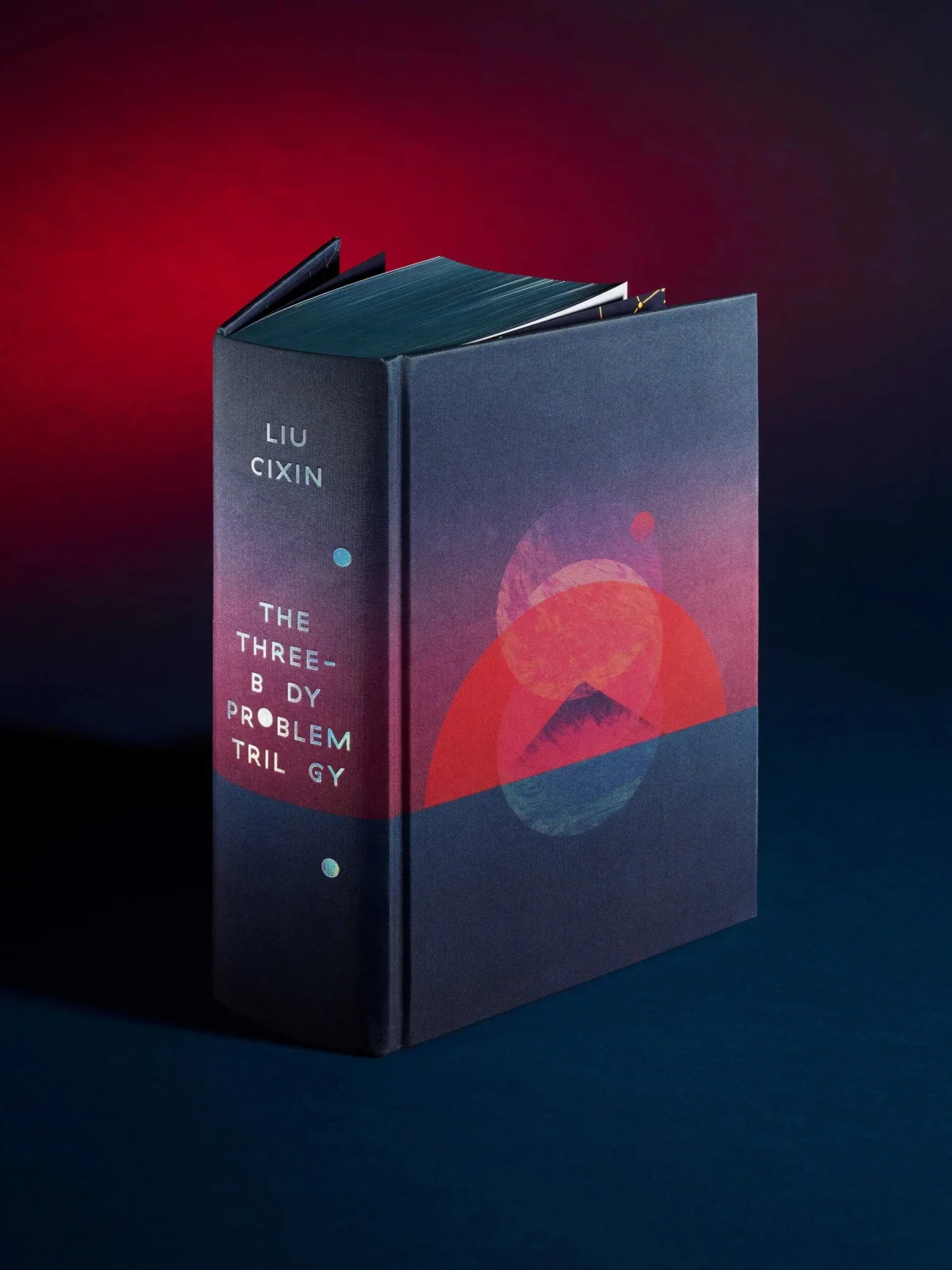
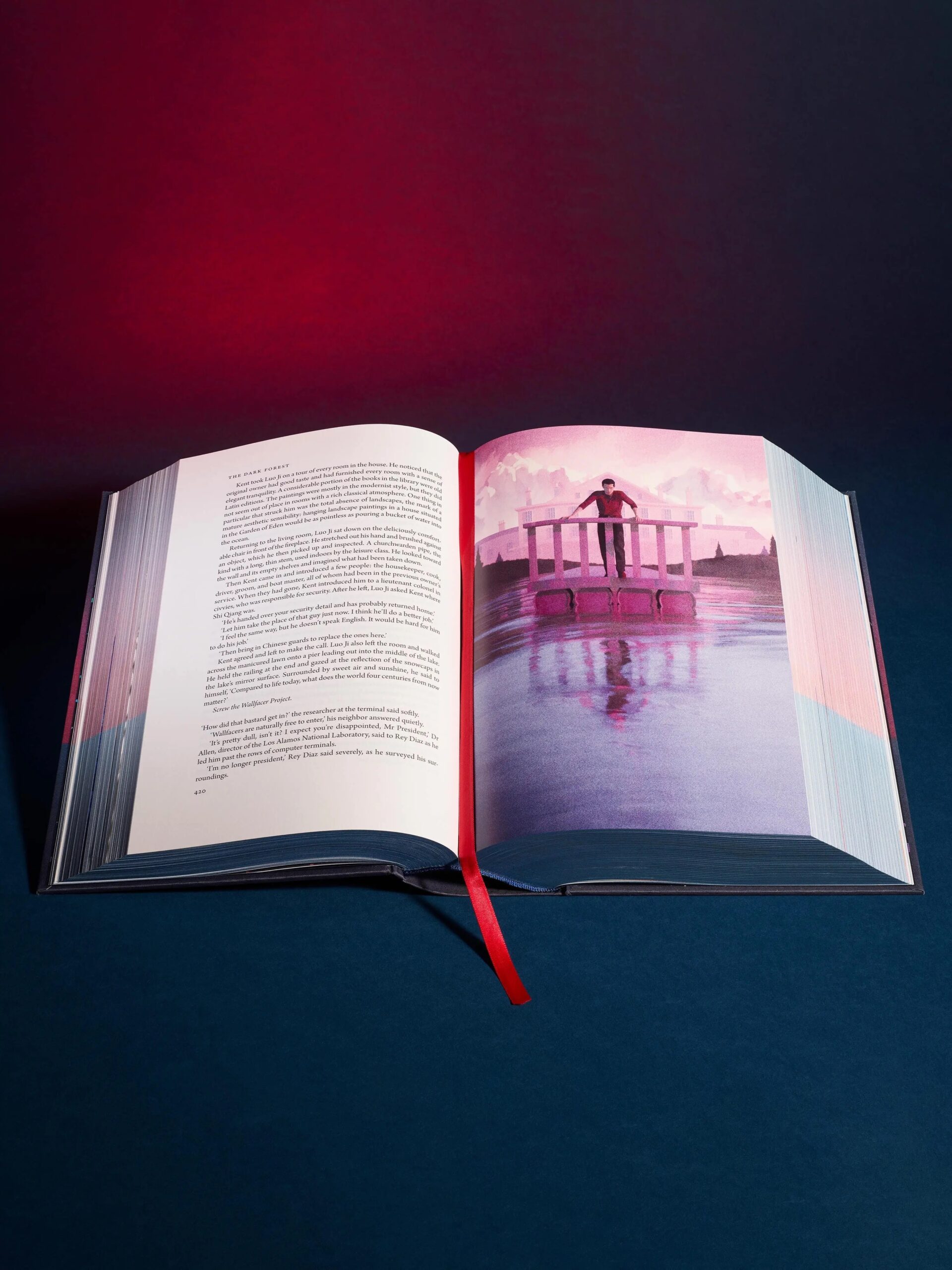
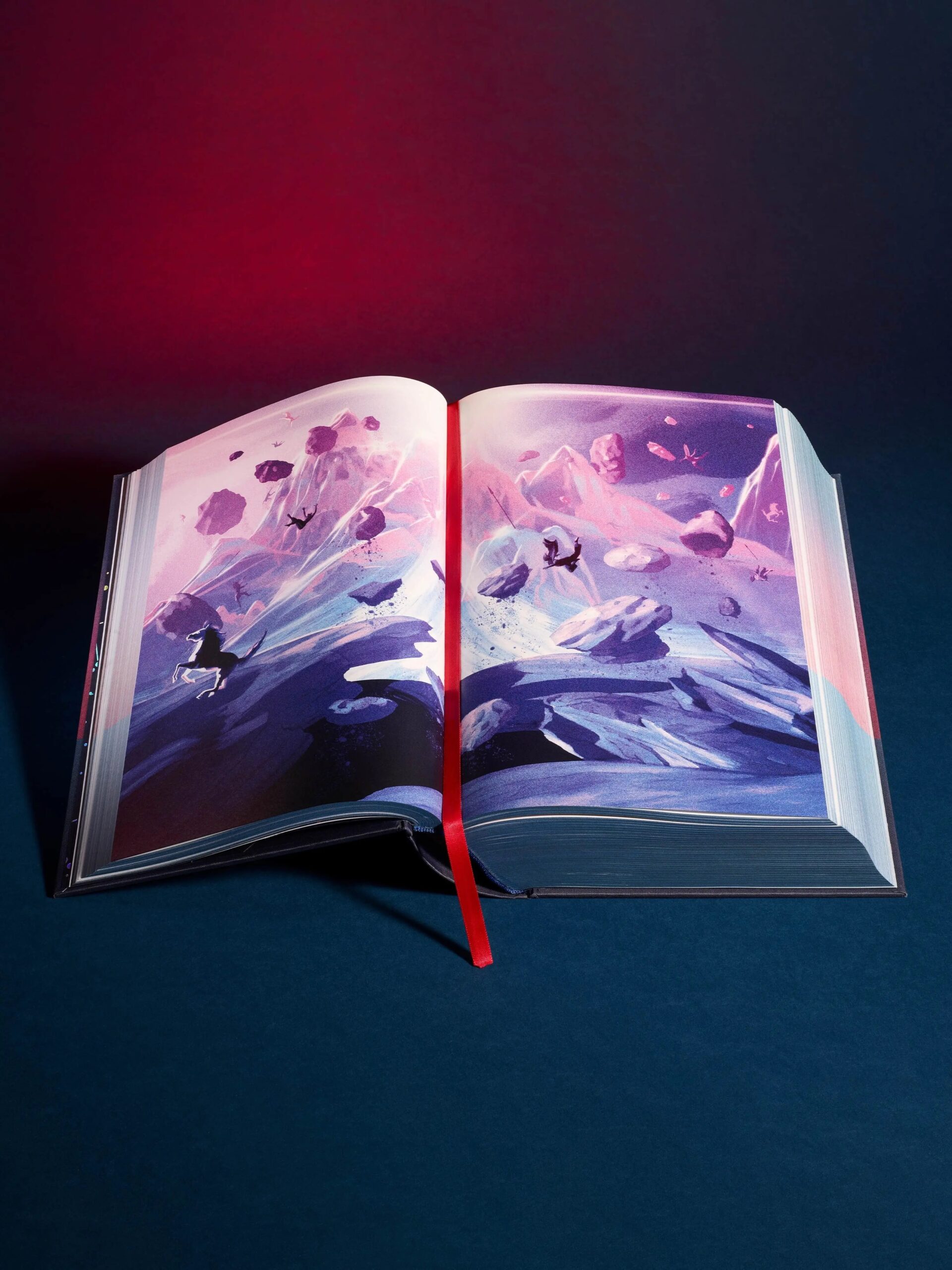
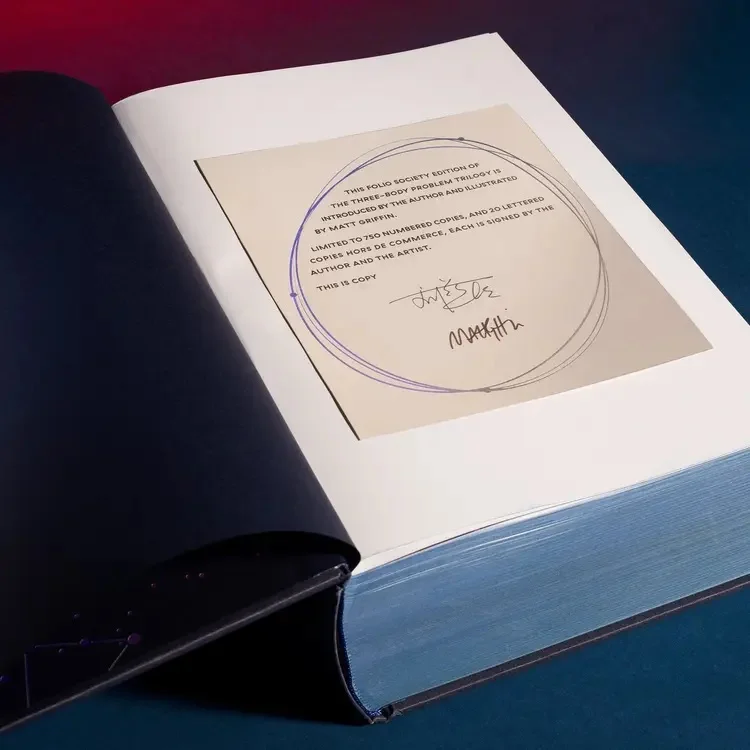
The limited-edition set gathers all three novels: The Three-Body Problem, The Dark Forest and Death’s End. Together, the books follow humanity’s first contact with an alien civilization and a struggle for survival across time and space, spanning 18 million years. The edition is signed by Liu and Griffin, and includes a new introduction by Liu that had not previously been published in English.
Ken Liu and Joel Martinsen translated the novels. Those details matter to the design story because the set brings a substantial, connected narrative into a single object. Its box, book covers and lining have to suggest a world operating at a scale far beyond an individual scene. Griffin’s use of orbital simulations offers one way to make that scale tangible: the visual source is a physical model of the forces described in the fiction.
The source account doesn’t specify the simulation software, the data parameters, or the steps Griffin used to turn the output into the lining. It does establish that the artwork came from real computational modelling of the three-body problem. For designers, that distinction is useful. A scientific process can supply a visual starting point without dictating every choice in the finished image; interpretation still sits between the model and the printed object.
From scientific process to visual atmosphere
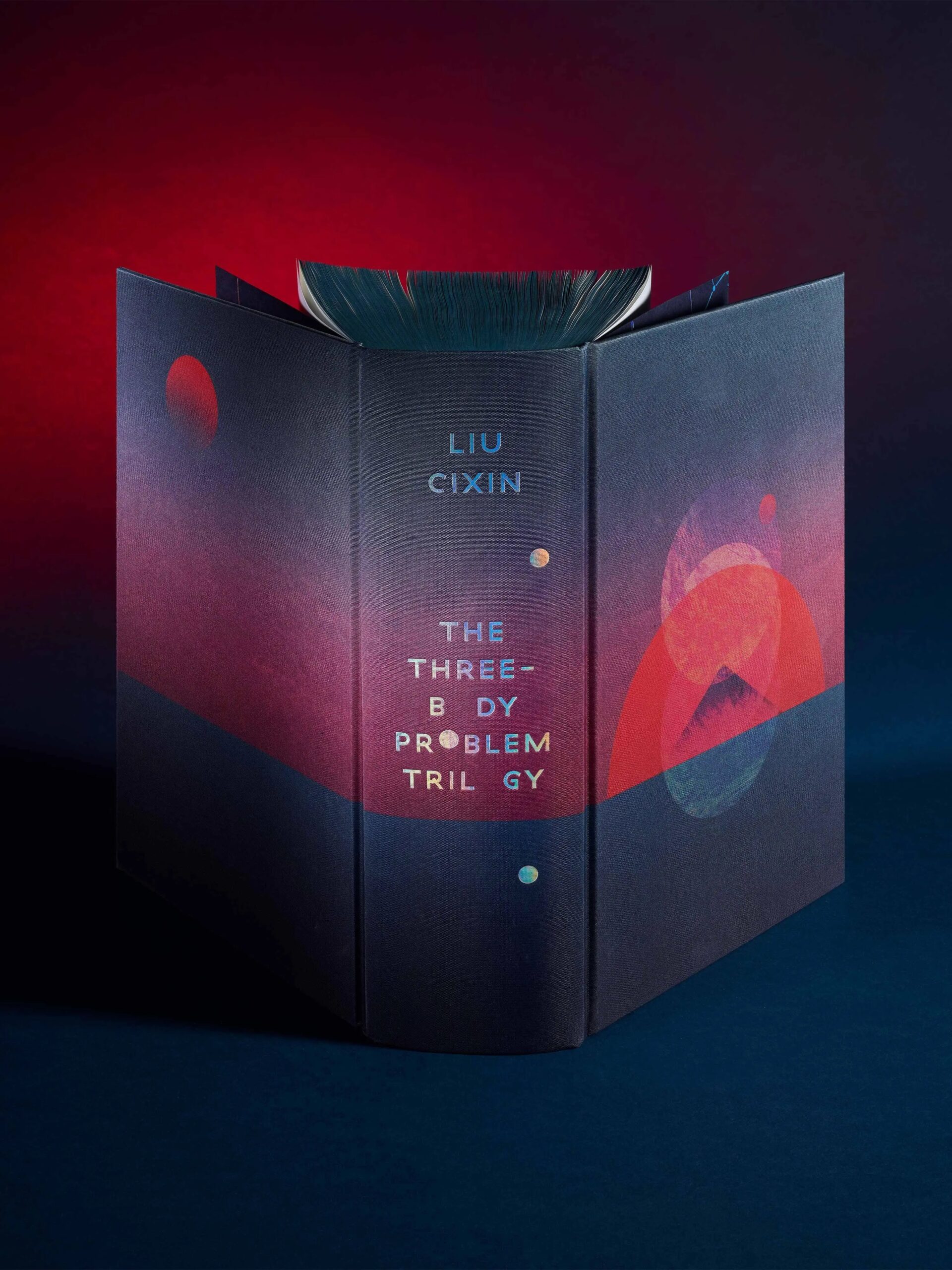
Griffin’s approach draws on myth, science fiction and speculative world-building. Here, the simulation gives that atmosphere a direct relationship to the trilogy’s premise. The motion of three bodies under gravity can be difficult to predict, and the resulting patterns offer a visual vocabulary for a story concerned with uncertainty, immense distances and the conditions for survival.
There’s a practical lesson in the method: when a project has a technical idea at its centre, research can become part of the image-making process. A designer might look for a mechanism, material or system that already belongs to the subject, then use its behaviour to inform composition and texture. In this case, the model isn’t simply a reference image. Its subject is also the story’s organising idea.
The published description calls the relationship between art, technology and storytelling immersive, but gives no detailed account of the printed finishes, colour palette or individual cover compositions. Those decisions can’t be inferred from the production notes alone. What is clear is that the box lining extends the project’s concept beyond the pages, making the packaging part of the visual experience rather than a neutral container.
A continuing practice in speculative worlds
The project builds on Griffin’s earlier work in science fiction publishing. He created the covers for Penguin/Ace deluxe editions of all six of Frank Herbert’s Dune novels, and illustrated Arthur C. Clarke’s Rendezvous With Rama for The Folio Society. The new trilogy edition places him again in a setting where the designer has to translate complex fictional systems into a coherent visual identity across multiple books.
Griffin is an Irish artist, author and illustrator based in County Clare. His work spans illustration, literature, animation and digital media, with clients and publishers including Disney, Lucasfilm, Warner Bros, National Geographic, Penguin Random House, HarperCollins and The Folio Society. He has also written and illustrated The Ayla Trilogy, which received the Literacy Association of Ireland’s Children’s Book of the Year Award.
His ongoing project The Endling Saga combines narrative, visual art, sound and interactive technology to explore consciousness and digital reality. That cross-disciplinary practice offers useful context for the box set: Griffin’s process can move between story, image and technical systems, letting the subject inform how the work is made as well as what it depicts.
For a designer approaching a book project with similarly large ideas, the takeaway is concrete: find a visual method that belongs to the subject, and let it shape the object’s supporting details as well as its central image. Griffin’s simulations give this edition a material link to the trilogy’s physics. The choice makes the packaging another place where the fiction’s underlying system can be seen.
More from Matt Griffin
View Matt Griffin’s portfolio on the Directory of Illustration, or visit his website. His work is also listed through Shannon Associates, with an agency portfolio.

| Rev | Description | Date |
|---|---|---|
| A | Issued for reading | |
| B | Viewed 964 times | Current |


