Gogoro CrossOver Smartscooter Uses 26 Mounting Points to Adapt Its Cargo Setup
- Project
- UX & UI Design
- Drawn by
- TheFuture
- Issued
- Sheet
- A-7
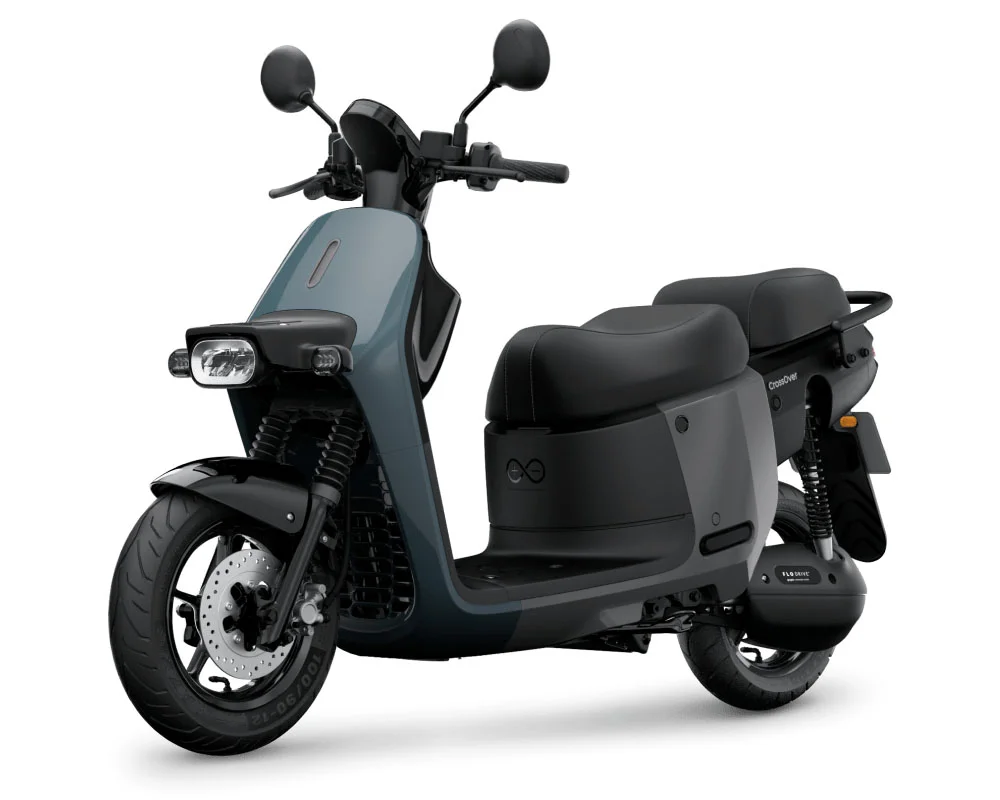
Gogoro’s CrossOver pairs an all-terrain frame with four cargo areas and a removable rear seat, letting riders reconfigure the scooter for different loads.
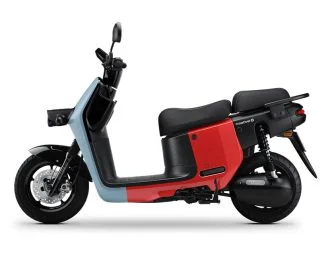
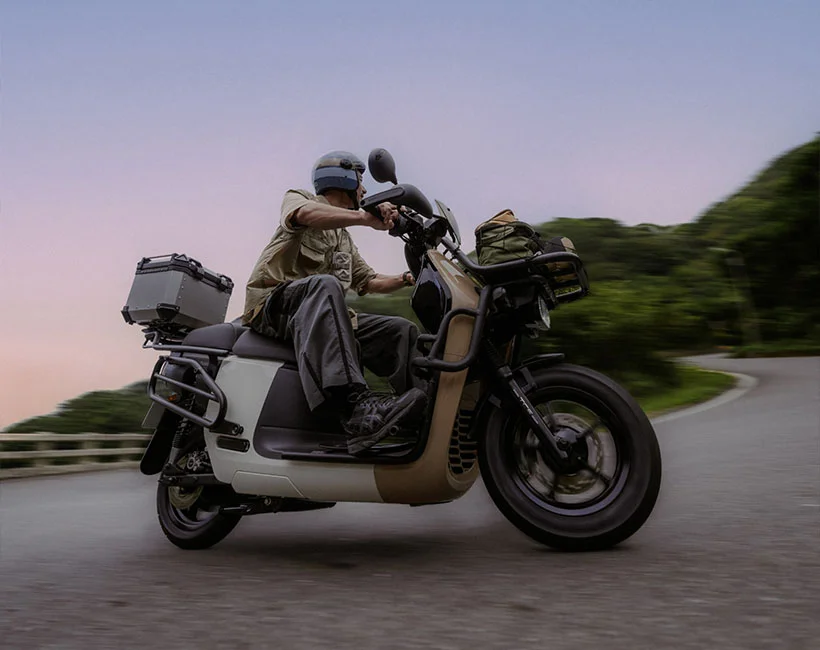
The Gogoro CrossOver Smartscooter treats storage as part of the vehicle’s core design. Its 26 locking points and four cargo areas let riders change how they carry things, while a rear seat that flips up or comes off makes room for larger loads. That adaptability shapes the CrossOver more than any single accessory: the scooter is designed to shift between passenger and cargo use as a rider’s needs change.
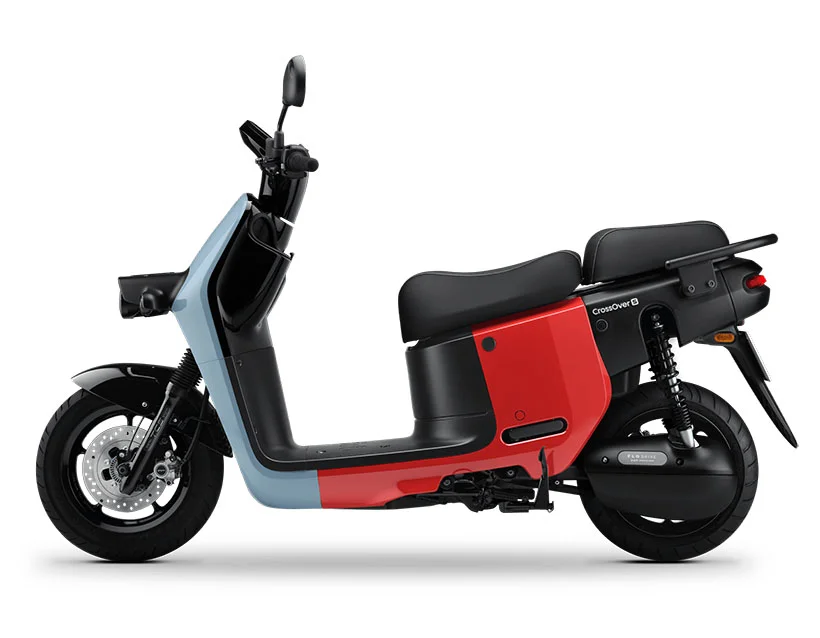
Gogoro describes the CrossOver as a two-wheel SUV and presents it in two models, CrossOver and CrossOver S. The company says the vehicles will be available in Taiwan later this quarter; the source does not specify a calendar date. The design is built around a redesigned all-terrain frame, with increased rigidity and 14.2 centimeters of ground clearance. Gogoro says that clearance is the highest in its current vehicle lineup.
A frame that supports changing use
The frame is the foundation for the CrossOver’s practical pitch. Gogoro says its structure is stronger and more stable, and that the revised design brings greater rigidity. Those qualities matter when a scooter is asked to handle different surfaces and carry changing loads: a frame needs to support the vehicle as its use moves from everyday riding to hauling gear. The article gives no load rating or technical comparison with earlier models, so the clearest measure of the change is the stated ground clearance and the new mounting system.
At 14.2 centimeters, the clearance gives the CrossOver more space beneath the vehicle than any other model in Gogoro’s current range, according to the company. The figure helps explain the all-terrain positioning, though it doesn’t by itself describe the limits of where the scooter can be ridden. For designers, the more revealing point is how the frame and storage system are presented as one package: the structure supports both a different riding role and more ways to attach cargo.
Four cargo areas, 26 places to configure
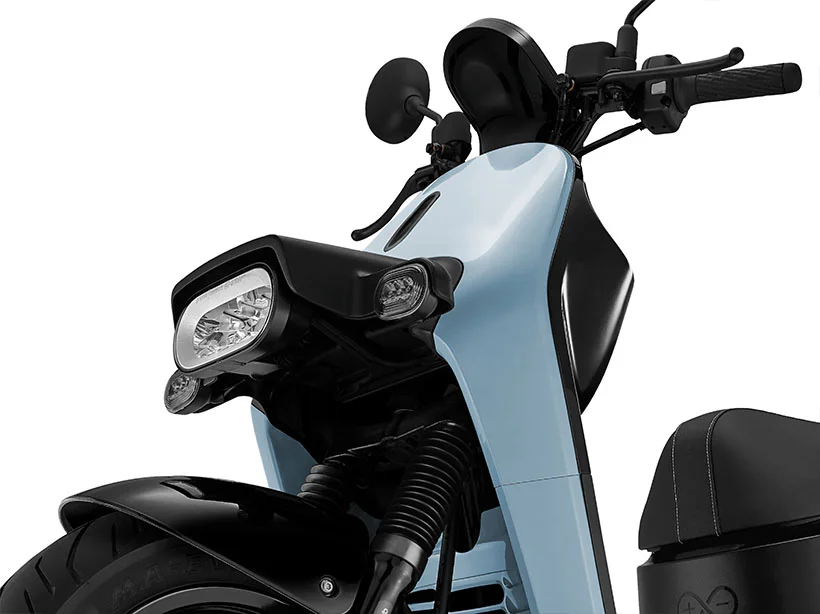
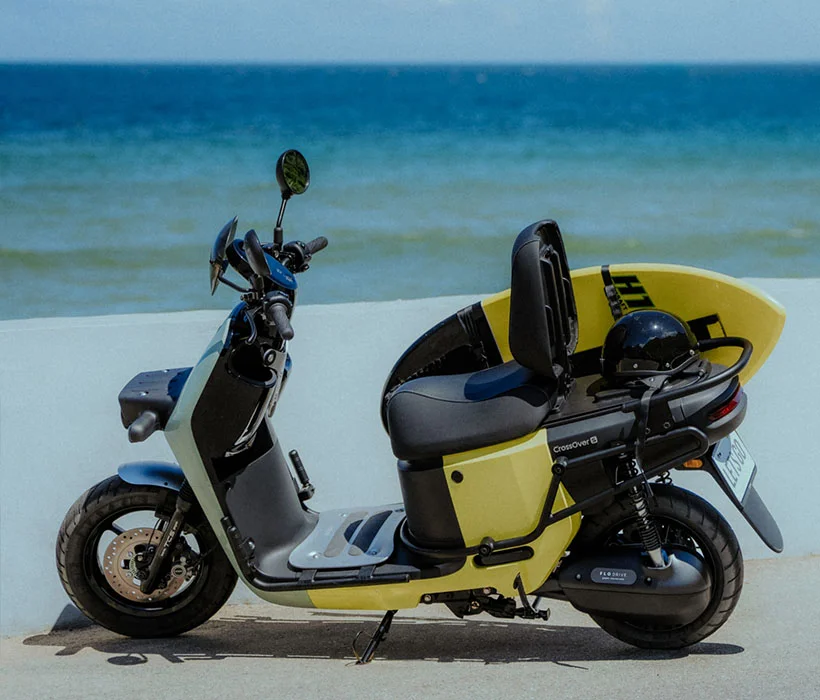
The mounting-point expansion system provides 26 locking points for adjusting the scooter’s cargo arrangement. Gogoro identifies four storage areas: a platform integrated with the headlight, the foot area, the seat, and the rear. Together, these locations spread storage around the vehicle instead of concentrating it in a single compartment. The layout gives riders several potential ways to place belongings, although the source doesn’t list compatible accessories or describe the capacity of each area.
The rear seat is the most direct example of the scooter changing roles. It can be flipped up or removed when the rider needs cargo space. That simple alteration makes the passenger area available for carrying items, without requiring the whole vehicle to be redesigned for a different task. The article calls the setup customizable and personalizable; in practical terms, the design offers multiple attachment points and a seat that can move out of the way.
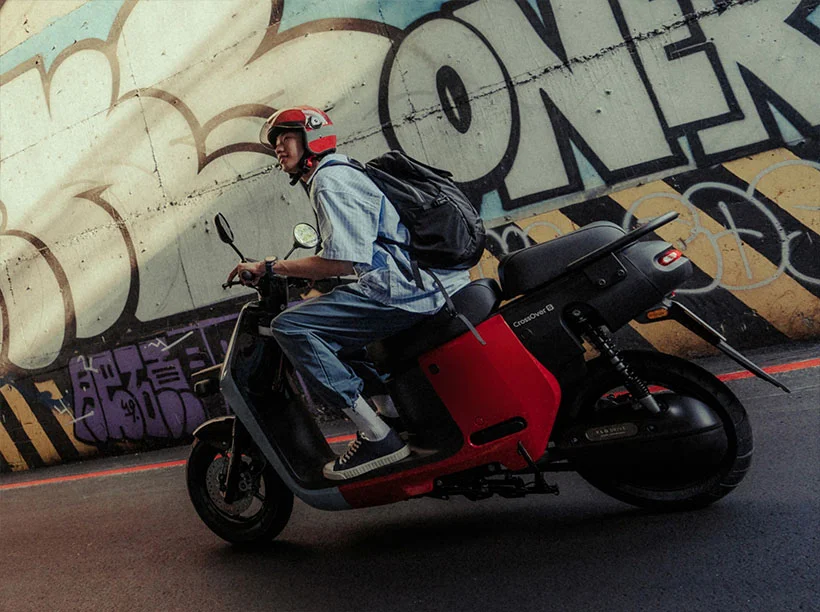
This kind of modular storage asks riders to think about the arrangement they need for a particular trip. A passenger, a bulky item, and smaller belongings make different demands on the same vehicle. Multiple mounting points can give a product more flexibility, but their usefulness also depends on the accessories available and how easily people can understand and change the setup. Gogoro’s description establishes the attachment system’s scale, while leaving those details open.
Motor, drive and braking
Power comes from a G2.2 aluminum alloy, water-cooled permanent magnet synchronous motor. Gogoro lists maximum power at 7.6kW. The FLO DRIVE belt drive system is intended to provide a smooth ride, according to the source. Together, these named components give a more concrete picture of the mechanical package than the broader SUV comparison, while the available information doesn’t include range, speed, battery capacity or charging figures.
For braking, the CrossOver uses integrated SBS with front and rear disc brakes. The source says this setup helps stabilize the vehicle and shorten braking distance, but offers no measurement for stopping performance. The distinction matters when reading the product description: the hardware is specified, while the result is a stated benefit rather than a quantified test outcome.
Connected controls and a broader product range
Gogoro says the scooter’s smart functions can be controlled through its mobile app. The article doesn’t identify the individual controls or explain which features require a connection, so the app’s role remains broad in the available description. For a vehicle with several possible configurations, the relationship between physical adjustments and digital controls will be an important part of the ownership experience: riders need to know which changes happen on the scooter and which are managed through the app.
The CrossOver extends Gogoro’s vehicle range in Taiwan and supports the company’s stated plans to expand its vehicle options in new markets. Its strongest design idea is visible in the combination of an all-terrain frame, substantial ground clearance and distributed cargo points. The 26 locks make customization tangible, while the removable rear seat gives that flexibility an immediate use. When the two models arrive in Taiwan later this quarter, the accessories and control details will help show how much of that adaptable setup riders can put to work.
The post Gogoro CrossOver Smartscooter Can Be Customized To Adapt To Rider’s Needs appeared first on Tuvie Design.
| Rev | Description | Date |
|---|---|---|
| A | Issued for reading | |
| B | Viewed 513 times | Current |


