Project 2 Craigs Turns Weekly Words into Two Distinct Visual Responses
- Project
- Graphic Design
- Drawn by
- PRINT Editorial Team
- Issued
- Sheet
- A-57
Craig Frazier and Craig Cutler’s yearlong book pairs drawings with photographs, showing how a shared word can produce sharply different ideas.
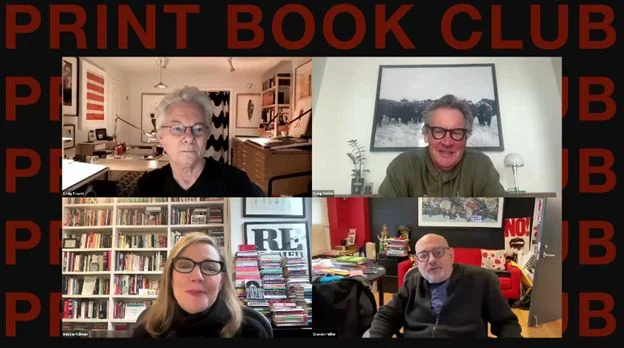
PRINT Book Club hosts Debbie Millman and Steven Heller recently spoke with illustrator and designer Craig Frazier and photographer and director Craig Cutler about Project 2 Craigs. You can watch the recording and buy the book.
The project’s central design decision is its constraint: one randomly selected word each week for 52 weeks, interpreted independently by two artists. Frazier made a drawing; Cutler made a photograph. They worked without art direction, conversation or access to each other’s response. The resulting book makes a case for a useful creative practice: set a clear limit, keep the process moving and let different visual instincts answer the same prompt.
A shared starting point, then separate work
The idea grew out of a winery shoot Frazier had commissioned from Cutler. Cutler’s still-life photographs arranged bottles and ceramics with care. After seeing the images, Frazier began drawing one of the unused photographs each morning, testing how many interpretations a single subject could support. When Cutler saw the sketches, the two recognized that this exchange could become a longer experiment.
For the yearlong project, they added a prompt and a weekly deadline to that initial spark. The word gave each artist a common point of departure, while the rule against sharing work kept the results independent. Random selection also limited their ability to steer the project toward familiar subjects or themes. Each week began with a small piece of language and an open question: what might this word look like?
Frazier kept to small sketchbooks and used no digital tools beyond scanning. Cutler worked alone in his studio, finding inexpensive props and sketching concepts before making each photograph. Their different methods matter: one artist could build an image through marks on a page, while the other arranged objects in front of a camera. Both kept the emphasis on the idea rather than elaborate production.
When the obvious answer stops being enough
At first, the exchange felt like two prizefighters circling. Around ten prompts in, both artists began pushing past the first association that came to mind. That shift gave the project room to develop. The words stayed simple, but the responses could carry memory, mood or a small visual surprise.
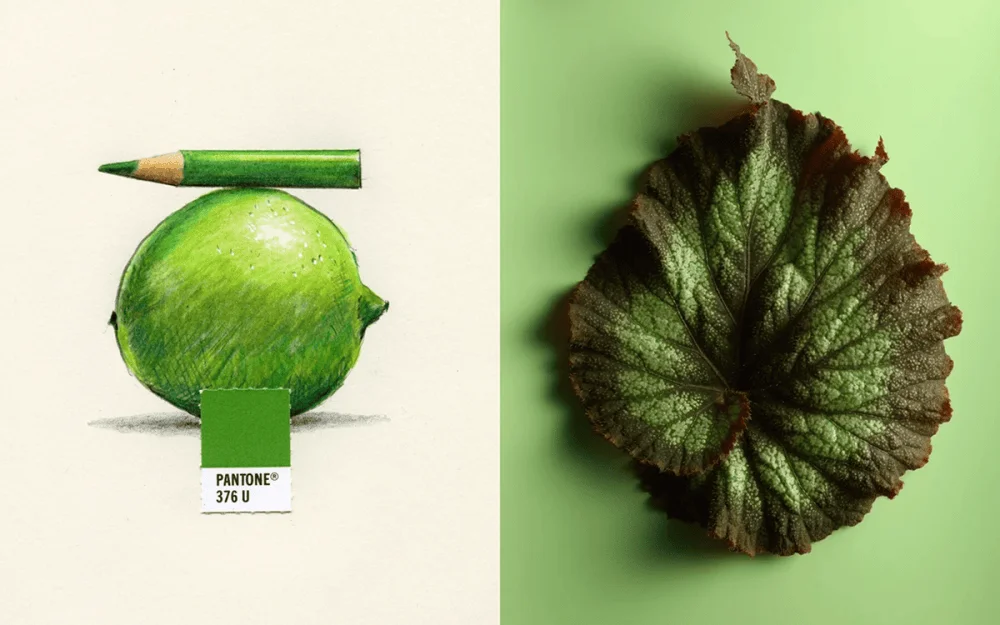
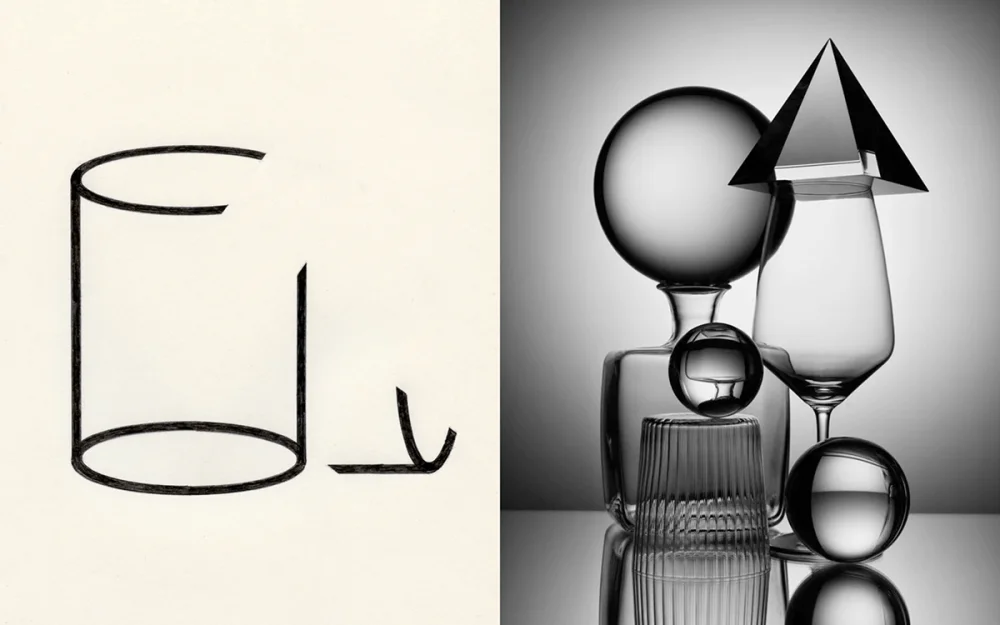
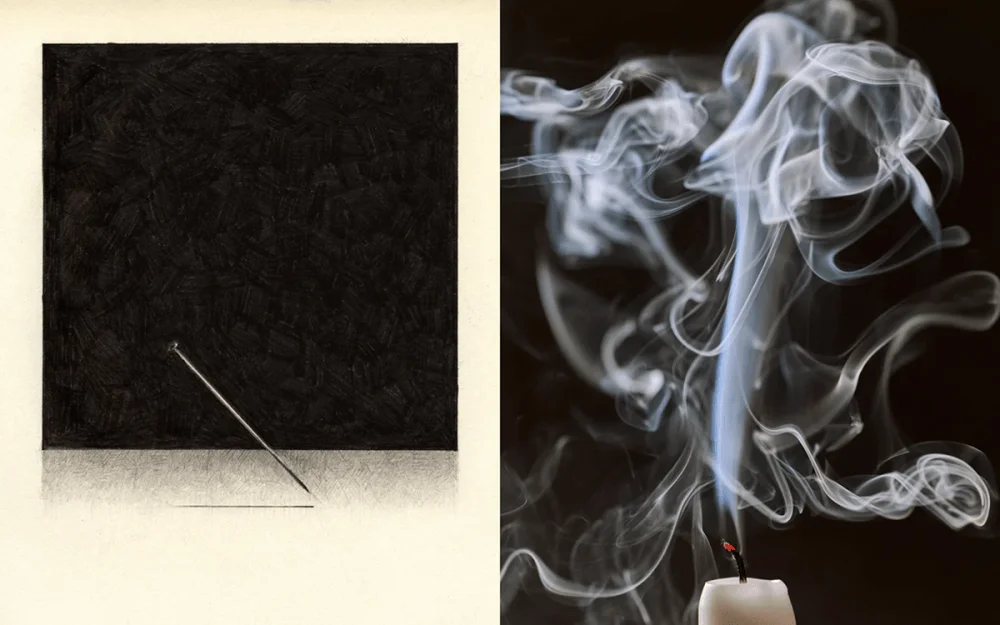
For “Glass,” Cutler made a luminous photograph, while Frazier used a minimal line drawing with a slight break to suggest fragility. The prompt “Quiet” drew on Cutler’s childhood memories of extinguished church candles. Frazier answered with a stark “pin drop.” Those pairings show how a word can work less like a subject to illustrate and more like a cue for choosing an image’s emotional register.
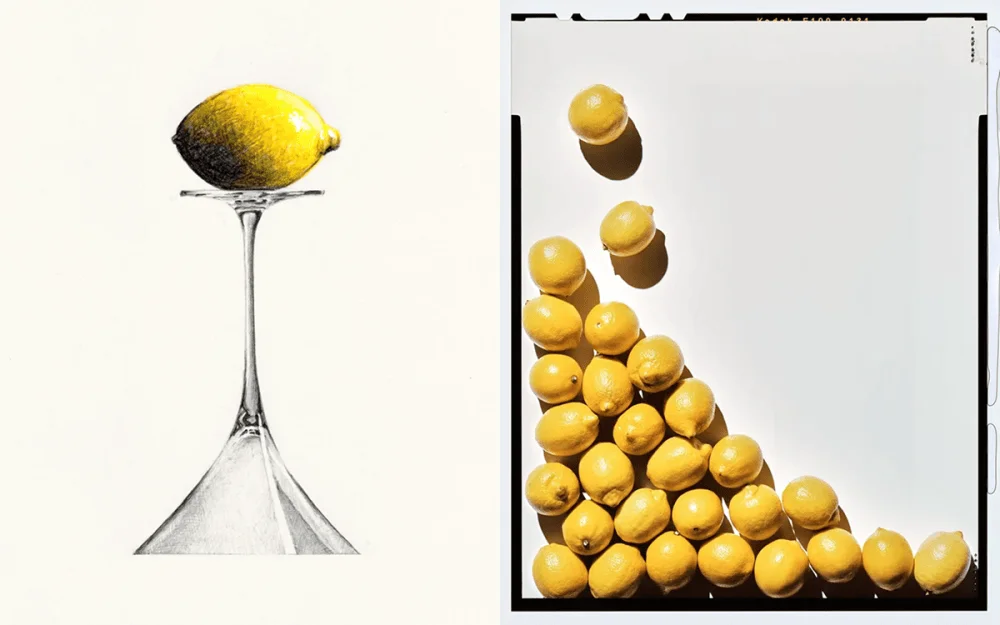
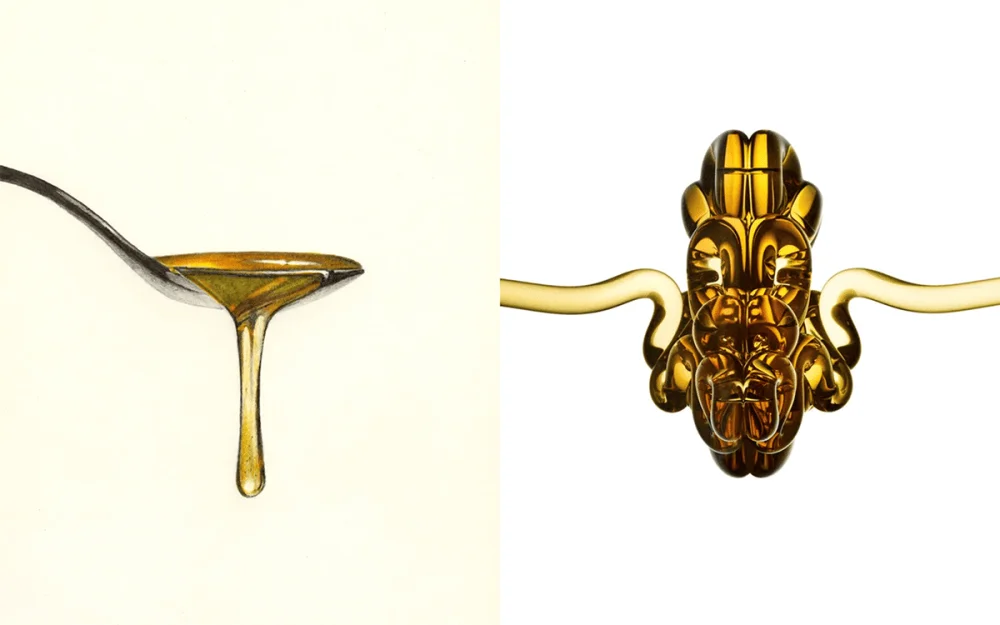
Other prompts revealed coincidence as well as difference. “Fruit” sent both artists to lemons. “Thick” became honey twice: Cutler poured it onto a mirror for his photograph, while Frazier drew it from life. The shared subject makes the contrast easy to see. The image making, rather than the word alone, determines what each response asks the viewer to notice.
The book lets readers make the connection
Published by Goff Books, Project 2 Craigs sequences the images so readers see them before discovering the prompts. That choice delays the verbal explanation. A viewer first encounters the visual relationship between the drawing and photograph, then learns which word each artist was interpreting. It gives the pairings a chance to register on their own terms, including when their connection is subtle or unexpected.
The project relied on a firm weekly rhythm. Once an image was posted, neither artist could revise it or veto the other’s contribution; they moved on to the next word. That rule kept the work from turning into a long exchange about which response was stronger. A deadline can create pressure, but here it also served as an editing tool: it left little room to polish away every uncertainty or second-guess an early idea.
Frazier and Cutler completed nearly the entire project without meeting in person. Their collaboration depended on the structure they had agreed to and the work they shared, rather than continuous discussion. Frazier’s takeaway was that not knowing is part of the process. The exercise didn’t remove uncertainty; it helped both artists become more comfortable making work within it.
Their next collaboration, Project 2: Dialog, changes the prompt system. Instead of two independent answers to one word, the artists pass images from left to right: each image becomes the next person’s starting point. That format puts sequence and response at the center. The first project shows what a shared constraint can reveal; the next will test what happens when one artist’s visual choice directly shapes the other’s.
PRINT Book Club: Project 2 Craigs appeared first on PRINT Magazine.
| Rev | Description | Date |
|---|---|---|
| A | Issued for reading | |
| B | Viewed 384 times | Current |