Apollo PRO Electric Scooter Pairs Modular Seating With 360-Degree Lighting
- Project
- UX & UI Design
- Drawn by
- TheFuture
- Issued
- Sheet
- A-4
Designed by Iago Valiño and Eloi Pecquet, Apollo PRO combines configurable seating and cargo options with app controls, phone charging and signals around the scooter.
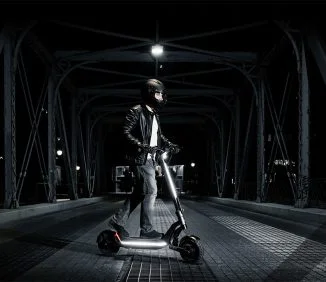
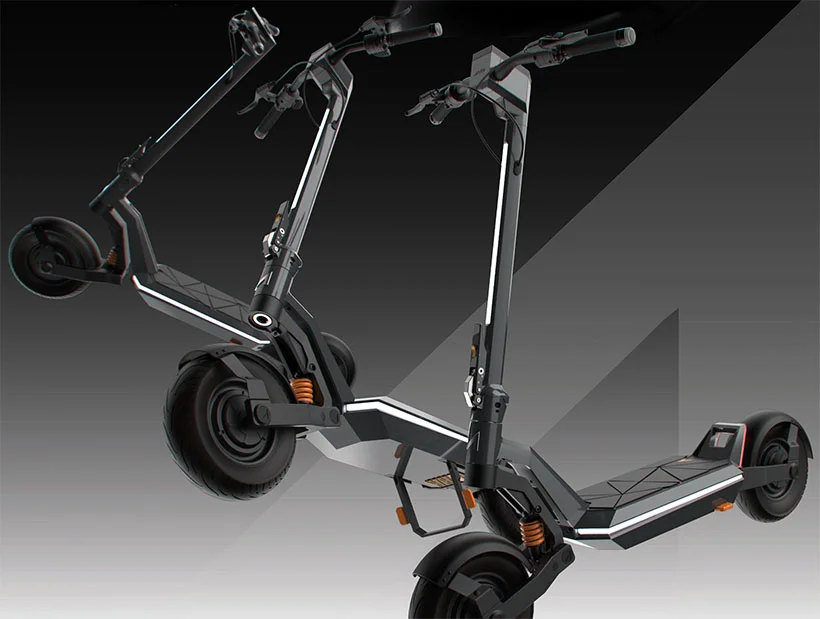
Apollo PRO is designed around a practical question: how much can one electric scooter adapt to different trips? Its one-piece aluminum frame forms the base for a configuration that can shift from a conventional standing scooter to a seated ride for one or two people, or a cargo setup, using attachable accessories. That modular approach gives the design its clearest point of difference: the frame stays constant while the rider changes how the vehicle carries them or their belongings.
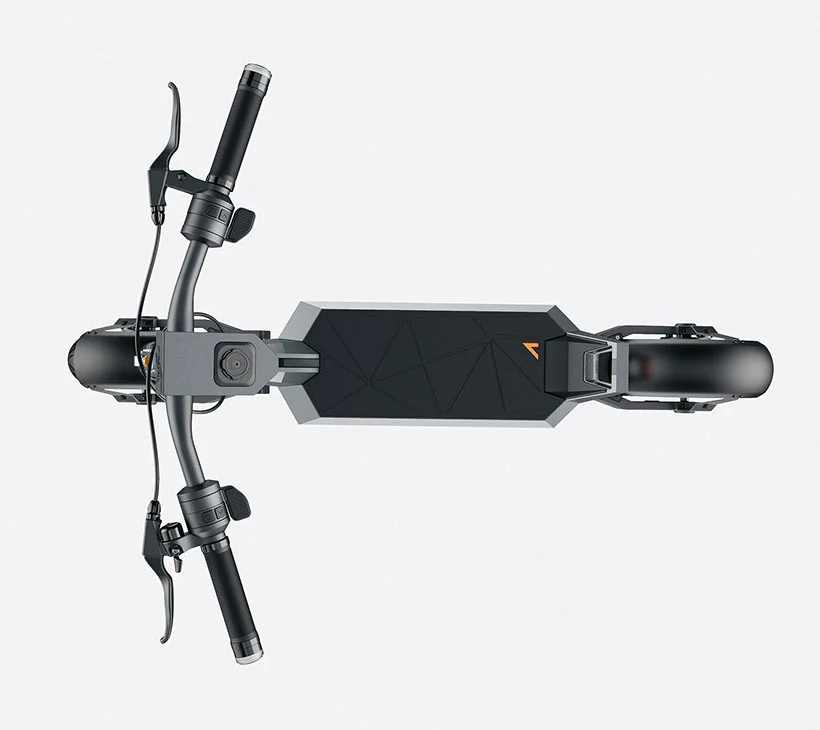
Designed by Iago Valiño and Eloi Pecquet of Apollo Scooters, the PRO brings together a sharply angled body, a multi-part cockpit and lighting intended to make the scooter visible from all sides. The source describes it as a vehicle-grade model and says its frame is built for strength. Its visual language supports that brief: the angular silhouette reads as compact and purposeful, while the accessories broaden what the same underlying form can do.
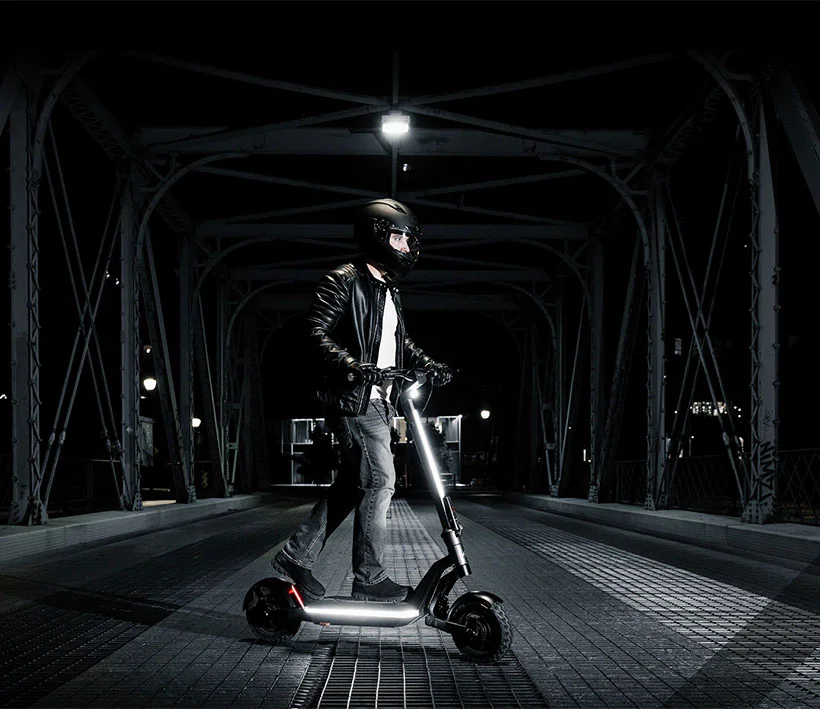
A cockpit built around the phone
The handlebar assembly gathers several functions into one control area. It includes a DOT display and an integrated speaker, along with a Quad Lock attachment that supports wireless phone charging. With a phone mounted, the rider can use it as a display. That setup makes the handset part of the interface while keeping a dedicated display in the cockpit too.
The scooter’s app adds controls for performance customization, navigation and theft deterrence. The product description also says GPS tracking provides riding statistics and that an integrated IoT module enables permanent location tracking. Those features make the software part of the product’s design, not just a companion for setup: riders can adjust performance, refer to navigation and check location through the app. The source does not specify which settings can be changed or how the tracking information is presented, so those details remain open.
A phone-based display can put familiar navigation and other information within easy reach, but it also makes the mount and charging connection central to the ride. Apollo PRO addresses that relationship with the wireless-charging Quad Lock attachment. In practice, the arrangement asks the cockpit to serve two roles: give riders scooter information through its own display and support the phone they may want to use for navigation.
One frame, several ways to ride
The accessory system is the key to the scooter’s adaptability. A seat can change the riding posture, with options described for one or two people, while a cargo configuration shifts the vehicle toward carrying goods. These changes suggest a product designed to cover different kinds of journeys with a shared chassis. The source does not list the available accessories individually or describe how long a conversion takes, but it presents attachment options as the mechanism behind the different configurations.
That flexibility makes the frame and its connection points especially important. The design relies on a solid, one-piece aluminum structure, while the folding joint has a separate role: it needs to secure the scooter during use and still allow it to fold. Apollo says the mechanism was a critical development focus and describes it as a tight-fitting system intended to stay secure over hundreds of kilometers. If it loosens, the stated adjustment is straightforward: tighten it with a screw.
For designers, that detail shows how a small mechanical interface can shape confidence in a product. A folding joint is easy to overlook in a rendered silhouette, but riders depend on it every time they open or close the scooter and while they travel. A stated method for retightening the mechanism gives owners a clear maintenance action. The source does not provide a service interval or explain what tools are needed beyond a screw, so it leaves those practical specifics unanswered.
Performance and visibility claims
Apollo PRO is described as reaching a real-world speed of up to 70 km/h and a maximum range of 100 km. Those figures frame the scooter as a high-performance option, though the source gives no testing conditions for either claim. Range and speed can depend on use, so the numbers are best read as the figures provided in the product description rather than as a guarantee for every ride.
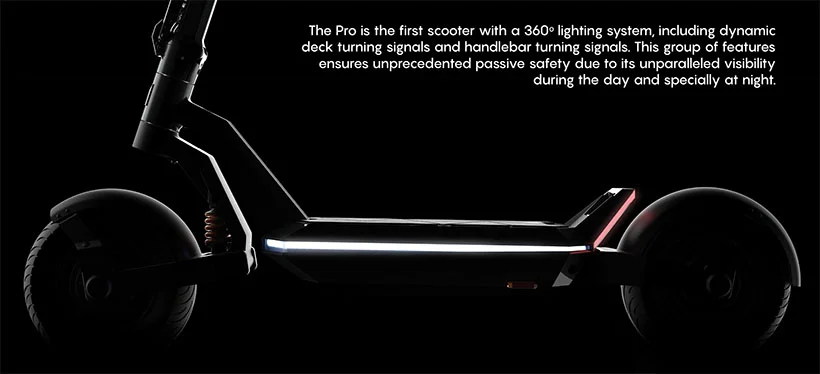
Lighting is another defining part of the design. Apollo describes the PRO as the first scooter with a 360-degree lighting system. Dynamic turn signals sit on the deck, with additional signals at the handlebars. Together, they are intended to make a change in direction legible from more than one point on the vehicle, particularly at night. The approach treats signaling as part of the scooter’s overall form: lights appear across both the lower deck and the upper control area.
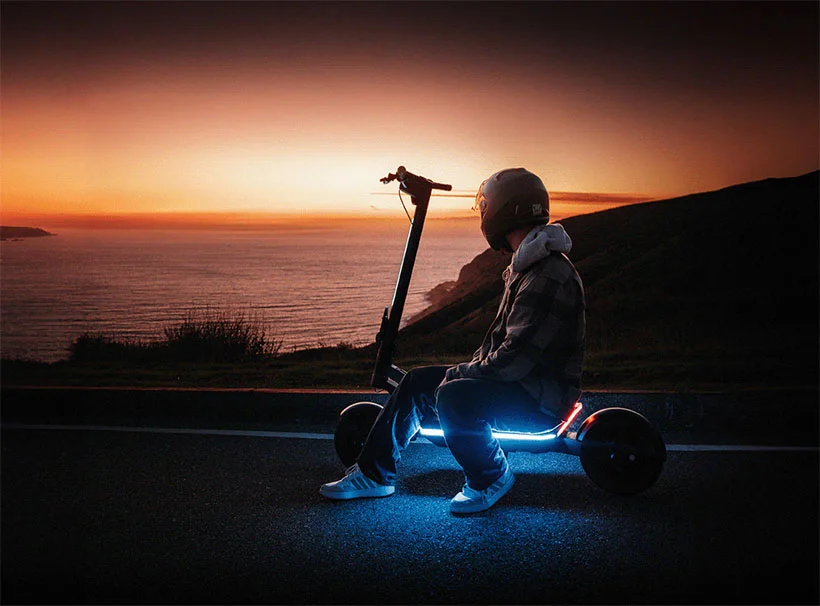
The design’s most useful idea is its combination of adaptability and visible controls: accessory configurations change the scooter’s role, while the cockpit and distributed signals address how riders interact with it. The next details that will clarify the ownership experience are the accessory options, their conversion steps and the conditions behind the stated performance figures. Apollo PRO Vehicle Grade Electric Scooter with 360-degree Lighting System first appeared on Tuvie Design.
| Rev | Description | Date |
|---|---|---|
| A | Issued for reading | |
| B | Viewed 391 times | Current |


