Four Animation Leaders Carry Their Mentors’ Lessons Into New Work
- Project
- UX & UI Design
- Drawn by
- Kim Fay
- Issued
- Sheet
- A-209
From kind feedback to bold color and creative freedom, four animation leaders show how mentors shape the way they guide teams.
Animation mentorship shows up in the choices a team makes every day: how a director gives notes, how an artist handles a tricky palette, or how much room a storyboarder gets to shape a scene. Four members of The Animation Guild trace those choices to people who influenced their careers: art director Derrick Wyatt, supervising director Jack Shih, production designer Lauren MacMullan, and Mike Roth.
Dou Hong: Kindness can make hard feedback useful
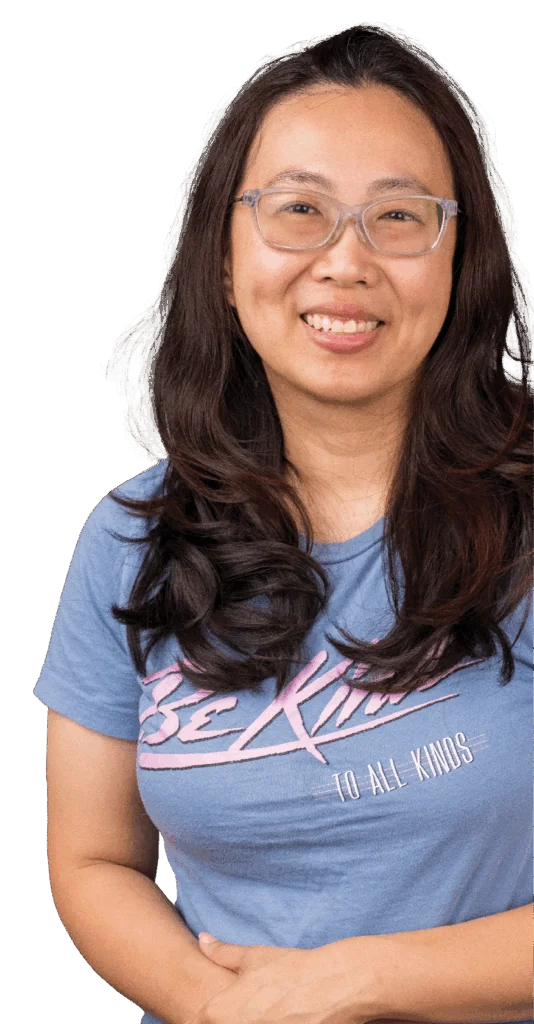
As art director on Invincible at Skybound Animation Studio, Dou Hong now gives artists the kind of guidance that helped her early in her career. Her first boss, art director Derrick Wyatt, showed her that clear criticism and encouragement can belong in the same conversation. Wyatt, who died in 2021, corrected her work without making her feel that she didn’t belong on the team.

Hong grew up in Ohio loving cartoons, without realizing that people made them as a profession. Unaware of art schools beyond her state, she enrolled at the University of Cincinnati and studied automotive design. Animation remained a personal ambition, though. She set herself drawing assignments, made fan art, and tagged the shows on social media. That work brought her to the attention of industry artists and led to freelance work on Ben 10: Omniverse.
As graduation approached, she told people she was looking for a job. A position in Burbank meant moving across the country to work in character design under Wyatt, whose credits included character design on Teen Titans. Hong admired the series, but adapting her personal drawing style to a production team proved difficult. She was moved from character design to props before gradually returning to character work, with Wyatt’s patience helping her improve.
“I think the number one thing I learned from Derrick is patience.”
His feedback was candid. He explained what needed work and made clear that he would have to find someone else if she couldn’t meet the assignment. Hong appreciated that directness because he never used it to shame her. She understood her work wasn’t yet at the required level, but felt supported as she learned to reach it.
That balance now informs her own management. Hong sees an art director’s job as preparing artists to succeed while defending the work they produce. That means naming what’s working and what needs another pass. It also means being responsible for a clear visual direction. Wyatt was kind to her, she says, but his vision remained his own, and her task was to deliver against it.
Hong’s route into art direction developed over several seasons of Invincible. She worked in character design on Season 1, then returned as Character Prop Lead on Season 2 to help troubleshoot. The pressure intensified when the team spent 11 weeks pushing through the final three episodes of an eight-episode season. Hong describes the stretch as a test she hadn’t known she was taking. She joined Season 3 as art director and continues in the role.


When artists raise concerns about a direction, Hong aims to hear them without handing over the responsibility to decide. She can acknowledge their reasoning, hold to the current plan, and leave room to change course if the result doesn’t work. Wyatt’s confidence in his own ideas is part of what she carries forward: an art director has to lead, rather than let a project’s direction drift among competing preferences. For Hong, the chance to lead in a way shaped by Wyatt’s example makes her present work feel like a celebration of him.
Ryan Quincy: Details give performance its precision
Animation director Ryan Quincy has worked alongside celebrated artists including Glen Keane, James Baxter, and Craig McCracken. Still, the colleague he points to as an inspiration is Jack Shih, whom he first met on South Park: Bigger, Longer & Uncut. Both were new to animated features. They later spent years on the franchise, Quincy as animation director and lead animator, and Shih as animation director and producer.

After working on his own series, Out There, and spending time at Disney Television Animation, Nickelodeon, and Warner Bros., Quincy was approached in fall 2024 about the animation director role on Long Story Short. He put himself forward. The series, made by Netflix and ShadowMachine, gives him a hands-on role with an in-house team of about a dozen animators.
“[Jack] wants to get the best out of people, and he likes to challenge people at times.”
Episodes return from an overseas studio before the show’s leaders review them. Quincy then works through their notes, from corrections that last only a few frames to adjustments that help a scene land with emotional nuance. He describes the process as close, detailed work. It’s a setting where Shih’s attention to specifics has made a lasting impression.
Shih, now the series’ supervising director, tracks details that help the show feel anchored in its time: which iPhone would have been available in a given year, or how a ticket stub from a particular Golden State Warriors season should look. Quincy says the team can spend time on tiny points of reference. But Shih’s eye also extends to acting. A scene might already seem strong to Quincy, yet Shih will keep refining a head tilt or eyebrow movement until the performance feels right.
 Photo credit: Agnes Shih
Continuity adds another layer of work because Long Story Short moves across a timeline from 1959 to 2022. To keep the shifting dates legible, the team tapes timelines to office walls. Quincy compares the setup to the red-yarn wall in A Beautiful Mind. Shih can manage the many details without being overwhelmed, keeping the different threads in view while the work moves ahead.
Quincy’s admiration is also about the way Shih works with colleagues. The show gives artists creative freedom within its guidelines, and Shih encourages them to find their own solutions. Their relationship now spans decades: they began as young artists on South Park, built families and careers, and eventually returned to work together. Quincy values that shared history as much as Shih’s skill at maintaining detail.


Jackie Gorman: Color can separate a character from any setting
Color designer Jackie Gorman has never met Lauren MacMullan, but MacMullan’s work on Mission Hill helped shape how Gorman approaches color. MacMullan’s credits also include The Simpsons and Avatar: The Last Airbender. For Gorman, Mission Hill stood out for the saturated palettes and distinctive choices she encountered while watching the series as a child and returning to it during college.

Gorman didn’t initially know what a color designer did. She joined Solar Opposites as a design assistant, hoping to work on props, but didn’t pass the props test. The art director had seen her personal artwork and suggested she try a color test instead. That opportunity led to her work as a color designer on Seasons 4 through 6 of the 20th Television series.
“I had to study Lauren’s art style, [and] I carried a lot of it with me professionally, her attention to detail and intention.”
On a two-person color team, Gorman handles characters, props, and effects—everything that isn’t a background, from a large alien creature to a small crumb. The job includes establishing base colors, then adjusting them as lighting changes or a scene moves between times of day. One lesson she draws from MacMullan’s work is the value of changing a character’s palette with purpose.
Gorman recalls a nighttime scene in Mission Hill featuring its blue-haired brothers. MacMullan rendered their hair black, using a large area of true black—a bold choice that changed the characters’ colors for the scene. For Gorman, the decision showed how a palette shift can signal the night while giving the characters a fresh visual presence.

That kind of flexibility matters on Solar Opposites, where a character or prop may appear against very different settings, from an ordinary kitchen to lava or ice. A color needs to read clearly across those scenes without losing continuity. Gorman studies how MacMullan adjusted tints by small amounts to separate a subject from its background and keep the framing easy to read. A slight shift can do useful work without making the palette feel disconnected.
Gorman’s study of Mission Hill has also become a hands-on project. In 2023, she was hired to illustrate posters and help design merchandise for the show’s 25th anniversary tour. The assignment gave her a reason to look more closely at MacMullan’s visual choices, while developing artwork that reflected each tour city and stayed within the series’ color language.
The influence continues in Gorman’s personal work. She experiments with styles and combines bright, saturated hues with more muted colors, testing combinations she might previously have avoided. Her takeaway from MacMullan is not a fixed palette to copy, but a way of thinking: make each color choice intentional, then check that the image still tells its story against the setting.


Henrique Jardim: Give artists room to leave their mark
Episodic director Henrique Jardim met Mike Roth after he had already built a substantial career in storyboards and revisions. His credits included Archer, Turbo FAST, Breadwinners, and Rick and Morty. Their work together began in 2016, when Cartoon Network’s shorts program accepted a pitch from Jardim. Roth, recently off five years as a writer and supervising producer on Regular Show, was overseeing the program.

The short had to fit a collection of ideas into eight minutes. Roth offered ways to shape the material, but Jardim says he never tried to take control of the concept. He helped the team clarify what it wanted the short to be. For Jardim, that distinction mattered: a person with authority can guide a project while still respecting whose idea it is.
“[Roth] never wanted to take over your idea… He essentially guided us into what we wanted to do with our vision.”
As they worked through the network’s notes, Jardim and Roth stayed late for several days. Eventually, Roth told him the piece was Jardim’s idea and that he should decide what worked, accepting that it wasn’t possible to satisfy everyone. Jardim went home, reworked the short, and removed elements that felt forced or ineffective. Roth liked the new version, helped polish it, and asked Jardim to explain his decisions in an email. The network accepted the revised direction.
That experience helped Jardim trust his judgment. While making his short Cadette in Charge, he landed his first directing job. He later directed on Ben 10, Big Mouth, and Human Resources, before becoming an episodic director on Netflix and Titmouse’s Mating Season.
His current role involves frequent communication with storyboard artists and revisionists to make sure shots build into a coherent episode. He also works with the other episodic directors so the episodes connect across a season. That coordination could easily become a reason to control every choice. Jardim instead tries to pass on Roth’s approach: give artists room to bring their own interpretation to a scene and leave some of their personal mark in the work.
Jardim sees that freedom as part of the job, even when a production has many people and constraints. Each scene and file can give an artist a chance to develop. He remembers being at an earlier stage in his own career and recognizes that younger colleagues also have ideas they want to express. His experience with Roth gives him a practical model for supporting those ideas: offer direction, make the necessary decisions, and let artists contribute more than execution.


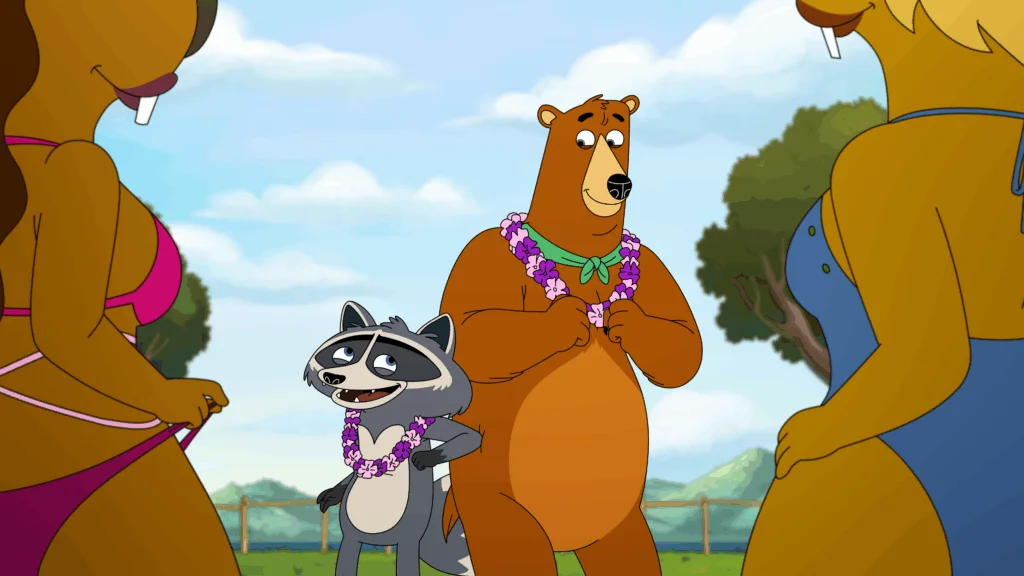

Across these four accounts, mentorship isn’t a single technique. It can mean making criticism safe to hear, insisting on the detail that gives a performance life, treating color as a storytelling tool, or helping an artist defend a creative choice. The influence lasts when those lessons become part of how a team is led—and when the next generation gets room to make the work its own.
Portraits of Dou Hong, Ryan Quincy, and Henrique Jardim by Tim Sullens.
| Rev | Description | Date |
|---|---|---|
| A | Issued for reading | |
| B | Viewed 353 times | Current |