Nine Astronomy Photographer of the Year Shortlist Images Span Auroras, Nebulae and Moonrise
- Project
- UX & UI Design
- Drawn by
- Kate Mothes
- Issued
- Sheet
- A-200
From a comet above the Alps to a supermoon over Paris, the 2026 shortlist pairs distant celestial subjects with striking places on Earth.
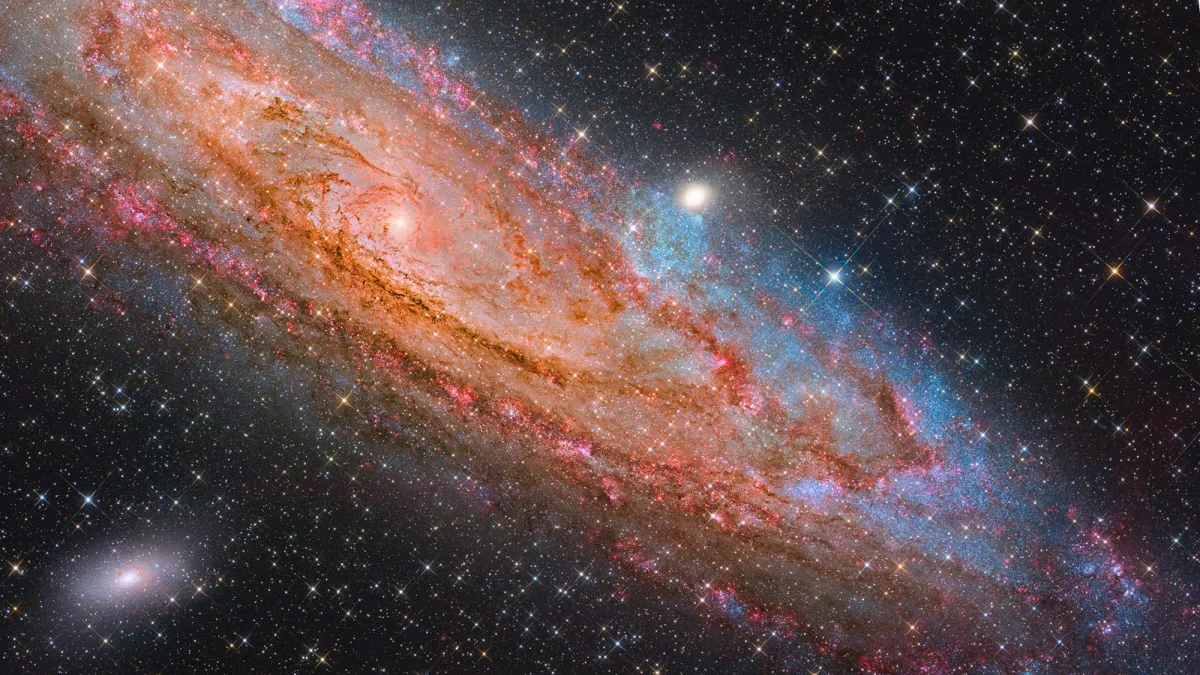
The 2026 ZWO Astronomy Photographer of the Year shortlist makes a strong case for treating the landscape around a celestial subject as part of the image. A comet crossing the Swiss Alps, auroras above waterfalls and a moonrise framed by New Zealand’s coastline all connect the scale of the sky to a specific place on Earth. Other shortlisted photographs turn their attention inward, using close views of the Sun or distant nebulae to make astronomical structures the main event.
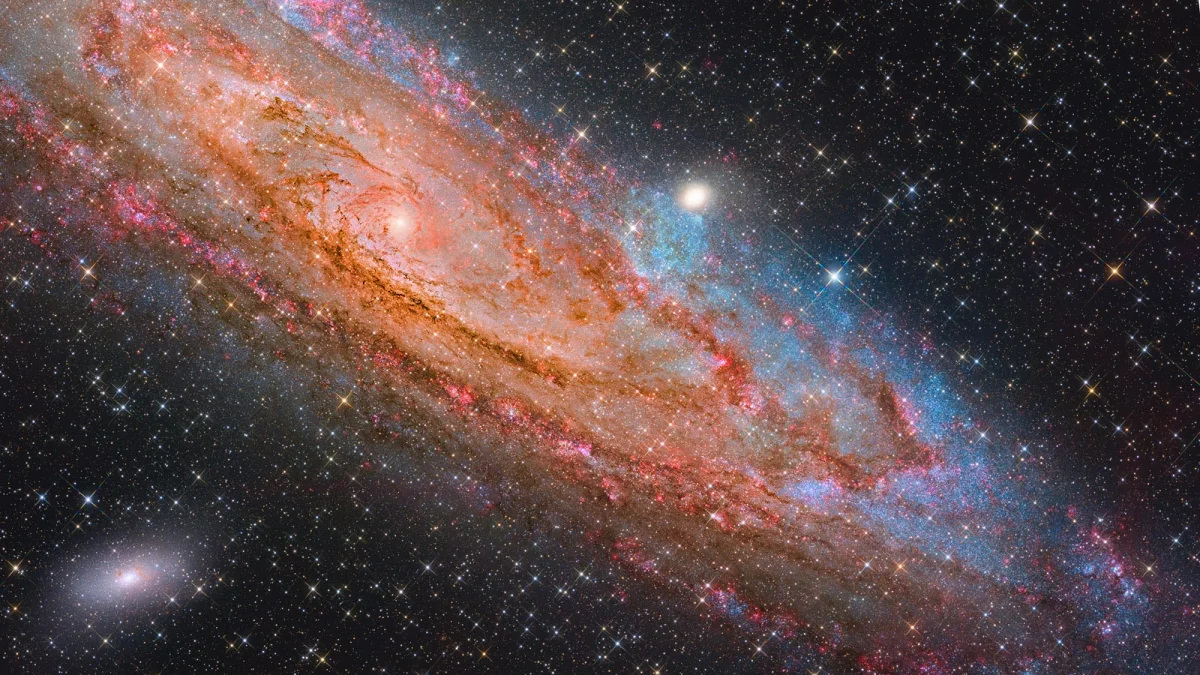
The range comes from a broad field of entries: 769 photographers and astronomers from 66 countries submitted more than 4,000 images. The selected work includes auroras, stars, planets and the Moon, with photographs made in locations around the globe. That variety gives the shortlist two complementary ways to look at the night sky: as something encountered from a particular place, and as a subject brought close through telescopic photography and composite images.
Celestial events in earthly settings
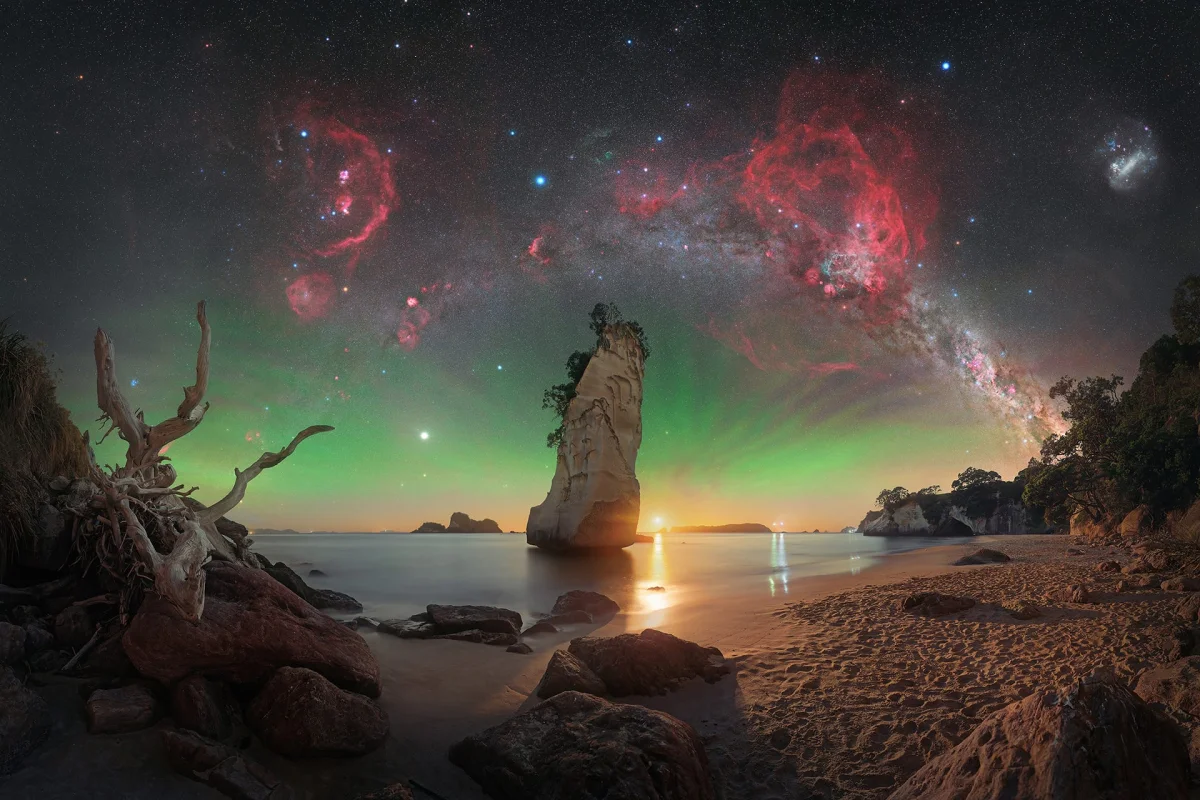
Several captions point to a clear compositional idea: place a recognizable feature of the sky in conversation with a landmark or terrain. Evan McKay’s “Te Hoho Rock Moonrise,” photographed at Cathedral Cove in Waikato, North Island, Aotearoa New Zealand, pairs a nebula with rock formations. The image’s subject is not only a distant object; the rock shapes give the viewer a grounded reference for reading the sky above them.
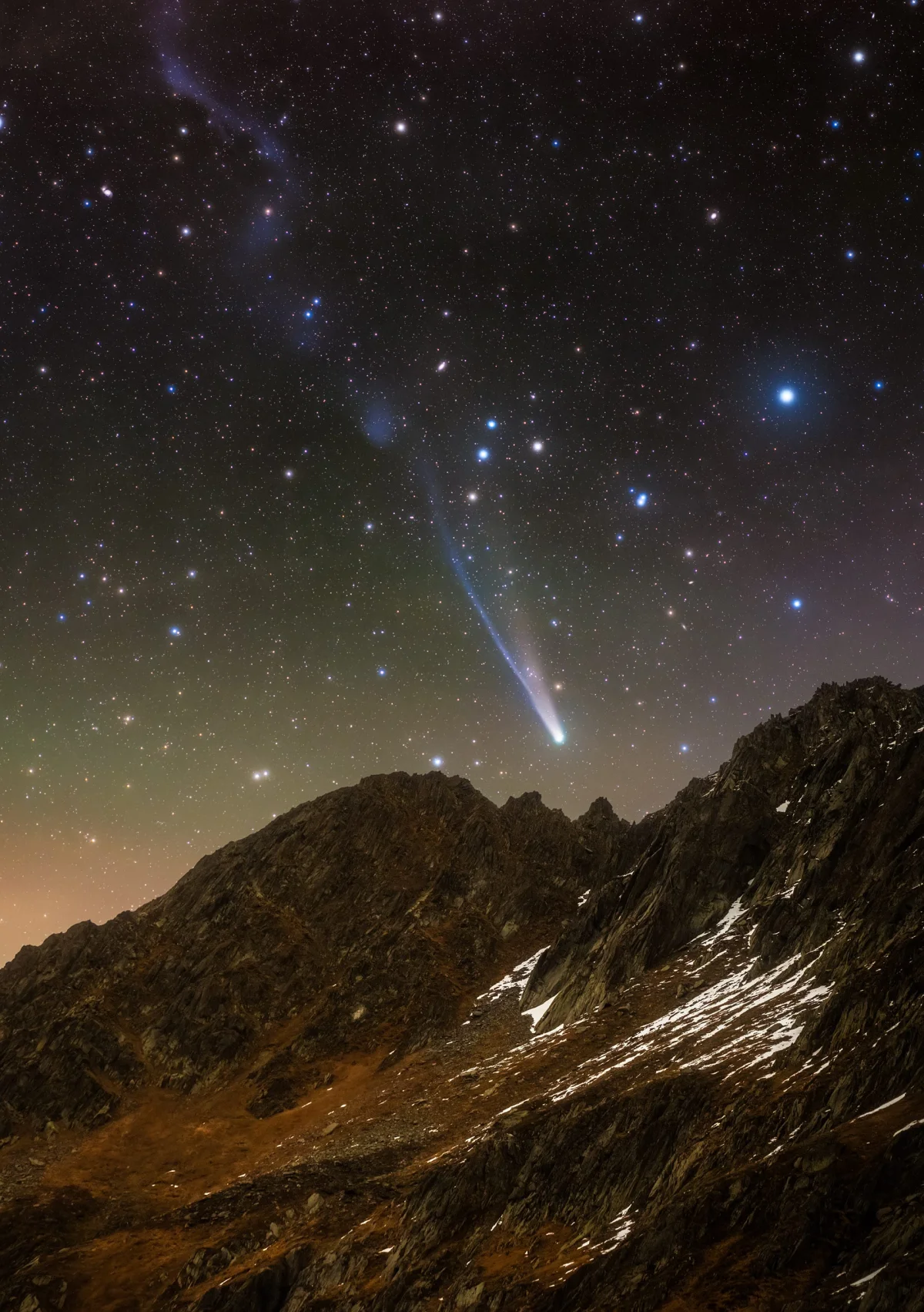
In Jakob Sahner’s “Comet C/2025 A6 (Lemmon) Over the Swiss Alps,” the comet is set against the mountain region of Tujetsch, Graubünden. The pairing gives the fleeting astronomical subject a sense of scale: the Alps anchor the view while the comet draws attention upward. It also makes location part of the photograph’s identity, rather than leaving the sky as an anonymous backdrop.
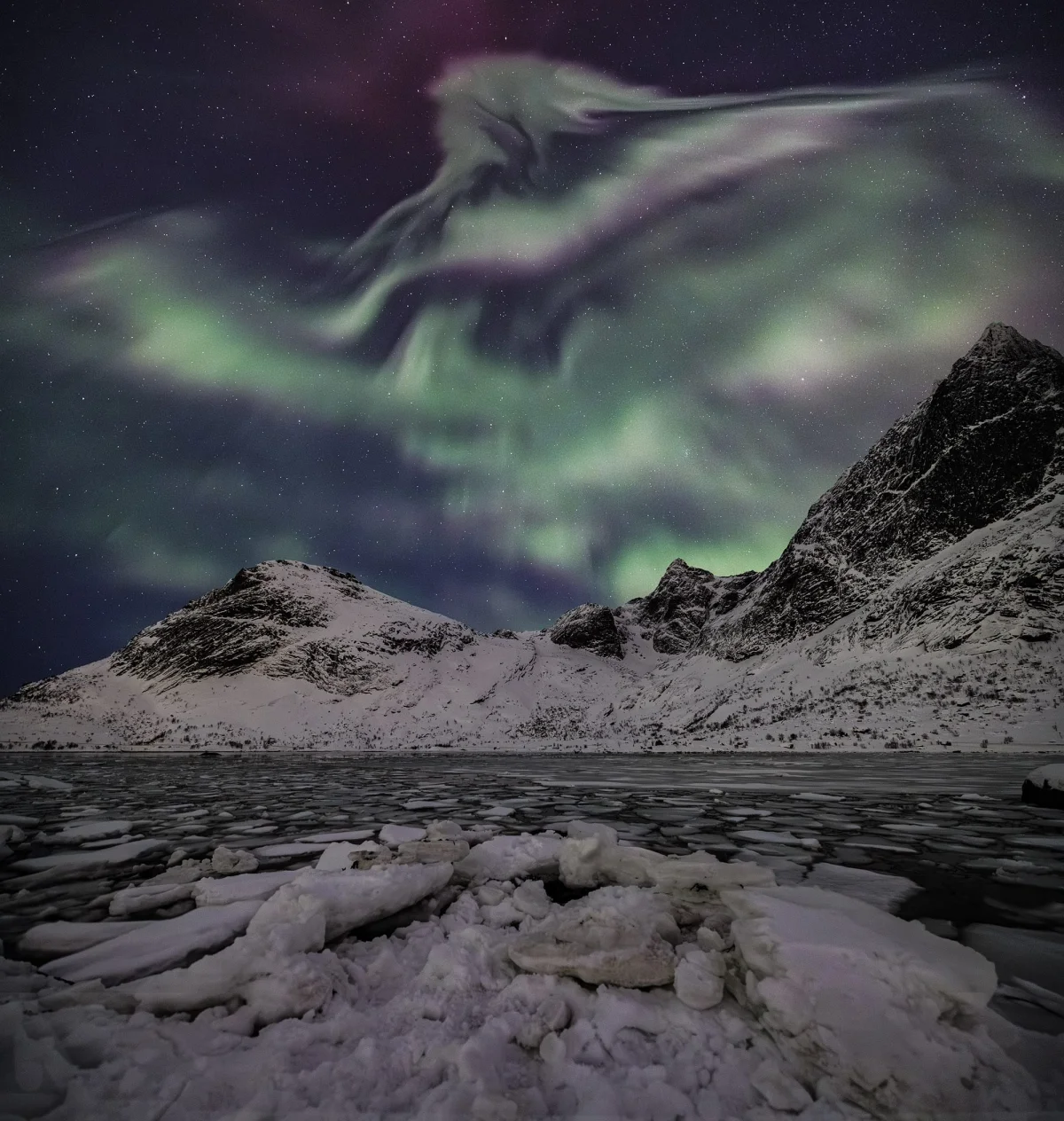
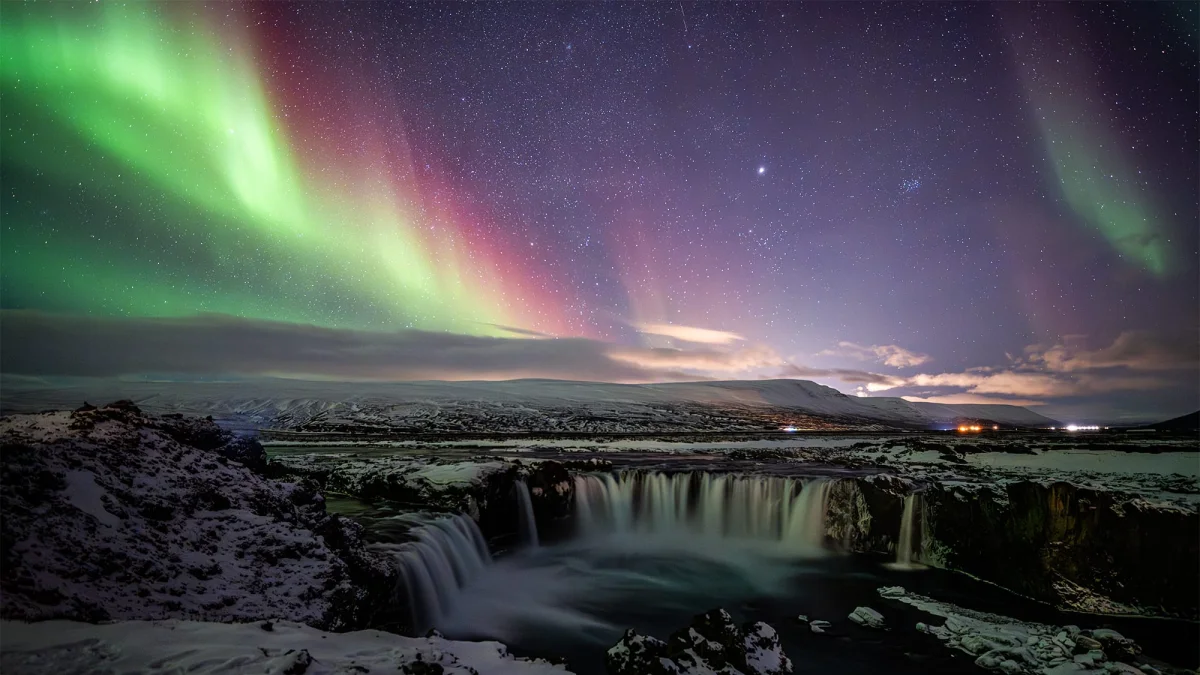
Aurora photographs in the selection use a similar relationship between sky and ground. Jennifer Rogers’s “Eagle Aurora,” made in Flakstad in Norway’s Lofoten region, sets the aurora above a remote landscape. Yifan Cao’s “Colourful Aurora and Waterfall,” photographed at Goðafoss in Iceland, brings the phenomenon together with moving water and a recognizable natural feature. In both cases, the foreground helps structure the image: it gives the eye somewhere to settle before following the luminous forms across the sky.
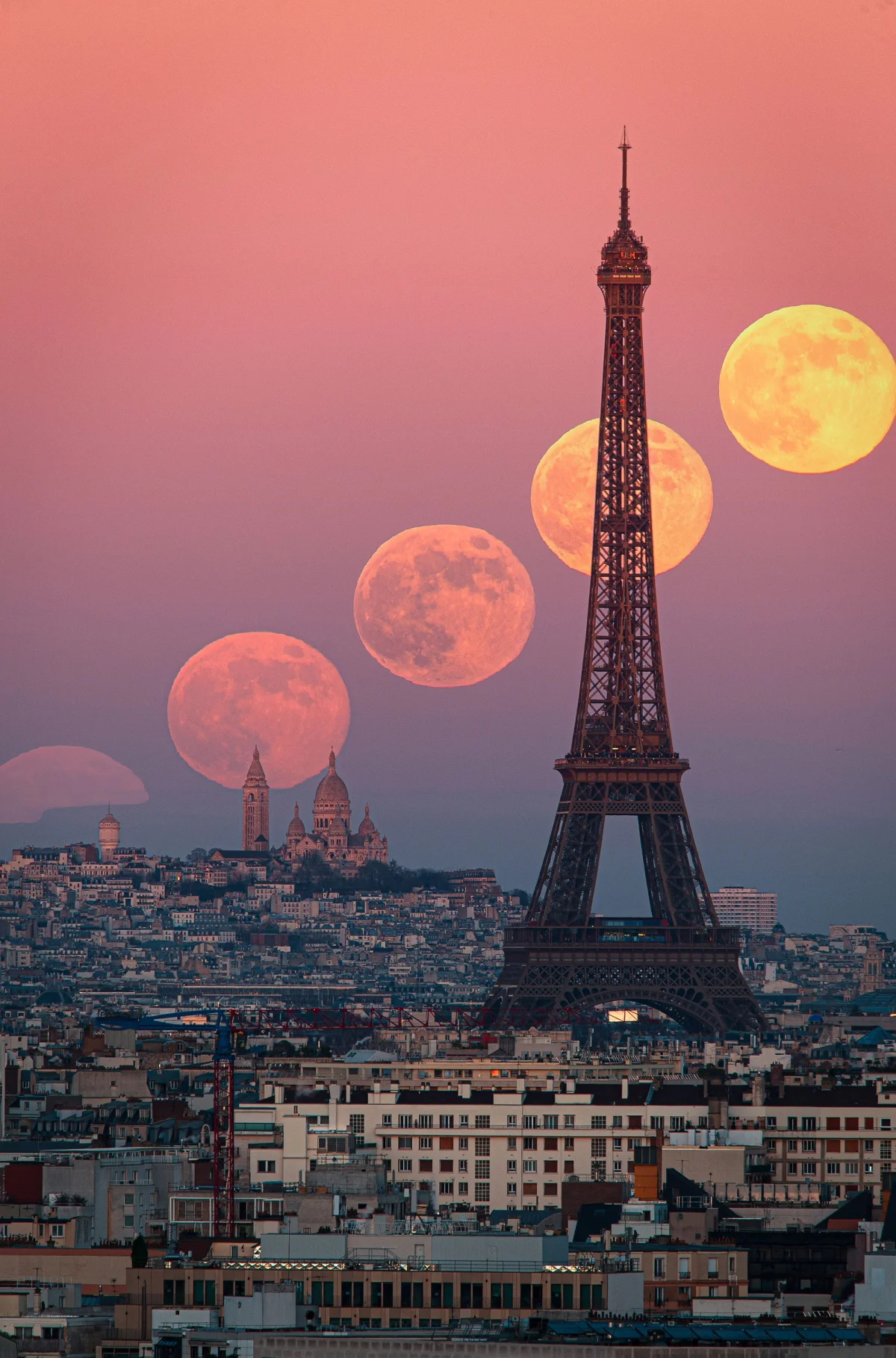
Martin Giraud’s “Supermoon Path Over Paris at Sunset” takes a more architectural approach. Its caption describes moon phases rising behind the Eiffel Tower, creating a sequence across the sky rather than a single isolated lunar view. The Paris setting gives that sequence a clear visual marker, while sunset adds a transition between daylight and night. For photographers, this kind of image makes timing and viewpoint central to the composition: the phases, tower and changing light have to align within one frame.
Looking closer at the sky
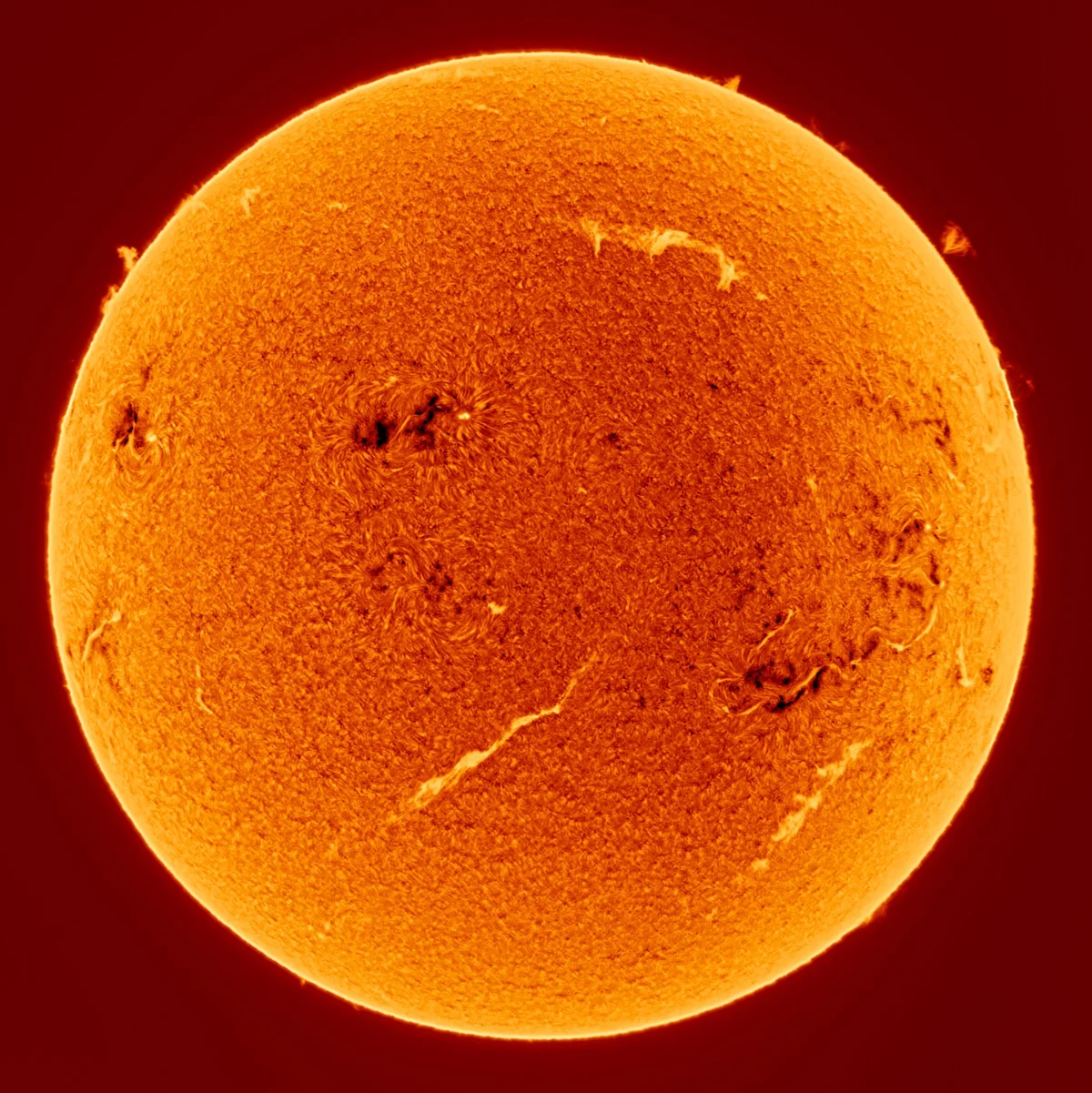
Other entries shift the emphasis away from terrestrial landmarks. “Dancing Flames,” by 14-year-old 林 与晨, is an up-close view of the Sun, showing flares and dark spots. That proximity changes the image’s visual language: instead of using a landscape to establish scale, the surface itself fills the frame. The title suggests motion, while the visible features give the photograph a pattern of bright and dark forms to follow.
Ani Shastry’s “Gum 37: The Southern Tadpoles (or ‘Teapot Nebula’)” and Humbert Cédric’s “NGC 7293: The Helix Nebula” focus on nebulae photographed from Chile. Their titles identify the objects by both catalogue designation and familiar nickname where available, giving viewers two ways into subjects that might otherwise appear as unfamiliar forms. The shortlist also includes Sahner’s “A Deep Look Into the Milky Way’s Core,” made in Namibia, extending the view from individual objects to the structure of our galaxy.
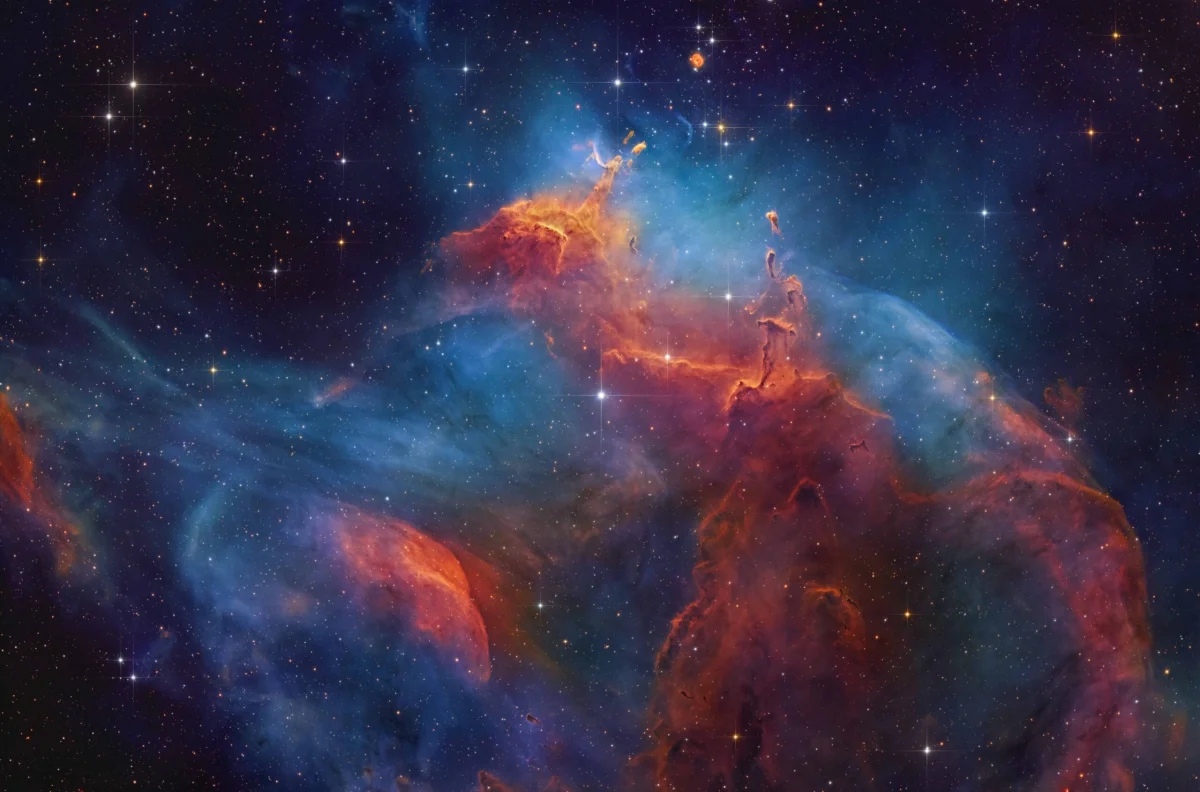
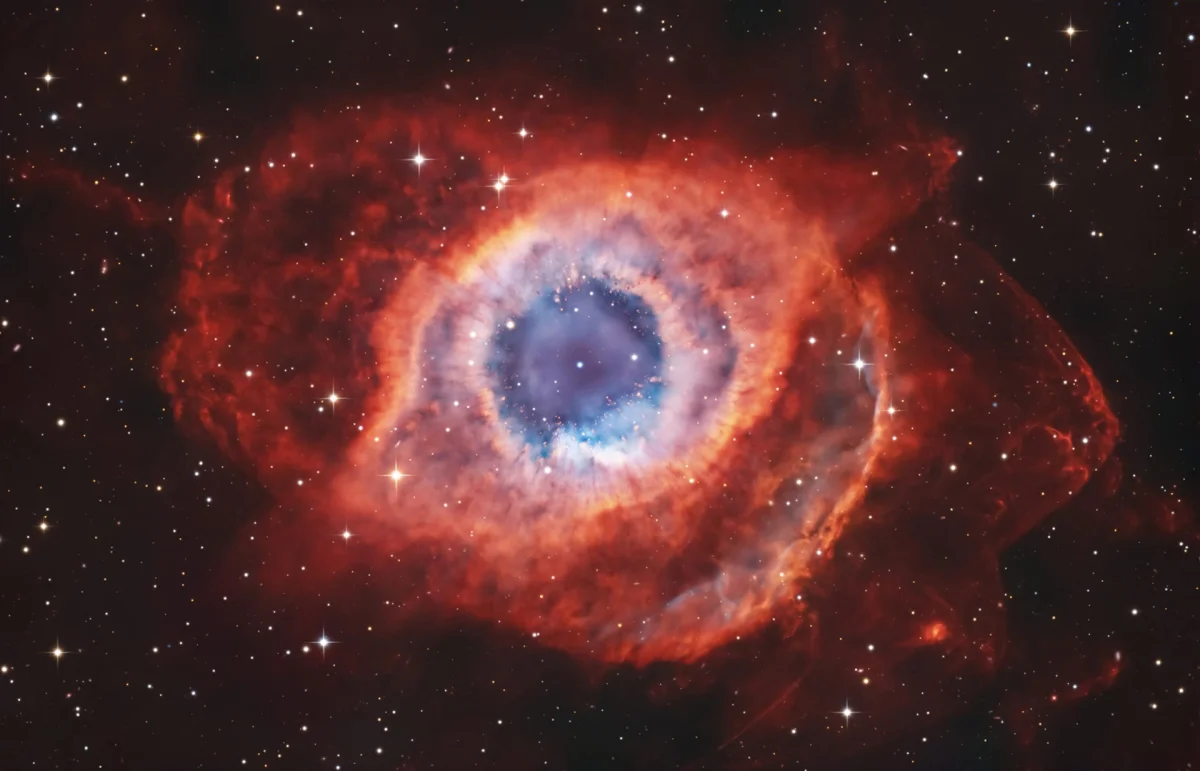
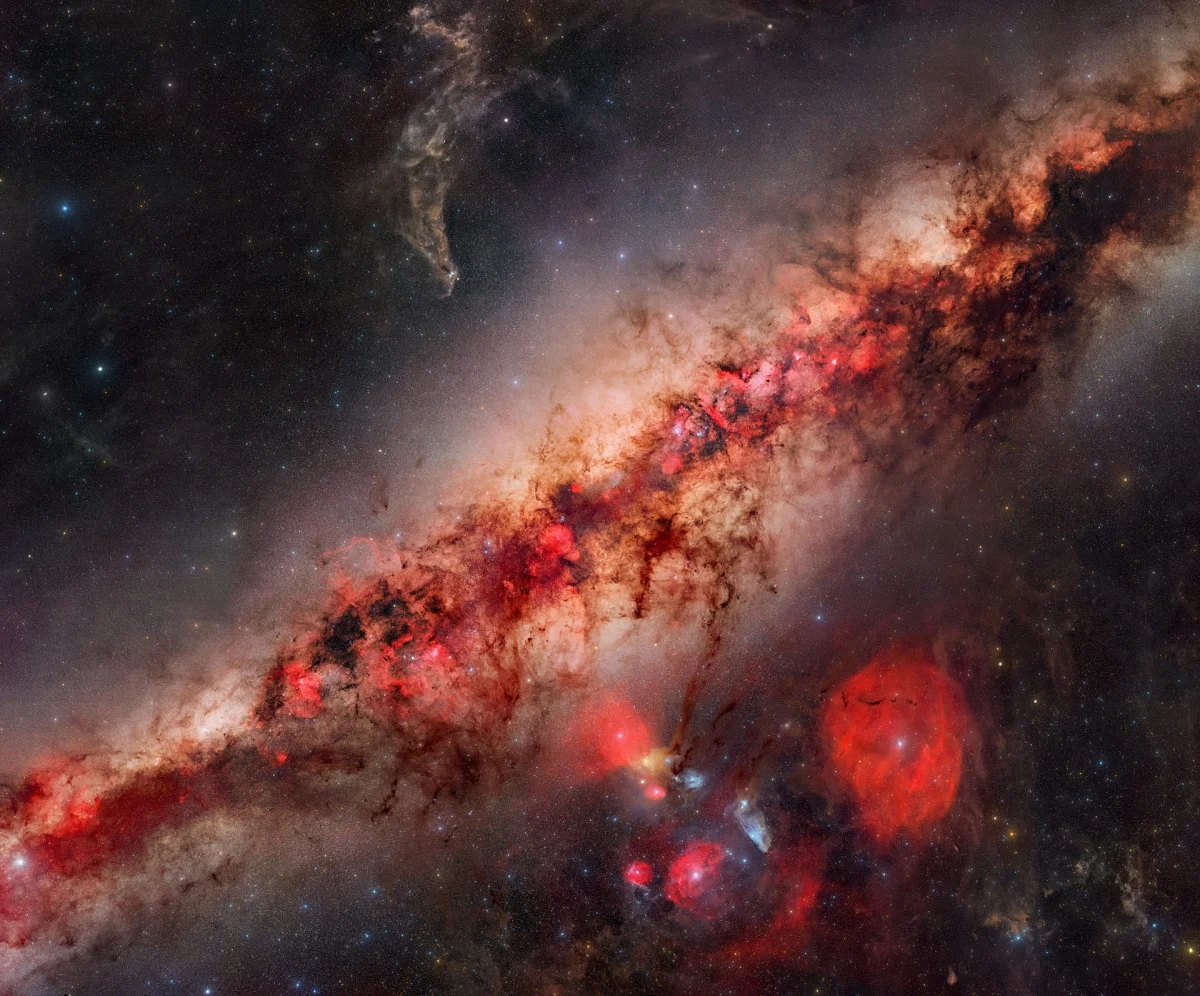
The source describes some shortlisted work as telescopically captured and presented in composite images. That approach can bring faint or distant structures into view by combining photographic material, while asking the maker to balance detail with a coherent overall image. The shortlist’s mix of close astronomical views and location-based compositions makes that balance especially visible: each picture has to decide whether the viewer should first notice a celestial form, a place, or the connection between them.
Exhibition and book
The winners are scheduled to be announced on September 17. The public exhibition opens the following day at London’s National Maritime Museum, accompanied by Astronomy Photographer of the Year, Collection 15. For designers and image makers, the selection offers a useful look at how framing, sequence, scale and contrast can make subjects with enormous distances feel immediate. The most memorable approach may be to begin with a clear point of reference—rock, mountain, waterfall or tower—and let the sky change how that familiar form is seen.
| Rev | Description | Date |
|---|---|---|
| A | Issued for reading | |
| B | Viewed 384 times | Current |