WIMO Scooter Concept Combines Riding, Walking Support and Follow Along Cargo
- Project
- UX & UI Design
- Drawn by
- TheFuture
- Issued
- Sheet
- A-2
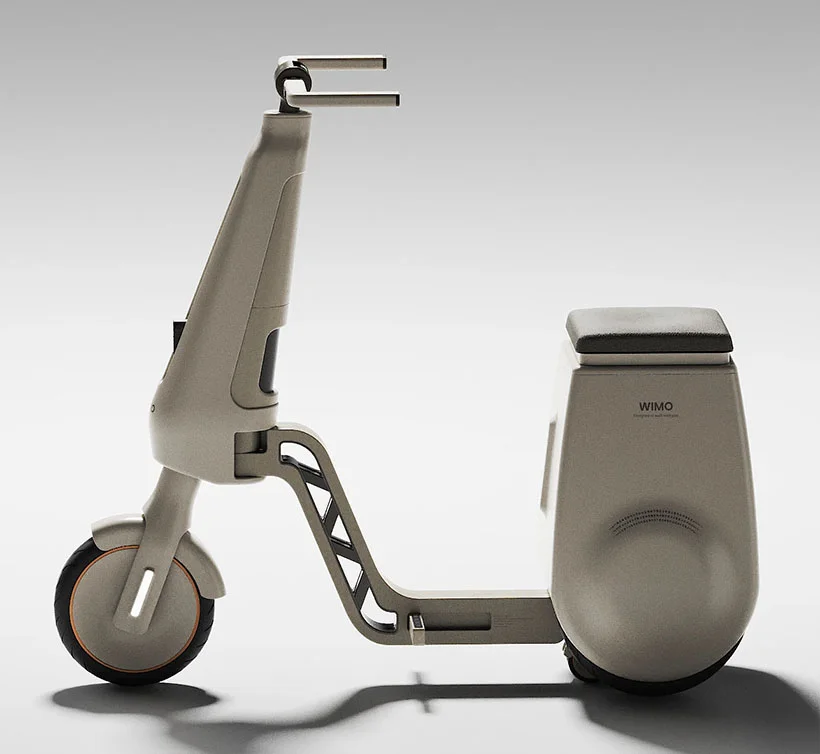
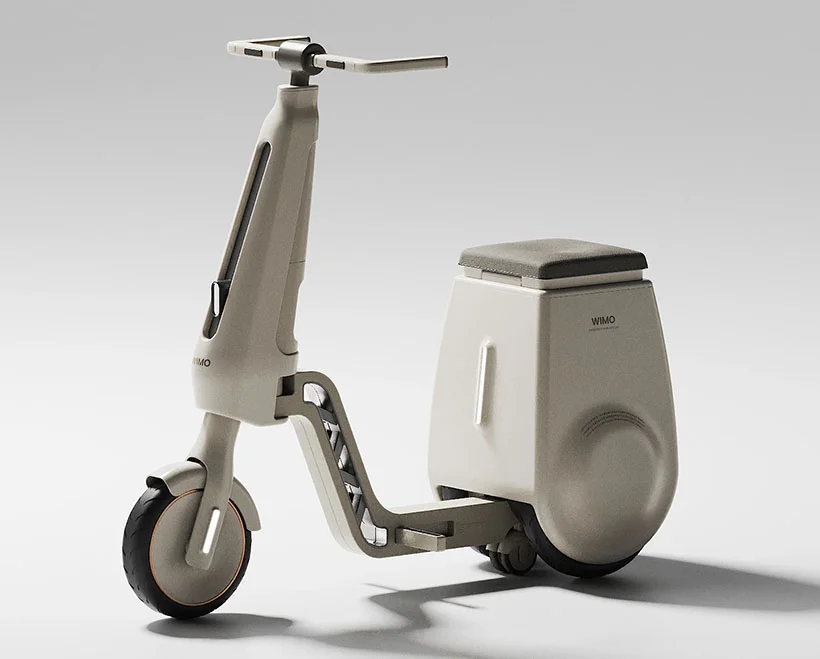
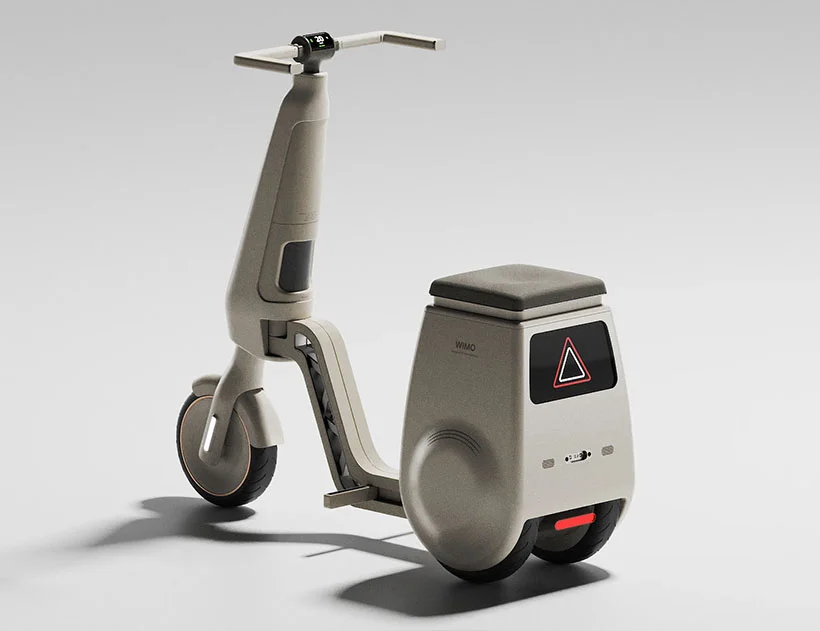
Geonwoo Kang’s WIMO concept pairs simple scooter controls with walking support, a folding seat and a detachable cargo bot.
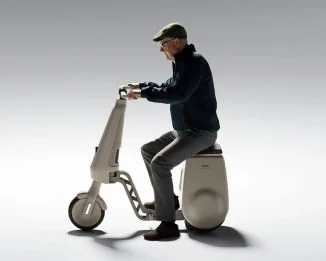
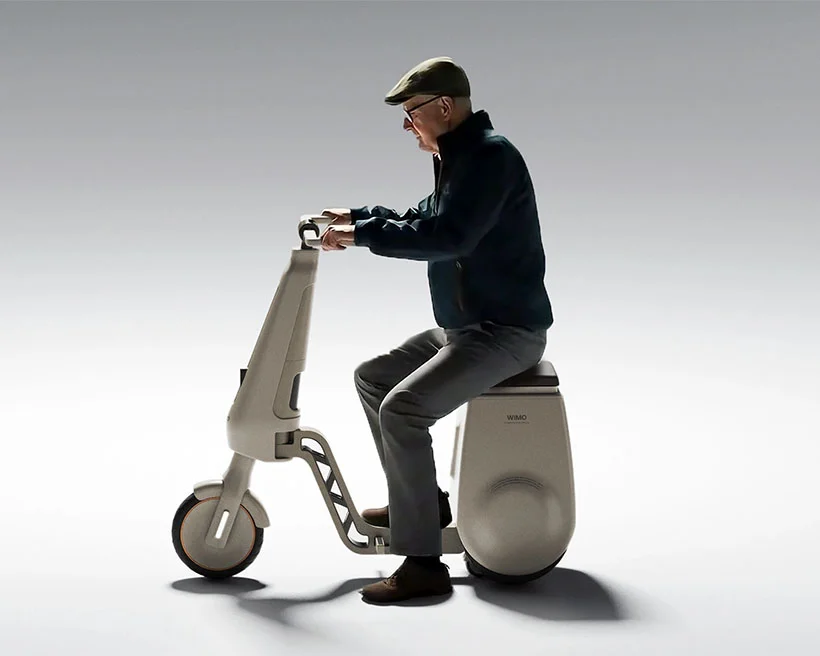
WIMO’s central design idea is to let one mobility device adapt when its rider wants to move in a different way. Designed by Geonwoo Kang, the scooter concept combines powered travel with a walker mode, a folding seat and a detachable cargo bot. That combination gives the design a broader role than getting from one point to another: it also considers what happens when someone pauses, changes pace or needs to carry something.
Controls designed around a light touch
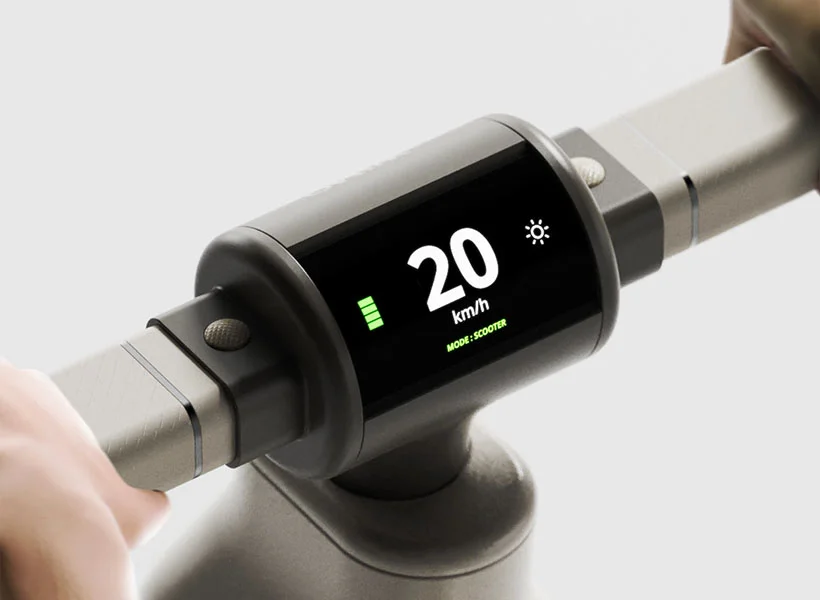
The handlebar puts forward and reverse on two buttons, with speed controlled by how firmly the rider presses. Releasing the control brings the scooter to a stop. There are no gears or layers of settings to manage in the described interface. The screen limits its information to speed, remaining battery and the current mode.
That small display makes the control scheme easier to read at a glance. Its three indicators relate directly to the next decision a rider may need to make: how quickly the scooter is moving, whether it has charge left, and which way the frame is set up for use. Keeping the screen focused can help reduce distraction, especially when the rider is also navigating a pavement or looking for a place to stop.
The pressure based speed control is another deliberate choice. It connects the rider’s hand movement to the scooter’s response without introducing a separate dial or gear sequence. For a product intended to support everyday trips, the fewer steps between a decision and the vehicle’s response, the easier it is to understand the interaction. The concept describes the scooter stopping when the rider lets go, making release part of the control logic.
A frame that changes with the trip
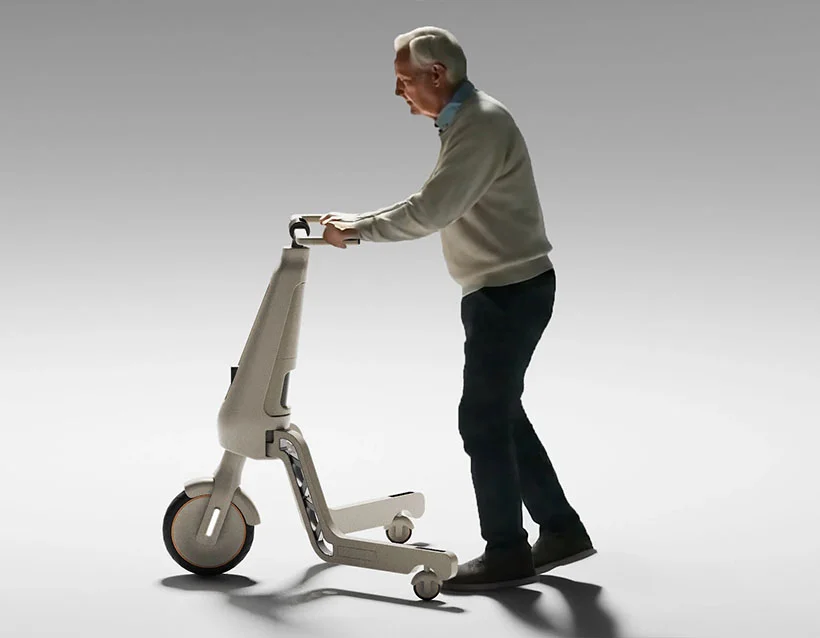
WIMO’s walker mode shifts the design from powered riding to walking support. The handlebars become a place to steady oneself, while the frame adjusts for walking. The concept presents this as a way to accommodate changes in comfort and energy during a trip: a rider might travel by scooter, then switch to walking and take a rest when needed.
This kind of mode change raises a useful product design question: can a device support different levels of mobility without making each transition feel like a separate task? WIMO’s answer is to keep the support within the same object. The user can change how they move while retaining the handlebars and frame as familiar points of contact. The article doesn’t specify how the transition works mechanically, how long it takes, or what adjustments the frame makes, so those details remain open questions for anyone assessing the concept as a practical product.
Geonwoo Kang is credited as the designer. The source describes WIMO as a concept and gives no launch date, technical specifications or availability information.
Cargo that can follow along
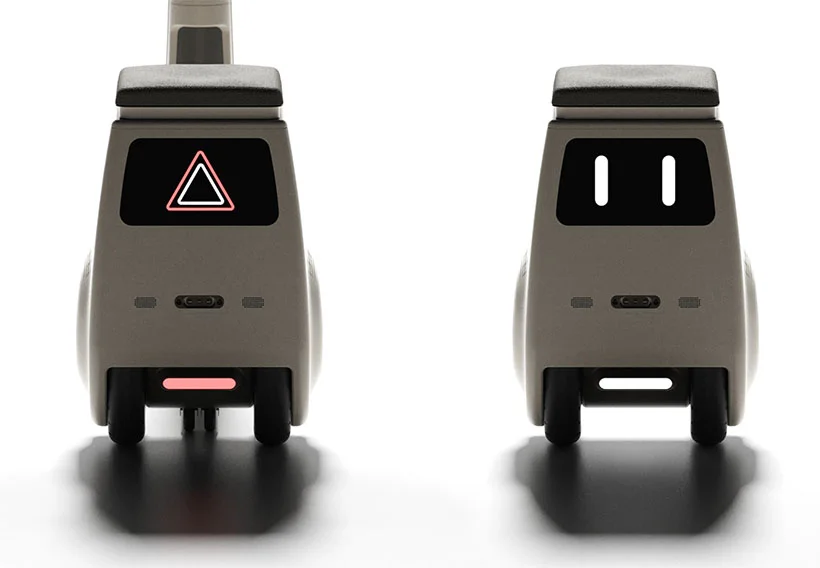
The detachable cargo bot extends WIMO’s thinking beyond the rider’s posture. Clipped onto the rear, it travels with the scooter; detached, it can follow the user. The concept frames it as a way to carry groceries or a bag without keeping that weight on the person. Its role is particularly interesting because it makes carrying part of the mobility system rather than an accessory the user has to manage separately.
That extra component also introduces practical questions. A working version would need to make detaching and reattaching clear, keep the cargo stable, and behave predictably as it follows someone on foot. The source doesn’t describe its navigation method, carrying capacity or charging setup, so none can be assumed. As a design proposition, though, the follower function points to a broader approach: mobility support can include what moves alongside a person, not only what they ride.

Pauses are part of the design
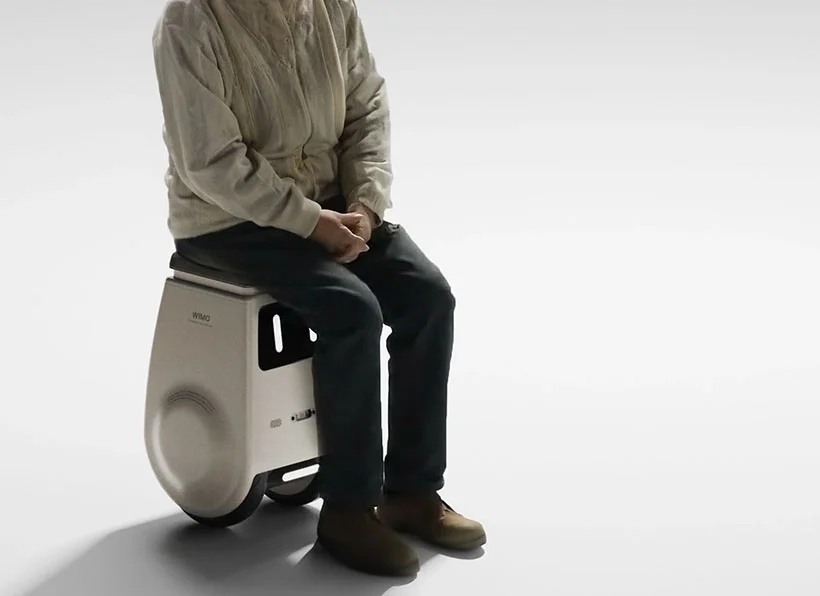
The frame can also fold into a seat. That feature treats resting as an ordinary part of a journey, rather than a situation requiring a separate piece of equipment. Together, the seat, walker mode and cargo bot account for three moments beyond riding: stopping, walking and carrying. The concept’s value lies in connecting those moments in one design.
WIMO’s restrained interface supports that focus. The source describes a compact display and two primary buttons, without presenting a crowded dashboard or a menu of features. The design’s visual character is described as quiet rather than attention seeking. For a mobility product, that restraint can make the controls and the person using them the focus.
The project also invites designers to examine how a product communicates mode changes. A screen label can identify the selected mode, but the physical form must make the change legible too: handlebars, frame and seat all take on different jobs. Clear feedback at each transition would help users understand the device’s state. The source establishes the modes and controls, but leaves their visual and physical feedback unspecified.

One device, several everyday needs
The concept’s strongest design move is its attention to changing needs over the course of a single outing. A user can ride, walk with support, sit down, and move belongings with the cargo bot. Those functions suggest a useful standard for evaluating mobility concepts: consider the full trip, including transitions and pauses, rather than judging the vehicle only while it is moving.
WIMO is presented as an idea, not a product with published performance details. Its concept makes the interaction easy to grasp through a small set of controls and a set of physical functions tied to common activities. The next design questions are concrete: how the frame adjusts, how the cargo bot follows, and how each mode announces itself to the rider. Answering those would show whether WIMO’s considerate premise carries through to the details of everyday use.
The post Wimo Scooter Concept for Elderly People with “Walking Mode” Feature appeared first on Tuvie Design.
| Rev | Description | Date |
|---|---|---|
| A | Issued for reading | |
| B | Viewed 456 times | Current |


