Ecool Shared Scooter Uses Foot Folding, Modular Parts and Charging Rails
- Project
- UX & UI Design
- Drawn by
- TheFuture
- Issued
- Sheet
- A-1
Designed by Wai Yin Chai, Ecool pairs a foot operated fold with replaceable parts and charging rails to address the everyday problems of shared scooter fleets.
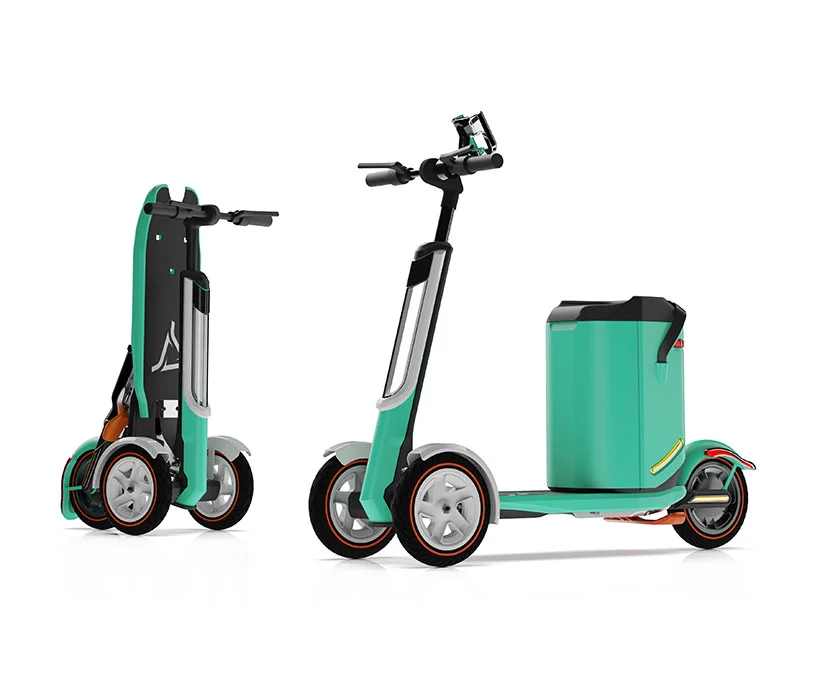
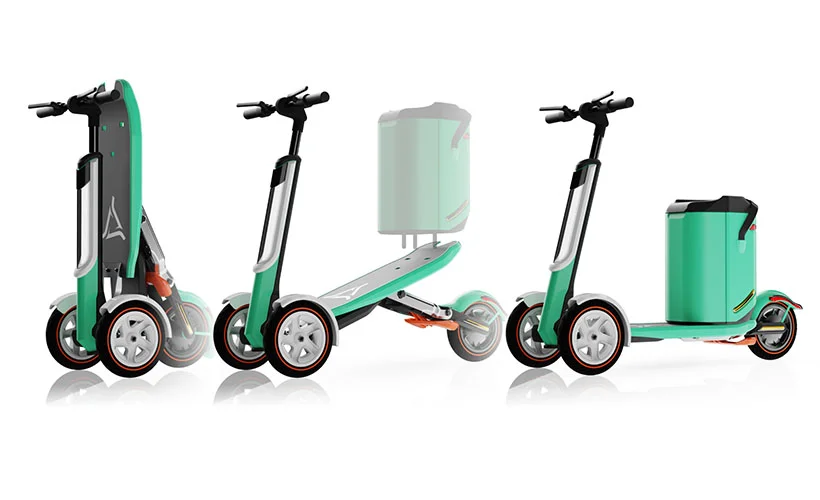
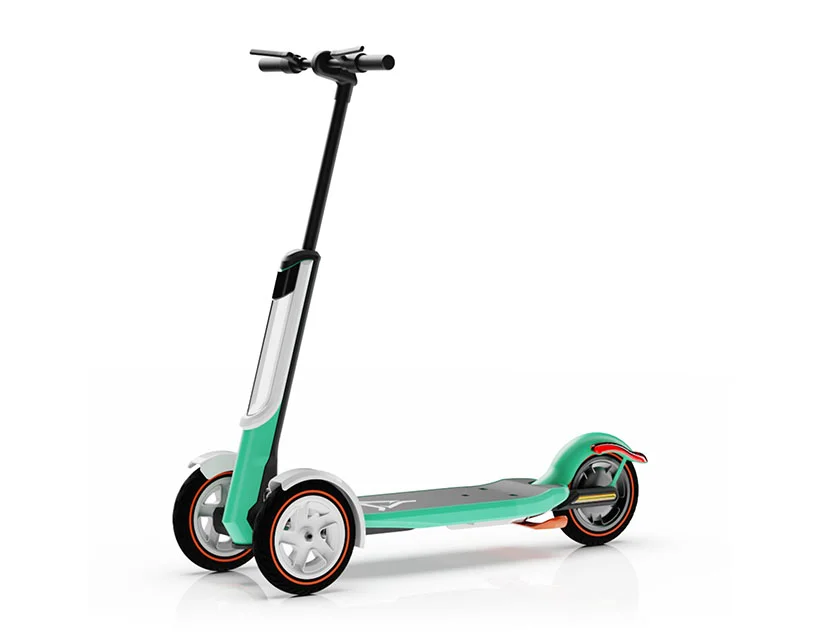
Ecool’s defining move happens at the curb: the scooter folds when a rider presses a foot control. That small physical gesture gives the design a clear purpose beyond getting from A to B. Shared scooters are often left taking up space, exposed to damage or simply abandoned after a trip. Ecool, designed by Wai Yin Chai, treats parking and storage as part of the product, rather than as someone else’s problem.
A fold designed for the end of the ride
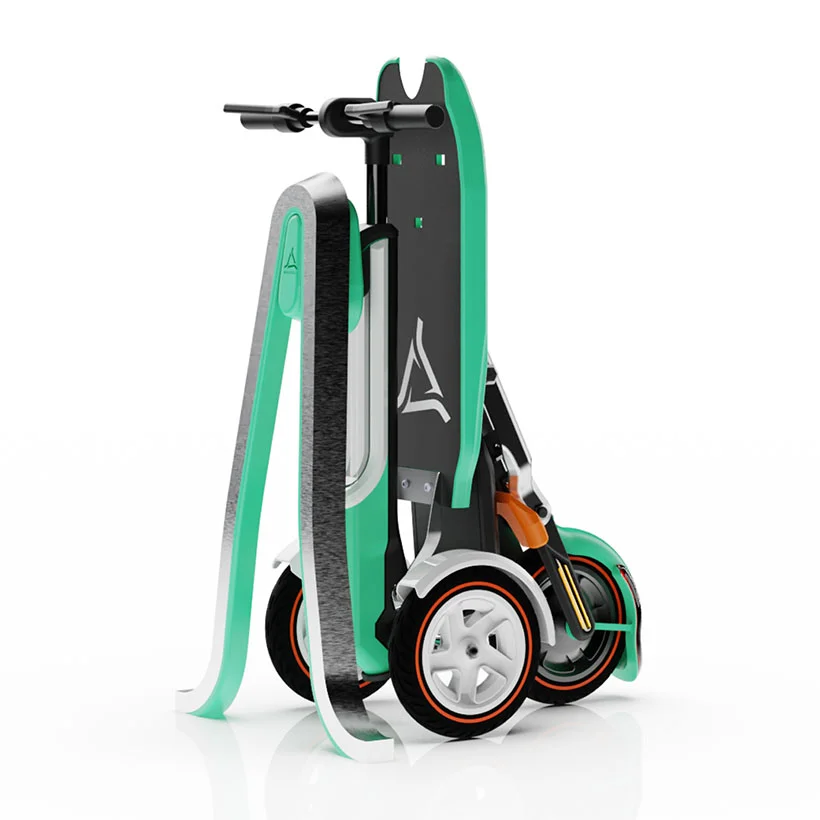
The fold is meant to be quick and hands free. Riders don’t have to lift the scooter or work through a fiddly sequence to make it more compact. That matters in everyday use: a mechanism that takes extra effort can be skipped, especially when a rider is in a hurry or has limited strength or mobility. With a foot activated control, Ecool makes the intended parking action easier to understand and carry out.
Once folded, the scooter takes up less room. That could make it easier to arrange at a designated storage point and less obtrusive when parked. The design’s premise is straightforward: if the vehicle can change shape at the moment it’s put away, the space it occupies becomes part of the design brief. The fold also signals that the ride has ended and the scooter has been put into a more orderly state.
There are practical questions the source doesn’t answer, including how much time the folding action takes, how the mechanism is maintained, and what happens if it’s damaged. Those details matter for a fleet product. The concept’s value lies in identifying the curbside handoff as a design opportunity, then giving that moment a specific physical interaction.
One platform, several kinds of use
Ecool is described as modular, with parts that can be swapped, repaired or replaced. The scooter is intended to adapt to commuters, delivery riders and shared fleets, rather than assuming every user needs the same configuration. The source doesn’t identify which components change or provide a parts list, so the extent of that adaptability remains unspecified. Still, the modular approach points toward a product that can be serviced in pieces instead of discarded as a whole when one part wears out.
That distinction has consequences for both daily operations and product life. A replaceable component can help keep a vehicle in use after a local failure, while a common platform can give a fleet operator options for different tasks. In practice, modularity only helps when replacement parts are accessible and repair is straightforward. Ecool’s stated design direction makes maintenance part of the product idea, though the source offers no details about repair procedures or component compatibility.
For designers, this is a useful reminder that adaptability needs to be visible in the product architecture. A label such as “modular” has little meaning on its own. The useful questions are which parts can be changed, what tools a repair requires, and whether a component can be replaced without taking the rest of the vehicle out of service. Ecool establishes the intent; the implementation details would show how far that intent reaches.
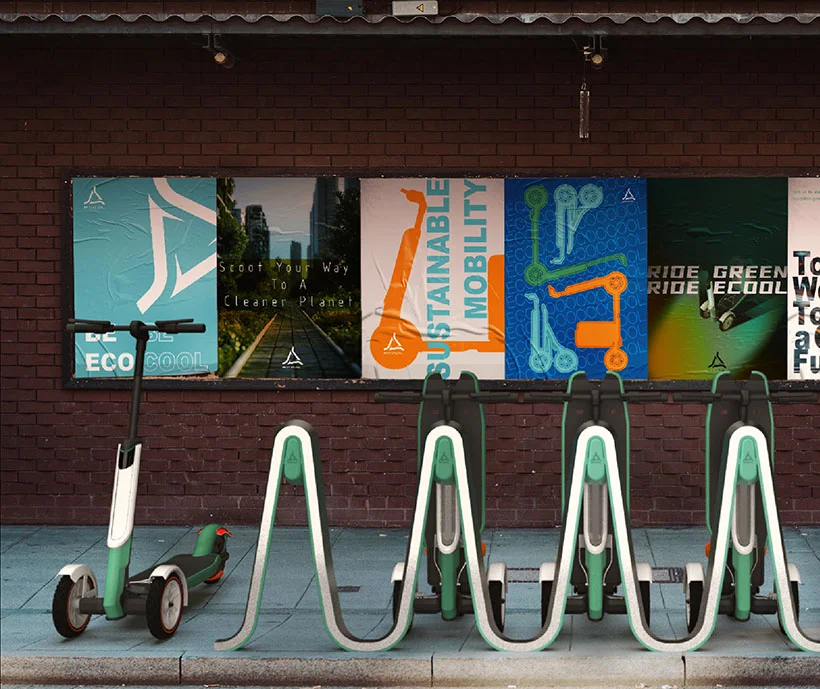
Charging rails give the fleet a home
The charging rails address another recurring challenge: where scooters go when they aren’t being ridden. Rather than leaving each vehicle to be parked wherever a trip ends, the rails give the fleet a defined place to return to. The source presents this as a way to reduce loss and clutter while creating more control over storage and charging.
That infrastructure changes the design problem. A scooter that must connect to a rail needs to work as part of a system, with its parking position and return path considered alongside its frame and controls. It also gives riders a clearer destination at the end of a trip. Ecool’s fold and its charging rails therefore support related behaviors: the vehicle becomes easier to put away, and the fleet has a place to receive it.
The project also includes an app for checking availability, battery and routing. Those familiar digital functions help riders interact with the service, but the central design emphasis remains physical: the vehicle’s folding action, storage and useful life. That balance is telling. An interface can guide a rider to a scooter, yet it can’t by itself make a vehicle easier to park or repair. Ecool puts those operational details into the product and its surroundings.
Designing for ordinary wear
Ecool reads as a response to the gap between the promise of shared mobility and the conditions these products meet in public space. The concept doesn’t claim that a fold, replaceable parts or charging rails will resolve every fleet problem. Instead, each feature addresses a specific point of friction: the scooter taking up space, components wearing out, and vehicles needing a reliable place to return.
For teams working on shared products, the useful takeaway is to map what happens after the primary interaction. What does the user do when a ride ends? How does the product get stored, charged and repaired? Which parts can take repeated use, and which can be changed when they fail? Those questions shape the service as much as the ride itself.
Designed by Wai Yin Chai, Ecool’s most persuasive idea is that the end of a trip deserves the same attention as the start. Its foot operated fold makes that idea tangible, while the modular construction and charging rails extend it into maintenance and fleet organization. The next measure of the concept would be how clearly those choices hold up through repeated everyday use.
The post Ecool Shared Scooter Knows When to Fold Itself Away appeared first on Tuvie Design.
| Rev | Description | Date |
|---|---|---|
| A | Issued for reading | |
| B | Viewed 693 times | Current |


