Hermès Cut on Tinos: A Reflection on Craft, Time and the Natural World
- Project
- Graphic Design
- Drawn by
- Anna Dorothea Ker
- Issued
- Sheet
- A-195
A journey to Tinos for the Hermès Cut timepiece connects the rhythms of the island with reflections on craft, history and the scale of human time.
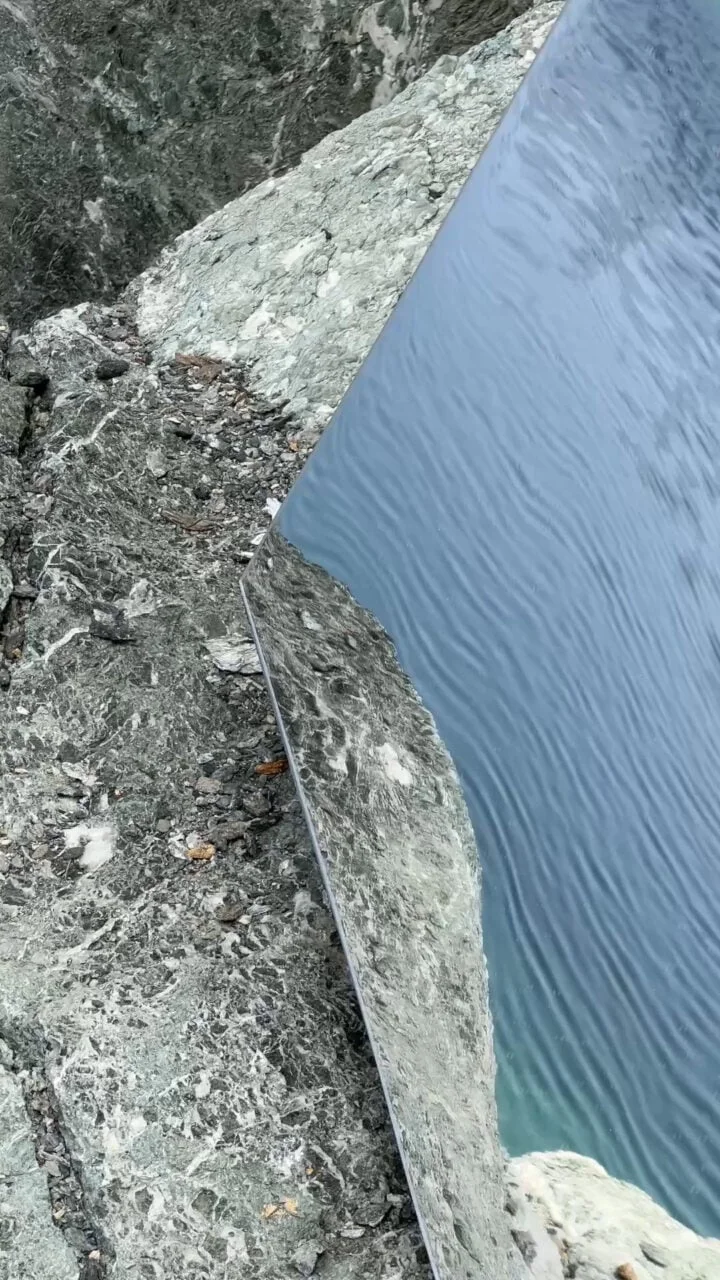
On Tinos, time has a visible scale. Mountain peaks meet the changing light, paths carry the traces of generations of footsteps, and the tide returns to the shore. Those slow, repeated rhythms set the frame for a journey to the Cycladic island to mark the release of the Hermès Cut timepiece. The encounter links a contemporary object for measuring hours with a place shaped by far longer cycles.
That connection gives the story its shape. A watch makes time legible in small increments; the island suggests a duration that resists that kind of measurement. Sunrise and sunset return, paths accumulate use, and the sea keeps moving. Set beside these patterns, a day can feel less like a fixed unit and more like a brief passage through a much larger history.
Time measured against the island
The account places landscape at the center of the experience. Rather than treating Tinos as a backdrop, it describes the island as a record of change: peaks have watched the Sun rise and fall for millennia, while footfall has worn routes into the ground over centuries. The details are spare, but they establish a useful contrast between time marked by human routines and time registered through the natural world.
For designers, that contrast offers a way to think about the meaning attached to an object. A timepiece is functional because it translates duration into a readable form. Yet its use also depends on the wearer’s sense of what those hours contain: work, travel, waiting, ritual or rest. Placing a watch in a setting where the sea and light follow recurring patterns shifts attention from precision alone to the experience of time passing.
The source doesn’t describe the Hermès Cut’s materials, dial, movement or construction, so those details can’t be assessed here. What it does provide is a setting and an idea: a visit connected to the timepiece’s release, framed by reflection on nature, craft and the marks history leaves on land. That distinction matters. Without specifics about the object, the strongest design reading comes from the relationship the story proposes rather than from claims about its visual features.
Craft as a trace across generations
Craft enters the story through the long view. A path shaped by repeated steps is a practical route, but it also holds evidence of use. In a similar way, making can carry knowledge forward through actions repeated, refined and handed on. The account names centuries of craft as part of the visit’s subject, though it doesn’t identify particular makers, techniques or traditions. The idea remains grounded in the relationship between time and accumulated human effort.
That perspective can help creative teams think about how to present a designed object without relying on a list of specifications. Context can make an object feel connected to a wider set of values: patience, continuity and care in making. The setting does this through contrast and association. The island’s slow rhythms invite the viewer to consider the time behind an object, as well as the time it helps someone keep.
There’s a practical lesson in the restraint, too. When a story has limited information about a product, its strongest details should lead. Here, those details are the journey to Tinos, the Hermès Cut timepiece, and the natural cycles and historical traces that shaped the reflection. Staying with them allows the narrative to build atmosphere without inventing technical claims or assigning motives that the source doesn’t provide.
A slower frame for a familiar object
Timepieces are often presented through close views and precise descriptions. This story takes a wider route, asking readers to consider the scale around the object. The tide’s ebb and flow offers a recurring measure; the worn path holds the past in its surface; the mountain gives the day a broader horizon. Each image brings a different kind of duration into view, from daily repetition to centuries of change.
For visual storytellers, the approach suggests a clear sequence: begin with a place and its rhythms, bring the object into that context, then let the connection carry the meaning. The sequence works because the landscape gives the abstract subject of time something tangible to hold onto. It also leaves room for the audience to make the final association rather than spelling out a single interpretation.
The journey to Tinos ultimately treats time as both a measure and an inheritance. A watch can mark the passing of an hour; the land reveals how much came before it. For a story about craft, that pairing offers a useful design prompt: show the object clearly, then give viewers a reason to look beyond its immediate function.
The post Exploring the Shapes of Time With Hermès appeared first on IGNANT.
| Rev | Description | Date |
|---|---|---|
| A | Issued for reading | |
| B | Viewed 432 times | Current |