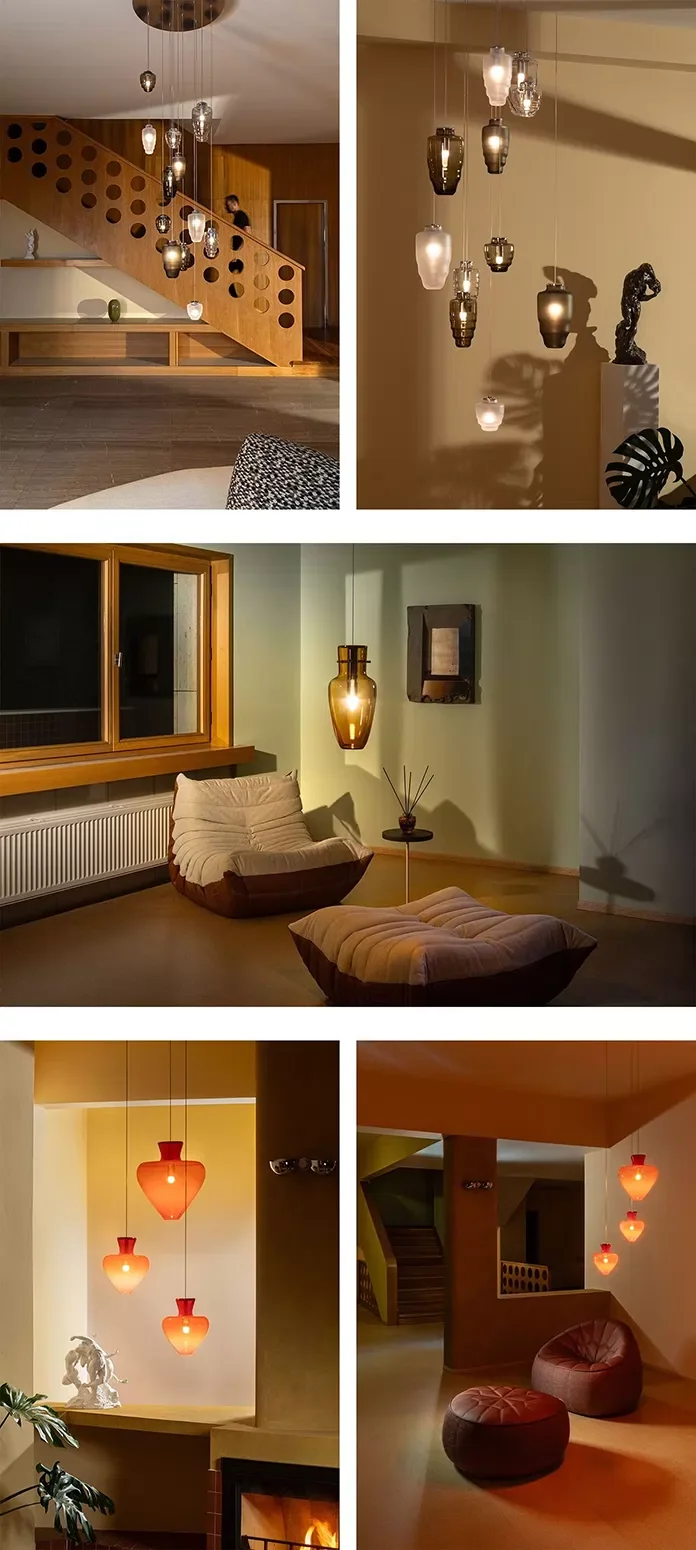
Studio Bonarchi Brings Greek Light and Island Heritage Into Contemporary Interiors
- Project
- Graphic Design
- Drawn by
- Marie-Louise Schmidlin
- Issued
- Sheet
- A-194
Vangelis Bonios balances Greek materials and island histories with European influences, shaping interiors around light, contrast and local identity.
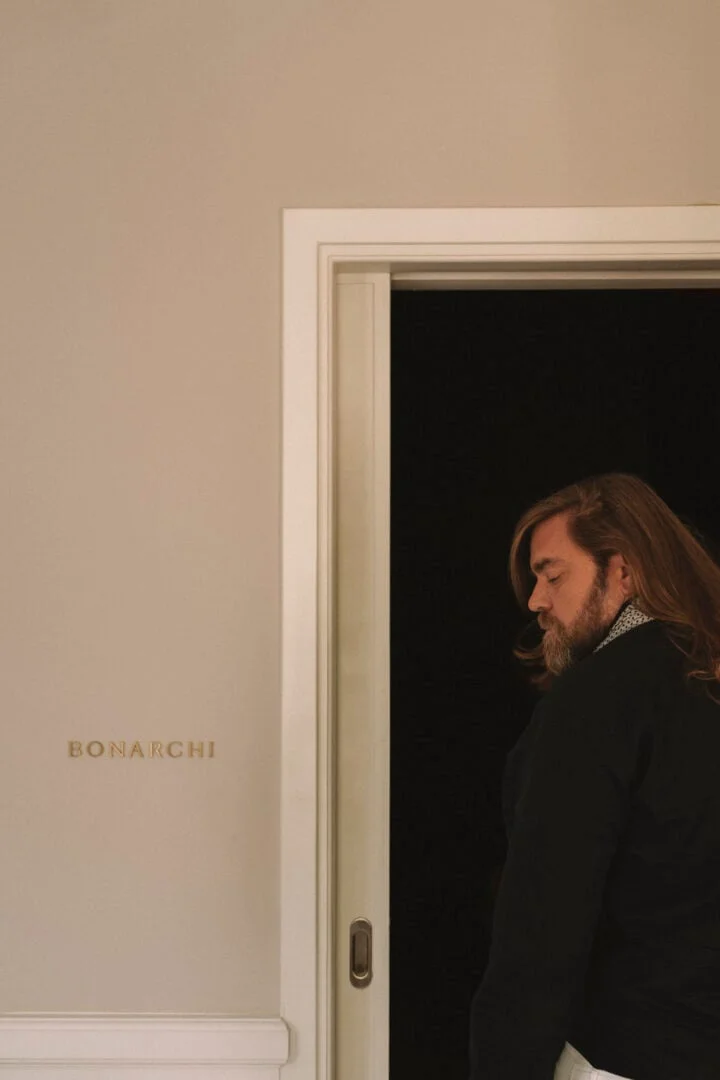
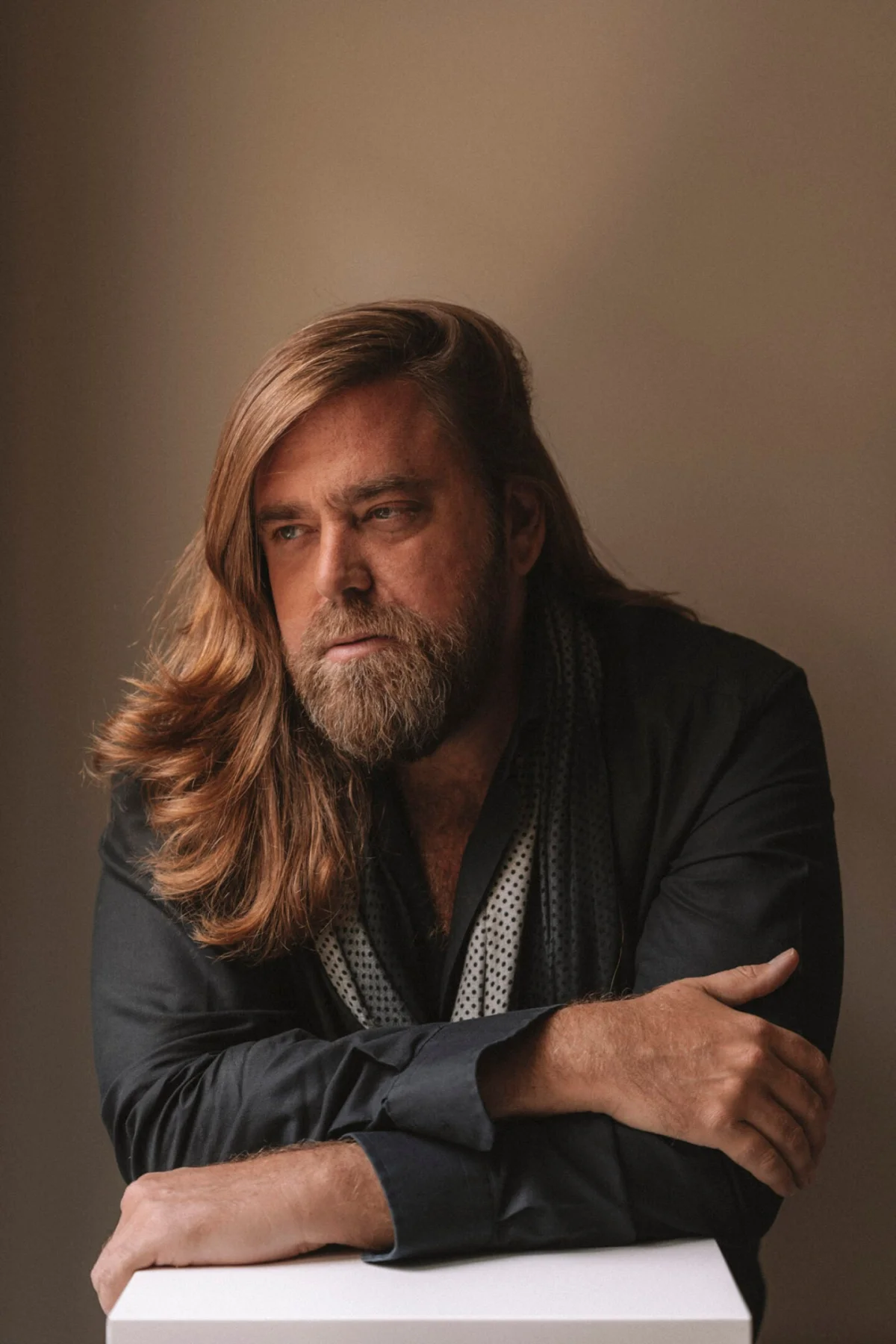
Light is the first design decision at Studio Bonarchi. For founder Vangelis Bonios, it can define a room through its presence or its absence: bright spaces make sunlight the focus, while darker ones use its restraint to create drama. That sensitivity shapes the Greek studio’s residential, restaurant and hotel interiors, where quiet palettes, tactile materials and dark accents give natural light room to lead.
Based in Athens, Studio Bonarchi works across bespoke, high-end interiors with a lasting quality. Its vocabulary sets soft linen against substantial marble, and relaxed spaces against carefully composed details. The studio’s earlier work includes Kalesma, a minimalist luxury hotel on Mykonos developed with architects K-studio; the project was featured previously. But Bonios’s approach isn’t built around a single island look. Each project draws on the history and character of its place.
Local history becomes a design language
For Bonios, regional identity should do more than supply visual motifs. He describes interiors as carrying meaning, with each design rooted in the place it serves. The process begins with close attention to local forms, materials and histories, which the studio then interprets in a contemporary vocabulary. That distinction matters in Greece, where islands within the same country have developed markedly different identities.
Odera Hotel on Tinos puts this thinking into practice. The project’s credits list Studio Bonarchi for interior design and FFE, T-constructions for architectural design and construction, and Panos Nikolaidis as lead architect. Bonios says Tinos has long been regarded as Greece’s most religious island, with more than 700 Catholic and Orthodox churches. The team set out to reflect that spiritual character in the hotel’s identity and interiors.
Rather than reproduce church architecture, the design uses restraint. Materials appear in their unembellished forms, while selected furniture pieces allude to the island’s many religious buildings. Light and shadow add another layer: the lobby’s shifting darkness gives it a contemplative mood, and the dim corridor to the spa recalls a passage leading toward secluded monastic rooms. The references are indirect, allowing atmosphere to carry the idea.
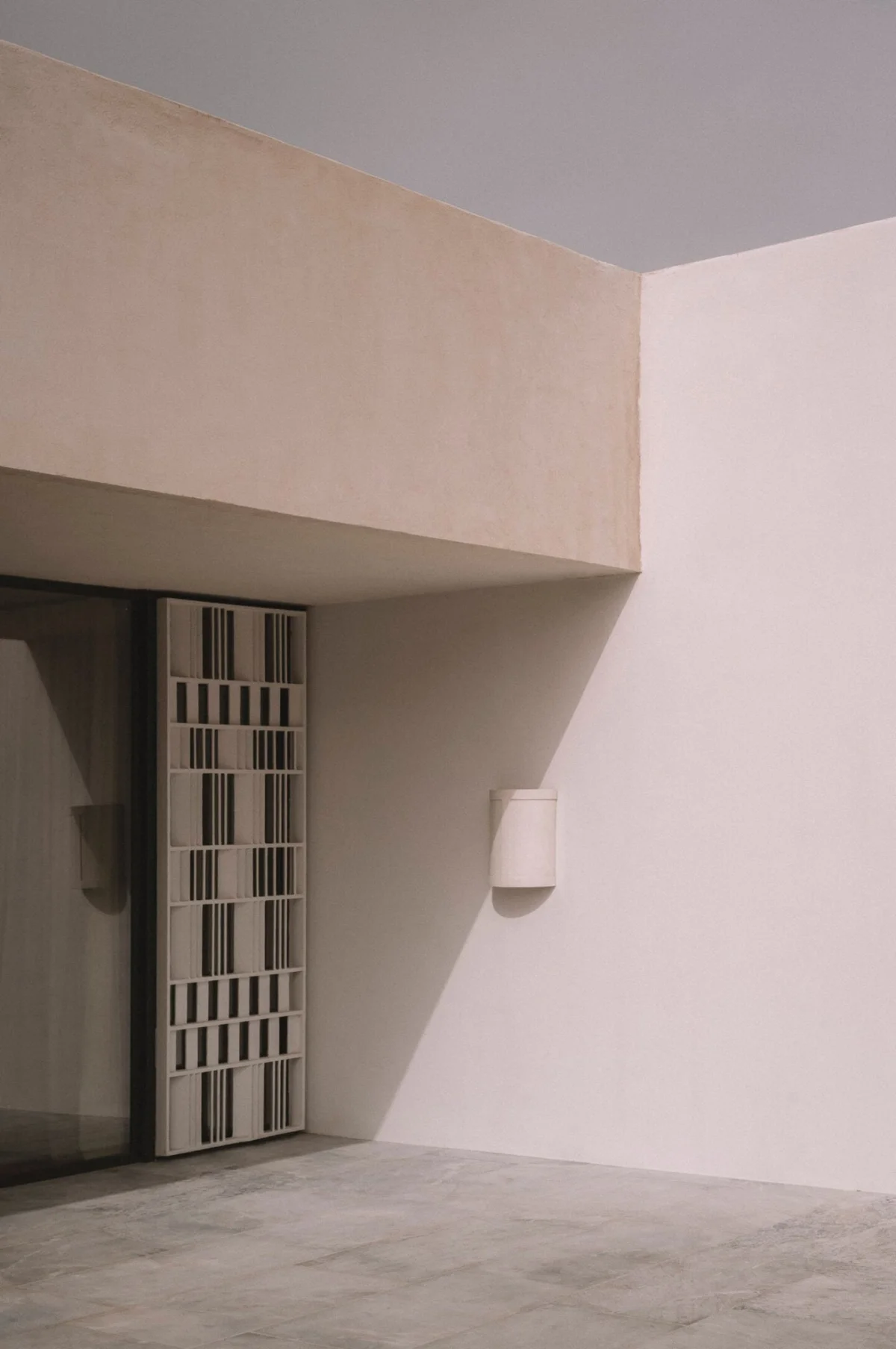
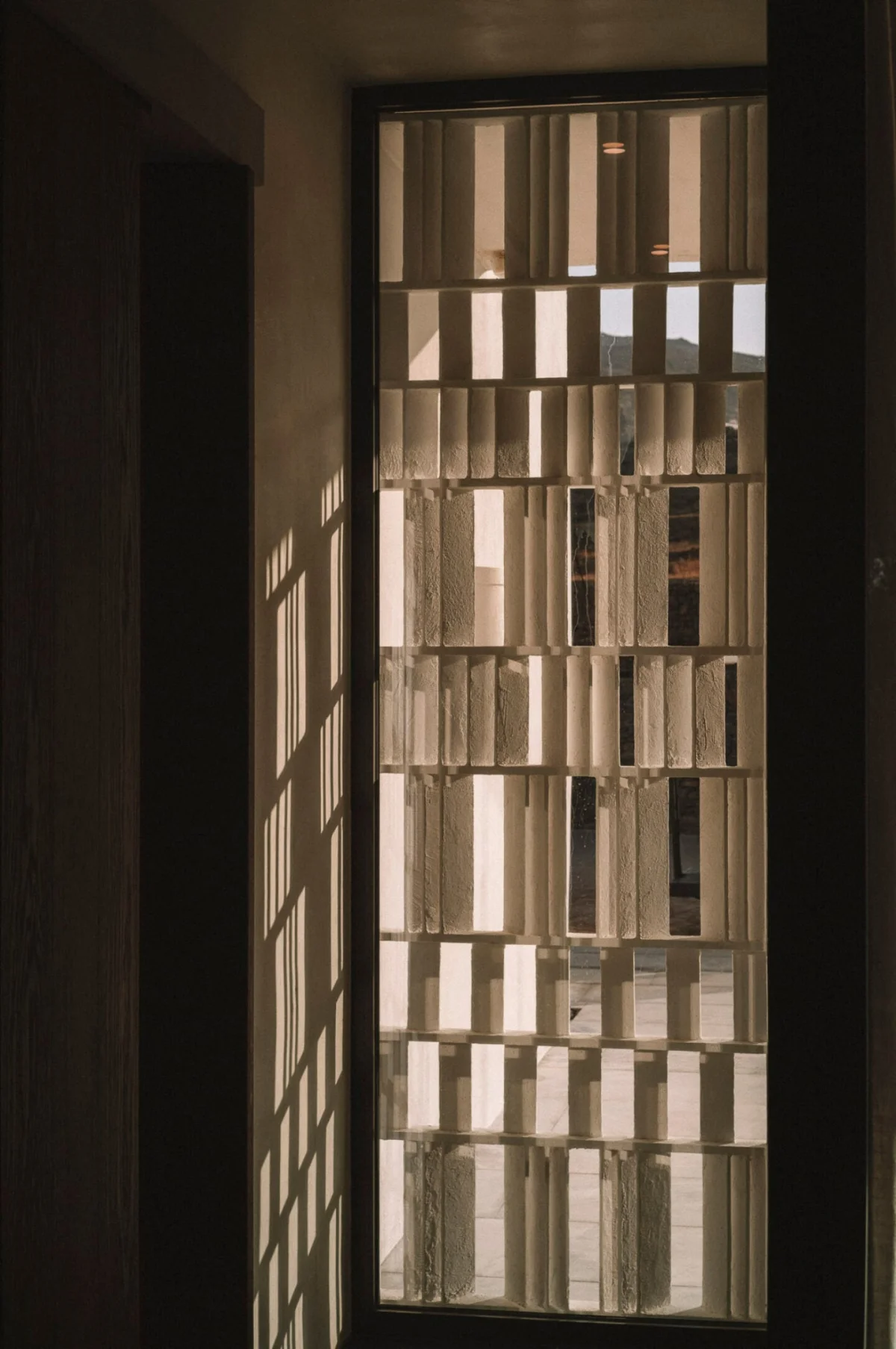
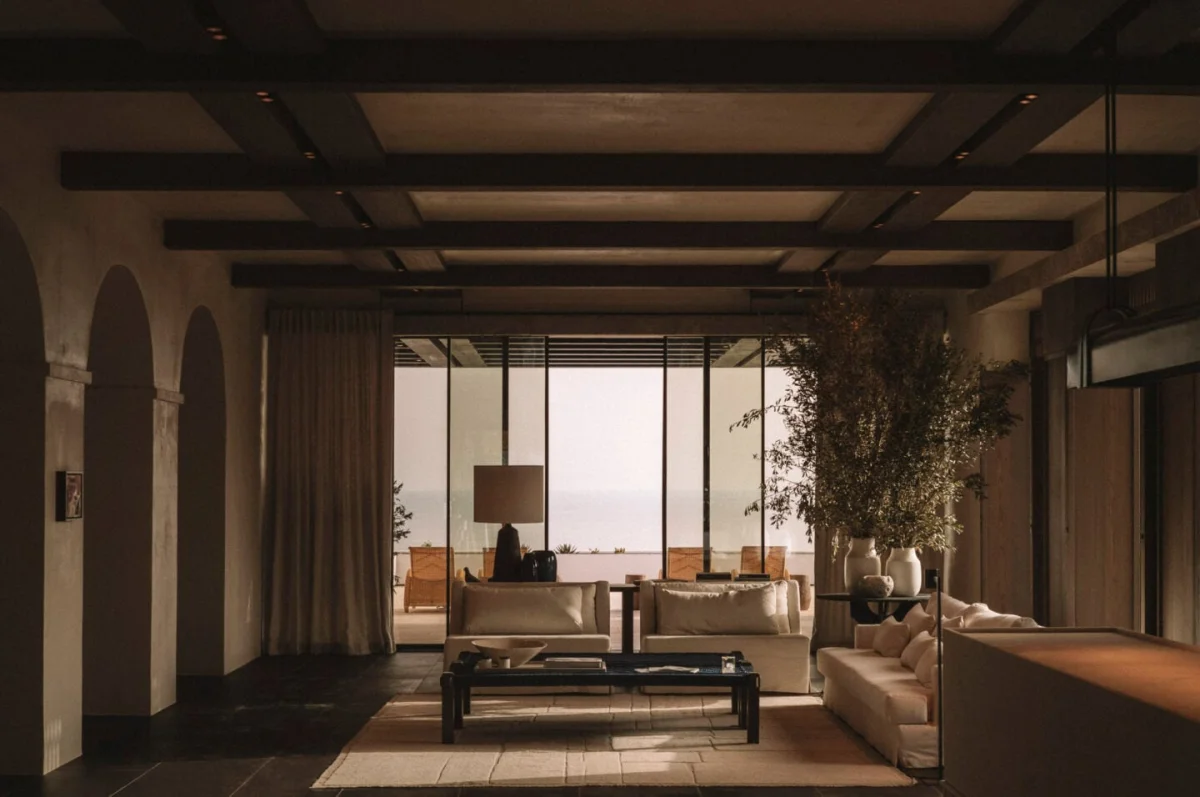
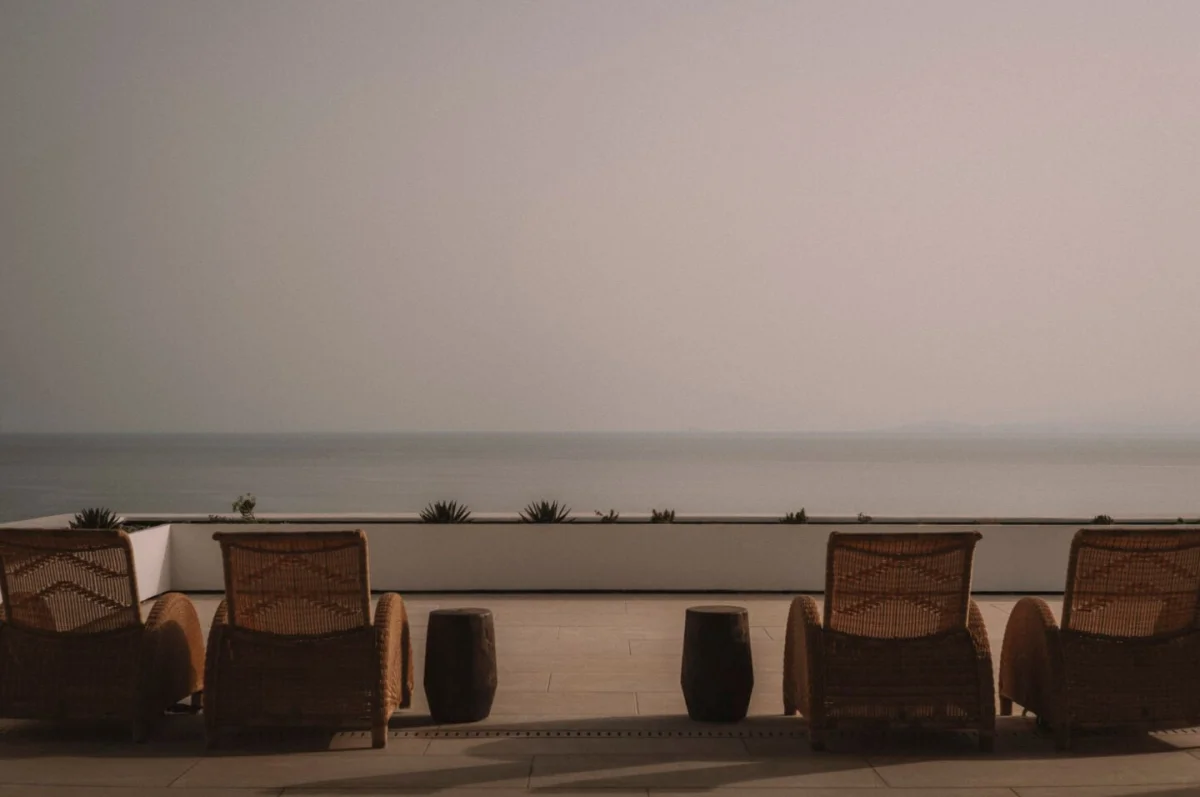
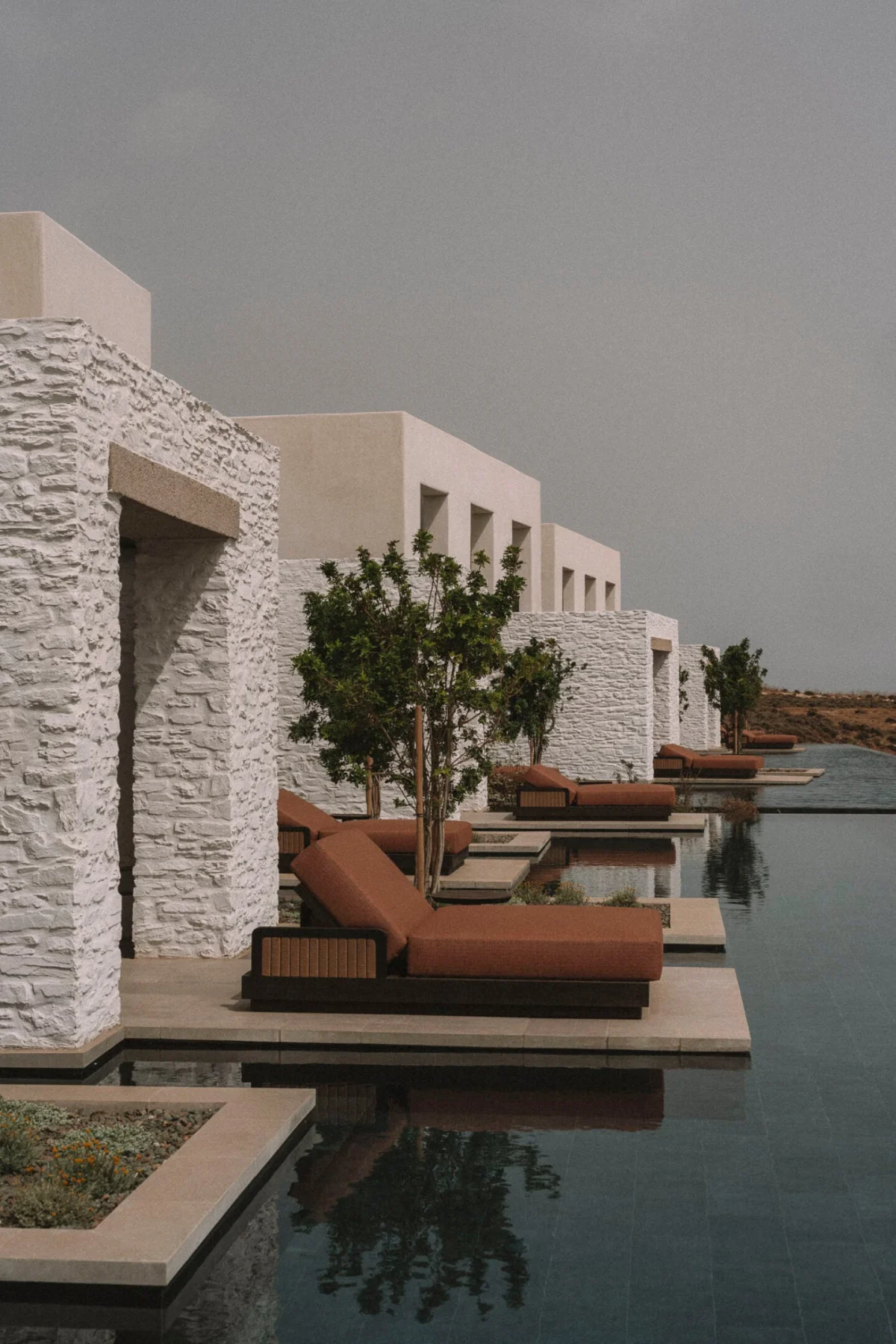
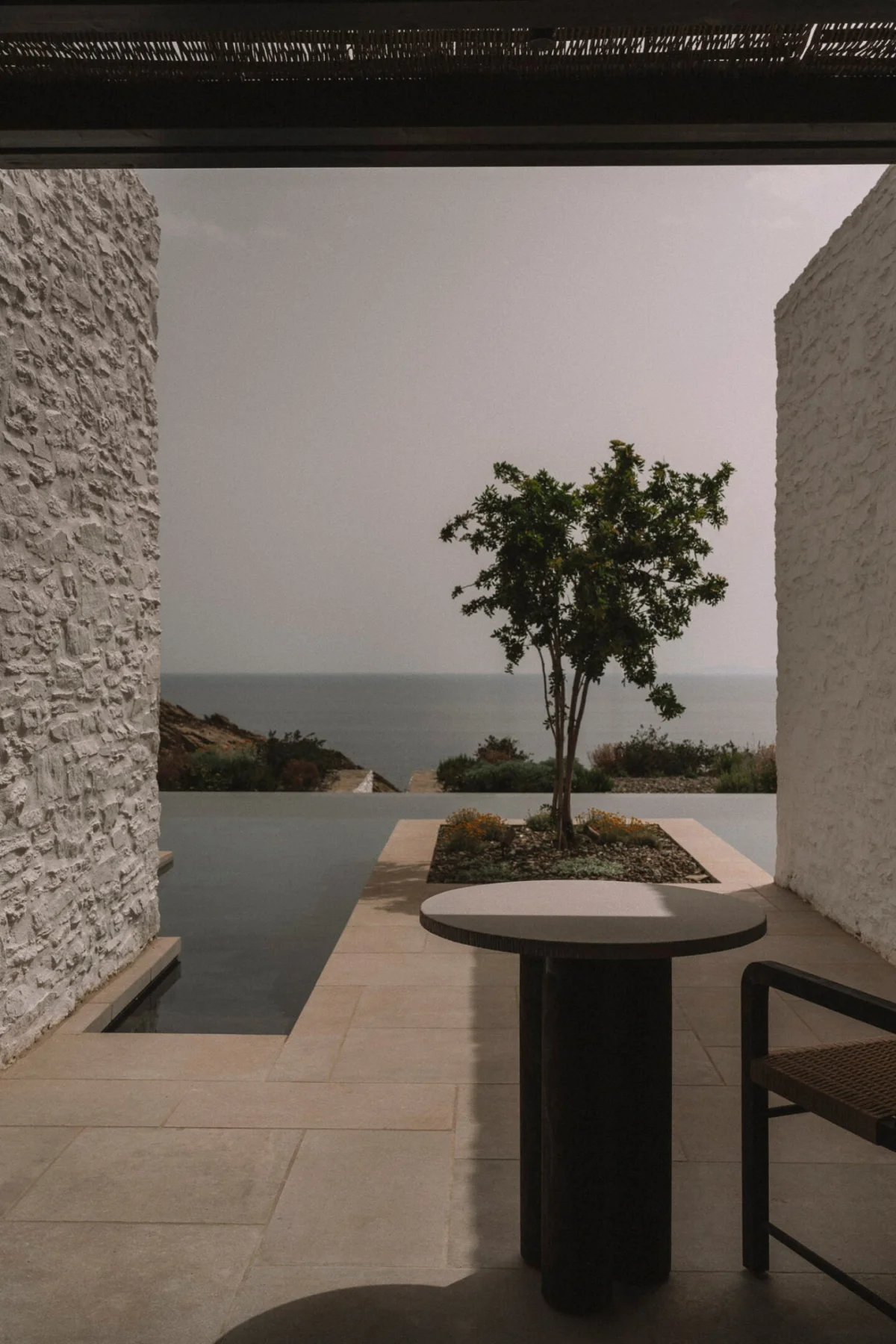
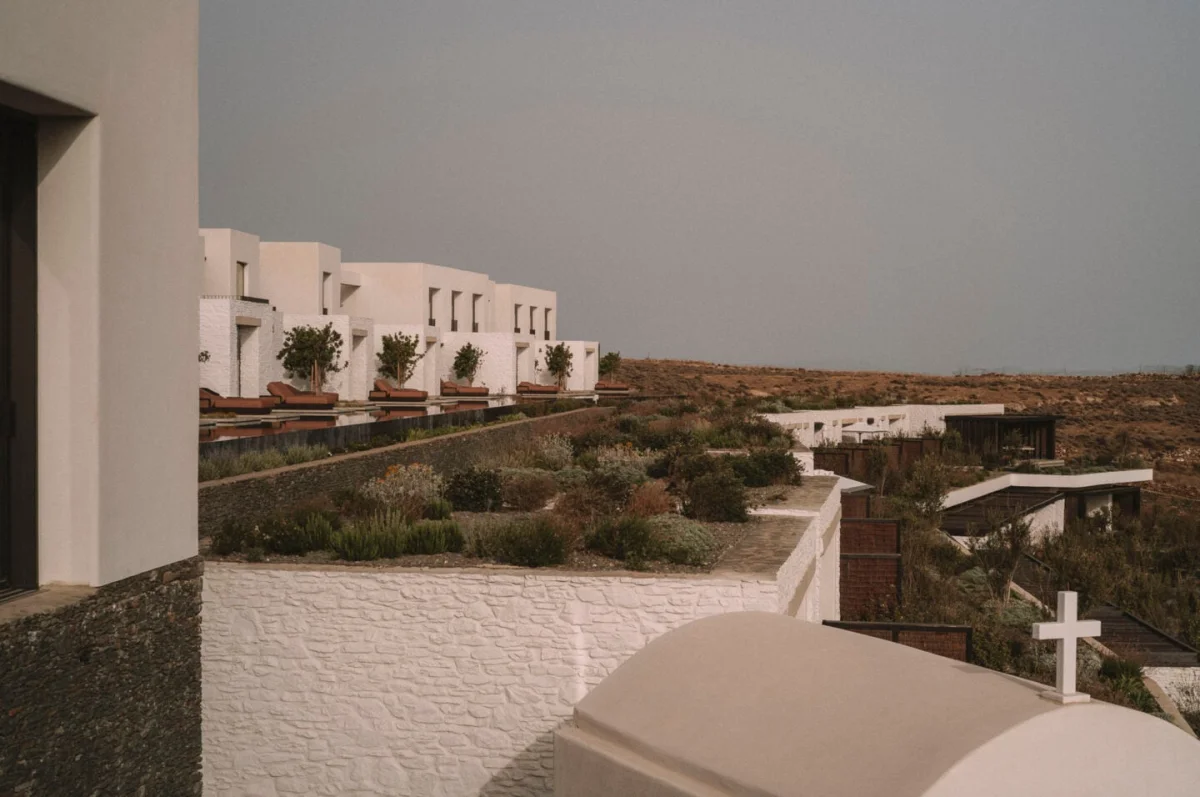
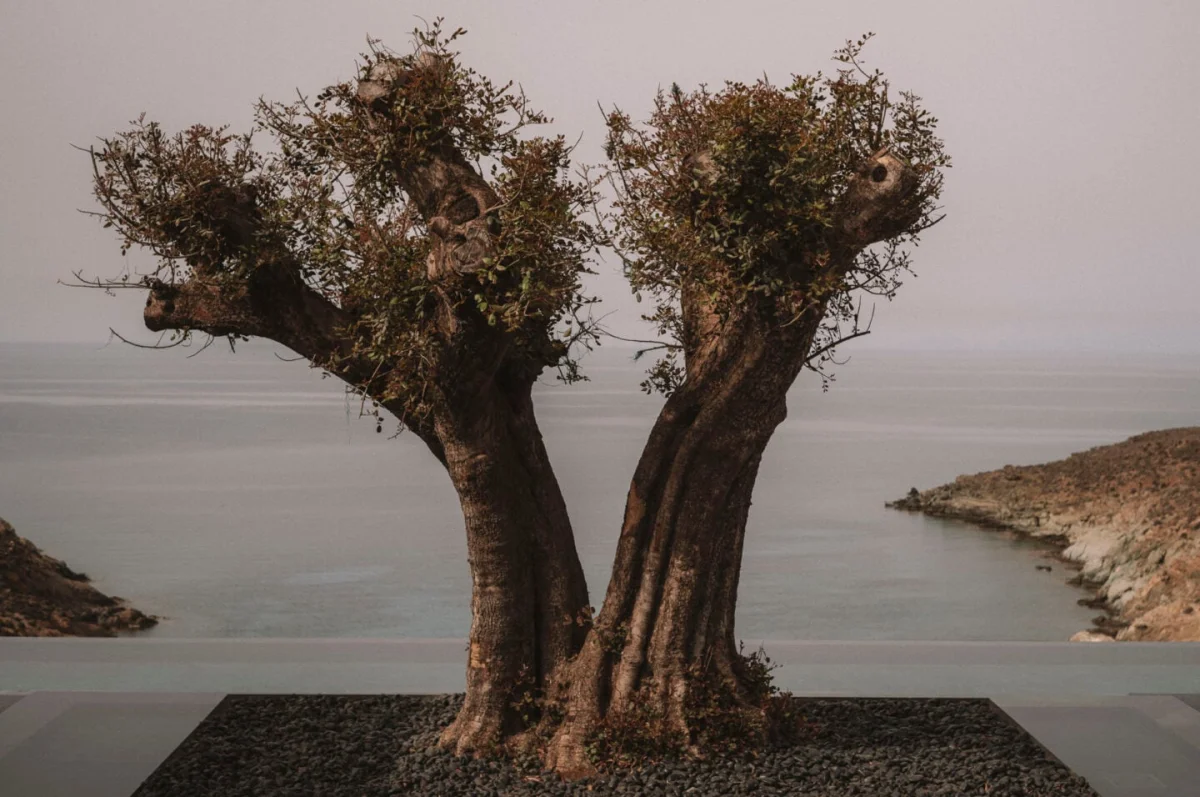
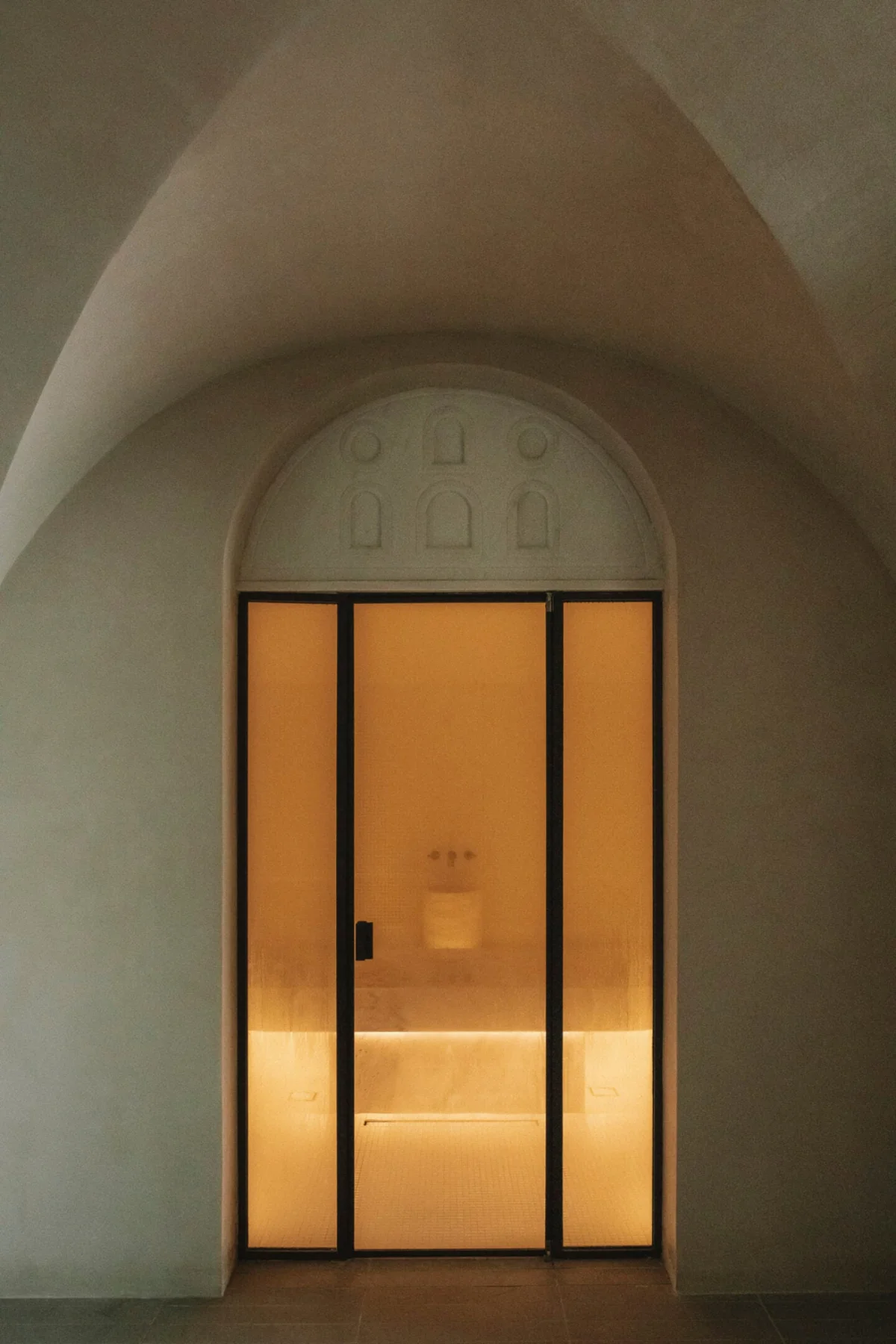
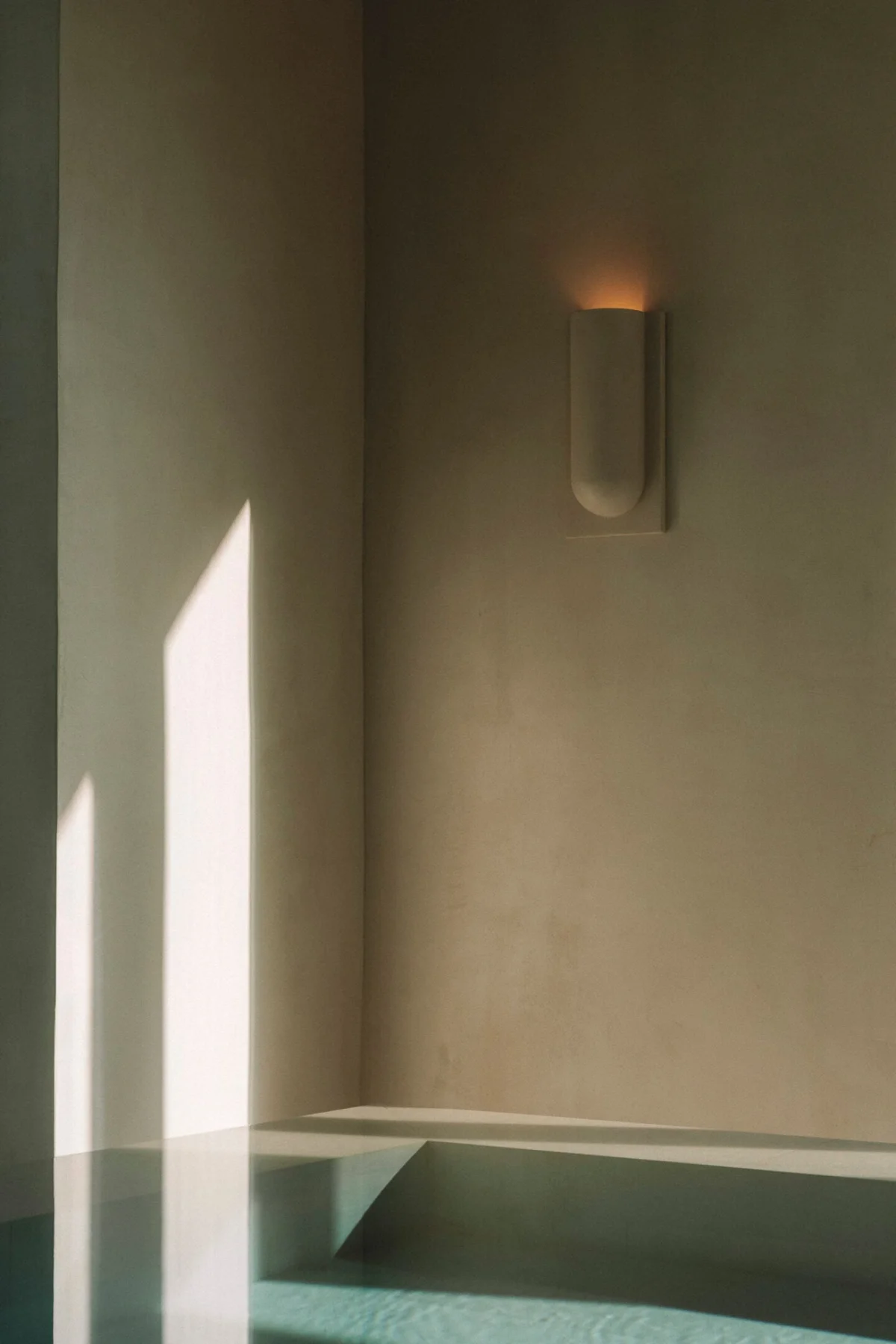
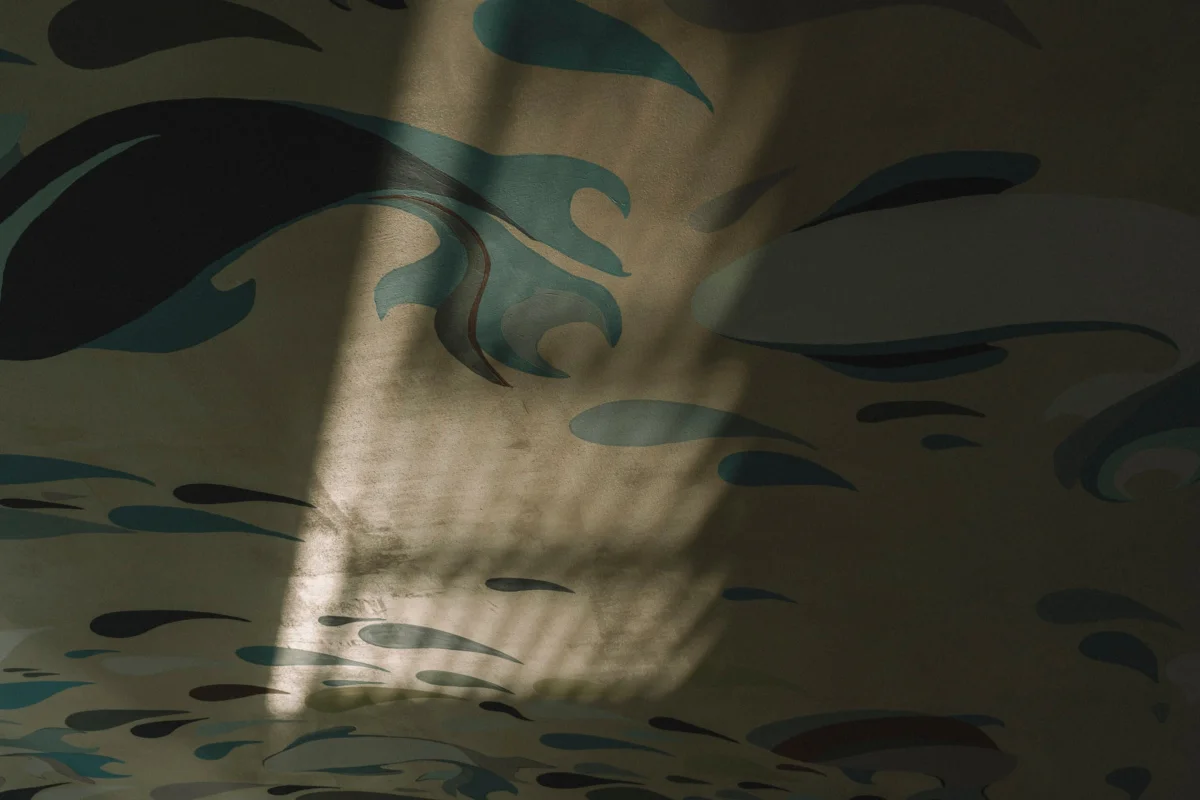
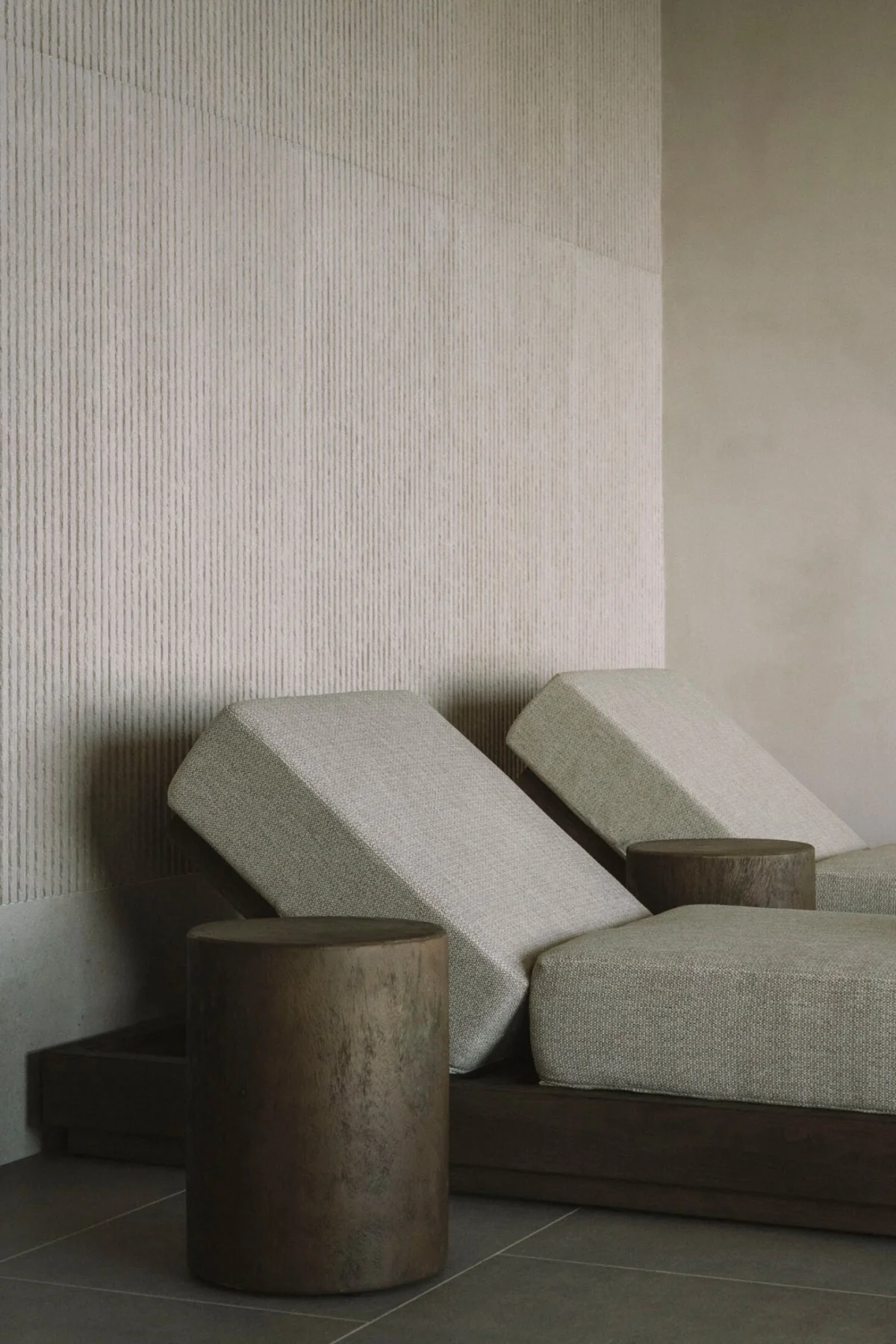
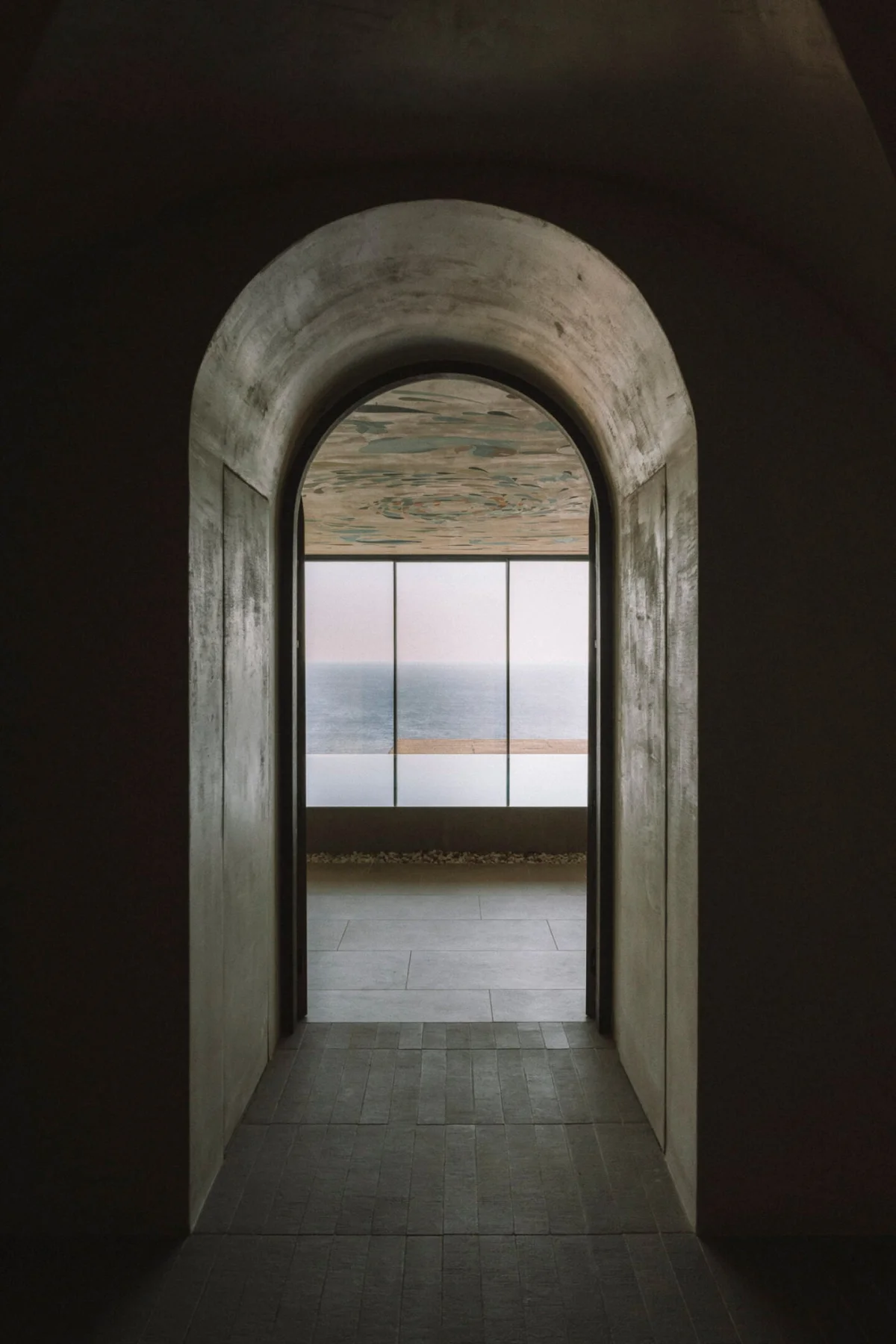
Look closer, and the island’s architecture offers another source of detail. Tinos’s pigeon houses have distinctive geometric patterns; at Odera, that geometry appears subtly in the bed headboards. It’s a small, specific reference rather than a broad decorative theme, letting guests encounter the island’s built heritage beyond the religious story.
A wider frame for Greek identity
Bonios also looks beyond Greece. He cites Paris, Vienna and Milan as influences on the studio’s sense of European elegance, and says keeping up with design in other parts of the world is essential to his practice. His aim is to join that wider outlook with close attention to local character. At Odera, the balance is visible in the pared-back detailing: the rooms feel contemporary while their references remain tied to Tinos.
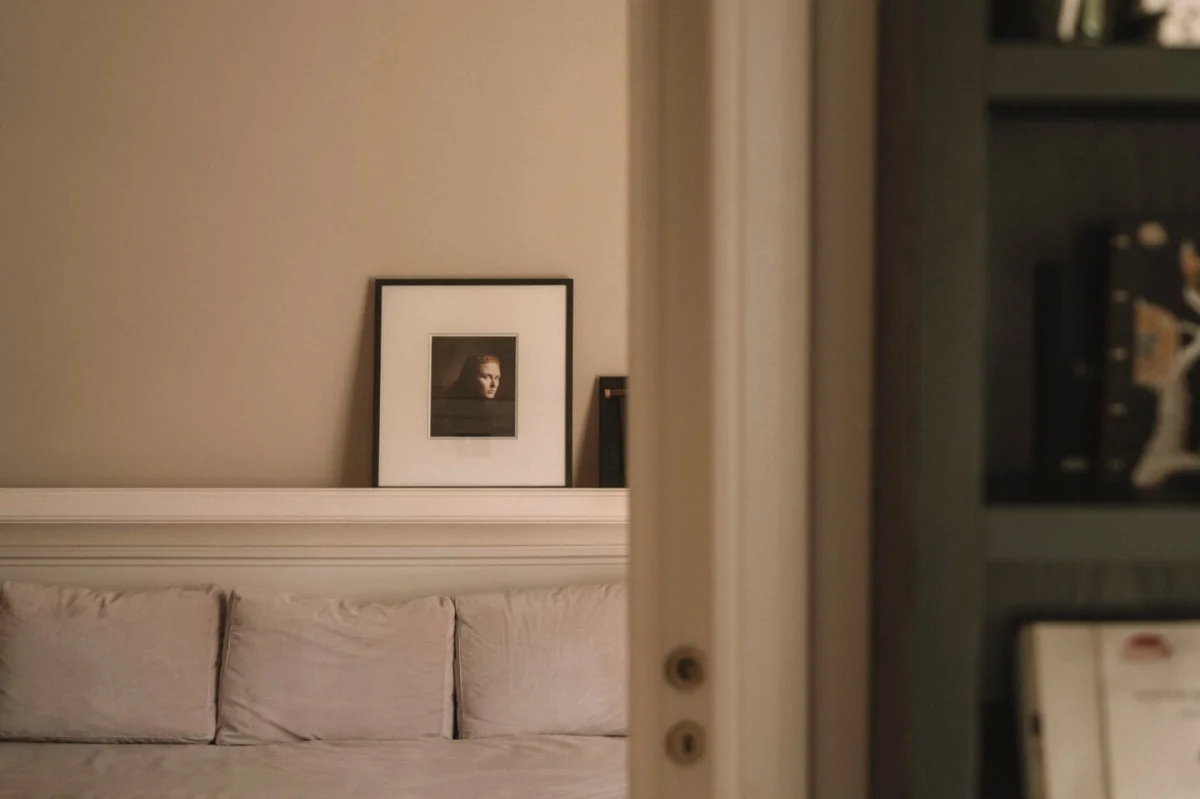
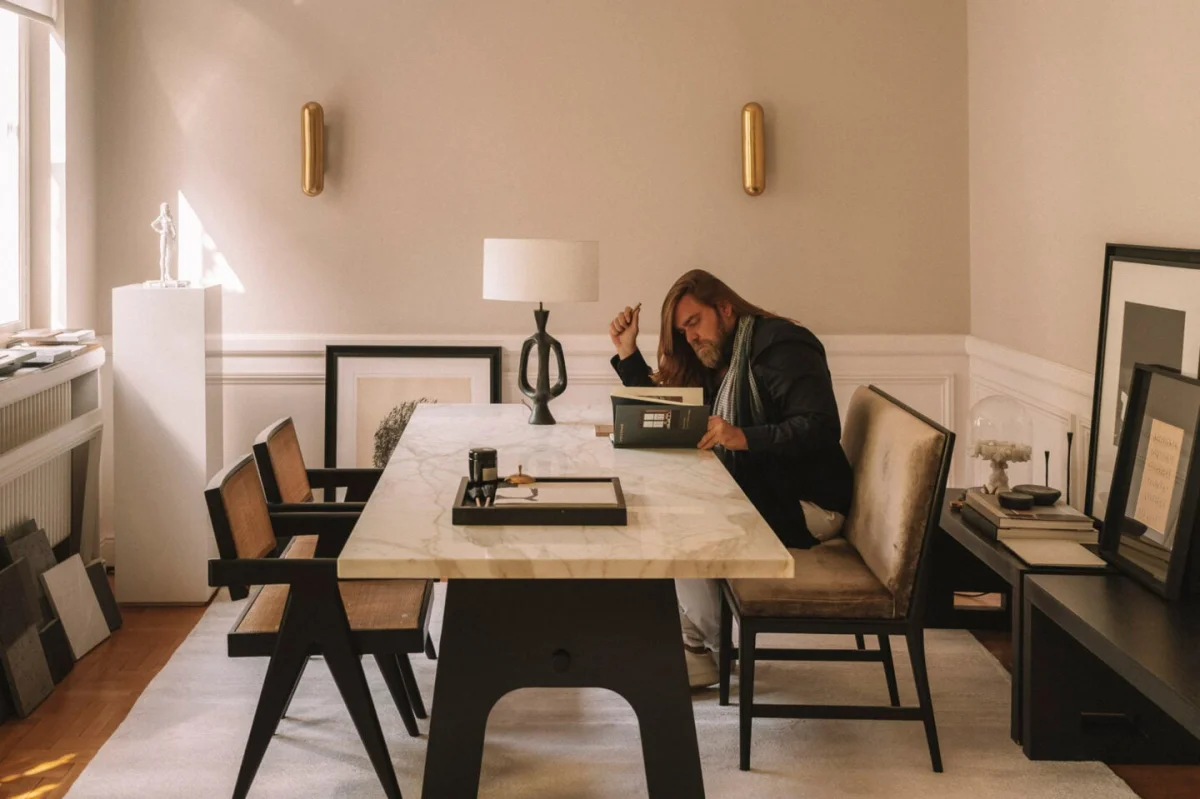
The studio’s own Athens spaces make the same mix tangible. Bonios’s apartment and the office occupy the same building near the Panathenaic Stadium. At home, original oak floors laid in a fishbone pattern sit alongside white boiserie. Black Pierre Jeanneret chairs introduce a strong accent, while the gray walls pick up the muted tone of upholstered chairs inherited from his grandmother. The arrangement brings personal history into a restrained interior without turning the room into a period piece.

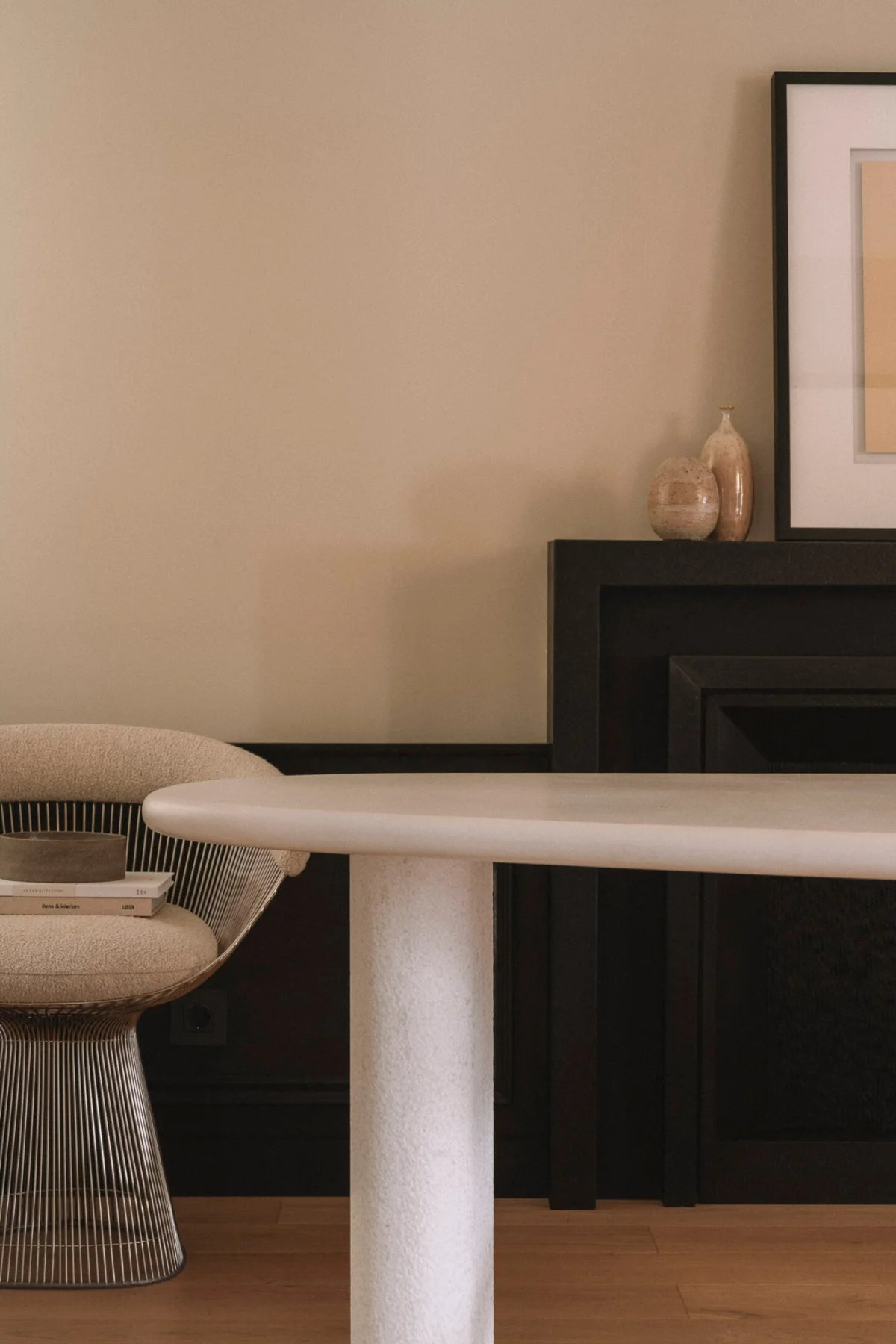
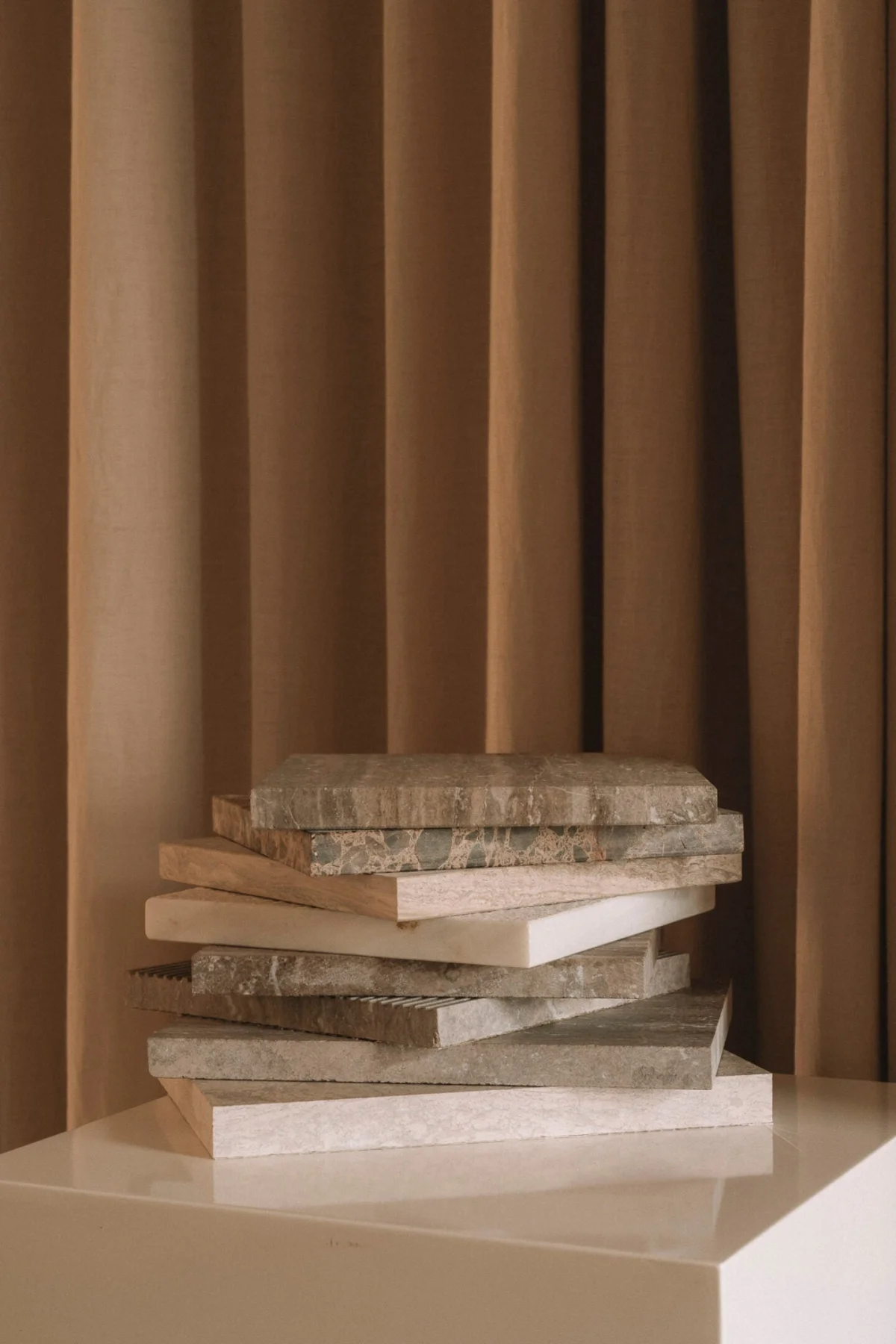
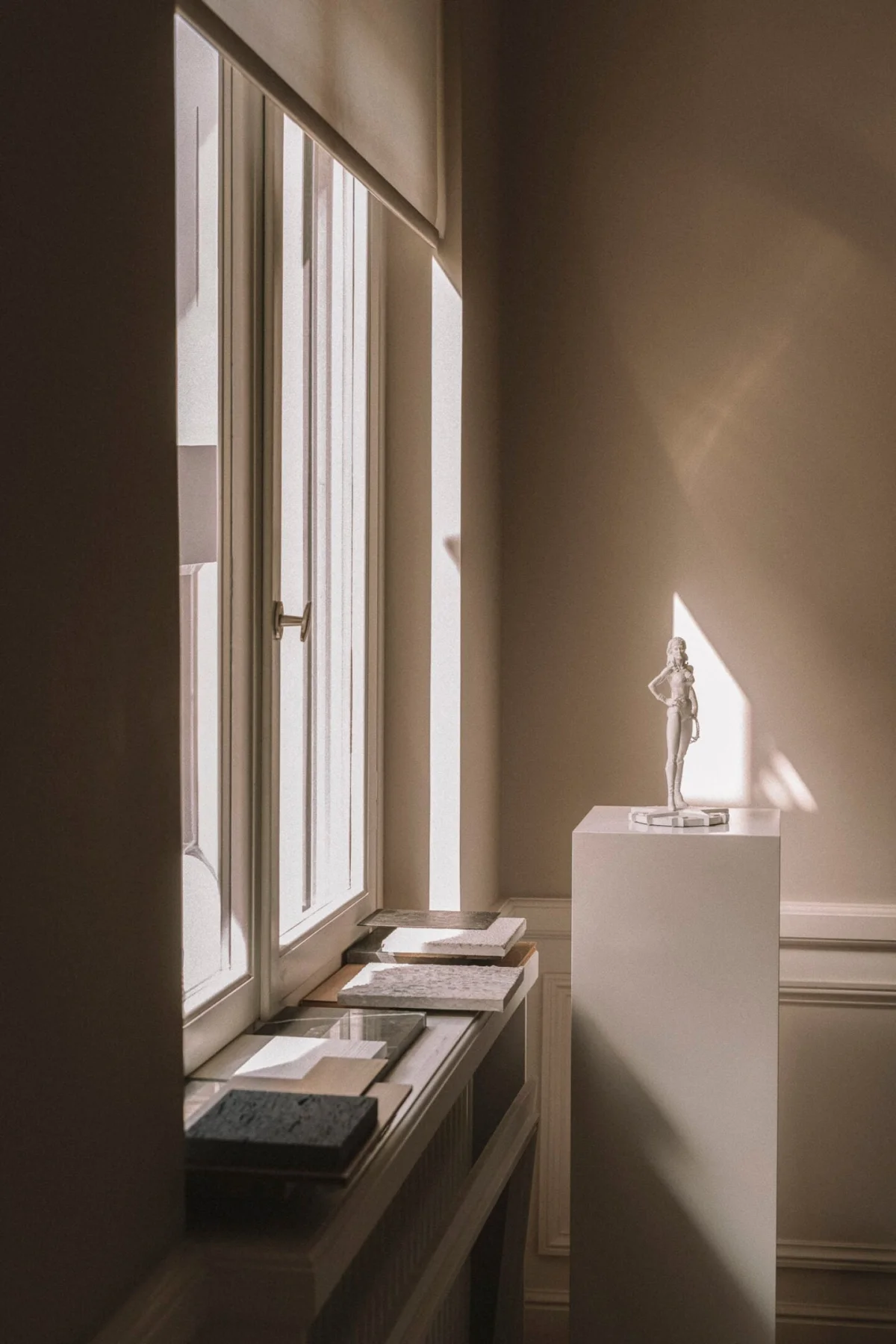
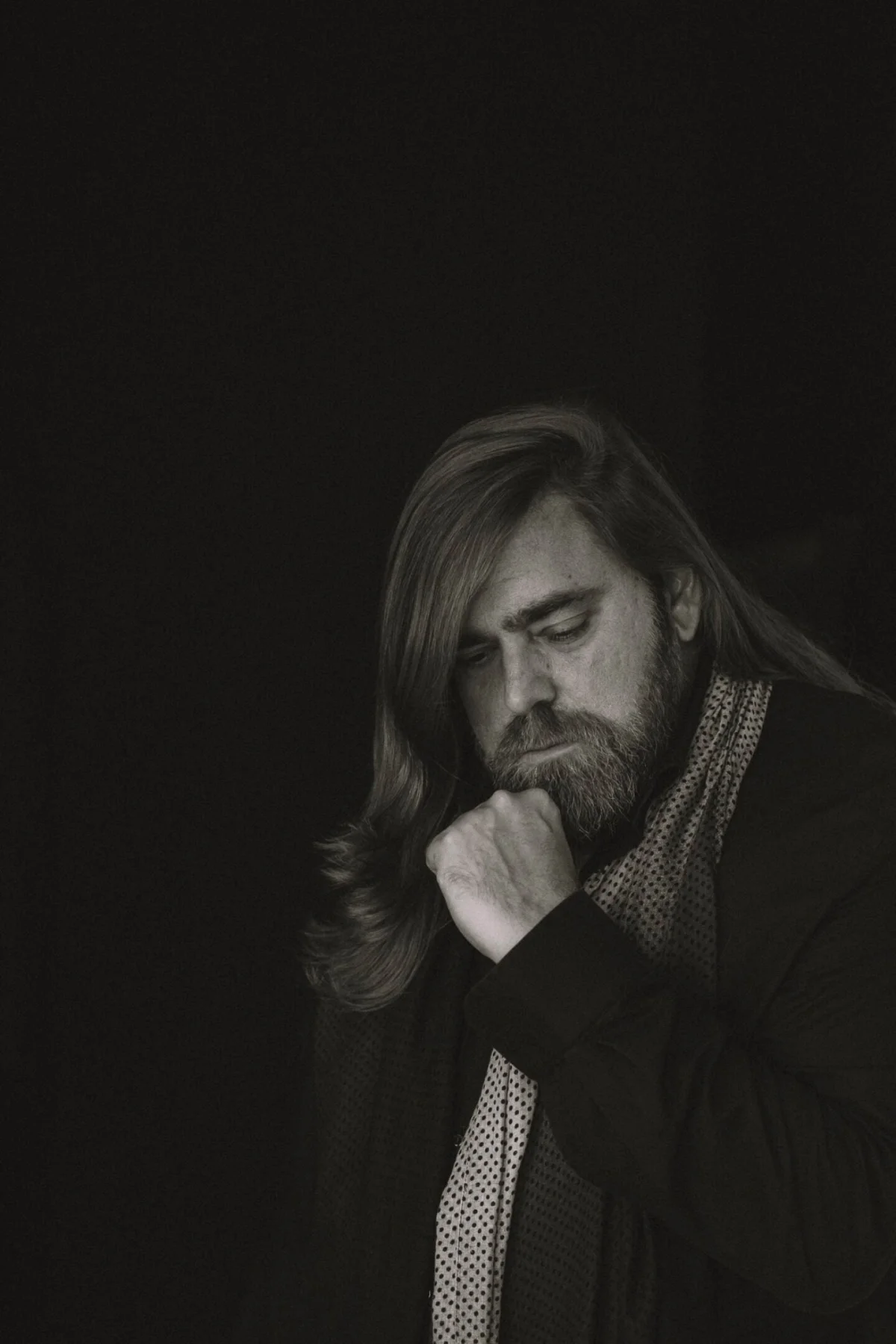
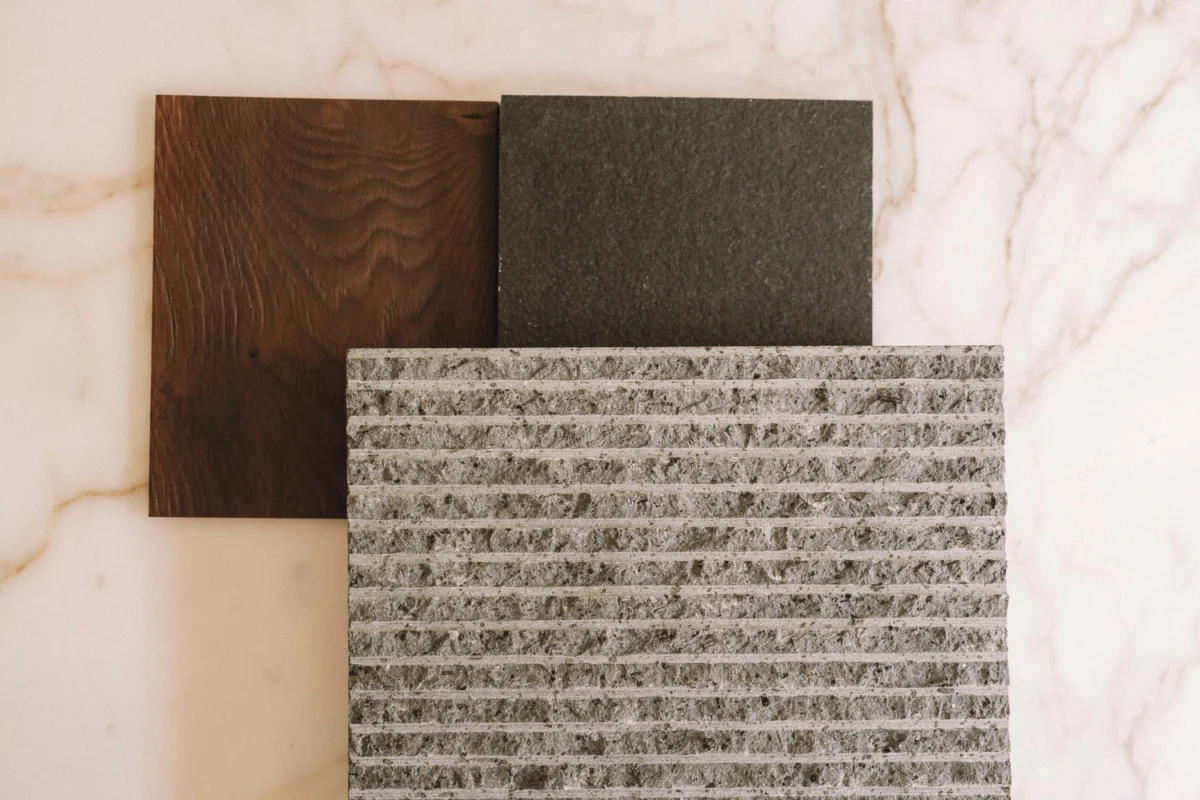
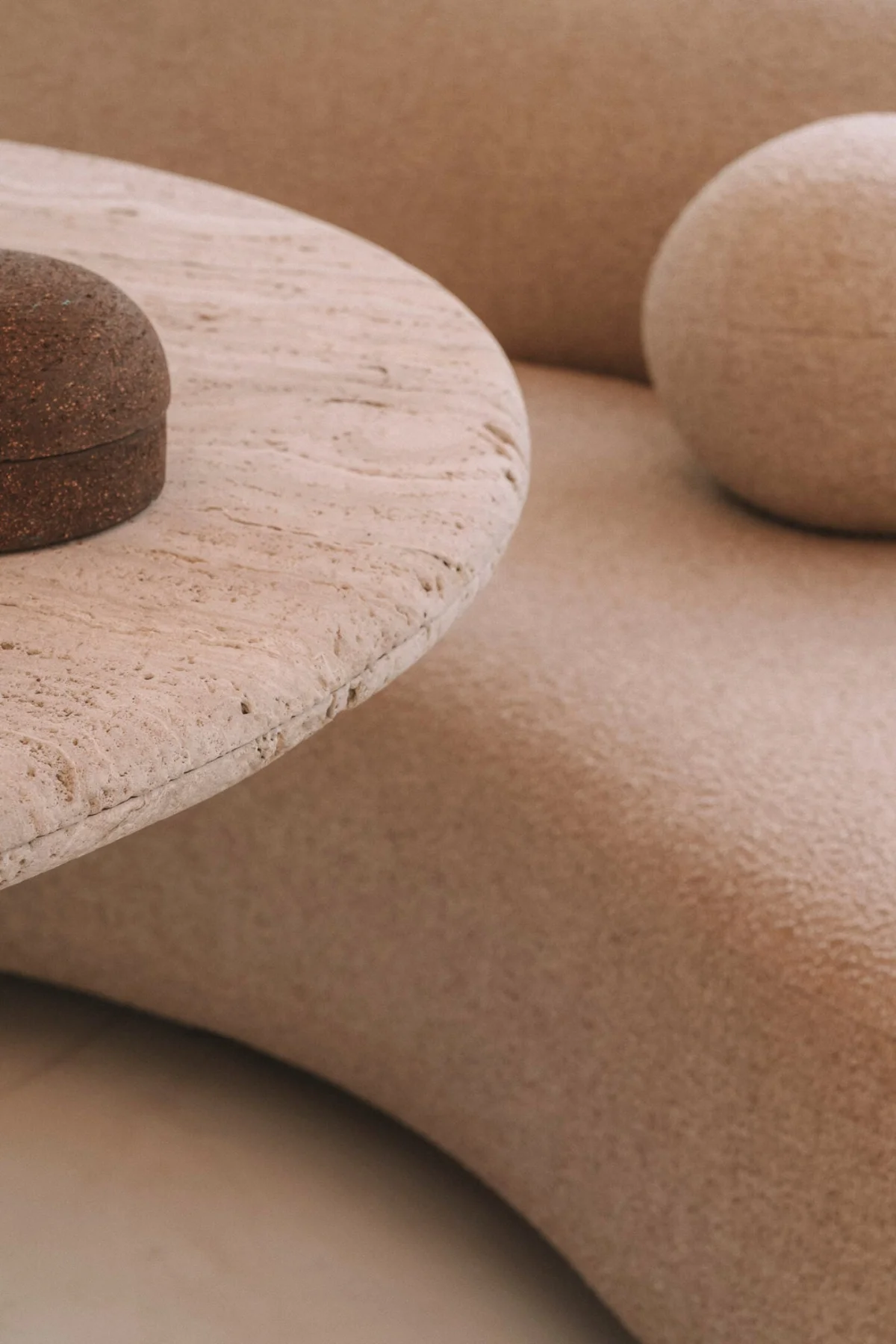
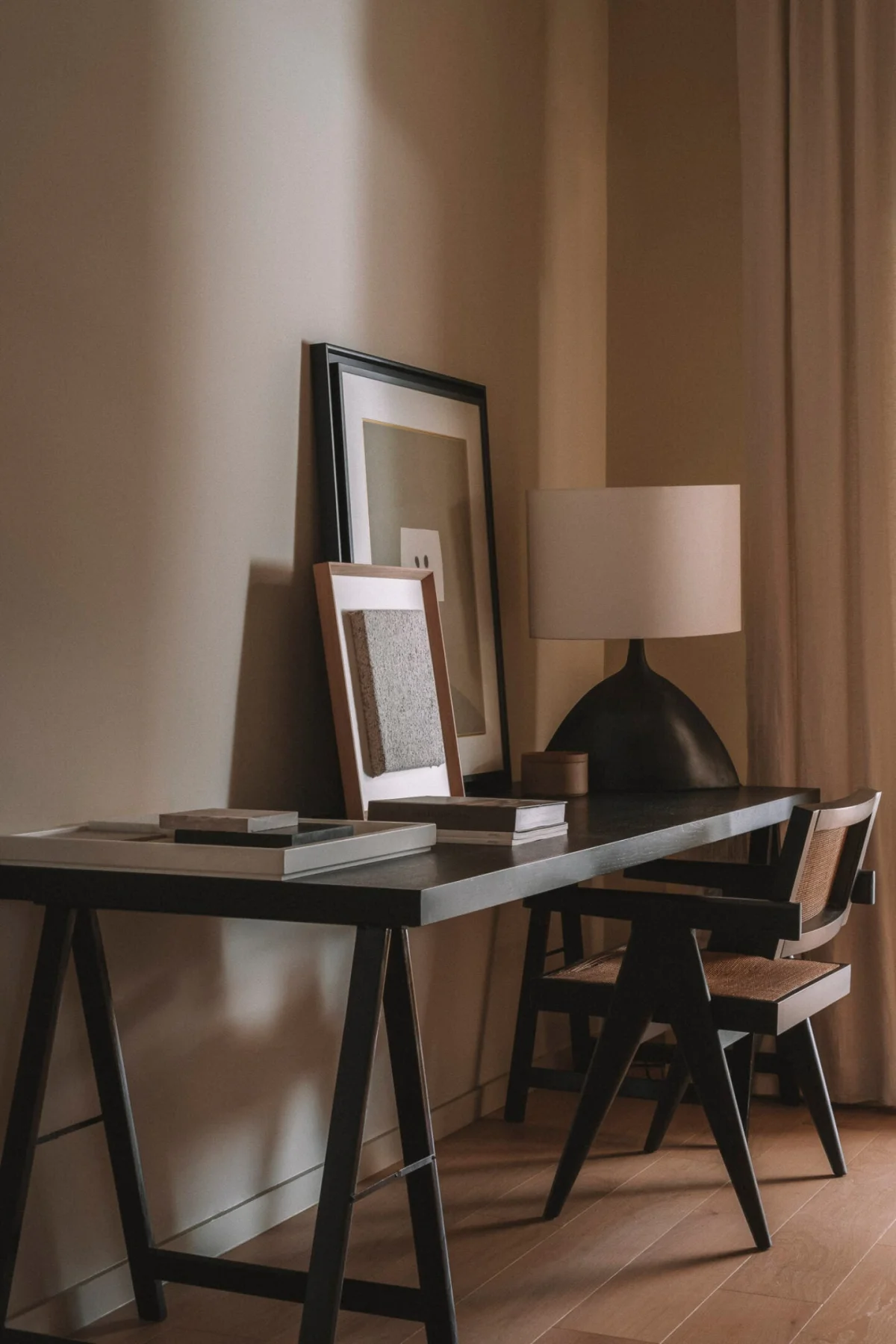
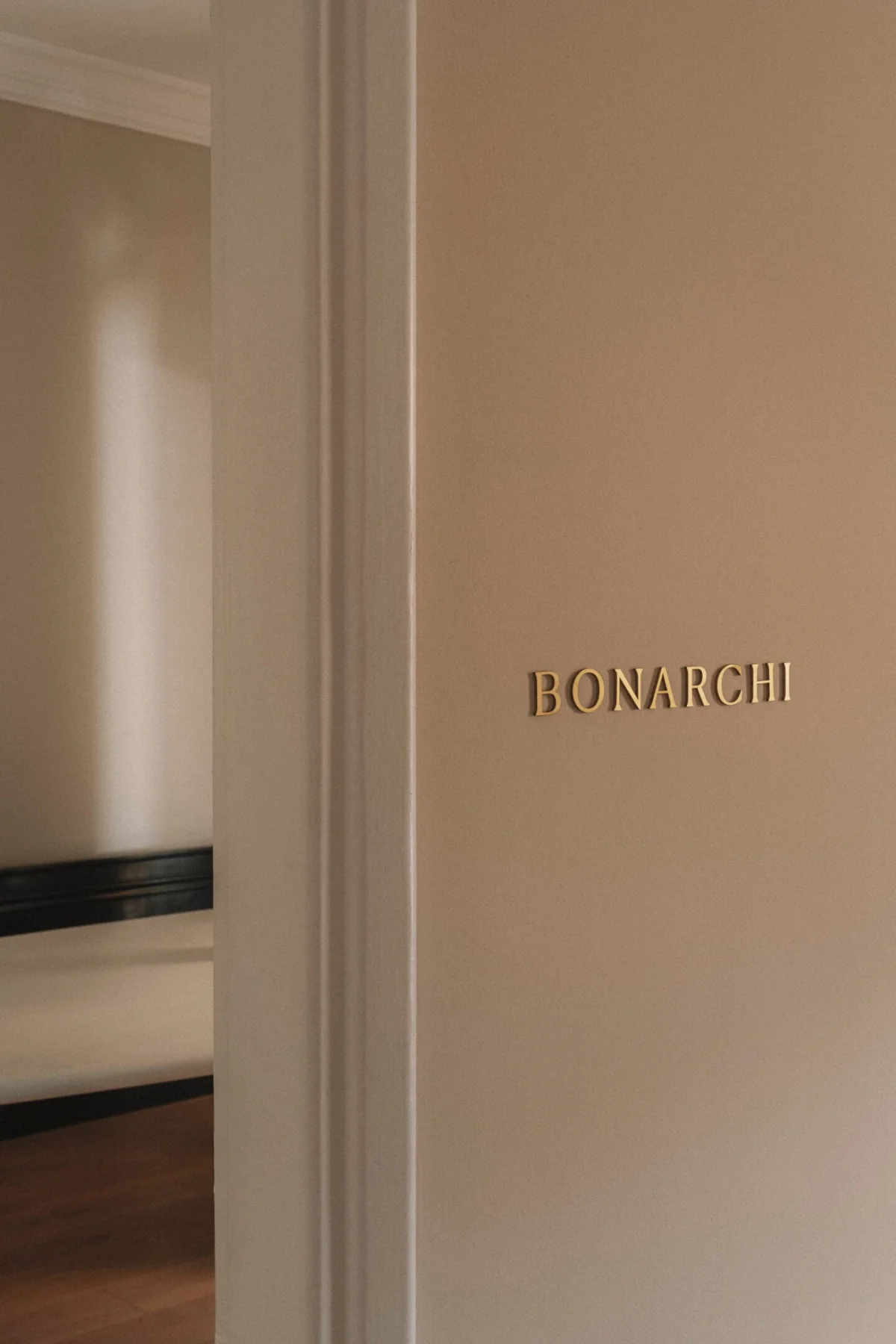
Upstairs, the office carries the studio’s lighter side. Beige and off-white tones, rounded edges and tactile surfaces set a calm register. A custom matte marble table meets Platner chairs, while the workspace opens onto a terrace that feels like a pocket of island quiet in the city. A discreet brass Bonarchi mark is the main sign that this is a workplace.
Atmosphere over signature gestures
Across the projects, the recurring thread is contrast: bright against dim, smooth against textured, familiar against cosmopolitan. These pairings give each space a clear mood while leaving room for local details to register. In the hotel work, the references emerge through material, form and circulation; in Bonios’s home and office, they show up in inherited furniture, preserved finishes and the framing of light.
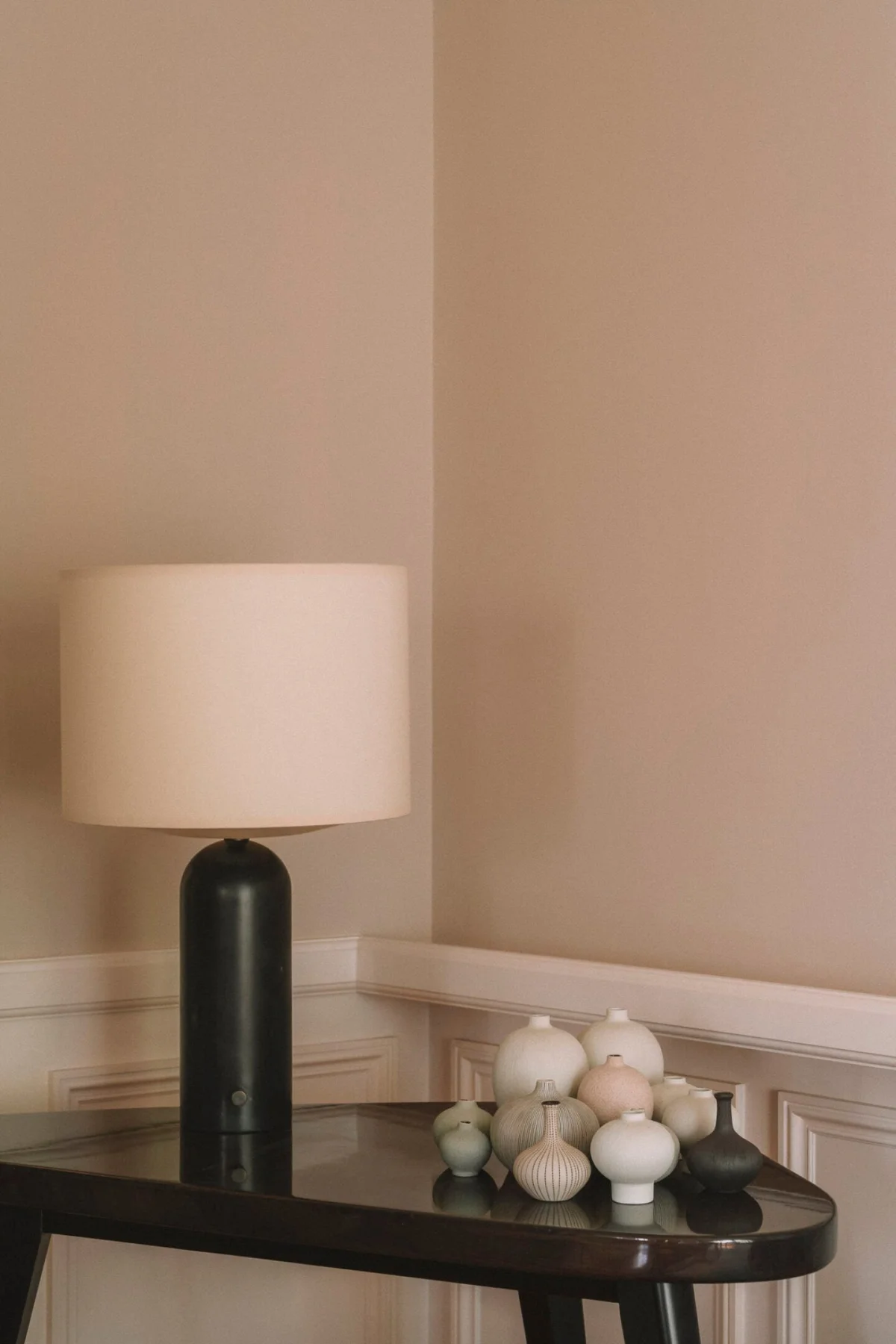
Bonios describes interiors as a constant preoccupation, but his account of swimming in the Greek sea points to the experience behind the work. Sun, water and the feeling of being immersed shape how he thinks and feels, he says. That connection helps explain why light is more than a finishing touch in Studio Bonarchi’s rooms: it’s a starting point, and the strongest way the architecture meets its setting.
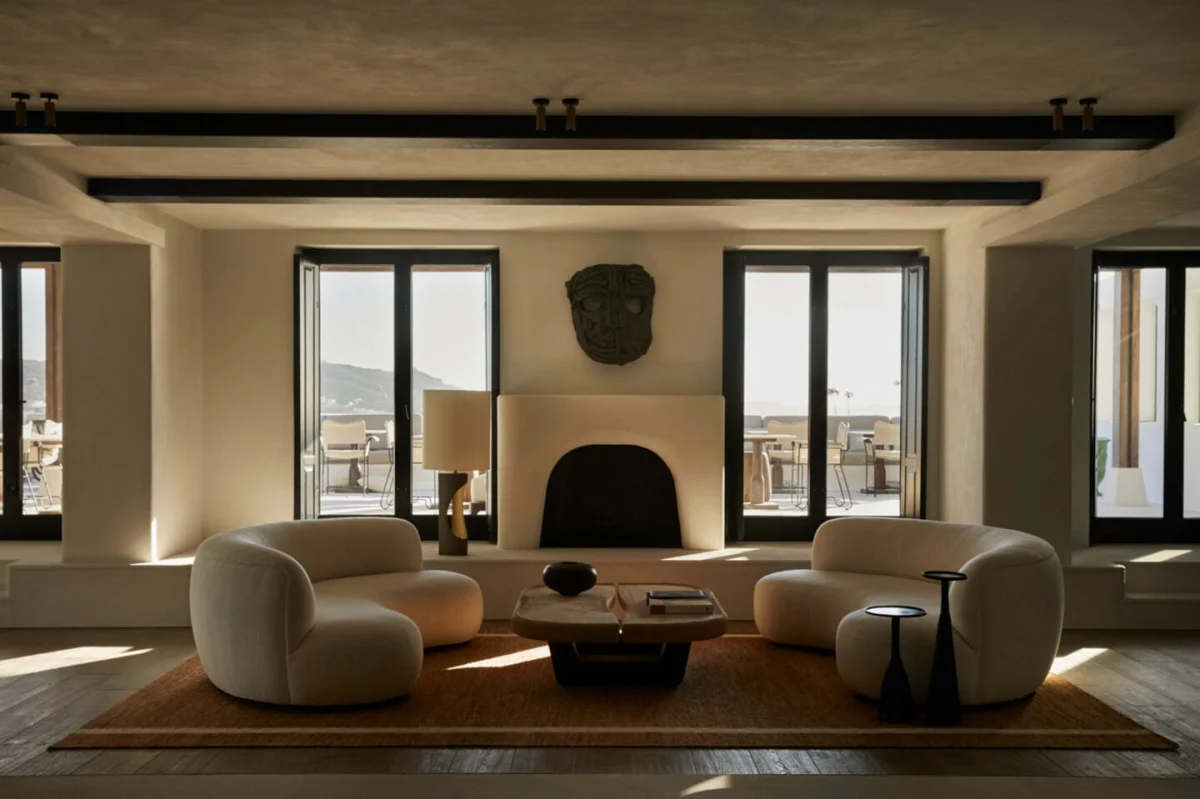
Anandes Hotel | Lobby | Photographer: Helen Cathcart
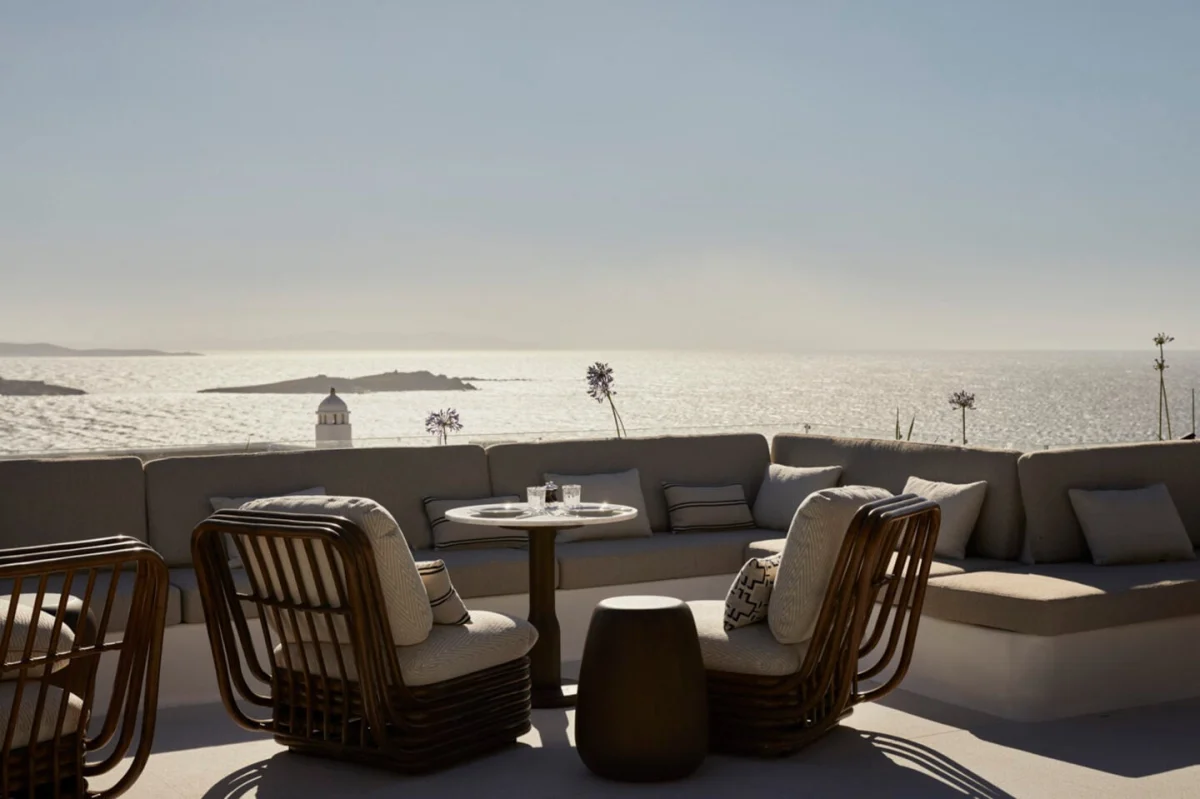
Anandes Hotel | Breakfast Area Veranda | Photographer: Helen Cathcart
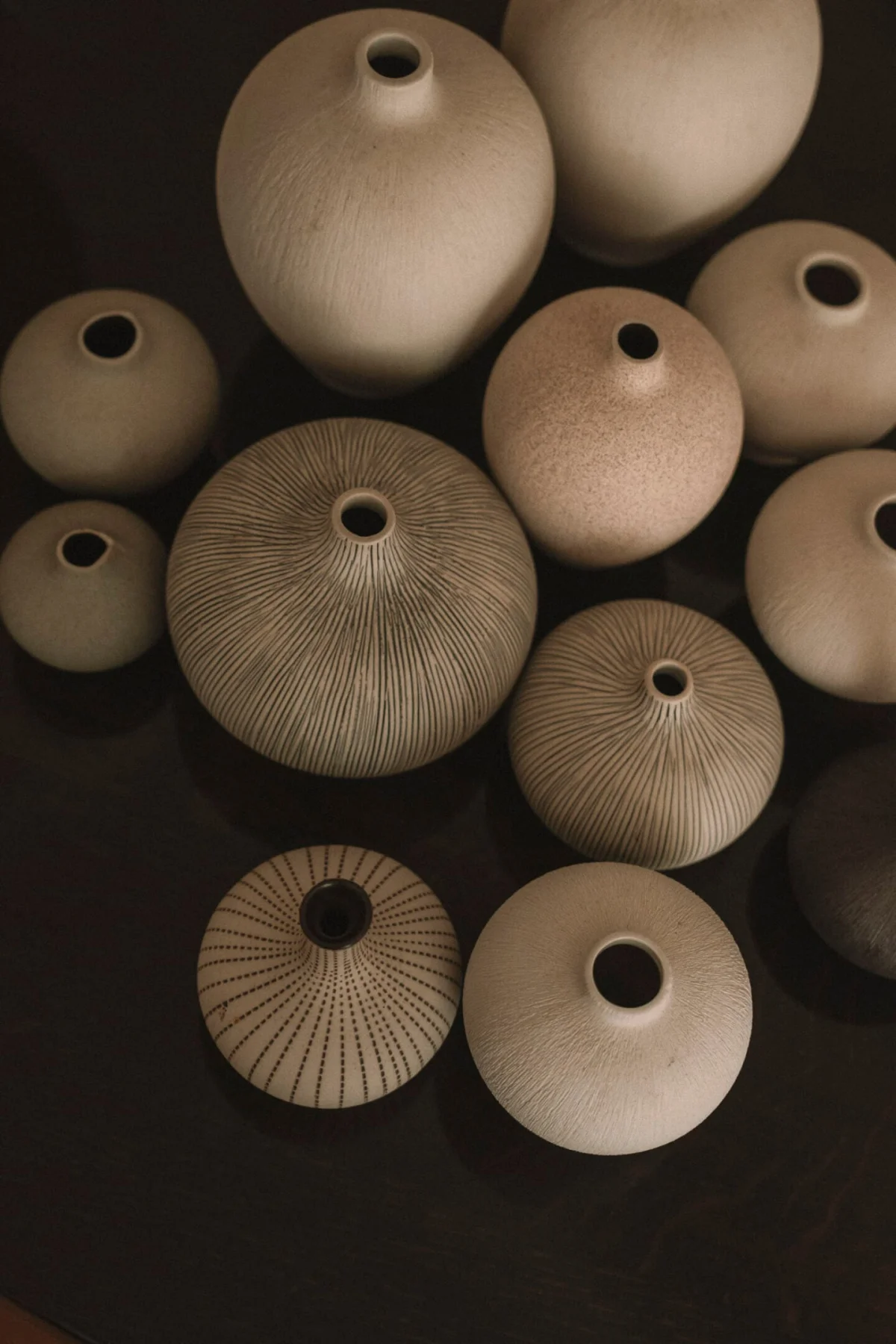
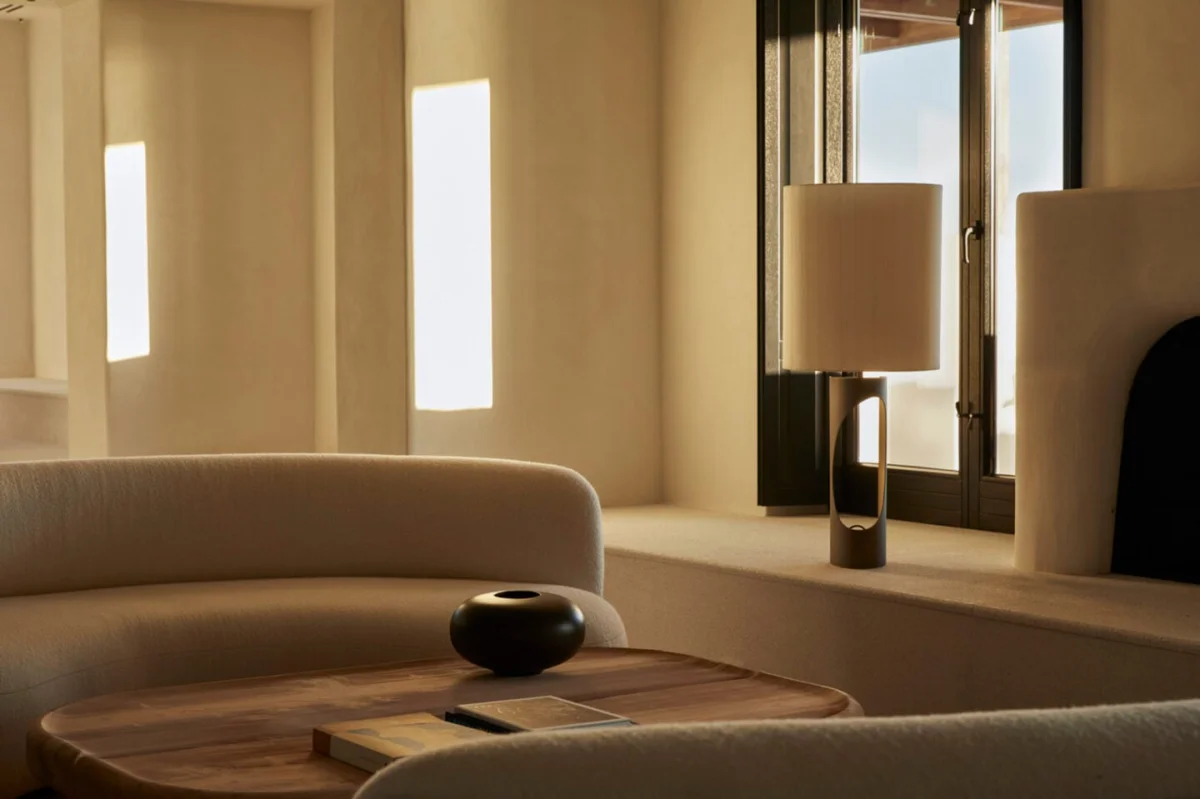
Anandes Hotel | Lobby Corner | Photographer: Helen Cathcart
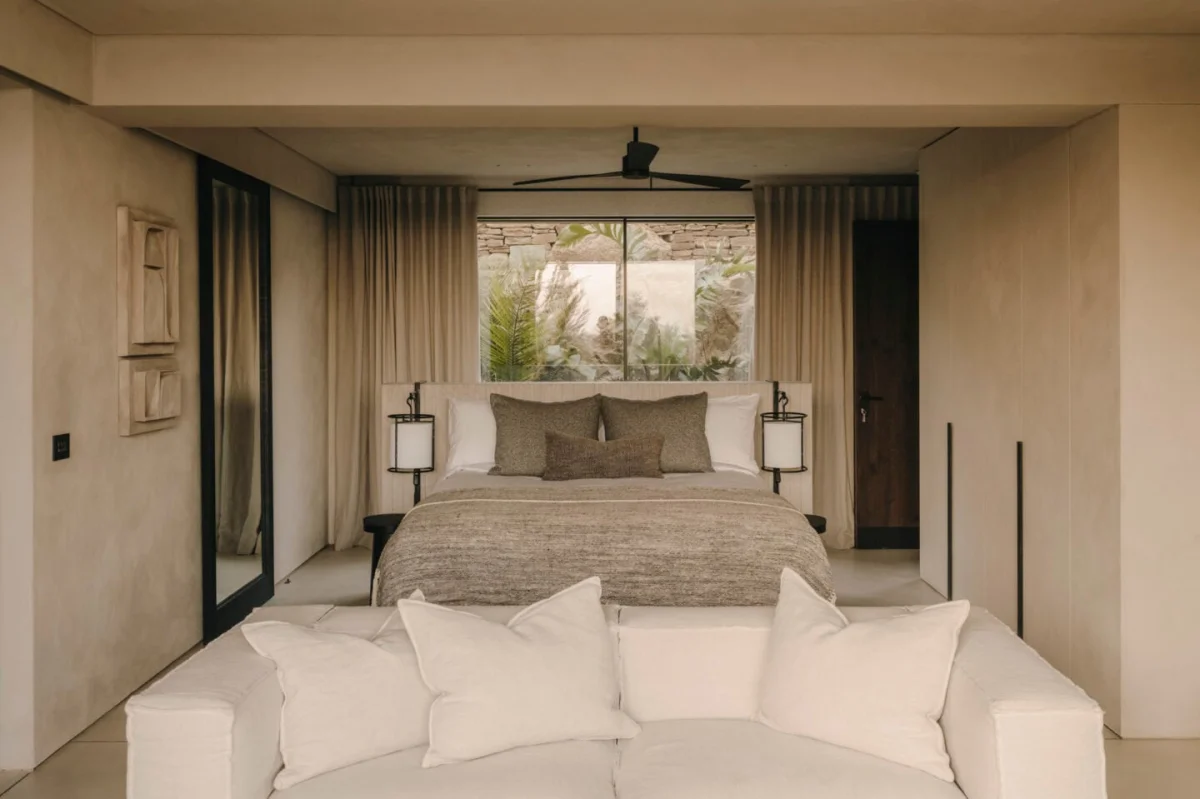
Mykonos Residence | Bedroom | Photographer: Salva Lopez
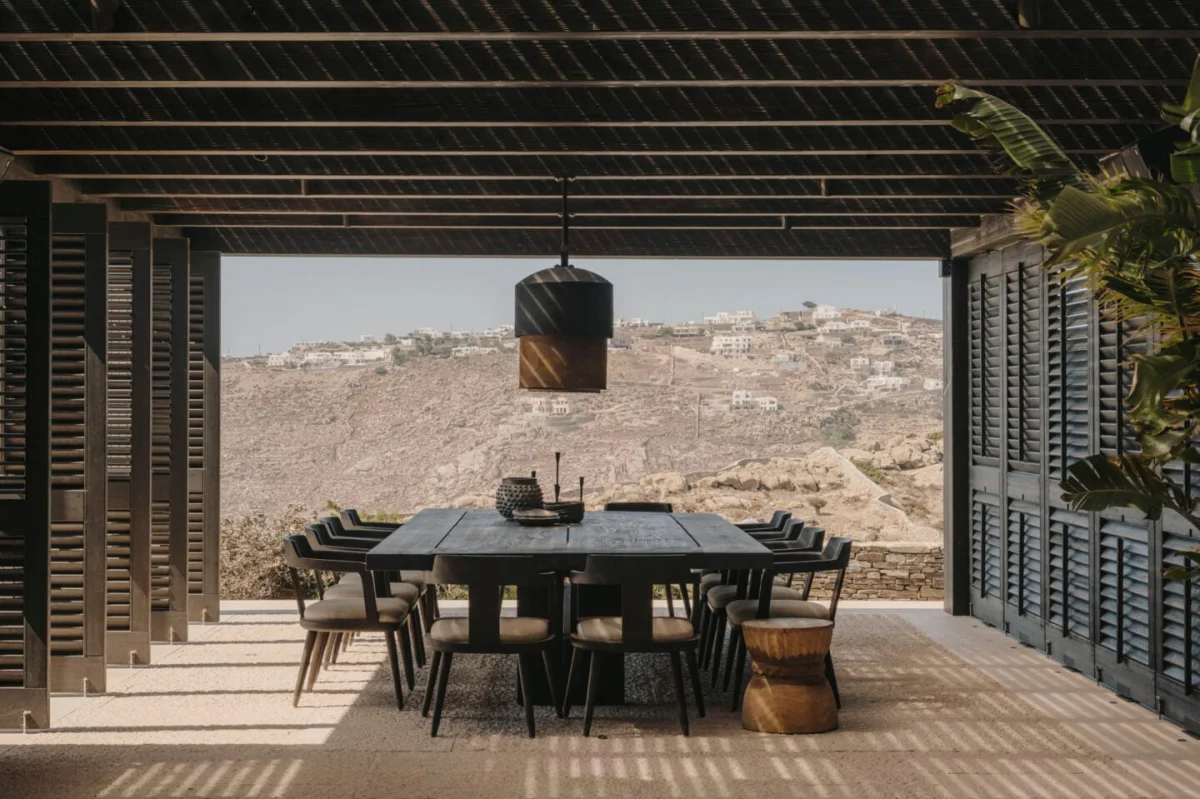
Mykonos Residence | Outdoor Dining Area | Photographer: Salva Lopez
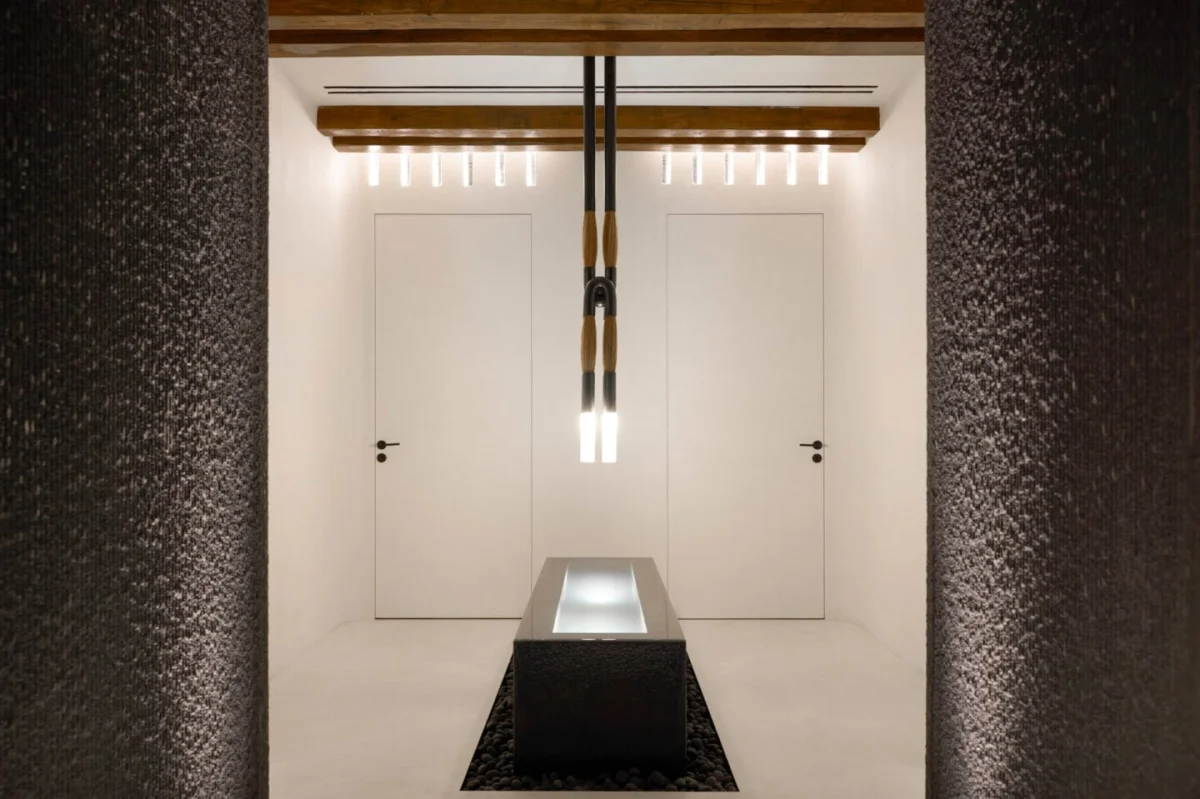
Kalesma Spa | Spa Corridor | Photographer: Vangelis Paterakis
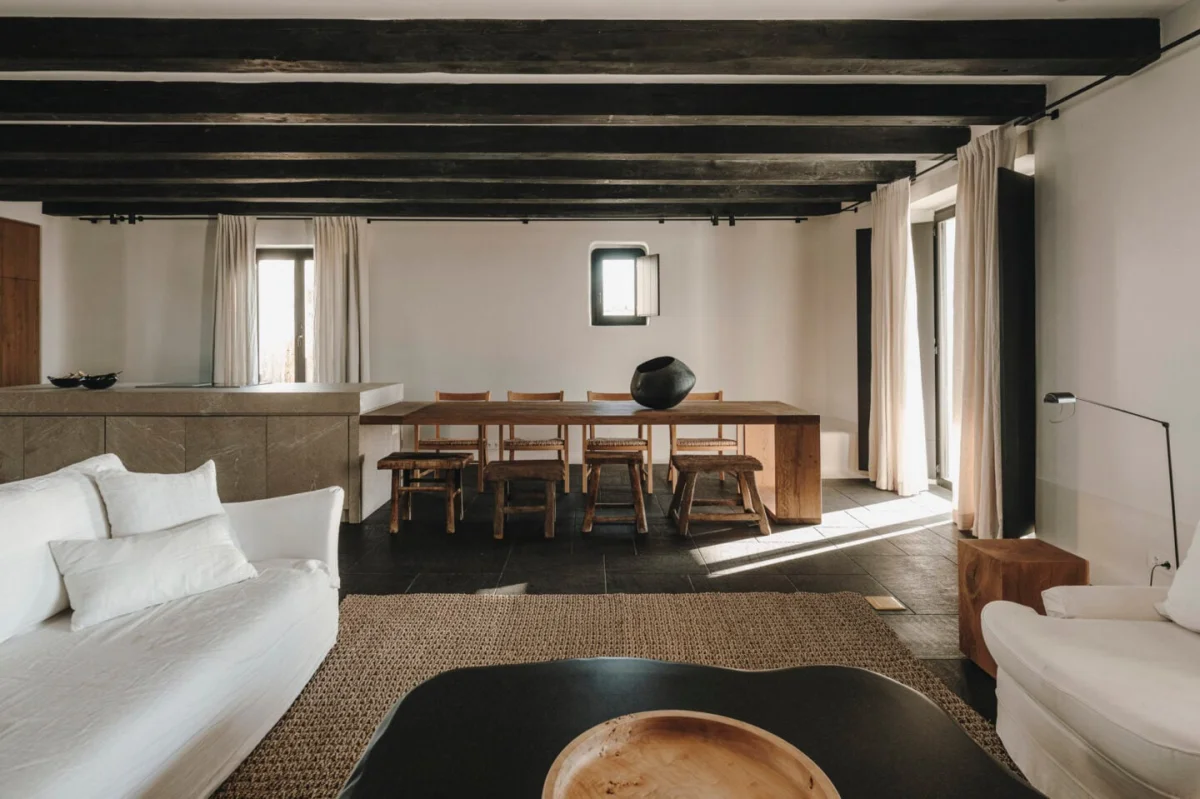
Kalesma Mykonos Villas | Kitchen / Dining Area | Photographer: Salva Lopez
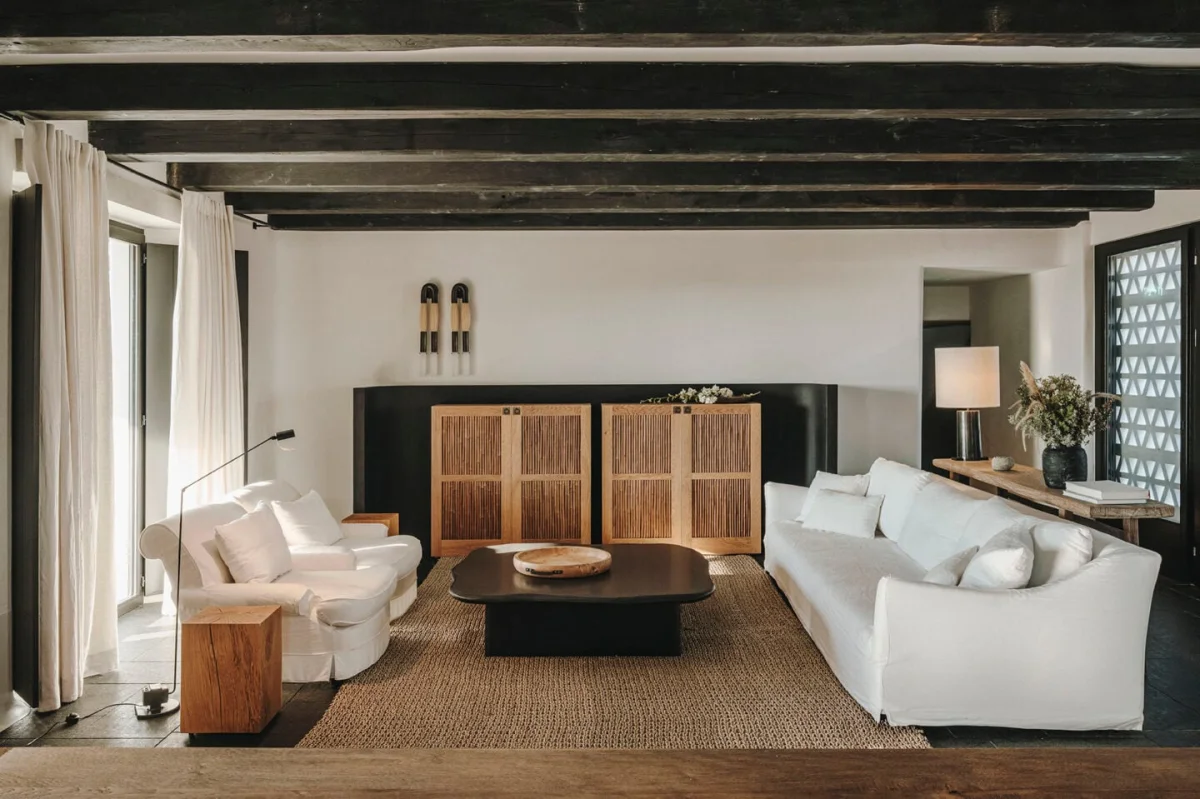
Kalesma Mykonos Villas | Living Room | Photographer: Salva Lopez
Images © Clemens Poloczek | Text: Marie-Louise Schmidlin
===END===| Rev | Description | Date |
|---|---|---|
| A | Issued for reading | |
| B | Viewed 707 times | Current |