Alan Witschonke’s Realist Illustration Moves Between Print, Digital and Portraiture
- Project
- Web Design
- Drawn by
- Andie O'Donnell
- Issued
- Sheet
- A-160
With more than 30 years of experience, Alan Witschonke brings realist illustration to editorial, publishing and commissioned portrait work.

Alan Witschonke’s practice connects realist illustration with portrait painting, carrying a close attention to observed detail across editorial, advertising, book publishing and corporate work. After more than 30 years as a professional illustrator, he has worked for clients including Rolling Stone, National Geographic, Cooks Illustrated, Random House and the Boston Red Sox. His range points to a practice built for different kinds of assignments: images can serve a publication, help a book find its visual voice or represent a client in a corporate setting.
Witschonke works in acrylic and digital techniques. The combination gives him more than one route into a realistic image, though the available account doesn’t specify how he divides those methods or what tools he uses. That distinction matters to working illustrators: material choices shape the surface and process of an image, while the assignment determines how it must function at its final size and in its intended setting. Here, the documented strength is the breadth of contexts in which his work has appeared, rather than a single signature workflow.
Realism across editorial and publishing
Editorial and book assignments ask an illustration to do more than demonstrate drawing skill. It has to communicate a subject clearly, hold attention and fit the surrounding design. A realist approach can make people, places and objects immediately legible, while the format determines how much detail can survive on the page. Work made for a magazine, a book and a corporate client may therefore call for different compositions and levels of finish, even when the artist’s underlying interest in realism stays consistent.
Witschonke’s client list gives a sense of that range without specifying individual briefs or describing particular visual decisions for each commission. Rolling Stone, National Geographic and Cooks Illustrated represent distinct publication contexts; Random House brings book publishing into the mix, and the Boston Red Sox adds a sports client. The useful takeaway for designers commissioning illustration is that a sustained representational practice can travel across sectors. The image still needs to answer the needs of its particular layout, readership and subject.
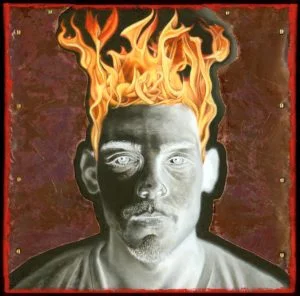
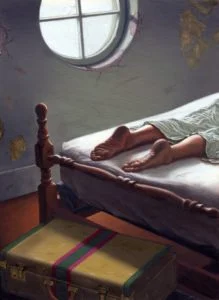
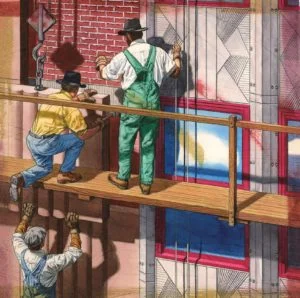
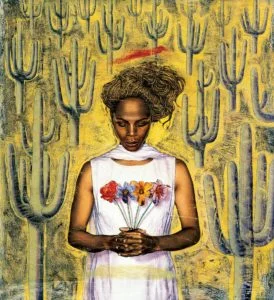
The work shown here is linked to Witschonke’s portfolio, allowing readers to inspect examples directly. The source identifies two images by filename as “Gateway to Polio Vaccine” and “Unveiling the Statue,” but doesn’t provide their briefs, dates or production details. Those titles suggest subjects with a historical or public-facing dimension; they don’t establish the stories behind the commissions. For a closer visual reading, the portfolio is the place to assess how the examples handle scale, detail, subject and composition.
A practice that includes teaching
Witschonke’s experience also includes teaching at Harvard University and the Art Institute of Boston. He has lectured and presented his work to schools, museums, libraries and professional organizations throughout New England. This educational work adds another dimension to a career otherwise described through client commissions and published illustration. It places his image-making in conversation with students and professional audiences, though the source doesn’t name specific courses, talks or teaching methods.
For illustrators developing their own practice, that combination offers a grounded example of how specialized visual skills can support several kinds of work. Client projects test whether an image can meet a brief; teaching and presentations require an artist to make choices and process understandable to others. The source doesn’t claim that one activity led to the other, but together they show a career extending beyond commissioned images alone.
From illustration to portrait painting
Alongside illustration, Witschonke works as a portrait painter. He recently completed a large commissioned painting for the Boston Medical Library at Harvard Medical School, shown among the accompanying work. The account doesn’t identify the person portrayed, give the painting’s dimensions or describe its materials. What it does establish is a shift in format and purpose: a large portrait commission sits alongside work made for editorial, advertising, publishing and corporate clients.
That change in scale gives designers and art directors a practical point to consider when looking at an illustrator’s broader practice. A portrait intended as a substantial painting has different viewing conditions from an image placed within a printed page. The scale, setting and subject all influence what details matter and how a viewer encounters the work. Without further production notes, it’s best to treat those as questions raised by the commission rather than as claims about Witschonke’s process.
The source reports recognition from the Society of Illustrators, American Illustration, Communication Arts and other industry publications. It doesn’t name specific awards or dates, so the record here is the range of organizations and publications that have recognized his work. Along with his client history, teaching and portrait commissions, that recognition sketches a career spanning several roles within illustration and visual art.
Witschonke’s portfolio and personal site offer the next step for readers who want to study the images themselves. Look across the examples for how his realist approach adapts to different subjects and formats, and use the commission context as a guide to the questions worth asking: what the image needs to communicate, where it will appear and how much detail that setting can carry.

Explore Alan Witschonke’s portfolio and website for additional work.
| Rev | Description | Date |
|---|---|---|
| A | Issued for reading | |
| B | Viewed 346 times | Current |


