Natalia Maca’s Illustrations Bring Circular Food Systems to Life
- Project
- Graphic Design
- Drawn by
- Marika Lind
- Issued
- Sheet
- A-104
For the Asia-Europe Environment Forum’s 2022 conference, Natalia Maca built an illustration-led visual system across motion, social media and print.

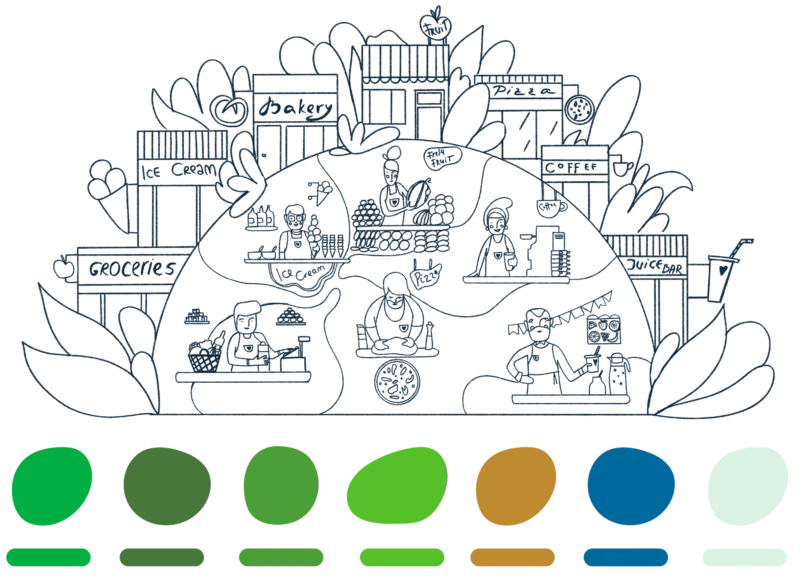
Natalia Maca’s work for the Asia-Europe Environment Forum Annual Conference 2022 had to do more than give an event a recognizable look. It needed to carry a complex subject—decarbonising food supply systems and moving small and medium-sized businesses towards circular practices—across a range of formats. Maca’s response was a connected set of illustrations and design materials, from a key image and logo to an animated banner and conference presentation loop.
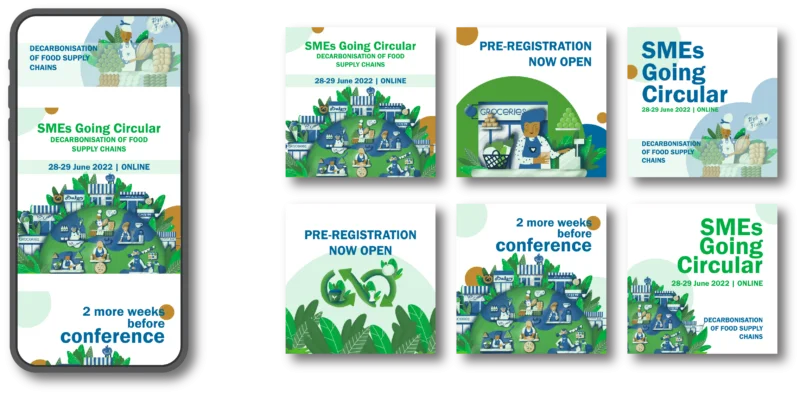
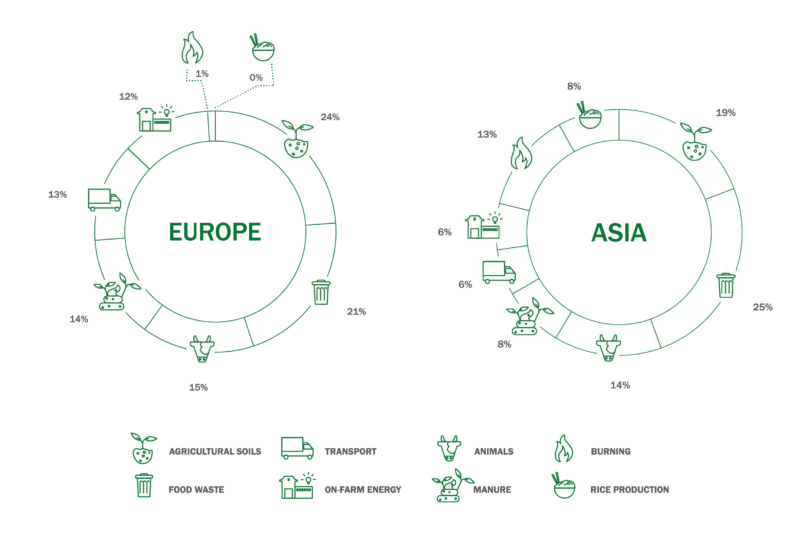
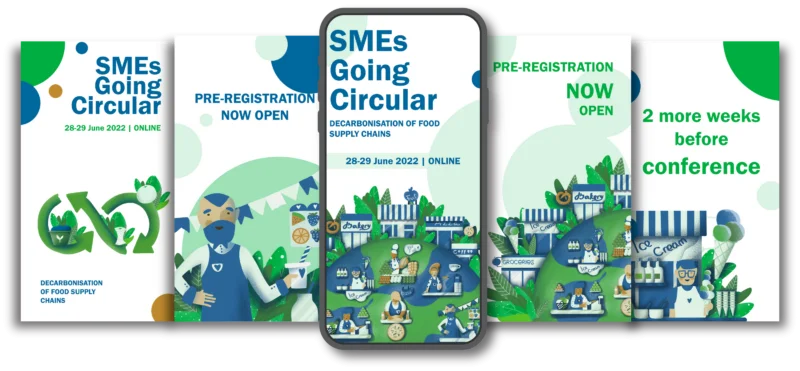
The two-day online conference, titled “SMEs Going Circular: Decarbonisation of Food Supply Systems,” was designed to encourage the exchange of ideas and solutions for the agri-food industry. That brief called for visual communication that could introduce the subject, support the event itself and continue into materials such as social posts and written briefs. Maca’s assignment covered each of those points: she created social media promotion materials, a looping video for the PowerPoint presentation, the conference’s background paper and its policy briefs.

One visual idea, several formats
The range of deliverables makes the project a useful example of illustration as a system rather than a single campaign image. A key image can establish the visual tone, while a logo gives the event a compact identifier. Social materials need to work in brief encounters on a screen; a presentation loop has to hold attention while an audience gathers; and a background paper or policy brief has to support sustained reading. The source doesn’t identify specific typefaces, colours or layout rules, so those details shouldn’t be inferred from the brief alone.
What is clear is the breadth of Maca’s role. She carried the visual language across static and moving formats, and across materials with different reading speeds. That kind of continuity asks the designer to consider how an illustration can be adapted without losing its meaning: what remains recognizable when it becomes a small social graphic, what can move in a banner, and what needs to stay quiet behind a page of text. The project description doesn’t spell out Maca’s individual design decisions, but the deliverable list shows the practical demands the work had to meet.
Illustration and motion in Maca’s practice
Based in Regensburg, Germany, Maca works as an illustrator, designer and motion graphics artist. The source describes 13 years of experience providing illustration, animation and graphic design services. Her clients have included HP Inc, Australia Post and 99designs, alongside private businesses and other clients.
Her practice spans vector and digital illustration, hand-drawn work, traditional cel animation and motion graphics. She describes combining digital and traditional media, using colour, composition and storytelling to communicate key messages. That range is directly relevant to a project whose outputs include both printed or screen-based graphics and animation: the same visual idea can be built as a still image, then considered in time and movement.
“I have a deep passion for illustration and giving motion to illustrated images, and I pride myself in producing quality work for my clients.” — Natalia Maca
For designers, the project’s clearest takeaway is its scope. An event identity can extend well beyond a logo when the brief includes promotion, presentations and publication materials. Planning for those uses early helps teams ask practical questions about scale, motion and reading context before the visual system is locked in. Here, the available project description doesn’t name software, production methods or a launch date beyond the conference’s 2022 edition, so those details remain unspecified.
Project images
The following images link to Maca’s project page:
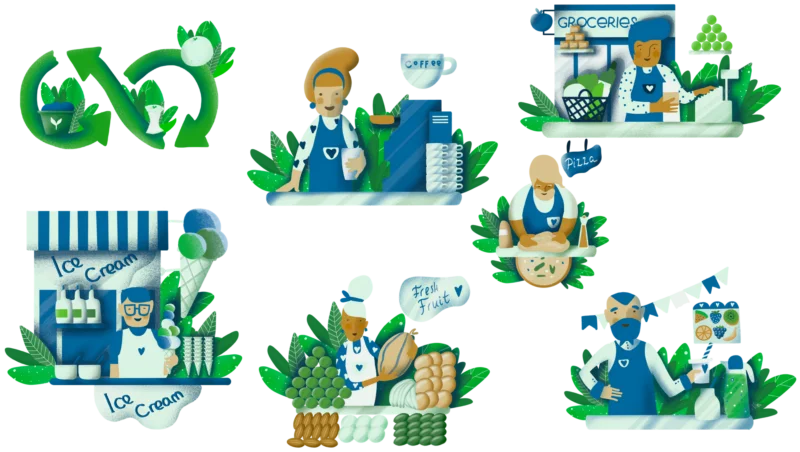
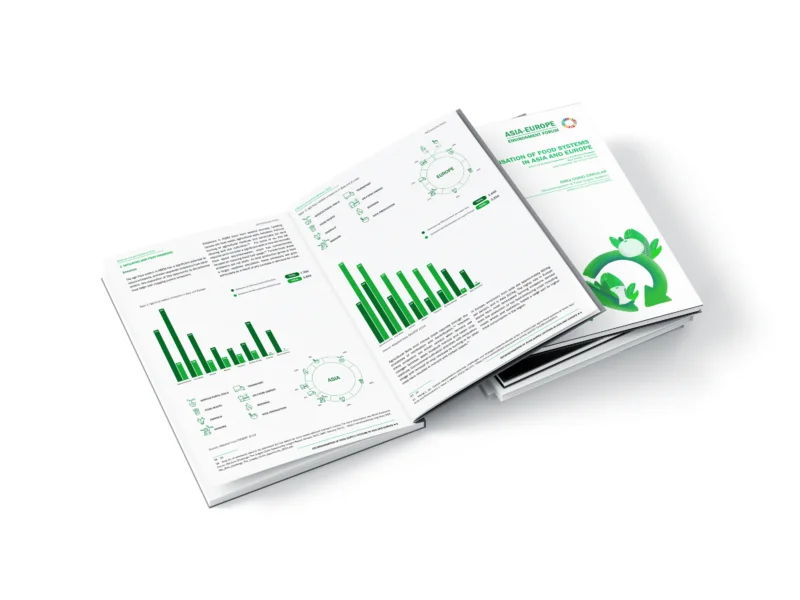
Maca’s project page and portfolio offer a closer look at the work: Asia-Europe Foundation project, Directory of Illustration portfolio and Maca’s website. For teams building identities around educational or technical subjects, the useful prompt is to map every place the design will appear first, then shape the illustration and motion around those real reading situations.
| Rev | Description | Date |
|---|---|---|
| A | Issued for reading | |
| B | Viewed 885 times | Current |