Lynne St. Clare Foster’s Gender Project Uses Portraiture to Open a Spectrum of Possibilities
- Project
- Graphic Design
- Drawn by
- Marika Lind
- Issued
- Sheet
- A-101
Lynne St. Clare Foster’s portrait project asks viewers to reconsider gender through visual storytelling, acceptance and self-definition.
Portraits that leave room for self-definition
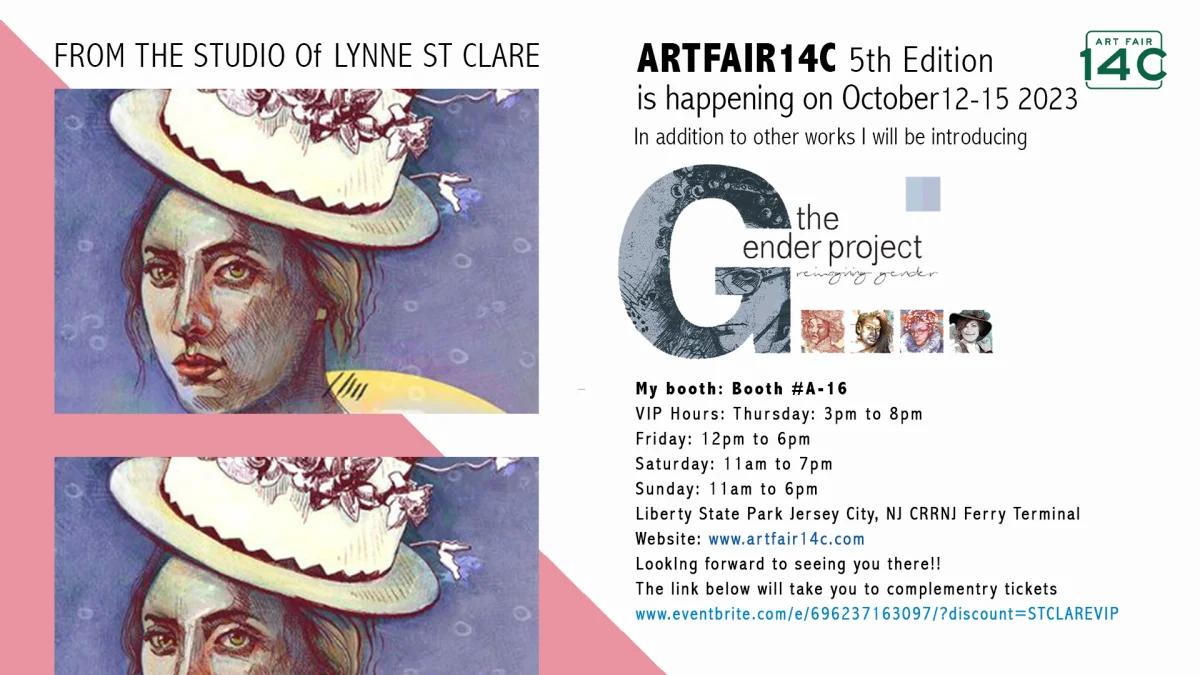
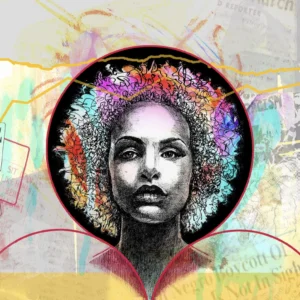
Lynne St. Clare Foster’s The Gender Project: Re-Imaging Gender starts with a question about how people understand themselves: what might change if gender were approached as a spectrum rather than a set of fixed categories? Foster uses portraiture and visual language to make that question visible. The project brings together people with different relationships to gender, inviting viewers to consider the space between how someone appears and how they describe themselves.
That gap is central to the work’s premise. Foster includes people who identify as gender nonconforming alongside people who identify as binary or cisgender. Some people use specific pronouns; others don’t. The range matters because the project isn’t limited to illustrating one identity or presenting a single look as representative. Instead, it asks viewers to make room for individual accounts and for the possibility that someone’s understanding of themselves may shift or become clearer through reflection.
Foster describes the project as a way to create space for imagining oneself in a nonbinary context. The portraits, in her account, connect distinct personal stories through a shared desire: to live authentically and be met with acceptance, respect and love. That emphasis gives the project a human scale. Rather than treating gender as an abstract concept, it directs attention to the people negotiating its meaning in their own lives.
Visual language as an invitation
Foster’s stated aim is to use visual language to build awareness and prompt questions. The available project description doesn’t name particular materials, typefaces, colour choices or image-making techniques for The Gender Project, so its specific visual system can’t be mapped from the description alone. What it does establish is the role she wants the images to play: opening a conversation about how people see themselves and how they might reconsider the categories they’ve inherited.
That leaves useful room for the viewer. A portrait can make someone present without reducing their identity to a label; a collection of portraits can show difference without pretending every story is the same. Foster’s framing asks the audience to look carefully, while resisting the idea that outward presentation tells the whole story. For designers working with portraiture or identity, that’s a practical distinction: representation can begin with who is shown, but it also depends on whether the work leaves people room to define themselves.
The project’s nonbinary context is an invitation rather than a demand that every subject use the same language. Foster explicitly notes that people on a spectrum may choose particular pronouns, while others may not. She also includes people who consider themselves binary or cisgender. This breadth supports her question about where viewers place themselves, without claiming that every person will arrive at the same answer.
Foster’s broader practice
Foster lives and works in New York City. She holds a BFA from Pratt and an MFA from the School of Visual Arts, and teaches at Pratt Institute and City College in New York. Her work spans illustration, fine art and photography. The biographical information describes a practice that moves between editorial assignments, exhibitions and projects focused on people and place.
Her illustrations appear monthly in the Brooklyn-based newspaper The Indypendent, and her work has been included in Artists Against the War. In 2011, she joined other photographers documenting life in Cuba. That work led to two exhibitions: Cuba—The Remainders and Art and Protest. Her solo exhibition And Then Comes a Dream was presented in Kuala Lumpur, Malaysia, and she was also part of a group exhibition at the University of Malaya.
A separate illustration, If I Was Made of Cake I’d Eat Myself Before Someone Else Could, was accepted into the Society of Illustrators LA Annual show. Her listed clients include The Red Betty Theatre, Cincinnati Magazine, Delaware Today Magazine, Congregations and the Museum of Natural History. The range of work suggests an artist comfortable moving between commissioned illustration and self-directed visual projects, while the Gender Project gives portraiture a specific role: helping viewers question how identity is seen and understood.
Where to see the project
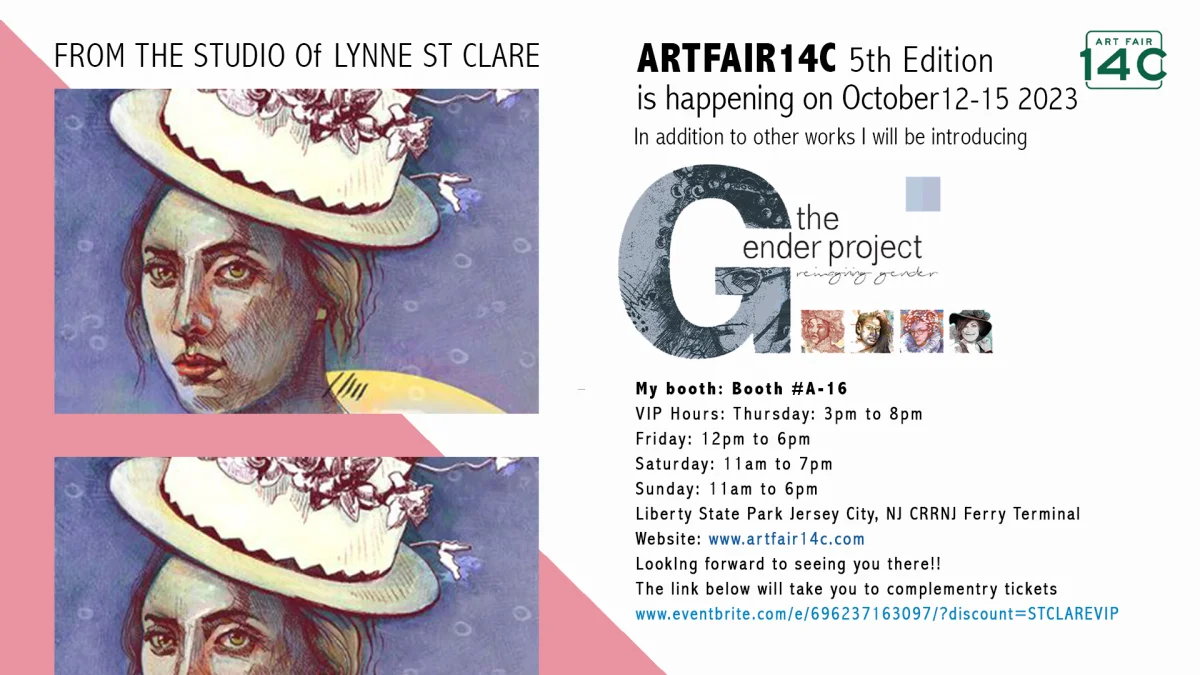
The Gender Project was presented in connection with ARTFAIR 14 C. The source page links to Foster’s portfolio and website, along with an event ticket page. Its description leaves the viewer with a concrete prompt: look at the people represented, notice what assumptions their portraits raise, and consider how a more open understanding of gender might make space for each person’s own account.

| Rev | Description | Date |
|---|---|---|
| A | Issued for reading | |
| B | Viewed 663 times | Current |


