Juan Travieso Turns Hand-Painted Wildlife into Bold, Pixel-Like Art
- Project
- Graphic Design
- Drawn by
- Andie O'Donnell
- Issued
- Sheet
- A-152
Juan Travieso’s vivid animal paintings connect biodiversity advocacy with brand work, including hand-painted designs adapted for Perrier products and murals.
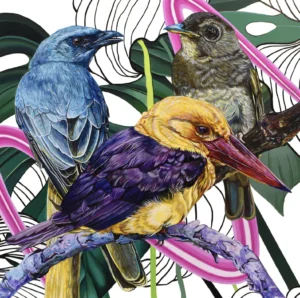
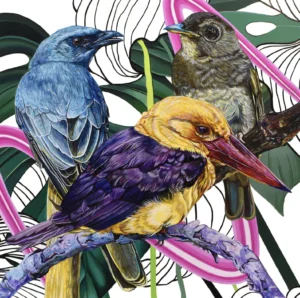
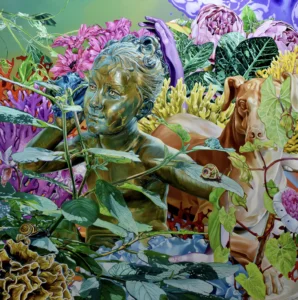
Juan Travieso’s animal portraits can look like digital mosaics, but the surfaces begin with paint on panel. That shift from hand-made image to products and public installations shaped his work for Perrier’s #PerrierXWild project—and offers a useful glimpse of how an artist’s personal practice can travel across formats without losing its character.
From Cuba to a practice rooted in nature
Originally from Havana, Cuba, Travieso is now based between New Jersey and New York. He traces his start as an artist to a childhood with limited access to cartoons: Cuban television permitted 30 minutes a day, and he would wait for the characters to appear. To keep them with him after the broadcasts ended, he began drawing them.
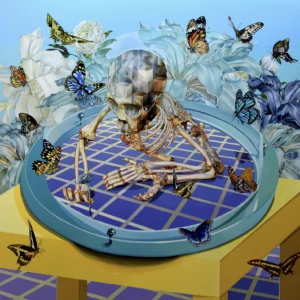
That early habit established a lasting interest in images that hold attention. Cuba also shaped his use of vivid colour and his desire to make nature a subject. Travieso’s work focuses largely on animals and other natural forms, built from geometric shapes and pixel-like blocks that give the paintings an abstract edge. Their crisp, segmented appearance can suggest digital rendering, even though the campaign images he describes were painted by hand.
For illustrators, the distinction matters: a visual style can evoke the precision of a screen while retaining the texture and decisions of a physical process. Travieso’s paintings keep those two readings in play. From a distance, the animal forms resolve into bold, graphic images; closer in, their painted construction becomes part of the work.
Making biodiversity visible
Travieso’s interest in environmentalism began early. He says he was drawn to science and biodiversity by the age of 10, then became more focused on these subjects during college. A professor encouraged students to follow the issues that stayed with them and find ways to speak about those issues through art. For Travieso, that meant turning toward endangered species, animal mistreatment and the value of biodiversity.
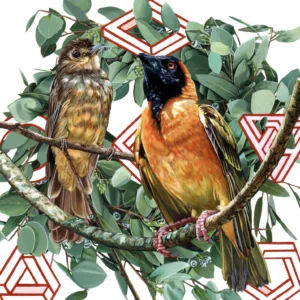
His ongoing “Endangered Birds” series uses animal portraiture to direct attention toward species at risk. The images bring the subject into view through colour and abstraction, while the series’ purpose remains grounded in conservation. Tigers are the species he says he feels most drawn to.
That approach gives the work a clear visual and thematic centre. Instead of treating nature as a backdrop, Travieso makes the animal itself the focal point. The stylized geometry helps the portraits read as designed images, while the recognizable subjects keep the work connected to the living species behind them. For teams working with environmental themes, that balance is a practical consideration: an image needs to attract attention, but its subject and purpose should remain legible.
A painted image across products and public space
Travieso’s best-known recent project is his collaboration with sparkling water brand Perrier on #PerrierXWild. He created animal designs for limited-edition cans, bicycles, T-shirts, backpacks and other products. The artwork also appeared in storefront displays and was adapted for murals and installations around the world. The brand framed the project around the idea of “awakening your wild side.”
Travieso describes the collaboration as a turning point in how he approached brand work. He says it made him more comfortable with unconventional partnerships and encouraged him to think about art on a global scale. He credits the team involved with helping bring the project to life and says he was invited to contribute ideas rather than simply deliver finished images.
The production process kept his own practice at the centre: each image used for the campaign was hand-painted on panel, then adapted to the products. That sequence is a useful model for artists and creative teams planning work across multiple formats. Start with a coherent original image, then consider how its colour, detail and composition will behave on each surface. A can, a garment and a mural offer different viewing distances and proportions; adapting the painting gives the artwork room to function in each setting.
The campaign also shows how a recognizable illustration style can scale beyond a single placement. The animal imagery could appear on packaging, retail displays and large walls while carrying the same visual language. Travieso’s account suggests that close collaboration gave him space to keep the work connected to his existing practice as it moved across those formats.
What’s next for Travieso’s work
At the time of the interview, Travieso was looking ahead to mural projects with Sea Walls in New Zealand, the Bushwick Collective in Brooklyn, New York, and Punto Urban Art Museum in Salem, Massachusetts. He also mentioned gallery shows planned for later that year. The source does not give launch dates for the Perrier project or those upcoming works.
Across studio paintings, branded products and public walls, the through line is consistent: vibrant animal imagery built from a hand-painted process, with biodiversity as a recurring concern. The work’s graphic clarity helps it travel, while its subjects keep the environmental message specific. For designers adapting illustration across formats, Travieso’s practice points to a concrete takeaway: preserve the qualities that make an image distinctive, then reshape the composition for the place where people will encounter it.
Explore Juan Travieso’s portfolio and website for more of his work.


| Rev | Description | Date |
|---|---|---|
| A | Issued for reading | |
| B | Viewed 588 times | Current |


